

The DOI matches its Crossref record; 63 of the 63 references it cites were found in a registry or an index.
Perineuronal Nets Enhance the Excitability of Fast-Spiking Neurons
Open accessAbstract
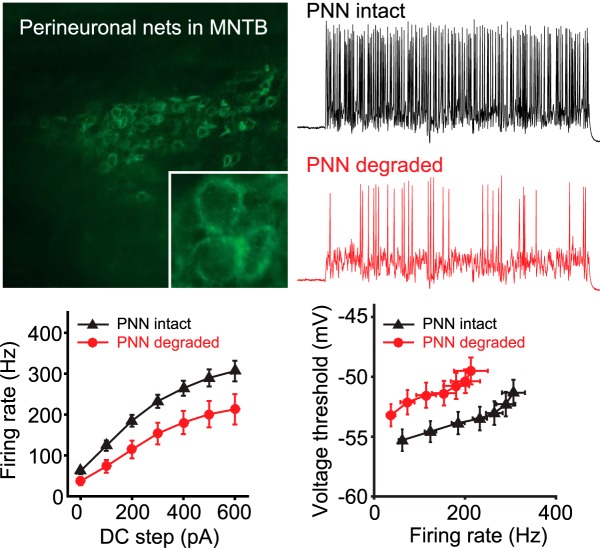
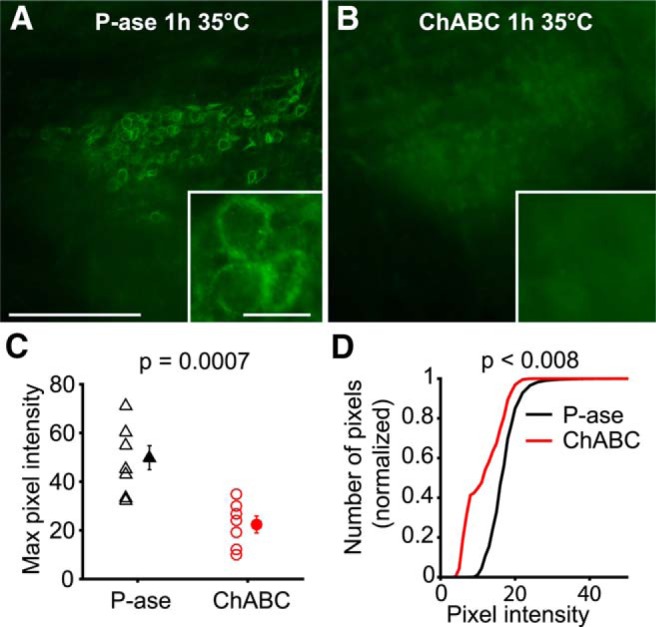
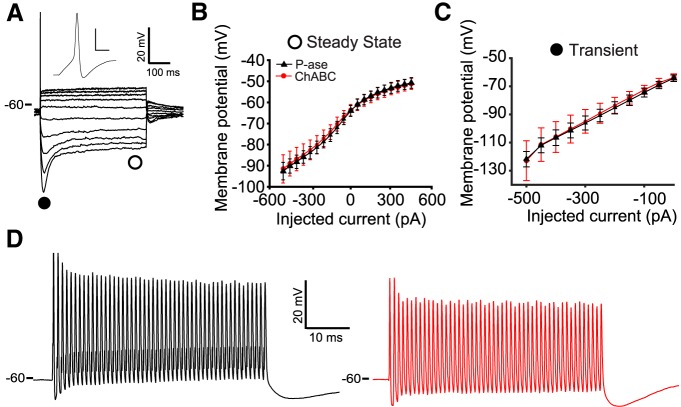
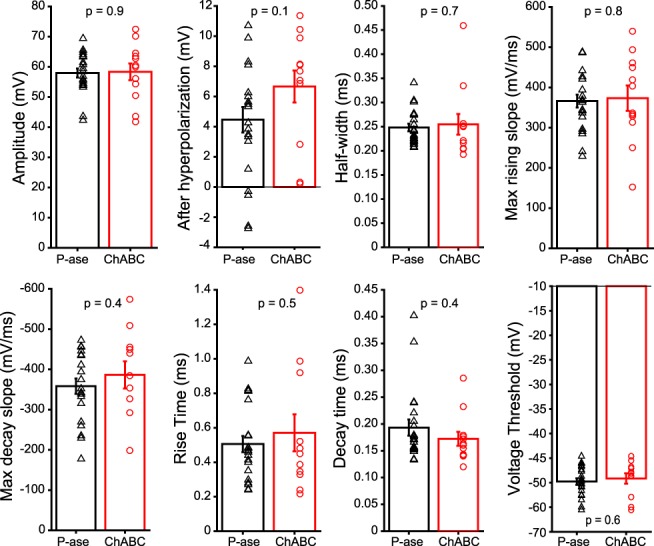
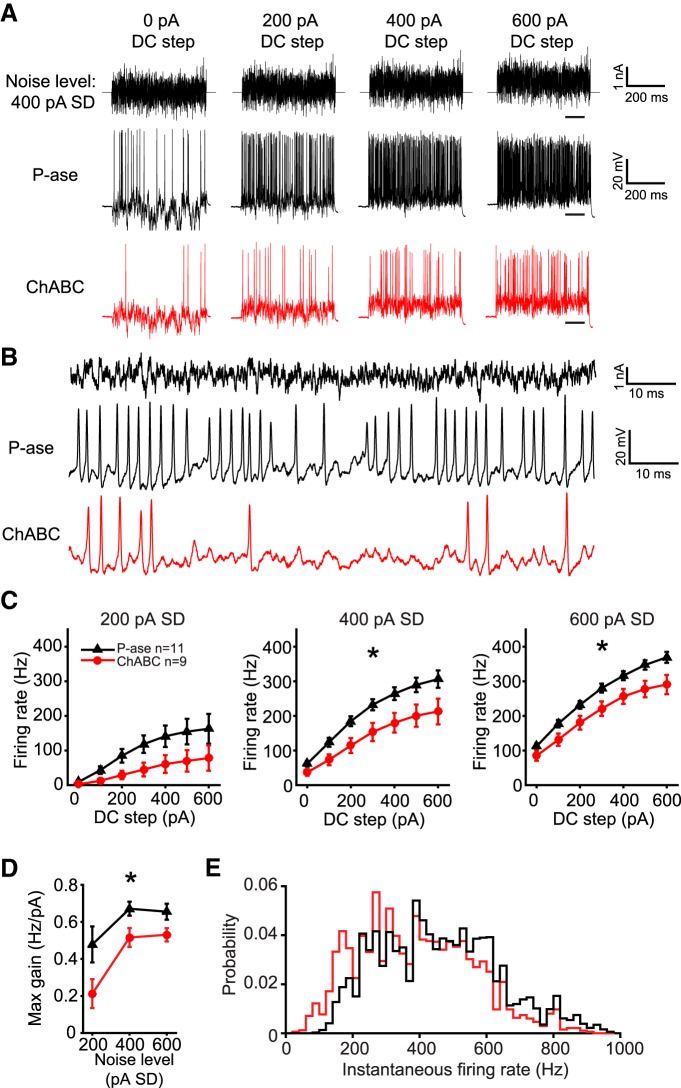
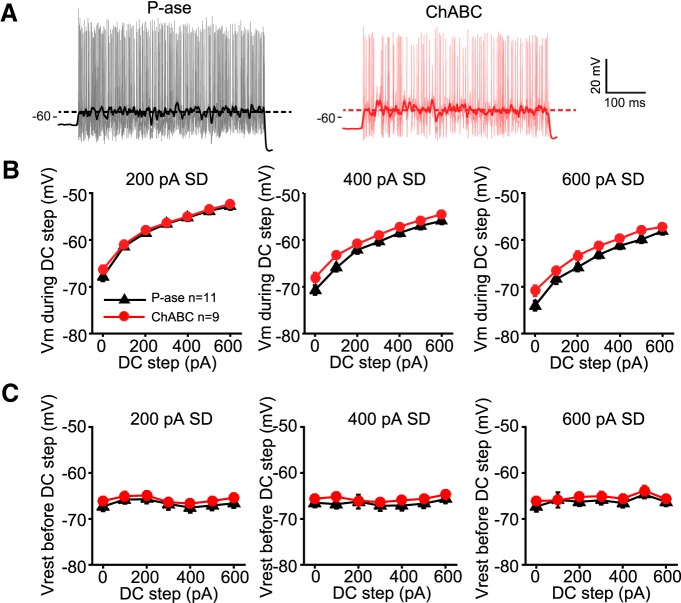
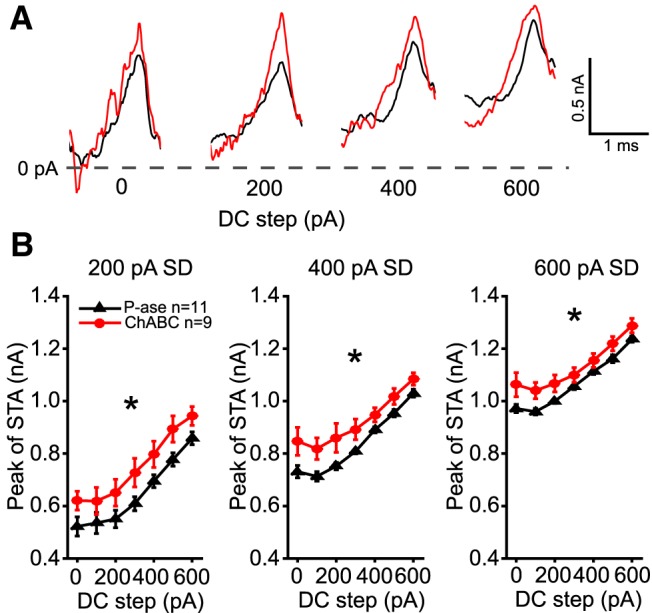
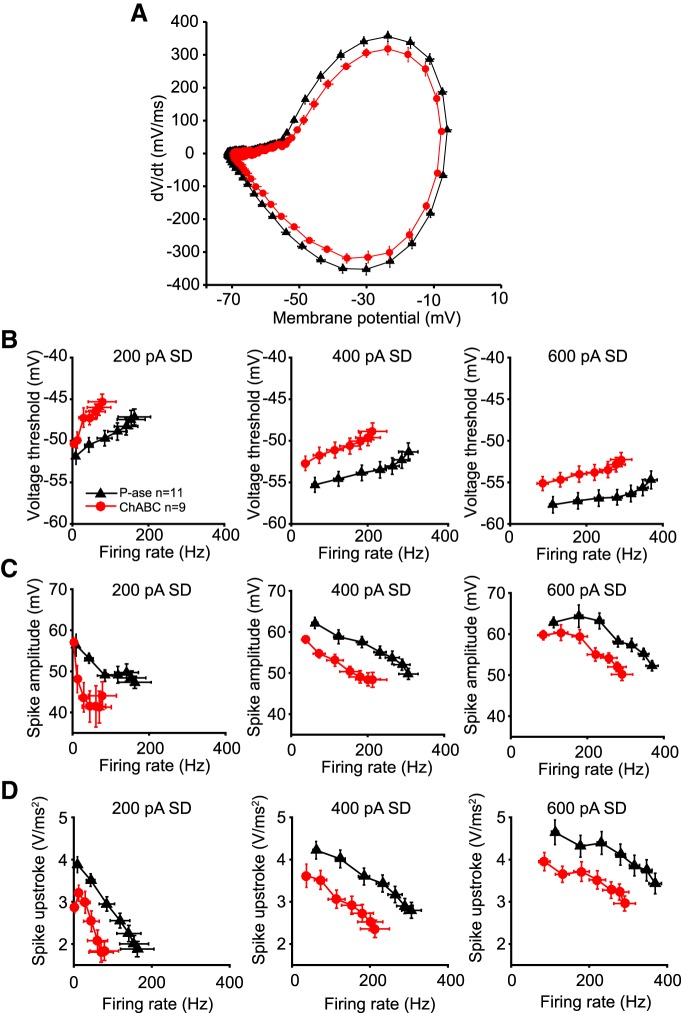
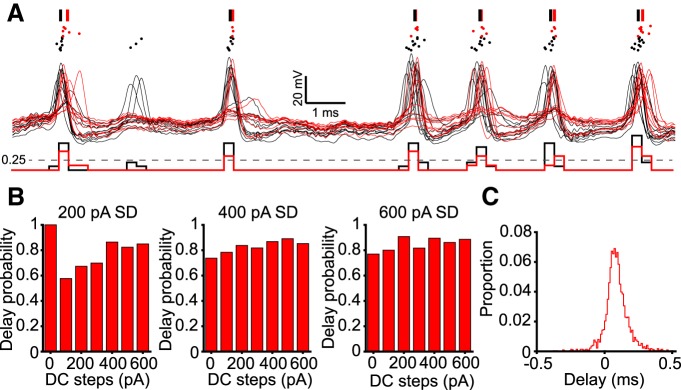
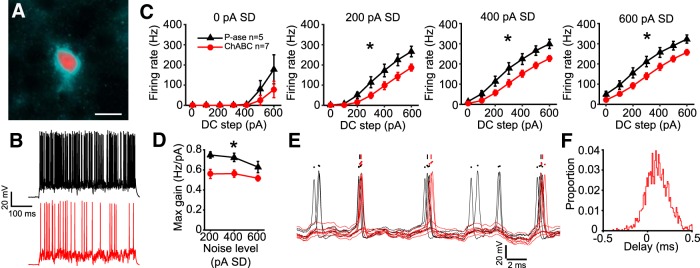
Perineuronal nets (PNNs) are specialized complexes of extracellular matrix molecules that surround the somata of fast-spiking neurons throughout the vertebrate brain. PNNs are particularly prevalent throughout the auditory brainstem, which transmits signals with high speed and precision. It is unknown whether PNNs contribute to the fast-spiking ability of the neurons they surround. Whole-cell recordings were made from medial nucleus of the trapezoid body (MNTB) principal neurons in acute brain slices from postnatal day 21 (P21) to P27 mice. PNNs were degraded by incubating slices in chondroitinase ABC (ChABC) and were compared to slices that were treated with a control enzyme (penicillinase). ChABC treatment did not affect the ability of MNTB neurons to fire at up to 1000 Hz when driven by current pulses. However, f – I (frequency–intensity) curves constructed by injecting Gaussian white noise currents superimposed on DC current steps showed that ChABC treatment reduced the gain of spike output. An increase in spike threshold may have contributed to this effect, which is consistent with the observation that spikes in ChABC-treated cells were delayed relative to control-treated cells. In addition, parvalbumin-expressing fast-spiking cortical neurons in >P70 slices that were treated with ChABC also had reduced excitability and gain. The development of PNNs around somata of fast-spiking neurons may be essential for fast and precise sensory transmission and synaptic inhibition in the brain.
Overview
The claims and statistics of this paper haven’t been checked yet.
Run the check — free, no account needed. It reads the open-access text and checks the sources it cites.
Integrity signals
Registry
Cites
Statistics
Figures
Verification
Claims the paper makes
The claims and statistics of this paper haven’t been checked yet.
Run the check — free, no account needed. It reads the open-access text and checks the sources it cites.
Claims other papers make about this one
Each is checked against this paper’s own text: does it say what the citing paper says it does?
The cited source says what the claim attributes to it.
In the citing paper
“As PNNs regulate PV cell activity (Balmer, 2016; Lensjø et al., 2017) and protect PV cells from oxidative stress (Cabungcal et al., 2013), PNNs can be potentially targeted to control seizures.”
From The Perineuronal ‘Safety’ Net? Perineuronal Net Abnormalities in Neurological Disorders (2018) · cites this paper as Balmer, 2016
In the citing paper
“As PNNs are implicated in neuronal health and function, protecting cells against neurotoxins such as Aβ1–42 [39] and oxidative stress [65] in addition to modulating neuronal activity [63, 66], the microglia-mediated loss of these structures in disease likely plays an important role in AD pathogenesis.”
From Microglia facilitate loss of perineuronal nets in the Alzheimer's disease brain (2020) · cites this paper as [63]
In the citing paper
“However, it is important to recognize that in addition to changes in the excitability of inhibitory neurons as suggested here and by others55, PNN degradation may also alter synaptic activity56 and hence network excitability.”
From Perineuronal nets decrease membrane capacitance of peritumoral fast spiking interneurons in a model of epilepsy (2018) · cites this paper as [55]
In the citing paper
“However, the role of PNNs in neural and network excitability is only beginning to be understood (Balmer, 2016; Murase et al., 2017; Wen et al., 2017).”
From The Perineuronal ‘Safety’ Net? Perineuronal Net Abnormalities in Neurological Disorders (2018) · cites this paper as Balmer, 2016
In the citing paper
“Perineuronal net dysfunction in schizophrenia may also drive changes in GABAergic cell function leading to network dysfunction, as normal PNN expression regulates excitability of PV cells (Liu et al., 2013; Balmer, 2016).”
From The Perineuronal ‘Safety’ Net? Perineuronal Net Abnormalities in Neurological Disorders (2018) · cites this paper as Balmer, 2016
In the citing paper
“While this mechanism has not been confirmed, chABC-mediated removal of chondroitin sulfate side chains from PNNs reduced spiking of PV cells in adult rats (Balmer, 2016; Lensjø et al., 2017) and increased spiking variability (Lensjø et al., 2017).”
From The Perineuronal ‘Safety’ Net? Perineuronal Net Abnormalities in Neurological Disorders (2018) · cites this paper as Balmer, 2016
In the citing paper
“chABC-mediated degradation of PNNs around PV cells in brainstem and central auditory neurons has similar effects, resulting in reduced PV cell excitability and gain (Balmer, 2016).”
From The Perineuronal ‘Safety’ Net? Perineuronal Net Abnormalities in Neurological Disorders (2018) · cites this paper as Balmer, 2016
In the citing paper
“Chondroitinase ABC, an enzyme that cleaves PNN proteoglycans, reduces GABA A inhibitory postsynaptic currents (Liu et al. 2013) and reduces excitability of PV fast-spiking cortical interneurons (Balmer 2016).”
In the citing paper
“Our findings reporting increased intensities of WFA labelled PNNs around PV+ interneurons suggest altered plasticity of PV+ cells as PNNs have been known to regulate synaptic and cellular plasticity of the cells they encapsulate (45) and digestion of PNNs around PV+ cells has been shown to reduce the fast spiking properties and excitability of PV+ cells (73)”
From Perineuronal nets, inhibitory interneurons and anxiety-related ventral hippocampal neuronal oscillations are altered by early life adversity (2019) · cites this paper as [73]
Self-check
Percentages, sums and reported differences re-computed from the paper’s own numbers.
The self-check needs the paper’s full text.
Citations
Cites
NIH Image to ImageJ: 25 years of image analysis
Schneider, C. A., Rasband, W. S., & Eliceiri, K. W. (2012) · Nature Methods · doi:10.1038/nmeth.2089 · Cited by 64,638
Ion Channels/Excitable Membranes
(2011) · Springer eBooks · doi:10.1007/springerreference_33998 · Cited by 4,066
The action of calcium on the electrical properties of squid axons
FRANKENHAEUSER, B., & Hodgkin, A. L. (1957) · The Journal of Physiology · doi:10.1113/jphysiol.1957.sp005808 · Cited by 1,839
Reactivation of Ocular Dominance Plasticity in the Adult Visual Cortex
Pizzorusso, T., Medini, P., Berardi, N., Chierzi, S., Fawcett, J. W., & Maffei, L. (2002) · Science · doi:10.1126/science.1072699 · Cited by 1,679
Perineuronal Nets Protect Fear Memories from Erasure
Gogolla, N., Caroni, P., Lüthi, A., & Herry, C. (2009) · Science · doi:10.1126/science.1174146 · Cited by 760
PTPσ Is a Receptor for Chondroitin Sulfate Proteoglycan, an Inhibitor of Neural Regeneration
Shen, Y., Tenney, A. P., Busch, S. A., Horn, K. P., Cuascut, F. X., Liu, K., He, Z., Silver, J., & Flanagan, J. G. (2009) · Science · doi:10.1126/science.1178310 · Cited by 682
Balancing Plasticity/Stability Across Brain Development
Takesian, A. E., & Hensch, T. K. (2013) · Progress in Brain Research · doi:10.1016/b978-0-444-63327-9.00001-1 · Cited by 667
Experience-driven plasticity of visual cortex limited by myelin and nogo receptor
McGee, A. W., Yang, Y., Fischer, Q. S., Daw, N. W., & Strittmatter, S. M. (2005) · Science · doi:10.1126/science.1114362 · Cited by 643
Chattopadhyaya, B., Di Cristo, G., Higashiyama, H., Knott, G. W., Kuhlman, S. J., Welker, E., & Huang, Z. J. (2004) · The Journal of Neuroscience · doi:10.1523/jneurosci.1851-04.2004 · Cited by 596
Brain extracellular matrix affects AMPA receptor lateral mobility and short-term synaptic plasticity
Frischknecht, R., Heine, M., Perrais, D., Seidenbecher, C. I., Choquet, D., & Gundelfinger, E. D. (2009) · Nature Neuroscience · doi:10.1038/nn.2338 · Cited by 554
Cited by
Sorted by citations
Perineuronal nets stabilize the grid cell network
Christensen, A. C., Lensjø, K. K., Lepperød, M. E., Dragly, S.-A., Sutterud, H., Blackstad, J. S., Fyhn, M., & Hafting, T. (2021) · Nature Communications · doi:10.1038/s41467-020-20241-w · Cited by 1,865
Critical period regulation across multiple timescales
Reh, R. K., Dias, B. G., Nelson, C. A., Kaufer, D., Werker, J. F., Kolb, B., Levine, J. D., & Hensch, T. K. (2020) · Proceedings of the National Academy of Sciences · doi:10.1073/pnas.1820836117 · Cited by 492
Neuron–glia interactions in the pathophysiology of epilepsy
Patel, D. C., Tewari, B. P., Chaunsali, L., & Sontheimer, H. W. (2019) · Nature reviews. Neuroscience · doi:10.1038/s41583-019-0126-4 · Cited by 478
Microglia facilitate loss of perineuronal nets in the Alzheimer's disease brain
Crapser, J. D., Spangenberg, E. E., Barahona, R. A., Arreola, M. A., Hohsfield, L. A., & Green, K. N. (2020) · EBioMedicine · doi:10.1016/j.ebiom.2020.102919 · Cited by 280
Crosstalk between glia, extracellular matrix and neurons
Song, I., & Dityatev, A. E. (2017) · Brain Research Bulletin · doi:10.1016/j.brainresbull.2017.03.003 · Cited by 270
Metadata
- Authors
- Balmer, T. S.
- Affiliations
- Marine Biological Laboratory (US)
- Corresponding author
- Balmer, Timothy S.
- ORCID
- Balmer, Timothy S.
- Venue
- eneuro
- Publisher
- Society for Neuroscience
- Published
- 2016-07
- Volume
- 3
- Issue
- 4
- Pages
- ENEURO.0112-16.2016
- ISSN
- 2373-2822 (ISSN-L)
- PMC
- PMC4987413
- OpenAlex
- W2467652827
- Cited by
- 220
- References
- 63
- Citations by year
- 2026: 13 · 2025: 26 · 2024: 24 · 2023: 18 · 2022: 19 · 2021: 22 · 2020: 28 · 2019: 24 · 2018: 28 · 2017: 18
- FWCI
- 13.09
- Type
- journal article
- Language
- en
- Open access
- gold
- doi.org
- Locations
- eNeuro (publishedVersion, cc-by)
- PubMed Central (publishedVersion, cc-by)
- PubMed (publishedVersion)
- Open Access Server of the Woods Hole Scientific Community (Woods Hole Scientific Community) (submittedVersion, cc-by)
- Funders
- Grass Foundation
- Topics
- Life Sciences › Neuroscience › Cellular and Molecular Neuroscience › Neuroscience and Neuropharmacology Research
- Life Sciences › Neuroscience › Sensory Systems › Hearing, Cochlea, Tinnitus, Genetics
- Life Sciences › Neuroscience › Cognitive Neuroscience › Neural dynamics and brain function
- Keywords
- perineuronal nets, fast-spiking neurons, neuronal excitability, medial nucleus of the trapezoid body, auditory brainstem, chondroitinase ABC, extracellular matrix, parvalbumin interneurons, spike threshold, synaptic inhibition, sensory transmission
- MeSH terms
- Action Potentials, Analysis of Variance, Animals, Central Nervous System Agents, Extracellular Matrix, Female, Immunohistochemistry, Male, Mice, Inbred C57BL, Microscopy, Fluorescence, Neurons, Penicillinase, Patch-Clamp Techniques, Chondroitin ABC Lyase, Tissue Culture Techniques, Superior Olivary Complex
About these checks
Registry, retraction, Cites and statistics results are computed, not judged, with one exception: a printed reference that no index lists is read once by a model before it counts as a citation error. Claims are extracted by a model and kept only when their quote appears verbatim in the text; each cited source is then checked, with a model’s help, for whether it says what the claim relies on. Those verdicts can be wrong — read the claim’s quote and the cited source before relying on one.
Statistics and arithmetic are recomputed, not judged.
Confidence bands are shown only for fields calibrated on our annotated test set. None is calibrated yet, so no band is shown.
What counts as a claim ›How we measure confidence ›How we check this ›
Are you an author, or do you see a problem with this page? Request a review
