

The DOI matches its Crossref record; 9 of the 9 references it cites were found in a registry or an index.
Serotonin produces long-term changes in the excitability of Aplysia sensory neurons in culture that depend on new protein synthesis
Open accessAbstract
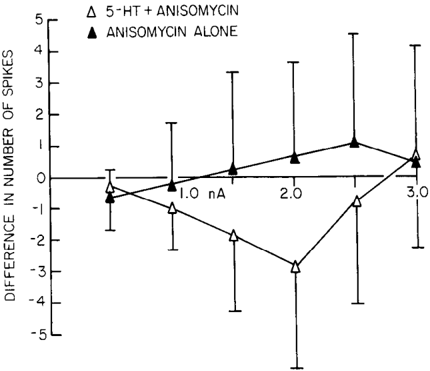
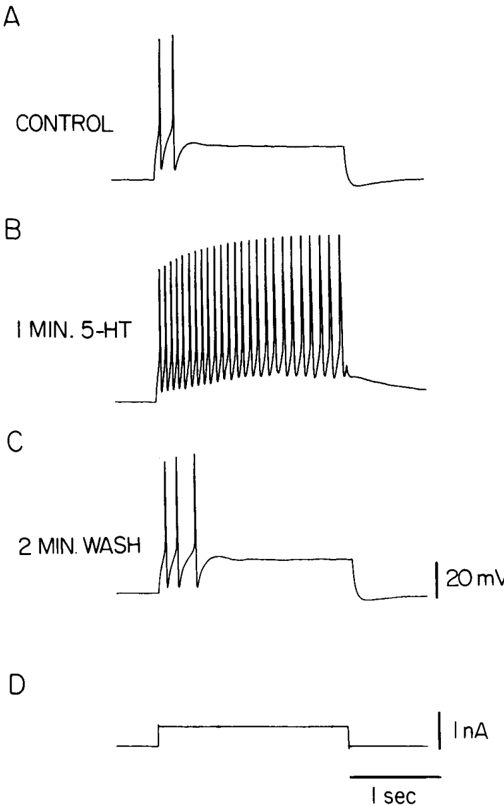
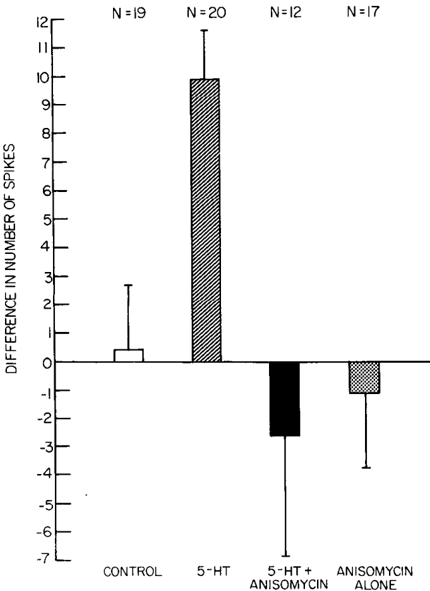
When isolated and grown in cell culture, the sensory and motor neurons of the gill withdrawal reflex of Aplysia readily form synaptic connections. Repeated exposures to 5-HT cause facilitation of the synaptic connections between co-cultured sensory and motor neurons lasting at least 24 hr. As a first step toward understanding the locus and the mechanisms underlying this long-term synaptic facilitation, we have examined the membrane excitability of the isolated presynaptic sensory neurons grown alone in dissociated cell culture. Four repeated applications of 1 microM 5-HT caused a significant increase in the excitability of sensory neurons, lasting at least 24 hr. This resembles the short-term changes in excitability seen in response to a single application of 5-HT. Unlike the short-term effect, this long-lasting change was blocked by exposure of the cells during the 5-HT treatment to 10 microM anisomycin, an inhibitor of protein synthesis. Thus, like the synaptic facilitation, the long-term change in excitability of the isolated presynaptic neurons differs from the short-term in requiring the synthesis of new protein. This finding suggests that the sensory neuron uses gene products to modulate membrane currents in its long- term response to repeated external stimuli that are not required in its short-term response to a single stimulus.
Overview
The claims and statistics of this paper haven’t been checked yet.
Run the check — free, no account needed. It reads the open-access text and checks the sources it cites.
Integrity signals
Registry
Cites
Statistics
Figures
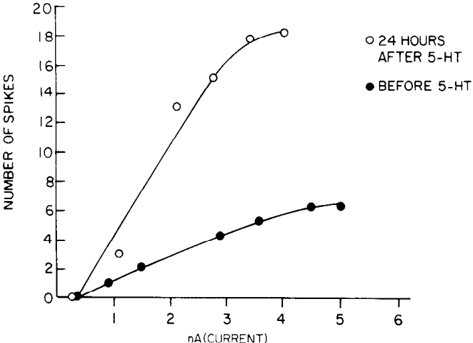
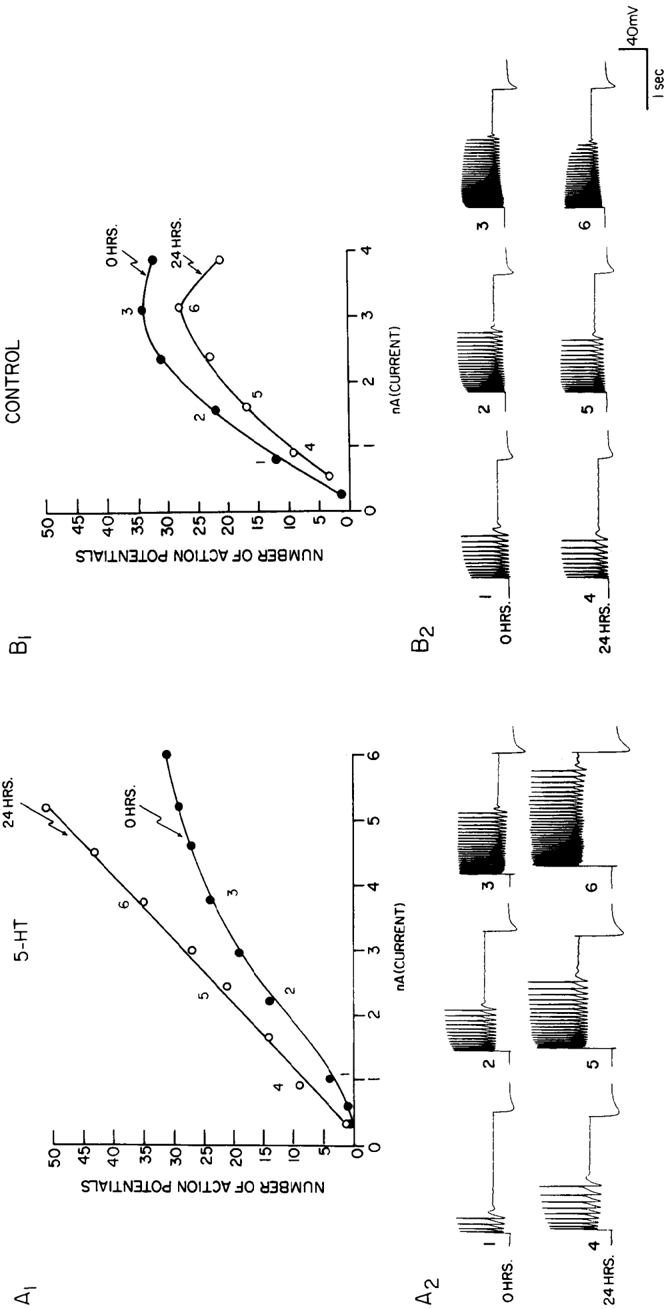
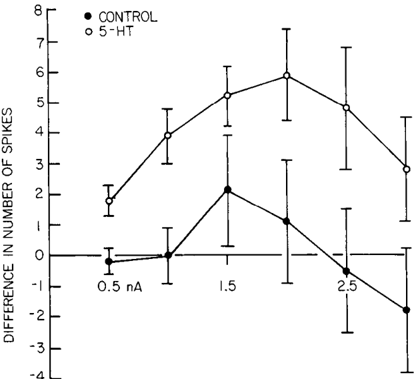
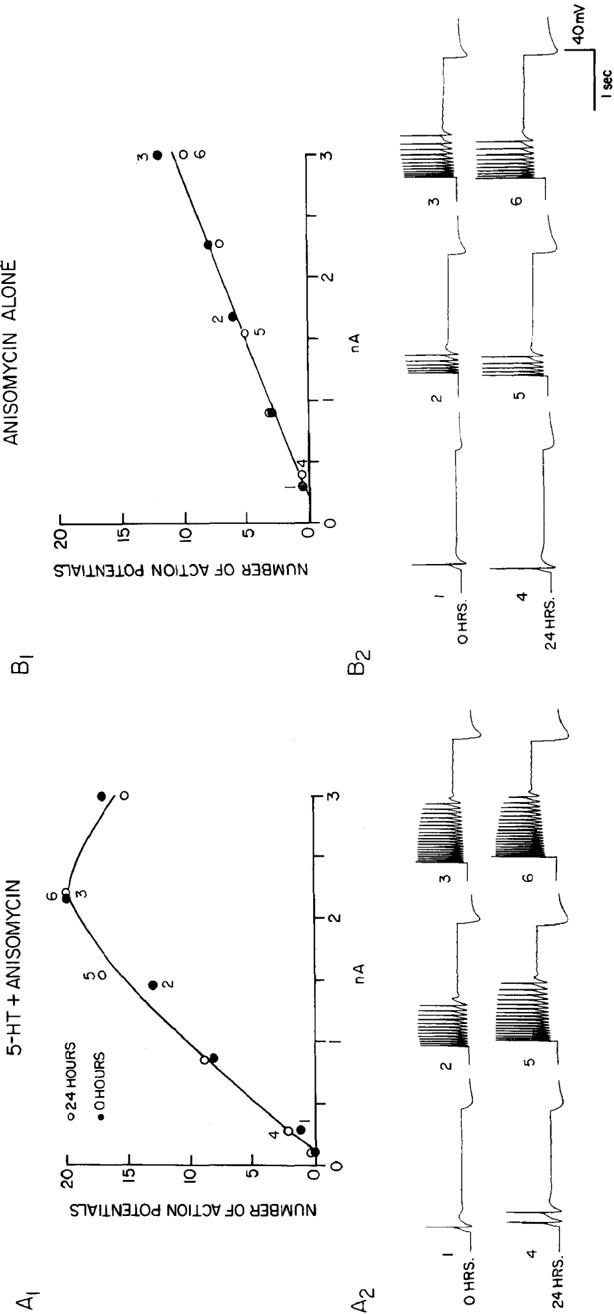
Verification
Claims the paper makes
The claims and statistics of this paper haven’t been checked yet.
Run the check — free, no account needed. It reads the open-access text and checks the sources it cites.
Claims other papers make about this one
Each is checked against this paper’s own text: does it say what the citing paper says it does?
In the citing paper
“The synthesis of new proteins is necessary for long-term changes in synaptic plasticity and learning (132–134). In this context, learning and long-term memory formation are improved by enhanced histone acetylation (135), which could be improved by HDAC inhibitors (HDACi).”
From The Role of Short-Chain Fatty Acids From Gut Microbiota in Gut-Brain Communication (2020) · cites this paper as [132]
Self-check
Percentages, sums and reported differences re-computed from the paper’s own numbers.
The self-check needs the paper’s full text.
Citations
Cites
Serotonin and cyclic AMP close single K+ channels in Aplysia sensory neurones
Siegelbaum, S. A., Camardo, J. S., & Kandel, E. R. (1982) · Nature · doi:10.1038/299413a0 · Cited by 649
Self-citationLong-Term Sensitization of a Defensive Withdrawal Reflex in Aplysia
Pinsker, H. M., Hening, W. A., Carew, T. J., & Kandel, E. R. (1973) · Science · doi:10.1126/science.182.4116.1039 · Cited by 606
Self-citationKlein, M., & Kandel, E. R. (1978) · Proceedings of the National Academy of Sciences · doi:10.1073/pnas.75.7.3512 · Cited by 394
Self-citationPresynaptic Facilitation as a Mechanism for Behavioral Sensitization in Aplysia
Castellucci, V. F., & Kandel, E. R. (1976) · Science · doi:10.1126/science.11560 · Cited by 374
Self-citationKlein, M. E., Camardo, J. S., & Kandel, E. R. (1982) · Proceedings of the National Academy of Sciences · doi:10.1073/pnas.79.18.5713 · Cited by 347
Self-citationHochner, B., Klein, M., Schacher, S., & Kandel, E. R. (1986) · Proceedings of the National Academy of Sciences · doi:10.1073/pnas.83.22.8794 · Cited by 168
Self-citationHochner, B., Klein, M., Schacher, S., & Kandel, E. R. (1986) · Proceedings of the National Academy of Sciences · doi:10.1073/pnas.83.21.8410 · Cited by 116
Self-citationKlein, M., Hochner, B., & Kandel, E. R. (1986) · Proceedings of the National Academy of Sciences · doi:10.1073/pnas.83.20.7994 · Cited by 115
Self-citationSchacher, S. (1985) · Journal of Neuroscience · doi:10.1523/jneurosci.05-08-02028.1985 · Cited by 79
Self-citation
Research works printed but not linked: 1
- Frost, W. N., V. F. Castellucci, R. D. Hawkins, and E. R. Kandel (1985) The monosynaptic connections from the sensory neurons participate in the storage of long-term memory for sensitization of the gill-and siphon-withdrawal reflex in Aplysia. Proc. Natl. Acad. Sci. USA 82: 8266-8269.
Cited by
Sorted by citations
The Role of Short-Chain Fatty Acids From Gut Microbiota in Gut-Brain Communication
Silva, Y. P., Bernardi, A., & Frozza, R. L. (2020) · Frontiers in Endocrinology · doi:10.3389/fendo.2020.00025 · Cited by 3,043
Silva, A. J., Kogan, J. H., Frankland, P. W., & Kida, S. (1998) · Annual Review of Neuroscience · doi:10.1146/annurev.neuro.21.1.127 · Cited by 1,462
The developmental role of serotonin: news from mouse molecular genetics
Gaspar, P., Cases, O., & Maroteaux, L. (2003) · Nature Reviews Neuroscience · doi:10.1038/nrn1256 · Cited by 1,297
The neuropharmacology of butyrate: the bread and butter of the microbiota-gut-brain axis
Stilling, R. M., van de Wouw, M., Clarke, G., Stanton, C., Dinan, T. G., & Cryan, J. F. (2016) · Neurochemistry International · doi:10.1016/j.neuint.2016.06.011 · Cited by 891
Toward a molecular definition of long-term memory storage
Bailey, C. H., Bartsch, D., & Kandel, E. R. (1996) · Proceedings of the National Academy of Sciences · doi:10.1073/pnas.93.24.13445 · Cited by 689
Self-citation
Metadata
- Authors
- Dale, N., Kandel, E., & Schacher, S.
- Affiliations
- Howard Hughes Medical Institute (US)
- ORCID
- Venue
- The Journal of Neuroscience
- Publisher
- Society for Neuroscience
- Published
- 1987-07-01
- Volume
- 7
- Issue
- 7
- Pages
- 2232-2238
- ISSN
- 0270-6474 (ISSN-L)
- 1529-2401
- PMC
- PMC6568947
- OpenAlex
- W1625157937
- Cited by
- 118
- References
- 9
- Citations by year
- 2026: 1 · 2024: 1 · 2023: 2 · 2022: 1 · 2021: 1 · 2020: 1 · 2019: 1 · 2018: 1 · 2017: 1 · 2016: 1 · 2014: 5 · 2013: 2 · 2012: 2
- FWCI
- 3.06
- Type
- journal article
- Language
- en
- Open access
- hybrid
- doi.org
- Licence
- Locations
- Journal of Neuroscience (publishedVersion, cc-by-nc-sa)
- Europe PMC (PubMed Central) (publishedVersion)
- PubMed Central (publishedVersion)
- PubMed (publishedVersion)
- Topics
- Life Sciences › Neuroscience › Cellular and Molecular Neuroscience › Neuroscience and Neuropharmacology Research
- Life Sciences › Neuroscience › Cognitive Neuroscience › Memory and Neural Mechanisms
- Life Sciences › Neuroscience › Cellular and Molecular Neuroscience › Neurobiology and Insect Physiology Research
- Keywords
- serotonin, sensory neuron excitability, Aplysia, gill-withdrawal reflex, synaptic facilitation, long-term synaptic plasticity, anisomycin, presynaptic neurons, membrane currents, sensory-motor synapses
- MeSH terms
- Action Potentials, Animals, Anisomycin, Aplysia, Cells, Cultured, Gills, Nerve Tissue Proteins, Neurons, Afferent, Serotonin
About these checks
Registry, retraction, Cites and statistics results are computed, not judged, with one exception: a printed reference that no index lists is read once by a model before it counts as a citation error. Claims are extracted by a model and kept only when their quote appears verbatim in the text; each cited source is then checked, with a model’s help, for whether it says what the claim relies on. Those verdicts can be wrong — read the claim’s quote and the cited source before relying on one.
Statistics and arithmetic are recomputed, not judged.
Confidence bands are shown only for fields calibrated on our annotated test set. None is calibrated yet, so no band is shown.
What counts as a claim ›How we measure confidence ›How we check this ›
Are you an author, or do you see a problem with this page? Request a review
