

The DOI matches its Crossref record; 52 of the 52 references it cites were found in a registry or an index.
Supraspinal Brain-Derived Neurotrophic Factor Signaling: A Novel Mechanism for Descending Pain Facilitation
Open accessAbstract
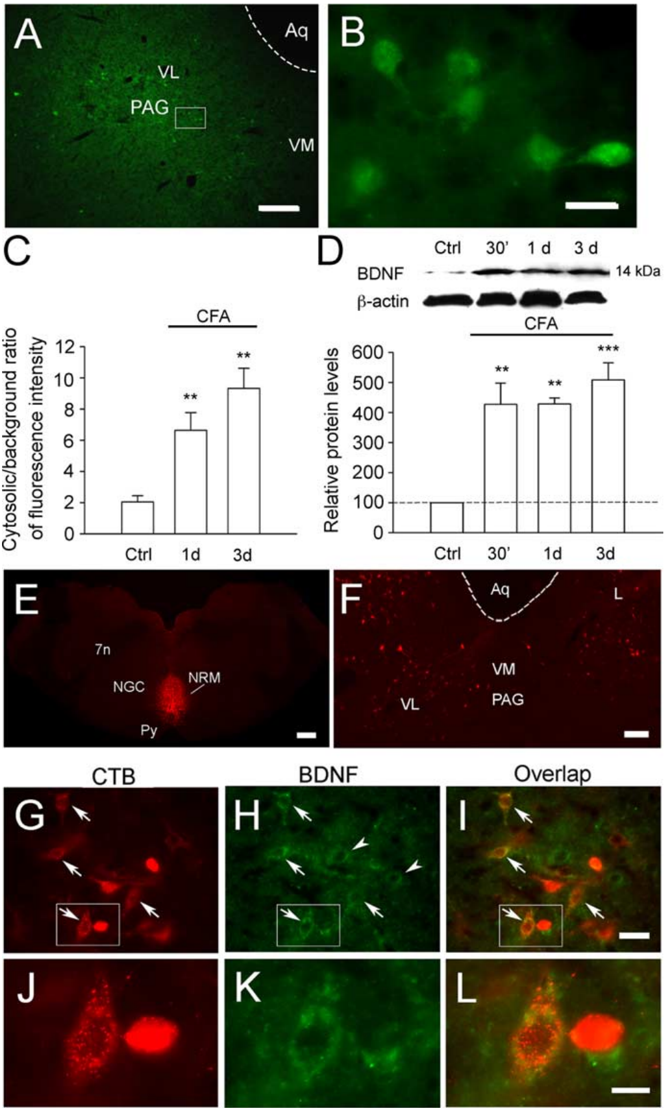
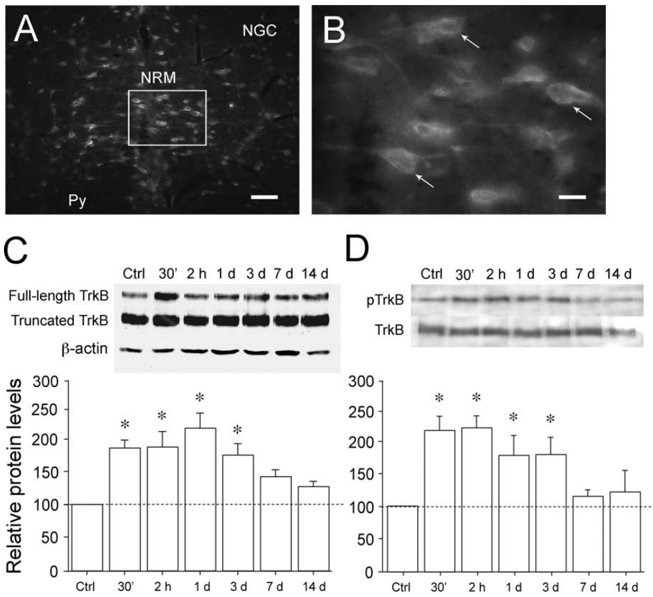
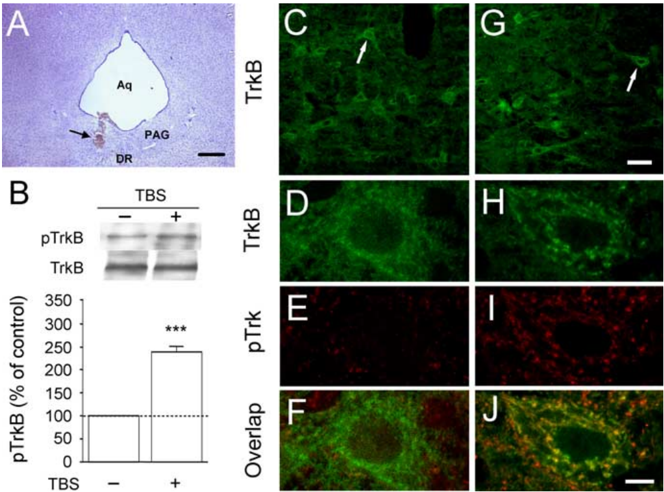
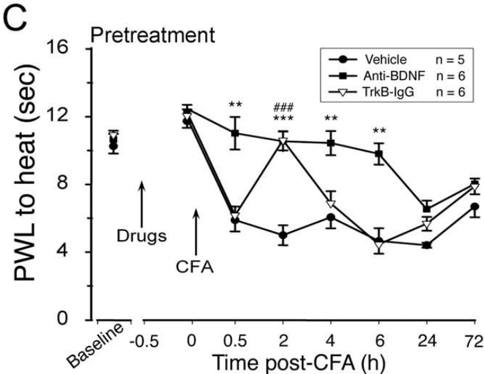
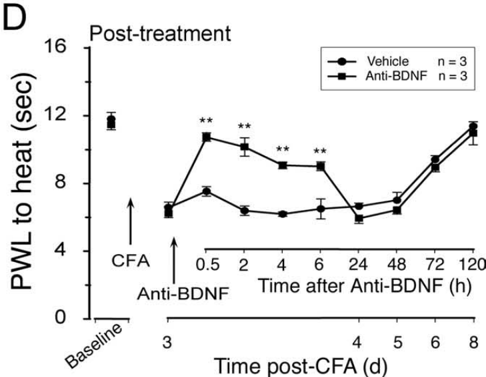
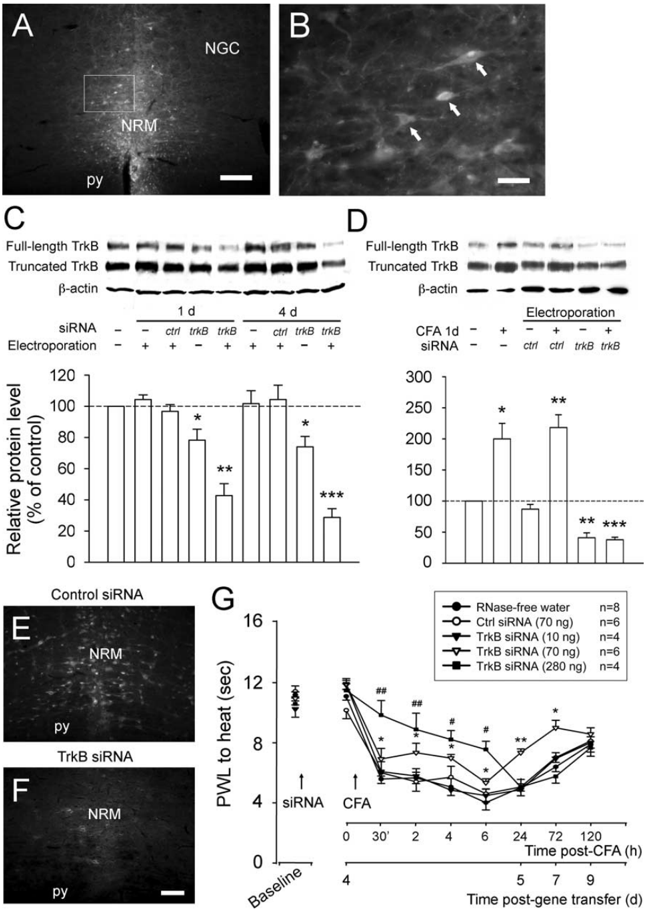
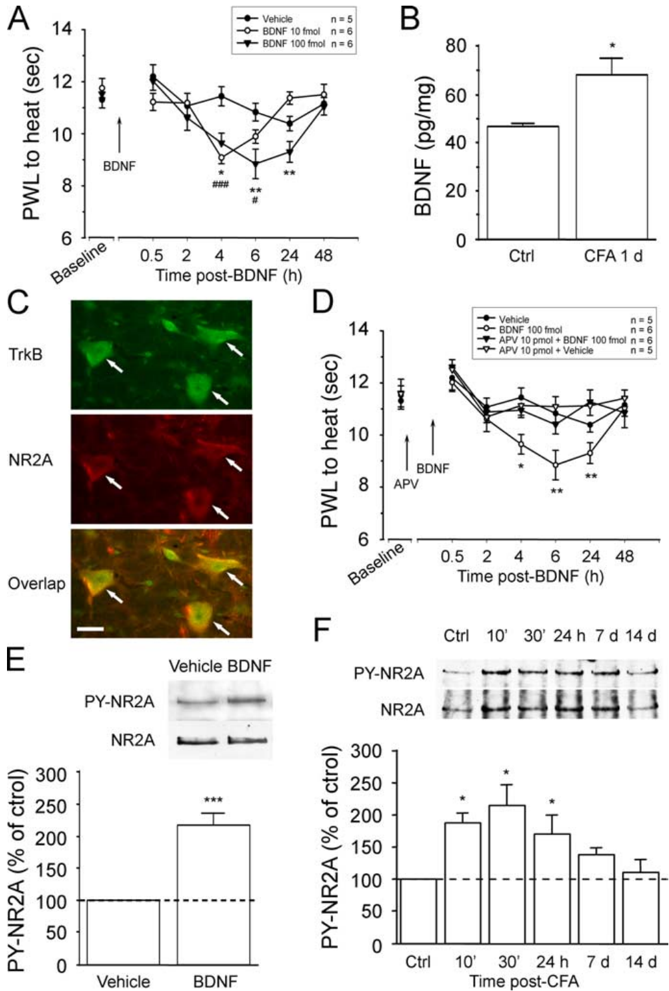
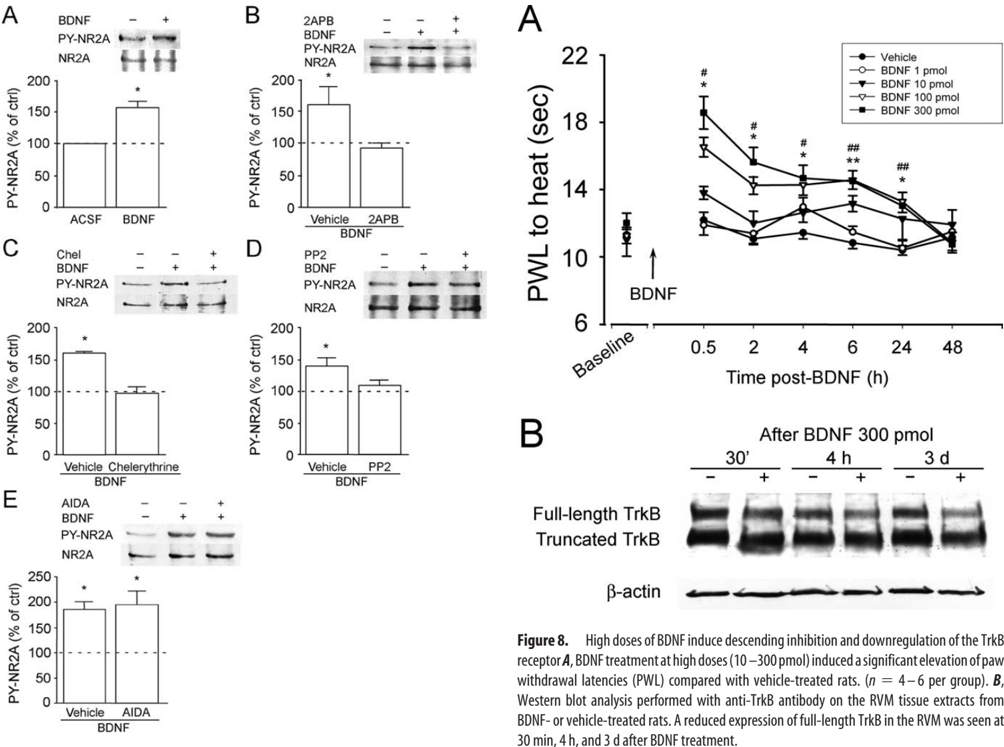
In the adult mammalian brain, brain-derived neurotrophic factor (BDNF) is critically involved in long-term synaptic plasticity. Here, we show that supraspinal BDNF-tyrosine kinase receptor B (TrkB) signaling contributes to pain facilitation. We show that BDNF-containing neurons in the periaqueductal gray (PAG), the central structure for pain modulation, project to and release BDNF in the rostral ventromedial medulla (RVM), a relay between the PAG and spinal cord. BDNF in PAG and TrkB phosphorylation in RVM neurons are upregulated after inflammation. Intra-RVM sequestration of BDNF and knockdown of TrkB by RNA interference attenuate inflammatory pain. Microinjection of BDNF (10-100 fmol) into the RVM facilitates nociception, which is dependent on NMDA receptors (NMDARs). In vitro studies with RVM slices show that BDNF induces tyrosine phosphorylation of the NMDAR NR2A subunit in RVM via a signal transduction cascade involving IP(3), PKC, and Src. The supraspinal BDNF-TrkB signaling represents a previously unknown mechanism underlying the development of persistent pain. Our findings also caution that application of BDNF for recovery from CNS disorders could lead to undesirable central pain.
Overview
The claims and statistics of this paper haven’t been checked yet.
Run the check — free, no account needed. It reads the open-access text and checks the sources it cites.
Integrity signals
Registry
Cites
Statistics
Figures
Verification
Claims the paper makes
The claims and statistics of this paper haven’t been checked yet.
Run the check — free, no account needed. It reads the open-access text and checks the sources it cites.
Claims other papers make about this one
Each is checked against this paper’s own text: does it say what the citing paper says it does?
In the citing paper
“BDNF enhances the pain signal transmission in the descending control system (170).”
From Nociplastic pain: the prominent role of non-neuronal cells in central and peripheral sensitization (2026) · cites this paper as [170]
Self-check
Percentages, sums and reported differences re-computed from the paper’s own numbers.
The self-check needs the paper’s full text.
Citations
Cites
The Rat Brain in Stereotaxic Coordinates
Paxinos, G., & Watson, C. (1983) · Elsevier eBooks · doi:10.1016/c2009-0-63235-9 · Cited by 28,585
Molecular Mechanisms of Depression: Perspectives on New Treatment Strategies
Lang, U. E., & Borgwardt, S. (2013) · Cellular Physiology and Biochemistry · doi:10.1159/000350094 · Cited by 8,526
A new and sensitive method for measuring thermal nociception in cutaneous hyperalgesia
Hargreaves, K., Dubner, R. A., Brown, F. J., Flores, C., & Joris, J. L. (1988) · Pain · doi:10.1016/0304-3959(88)90026-7 · Cited by 5,155
Self-citationTrk Receptors: Roles in Neuronal Signal Transduction
Huang, E. J., & Reichardt, L. F. (2003) · Annual Review of Biochemistry · doi:10.1146/annurev.biochem.72.121801.161629 · Cited by 2,537 · cited 1×
“The effects of BDNF are mediated through its binding to the tyrosine kinase receptor B (TrkB) and subsequent activation of downstream signaling pathways (Huang and Reichardt, 2003).”
BackgroundBonica, J. J., Melzack, R., & Wall, P. D. (1999) · Cited by 2,537
Figurov, A., Pozzo-Miller, L. D., Olafsson, P., Wang, T., & Lu, B. (1996) · Nature · doi:10.1038/381706a0 · Cited by 1,106
Conner, J. M., Lauterborn, J. C., Yan, Q., Gall, C. M., & Varon, S. (1997) · The Journal of Neuroscience · doi:10.1523/jneurosci.17-07-02295.1997 · Cited by 1,097
Chronic pain and medullary descending facilitation
Porreca, F. (2002) · Trends in Neurosciences · doi:10.1016/s0166-2236(02)02157-4 · Cited by 1,007
BDNF and Activity-Dependent Synaptic Modulation: Figure 1.
Lu, B. (2003) · Learning & Memory · doi:10.1101/lm.54603 · Cited by 945
Activation of p75NTR by proBDNF facilitates hippocampal long-term depression
Woo, N. H., Teng, H. K., Siao, C.-J., Chiaruttini, C., Pang, P. T., Milner, T. A., Hempstead, B. L., & Lu, B. (2005) · Nature Neuroscience · doi:10.1038/nn1510 · Cited by 815
Research works printed but not linked: 2
- 1999, Proc Natl Acad Sci USA, 69, 7687
- 10.1038/nn855 · DOI
Cited by
Sorted by citations
The mechanisms of manual therapy in the treatment of musculoskeletal pain: A comprehensive model
Bialosky, J. E., Bishop, M. D., Price, D. D., Robinson, M. E., & George, S. Z. (2008) · Manual Therapy · doi:10.1016/j.math.2008.09.001 · Cited by 1,146
Descending pain modulation and chronification of pain
Ossipov, M. H., Morimura, K., & Porreca, F. (2014) · Current Opinion in Supportive and Palliative Care · doi:10.1097/spc.0000000000000055 · Cited by 875
Central mechanisms of pathological pain
Kuner, R. (2010) · Nature Medicine · doi:10.1038/nm.2231 · Cited by 795
Chapman, C. R., & Vierck, C. J. (2017) · The Journal of Pain · doi:10.1016/j.jpain.2016.11.004 · Cited by 423
Neurobiology of depression, fibromyalgia and neuropathic pain
Maletic, V. (2009) · Frontiers in bioscience · doi:10.2741/3598 · Cited by 384
Metadata
- Authors
- Guo, W., Robbins, M. T., Wei, F., Zou, S., Dubner, R., & Ren, K.
- Affiliations
- University of Maryland, Baltimore (US)
- Corresponding author
- Ren, Ke
- Venue
- The Journal of Neuroscience
- Publisher
- Society for Neuroscience
- Published
- 2006-01-04
- Volume
- 26
- Issue
- 1
- Pages
- 126-137
- ISSN
- 0270-6474 (ISSN-L)
- 1529-2401
- PMC
- PMC6674294
- OpenAlex
- W2131110619
- Cited by
- 192
- References
- 52
- Citations by year
- 2026: 5 · 2025: 4 · 2024: 9 · 2023: 6 · 2022: 6 · 2021: 5 · 2020: 7 · 2019: 11 · 2018: 5 · 2017: 7 · 2016: 11 · 2015: 7 · 2014: 17 · 2013: 20 · 2012: 11
- FWCI
- 9.08
- Type
- journal article
- Language
- en
- Open access
- hybrid
- doi.org
- Licence
- Locations
- Journal of Neuroscience (publishedVersion, cc-by-nc-sa)
- PubMed Central (publishedVersion)
- PubMed (publishedVersion)
- Funders
- National Institutes of Health
- National Institute on Drug Abuse (DA10275, R01DA010275)
- National Institute of Dental and Craniofacial Research (DE 11964, R01DE011964)
- Topics
- Health Sciences › Medicine › Physiology (medical) › Pain Mechanisms and Treatments
- Health Sciences › Medicine › Anesthesiology and Pain Medicine › Pain Management and Treatment
- Life Sciences › Neuroscience › Cellular and Molecular Neuroscience › Nerve injury and regeneration
- Keywords
- brain-derived neurotrophic factor, TrkB receptor, descending facilitation, periaqueductal gray, rostral ventromedial medulla, inflammatory pain, NMDA receptor, NR2A subunit, chronic pain, central sensitization, IP3 signaling, protein kinase C, Src kinase, nociception, central pain
- MeSH terms
- Animals, Male, Medulla Oblongata, Pain, Pain Measurement, Pyramidal Tracts, Signal Transduction, Rats, Sprague-Dawley, Brain-Derived Neurotrophic Factor, Receptor, trkB, Rats
About these checks
Registry, retraction, Cites and statistics results are computed, not judged, with one exception: a printed reference that no index lists is read once by a model before it counts as a citation error. Claims are extracted by a model and kept only when their quote appears verbatim in the text; each cited source is then checked, with a model’s help, for whether it says what the claim relies on. Those verdicts can be wrong — read the claim’s quote and the cited source before relying on one.
Statistics and arithmetic are recomputed, not judged.
Confidence bands are shown only for fields calibrated on our annotated test set. None is calibrated yet, so no band is shown.
What counts as a claim ›How we measure confidence ›How we check this ›
Are you an author, or do you see a problem with this page? Request a review
