

CSF progranulin increases in the course of Alzheimer's disease and is associated with sTREM2, neurodegeneration and cognitive decline
Open accessThe DOI matches its Crossref record; 106 of the 106 references it cites were found in a registry or an index.
Abstract
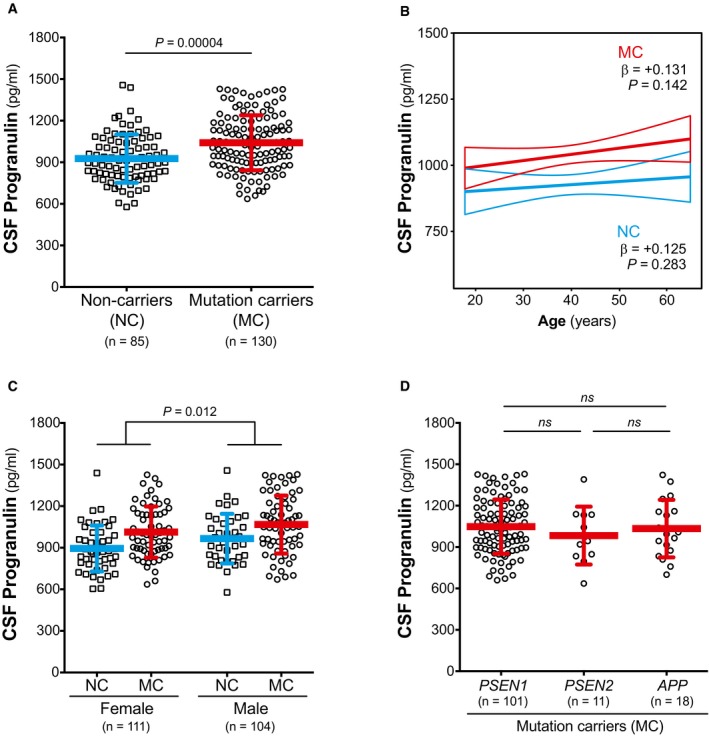
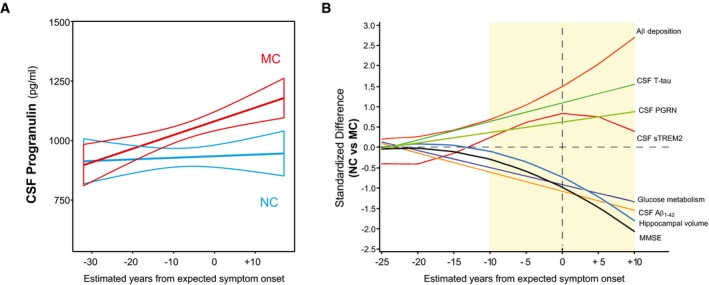
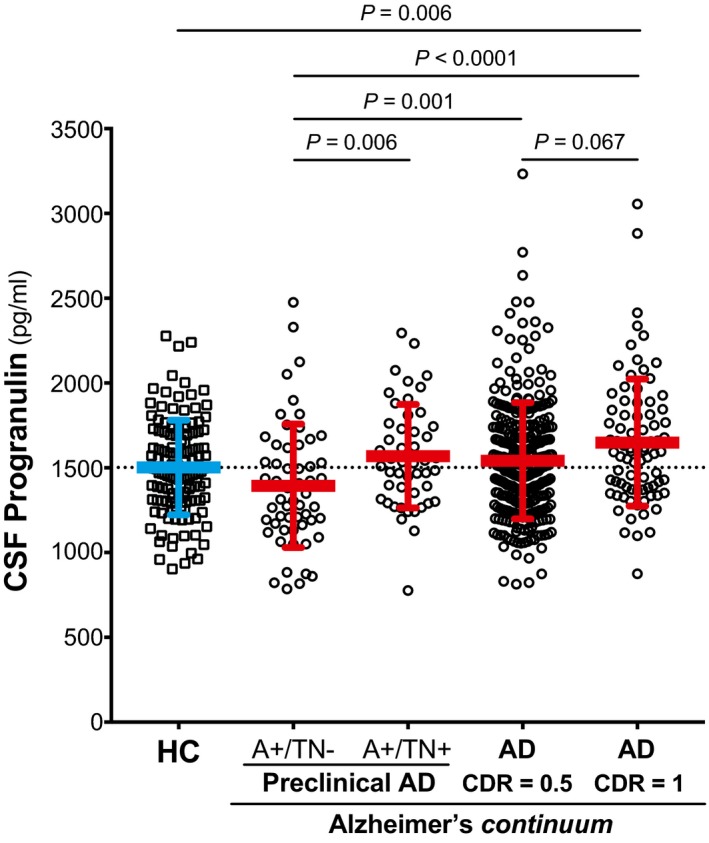
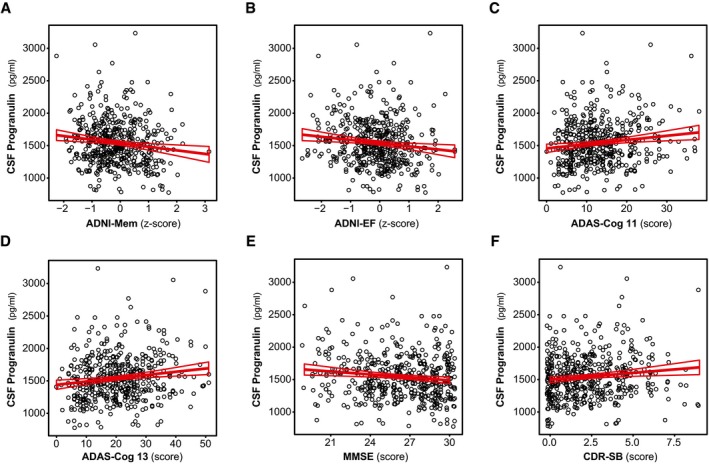
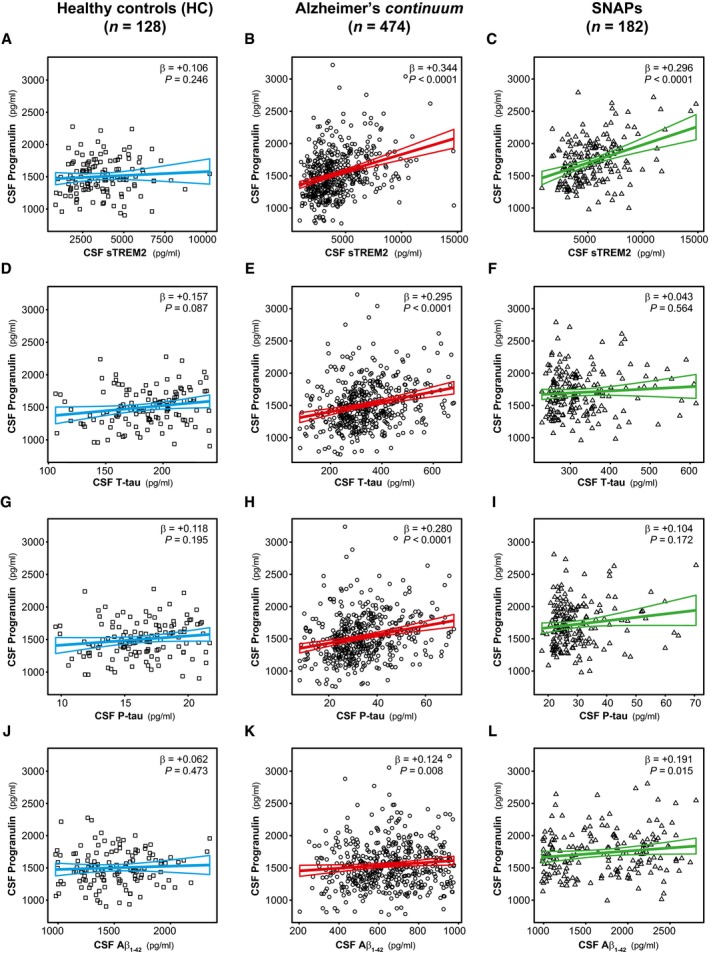
Progranulin (PGRN) is predominantly expressed by microglia in the brain, and genetic and experimental evidence suggests a critical role in Alzheimer's disease (AD). We asked whether PGRN expression is changed in a disease severity‐specific manner in AD. We measured PGRN in cerebrospinal fluid (CSF) in two of the best‐characterized AD patient cohorts, namely the Dominant Inherited Alzheimer's Disease Network (DIAN) and the Alzheimer's Disease Neuroimaging Initiative (ADNI). In carriers of AD causing dominant mutations, cross‐sectionally assessed CSF PGRN increased over the course of the disease and significantly differed from non‐carriers 10 years before the expected symptom onset. In late‐onset AD, higher CSF PGRN was associated with more advanced disease stages and cognitive impairment. Higher CSF PGRN was associated with higher CSF soluble TREM2 (triggering receptor expressed on myeloid cells 2) only when there was underlying pathology, but not in controls. In conclusion, we demonstrate that, although CSF PGRN is not a diagnostic biomarker for AD, it may together with sTREM2 reflect microglial activation during the disease. Neuroinflammation and microgliosis are key pathological features of Alzheimer's disease (AD). Cerebrospinal fluid (CSF) protein levels analysis in large AD patients' cohorts reveals that CSF levels of Progranulin (PGRN) together with soluble TREM2 may serve as a microglia activity marker in AD. Neuroinflammation and microgliosis are key pathological features of Alzheimer's disease (AD). Cerebrospinal fluid (CSF) protein levels analysis in large AD patients' cohorts reveals that CSF levels of Progranulin (PGRN) together with soluble TREM2 may serve as a microglia activity marker in AD.
Overview
The claims and statistics of this paper haven’t been checked yet.
Free: it reads the open-access text and checks the first 5 claims that cite a source we can check. Create a free account to check every claim.
Integrity signals
Registry
Cites
Statistics
Figures
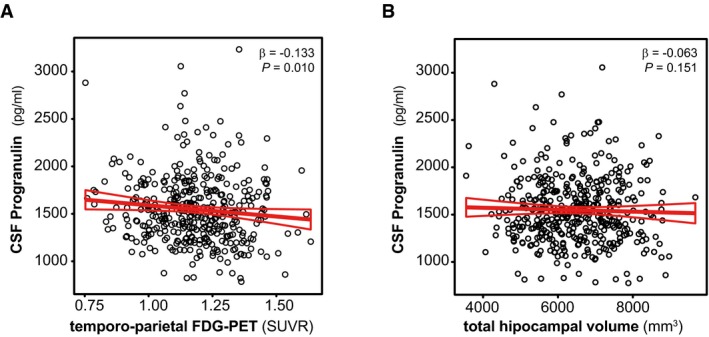
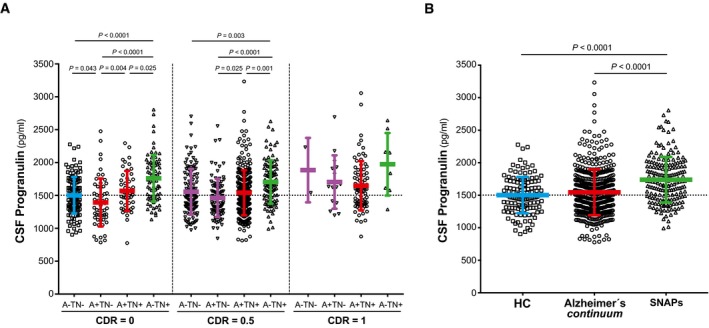
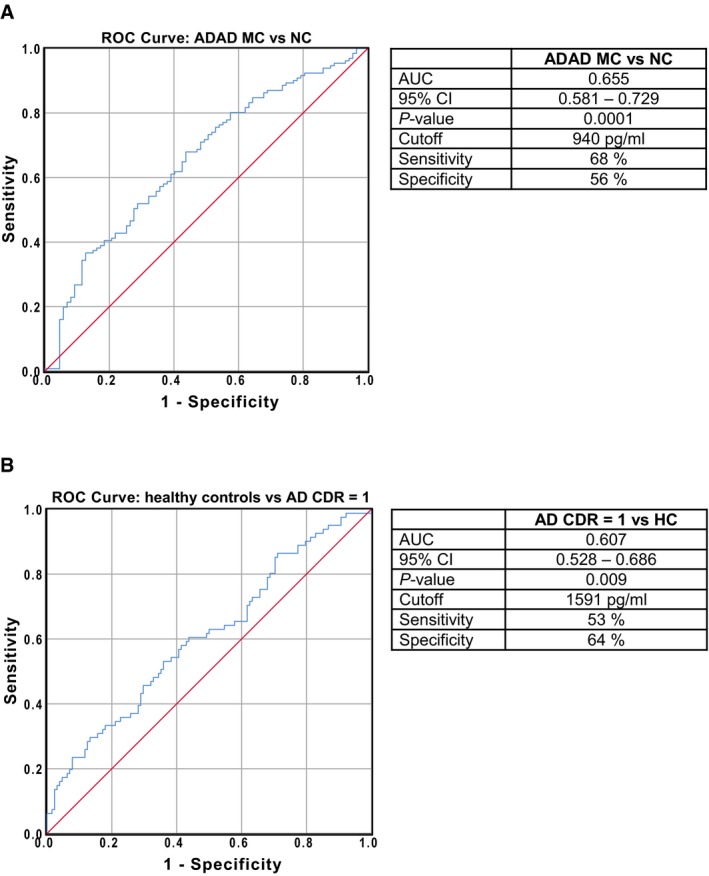
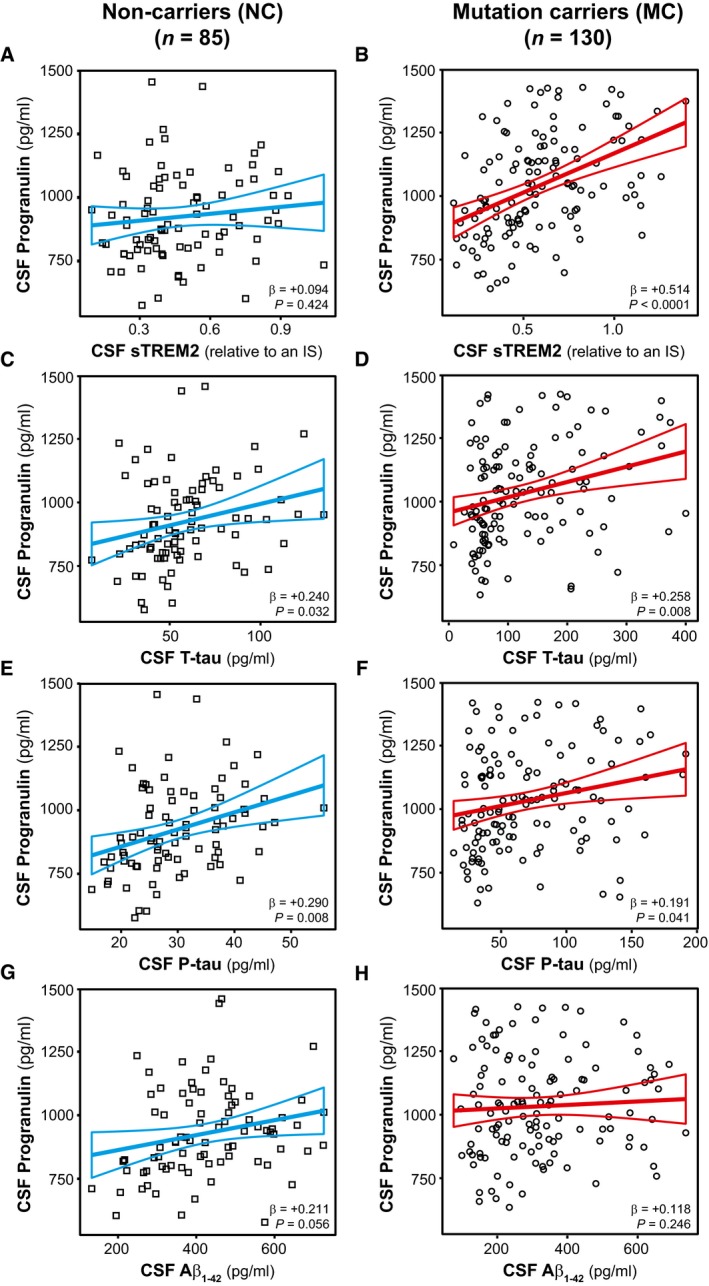
Verification
Claims the paper makes
The claims and statistics of this paper haven’t been checked yet.
Free: it reads the open-access text and checks the first 5 claims that cite a source we can check. Create a free account to check every claim.
Claims other papers make about this one
Each is checked against this paper’s own text: does it say what the citing paper says it does?
In the citing paper
“It has been observed that the CSF level of progranulin elevates as early as ten years before the presentation of symptoms in patients with familial or sporadic AD.544”
From Amyloid β-based therapy for Alzheimer’s disease: Challenges, successes and future (2023) · cites this paper as [544]
Self-check
Percentages, sums and reported differences re-computed from the paper’s own numbers.
The self-check needs the paper’s full text.
Citations
Cites
McKhann, G. M., Knopman, D. S., Chertkow, H., Hyman, B. T., Jack, C. R., Kawas, C. H., Klunk, W. E., Koroshetz, W. J., Manly, J. J., Mayeux, R., et al. (2011) · Alzheimer's & Dementia · doi:10.1016/j.jalz.2011.03.005 · Cited by 18,657 · cited 1×
“…as a combination of biomarkers and clinical symptoms similar to what was proposed by the previous 2011 NIAAA diagnostic criteria (Albert et al, 2011; McKhann et al, 2011; Sperling et al, 2011), and it was done in order to render the disease staging in late-onset AD more comparable to that in ADAD…”
ResultSelf-citationNIA‐AA Research Framework: Toward a biological definition of Alzheimer's disease
Jack, C. R., Bennett, D. A., Blennow, K., Carrillo, M. C., Dunn, B., Haeberlein, S. B., Holtzman, D. M., Jagust, W., Jessen, F., Karlawish, J., et al. (2018) · Alzheimer's & Dementia · doi:10.1016/j.jalz.2018.02.018 · Cited by 10,537
Albert, M. S., DeKosky, S. T., Dickson, D., Dubois, B., Feldman, H. H., Fox, N. C., Gamst, A., Holtzman, D. M., Jagust, W. J., Petersen, R. C., et al. (2011) · Alzheimer's & Dementia · doi:10.1016/j.jalz.2011.03.008 · Cited by 10,152 · cited 1×
“…continuum as a combination of biomarkers and clinical symptoms similar to what was proposed by the previous 2011 NIAAA diagnostic criteria (Albert et al, 2011; McKhann et al, 2011; Sperling et al, 2011), and it was done in order to render the disease staging in late-onset AD more…”
MethodThe Clinical Dementia Rating (CDR): Current version and scoring rules
Morris, J. C. (1993) · Neurology · doi:10.1212/wnl.43.11.2412-a · Cited by 9,882 · cited 5×
“Second, we classified the participants based on clinical symptoms based on the clinical dementia rating (CDR) global score (Morris, 1993) into cognitively unimpaired (CDR = 0), very mild dementia (CDR = 0.5) and mild dementia (CDR = 1).”
MethodInfluentialSelf-citationFischl, B., Salat, D. H., Busa, E., Albert, M., Dieterich, M., Haselgrove, C., van der Kouwe, A., Killiany, R., Kennedy, D., Klaveness, S., et al. (2002) · Neuron · doi:10.1016/s0896-6273(02)00569-x · Cited by 8,610
Sperling, R. A., Aisen, P. S., Beckett, L. A., Bennett, D. A., Craft, S., Fagan, A. M., Iwatsubo, T., Jack, C. R., Kaye, J., Montine, T. J., et al. (2011) · Alzheimer's & Dementia · doi:10.1016/j.jalz.2011.03.003 · Cited by 7,155 · cited 1×
“…of biomarkers and clinical symptoms similar to what was proposed by the previous 2011 NIAAA diagnostic criteria (Albert et al, 2011; McKhann et al, 2011; Sperling et al, 2011), and it was done in order to render the disease staging in late-onset AD more comparable to that in ADAD defined by EYO.”
ResultSelf-citationUbiquitinated TDP-43 in Frontotemporal Lobar Degeneration and Amyotrophic Lateral Sclerosis
Neumann, M., Sampathu, D. M., Kwong, L. K., Truax, A. C., Micsenyi, M. C., Chou, T. T., Bruce, J., Schuck, T., Grossman, M., Clark, C. M., et al. (2006) · Science · doi:10.1126/science.1134108 · Cited by 6,576 · cited 1×
“Haploinsufficiency of the gene encoding progranulin (PGRN) leads to frontotemporal lobar degeneration (FTLD) with TAR DNA binding protein 43 (TDP-43) deposition (FTLD-TDP) (Baker et al, 2006; Cruts et al, 2006; Neumann et al, 2006).”
BackgroundSelf-citationNeuroinflammation in Alzheimer's disease
Heneka, M. T., Carson, M. J., Khoury, J. E., Landreth, G. E., Brosseron, F., Feinstein, D. L., Jacobs, A. H., Wyss-Coray, T., Vitorica, J., Ransohoff, R. M., et al. (2015) · The Lancet Neurology · doi:10.1016/s1474-4422(15)70016-5 · Cited by 6,226 · cited 1×
“It is well established that activation of microglia occurs in AD (Lyman et al, 2014; Heneka et al, 2015) and, in fact, we and others have previously shown that CSF sTREM2 also increases throughout the evolution of the disease (Heslegrave et al, 2016; Piccio et al, 2016; Suárez-Calvet et al,…”
BackgroundA Unique Microglia Type Associated with Restricting Development of Alzheimer’s Disease
Keren-Shaul, H., Spinrad, A., Weiner, A., Matcovitch-Natan, O., Dvir-Szternfeld, R., Ulland, T. K., David, E., Baruch, K., Lara-Astaiso, D., Toth, B., et al. (2017) · Cell · doi:10.1016/j.cell.2017.05.018 · Cited by 5,493 · cited 1×
“This may indicate that these two proteins are released by microglia adopting a disease-associated signature (Keren-Shaul et al, 2017; Krasemann et al, 2017).”
BackgroundZhang, Y., Chen, K., Sloan, S. A., Bennett, M. L., Scholze, A. R., O'Keeffe, S., Phatnani, H. P., Guarnieri, P., Caneda, C., Ruderisch, N., et al. (2014) · The Journal of Neuroscience · doi:10.1523/jneurosci.1860-14.2014 · Cited by 4,875 · cited 1×
“Within the brain, PGRN is predominantly expressed by microglia (Zhang et al, 2014; Lui et al, 2016; Chang et al, 2017), but some expression is also observed in neurons.”
Background
Cited by
Scheltens, P., De Strooper, B., Kivipelto, M., Holstege, H., Chételat, G., Teunissen, C. E., Cummings, J., & van der Flier, W. M. (2021) · The Lancet · doi:10.1016/s0140-6736(20)32205-4 · Cited by 5,465
Amyloid β-based therapy for Alzheimer’s disease: Challenges, successes and future
Zhang, Y., Chen, H., Li, R., Sterling, K., & Song, W. (2023) · Signal Transduction and Targeted Therapy · doi:10.1038/s41392-023-01484-7 · Cited by 988
“It has been observed that the CSF level of progranulin elevates as early as ten years before the presentation of symptoms in patients with familial or sporadic AD.(544) Neurogranin is expressed in the cortex and hippocampus, the brain areas most affected by AD.”
BackgroundAdvances in the development of new biomarkers for Alzheimer’s disease
Klyucherev, T. O., Olszewski, P., Shalimova, A. A., Chubarev, V. N., Tarasov, V. V., Attwood, M. M., Syvänen, S., & Schiöth, H. B. (2022) · Translational Neurodegeneration · doi:10.1186/s40035-022-00296-z · Cited by 241
“The CSF level of progranulin (1082 pg/ml) increases as early as 10 years before the clinical presentation of the disease in patients with familial AD and late-onset sporadic AD [108].”
BackgroundAdvancing cell therapy for neurodegenerative diseases
Temple, S. (2023) · Cell Stem Cell · doi:10.1016/j.stem.2023.03.017 · Cited by 198
Late-onset vs nonmendelian early-onset Alzheimer disease: A distinction without a difference?
Reitz, C., Rogaeva, E., & Beecham, G. W. (2020) · Neurology Genetics · doi:10.1212/nxg.0000000000000512 · Cited by 168
“44 Studies in subjects with nmEOAD without AD family history have also shown more atrophy, 45 more prominent neocortical glucose hypometabolism, 46 and increased tau PET uptake 47,48 relative to LOAD.”
BackgroundCerebrospinal fluid proteomics define the natural history of autosomal dominant Alzheimer’s disease
Johnson, E. C. B., Bian, S., Haque, R. U., Carter, E. K., Watson, C. M., Gordon, B. A., Ping, L., Duong, D. M., Epstein, M. P., McDade, E., et al. (2023) · Nature Medicine · doi:10.1038/s41591-023-02476-4 · Cited by 170
Self-citationCerebrospinal Fluid Biomarkers of Alzheimer’s Disease: Current Evidence and Future Perspectives
McGrowder, D. A., Miller, F., Vaz, K., Nwokocha, C., Wilson-Clarke, C., Anderson-Cross, M., Brown, J., Anderson-Jackson, L., Williams, L., Latore, L., et al. (2021) · Brain Sciences · doi:10.3390/brainsci11020215 · Cited by 167
Fornari Laurindo, L., Aparecido Dias, J., Cressoni Araújo, A., Torres Pomini, K., Machado Galhardi, C., Rucco Penteado Detregiachi, C., Santos de Argollo Haber, L., Donizeti Roque, D., Dib Bechara, M., Vialogo Marques de Castro, M., et al. (2024) · Frontiers in Immunology · doi:10.3389/fimmu.2023.1305933 · Cited by 144
Soluble TREM2: Innocent bystander or active player in neurological diseases?
Filipello, F., Goldsbury, C., You, S. F., Locca, A., Karch, C. M., & Piccio, L. (2022) · Neurobiology of Disease · doi:10.1016/j.nbd.2022.105630 · Cited by 134
Self-citationCano, A., Turowski, P., Ettcheto, M., Duskey, J. T., Tosi, G., Sánchez-López, E., García, M. L., Camins, A., Souto, E. B., Ruiz, A., et al. (2021) · Journal of Nanobiotechnology · doi:10.1186/s12951-021-00864-x · Cited by 122
“However, although a cross-sectional study reported increased CSF progranulin levels in autosomal-dominant AD and late-onset AD, progranulin from CSF or blood is currently not validated as diagnostic markers [75, 76].”
BackgroundSynaptic Elimination in Neurological Disorders
Cardozo, P. L., de Lima, I. B. Q., Maciel, E. M. A., Silva, N. C., Dobransky, T., & Ribeiro, F. M. (2019) · Current Neuropharmacology · doi:10.2174/1570159x17666190603170511 · Cited by 115
The role of the immune system in Alzheimer’s disease
Wu, K., Zhang, Y.-R., Huang, Y., Dong, Q., Tan, L., & Yu, J. (2021) · Ageing Research Reviews · doi:10.1016/j.arr.2021.101409 · Cited by 127
New fluid biomarkers tracking non-amyloid-β and non-tau pathology in Alzheimer’s disease
Park, S. A., Han, S. M., & Kim, C. E. (2020) · Experimental & Molecular Medicine · doi:10.1038/s12276-020-0418-9 · Cited by 91
Li, Z., Farias, F. H. G., Dube, U., Del-Aguila, J. L., Mihindukulasuriya, K. A., Fernandez, M. V., Ibanez, L., Budde, J. P., Wang, F., Lake, A. M., et al. (2020) · Acta Neuropathologica · doi:10.1007/s00401-019-02066-0 · Cited by 85
Self-citationQu, Y., Ma, Y., Huang, Y., Ou, Y., Shen, X., Chen, S.-D., Dong, Q., Tan, L., & Yu, J. (2021) · Neuroscience & Biobehavioral Reviews · doi:10.1016/j.neubiorev.2021.07.007 · Cited by 94
Latest advances in cerebrospinal fluid and blood biomarkers of Alzheimer’s disease
Milà-Alomà, M., Suárez-Calvet, M., & Molinuevo, J. L. (2019) · Therapeutic Advances in Neurological Disorders · doi:10.1177/1756286419888819 · Cited by 78
Self-citationNoh, M., Kwon, H. S., Kwon, M., Nahm, M., Jin, H. K., Bae, J., & Kim, S. H. (2025) · Molecular Neurodegeneration · doi:10.1186/s13024-025-00867-4 · Cited by 98
“) [ 218 , 219 ] N f L * [ 220 ] T D P ‑ 43 p a t h o l o g y : H D G F L 2 [ 221 ] P G R N * [ 222 , 223 ] , C X 3 C L 1 * [ 224 ] , C H I 3 L 1 / Y K L ‑ 40 * [ 225 – 227 ] S y n a p s e l o ss m a r k e r s : S N A P ‑ 25 [ 228 ] , G A P ‑ 43 [ 229 ] , N g [ 230 – 232 ] G F A P [ 233 – 235 ] 2 .”
Microglial Progranulin: Involvement in Alzheimer’s Disease and Neurodegenerative Diseases
Mendsaikhan, A., Tooyama, I., & Walker, D. G. (2019) · Cells · doi:10.3390/cells8030230 · Cited by 72
“Furthermore, in late-onset AD cases, higher CSF PGRN levels were associated with more advanced disease stages and cognitive impairment, and once pathology had commenced correlated with CSF levels of soluble triggering receptor expressed on myeloid cells 2 (TREM2) [76].”
BackgroundUdeh-Momoh, C., & Watermeyer, T. (2021) · Ageing Research Reviews · doi:10.1016/j.arr.2021.101459 · Cited by 67
Brosseron, F., Maass, A., Kleineidam, L., Ravichandran, K. A., González, P. G., McManus, R. M., Ising, C., Santarelli, F., Kolbe, C.-C., Häsler, L. M., et al. (2022) · Neuron · doi:10.1016/j.neuron.2021.12.016 · Cited by 65
Self-citationSecreted Chaperones in Neurodegeneration
Chaplot, K., Jarvela, T. S., & Lindberg, I. (2020) · Frontiers in Aging Neuroscience · doi:10.3389/fnagi.2020.00268 · Cited by 66
“neurodegeneration and neurofibrillary tangle formation occur (Suárez-Calvet et al., 2018).”
BackgroundA data-driven study of Alzheimer's disease related amyloid and tau pathology progression
Aksman, L., Oxtoby, N. P., Scelsi, M. A., Wijeratne, P. A., Young, A. L., Alves, I. L., Collij, L. E., Vogel, J. W., Barkhof, F., Alexander, D. C., et al. (2023) · Brain · doi:10.1093/brain/awad232 · Cited by 77
Mendsaikhan, A., Tooyama, I., Bellier, J.-P., Serrano, G. E., Sue, L. I., Lue, L.-F., Beach, T. G., & Walker, D. G. (2019) · Acta Neuropathologica Communications · doi:10.1186/s40478-019-0862-8 · Cited by 57
“AD subjects have shown changes with disease progression but limited diagnostic utility [28, 30].”
BackgroundThe role of microglia in Alzheimer's disease and progress of treatment
Guan, Y., Zhang, L., Wang, S., Deng, Y., Zhou, H., Chen, D., & Zhang, L. (2022) · Ibrain · doi:10.1002/ibra.12023 · Cited by 59
“Although CSF PGRN is not a diagnostic biomarker for AD, it may reflect the activation of microglia during the disease together with sTREM2.(15) In addition, the presence of some related targets in cells can also mediate the activation of microglia, and the specific upregulation of CD200 inhibits the activation and sec…”
Knapskog, A.-B., Henjum, K., Idland, A.-V., Eldholm, R. S., Persson, K., Saltvedt, I., Watne, L. O., Engedal, K., & Nilsson, L. N. G. (2020) · Scientific Reports · doi:10.1038/s41598-020-72878-8 · Cited by 49
Tweaking Progranulin Expression: Therapeutic Avenues and Opportunities
Terryn, J., Verfaillie, C. M., & Damme, P. V. (2021) · Frontiers in Molecular Neuroscience · doi:10.3389/fnmol.2021.713031 · Cited by 49
“In Alzheimer’s disease (AD), GRN cerebrospinal fluid (CSF) levels rise with disease progression and correlate with cognitive impairment and with the expression of the microglia derived soluble TREM2 (triggering receptor expressed on myeloid cells 2) (Suárez-Calvet et al., 2018).”
BackgroundHarnessing Immunoproteostasis to Treat Neurodegenerative Disorders
Golde, T. E. (2019) · Neuron · doi:10.1016/j.neuron.2019.02.027 · Cited by 45
Raikwar, S. P., Kikkeri, N. S., Sakuru, R. C., Saeed, D., Zahoor, H., Premkumar, K., Mentor, S., Thangavel, R., Dubova, I., Ahmed, M. E., et al. (2019) · Journal of Neuroimmune Pharmacology · doi:10.1007/s11481-019-09849-y · Cited by 54
Zeng, S., Qing, Q., Xu, W., Yu, S., Zheng, M., Tan, H., Peng, J., & Huang, J. Y. (2024) · Frontiers in Medicine · doi:10.3389/fmed.2024.1365524 · Cited by 65
The microglial lysosomal system in Alzheimer’s disease: Guardian against proteinopathy
Van Acker, Z. P., Perdok, A., Bretou, M., & Annaert, W. (2021) · Ageing Research Reviews · doi:10.1016/j.arr.2021.101444 · Cited by 45
BACE1 Inhibitors for Alzheimer’s Disease: Current Challenges and Future Perspectives
Coimbra, J. R. M., Resende, R., Custódio, J. B. A., Salvador, J. A. R., & Santos, A. E. (2024) · Journal of Alzheimer s Disease · doi:10.3233/jad-240146 · Cited by 53
Xu, W., Han, S., Zhang, C. M., Li, J., Wang, Y., Tan, C., Li, H.-Q., Dong, Q., Mei, C., Tan, L., et al. (2020) · Science Advances · doi:10.1126/sciadv.abb3063 · Cited by 42
Progranulin in neurodegenerative dementia
Wang, X., Zeng, P. H., Fang, Y., Zhang, T., & Tian, Q. (2021) · Journal of Neurochemistry · doi:10.1111/jnc.15378 · Cited by 40
“Secretory leukocyte protease inhibitor (SLPI), primarily produced by astrocytes in the brain (Suh et al., 2012), is reported to bind to PGRN linker sequences directly, and block proteolysis by elastase (Zhu et al., 2002).”
BackgroundProgranulin Regulates Inflammation and Tumor
Liu, C., Li, J., Shi, W., Zhang, L., Liu, S., Lian, Y., Liang, S., & Wang, H. (2019) · Anti-Inflammatory & Anti-Allergy Agents in Medicinal Chemistry · doi:10.2174/1871523018666190724124214 · Cited by 38
Kucikova, L., Goerdten, J., Dounavi, M.-E., Mak, E., Su, L., Waldman, A. D., Danso, S., Muniz-Terrera, G., & Ritchie, C. W. (2021) · Neuroscience & Biobehavioral Reviews · doi:10.1016/j.neubiorev.2021.07.024 · Cited by 36
Batzu, L., Westman, E., & Pereira, J. B. (2019) · Neurobiology of Aging · doi:10.1016/j.neurobiolaging.2019.12.012 · Cited by 32
Gillett, D. A., Wallings, R. L., Huarte, O. U., & Tansey, M. G. (2023) · Journal of Neuroinflammation · doi:10.1186/s12974-023-02965-w · Cited by 34
“Finally, a recent paper suggested that CSF levels of PGRN may represent a marker of AD disease progression rather than a diagnostic marker for AD [174].”
BackgroundMicroglial dysfunction in Alzheimer's disease: Mechanisms, emerging therapies, and future directions
Azmal, M., Paul, J. K., Prima, F. S., Haque, A. N. M. S. N. B., Meem, M., & Ghosh, A. (2025) · Experimental Neurology · doi:10.1016/j.expneurol.2025.115374 · Cited by 36
Progranulin mutations in clinical and neuropathological Alzheimer's disease
Vardarajan, B. N., Reyes‐Dumeyer, D., Piriz, A. L., Lantigua, R. A., Medrano, M., Rivera, D., Jiménez‐Velázquez, I. Z., Martin, E., Pericak‐Vance, M. A., Bush, W., et al. (2022) · Alzheimer's & Dementia · doi:10.1002/alz.12567 · Cited by 27
“rylated tau (PHFtau) tangle density across eight brain regions; (6) area occupied by Aβ across eight brain regions; (7) hippocampal sclerosis (present/absent); (8) TPD-43 inclusions (present/absent); (9) synaptic measure across three cortical regions (hippocampus, midfrontal cortex, and inferior temporal); and (10) pr…”
BackgroundWang, Z., Ma, Y., Sun, Y., Tan, L., Wang, H.-F., Yu, J., & Initiative, A. D. N. (2022) · Journal of Neuroinflammation · doi:10.1186/s12974-022-02679-5 · Cited by 29
“CSF sTREM2 levels were measured by the MSD platform-based assay, and previous publication reported and validated this detailed method [28].”
MethodImmune dysfunction in Alzheimer disease
Butovsky, O., Rosenzweig, N., Kleemann, K. L., Jorfi, M., Kuchroo, V. K., Tanzi, R. E., & Weiner, H. L. (2025) · Nature reviews. Neuroscience · doi:10.1038/s41583-025-00997-0 · Cited by 48
Weber, G. E., Koenig, K. A., Khrestian, M., Shao, Y., Tuason, E. D., Gramm, M., Lal, D., Leverenz, J. B., & Bekris, L. M. (2020) · The Journal of Immunology · doi:10.4049/jimmunol.1901166 · Cited by 26
Association study of serum soluble TREM2 with vascular dementia in Chinese Han population
Wang, Q., Xu, Y., Qi, C., Liu, A., & Zhao, Y. (2019) · International Journal of Neuroscience · doi:10.1080/00207454.2019.1702548 · Cited by 29
“In addition, a multicenter study indicated that sTREM2 together with progranulin may reflect microglial activation during the pathological process of AD [26].”
BackgroundJia, L., Chen, Y., Li, H., Zhao, K., Ge, S., Wang, C., Zhao, J., Li, F., Zhang, L., & Yao, A. (2025) · Acta Neuropathologica Communications · doi:10.1186/s40478-025-02203-9 · Cited by 29
“Mutations in the Family With Sequence Similarity 171 Member A2 ( FAM171A2 ) gene disrupt the stability of progranulin (PGRN) in CSF, thereby contributing to neurodegenerative pathogenesis [34, 35].”
Progranulin deficiency confers resistance to autoimmune encephalomyelitis in mice
Schmitz, K., Wilken‐Schmitz, A., Vasić, V., Brunkhorst, R., Schmidt, M. H. H., & Tegeder, I. (2019) · Cellular and Molecular Immunology · doi:10.1038/s41423-019-0274-5 · Cited by 24
Wittrahm, R., Takalo, M., Kuulasmaa, T., Mäkinen, P. M., Mäkinen, P., Končarević, S., Fartzdinov, V., Selzer, S., Kokkola, T., Antikainen, L., et al. (2023) · Neurobiology of Disease · doi:10.1016/j.nbd.2023.106140 · Cited by 22
“Progranulin (GRN) expression is increased in activated microglia and higher progranulin levels in CSF have been associated with advanced stages of AD (68,69).”
Longobardi, A., Nicsanu, R., Bellini, S., Squitti, R., Catania, M., Tiraboschi, P., Saraceno, C., Ferrari, C., Zanardini, R., Binetti, G. G., et al. (2022) · Cells · doi:10.3390/cells11030462 · Cited by 24
“Of note, PGRN CSF concentration has been shown to be increased with microglia activation in AD [53,54] and in the progression of the disease [55].”
BackgroundChen, Y.-H., Lin, R.-R., Huang, H.-F., Xue, Y.-Y., & Tao, Q.-Q. (2022) · Frontiers in Aging Neuroscience · doi:10.3389/fnagi.2022.848180 · Cited by 22
Swift, I. J., Rademakers, R., Finch, N. A., Baker, M. C., Ghidoni, R., Benussi, L., Binetti, G. G., Rossi, G., Synofzik, M., Wilke, C., et al. (2024) · Alzheimer s Research & Therapy · doi:10.1186/s13195-024-01420-z · Cited by 24
Zhou, X., Kukar, T. L., & Rademakers, R. (2021) · Advances in experimental medicine and biology · doi:10.1007/978-3-030-51140-1_14 · Cited by 25
Promising protein biomarkers in the early diagnosis of Alzheimer’s disease
Sharma, L. K., Sharma, A., Kumar, D., Asthana, M. K., Lalhlenmawia, H., Kumar, A., Bhattacharyya, S., & Kumar, D. (2022) · Metabolic Brain Disease · doi:10.1007/s11011-021-00847-9 · Cited by 27
Progranulin haploinsufficiency reduces amyloid beta deposition in Alzheimer’s disease model mice
Hosokawa, M., Tanaka, Y., Arai, T., Kondo, H., Akiyama, H., & Hasegawa, M. (2017) · EXPERIMENTAL ANIMALS · doi:10.1538/expanim.17-0060 · Cited by 23
Nordengen, K., Kirsebom, B., Richter, G., Pålhaugen, L., Gísladóttir, B., Siafarikas, N., Nakling, A. E., Rongve, A., Bråthen, G., Grøntvedt, G. R., et al. (2023) · Journal of Neuroinflammation · doi:10.1186/s12974-023-02973-w · Cited by 22
Whole Blood Expression Pattern of Inflammation and Redox Genes in Mild Alzheimer’s Disease
Milanesi, E., Dobre, M., Cucos, C. A., Rojo, A. I., Jiménez-Villegas, J., Capetillo-Zarate, E., Matute, C., Piñol-Ripoll, G., Manda, G., & Cuadrado, A. (2021) · Journal of Inflammation Research · doi:10.2147/jir.s334337 · Cited by 21
Microglia Biomarkers in Alzheimer’s Disease
Zhang, P., Hu, H., Tan, L., & Yu, J. (2021) · Molecular Neurobiology · doi:10.1007/s12035-021-02348-3 · Cited by 19
“Importantly, GPNMB was elevated in brain samples and CSF of LOAD patients compared to normal controls, and soluble Aβ had a direct effect on GPNMB expression in microglia [66].”
BackgroundInfluentialAdvances in Genetic and Molecular Understanding of Alzheimer’s Disease
Ibáñez, L., Cruchaga, C., & Fernández, M. V. (2021) · Genes · doi:10.3390/genes12081247 · Cited by 22
Self-citationGuo, F., Sheng, Z.-H., Fu, Y., Wang, Z., Xue, R., Tan, L., Tan, M., & Wang, Z.-T. (2025) · Translational Psychiatry · doi:10.1038/s41398-025-03458-5 · Cited by 25
“CSF sTREM2 levels were determined using an assay based on the MSD platform, with the method having been previously reported and validated in earlier publications [30].”
From Amyloid to Synaptic Dysfunction: Biomarker-Driven Insights into Alzheimer’s Disease
Agnello, L., Gambino, C. M., Ciaccio, A. M., Cacciabaudo, F., Massa, D., Masucci, A., Tamburello, M., Vassallo, R., Midiri, M., Scazzone, C., et al. (2025) · Current Issues in Molecular Biology · doi:10.3390/cimb47080580 · Cited by 27
“Longitudinal studies have shown that CSF-PGRN levels increase as AD progresses, correlating with neurodegenerative markers such as t-Tau, p-Tau181P, and cognitive decline, although their role as biomarkers remains debated [101,102].”
Höhn, L., Hußler, W., Richter, A., Smalla, K., Birkl-Toeglhofer, A. M., Birkl, C. R., Vielhaber, S., Leber, S. L., Gundelfinger, E. D., Haybaeck, J., et al. (2023) · International Journal of Molecular Sciences · doi:10.3390/ijms24065532 · Cited by 20
“On the other hand, progranulin as indicator for microglial activ ti [20] revealed positiv correlations with brevican and its cleaved fragment in our sample.”
BackgroundMicroglial Reactivity Correlates with Presynaptic Loss Independent of β‐Amyloid and Tau
Lan, G., Chen, X., Yang, J., Sun, P., Cai, Y. Q., Li, A., Zhu, Y., Liu, Z., Ma, S., Guo, T., et al. (2024) · Annals of Neurology · doi:10.1002/ana.26885 · Cited by 20
“13 It may be explained by the formation of A β plaques sequestering soluble A β oligomers, 39 thereby limiting their potential to induce microglial reactivity.”
InfluentialWhole Blood Expression Pattern of Inflammation and Redox Genes in Mild Alzheimer’s Disease
Milanesi, E., Dobre, M., Cucoș, C. A., Rojo, A. I., Jiménez-Villegas, J., Capetillo‐Zarate, E., Matute, C., Piñol-Ripoll, G., Manda, G., & Cuadrado, A. (2021) · Dove Medical Press (Taylor and Francis Group) · Cited by 17
Torso, M., Ridgway, G. R., Hardingham, I., Schwarz, A. J., & Chance, S. A. (2022) · The Journal of Prevention of Alzheimer s Disease · doi:10.14283/jpad.2022.59 · Cited by 19
Xu, W., Initiative, A. D. N., Sun, F.-R., Tan, C., & Tan, L. (2020) · Journal of Alzheimer s Disease · doi:10.3233/jad-200524 · Cited by 17
Associations of plasma neurofilament light chain and progranulin with frailty in older adults
Lu, W., Giudici, K. V., Guyonnet, S., Aggarwal, G., Nguyen, A. D., Morley, J. E., Vellas, B. J., Barreto, P. D. S., & MAPT/DSA Group (2021) · Journal of the American Geriatrics Society · doi:10.1111/jgs.17604 · Cited by 15
“Regarding neurodegeneration, both elevated PGRN expression (induced by microglial activation(27)) and loss of PGRN (resulting in lysosomal and autography dysfunction(28)) have been observed in neurodegenerative diseases.(10,29) As a result, whether plasma PGRN levels could serve as a biomarker of frailty requires more…”
BackgroundHigher plasma soluble TREM2 correlates with reduced cerebral tau accumulation in Alzheimer’s disease
Lan, G., Li, A., González‐Ortiz, F., Lv, J., Ran, W., Cai, Y. Q., Sun, P., Liu, L., Yang, J., Zhang, L., et al. (2025) · Molecular Psychiatry · doi:10.1038/s41380-025-02976-4 · Cited by 18
“Plasma sTREM2 concentrations were determined using an MSD platform-based electro-chemiluminescence assay developed by the Haass group [27, 28].”
Sheng, Z.-H., Wang, L., Chen, M., Zhong, F., Wu, S., Liang, S., Song, J., Chen, L., Chen, Y., Chen, S., et al. (2025) · Alzheimer s Research & Therapy · doi:10.1186/s13195-024-01665-8 · Cited by 16
Plasma N‐terminal tau fragment is an amyloid‐dependent biomarker in Alzheimer's disease
Lan, G., Zhang, L., Li, A., Ran, W., Lv, J., González‐Ortiz, F., Cai, Y. Q., Sun, P., Liu, L., Yang, J., et al. (2025) · Alzheimer s & Dementia · doi:10.1002/alz.14550 · Cited by 12
Biological mechanisms of resilience to tau pathology in Alzheimer’s disease
Svenningsson, A. L., Bocancea, D. I., Stomrud, E., van Loenhoud, A. C., Barkhof, F., Mattsson, N., Palmqvist, S., Hansson, O., & Ossenkoppele, R. (2024) · Alzheimer s Research & Therapy · doi:10.1186/s13195-024-01591-9 · Cited by 15
“We used glial fibrillary acidic protein (GFAP) [35, 36], triggering receptor expressed on myeloid cells 2 (TREM2) [37, 38], progranulin (GRN) [39], intercellular adhesion molecule 1 (ICAM-1) [40], interleukin 15 (IL-15) [40], and chitinase-3-like protein 1 (YKL-40) [40] as neuroinflammatory markers…”
Charting the Next Road Map for CSF Biomarkers in Alzheimer's Disease and Related Dementias
Hu, W. T., Nayyar, A., & Kaluzová, M. (2023) · Neurotherapeutics · doi:10.1007/s13311-023-01370-8 · Cited by 11
Neuroinflammation modulates the association of PGRN with cerebral amyloid-β burden
Xu, W., Tan, C., Cao, X., & Tan, L. (2021) · Neurobiology of Aging · doi:10.1016/j.neurobiolaging.2021.02.016 · Cited by 11
Wang, B., Sun, X., Wang, J., Deng, X., Lin, Y., Liu, F., Dong, R., Xu, L., & Bi, Y. (2022) · Frontiers in Aging Neuroscience · doi:10.3389/fnagi.2021.772795 · Cited by 11
“Some studies have found that PGRN protein is closely related to changes in cognitive function (Suárez-Calvet et al., 2018).”
Background15 years of longitudinal genetic, clinical, cognitive, imaging, and biochemical measures in DIAN
Daniels, A. J., McDade, E., Llibre‐Guerra, J. J., Xiong, C., Perrin, R. J., Ibáñez, L., Supnet‐Bell, C., Cruchaga, C., Goate, A., Renton, A. E., et al. (2026) · npj Dementia · doi:10.1038/s44400-025-00047-7 · Cited by 13
Self-citationWu, C., Initiative, A. D. N., Ma, Y., Hu, H., Zhao, B. T., & Tan, L. (2023) · Journal of Alzheimer s Disease · doi:10.3233/jad-220731 · Cited by 9
PGRN as an emerging regulator of lipid metabolism in neurodegenerative diseases
Shi, Y., Hou, W., Li, B., & Zhu, C. (2025) · Communications Biology · doi:10.1038/s42003-025-08272-9 · Cited by 10
“…association with soluble triggering receptor expressed on myeloid cells 2 (sTREM2), with both biomarkers correlating with more advanced disease stages and greater cognitive impairment 163 , suggesting coordinated involvement of neuroin fl ammation and lysosomal dysfunction in disease progression.”
Guo, Y., Initiative, A. D. N., Sun, Y., Li, M., Qi, W.-Y., Tan, L., & Tan, M. (2023) · Journal of Alzheimer s Disease · doi:10.3233/jad-230918 · Cited by 9
Sexual dimorphisms in innate immune activation markers in predementia Alzheimer’s disease
Knudtzon, S. L., Nordengen, K., Pålhaugen, L., Gísladóttir, B., Jarholm, J. A., Bråthen, G., Skogseth, R. E., Waterloo, K. K., Selnes, P., Fladby, T., et al. (2025) · Brain Communications · doi:10.1093/braincomms/fcaf161 · Cited by 8
“37 In all MSD analyses, the samples were analyzed in duplicate and reanalyzed if relative deviations (RDs) exceeded 20%.”
Huang, L., Tan, C., Xu, W., Tan, L., Initiative, A. D. N., Weiner, M. W., Aisen, P. S. S., Petersen, R. C., Jack, C. R., Jagust, W., et al. (2025) · Translational Psychiatry · doi:10.1038/s41398-025-03457-6 · Cited by 8
Self-citationImproving Regression Analysis with Imputation in a Longitudinal Study of Alzheimer’s Disease
Chandrasekaran, G., Xie, S. X., & Initiative, A. D. N. (2024) · Journal of Alzheimer s Disease · doi:10.3233/jad-231047 · Cited by 8
“Studyprotocolsdescribefollow-upsevery6months fromtheinitialvisituntilmonth24.”
Progranulin and neuropathological features of Alzheimer’s disease: longitudinal study
Nabizadeh, F., Zafari, R., & Initiative, A. D. N. (2024) · Aging Clinical and Experimental Research · doi:10.1007/s40520-024-02715-9 · Cited by 6
Tsantzali, I., Boufidou, F., Sideri, E., Mavromatos, A., Papaioannou, M. G., Foska, A., Tollos, I., Paraskevas, S. G., Bonakis, A., Voumvourakis, K. I., et al. (2021) · Biomedicines · doi:10.3390/biomedicines9101376 · Cited by 6
Liu, Y., Initiative, A. D. N., Wang, X.-J., Tan, L., Tan, C., & Xu, W. (2023) · Journal of Alzheimer s Disease · doi:10.3233/jad-230516 · Cited by 6
Guo, F., Tan, M., Hu, H., Ou, Y., Zhang, M., Sheng, Z.-H., Chi, H., Tan, L., & Initiative, A. D. N. (2024) · Journal of Alzheimer s Disease · doi:10.3233/jad-240372 · Cited by 4
“30”
Budda, B., Mitra, A., Park, L., Long, H., Kurnellas, M., Bien‐Ly, N., Estacio, W. F., Burgess, B., Chao, G., Schwabe, T., et al. (2025) · Alzheimer s Research & Therapy · doi:10.1186/s13195-025-01817-4 · Cited by 8
“…cerebro-spinal fluid (CSF) PGRN levels have been observed in neurodegenerative conditions such as AD, with reduced levels during symptom onset and elevated levels throughout disease progression, potentially resulting from an insufficient microglial response to amyloid deposition and pathology [58].”
Cao, T. H. M., Le, A. P. H., Tran, T. T., Huynh, V. K., Pham, B. H., Le, T., Nguyen, Q. L., Tran, T. C., Tong, T. M., Than, T. H. N., et al. (2023) · Frontiers in Molecular Neuroscience · doi:10.3389/fnmol.2023.1308610 · Cited by 3
Tavares-Júnior, J. W. L., Ciurleo, G. C. V., Feitosa, E. D. A. A. F., Oriá, R. B., & Braga‐Neto, P. (2024) · Journal of Alzheimer s Disease · doi:10.3233/jad-231368 · Cited by 3
Wu, H.-S., Li, L., Sun, Q.-Q., Tan, C.-C., Tan, L., & Xu, W. (2024) · The Journal of Prevention of Alzheimer s Disease · doi:10.14283/jpad.2024.82 · Cited by 2
“The detailed procedures for measuring the CSF Aβ1-42, t-tau, p-tau181 sTREM2 and PGRN have been described as previous (16, 22).”
InfluentialQian, S., Zheng, Y., Jiang, T., Hou, J., Cao, R., Cai, J., Ma, E., Wang, W., Song, W., & Xie, C. (2024) · The Journals of Gerontology Series A · doi:10.1093/gerona/glae185 · Cited by 2
Sleep Characteristics and Cerebrospinal Fluid Progranulin in Older Adults: The CABLE Study
Wang, M., Sun, F.-R., Bi, Y., Ma, Y., Yin, J., Shen, X., Wang, X., Tan, L., & Yu, J. (2021) · Neurotoxicity Research · doi:10.1007/s12640-020-00326-6 · Cited by 2
“Today, large amounts of researches are focusing on the protect role of progranulin (PGRN) in neurodegeneration diseases (Galimberti et al. 2018; Mendsaikhan et al. 2019; Suarez-Calvet et al. 2018; Van Kampen 2018).”
BackgroundInfluentialBiomarkers for Alzheimer's Disease: Early Diagnosis
Panwar, D., Sharma, P., Sharma, S., Malik, M., & Kaur, J. (2024) · Advances in bioinformatics and biomedical engineering book series · doi:10.4018/979-8-3693-6442-0.ch003 · Cited by 1
Li, Y., Xu, X., Tang, L., & Initiative, O. B. O. T. A. D. N. (2025) · Frontiers in Neurology · doi:10.3389/fneur.2025.1629389 · Cited by 2
Genetic evidence supports therapeutic modulation of progranulin levels in Alzheimer’s Disease
Robins, C., Eicher, J. D., Liu, J., Lo, Y., Richardson, T. G., Western, D., Davitte, J., Cruchaga, C., Initiative, A. D. N., Kumar, U., et al. (2026) · Molecular Neurodegeneration Advances · doi:10.1186/s44477-025-00011-y · Cited by 2
“While there is a correlation between PGRN levels in CSF and progression of AD [52], CSF levels may not truly represent the local brain parenchymal levels of PGRN.”
InfluentialSelf-citationGuo, H.-H., Su, D., Song, B. K., Geng, Z., Wang, L., Wang, W., Hu, W., Li, X., Li, W., Zhang, G., et al. (2026) · Journal of Neuroinflammation · doi:10.1186/s12974-026-03758-7 · Cited by 2
Laadraoui, J., Kabdy, H., Azraida, H., Aimrane, A., & Smimih, K. (2023) · Advances in bioinformatics and biomedical engineering book series · doi:10.4018/978-1-6684-9675-6.ch015 · Cited by 1
Sun, Y., Liu, Y., Tan, C., Tan, L., & Xu, W. (2025) · Molecular Neurobiology · doi:10.1007/s12035-025-05154-3
“…our findings, a previous cross-sectional study which data from the Dominant Inherited Alzheimer’s Disease Network (DIAN) cohort reported that higher levels of CSF PGRN were associated with higher CSF P-tau 181 and T-tau at baseline [6], indicating a correlation between PGRN and neuronal injury.”
InfluentialFluid and Imaging Markers of Glial Reactivity
Suárez‐Calvet, M. (2025) · Springer eBooks · doi:10.1007/978-3-031-80849-4_6 · Cited by 1
Self-citationChen, M., Sheng, Z.-H., Wang, L., Zhang, P., Zhang, J., Wang, X., Duan, J., Yang, W., Initiative, A. D. N., Yu, W., et al. (2025) · Molecular Neurobiology · doi:10.1007/s12035-025-05580-3
Nordengen, K., Kirsebom, B.-E., Richter, G., Pålhaugen, L., Gísladóttir, B., Siafarikas, N., Nakling, A. E., Rongve, A., Bråthen, G., Grøntvedt, G. R., et al. (2024) · Figshare · doi:10.6084/m9.figshare.26653528
Nordengen, K., Kirsebom, B.-E., Richter, G., Pålhaugen, L., Gísladóttir, B., Siafarikas, N., Nakling, A. E., Rongve, A., Bråthen, G., Grøntvedt, G. R., et al. (2024) · Figshare · doi:10.6084/m9.figshare.26653531
Swift, I. J., Rademakers, R., Finch, N. A., Baker, M. C., Ghidoni, R., Benussi, L., Binetti, G. G., Rossi, G., Synofzik, M., Wilke, C., et al. (2024) · Figshare · doi:10.6084/m9.figshare.26699000
Wang, Z.-B., Ma, Y.-H., Sun, Y., Tan, L., Wang, H.-F., & Yu, J. (2024) · Figshare · doi:10.6084/m9.figshare.26558030
Metadata
- Authors
- Suárez‐Calvet, M., Capell, A., Araque Caballero, M. Á., Morenas‐Rodríguez, E., Fellerer, K., Franzmeier, N., Kleinberger, G., Eren, E., Deming, Y., Piccio, L., Karch, C. M., Cruchaga, C., Paumier, K., Bateman, R. J., Fagan, A. M., Morris, J. C., Levin, J., Danek, A., Jucker, M., Masters, C. L., Rossor, M. N., Ringman, J. M., Shaw, L. M., Trojanowski, J. Q., Weiner, M., Ewers, M., Haass, C., the Dominantly Inherited Alzheimer Network, & Initiative, T. A. D. N.
- Affiliations
- German Center for Neurodegenerative Diseases (DE)
- Ludwig-Maximilians-Universität München (DE)
- Universitat Autònoma de Barcelona (ES)
- Institut für Schlaganfall- und Demenzforschung (DE)
- Munich Cluster for Systems Neurology (DE)
- Dokuz Eylül University (TR)
- Washington University in St. Louis (US)
- The University of Melbourne (AU)
- UCL Queen Square Institute of Neurology (GB)
- University of Southern California (US)
- University of Pennsylvania (US)
- University of California, San Francisco (US)
- Corresponding author
- Suárez‐Calvet, Marc
- Haass, Christian
- ORCID
- Suárez‐Calvet, Marc
- Capell, Anja
- Morenas‐Rodríguez, Estrella
- Franzmeier, Nicolai
- Kleinberger, Gernot
- Eren, Erden
- Deming, Yuetiva
- Piccio, Laura
- Karch, Celeste M
- Cruchaga, Carlos
- Paumier, Katrina
- Bateman, Randall J
- Fagan, Anne M
- Morris, John C
- Levin, Johannes
- Danek, Adrian
- Jucker, Mathias
- Masters, Colin L
- Rossor, Martin N
- Ringman, John M
- Shaw, Leslie M
- Trojanowski, John Q
- Weiner, Michael
- Ewers, Michael
- Haass, Christian
- Venue
- EMBO Molecular Medicine
- Published
- 2018-11-27
- Volume
- 10
- Issue
- 12
- ISSN
- 1757-4676 (ISSN-L)
- 1757-4684
- PMC
- PMC6284390
- OpenAlex
- W2902211958
- Cited by
- 109
- References
- 106
- Citations by year
- 2026: 10 · 2025: 17 · 2024: 18 · 2023: 14 · 2022: 11 · 2021: 19 · 2020: 7 · 2019: 12
- FWCI
- 4.24
- Type
- journal article
- Language
- en
- Open access
- gold
- doi.org
- Licence
- cc-by
- creativecommons.org/licenses/by/4.0/ (tdm)
- creativecommons.org/licenses/by/4.0/ (vor)
- Locations
- EMBO Molecular Medicine (publishedVersion, cc-by)
- Europe PMC (PubMed Central) (publishedVersion, cc-by)
- PubMed Central (publishedVersion, cc-by)
- PubMed (publishedVersion)
- Dipòsit Digital de Documents de la UAB (Universitat Autònoma de Barcelona) (submittedVersion, cc-by)
- Minerva Access (University of Melbourne) (submittedVersion, other-oa)
- LA Referencia (Red Federada de Repositorios Institucionales de Publicaciones Científicas) (submittedVersion, cc-by)
- DOAJ (DOAJ: Directory of Open Access Journals) (submittedVersion)
- UCL Discovery (University College London) (submittedVersion)
- eScholarship (California Digital Library) (submittedVersion, cc-by)
- DZNE Pub (submittedVersion, other-oa)
- Funders
- Association for Frontotemporal Degeneration (FTD Biomarker Award)
- Raul Carrea Institute for Neurological Research
- Research and Development Grants for Dementia from Japan Agency for Medical Research and Development
- AMED
- Korea Health Technology R&D Project Through the Korea Health Industry Development Institute
- Ad‐Hoc Committee for Young Neurologist
- Health Institute Carlos III
- Deutsches Zentrum für Neurodegenerative Erkrankungen (DIAN,UF1AG032438)
- Deutsche Forschungsgemeinschaft (EXC 1010 SyNergy, HA1737/16‐1)
- HHS | NIH | National Institute on Aging (DIAN, UF1AG032438, R01AG044546, RF1AG053303, R01AG058501, U01AG058922)
- HHS | NIH | National Institute of Mental Health (T32MH014877)
- Fondazione Italiana Sclerosi Multipla (FISM 2017/R/20)
- Topics
- Life Sciences › Neuroscience › Neurology › Neuroinflammation and Neurodegeneration Mechanisms
- Life Sciences › Neuroscience › Cellular and Molecular Neuroscience › Alzheimer's disease research and treatments
- Health Sciences › Medicine › Psychiatry and Mental health › Dementia and Cognitive Impairment Research
- Keywords
- progranulin, Alzheimer's disease, cerebrospinal fluid biomarkers, soluble TREM2, microglial activation, neuroinflammation, neurodegeneration, cognitive decline, disease progression, CSF protein levels
- MeSH terms
- Progranulins, Adult, Alzheimer Disease, Cross-Sectional Studies, Female, Humans, Male, Membrane Glycoproteins, Middle Aged, Receptors, Immunologic, Microglia, Cognitive Dysfunction
About these checks
Registry, retraction, Cites and statistics results are computed, not judged, with one exception: a printed reference that no index lists is read once by a model before it counts as a citation error. Claims are extracted by a model and kept only when their quote appears verbatim in the text; each cited source is then checked, with a model’s help, for whether it says what the claim relies on. Those verdicts can be wrong — read the claim’s quote and the cited source before relying on one.
Statistics and arithmetic are recomputed, not judged.
Confidence bands are shown only for fields calibrated on our annotated test set. None is calibrated yet, so no band is shown.
What counts as a claim ›How we measure confidence ›How we check this ›
Are you an author, or do you see a problem with this page? Request a review
Data sources
Bibliographic data: Semantic Scholar, OpenAlex, Crossref.
Contains information from the Semantic Scholar Academic Graph Datasets, made available under the ODC Attribution License (ODC-BY 1.0).
Semantic Scholar’s data is described in: Kinney, R., et al. (2023). The Semantic Scholar Open Data Platform. arXiv:2301.10140.
