

CSF progranulin increases in the course of Alzheimer's disease and is associated with sTREM2, neurodegeneration and cognitive decline
Open accessThe DOI matches its Crossref record; 106 of the 106 references it cites were found in a registry or an index.
Abstract
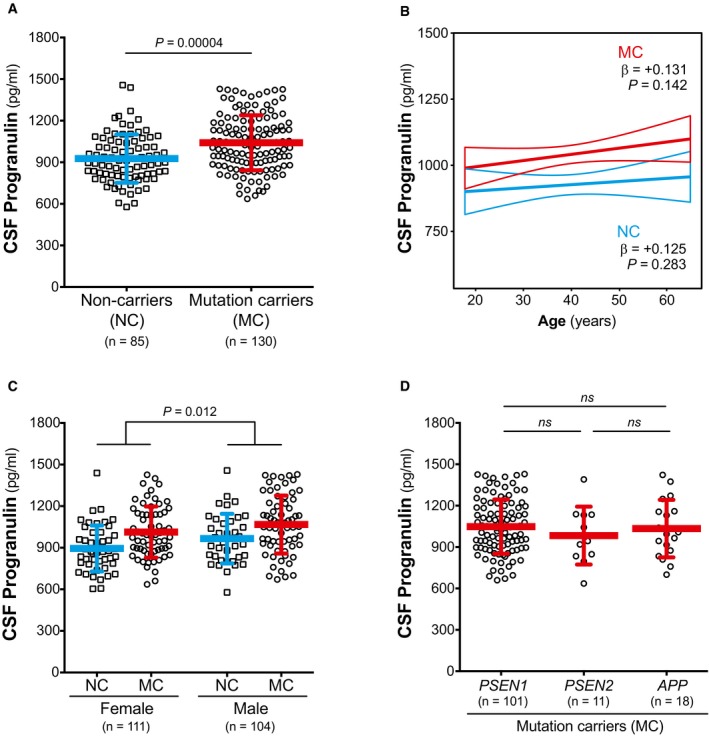
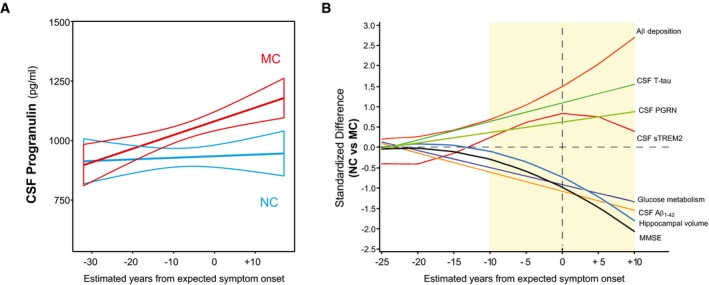
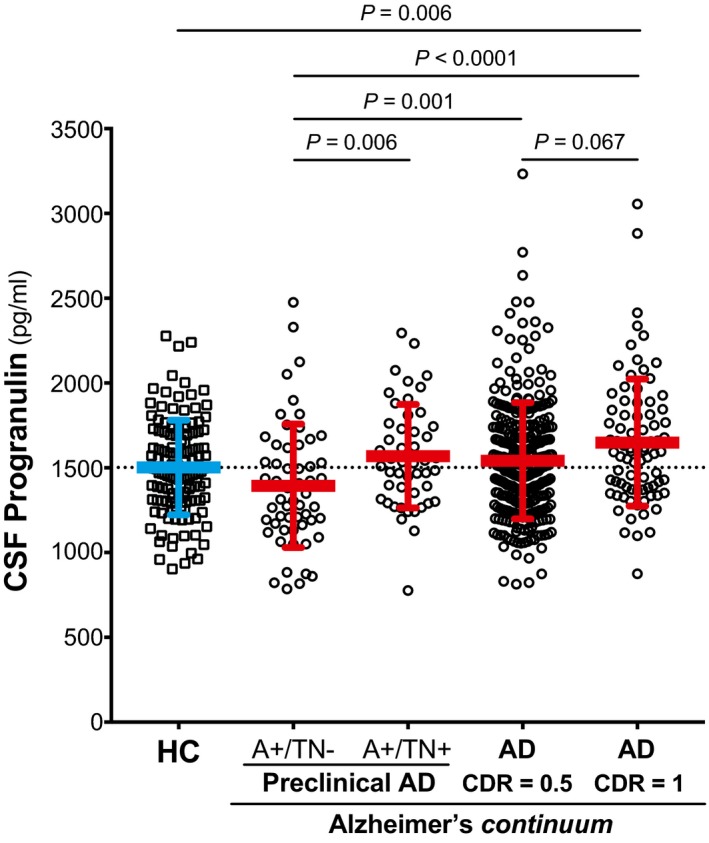
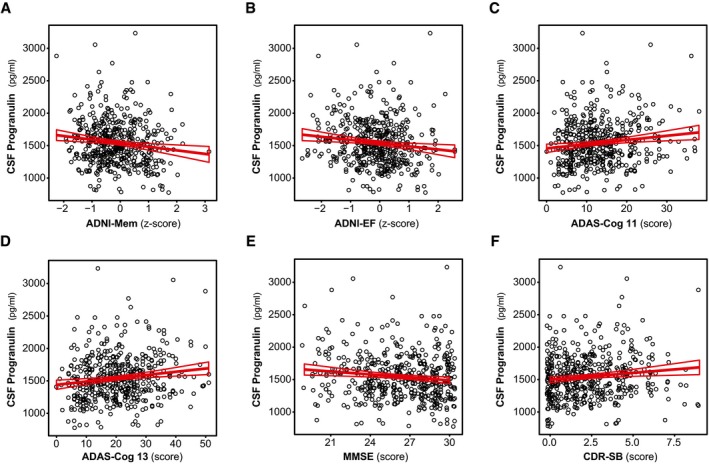
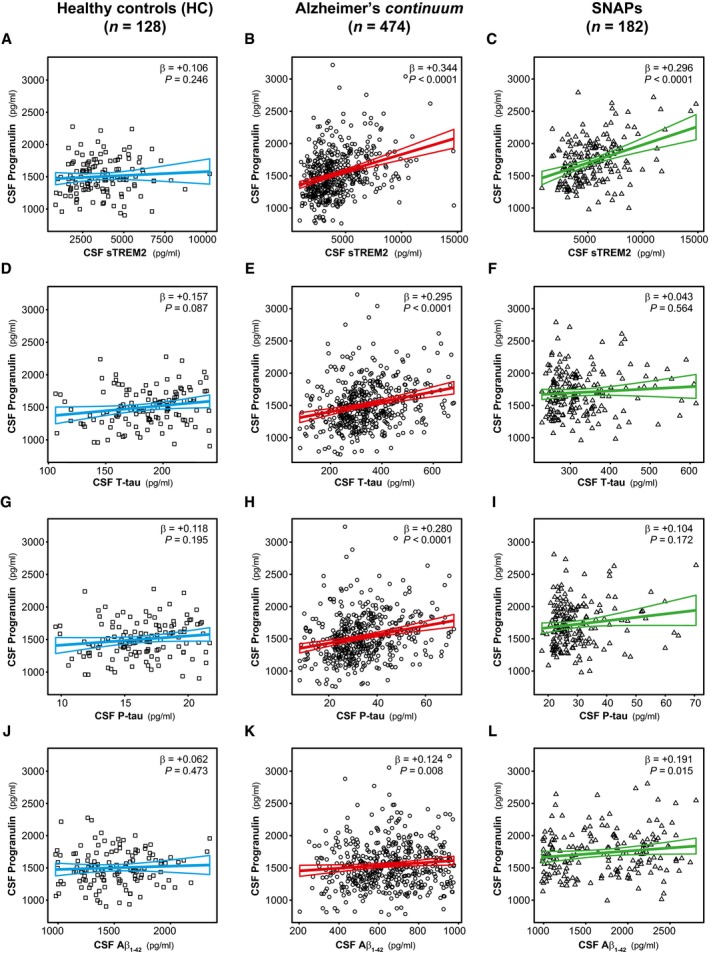
Progranulin (PGRN) is predominantly expressed by microglia in the brain, and genetic and experimental evidence suggests a critical role in Alzheimer's disease (AD). We asked whether PGRN expression is changed in a disease severity‐specific manner in AD. We measured PGRN in cerebrospinal fluid (CSF) in two of the best‐characterized AD patient cohorts, namely the Dominant Inherited Alzheimer's Disease Network (DIAN) and the Alzheimer's Disease Neuroimaging Initiative (ADNI). In carriers of AD causing dominant mutations, cross‐sectionally assessed CSF PGRN increased over the course of the disease and significantly differed from non‐carriers 10 years before the expected symptom onset. In late‐onset AD, higher CSF PGRN was associated with more advanced disease stages and cognitive impairment. Higher CSF PGRN was associated with higher CSF soluble TREM2 (triggering receptor expressed on myeloid cells 2) only when there was underlying pathology, but not in controls. In conclusion, we demonstrate that, although CSF PGRN is not a diagnostic biomarker for AD, it may together with sTREM2 reflect microglial activation during the disease. Neuroinflammation and microgliosis are key pathological features of Alzheimer's disease (AD). Cerebrospinal fluid (CSF) protein levels analysis in large AD patients' cohorts reveals that CSF levels of Progranulin (PGRN) together with soluble TREM2 may serve as a microglia activity marker in AD. Neuroinflammation and microgliosis are key pathological features of Alzheimer's disease (AD). Cerebrospinal fluid (CSF) protein levels analysis in large AD patients' cohorts reveals that CSF levels of Progranulin (PGRN) together with soluble TREM2 may serve as a microglia activity marker in AD.
Overview
The claims and statistics of this paper haven’t been checked yet.
Free: it reads the open-access text and checks the first 5 claims that cite a source we can check. Create a free account to check every claim.
Integrity signals
Registry
Cites
Statistics
Figures
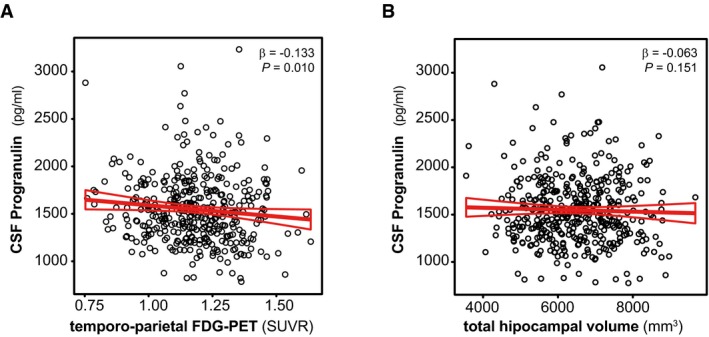
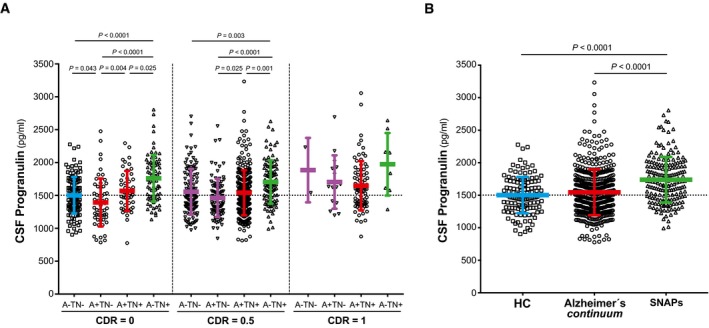
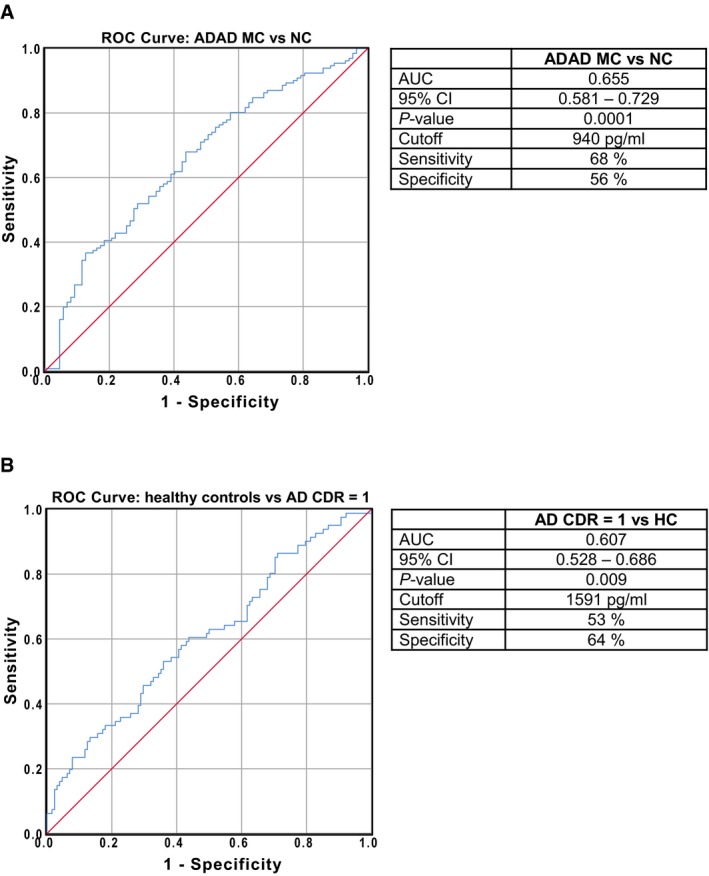
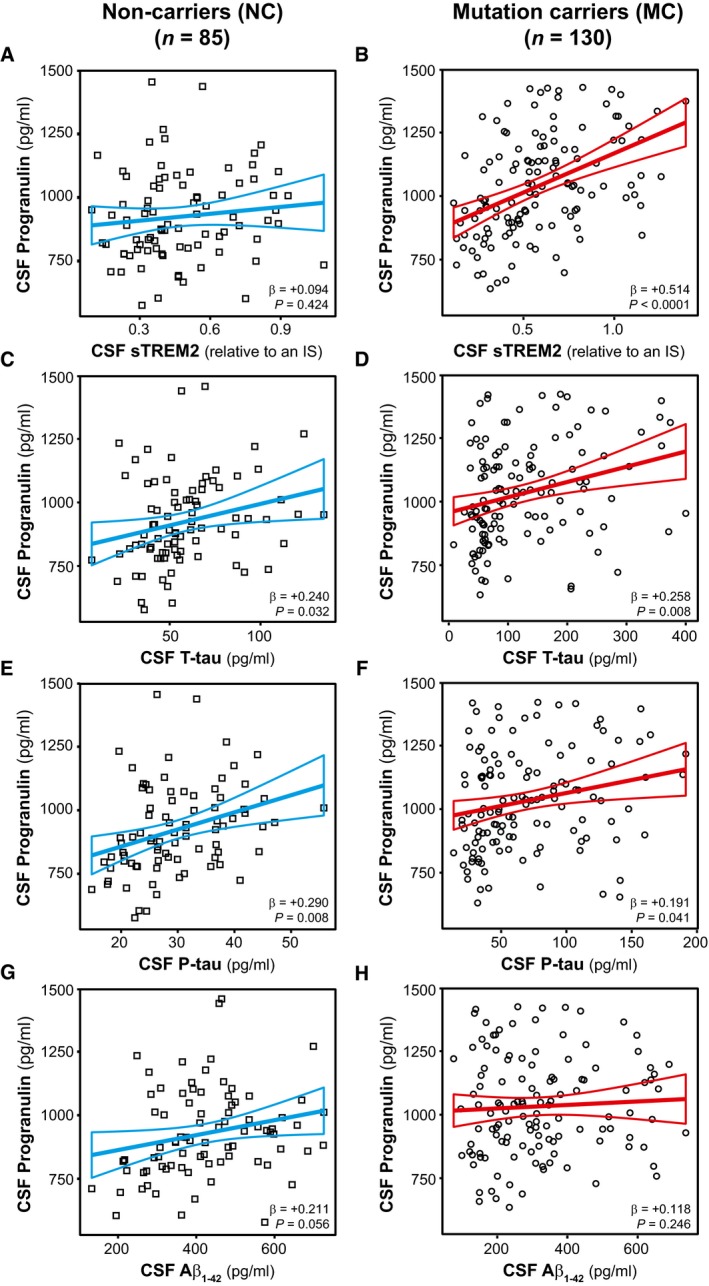
Verification
Claims the paper makes
The claims and statistics of this paper haven’t been checked yet.
Free: it reads the open-access text and checks the first 5 claims that cite a source we can check. Create a free account to check every claim.
Claims other papers make about this one
Each is checked against this paper’s own text: does it say what the citing paper says it does?
In the citing paper
“It has been observed that the CSF level of progranulin elevates as early as ten years before the presentation of symptoms in patients with familial or sporadic AD.544”
From Amyloid β-based therapy for Alzheimer’s disease: Challenges, successes and future (2023) · cites this paper as [544]
Self-check
Percentages, sums and reported differences re-computed from the paper’s own numbers.
The self-check needs the paper’s full text.
Citations
Cites
McKhann, G. M., Knopman, D. S., Chertkow, H., Hyman, B. T., Jack, C. R., Kawas, C. H., Klunk, W. E., Koroshetz, W. J., Manly, J. J., Mayeux, R., et al. (2011) · Alzheimer's & Dementia · doi:10.1016/j.jalz.2011.03.005 · Cited by 18,657 · cited 1×
“…as a combination of biomarkers and clinical symptoms similar to what was proposed by the previous 2011 NIAAA diagnostic criteria (Albert et al, 2011; McKhann et al, 2011; Sperling et al, 2011), and it was done in order to render the disease staging in late-onset AD more comparable to that in ADAD…”
ResultSelf-citationNIA‐AA Research Framework: Toward a biological definition of Alzheimer's disease
Jack, C. R., Bennett, D. A., Blennow, K., Carrillo, M. C., Dunn, B., Haeberlein, S. B., Holtzman, D. M., Jagust, W., Jessen, F., Karlawish, J., et al. (2018) · Alzheimer's & Dementia · doi:10.1016/j.jalz.2018.02.018 · Cited by 10,537
Albert, M. S., DeKosky, S. T., Dickson, D., Dubois, B., Feldman, H. H., Fox, N. C., Gamst, A., Holtzman, D. M., Jagust, W. J., Petersen, R. C., et al. (2011) · Alzheimer's & Dementia · doi:10.1016/j.jalz.2011.03.008 · Cited by 10,152 · cited 1×
“…continuum as a combination of biomarkers and clinical symptoms similar to what was proposed by the previous 2011 NIAAA diagnostic criteria (Albert et al, 2011; McKhann et al, 2011; Sperling et al, 2011), and it was done in order to render the disease staging in late-onset AD more…”
MethodThe Clinical Dementia Rating (CDR): Current version and scoring rules
Morris, J. C. (1993) · Neurology · doi:10.1212/wnl.43.11.2412-a · Cited by 9,882 · cited 5×
“Second, we classified the participants based on clinical symptoms based on the clinical dementia rating (CDR) global score (Morris, 1993) into cognitively unimpaired (CDR = 0), very mild dementia (CDR = 0.5) and mild dementia (CDR = 1).”
MethodInfluentialSelf-citationFischl, B., Salat, D. H., Busa, E., Albert, M., Dieterich, M., Haselgrove, C., van der Kouwe, A., Killiany, R., Kennedy, D., Klaveness, S., et al. (2002) · Neuron · doi:10.1016/s0896-6273(02)00569-x · Cited by 8,610
Sperling, R. A., Aisen, P. S., Beckett, L. A., Bennett, D. A., Craft, S., Fagan, A. M., Iwatsubo, T., Jack, C. R., Kaye, J., Montine, T. J., et al. (2011) · Alzheimer's & Dementia · doi:10.1016/j.jalz.2011.03.003 · Cited by 7,155 · cited 1×
“…of biomarkers and clinical symptoms similar to what was proposed by the previous 2011 NIAAA diagnostic criteria (Albert et al, 2011; McKhann et al, 2011; Sperling et al, 2011), and it was done in order to render the disease staging in late-onset AD more comparable to that in ADAD defined by EYO.”
ResultSelf-citationUbiquitinated TDP-43 in Frontotemporal Lobar Degeneration and Amyotrophic Lateral Sclerosis
Neumann, M., Sampathu, D. M., Kwong, L. K., Truax, A. C., Micsenyi, M. C., Chou, T. T., Bruce, J., Schuck, T., Grossman, M., Clark, C. M., et al. (2006) · Science · doi:10.1126/science.1134108 · Cited by 6,576 · cited 1×
“Haploinsufficiency of the gene encoding progranulin (PGRN) leads to frontotemporal lobar degeneration (FTLD) with TAR DNA binding protein 43 (TDP-43) deposition (FTLD-TDP) (Baker et al, 2006; Cruts et al, 2006; Neumann et al, 2006).”
BackgroundSelf-citationNeuroinflammation in Alzheimer's disease
Heneka, M. T., Carson, M. J., Khoury, J. E., Landreth, G. E., Brosseron, F., Feinstein, D. L., Jacobs, A. H., Wyss-Coray, T., Vitorica, J., Ransohoff, R. M., et al. (2015) · The Lancet Neurology · doi:10.1016/s1474-4422(15)70016-5 · Cited by 6,226 · cited 1×
“It is well established that activation of microglia occurs in AD (Lyman et al, 2014; Heneka et al, 2015) and, in fact, we and others have previously shown that CSF sTREM2 also increases throughout the evolution of the disease (Heslegrave et al, 2016; Piccio et al, 2016; Suárez-Calvet et al,…”
BackgroundA Unique Microglia Type Associated with Restricting Development of Alzheimer’s Disease
Keren-Shaul, H., Spinrad, A., Weiner, A., Matcovitch-Natan, O., Dvir-Szternfeld, R., Ulland, T. K., David, E., Baruch, K., Lara-Astaiso, D., Toth, B., et al. (2017) · Cell · doi:10.1016/j.cell.2017.05.018 · Cited by 5,493 · cited 1×
“This may indicate that these two proteins are released by microglia adopting a disease-associated signature (Keren-Shaul et al, 2017; Krasemann et al, 2017).”
BackgroundZhang, Y., Chen, K., Sloan, S. A., Bennett, M. L., Scholze, A. R., O'Keeffe, S., Phatnani, H. P., Guarnieri, P., Caneda, C., Ruderisch, N., et al. (2014) · The Journal of Neuroscience · doi:10.1523/jneurosci.1860-14.2014 · Cited by 4,875 · cited 1×
“Within the brain, PGRN is predominantly expressed by microglia (Zhang et al, 2014; Lui et al, 2016; Chang et al, 2017), but some expression is also observed in neurons.”
Background
Cited by
Items 101–109 of 109
Nordengen, K., Kirsebom, B.-E., Richter, G., Pålhaugen, L., Gísladóttir, B., Siafarikas, N., Nakling, A. E., Rongve, A., Bråthen, G., Grøntvedt, G. R., et al. (2024) · Figshare · doi:10.6084/m9.figshare.26653534
Genotype–phenotype interaction in Alzheimer's disease immune activation
Knudtzon, S. L., Kirsebom, B., Pålhaugen, L., Bettella, F., Gísladóttir, B., Bahrami, S., Athanasiu, L., Rongve, A., Nakling, A. E., Almdahl, I. S., et al. (2026) · Alzheimer s & Dementia · doi:10.1002/alz.70978 · Cited by 1
Klem, L., Dumas, D., Swift, I. J., Frandsen, S. L., Mikkelsen, D. N., Fensbaek, L., Yavuz, Y., Merton, O., Castricum, J., Prichardt, S., et al. (2026) · Nature Communications · doi:10.1038/s41467-026-77638-2
“Contextualization of these effects within the Genetic FTD Initiative (GENFI), which quanti fi ed PGRN using the same assay, provides a translational benchmark 46,47 .”
Implication du fragment C99 dans l’avènement des phénotypes pathologiques de la maladie d’Alzheimer
Bourgeois, A. (2019) · theses.fr (ABES) · doi:10.70675/bb8ccf34zec6cz4bb6z82b4z3030b9cb28f7
Yang, J., Wang, J., Chai, W., Zhang, L., Li, A., Lan, G., Jiang, M., Fan, X., 杨洪杰, Li, J., et al. (2026) · Alzheimer s & Dementia · doi:10.1002/alz.71397
Treatment Using Anti-Amyloid Antibodies for Alzheimer’s Disease
Chatterjee, S., Gayen, S., & Roy, S. (2026) · BENTHAM SCIENCE PUBLISHERS eBooks · doi:10.2174/9798898815646126010012
From biology to therapy: advances in progranulin-related neurodegenerative diseases
Hu, S., Qiu, K., Zhen, F., & Zhou, X. (2026) · Molecular Neurodegeneration Advances · doi:10.1186/s44477-026-00042-z
“In clinical cohorts, altered CSF PGRN levels have been reported in AD, with higher CSF PGRN associated with microglial activation markers, neurodegeneration, disease progression, and cognitive decline [90, 91].”
Ding, L., Zheng, M., Wang, S., Liu, W., Liang, Y., Xie, S., Yang, T., Sheng, D., Wang, S., Sheng, J., et al. (2026) · Alzheimer s & Dementia · doi:10.1002/alz.71915
Self-citationPehlivan, Z. N., Zıkşahna, K., Adıyıl, R., & Ihlamur, M. (2026) · Metabolic Brain Disease · doi:10.1007/s11011-026-01993-8 · Cited by 1
Metadata
- Authors
- Suárez‐Calvet, M., Capell, A., Araque Caballero, M. Á., Morenas‐Rodríguez, E., Fellerer, K., Franzmeier, N., Kleinberger, G., Eren, E., Deming, Y., Piccio, L., Karch, C. M., Cruchaga, C., Paumier, K., Bateman, R. J., Fagan, A. M., Morris, J. C., Levin, J., Danek, A., Jucker, M., Masters, C. L., Rossor, M. N., Ringman, J. M., Shaw, L. M., Trojanowski, J. Q., Weiner, M., Ewers, M., Haass, C., the Dominantly Inherited Alzheimer Network, & Initiative, T. A. D. N.
- Affiliations
- German Center for Neurodegenerative Diseases (DE)
- Ludwig-Maximilians-Universität München (DE)
- Universitat Autònoma de Barcelona (ES)
- Institut für Schlaganfall- und Demenzforschung (DE)
- Munich Cluster for Systems Neurology (DE)
- Dokuz Eylül University (TR)
- Washington University in St. Louis (US)
- The University of Melbourne (AU)
- UCL Queen Square Institute of Neurology (GB)
- University of Southern California (US)
- University of Pennsylvania (US)
- University of California, San Francisco (US)
- Corresponding author
- Suárez‐Calvet, Marc
- Haass, Christian
- ORCID
- Suárez‐Calvet, Marc
- Capell, Anja
- Morenas‐Rodríguez, Estrella
- Franzmeier, Nicolai
- Kleinberger, Gernot
- Eren, Erden
- Deming, Yuetiva
- Piccio, Laura
- Karch, Celeste M
- Cruchaga, Carlos
- Paumier, Katrina
- Bateman, Randall J
- Fagan, Anne M
- Morris, John C
- Levin, Johannes
- Danek, Adrian
- Jucker, Mathias
- Masters, Colin L
- Rossor, Martin N
- Ringman, John M
- Shaw, Leslie M
- Trojanowski, John Q
- Weiner, Michael
- Ewers, Michael
- Haass, Christian
- Venue
- EMBO Molecular Medicine
- Published
- 2018-11-27
- Volume
- 10
- Issue
- 12
- ISSN
- 1757-4676 (ISSN-L)
- 1757-4684
- PMC
- PMC6284390
- OpenAlex
- W2902211958
- Cited by
- 109
- References
- 106
- Citations by year
- 2026: 10 · 2025: 17 · 2024: 18 · 2023: 14 · 2022: 11 · 2021: 19 · 2020: 7 · 2019: 12
- FWCI
- 4.24
- Type
- journal article
- Language
- en
- Open access
- gold
- doi.org
- Licence
- cc-by
- creativecommons.org/licenses/by/4.0/ (tdm)
- creativecommons.org/licenses/by/4.0/ (vor)
- Locations
- EMBO Molecular Medicine (publishedVersion, cc-by)
- Europe PMC (PubMed Central) (publishedVersion, cc-by)
- PubMed Central (publishedVersion, cc-by)
- PubMed (publishedVersion)
- Dipòsit Digital de Documents de la UAB (Universitat Autònoma de Barcelona) (submittedVersion, cc-by)
- Minerva Access (University of Melbourne) (submittedVersion, other-oa)
- LA Referencia (Red Federada de Repositorios Institucionales de Publicaciones Científicas) (submittedVersion, cc-by)
- DOAJ (DOAJ: Directory of Open Access Journals) (submittedVersion)
- UCL Discovery (University College London) (submittedVersion)
- eScholarship (California Digital Library) (submittedVersion, cc-by)
- DZNE Pub (submittedVersion, other-oa)
- Funders
- Association for Frontotemporal Degeneration (FTD Biomarker Award)
- Raul Carrea Institute for Neurological Research
- Research and Development Grants for Dementia from Japan Agency for Medical Research and Development
- AMED
- Korea Health Technology R&D Project Through the Korea Health Industry Development Institute
- Ad‐Hoc Committee for Young Neurologist
- Health Institute Carlos III
- Deutsches Zentrum für Neurodegenerative Erkrankungen (DIAN,UF1AG032438)
- Deutsche Forschungsgemeinschaft (EXC 1010 SyNergy, HA1737/16‐1)
- HHS | NIH | National Institute on Aging (DIAN, UF1AG032438, R01AG044546, RF1AG053303, R01AG058501, U01AG058922)
- HHS | NIH | National Institute of Mental Health (T32MH014877)
- Fondazione Italiana Sclerosi Multipla (FISM 2017/R/20)
- Topics
- Life Sciences › Neuroscience › Neurology › Neuroinflammation and Neurodegeneration Mechanisms
- Life Sciences › Neuroscience › Cellular and Molecular Neuroscience › Alzheimer's disease research and treatments
- Health Sciences › Medicine › Psychiatry and Mental health › Dementia and Cognitive Impairment Research
- Keywords
- progranulin, Alzheimer's disease, cerebrospinal fluid biomarkers, soluble TREM2, microglial activation, neuroinflammation, neurodegeneration, cognitive decline, disease progression, CSF protein levels
- MeSH terms
- Progranulins, Adult, Alzheimer Disease, Cross-Sectional Studies, Female, Humans, Male, Membrane Glycoproteins, Middle Aged, Receptors, Immunologic, Microglia, Cognitive Dysfunction
About these checks
Registry, retraction, Cites and statistics results are computed, not judged, with one exception: a printed reference that no index lists is read once by a model before it counts as a citation error. Claims are extracted by a model and kept only when their quote appears verbatim in the text; each cited source is then checked, with a model’s help, for whether it says what the claim relies on. Those verdicts can be wrong — read the claim’s quote and the cited source before relying on one.
Statistics and arithmetic are recomputed, not judged.
Confidence bands are shown only for fields calibrated on our annotated test set. None is calibrated yet, so no band is shown.
What counts as a claim ›How we measure confidence ›How we check this ›
Are you an author, or do you see a problem with this page? Request a review
Data sources
Bibliographic data: Semantic Scholar, OpenAlex, Crossref.
Contains information from the Semantic Scholar Academic Graph Datasets, made available under the ODC Attribution License (ODC-BY 1.0).
Semantic Scholar’s data is described in: Kinney, R., et al. (2023). The Semantic Scholar Open Data Platform. arXiv:2301.10140.
