

The DOI matches its Crossref record; 63 of the 63 references it cites were found in a registry or an index.
Enhancing protective microglial activities with a dual function TREM2 antibody to the stalk region
Open accessAbstract
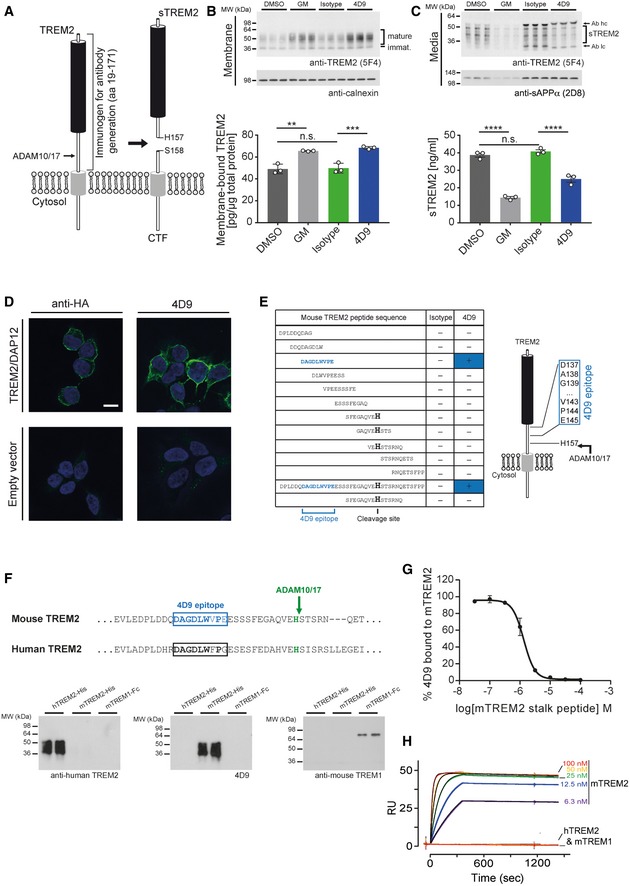
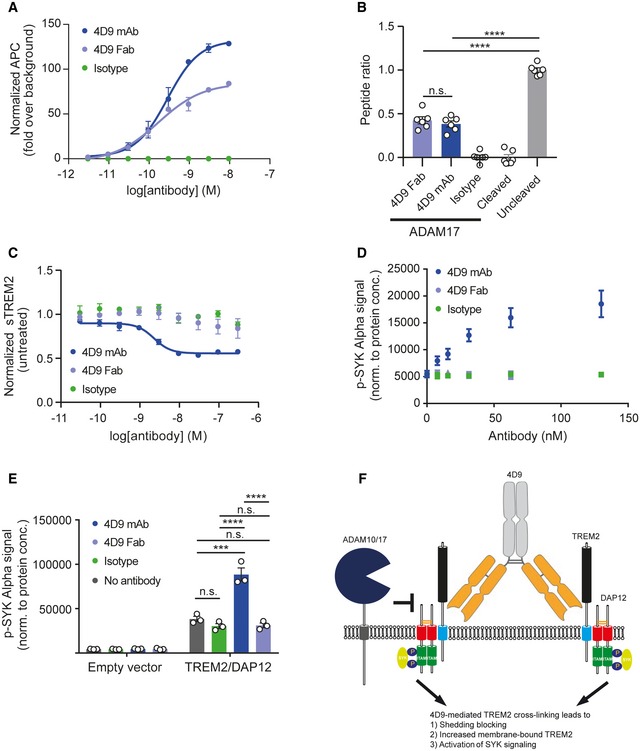
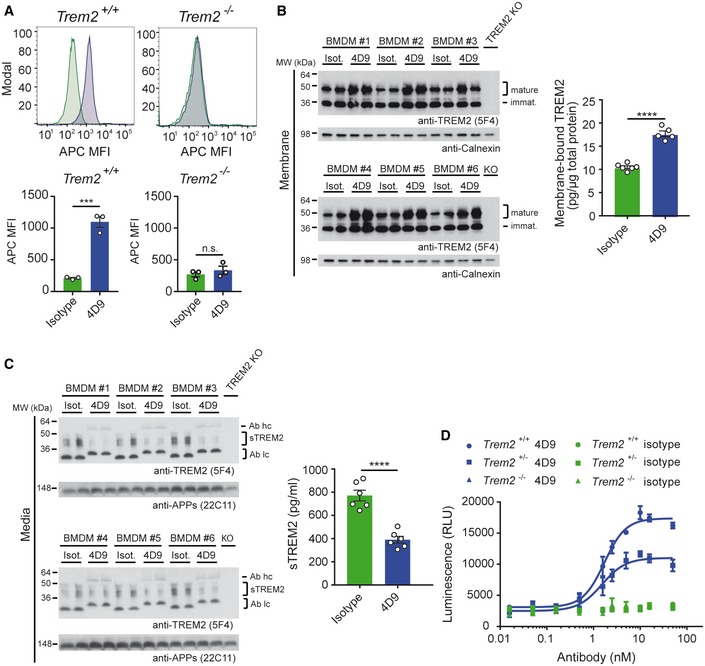
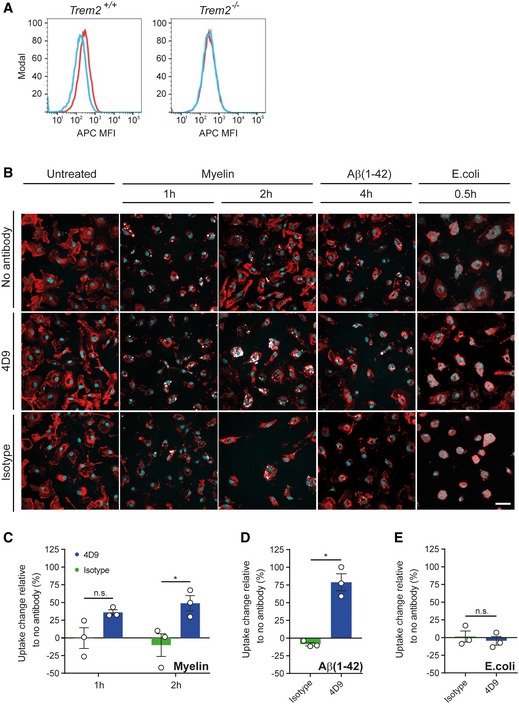
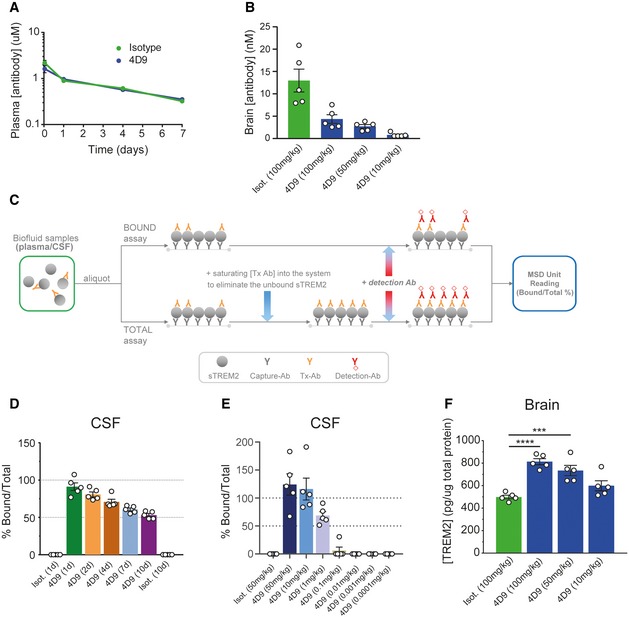
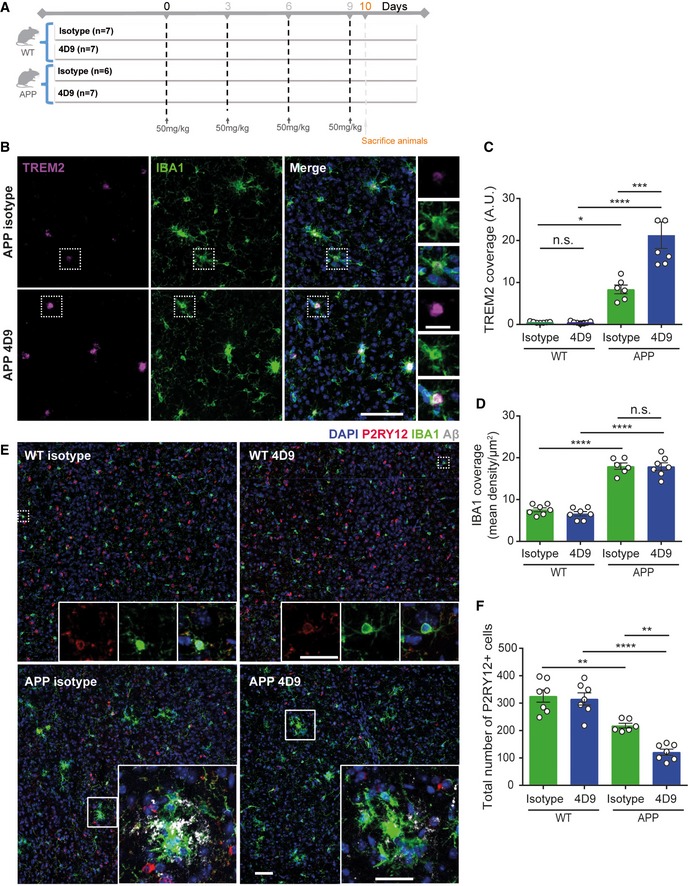
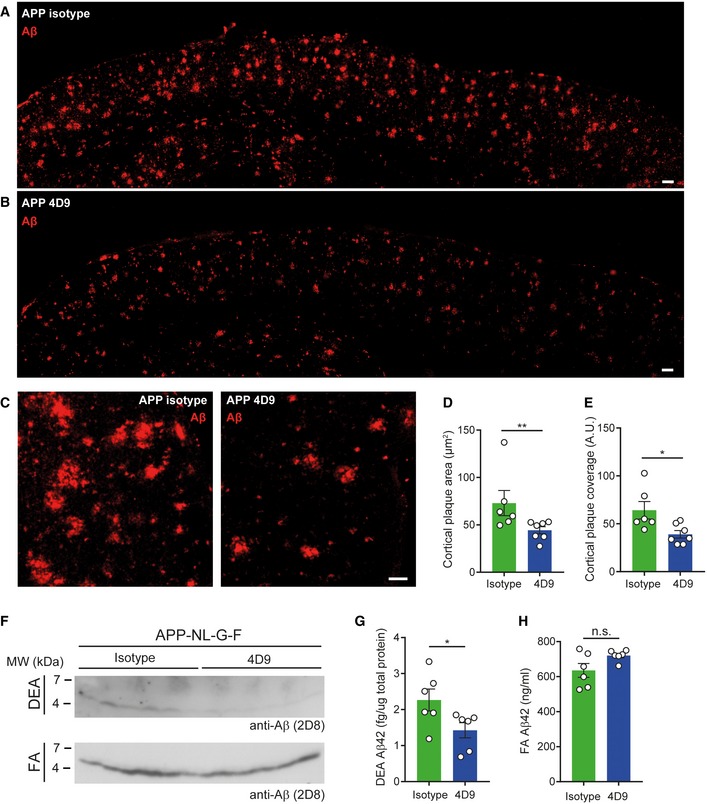
Triggering receptor expressed on myeloid cells 2 (TREM2) is essential for the transition of homeostatic microglia to a disease-associated microglial state. To enhance TREM2 activity, we sought to selectively increase the full-length protein on the cell surface via reducing its proteolytic shedding by A Disintegrin And Metalloproteinase (i.e., α-secretase) 10/17. We screened a panel of monoclonal antibodies against TREM2, with the aim to selectively compete for α-secretase-mediated shedding. Monoclonal antibody 4D9, which has a stalk region epitope close to the cleavage site, demonstrated dual mechanisms of action by stabilizing TREM2 on the cell surface and reducing its shedding, and concomitantly activating phospho-SYK signaling. 4D9 stimulated survival of macrophages and increased microglial uptake of myelin debris and amyloid β-peptide in vitro. In vivo target engagement was demonstrated in cerebrospinal fluid, where nearly all soluble TREM2 was 4D9-bound. Moreover, in a mouse model for Alzheimer's disease-related pathology, 4D9 reduced amyloidogenesis, enhanced microglial TREM2 expression, and reduced a homeostatic marker, suggesting a protective function by driving microglia toward a disease-associated state.
Overview
The claims and statistics of this paper haven’t been checked yet.
Run the check — free, no account needed. It reads the open-access text and checks the sources it cites.
Integrity signals
Registry
Cites
Statistics
Figures
Verification
Claims the paper makes
The claims and statistics of this paper haven’t been checked yet.
Run the check — free, no account needed. It reads the open-access text and checks the sources it cites.
Claims other papers make about this one
Each is checked against this paper’s own text: does it say what the citing paper says it does?
The source backs part of the claim, not all of it — or backs it for a different population, condition or comparison.
In the citing paper
“recent in vivo and in vitro models seem to support the idea that activation of Trem2 leads to reduced amyloidogenesis by a more efficient clearance, and promotes cell phagocytosis and survival, at least in mouse models ([46], see more below)”
From TREM2/PLCγ2 signalling in immune cells: function, structural insight, and potential therapeutic modulation (2021) · cites this paper as [46]
Experimental — accuracy not yet measuredThe cited source says what the claim attributes to it.
In the citing paper
“Administration of 4D9 in AD mouse model increased the level of TREM2 in microglia and reduced amyloidogenesis,539 though no changes to cognitive ability were reported.”
From Role of neuroinflammation in neurodegeneration development (2023) · cites this paper as [539]
The cited source says what the claim attributes to it.
In the citing paper
“The opposite phenotypes observed in PLCG2 KO iMGs and Plcγ2-P522R KI mice also support the notion to therapeutically stimulate TREM2 functions [6, 16, 17, 43].”
From The Alzheimer’s disease-associated protective Plcγ2-P522R variant promotes immune functions (2020) · cites this paper as [16]
The cited source says what the claim attributes to it.
In the citing paper
“Increased shedding from microglia [45], leading to phagocytosis deficits [46]”
From TREM2/PLCγ2 signalling in immune cells: function, structural insight, and potential therapeutic modulation (2021) · cites this paper as [46]
The cited source says what the claim attributes to it.
In the citing paper
“Other similar strategies, based on monoclonal antibodies (4D9), act via a dual mechanism: as direct agonists of the TREM2 signalling, and by stabilizing TREM2 on the cell surface and reducing its shedding [46]”
From TREM2/PLCγ2 signalling in immune cells: function, structural insight, and potential therapeutic modulation (2021) · cites this paper as [46]
The cited source says what the claim attributes to it.
In the citing paper
“This strategy demonstrated increased microglial uptake of myelin debris and amyloid β-peptide in vitro, and reduced amyloid plaque burden in the cortex of APPNLGF mice [46]”
From TREM2/PLCγ2 signalling in immune cells: function, structural insight, and potential therapeutic modulation (2021) · cites this paper as [46]
In the citing paper
“Our findings are thus compatible with increased expression of TREM2 in Alzheimer’s disease having a protective function slowing disease progression”
From Trem2 promotes anti-inflammatory responses in microglia and is suppressed under pro-inflammatory conditions (2020) · cites this paper as [106]
In the citing paper
“loss of function due to the presence of the Trem2 R47H mutation increasing the chance of AD reaching the stage of diagnosis (44,104–107)”
From Trem2 promotes anti-inflammatory responses in microglia and is suppressed under pro-inflammatory conditions (2020) · cites this paper as [106]
Self-check
Percentages, sums and reported differences re-computed from the paper’s own numbers.
The self-check needs the paper’s full text.
Citations
Cites
Continuous cultures of fused cells secreting antibody of predefined specificity
Köhler, G., & Milstein, C. (1975) · Nature · doi:10.1038/256495a0 · Cited by 17,200
A Unique Microglia Type Associated with Restricting Development of Alzheimer’s Disease
Keren-Shaul, H., Spinrad, A., Weiner, A., Matcovitch-Natan, O., Dvir-Szternfeld, R., Ulland, T. K., David, E., Baruch, K., Lara-Astaiso, D., Toth, B., et al. (2017) · Cell · doi:10.1016/j.cell.2017.05.018 · Cited by 5,493
The antibody aducanumab reduces Aβ plaques in Alzheimer’s disease
Sevigny, J., Chiao, P., Bussière, T., Weinreb, P. H., Williams, L., Maier, M., Dunstan, R., Salloway, S., Chen, T., Ling, Y., et al. (2016) · Nature · doi:10.1038/nature19323 · Cited by 3,059
Krasemann, S., Madore, C., Cialic, R., Baufeld, C., Calcagno, N., El Fatimy, R., Beckers, L., O’Loughlin, E., Xu, Y., Fanek, Z., et al. (2017) · Immunity · doi:10.1016/j.immuni.2017.08.008 · Cited by 2,979
Self-citationVariant of TREM2 Associated with the Risk of Alzheimer's Disease
Jonsson, T., Stefansson, H., Steinberg, S., Jonsdottir, I., Jonsson, P. V., Snaedal, J., Bjornsson, S., Huttenlocher, J., Levey, A. I., Lah, J. J., et al. (2013) · New England Journal of Medicine · doi:10.1056/nejmoa1211103 · Cited by 2,558
Self-citationIdentification of a unique TGF-β–dependent molecular and functional signature in microglia
Butovsky, O., Jedrychowski, M. P., Moore, C. S., Cialic, R., Lanser, A. J., Gabriely, G., Koeglsperger, T., Dake, B., Wu, P. M., Doykan, C. E., et al. (2014) · Nature Neuroscience · doi:10.1038/nn.3599 · Cited by 2,543
How neuroinflammation contributes to neurodegeneration
Ransohoff, R. M. (2016) · Science · doi:10.1126/science.aag2590 · Cited by 1,967 · cited 1×
“In addition to the selective deposition of amyloidogenic proteins, neuroinflammation associated with microgliosis is a common feature of many neurodegenerative disorders (Ransohoff, 2016).”
BackgroundTREM2 Lipid Sensing Sustains the Microglial Response in an Alzheimer’s Disease Model
Wang, Y., Cella, M., Mallinson, K., Ulrich, J. D., Young, K. L., Robinette, M. L., Gilfillan, S., Krishnan, G. M., Sudhakar, S., Zinselmeyer, B. H., et al. (2015) · Cell · doi:10.1016/j.cell.2015.01.049 · Cited by 1,736
Marschallinger, J., Iram, T., Zardeneta, M., Lee, S. E., Lehallier, B., Haney, M. S., Pluvinage, J. V., Mathur, V., Hahn, O., Morgens, D. W., et al. (2020) · Nature Neuroscience · doi:10.1038/s41593-019-0566-1 · Cited by 1,384 · cited 1×
“Notably, lipid metabolism, storage, and processing has emerged as a potentially important contributor to proper microglial function in the CNS (Chan et al, 2012; Wang et al, 2015; Keren-Shaul et al, 2017; Griciuc et al, 2019; Marschallinger et al, 2020; Nugent et al, 2019).”
BackgroundLipid-associated macrophages control metabolic homeostasis in a Trem2-dependent manner
Jaitin, D. A., Adlung, L., Thaiss, C. A., Weiner, A., Li, B., Descamps, H., Lundgren, P., Bleriot, C., Liu, Z., Deczkowska, A., et al. (2019) · Cell · doi:10.1016/j.cell.2019.05.054 · Cited by 1,377
Research works printed but not linked: 2
- Bradbury A (2010) Antibody engineering, Vol. 1. Berlin Heidelberg: Springer‐Verlag
- Jonsson T, Stefansson K (2013) TREM2 and neurodegenerative disease. N Engl J Med 369: 1568–1569
Cited by
Sorted by citations
Items 101–200 of 319
TREM2 promotes glioma progression and angiogenesis mediated by microglia/brain macrophages
Chen, X., Zhao, Y., Huang, Y., Zhu, K., Zeng, F., Zhao, J., Zhang, H., Zhu, X., Kettenmann, H., & Xiang, X. (2023) · Glia · doi:10.1002/glia.24456 · Cited by 36
Self-citationEskandari‐Sedighi, G., Crichton, M. C., Zia, S., Gomez‐Cardona, E., Cortez, L. M., Patel, Z. H., Takahashi, K., Laurent, C. D. S., Sidhu, G., Sarkar, S., et al. (2024) · Molecular Neurodegeneration · doi:10.1186/s13024-024-00734-8 · Cited by 37
Althafar, Z. M. (2022) · Molecules · doi:10.3390/molecules27134124 · Cited by 36
Etxeberria, A., Shen, Y.-A. A., Vito, S., Silverman, S. M., Imperio, J., Lalehzadeh, G., Soung, A. L., Du, C., Xie, L., Choy, M. K., et al. (2024) · The Journal of Neuroscience · doi:10.1523/jneurosci.2347-23.2024 · Cited by 34
Roles of TREM2 in Alzheimer’s disease
Qi, X., Zhu, K., Ke, W., Wang, J., Mao, S., & Chen, G. (2025) · Translational Neurodegeneration · doi:10.1186/s40035-025-00515-3 · Cited by 38
Diabetic phenotype in mouse and humans reduces the number of microglia around β-amyloid plaques
Natunen, T., Martiskainen, H., Marttinen, M., Gabbouj, S., Koivisto, H., Kemppainen, S., Kaipainen, S., Takalo, M., Svobodová, H., Leppänen, L., et al. (2020) · Molecular Neurodegeneration · doi:10.1186/s13024-020-00415-2 · Cited by 36
Lu, Y., Hao, R., Hu, Y., Wei, Y., Xie, Y., Shen, Y., Rui, Q., & Yu, G. (2021) · Chemico-Biological Interactions · doi:10.1016/j.cbi.2021.109653 · Cited by 35
TREM2 and Microglia Contribute to the Synaptic Plasticity: from Physiology to Pathology
Yu, C.-J., Wang, M., Ruiyang, L., Wei, T., Yang, H.-C., Yin, Y., Mi, Y., Qin, Q., & Tang, Y. (2022) · Molecular Neurobiology · doi:10.1007/s12035-022-03100-1 · Cited by 34
PET imaging of microglia in Alzheimer's disease using copper-64 labeled TREM2 antibodies
Shojaei, M., Schaefer, R., Schlepckow, K., Kunze, L. H., Struebing, F. L., Brunner, B., Willem, M., Bartos, L. M., Feiten, A., Palumbo, G., et al. (2024) · Theranostics · doi:10.7150/thno.97149 · Cited by 35
Self-citationKonishi, H., & Kiyama, H. (2020) · Neurochemistry International · doi:10.1016/j.neuint.2020.104878 · Cited by 33
TREM2: Keeping Pace With Immune Checkpoint Inhibitors in Cancer Immunotherapy
Qiu, H., Shao, Z., Wen, X., Jiang, J., Ma, Q., Wang, Y., Huang, L., Ding, X., & Zhang, L. (2021) · Frontiers in Immunology · doi:10.3389/fimmu.2021.716710 · Cited by 32
Pinpointing Brain TREM2 Levels in Two Mouse Models of Alzheimer’s Disease
Meier, S. R., Sehlin, D., Hultqvist, G., & Syvänen, S. (2021) · Molecular Imaging and Biology · doi:10.1007/s11307-021-01591-3 · Cited by 32
Tobeh, N. S., & Bruce, K. D. (2023) · Frontiers in Aging Neuroscience · doi:10.3389/fnagi.2023.1259012 · Cited by 35
Reduced TREM2 activation in microglia of patients with Alzheimer's disease
Okuzono, Y., Sakuma, H., Miyakawa, S., Ifuku, M., Lee, J. H., Das, D., Banerjee, A., Zhao, Y., Yamamoto, K., Ando, T., et al. (2021) · FEBS Open Bio · doi:10.1002/2211-5463.13300 · Cited by 33
Gao, H., Di, J., Clausen, B. H., Wang, N., Zhu, X., Zhao, T., Chang, Y., Pang, M., Yang, Y., He, R., et al. (2023) · Cell Reports · doi:10.1016/j.celrep.2023.112629 · Cited by 36
Fujita, Y., Kano, K., Kishino, S., Nagao, T., Shen, X., Sato, C., Hatakeyama, H., Ota, Y., Niibori, S., Nomura, A., et al. (2021) · Scientific Reports · doi:10.1038/s41598-021-88870-9 · Cited by 31
Bispecific brain-penetrant antibodies for treatment of Alzheimer’s disease
Sehlin, D., Hultqvist, G., Michno, W., Aguilar, X., Dahlén, A. D., Cerilli, E., Bucher, N. M., van den Broek, S. L., & Syvänen, S. (2025) · The Journal of Prevention of Alzheimer s Disease · doi:10.1016/j.tjpad.2025.100214 · Cited by 29
Yu, H., Zhang, L., Song, B., Ren, K., Chen, X., Dai, Y., Yang, Y., Xu, Y., & Wei, Z. (2025) · Journal of Translational Medicine · doi:10.1186/s12967-025-06799-3 · Cited by 33
Neuroinflammation Biomarkers in the AT(N) Framework Across the Alzheimer's Disease Continuum
Bieger, A., Rocha, A., Bellaver, B., Machado, L. S., Ros, L. U. D., Borelli, W. V., Therriault, J., Macedo, A. C., Pascoal, T. A., Gauthier, S. G., et al. (2023) · The Journal of Prevention of Alzheimer s Disease · doi:10.14283/jpad.2023.54 · Cited by 29
TREM2 in Alzheimer's disease: Structure, function, therapeutic prospects, and activation challenges
Zgórzyńska, E. (2024) · Molecular and Cellular Neuroscience · doi:10.1016/j.mcn.2024.103917 · Cited by 29
Trem2 H157Y increases soluble TREM2 production and reduces amyloid pathology
Qiao, W., Chen, Y., Zhong, J., Madden, B. J., Charlesworth, C. M., Martens, Y. A., Liu, C., Knight, J. A., Ikezu, T. C., Kurti, A., et al. (2023) · Molecular Neurodegeneration · doi:10.1186/s13024-023-00599-3 · Cited by 28
The γ-secretase substrate proteome and its role in cell signaling regulation
Hou, P., Zielonka, M., Serneels, L., Martínez‐Muriana, A., Fattorelli, N., Wolfs, L., Poovathingal, S. K., T’Syen, D., Balusu, S., Theys, T., et al. (2023) · Molecular Cell · doi:10.1016/j.molcel.2023.10.029 · Cited by 29
Chen, K., Li, F., Zhang, S., Chen, Y., Ikezu, T. C., Li, Z., Martens, Y. A., Qiao, W., Meneses, A. D., Zhu, Y., et al. (2025) · Journal of Neuroinflammation · doi:10.1186/s12974-025-03420-8 · Cited by 29
The double-edged role and therapeutic potential of TREM2 in atherosclerosis
Zhu, B., Liu, Y., & Peng, D. (2024) · Biomarker Research · doi:10.1186/s40364-024-00675-w · Cited by 28
TREM2+ macrophages: a key role in disease development
Wang, X., Wang, Y., Yang, L. X., Zhang, Y., & Yang, L. (2025) · Frontiers in Immunology · doi:10.3389/fimmu.2025.1550893 · Cited by 29
Hypothalamic Microglial Heterogeneity and Signature under High Fat Diet–Induced Inflammation
Mendes, N. F., Jara, C. P., Zanesco, A. M., & ARAUJO, E. P. D. (2021) · International Journal of Molecular Sciences · doi:10.3390/ijms22052256 · Cited by 28
Lin, C., Kong, Y., Chen, Q., Zeng, J., Pan, X., & Miao, J. (2024) · Frontiers in Aging Neuroscience · doi:10.3389/fnagi.2024.1420731 · Cited by 24
Knowledge gaps in Alzheimer's disease immune biomarker research
Morgan, D., & Mielke, M. M. (2021) · Alzheimer s & Dementia · doi:10.1002/alz.12342 · Cited by 26
Cooper, O., Hallett, P. J., & Ole Isacson, A. (2022) · FEBS Journal · doi:10.1111/febs.16638 · Cited by 26
Pathways linking aging and atheroprotection in Mif ‐deficient atherosclerotic mice
Krammer, C., Yang, B., Reichl, S., Besson‐Girard, S., Ji, H., Bolini, V., Schulte, C., Noels, H., Schlepckow, K., Jocher, G., et al. (2023) · The FASEB Journal · doi:10.1096/fj.202200056r · Cited by 26
Self-citationTREM2 in Neurodegenerative Disorders: Mutation Spectrum, Pathophysiology, and Therapeutic Targeting
Yang, H.-W., Kim, D., Yang, Y., Bagyinszky, E., & An, S. S. A. (2025) · International Journal of Molecular Sciences · doi:10.3390/ijms26157057 · Cited by 26
Self-citationIbach, M., Mathews, M., Linnartz‐Gerlach, B., Theil, S., Kumar, S., Feederle, R., Brüstle, O., Neumann, H., & Walter, J. (2020) · Glia · doi:10.1002/glia.23953 · Cited by 25
Self-citationDoke, R. R., Lamkhade, G., Vinchurkar, K., & Singh, S. K. (2024) · ACS Pharmacology & Translational Science · doi:10.1021/acsptsci.4c00457 · Cited by 24
Takatori, S., Kondo, M., & Tomita, T. (2025) · Inflammation and Regeneration · doi:10.1186/s41232-025-00383-4 · Cited by 28
Zhang, X., Chen, X., Zhang, L., Sun, Y., Liang, Y., Li, H., & Zhang, Y. (2023) · Neurochemistry International · doi:10.1016/j.neuint.2023.105639 · Cited by 23
Brain resident microglia in Alzheimer’s disease: foe or friends
Kaur, S., Malleshwari, K., Sharma, A., Giridharan, V. V., & Dandekar, M. P. (2024) · Inflammopharmacology · doi:10.1007/s10787-024-01550-8 · Cited by 23
TREM2 Agonism with a Monoclonal Antibody Attenuates Tau Pathology and Neurodegeneration
Fassler, M., Benaim, C., & George, J. (2023) · Cells · doi:10.3390/cells12111549 · Cited by 22
Circadian rhythm, microglia-mediated neuroinflammation, and Alzheimer’s disease
Geng, F., Zhao, N., & Ren, Q. (2025) · Neuroscience & Biobehavioral Reviews · doi:10.1016/j.neubiorev.2025.106044 · Cited by 22
TREM2-expressing macrophages in liver diseases
Wang, X., Qiu, Z., Zhong, Z., & Liang, S. (2025) · Trends in Endocrinology and Metabolism · doi:10.1016/j.tem.2025.04.009 · Cited by 24
Beckmann, N., Neuhaus, A., Zurbruegg, S., Volkmer, P., Patiño, C., Joller, S., Feuerbach, D., Doelemeyer, A., Schweizer, T., Rudin, S., et al. (2023) · Journal of Neuroinflammation · doi:10.1186/s12974-022-02671-z · Cited by 24
Emerging Roles of Cells and Molecules of Innate Immunity in Alzheimer’s Disease
Tamburini, B., Badami, G. D., Manna, M. P. L., Azgomi, M. S., Caccamo, N., & Dieli, F. (2023) · International Journal of Molecular Sciences · doi:10.3390/ijms241511922 · Cited by 22
Shi, J., & Huang, S. (2023) · International Journal of Molecular Sciences · doi:10.3390/ijms25010016 · Cited by 22
Self-citationSignatures of glial activity can be detected in the CSF proteome
Eninger, T., Müller, S. A., Bacioglu, M., Schweighauser, M., Lambert, M., Maia, L. F., Neher, J. J., Hornfeck, S. M., Obermüller, U., Kleinberger, G., et al. (2022) · Proceedings of the National Academy of Sciences · doi:10.1073/pnas.2119804119 · Cited by 24
Self-citationSmall molecule therapeutics for neuroinflammation-mediated neurodegenerative disorders
Miller, S., & Blanco, M.-J. (2021) · RSC Medicinal Chemistry · doi:10.1039/d1md00036e · Cited by 21
Pathways linking Alzheimer’s disease risk genes expressed highly in microglia
Hodges, A. K., Piers, T. M., Collier, D., Cousins, O., & Pocock, J. M. (2021) · Neuroimmunology and Neuroinflammation · doi:10.20517/2347-8659.2020.60 · Cited by 21
Acute TREM2 inhibition depletes MAFB-high microglia and hinders remyelination
Hou, J., Magliozzi, R., Chen, Y., Wu, J., Wulf, J., Strout, G., Fang, X., & Colonna, M. (2025) · Proceedings of the National Academy of Sciences · doi:10.1073/pnas.2426786122 · Cited by 20
TREM2 in Neurodegenerative Diseases: Mechanisms and Therapeutic Potential
Li, L., Zheng, X., Ma, H., Zhu, M., Li, X., Sun, X., & Feng, X. (2025) · Cells · doi:10.3390/cells14171387 · Cited by 22
The Dual Nature of Microglia in Alzheimer’s Disease: A Microglia-Neuron Crosstalk Perspective
Xie, Z., Meng, J., Wu, Z., Nakanishi, H., Hayashi, Y., Kong, W., Lan, F., Narengaowa, Yang, Q., Qing, H., et al. (2023) · The Neuroscientist · doi:10.1177/10738584211070273 · Cited by 19
Alzheimer’s Disease Genetics: A Dampened Microglial Response?
Chatila, Z. K., & Bradshaw, E. M. (2021) · The Neuroscientist · doi:10.1177/10738584211024531 · Cited by 20
Selection and structural characterization of anti-TREM2 scFvs that reduce levels of shed ectodomain
Szykowska, A., Chen, Y., Smith, T. B., Preger, C., Yang, J., Qian, D., Mukhopadhyay, S. M. M., Wigren, E., Neame, S. J., Gräslund, S., et al. (2021) · Structure · doi:10.1016/j.str.2021.06.010 · Cited by 20
Multimerization of TREM2 is impaired by Alzheimer's disease–associated variants
Dean, H. B., Greer, R. A., Yang, S., Elston, D. S., Brett, T. J., Roberson, E. D., & Song, Y. (2024) · Alzheimer s & Dementia · doi:10.1002/alz.14124 · Cited by 20
TREM2 in MASH: integrating lipid metabolism and immune response
Shi, S., Zhou, Y. Y., Zhang, H., & Zhang, J. (2025) · Frontiers in Immunology · doi:10.3389/fimmu.2025.1604837 · Cited by 21
Recent Advances in Antibody Therapy for Alzheimer’s Disease: Focus on Bispecific Antibodies
Yang, H. (2025) · International Journal of Molecular Sciences · doi:10.3390/ijms26136271 · Cited by 19
Ayyubova, G. (2023) · European Journal of Neuroscience · doi:10.1111/ejn.15914 · Cited by 21
New insights into innate immunity in Alzheimer’s disease: From APOE protective variants to therapies
Chen, Y., & Holtzman, D. M. (2024) · Trends in Immunology · doi:10.1016/j.it.2024.08.001 · Cited by 19
Alzheimer’s disease: an axonal injury disease?
Liang, D., & Zhang, Z. (2023) · Frontiers in Aging Neuroscience · doi:10.3389/fnagi.2023.1264448 · Cited by 21
Ramaswami, G., Yuva-Aydemir, Y., Akerberg, B. N., Matthews, B. J., Williams, J., Golczer, G., Huang, J., Abdullatif, A. A., Huh, D., Burkly, L. C., et al. (2024) · Scientific Reports · doi:10.1038/s41598-024-52311-0 · Cited by 18
DAP12 interacts with RER1 and is retained in the secretory pathway before assembly with TREM2
Liu, Y., Theil, S., Ibach, M., & Walter, J. (2024) · Cellular and Molecular Life Sciences · doi:10.1007/s00018-024-05298-w · Cited by 18
Glial Cells in the Early Stages of Neurodegeneration: Pathogenesis and Therapeutic Targets
Ahremenko, E. A., Andreev, A., Apushkin, D., & Korkotian, E. (2025) · International Journal of Molecular Sciences · doi:10.3390/ijms262411995 · Cited by 20
VEGF controls microglial phagocytic response to amyloid-β
Gea, P. D., Benkeder, S., Bouvet, P., Aimard, M., Chounlamountri, N., Honnorat, J., Do, L.-D., & Meissirel, C. (2023) · Frontiers in Cellular Neuroscience · doi:10.3389/fncel.2023.1264402 · Cited by 19
Immunological aspects of central neurodegeneration
Niso‐Santano, M., Fuentes, J. M., & Galluzzi, L. (2024) · Cell Discovery · doi:10.1038/s41421-024-00666-z · Cited by 17
Takalo, M., Jeskanen, H., Rolova, T., Kervinen, I., Hellén, M., Heikkinen, S., Koivisto, H., Jokivarsi, K., Müller, S. A., Koivumäki, E.-M., et al. (2025) · Journal of Neuroinflammation · doi:10.1186/s12974-025-03387-6 · Cited by 15
“Importantly, very similar effects have been reported for agonistic anti-TREM2 antibodies, which are designed to enhance microglial functions in AD patients [8, 18].”
Self-citationYuan, S., Gaamouch, F. E., Cho, S., Kuncewicz, K., Nada, H., & Gabr, M. T. (2025) · ACS Medicinal Chemistry Letters · doi:10.1021/acsmedchemlett.5c00299 · Cited by 17
de Weerd, L., Hummel, S., Müller, S. A., Paris, I., Sandmann, T., Eichholtz, M., Gröger, R., Englert, A. L., Wagner, S., Ha, C., et al. (2025) · Molecular Neurodegeneration · doi:10.1186/s13024-025-00878-1 · Cited by 18
Self-citationTherapeutic Targets in Innate Immunity to Tackle Alzheimer’s Disease
Serradas, M. L., Ding, Y., Martorell, P., Kulińska, I., & Castro‐Gomez, S. (2024) · Cells · doi:10.3390/cells13171426 · Cited by 16
Microglial Modulation in Alzheimer’s Disease: Central Players in Neuroinflammation and Pathogenesis
Hussain, M. S., Khan, Y., Fatima, R., Maqbool, M., Ramalingam, P. S., Khan, M. G., & Bisht, A. S. (2025) · Current Alzheimer Research · doi:10.2174/0115672050364292250113063513 · Cited by 15
Refining the interactions between microglia and astrocytes in Alzheimer’s disease pathology
Chen, J., Xu, S., Wang, L., Liu, X., Liu, G., Tan, Q., Li, W., Zhang, S., & Du, Y. (2025) · Neuroscience · doi:10.1016/j.neuroscience.2025.03.033 · Cited by 17
Role of triggering receptor expressed on myeloid cells 2 (TREM2) in neurodegenerative dementias
Shafi, S., Singh, A., Ibrahim, A. M., Alhajri, N., Izneid, T. A., & Pottoo, F. H. (2021) · European Journal of Neuroscience · doi:10.1111/ejn.15215 · Cited by 15
Pilat, D. J., Le, H., Prokopenko, D., Lin, C.-C. J., Eimer, W. A., Quinti, L., Gavrilles, E. P., Garcia, S. N., Heitman, S. N., McGinty, D., et al. (2026) · Neuron · doi:10.1016/j.neuron.2025.09.032 · Cited by 14
Mishra, S., Swain, P. S., Pati, S., & Dehury, B. (2024) · Heliyon · doi:10.1016/j.heliyon.2024.e41414 · Cited by 14
As48, a first-in-class dual-function TREM2 modulator: Receptor activation and shedding inhibition
Cho, S., Gaamouch, F. E., Upadhyay, S., Nada, H., Kuncewicz, K., & Gabr, M. T. (2025) · Biomedicine & Pharmacotherapy · doi:10.1016/j.biopha.2025.118862 · Cited by 15
Farzan, M., Rounkian, M. S., Rizi, A. A., Heidari, Z., Farzan, M., Fathi, M., Aghaei, A., Azadegan‐Dehkordi, F., & Bagheri, N. (2024) · Experimental Neurology · doi:10.1016/j.expneurol.2024.115071 · Cited by 15
Dehydroervatamine as a promising novel TREM2 agonist, attenuates neuroinflammation
Li, L., Xu, N., He, Y., Tang, M., Yang, B., Du, J., Liang, C., Mao, X., Song, B., Zhou, H., et al. (2024) · Neurotherapeutics · doi:10.1016/j.neurot.2024.e00479 · Cited by 14
Self-citationLarson, K. C., Gergits, F. W., Renoux, A. J., Weisman, E. J., Dejanovic, B., Huang, L., Pandya, B. A., McLaren, D. G., Lynch, B. A., Fisher, R., et al. (2025) · Journal of Neuroinflammation · doi:10.1186/s12974-025-03346-1 · Cited by 14
MEK1/2 activity modulates TREM2 cell surface recruitment
Schapansky, J., Grinberg, Y. Y., Osiecki, D. M., Freeman, E. A., Walker, S. G., Karran, E. H., Gopalakrishnan, S. M., & Talanian, R. V. (2020) · Journal of Biological Chemistry · doi:10.1074/jbc.ra120.014352 · Cited by 14
Boudesco, C., Nonneman, A., Cinti, A., Picardi, P., Redaelli, L., Swijsen, S., Roewe, J., Reinhardt, P., Ibach, M., Walter, J., et al. (2022) · Glia · doi:10.1002/glia.24252 · Cited by 14
Role of TREM2 in the Development of Neurodegenerative Diseases After Traumatic Brain Injury
Zhang, C., & Chen, S. (2022) · Molecular Neurobiology · doi:10.1007/s12035-022-03094-w · Cited by 14
TREM2 as an evolving therapeutic target in Alzheimer’s disease
George, J. (2023) · Neural Regeneration Research · doi:10.4103/1673-5374.371360 · Cited by 14
Phase 1, First‐In‐Human, Single‐/Multiple‐Ascending Dose Study of Iluzanebart in Healthy Volunteers
Meier, A., Papapetropoulos, S., Marsh, A., Neelon, K., Stiles, D. A., O'Mara, R., Thackaberry, E. A., Colonna, M., & Rajagovindan, R. (2025) · Annals of Clinical and Translational Neurology · doi:10.1002/acn3.70033 · Cited by 13
Kraller, M., Faßbender, J., Jabali, A., Kroeger, J. A., Fink, B., Popper, B., Ungerer, M., & Christlmeier, M. A. (2025) · Alzheimer s Research & Therapy · doi:10.1186/s13195-025-01759-x · Cited by 13
Cen, Y., Alves, S. R., Song, D., Felice, C., Preall, J. B., Aelst, L. V., & Tonks, N. K. (2026) · Proceedings of the National Academy of Sciences · doi:10.1073/pnas.2521944123 · Cited by 14
Therapeutic targeting of neuroimmune mechanisms in neurodegeneration
Monroe, K. M., Hong, S. Y., Lewcock, J. W., & Yang, A. C. (2026) · Nature Reviews Drug Discovery · doi:10.1038/s41573-025-01370-7 · Cited by 16
Self-citationThe Pathogenesis in Alzheimer's Disease: TREM2 as a Potential Target
Liu, G., Zhang, L., Fan, Y., & Ji, W. (2023) · Journal of Integrative Neuroscience · doi:10.31083/j.jin2206150 · Cited by 13
Neuroglia in Neurodegeneration: Exploring Glial Dynamics in Brain Disorders
Dar, N. J., Bhat, J. A., John, U., & Bhat, S. A. (2024) · Neuroglia · doi:10.3390/neuroglia5040031 · Cited by 14
Samuels, J. D., Lukens, J. R., & Price, R. J. (2023) · Journal of Neurochemistry · doi:10.1111/jnc.15981 · Cited by 13
Gandy, S., & Ehrlich, M. E. (2023) · Journal of Neuroinflammation · doi:10.1186/s12974-023-02895-7 · Cited by 11
Anwar, M. M., Pérez‐Martínez, L., & Pedraza‐Alva, G. (2024) · Immunological Investigations · doi:10.1080/08820139.2024.2358446 · Cited by 11
Wu, L., Zhao, Y., Gong, X., Liang, Z., Yu, J., Wang, J., Zhang, Y., Wang, X., Shu, X., & Bao, J. (2025) · Molecular Nutrition & Food Research · doi:10.1002/mnfr.202400660 · Cited by 12
Jiao, H., Ge, Y., Huang, L.-Y., Liu, Y., Wu, B., Lian, P., Hao, Y., Han, S., Li, Y., Wu, K., et al. (2025) · Molecular Neurodegeneration · doi:10.1186/s13024-025-00887-0 · Cited by 11
Weerakkody, T. N., Sabelström, H., Andrews, S. V., Chadarevian, J. P., Chin, M. Y., Tatarakis, D., Propson, N. E., Kim, D. J., Theolis, R., Parico, G. C. G., et al. (2025) · Science Translational Medicine · doi:10.1126/scitranslmed.adw7428 · Cited by 12
Self-citationActivation of the hypoxia response protects mice from amyloid-β accumulation
Ollonen, T., Kurkela, M., Laitakari, A., Sakko, S., Koivisto, H., Myllyharju, J., Tanila, H., Serpi, R., & Koivunen, P. (2022) · Cellular and Molecular Life Sciences · doi:10.1007/s00018-022-04460-6 · Cited by 11
Novel insights into the role of TREM2 in cerebrovascular diseases
Awuah, W. A., Ben-Jaafar, A., Kong, J. S. H., Sanker, V., Shah, M. H., Poornaselvan, J., Frimpong, M., Imran, S., Alocious, T., Abdul-Rahman, T., et al. (2024) · Brain Research · doi:10.1016/j.brainres.2024.149245 · Cited by 10
Cho, S., Szalai, T. V., Gaamouch, F. E., Bajusz, D., Keserű, G. M., & Gabr, M. T. (2026) · ACS Medicinal Chemistry Letters · doi:10.1021/acsmedchemlett.5c00542 · Cited by 12
Recent advances in Alzheimer’s disease: From molecular mechanisms to therapeutic strategies
Rudman, M. D., Ulrich, J. D., & Holtzman, D. M. (2026) · Cell · doi:10.1016/j.cell.2026.06.006 · Cited by 12
A landscape of the genetic and cellular heterogeneity in Alzheimer diseasePreprint
Brase, L., You, S., Albanus, R. D., Del‐Aguila, J. L., Dai, Y., Novotny, B. C., Soriano‐Tárraga, C., Dykstra, T., Fernández, M. V., Budde, J., et al. (2021) · medRxiv · doi:10.1101/2021.11.30.21267072 · Cited by 11
Vorselen, D., Kamber, R. A., Labitigan, R. L. D., van Loon, A. P., Peterman, E., Delgado, M. K., Lin, S., Rasmussen, J. P., Bassik, M. C., & Theriot, J. A. (2022) · bioRxiv (Cold Spring Harbor Laboratory) · doi:10.1101/2022.07.30.502145 · Cited by 11
Greer, R. A., Tuckey, R. A., Dean, H. B., Brett, T. J., Roberson, E. D., & Song, Y. (2025) · Alzheimer s & Dementia · doi:10.1002/alz.70729 · Cited by 9
Potential Alzheimer’s disease drug targets identified through microglial biology research
Lepiarz‐Raba, I., Hidayat, T., Hannan, A. J., & Jawaid, A. (2024) · Expert Opinion on Drug Discovery · doi:10.1080/17460441.2024.2335210 · Cited by 9
Liu, J., Zhou, J., You, C., Xia, H., Gao, Y., Liu, Y., & Gong, X. (2024) · Frontiers in Neuroscience · doi:10.3389/fnins.2024.1435082 · Cited by 10
Almalki, W. H., & Almujri, S. S. (2024) · Pathology - Research and Practice · doi:10.1016/j.prp.2024.155614 · Cited by 9
Metadata
- Authors
- Schlepckow, K., Monroe, K. M., Kleinberger, G., Cantuti‐Castelvetri, L., Parhizkar, S., Xia, D., Willem, M., Werner, G., Pettkus, N., Brunner, B., Sülzen, A., Nuscher, B., Hampel, H., Xiang, X., Feederle, R., Tahirovic, S., Park, J. I., Prorok, R., Mahon, C., Liang, C., Shi, J., Kim, D. J., Sabelström, H., Huang, F., Di Paolo, G., Simons, M., Lewcock, J. W., & Haass, C.
- Affiliations
- German Center for Neurodegenerative Diseases (DE)
- Denali Therapeutics (United States) (US)
- Ludwig-Maximilians-Universität München (DE)
- Corresponding author
- Lewcock, Joseph W
- Haass, Christian
- ORCID
- Schlepckow, Kai
- Monroe, Kathryn M
- Kleinberger, Gernot
- Cantuti‐Castelvetri, Ludovico
- Parhizkar, Samira
- Willem, Michael
- Werner, Georg
- Nuscher, Brigitte
- Xiang, Xianyuan
- Feederle, Regina
- Tahirovic, Sabina
- Prorok, Rachel
- Mahon, Cathal
- Shi, Ju
- Kim, Do Jin
- Sabelström, Hanna
- Huang, Fen
- Simons, Mikael
- Lewcock, Joseph W
- Haass, Christian
- Venue
- EMBO Molecular Medicine
- Published
- 2020-03-10
- Volume
- 12
- Issue
- 4
- Pages
- e11227-e11227
- ISSN
- 1757-4676 (ISSN-L)
- 1757-4684
- PMC
- PMC7136959
- OpenAlex
- W3012091890
- Cited by
- 324
- References
- 63
- Citations by year
- 2026: 42 · 2025: 55 · 2024: 52 · 2023: 58 · 2022: 50 · 2021: 39 · 2020: 28
- FWCI
- 16.91
- Type
- journal article
- Language
- en
- Open access
- gold
- doi.org
- Locations
- EMBO Molecular Medicine (publishedVersion, cc-by)
- PubMed Central (publishedVersion, cc-by)
- PubMed (publishedVersion)
- DOAJ (DOAJ: Directory of Open Access Journals) (submittedVersion, cc-by-sa)
- Open access LMU (Ludwid Maxmilian's Universitat Munchen) (submittedVersion, cc-by)
- mediaTUM (Technical University of Munich) (submittedVersion)
- DZNE Pub (submittedVersion, other-oa)
- Zenodo (CERN European Organization for Nuclear Research) (submittedVersion, cc-by)
- Funders
- Deutsche Forschungsgemeinschaft (EXC 2145; ID 390857198 SyNergy, HA1737/16‐1)
- Helmholtz Association (ZT‐0027)
- Dr. Miriam and Sheldon G. Adelson Medical Research Foundation
- Innovative Medicines Initiative (115976)
- Topics
- Life Sciences › Neuroscience › Neurology › Neuroinflammation and Neurodegeneration Mechanisms
- Life Sciences › Neuroscience › Cellular and Molecular Neuroscience › Alzheimer's disease research and treatments
- Life Sciences › Biochemistry, Genetics and Molecular Biology › Molecular Biology › Inflammasome and immune disorders
- Keywords
- TREM2, microglia, antibody therapy, Syk signaling, disease-associated microglia, macrophage survival, amyloid-beta, Alzheimer's disease, soluble TREM2, cerebrospinal fluid
- MeSH terms
- Animals, Antibodies, Monoclonal, Female, Macrophages, Membrane Glycoproteins, Multiple Myeloma, Receptors, Immunologic, Amyloid beta-Peptides, Rats, Wistar, Microglia, Cell Line, Tumor, Mice, Rats
About these checks
Registry, retraction, Cites and statistics results are computed, not judged, with one exception: a printed reference that no index lists is read once by a model before it counts as a citation error. Claims are extracted by a model and kept only when their quote appears verbatim in the text; each cited source is then checked, with a model’s help, for whether it says what the claim relies on. Those verdicts can be wrong — read the claim’s quote and the cited source before relying on one.
Statistics and arithmetic are recomputed, not judged.
Confidence bands are shown only for fields calibrated on our annotated test set. None is calibrated yet, so no band is shown.
What counts as a claim ›How we measure confidence ›How we check this ›
Are you an author, or do you see a problem with this page? Request a review
