

Specific associations between plasma biomarkers and postmortem amyloid plaque and tau tangle loads
Open accessThe DOI matches its Crossref record; 70 of the 71 references it cites were found in a registry or an index.
Abstract
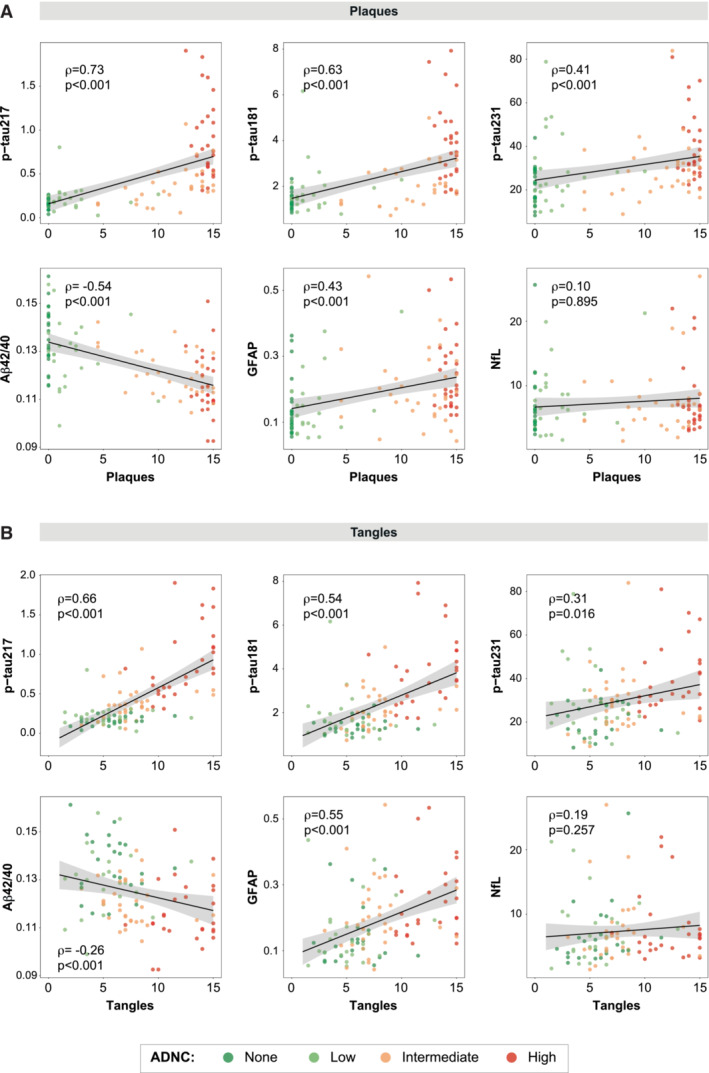
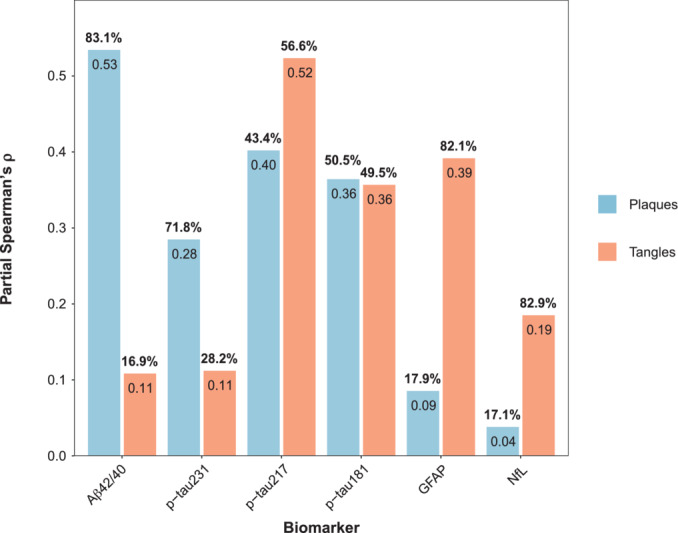
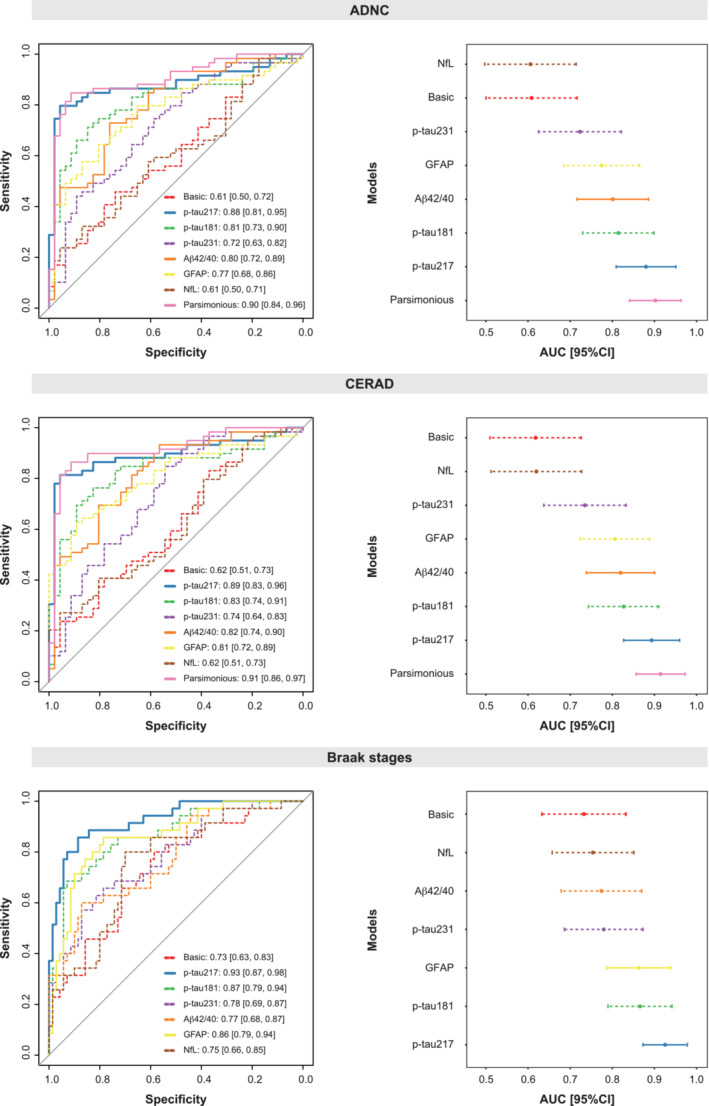
Several promising plasma biomarkers for Alzheimer's disease have been recently developed, but their neuropathological correlates have not yet been fully determined. To investigate and compare independent associations between multiple plasma biomarkers (p‐tau181, p‐tau217, p‐tau231, Aβ42/40, GFAP, and NfL) and neuropathologic measures of amyloid and tau, we included 105 participants from the Arizona Study of Aging and Neurodegenerative Disorders (AZSAND) with antemortem plasma samples and a postmortem neuropathological exam, 48 of whom had longitudinal p‐tau217 and p‐tau181. When simultaneously including plaque and tangle loads, the Aβ42/40 ratio and p‐tau231 were only associated with plaques (ρ Aβ42/40 [95%CI] = −0.53[−0.65, −0.35], ρ p‐tau231 [95%CI] = 0.28[0.10, 0.43]), GFAP was only associated with tangles (ρ GFAP [95%CI] = 0.39[0.17, 0.57]), and p‐tau217 and p‐tau181 were associated with both plaques (ρ p‐tau217 [95%CI] = 0.40[0.21, 0.56], ρ p‐tau181 [95%CI] = 0.36[0.15, 0.50]) and tangles (ρ p‐tau217 [95%CI] = 0.52[0.34, 0.66]; ρ p‐tau181 [95%CI] = 0.36[0.17, 0.52]). A model combining p‐tau217 and the Aβ42/40 ratio showed the highest accuracy for predicting the presence of Alzheimer's disease neuropathological change (ADNC, AUC[95%CI] = 0.89[0.82, 0.96]) and plaque load ( R 2 = 0.55), while p‐tau217 alone was optimal for predicting tangle load ( R 2 = 0.45). Our results suggest that high‐performing assays of plasma p‐tau217 and Aβ42/40 might be an optimal combination to assess Alzheimer's‐related pathology in vivo .
Overview
The claims and statistics of this paper haven’t been checked yet.
Free: it reads the open-access text and checks the first 5 claims that cite a source we can check. Create a free account to check every claim.
Integrity signals
Registry
Cites
Statistics
Figures
Verification
Claims the paper makes
The claims and statistics of this paper haven’t been checked yet.
Free: it reads the open-access text and checks the first 5 claims that cite a source we can check. Create a free account to check every claim.
Claims other papers make about this one
Each is checked against this paper’s own text: does it say what the citing paper says it does?
The source backs part of the claim, not all of it — or backs it for a different population, condition or comparison.
In the citing paper
“However, it is important to emphasize that head-to-head studies indicate that different assays for p-tau181 vary substantially in their diagnostic performance9,10 and may not all perform inferiorly to GFAP in all contexts34,43.”
From Diagnosis of Alzheimer's disease using plasma biomarkers adjusted to clinical probability (2024) · cites this paper as [34]
Experimental — accuracy not yet measuredThe source backs part of the claim, not all of it — or backs it for a different population, condition or comparison.
In the citing paper
“Among different p-tau variants, tau phosphorylated at threonine 217 (p-tau217) has demonstrated the highest accuracy in detecting AD pathology and predicting future cognitive decline23,27,29–31.”
From Highly accurate blood test for Alzheimer's disease is similar or superior to clinical cerebrospinal fluid tests (2024) · cites this paper as [27]
Experimental — accuracy not yet measuredThe cited source says what the claim attributes to it.
In the citing paper
“Yet certain p-tau species, but not all, are also associated with neurofibrillary tangle pathology, the secondary AD pathological hallmark.15,16,17”
From Diagnostic Accuracy of a Plasma Phosphorylated Tau 217 Immunoassay for Alzheimer Disease Pathology (2024) · cites this paper as [16]
The cited source says what the claim attributes to it.
In the citing paper
“Plasma levels of p-tau are strongly associated with PET and CSF biomarkers of AD pathology19–25, neuropathological changes associated with AD20,23,26,27 and the subsequent development of AD dementia20,23,28.”
From Highly accurate blood test for Alzheimer's disease is similar or superior to clinical cerebrospinal fluid tests (2024) · cites this paper as [27]
Self-check
Percentages, sums and reported differences re-computed from the paper’s own numbers.
The self-check needs the paper’s full text.
Citations
Cites
Neuropathological stageing of Alzheimer-related changes.
Braak, H., & Braak, E. (1991) · Acta Neuropathologica · doi:10.1007/bf00308809 · Cited by 16,123 · cited 3×
“…except NfL ( q = 0.19, P = 0.257) were also associated with the total amount of tangles in the independent models (0.26 ≤ | q | ≤ 0.66, P ≤ 0.016; Fig 1B and (Mirra et al , 1991 ) scale and Braak staging (Braak & Braak, 1991 ) refer to measures of plaque and neurofibrillary tangle, respectively.”
MethodResultInfluentialpROC: an open-source package for R and S+ to analyze and compare ROC curves
Robin, X., Turck, N., Hainard, A., Tiberti, N., Lisacek, F., Sanchez, J.-C., & Müller, M. (2011) · BMC Bioinformatics · doi:10.1186/1471-2105-12-77 · Cited by 13,697
Mirra, S. S., Heyman, A., McKeel, D., Sumi, S. M., Crain, B. J., Brownlee, L. M., Vogel, F. S., Hughes, J. P., Belle, G. V., Berg, L., et al. (1991) · Neurology · doi:10.1212/wnl.41.4.479 · Cited by 4,961
Phases of Aβ-deposition in the human brain and its relevance for the development of AD
Thal, D. R., Rüb, U., Orantes, M., & Braak, H. (2002) · Neurology · doi:10.1212/wnl.58.12.1791 · Cited by 3,490
Montine, T. J., Phelps, C. H., Beach, T. G., Bigio, E. H., Cairns, N. J., Dickson, D. W., Duyckaerts, C., Frosch, M. P., Masliah, E., Mirra, S. S., et al. (2012) · Acta Neuropathologica · doi:10.1007/s00401-011-0910-3 · Cited by 2,894
Self-citationA/T/N: An unbiased descriptive classification scheme for Alzheimer disease biomarkers
Jack, C. R., Bennett, D. A., Blennow, K., Carrillo, M. C., Feldman, H. H., Frisoni, G. B., Hampel, H., Jagust, W. J., Johnson, K. A., Knopman, D. S., et al. (2016) · Neurology · doi:10.1212/wnl.0000000000002923 · Cited by 1,864 · cited 1×
“…useful to track AD pathology across the continuum due to its relationship with both main pathological hallmarks of AD, as well as better statistical characteristics of ratios, which can account for production/clearance participants’ inter-variability (Janelidze et al , 2016; Hansson et al , 2019).”
BackgroundSelf-citationHansson, O., Zetterberg, H., Buchhave, P., Londos, E., Blennow, K., & Minthon, L. (2006) · The Lancet Neurology · doi:10.1016/s1474-4422(06)70355-6 · Cited by 1,700 · cited 1×
“The CSF p-tau/A b 42 ratio has received a lot of attention in recent years, both as a research and a clinical tool (Hansson et al , 2006; Fagan et al , 2007; Li et al , 2007; Snider et al , 2009; Mil (cid:4) a-Alom (cid:4) a et al , 2020; Salvad (cid:1) o & Larsson, 2022).”
MethodSelf-citationPalmqvist, S., Janelidze, S., Quiroz, Y. T., Zetterberg, H., Lopera, F., Stomrud, E., Su, Y., Chen, Y., Serrano, G. E., Leuzy, A., et al. (2020) · JAMA · doi:10.1001/jama.2020.12134 · Cited by 1,603 · cited 4×
“…markers have the benefit of being significantly cheaper and less invasive than established markers (i.e., cerebrospinal fluid [CSF] and positron emission tomography [PET]), while showing the excellent diagnostic performance (Karikari et al , 2020; Palmqvist et al , 2020; Jane-lidze et al , 2021a).”
BackgroundMethodInfluentialSelf-citationKarikari, T. K., Pascoal, T. A., Ashton, N. J., Janelidze, S., Benedet, A. L., Rodriguez, J. L., Chamoun, M., Savard, M., Kang, M. S., Therriault, J., et al. (2020) · The Lancet Neurology · doi:10.1016/s1474-4422(20)30071-5 · Cited by 1,316 · cited 3×
“Although p-tau181 has shown very good performance as an AD biomarker (Karikari et al , 2020, 2021; Thijssen et al , 2020; Jane-lidze et al , 2020a; Grothe et al , 2021), multiple (plasma and CSF) studies support that p-tau217 may be a more useful biomarker than p-tau181, as it has stronger…”
BackgroundResultSelf-citationJanelidze, S., Mattsson, N., Palmqvist, S., Smith, R., Beach, T. G., Serrano, G. E., Chai, X., Proctor, N. K., Eichenlaub, U., Zetterberg, H., et al. (2020) · Nature Medicine · doi:10.1038/s41591-020-0755-1 · Cited by 1,247 · cited 4×
“…biomarkers for distinguishing AD from non-AD neurodegenerative disorders (Karikari et al , 2020; Palmqvist et al , 2020; Thijssen et al , 2020; Janelidze et al , 2020a), with noninferior performance compared with CSF and PET markers (Palmqvist et al , 2019; Janelidze et al , 2020a, 2021a;…”
BackgroundMethodInfluentialSelf-citation
Cited by
Items 101–200 of 205
Krell‐Roesch, J., Zaniletti, I., Syrjanen, J. A., Kremers, W. K., Algeciras‐Schimnich, A., Dage, J. L., van Harten, A. C., Fields, J. A., Knopman, D. S., Jack, C. R., et al. (2023) · Alzheimer s & Dementia Diagnosis Assessment & Disease Monitoring · doi:10.1002/dad2.12461 · Cited by 16
Accuracy of plasma biomarkers to detect Alzheimer's disease proteinopathy prior to dementia
Cody, K. A., Du, L., Studer, R. L., Jonaitis, E. M., Asthana, S., Christian, B. T., Chin, N. A., Kirmess, K. M., Meyer, M. R., Yarasheski, K. E., et al. (2025) · Alzheimer s & Dementia · doi:10.1002/alz.14570 · Cited by 15
Dementia research in 2023: the year of anti-amyloid immunotherapy
Delrieu, J., Andrieu, S., & Vellas, B. J. (2023) · The Lancet Neurology · doi:10.1016/s1474-4422(23)00449-0 · Cited by 12
Wennström, M., Schultz, N., Gallardo, P. M., Bank, T. N. B., Serrano, G. E., Beach, T. G., Bose, S., & Hansson, O. (2024) · Cells · doi:10.3390/cells13040331 · Cited by 11
“The same speculation can be applied to the altered co-localization between p-tau231 and p-tau271, as the former is foremost associated with Aß pathology, while the latter is associated with both Aß and tau pathology [8,10,15,33].”
BackgroundSelf-citationOssenkoppele, R., Salvadó, G., Janelidze, S., Binette, A. P., Bali, D., Karlsson, L., Palmqvist, S., Mattsson, N., Stomrud, E., Therriault, J., et al. (2024) · medRxiv · doi:10.1101/2024.06.12.24308824 · Cited by 10
“…scans are relatively rare in CU individuals (i.e., ~5-10% among A b -positive CU individuals in a temporal meta-ROI) 3,4 and post-mortem studies have indicated that a positive [ 18 F]Flortaucipir Tau-PET scan (quantitatively or by visual read) represents tau pathology in Braak stages IV and above.”
BackgroundSelf-citationÁlvarez‐Sánchez, L., Peña‐Bautista, C., Ferré‐González, L., Balaguer, Á., Amengual, J. L., Baquero, M., & Cháfer‐Pericás, C. (2025) · Scientific Reports · doi:10.1038/s41598-025-01511-3 · Cited by 9
Montoliu‐Gaya, L., Valeriano-Lorenzo, E., Ashton, N. J., López‐González, F. J., Lantero‐Rodriguez, J., Ruiz-González, A., Pastor, A. B., Frades, B., Zea‐Sevilla, M. A., Valentí, M., et al. (2025) · Alzheimer s & Dementia · doi:10.1002/alz.70562 · Cited by 11
“One study using immunoassays found that p-tau231 plasma levels were specifically associated with amyloid plaques, whereas p-tau181 and p-tau217 were independently associated with both plaques and tangles, 13 corroborating previous findings using PET imaging biomarkers.”
Self-citationTargeting tau in Alzheimer’s Disease: rationale, approach and challenges
Aslanyan, A., Foiani, M. S., Giovannucci, T. A., McDade, E., Duff, K., Mummery, C. J., Schöll, M., Wildsmith, K. R., & Paterson, R. W. (2026) · Molecular Neurodegeneration · doi:10.1186/s13024-026-00925-5 · Cited by 11
“…plasma p-tau181 was shown to correlate well with amyloid and tau PET scans [246, 300, 301], however some recent data showed that plasma p-tau217 is an earlier and stronger marker associated with AD pathology having strong association with both plaques and tangles [44, 287, 300, 302– 304].”
Multi-Omic Blood Biomarkers as Dynamic Risk Predictors in Late-Onset Alzheimer’s Disease
Bhalala, O. G., Watson, R., & Yassi, N. (2024) · International Journal of Molecular Sciences · doi:10.3390/ijms25021231 · Cited by 11
“A combination of p-tau217 levels and A β 42/40 ratio measured in ante-mortem plasma strongly predicts AD amyloid and tau load in postmortem analysis with an AUC = 0.89 [0.82–0.96], but not significantly better than p-tau217 alone ( p = 0.124) [171].”
MethodInfluentialHow well do plasma Alzheimer’s disease biomarkers reflect the CSF amyloid status?
Hazan, J., Abel, E., Rosa‐Grilo, M., Alawode, D. O. T., Laranjinha, I., Heslegrave, A., Liu, K. Y., Schott, J. M., Howard, R. J., Zetterberg, H., et al. (2024) · Journal of Neurology Neurosurgery & Psychiatry · doi:10.1136/jnnp-2024-334122 · Cited by 12
Self-citationMultimorbidity and fluid biomarkers of Alzheimer's disease: a systematic review
Valletta, M., Canevelli, M., Gasparini, F., Buscarnera, S., Salzillo, M., Triolo, F., Calderón‐Larrañaga, A., Marengoni, A., Vetrano, D. L., & Grande, G. (2025) · European Geriatric Medicine · doi:10.1007/s41999-025-01222-y · Cited by 11
“Measured in cerebrospinal fluid (CSF) and blood, these biomarkers offer a window into the brain by reflecting the underlying neuropathological changes [2–4].”
Wang, Q., Zhong, X., Gao, P., Xiao, Z., Chen, B., Tan, H., Liu, Q., Yao, K., Liang, S., Li, J., et al. (2025) · Alzheimer s & Dementia · doi:10.1002/alz.70465 · Cited by 11
“22,23 In addition, plasma p-tau217 levels correlate with cerebrospinal fluid (CSF) A β and p-tau levels, as well as the severity of cognitive impairment.”
Collij, L. E., Mattsson, N., Janelidze, S., Ossenkoppele, R., & Hansson, O. (2025) · Alzheimer s & Dementia · doi:10.1002/alz.70763 · Cited by 10
Self-citationKivisäkk, P., Fatima, H. A., Wu, C., Padmanabhan, N., Romero, D., Gorham, T., Weik, M., Dodge, H. H., Scherzer, C. R., Das, S., et al. (2026) · Neurology · doi:10.1212/wnl.0000000000214351 · Cited by 13
Plasma glial fibrillary acidic protein in the visual and language variants of Alzheimer's disease
Sintini, I., Singh, N. A., Li, D., Mielke, M. M., Machulda, M. M., Schwarz, C. G., Senjem, M. L., Jack, C. R., Lowe, V. J., Graff‐Radford, J., et al. (2024) · Alzheimer s & Dementia · doi:10.1002/alz.13713 · Cited by 7
“16 To our knowledge, GFAP levels in atypical non-amnestic variants of AD have not yet been investigated.”
BackgroundBlood-based biomarkers of Alzheimer’s disease—A guideline for clinical use
Shi, J., Ou, Q., & Chen, X. (2024) · Medicine Plus · doi:10.1016/j.medp.2024.100057 · Cited by 11
McDade, E., Barthélemy, N. R., Wang, G., Li, Y., Cao, Y., Gordon, B. A., Benzinger, T. L. S., Clifford, D. B., Goate, A., Renton, A. E., et al. (2025) · Alzheimer s & Dementia · doi:10.1002/alz.70689 · Cited by 8
“42 The high concordance between a normal A β -PET level and a normal pT217/T217 ratio also suggests that p-tau217 could be used to monitor for an initial and substantial response to A β -plaque lowering therapiesinthecontextofAD.”
Mostaghimi, H., Cohen, D. A., Okhravi, H. R., Niknejad, B., & Audette, M. A. (2025) · Archives of Gerontology and Geriatrics Plus · doi:10.1016/j.aggp.2025.100207 · Cited by 7
Emerging concepts towards a translational framework in Alzheimer’s disease
Cozachenco, D., Zimmer, E. R., & Lourenco, M. V. (2023) · Neuroscience & Biobehavioral Reviews · doi:10.1016/j.neubiorev.2023.105246 · Cited by 8
Hu, M., Moloney, C. M., Przybelski, S. A., Algeciras‐Schimnich, A., Therneau, T. M., Fought, A. J., Rothberg, D. M., Nguyen, A. T., Reichard, R. R., Dickson, D. W., et al. (2025) · Alzheimer s Research & Therapy · doi:10.1186/s13195-025-01852-1 · Cited by 8
“Previous literature investigated correlations between various plasma assays and neuropathology and yielded different results [17, 19, 33, 34, 45].”
Yang, S. J., Lin, A. A., Shen, H., Pappalardo, L. W., Spychalski, G. B., Rosario, J. G., Forsberg, L. K., Grant, K. M., Buser, J. R., Savica, R., et al. (2026) · npj Biosensing · doi:10.1038/s44328-026-00086-x · Cited by 7
“…p-tau217, may not be effective in detecting these mixed pathology cases; SAAs may still produce a positive result for some patients with Lewy bodies that do not meet neuropathological criteria for LBD 17,18 and p-Tau217 is unable to predict presence or absence of LBD co-pathology in AD patients 4 .”
Tropea, T. F., Stevenson, P. A., Flitter, M. L., Meehan, D., Morris, A., Lu, M., Iaccarino, L., Collins, E. C., Hodsdon, M. E., Irwin, D. J., et al. (2026) · Annals of Neurology · doi:10.1002/ana.78201 · Cited by 12
Tracking the turning point in Alzheimer’s disease
Strooper, B. D., & Zetterberg, H. (2026) · Science · doi:10.1126/science.aeb6987 · Cited by 8
Self-citationLane, R. M., Darreh‐Shori, T., Junge, C., Li, D. X., Yang, Q., Edwards, A., Graham, D. L., Moore, K. M., & Mummery, C. J. (2024) · BMC Neurology · doi:10.1186/s12883-024-03611-5 · Cited by 6
“The primary biomarker used in this study to index tau pathophysiology (CSF p-tau 181 ) may reflect a mix of amyloid and tau pathological changes in the brain [98], and is therefore not a “pure” marker of tau tangle load in the brain.”
MethodBiomarker-integrated prognostic stagings for Alzheimer’s Disease
Shin, D., Lee, S., Kim, J. P., Jang, H., Yun, J., Chun, M. Y., Ahn, J., Kim, S., Kim, K., Yoon, S., et al. (2026) · Nature Communications · doi:10.1038/s41467-026-68732-6 · Cited by 6
Self-citationBathla, S., Datta, D., Bolat, D., Woo, E., Duque, A., Arellano, J. I., Arnsten, A. F. T., & Nairn, A. C. (2025) · Frontiers in Aging Neuroscience · doi:10.3389/fnagi.2025.1549770 · Cited by 5
Wei, M., Zhang, Y., Wang, M., Zhong, J., Chai, W., Hu, W., Tao, F., Wang, L., Zhang, Q., Yu, X., et al. (2025) · Alzheimer s & Dementia · doi:10.1002/alz.70114 · Cited by 5
“65,66 More interestingly, previous studies found that tau pathology could destroy neuronal connectivity and brain network function in preclinical phases, driving neurodegeneration, which highlights the core effects of p-tau biomarkers.”
The Current Role of Tau PET Imaging in Neurodegeneration
Vanderlinden, G., Vandenberghe, R. R., Vandenbulcke, M., & Laere, K. V. (2025) · Seminars in Nuclear Medicine · doi:10.1053/j.semnuclmed.2025.03.002 · Cited by 8
Cousins, K. A. Q., Boyle, R. T., Morse, C., Verma, A., Brown, C., O'Brien, K. O., Serper, M., Dehghani, N., BioBank, P. M., McMillan, C. T., et al. (2025) · Annals of Neurology · doi:10.1002/ana.78114 · Cited by 5
Plasma phosphorylated tau 217 detects amyloid-β in neuronal synuclein disease
Smith, A. M., Lorkiewicz, S. A., Arslan, B., Montoliu‐Gaya, L., Ashton, N. J., Wilson, E. N., Alcolea, D. A., Rodríguez‐Baz, Í., Fortea, J., Young, C. B., et al. (2026) · npj Parkinson s Disease · doi:10.1038/s41531-026-01341-8 · Cited by 5
“Based on this evidence, pTau217 is now recommended for clinical and research use 16 .”
Self-citationPlasma eMTBR-tau243 and %p-tau217 for Biological Staging of Alzheimer Disease
Salvadó, G., Horie, K., Barthélemy, N. R., Schindler, S. E., Janelidze, S., Dolado, A. O., Bali, D., Perrin, R. J., Morris, J. C., Benzinger, T. L. S., et al. (2026) · JAMA Neurology · doi:10.1001/jamaneurol.2026.1405 · Cited by 12
Self-citationMoghekar, A., Rock, J. A., Mohs, R. C., Hansson, O., Stomrud, E., Palmqvist, S., Mattsson, N., Johnson, S. C., Zetterberg, H., Radwan, R. R., et al. (2026) · Alzheimer s & Dementia · doi:10.1002/alz.71644 · Cited by 8
“16 19 Similar to CSF findings, plasma A β 1-42 levels correlate with brain amyloid plaque burden 20 and have beeninvestigatedasdiagnosticmarkersinprodromalandsymptomatic AD.”
Self-citationAschenbrenner, A. J., Hassenstab, J. J., Schindler, S. E., Janelidze, S., Hansson, O., Morris, J. C., & Grober, E. H. (2024) · The Journal of Prevention of Alzheimer s Disease · doi:10.14283/jpad.2024.130 · Cited by 4
“Plasma p-tau217 reflects both amyloid and tau pathology (30, 42, 43), and tau pathology is more strongly associated with cognitive impairment than amyloid pathology alone (44,45).”
Self-citationGarnier‐Crussard, A. (2024) · Alzheimer s Research & Therapy · doi:10.1186/s13195-024-01547-z · Cited by 7
“Other plasma biomarkers, including phosphorylated tau proteins (p-tau217 and p-tau181, reflecting both tau and amyloid pathology [24]), did not show a significant change under treatment.”
BackgroundA fluid biomarker accurately detects tau aggregate pathology in Alzheimer’s disease
(2023) · Nature Medicine · doi:10.1038/s41591-023-02468-4 · Cited by 4
Evaluation of a panel of plasma biomarkers for Alzheimer's disease in a diverse research cohort
DuBois, K. N., Pal, S., Reader, J. M., Jackman, B. M., Perkins, M., Khobeir, N., Bakulski, K. M., Heidebrink, J. L., Hampstead, B. M., Morgan, D., et al. (2025) · Journal of Alzheimer s Disease · doi:10.1177/13872877251393405 · Cited by 3
Longitudinal plasma proteomics: relation to incident Alzheimer's disease dementia and biomarkers
Lee, E. H., Huang, Y.-N., Park, T., Liu, S., Adzibolosu, N. K., Chaudhuri, S., Chang, C., Bice, P. J., Dage, J. L., Brosch, J. R., et al. (2025) · Alzheimer s & Dementia · doi:10.1002/alz.70900 · Cited by 7
“57 These PET-plasma biomarker differences may explain the distinct protein associations.”
AD‐related plasma biomarkers in centenarians: links to cognition and neuropathology
Lorenz, L. M. C., Rohde, S. K., Luimes, M. C., Rozemüller, A. J. M., Bank, N. B., Hulsman, M., Graat, M. J. I., van der Hoorn, M. E., Daatselaar, D. A. H., Gouda, M., et al. (2025) · Alzheimer s & Dementia · doi:10.1002/alz.70969 · Cited by 4
“5 10 In addition, increased plasma concentrations of blood-based neurofilament light (NfL) reflect axonal degeneration, 11 and increased plasma concentra-tionsofglialfibrillaryacidicprotein(GFAP)reflectastrocyteactivation in response to neuroinflammation, and are associated with increased A β…”
Silva‐Spínola, A., Durães, J., de Oliveira, J. F., Tábuas‐Pereira, M., Lima, M., de Mendonça, A., Santana, I. J., & Baldeiras, I. (2026) · Scientific Reports · doi:10.1038/s41598-025-34241-7 · Cited by 5
“Neuropathological studies further validate this, which demonstrated a stronger association between plasma p-tau217 levels and the presence of amyloid plaques and tau tangles, relative to plasma p-tau181 6 .”
Tan, Y.-R., Mohammadi, R., Saffari, S. E., Tan, N. I., Lim, L. S., Low, S. H., Tan, L. C., Chiew, H. J., Ng, K. P., Hameed, S., et al. (2026) · Alzheimer s Research & Therapy · doi:10.1186/s13195-026-02008-5 · Cited by 6
Yu, L., Wang, T., Hansson, O., Janelidze, S., Lamar, M., Arfanakis, K., Bennett, D. A., Schneider, J. A., & Boyle, P. A. (2024) · Neurology Clinical Practice · doi:10.1212/cpj.0000000000200291 · Cited by 3
Self-citationA novel pThr217 tau monoclonal antibody reveals neuropathological heterogeneity in tauopathies
Paterno, G., Bell, B. M., Gorion, K.-M. M., Quintin, S. S., Prokop, S., & Giasson, B. I. (2025) · Scientific Reports · doi:10.1038/s41598-025-04291-y · Cited by 2
Tranfa, M., Pieperhoff, L., Pontillo, G., Luckett, E. S., Collij, L. E., Oliveira, T. G., Tesi, N., Vilor‐Tejedor, N., Altmann, A., Roccatagliata, L., et al. (2025) · Alzheimer s Research & Therapy · doi:10.1186/s13195-025-01888-3 · Cited by 2
“…recent availability of additional p-Tau epitopes that more closely reflect tau tangle pathology, such as p-Tau 217 , p-Tau 205 , and MTBR-tau 243 [70–72], warrants future studies including these markers to enable a more nuanced characterization of stage-specific pathological changes and to…”
Self-citationDiagnostic utility of plasma p‐tau217 differs by Alzheimer's disease tau‐based subtypes
Hojjati, S. H., Butler, T., Zare, S., Reihanian, A., Khalafi, M., Foldi, N. S., Shah, S. A., Jafari, H., Li, Y., Zhou, L., et al. (2025) · Alzheimer s & Dementia Diagnosis Assessment & Disease Monitoring · doi:10.1002/dad2.70227 · Cited by 3
“30,31 Although p-tau 217 has helped improve the early detection of AD, we still know very little about accuracy in individuals with atypical forms of the disease, which can occur at younger ages and be more difficult to diagnose clinically.”
Mattsson, N., Karlsson, L., Tang, W., Blennow, K., Zetterberg, H., Bateman, R. J., Schindler, S. E., Barthélemy, N. R., Palmqvist, S., Stomrud, E., et al. (2025) · EMBO Molecular Medicine · doi:10.1038/s44321-025-00348-7 · Cited by 4
Self-citationA Test of the Alzheimer Disease Framework—Did It Pass?
Petersen, R. C., & Zetterberg, H. (2025) · JAMA Neurology · doi:10.1001/jamaneurol.2025.4966 · Cited by 2
Self-citationHe, B., Ospina-Lopera, P., Espinosa, A. C., Becerra, J. C., Osorio, L., Alzate, D., Álvarez, S., Grazia, A., Teipel, S. J., Malotaux, V., et al. (2025) · Alzheimer s & Dementia · doi:10.1002/alz.71052 · Cited by 2
“Its robust association with cerebral amyloid and tau deposition underscores its sensitivity to early AD pathology 26,27 .”
Malotaux, V., Ku, V., Ospina-Lopera, P., Su, Y., Chen, Y., Singh, A., Ruiz-Triviño, J., Hidalgo, M. J., Osorio, L., Serna, L., et al. (2026) · The Journal of Prevention of Alzheimer s Disease · doi:10.1016/j.tjpad.2026.100578 · Cited by 3
Self-citationProminent Perspective on Existing Biological Hallmarks of Alzheimer’s Disease
Singh, N., Sharma, S., Ghosh, K. K., Gupta, B., & Kuča, K. (2024) · Current Topics in Medicinal Chemistry · doi:10.2174/0115680266292514240404040341 · Cited by 2
Biomarkers for Neurodegenerative Diseases
Abdelmoaty, M. M., Lu, E., & Foster, E. G. (2024) · Springer eBooks · doi:10.1007/978-3-031-68237-7_44 · Cited by 2
Biomarkers in Clinical Trials of Alzheimer Disease: An Overview
de Oliveira, F. F., Castilhos, R. M., Coutinho, A. M., Andrade, A. C., Kim, Y. J., Nabizadeh, F., Porto, F. H. D. G., & dos Santos, G. A. A. (2025) · Springer eBooks · doi:10.1007/978-3-031-80849-4_14 · Cited by 2
Vrillon, A., Spina, S., Mejía‐Perez, J. A., LaMore, T., Yballa, C., Soleimani‐Meigooni, D. N., Blazhenets, G., Boxer, A. L., Rojas, J. C., Lago, A. L., et al. (2025) · medRxiv · doi:10.1101/2025.05.14.25326954 · Cited by 2
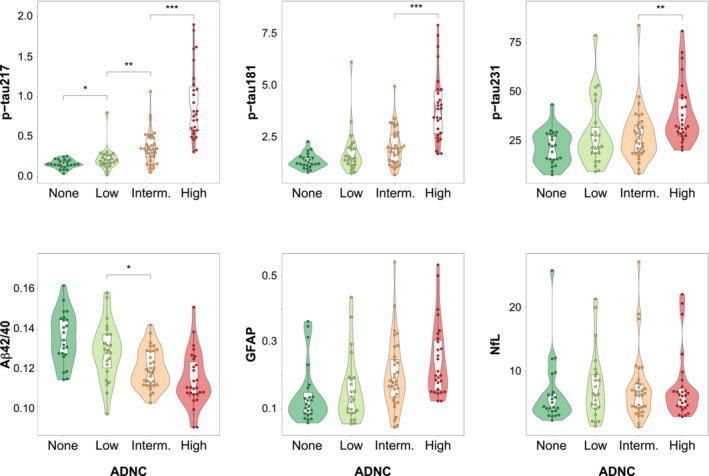
“We observed consistently elevated p-tau217 concentrations at advanced Braak stages and high levels of ADNC, in a similar profile to PET, with a significant correlation with NFT burden 10,11,41,42 .”
InfluentialTan, Y. J., Mohammadi, R., Saffari, S. E., Tan, N. I., Lim, L. S., Low, S. H., Tan, L. C., Chiew, H. J., Ng, K. P., Hameed, S., et al. (2025) · medRxiv · doi:10.1101/2025.05.22.25328192 · Cited by 2
Dolado, A. O., Binette, A. P., Benedet, A. L., Pola, I., Tan, K., Traichel, W., Hristovska, I., Mammana, A., Stomrud, E., Salvadó, G., et al. (2026) · medRxiv · doi:10.64898/2026.02.04.26345534 · Cited by 4
Self-citationPieperhoff, L., Lorenzini, L., Mastenbroek, S. E., Tranfa, M., Shekari, M., Wink, A. M., Wolz, R., Grootoonk, S., Ritchie, C. W., Boada, M., et al. (2025) · NeuroImage Clinical · doi:10.1016/j.nicl.2025.103912 · Cited by 5
Chen, C. D., Agüero, C., Melloni, A. N., Healy, B. C., Thibault, E. G., Fu, J. F., Farrell, M. E., Schultz, S. A., Yang, H., Bellier, J., et al. (2026) · Alzheimer s & Dementia · doi:10.1002/alz.71092 · Cited by 1
“10 The study referenced above also reported that plasma GFAP correlates with postmortem A β plaques and tau NFTs, whereas plasma NfL correlates with neither.”
Alzheimer’s Disease Pathologies Affect Dopaminergic Neural Mechanisms of Memory
Morin, T., Cowan, J. L., Chen, H.-Y., Parent, J. H., Crawford, J. L., Ciampa, C. J., Shah, V. D., Hsu, M. H., Jagust, W. J., & Berry, A. S. (2026) · Journal of Neuroscience · doi:10.1523/jneurosci.1580-25.2026 · Cited by 3
Li, S., Wei, S., Wang, L., Yu, T., Wang, H., Yang, S. B., Cao, W., & Zhang, X. (2026) · International Journal of Biological Macromolecules · doi:10.1016/j.ijbiomac.2026.151452 · Cited by 1
Tau and amyloid-β imaging with proteomics and genomics
Chinnathambi, S., Baisya, U., & Ananthanarayana, V. (2026) · Advances in protein chemistry and structural biology · doi:10.1016/bs.apcsb.2026.02.009 · Cited by 1
Riccardi, N., Martin, A., Pytel, D., Newman-Norlund, S. E., Carroll, S. L., Rorden, C., Fridriksson, J., & Bonilha, L. (2026) · npj Dementia · doi:10.1038/s44400-026-00115-6 · Cited by 2
“Most prior work has examined plasma p-tau217 in cohorts enriched for AD or mild cognitive impairment (MCI) or has focused on its relationship to CSF, PET, or postmortem brain structure 20 – 22 .”
Plasma Phosphorylated Tau 217 in Participants at Risk for Chronic Traumatic Encephalopathy
Miner, A. E., Zetterberg, H., Blennow, K., Groh, J. R., Singh, A., Dieckhoff, K., Tripodis, Y., Adler, C. H., Balcer, L. J., Bernick, C. B., et al. (2026) · JAMA Network Open · doi:10.1001/jamanetworkopen.2026.22966 · Cited by 2
Self-citationFluid-Based Biomarkers of Alzheimer’s Disease
Rocha, N. P., Teixeira, A. L., & de Souza, L. C. (2023) · Springer eBooks · doi:10.1007/978-3-031-43356-6_10 · Cited by 1
Five biomarkers from one cerebrospinal fluid sample to stage Alzheimer’s disease
Salvadó, G., & Hansson, O. (2024) · Nature Aging · doi:10.1038/s43587-024-00618-y · Cited by 1
Self-citationThe Alzheimer disease continuum : findings from monogenic Alzheimer disease
Johansson, C. (2025) · doi:10.69622/28639856 · Cited by 4
Yakoub, Y., Qiu, T., Peyrot, C., Salvadó, G., Villeneuve, S., Binette, A. P., & Initiative, A. D. N. (2025) · medRxiv · doi:10.1101/2025.09.30.25337003 · Cited by 4
Self-citationThe Crossroads Between Alzheimer's Disease Pathophysiology and Epilepsy
Kobayashi, E. (2024) · Epiliepsy currents/Epilepsy currents · doi:10.1177/15357597241256616
Fluid and Imaging Markers of Glial Reactivity
Suárez‐Calvet, M. (2025) · Springer eBooks · doi:10.1007/978-3-031-80849-4_6 · Cited by 1
Shekari, M., Escalante, A. G., Milà‐Alomà, M., Falcón, C., López‐Martos, D., Sánchez‐Benavides, G., Brugulat‐Serrat, A., Niñerola‐Baizán, A., Ashton, N. J., Karikari, T. K., et al. (2025) · medRxiv · doi:10.1101/2025.07.09.25331011
Self-citationEvaluation of a Sensitive Visual Read Algorithm for Assessing 3R/4R Tau PET Images
Smith, R. A., Garibotto, V., Hägerström, D., Jögi, J., Ohlsson, T. G., Strandberg, O. T., Tonietto, M., Janelidze, S., Palmqvist, S., Stomrud, E., et al. (2025) · Journal of Nuclear Medicine · doi:10.2967/jnumed.125.269685
Self-citationCottez, R. J., Peyrot, C., Denis, H. L., Tremblay, C., Loiselle, A., Filali‐Mouhim, A., Hébert, S. S., Leclerc, N. M., Blennow, K., Zetterberg, H., et al. (2025) · medRxiv · doi:10.1101/2025.09.26.25336739
Self-citationClinicopathological and prognostic correlations of plasma biomarkers in neurodegenerative diseasesPreprint
Malpetti, M., Chouliaras, L., Murley, A. G., Swann, P., Coyle-Gilchrist, I. T. S., Bevan-Jones, W. R., Savulich, G., Perquin, M. N., Wiggins, J., Bowns, L., et al. (2025) · medRxiv · doi:10.64898/2025.12.07.25341788 · Cited by 2
Self-citationRad, A. R., Nadaki, A., Khosravi, F., Nasiri, H., Ghayourvahdat, A., & Initiative, A. D. N. (2025) · Scientific Reports · doi:10.1038/s41598-025-32404-0 · Cited by 1
Cognitive profile accurately predicts underlying pathology in Corticobasal SyndromePreprint
Smithies, S., Ebneabbasi, A., Conci, R., Murley, A. G., Savulich, G., Stockton, K. C., Rouse, M. A., Naessens, M., Malpetti, M., Rittman, T., et al. (2025) · medRxiv · doi:10.64898/2025.12.17.25342469 · Cited by 1
Lane, R. M., Darreh-Shori, T., Junge, C., Li, D., Yang, Q., Edwards, A., Graham, D. L., Moore, K. M., & Mummery, C. J. (2024) · Figshare · doi:10.6084/m9.figshare.25572641
Niimi, Y., Janelidze, S., Sato, K., Tomita, N., Tsukamoto, T., Kato, T., Yoshiyama, K., Kowa, H., Iwata, A., Ihara, R., et al. (2024) · Figshare · doi:10.6084/m9.figshare.25884992
Self-citationLane, R. M., Darreh-Shori, T., Junge, C., Li, D., Yang, Q., Edwards, A., Graham, D. L., Moore, K. M., & Mummery, C. J. (2024) · Figshare · doi:10.6084/m9.figshare.25572515
Kurihara, M., Matsubara, T., Morimoto, S., Arakawa, A., Ohse, K., Kanemaru, K., Iwata, A., Murayama, S., & Saito, Y. (2024) · Figshare · doi:10.6084/m9.figshare.26698736
Lane, R. M., Darreh-Shori, T., Junge, C., Li, D., Yang, Q., Edwards, A., Graham, D. L., Moore, K. M., & Mummery, C. J. (2024) · Figshare · doi:10.6084/m9.figshare.26703981
Is there a link between multiple sclerosis and Alzheimer disease? A critical note
Jellinger, K. (2025) · Journal of Neural Transmission · doi:10.1007/s00702-025-03073-0
“Similar to CSF, the plasma Aβ 1–42/1–40 ratio is decreased in individuals demonstrating ADNC at autopsy, regardless of the clinical symptoms (Salvadó et al. 2023).”
Blood-based emerging biomarkers in early detection and diagnosis of Alzheimer’s disease
Anand, T., & Kumar, A. (2026) · International review of neurobiology · doi:10.1016/bs.irn.2026.01.002
Capillary Plasma GFAP and NfL Track In Vivo Tauopathy Progression in PS19 MicePreprint
Harima, A., Kobayashi, N., Sharma, S., Tokuda, T., Higuchi, M., Tsukakoshi, K., & Murakami, T. (2026) · Research Square · doi:10.21203/rs.3.rs-8912963/v1 · Cited by 1
Koenig, L. N., Huber, H., Chongtham, A., Molfetta, G. D., Andrews, R. D., Lukic, A., Shafiian, N., Fillit, H. M., Blennow, K., Ashton, N. J., et al. (2026) · Brain Communications · doi:10.1093/braincomms/fcag074
“15,16 Aside from its correlations with amyloid and tau pathology, GFAP, a protein related to astrocyte reactivity in the brain, remains of high interest as a plasma biomarker in Alzheimer’s disease and related disorders to track astrogliosis.”
Self-citationAngioni, D., Delrieu, J., Cantet, C., Soriano, G., Bellelli, F., Vellas, B. J., Andrieu, S., & Sourdet, S. (2026) · Alzheimer s & Dementia Translational Research & Clinical Interventions · doi:10.1002/trc2.70213
Yakubu, A. O., Atafo, G. I., Nwaze, C. E., Bakare, T. Y., Adeniyi, T. O., Alare, K., Oladele, A. B., & Solagbade, O. S. (2026) · NeuroMarkers. · doi:10.1016/j.neumar.2026.100167 · Cited by 2
Wu, J., Fang, T., Lv, X., Wang, Y., Gao, F., Shen, Y., Cheng, Z., & Shi, J. (2026) · CNS Neuroscience & Therapeutics · doi:10.1002/cns.70949
“Among these, phosphorylated tau at residue 217 (p-tau217) has emerged as a highly robust biomarker [23, 24], demonstrating strong correlations with cerebral amyloid-β (Aβ) deposition and tau pathology [25, 26].”
Zhang, M., Shi, L., Dong, Y., Sun, Y., Zhu, S., & Jin, Q. (2026) · Molecular Biology Reports · doi:10.1007/s11033-026-12088-z
“To some extent, the levels of these peripheral signals reflect the degree of accumulation of pathological factors in the brain [21].”
Plasma p‐tau markers, vascular factors, and cognitive decline in the CIMA‐Q cohort
Cottez, R. J., Peyrot, C., Denis, H. L., Tremblay, C., Loiselle, A., Dallaire‐Théroux, C., Filali‐Mouhim, A., Hébert, S. S., Leclerc, N. M., Blennow, K., et al. (2026) · Alzheimer s & Dementia · doi:10.1002/alz.71588
Self-citationChen, Y., Zhang, B., Yang, S., Wang, P., Wang, X., & He, H. (2026) · Analytica Chimica Acta · doi:10.1016/j.aca.2026.345836
Soni, H., Sutherland, G. T., & Hofer, M. J. (2026) · Journal of Neuroinflammation · doi:10.1186/s12974-026-03927-8
“However, their interpretation is still shaped by disease stage, assay modality, mixed pathology, and clinical context [139, 197, 198].”
REAl world Dementia OUTcomes (READ-OUT) protocol: observational study
Whiteside, D. J., Yang, Y., Begde, A., Rome‐Hall, H., Koohi, F., Koychev, I. G., Raymont, V., & Rowe, J. B. (2026) · BMJ Open · doi:10.1136/bmjopen-2025-115574
“25 Blood biomarkers (BBMs) have also been shown to have prognostic value both in people with dementia and in at-risk cohorts.”
Thanou, E., Ganz, A. B., Pita-Illobre, D., Koopmans, F., Hoozemans, J. J. M., Rozemüller, A. J. M., Holstege, H. H., SMIT, A. B., & Li, K. W. (2026) · Alzheimer s & Dementia · doi:10.1002/alz.71662
Classification of tau status with machine learning models in amyloid‐positive cohorts
Lin, Y., Chiu, S.-C., Massey, R., Fang, Y.-H. D., & Initiative, A. D. N. (2026) · Alzheimer s & Dementia · doi:10.1002/alz.71683 · Cited by 1
“17,18 Plasma endogenously cleaved microtubule-binding regiontau containing residue 243 (eMTBR-tau243) has demonstrated a strong ability to identify insoluble tau tangles, but it is still under development and requires a relatively complex assay.”
Le diagnostic sanguin de la maladie d’Alzheimer : utopie ou dystopie ?
Planche, V. (2026) · Bulletin de l Académie Nationale de Médecine · doi:10.1016/j.banm.2026.05.033
Novel cell markers with altered expression in brain aging and Alzheimer's disease: A review
Alobu, E. J., Uchewa, O. O., & Ibegbu, A. O. (2026) · IBRO Neuroscience Reports · doi:10.1016/j.ibneur.2026.08.010
Xie, B., Zhang, W., Zhang, Y., Liu, L., You, J., & Li, Q. (2026) · Frontiers in Aging Neuroscience · doi:10.3389/fnagi.2026.1852137
“Postmortem and imaging studies further suggest that plasma A β 42/40 is associated with amyloid plaque burden, although the strength of this association varies across cohorts and analytical platforms (Brickman et al., 2021; Salvadó et al., 2023).”
Mastrangelo, A., Baiardi, S., Ruggeri, E., Bentivenga, G. M., Vargiu, C. M., Mammana, A., Sbriccoli, M., Polischi, B., Carlà, B., Capellari, S., et al. (2026) · Acta Neuropathologica · doi:10.1007/s00401-026-03076-5
“Although this performance lies within the lower range of AUC values reported in previous neuropathological studies [27, 39, 40, 46, 54, 56, 58, 61], differences in cohort composition may partially explain this discrepancy.”
Tansey, M. G., Bozeat, S., Ackerman, P., Atri, A., Barnum, C. J., Brundin, P., de Carvalho, C. M. A., Fleisher, A., Graf, A., Head, E., et al. (2026) · Alzheimer s & Dementia Translational Research & Clinical Interventions · doi:10.1002/trc2.70287
Morbelli, S. D., Brendel, M., Tolboom, N., Drzezga, A. E., Janelidze, S., Joie, R. L., Roccatagliata, L., Agosta, F., Arbizu, J., Boccalini, C., et al. (2026) · The EANM Journal · doi:10.1016/j.eanmj.2026.100250
Self-citationYagihara, H., 祐幸, 齋., Takeuchi, T., Seki, K., & Minakawa, E. N. (2026) · Experimental Neurology · doi:10.1016/j.expneurol.2026.116044
Quantitative Relationship Between Lumipulse G Measures of pTau217 in Plasma and the Temporal Cortex
Meyer, S. D., Tomé, S. O., Lahaije, B., Vanbrabant, J., Lambrechts, C., Goossens, J., Vanmechelen, E., Sleegers, K., Arnim, C. A. F. V., Tousseyn, T., et al. (2026) · Neurology · doi:10.1212/wnl.0000000000218598
“3,13,14,16,44 Taken together, accumulating evidence suggests that soluble pTau217 may mediate the link between amyloid and tau, with tau ’ s independent contribution becoming more evident in later disease stages.”
Metadata
- Authors
- Salvadó, G., Ossenkoppele, R., Ashton, N. J., Beach, T. G., Serrano, G. E., Reiman, E. M., Zetterberg, H., Mattsson‐Carlgren, N., Janelidze, S., Blennow, K., & Hansson, O.
- Affiliations
- Lund University (SE)
- King's College London (GB)
- Banner Sun Health Research Institute (US)
- University of Arizona (US)
- Sahlgrenska University Hospital (SE)
- Corresponding author
- Salvadó, Gemma
- Hansson, Oskar
- ORCID
- Venue
- EMBO Molecular Medicine
- Published
- 2023-03-13
- Volume
- 15
- Issue
- 5
- Pages
- e17123-e17123
- ISSN
- 1757-4676 (ISSN-L)
- 1757-4684
- PMC
- PMC10165361
- OpenAlex
- W4324019853
- Cited by
- 205
- References
- 71
- Citations by year
- 2026: 52 · 2025: 70 · 2024: 62 · 2023: 20
- FWCI
- 35.94
- Type
- journal article
- Language
- en
- Open access
- gold
- doi.org
- Licence
- cc-by
- creativecommons.org/licenses/by/4.0/ (tdm)
- creativecommons.org/licenses/by/4.0/ (vor)
- Locations
- EMBO Molecular Medicine (publishedVersion, cc-by)
- PubMed Central (publishedVersion, cc-by)
- PubMed (publishedVersion)
- UCL Discovery (University College London) (submittedVersion, cc-by)
- DOAJ (DOAJ: Directory of Open Access Journals) (submittedVersion, cc-by-sa)
- Lund University Publications (Lund University) (submittedVersion)
- Pure Amsterdam UMC (submittedVersion, cc-by)
- Amsterdam UMC (VU Amsterdam) - Institutional Repository (submittedVersion, other-oa)
- Data Archiving and Networked Services (DANS) (submittedVersion, cc-by)
- Funders
- AD Strategic Fund and Alzheimer's Association (ADSF‐21‐831376‐C, ADSF‐21‐831381‐C, ADSF‐21‐831377‐C)
- ALF‐agreement (ALFGBG‐715986, ALFGBG‐965240)
- Alzheimer Drug Discovery Foundation (201809‐2016862, RDAPB‐201809‐2016615)
- Alzheimer's Association 2021 Zenith Award (ZEN‐21‐848495)
- Bluefield Project
- Erling Persson Family Foundation
- European Research Council (681712, 101053962)
- European Union Joint Program for Neurodegenerative Disorders (JPND2019‐466‐236)
- European Union Joint Programme—Neurodegenerative Disease Research (JPND2021‐00694)
- Greta och Johan Kocks stiftelser
- Hj#x00E4;rnfonden, Sweden (FO2017‐0243, ALZ2022‐0006)
- Knut och Alice Wallenbergs Stiftelse (2017‐0383)
- Konnung Gustaf och Drottning Victorias Frimurarestiftelse
- Marianne and Marcus Wallenberg Foundation (2015.0125)
- Marie Sklodowska‐Curie (101061836, 860197)
- National Institute of Health, USA (1R01AG068398‐01)
- Olav Thon Foundation
- Parkinson Foundation of Sweden (1280/20)
- Skane University Hospital Foundation (2020‐O000028)
- Stiftelsen för Gamla Tjänarinnor, Hjärnfonden, Sweden (FO2022‐0270)
- Strategic Research Area MultiPark
- Swedish Alzheimer Foundation (AF‐939932, AF‐930351, AF‐939721, AF‐968270)
- Swedish Brain Foundation (FO2021‐0293)
- Swedish Federal Government (2018‐Projekt0279)
- Swedish Research Council (2016‐00906, 2018‐02532, 2017‐00915)
- Swedish State Support for Clinical Research (ALFGBG‐71320)
- UK Dementia Research Institute at UCL (UKDRI‐1003)
- Topics
- Life Sciences › Neuroscience › Cellular and Molecular Neuroscience › Alzheimer's disease research and treatments
- Health Sciences › Medicine › Psychiatry and Mental health › Dementia and Cognitive Impairment Research
- Health Sciences › Medicine › Clinical Neurology › Cerebrospinal fluid and hydrocephalus
- Keywords
- Alzheimer's disease, plasma biomarkers, postmortem neuropathology, amyloid plaques, tau tangles, phosphorylated tau, p-tau217, p-tau181, p-tau231, amyloid-beta 42/40 ratio, glial fibrillary acidic protein, neurofilament light chain, biomarker prediction
- MeSH terms
- Neuropathology, Alzheimer Disease, Autopsy, Humans, Biomarkers, Amyloid beta-Peptides, tau Proteins, Plaque, Amyloid
About these checks
Registry, retraction, Cites and statistics results are computed, not judged, with one exception: a printed reference that no index lists is read once by a model before it counts as a citation error. Claims are extracted by a model and kept only when their quote appears verbatim in the text; each cited source is then checked, with a model’s help, for whether it says what the claim relies on. Those verdicts can be wrong — read the claim’s quote and the cited source before relying on one.
Statistics and arithmetic are recomputed, not judged.
Confidence bands are shown only for fields calibrated on our annotated test set. None is calibrated yet, so no band is shown.
What counts as a claim ›How we measure confidence ›How we check this ›
Are you an author, or do you see a problem with this page? Request a review
Data sources
Bibliographic data: Semantic Scholar, OpenAlex, Crossref.
Contains information from the Semantic Scholar Academic Graph Datasets, made available under the ODC Attribution License (ODC-BY 1.0).
Semantic Scholar’s data is described in: Kinney, R., et al. (2023). The Semantic Scholar Open Data Platform. arXiv:2301.10140.
