

Specific associations between plasma biomarkers and postmortem amyloid plaque and tau tangle loads
Open accessThe DOI matches its Crossref record; 70 of the 71 references it cites were found in a registry or an index.
Abstract
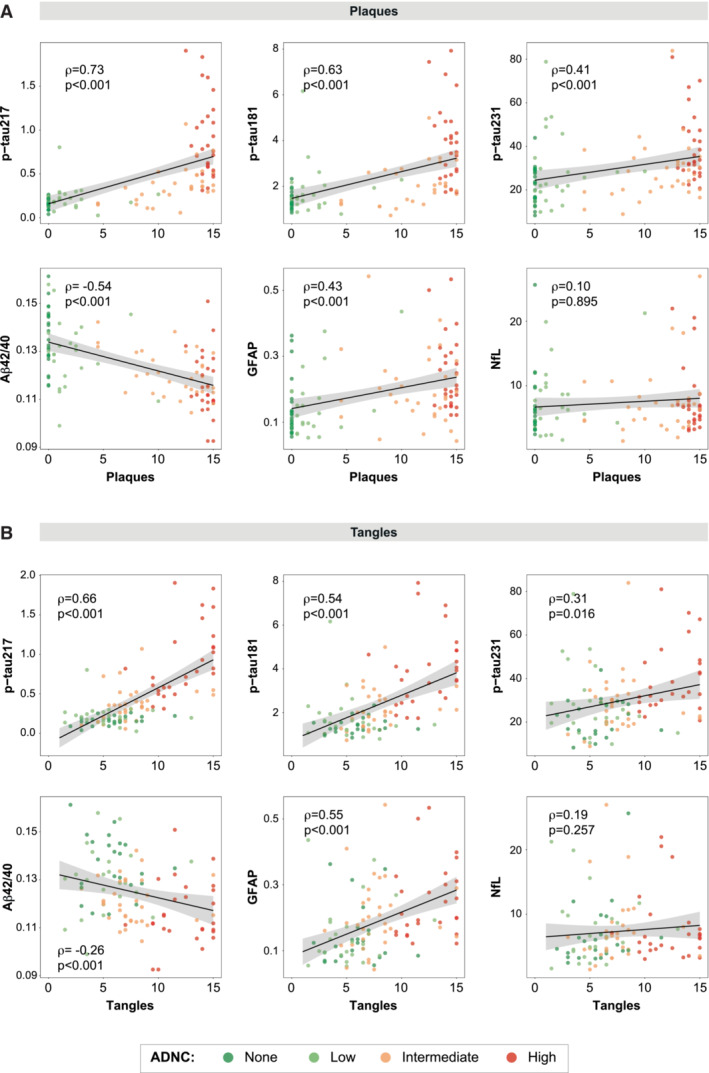
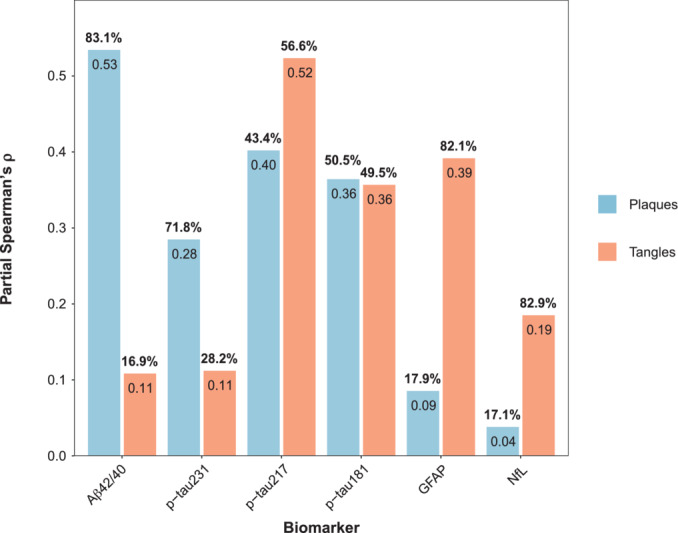
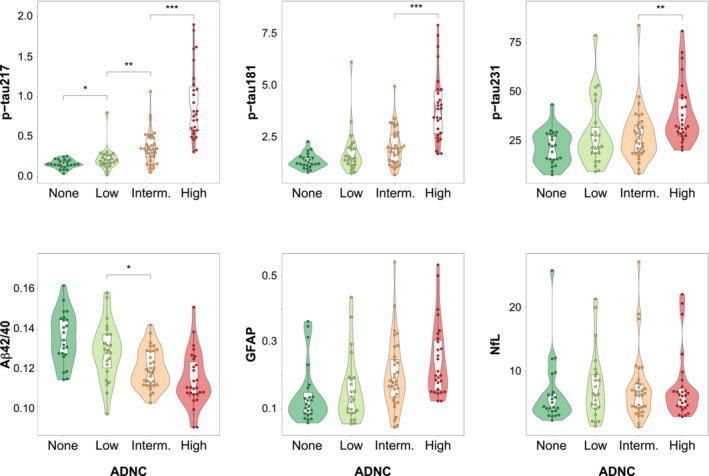
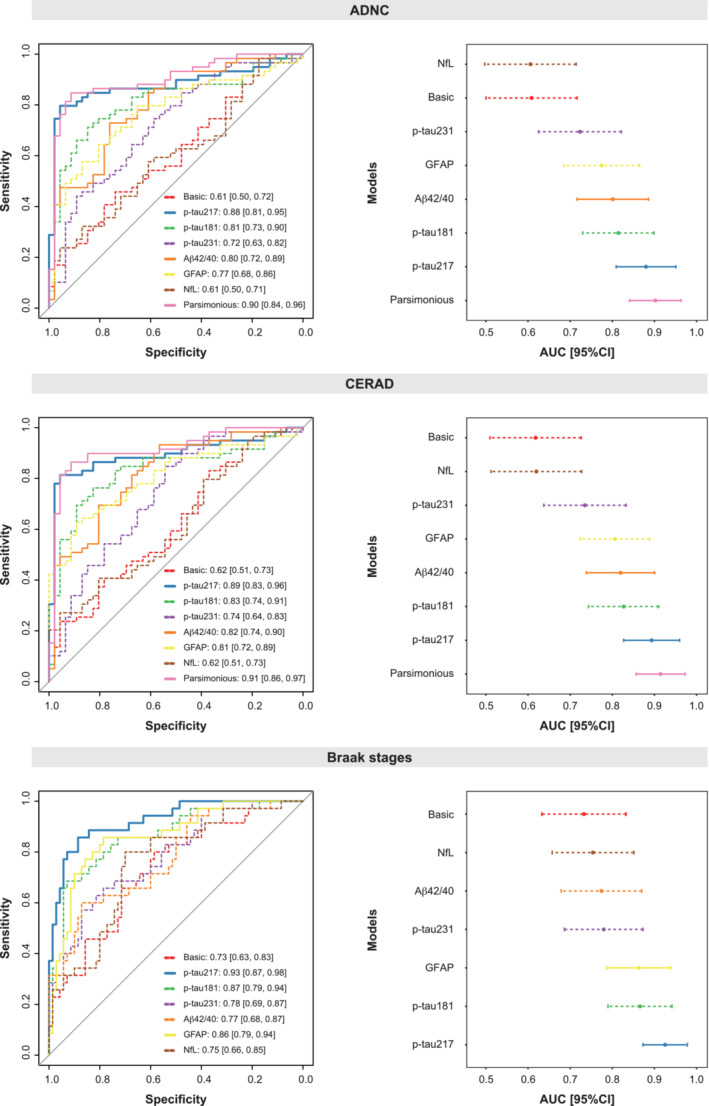
Several promising plasma biomarkers for Alzheimer's disease have been recently developed, but their neuropathological correlates have not yet been fully determined. To investigate and compare independent associations between multiple plasma biomarkers (p‐tau181, p‐tau217, p‐tau231, Aβ42/40, GFAP, and NfL) and neuropathologic measures of amyloid and tau, we included 105 participants from the Arizona Study of Aging and Neurodegenerative Disorders (AZSAND) with antemortem plasma samples and a postmortem neuropathological exam, 48 of whom had longitudinal p‐tau217 and p‐tau181. When simultaneously including plaque and tangle loads, the Aβ42/40 ratio and p‐tau231 were only associated with plaques (ρ Aβ42/40 [95%CI] = −0.53[−0.65, −0.35], ρ p‐tau231 [95%CI] = 0.28[0.10, 0.43]), GFAP was only associated with tangles (ρ GFAP [95%CI] = 0.39[0.17, 0.57]), and p‐tau217 and p‐tau181 were associated with both plaques (ρ p‐tau217 [95%CI] = 0.40[0.21, 0.56], ρ p‐tau181 [95%CI] = 0.36[0.15, 0.50]) and tangles (ρ p‐tau217 [95%CI] = 0.52[0.34, 0.66]; ρ p‐tau181 [95%CI] = 0.36[0.17, 0.52]). A model combining p‐tau217 and the Aβ42/40 ratio showed the highest accuracy for predicting the presence of Alzheimer's disease neuropathological change (ADNC, AUC[95%CI] = 0.89[0.82, 0.96]) and plaque load ( R 2 = 0.55), while p‐tau217 alone was optimal for predicting tangle load ( R 2 = 0.45). Our results suggest that high‐performing assays of plasma p‐tau217 and Aβ42/40 might be an optimal combination to assess Alzheimer's‐related pathology in vivo .
Overview
The claims and statistics of this paper haven’t been checked yet.
Free: it reads the open-access text and checks the first 5 claims that cite a source we can check. Create a free account to check every claim.
Integrity signals
Registry
Cites
Statistics
Figures
Verification
Claims the paper makes
The claims and statistics of this paper haven’t been checked yet.
Free: it reads the open-access text and checks the first 5 claims that cite a source we can check. Create a free account to check every claim.
Claims other papers make about this one
Each is checked against this paper’s own text: does it say what the citing paper says it does?
The source backs part of the claim, not all of it — or backs it for a different population, condition or comparison.
In the citing paper
“However, it is important to emphasize that head-to-head studies indicate that different assays for p-tau181 vary substantially in their diagnostic performance9,10 and may not all perform inferiorly to GFAP in all contexts34,43.”
From Diagnosis of Alzheimer's disease using plasma biomarkers adjusted to clinical probability (2024) · cites this paper as [34]
Experimental — accuracy not yet measuredThe source backs part of the claim, not all of it — or backs it for a different population, condition or comparison.
In the citing paper
“Among different p-tau variants, tau phosphorylated at threonine 217 (p-tau217) has demonstrated the highest accuracy in detecting AD pathology and predicting future cognitive decline23,27,29–31.”
From Highly accurate blood test for Alzheimer's disease is similar or superior to clinical cerebrospinal fluid tests (2024) · cites this paper as [27]
Experimental — accuracy not yet measuredThe cited source says what the claim attributes to it.
In the citing paper
“Yet certain p-tau species, but not all, are also associated with neurofibrillary tangle pathology, the secondary AD pathological hallmark.15,16,17”
From Diagnostic Accuracy of a Plasma Phosphorylated Tau 217 Immunoassay for Alzheimer Disease Pathology (2024) · cites this paper as [16]
The cited source says what the claim attributes to it.
In the citing paper
“Plasma levels of p-tau are strongly associated with PET and CSF biomarkers of AD pathology19–25, neuropathological changes associated with AD20,23,26,27 and the subsequent development of AD dementia20,23,28.”
From Highly accurate blood test for Alzheimer's disease is similar or superior to clinical cerebrospinal fluid tests (2024) · cites this paper as [27]
Self-check
Percentages, sums and reported differences re-computed from the paper’s own numbers.
The self-check needs the paper’s full text.
Citations
Cites
Neuropathological stageing of Alzheimer-related changes.
Braak, H., & Braak, E. (1991) · Acta Neuropathologica · doi:10.1007/bf00308809 · Cited by 16,123 · cited 3×
“…except NfL ( q = 0.19, P = 0.257) were also associated with the total amount of tangles in the independent models (0.26 ≤ | q | ≤ 0.66, P ≤ 0.016; Fig 1B and (Mirra et al , 1991 ) scale and Braak staging (Braak & Braak, 1991 ) refer to measures of plaque and neurofibrillary tangle, respectively.”
MethodResultInfluentialpROC: an open-source package for R and S+ to analyze and compare ROC curves
Robin, X., Turck, N., Hainard, A., Tiberti, N., Lisacek, F., Sanchez, J.-C., & Müller, M. (2011) · BMC Bioinformatics · doi:10.1186/1471-2105-12-77 · Cited by 13,697
Mirra, S. S., Heyman, A., McKeel, D., Sumi, S. M., Crain, B. J., Brownlee, L. M., Vogel, F. S., Hughes, J. P., Belle, G. V., Berg, L., et al. (1991) · Neurology · doi:10.1212/wnl.41.4.479 · Cited by 4,961
Phases of Aβ-deposition in the human brain and its relevance for the development of AD
Thal, D. R., Rüb, U., Orantes, M., & Braak, H. (2002) · Neurology · doi:10.1212/wnl.58.12.1791 · Cited by 3,490
Montine, T. J., Phelps, C. H., Beach, T. G., Bigio, E. H., Cairns, N. J., Dickson, D. W., Duyckaerts, C., Frosch, M. P., Masliah, E., Mirra, S. S., et al. (2012) · Acta Neuropathologica · doi:10.1007/s00401-011-0910-3 · Cited by 2,894
Self-citationA/T/N: An unbiased descriptive classification scheme for Alzheimer disease biomarkers
Jack, C. R., Bennett, D. A., Blennow, K., Carrillo, M. C., Feldman, H. H., Frisoni, G. B., Hampel, H., Jagust, W. J., Johnson, K. A., Knopman, D. S., et al. (2016) · Neurology · doi:10.1212/wnl.0000000000002923 · Cited by 1,864 · cited 1×
“…useful to track AD pathology across the continuum due to its relationship with both main pathological hallmarks of AD, as well as better statistical characteristics of ratios, which can account for production/clearance participants’ inter-variability (Janelidze et al , 2016; Hansson et al , 2019).”
BackgroundSelf-citationHansson, O., Zetterberg, H., Buchhave, P., Londos, E., Blennow, K., & Minthon, L. (2006) · The Lancet Neurology · doi:10.1016/s1474-4422(06)70355-6 · Cited by 1,700 · cited 1×
“The CSF p-tau/A b 42 ratio has received a lot of attention in recent years, both as a research and a clinical tool (Hansson et al , 2006; Fagan et al , 2007; Li et al , 2007; Snider et al , 2009; Mil (cid:4) a-Alom (cid:4) a et al , 2020; Salvad (cid:1) o & Larsson, 2022).”
MethodSelf-citationPalmqvist, S., Janelidze, S., Quiroz, Y. T., Zetterberg, H., Lopera, F., Stomrud, E., Su, Y., Chen, Y., Serrano, G. E., Leuzy, A., et al. (2020) · JAMA · doi:10.1001/jama.2020.12134 · Cited by 1,603 · cited 4×
“…markers have the benefit of being significantly cheaper and less invasive than established markers (i.e., cerebrospinal fluid [CSF] and positron emission tomography [PET]), while showing the excellent diagnostic performance (Karikari et al , 2020; Palmqvist et al , 2020; Jane-lidze et al , 2021a).”
BackgroundMethodInfluentialSelf-citationKarikari, T. K., Pascoal, T. A., Ashton, N. J., Janelidze, S., Benedet, A. L., Rodriguez, J. L., Chamoun, M., Savard, M., Kang, M. S., Therriault, J., et al. (2020) · The Lancet Neurology · doi:10.1016/s1474-4422(20)30071-5 · Cited by 1,316 · cited 3×
“Although p-tau181 has shown very good performance as an AD biomarker (Karikari et al , 2020, 2021; Thijssen et al , 2020; Jane-lidze et al , 2020a; Grothe et al , 2021), multiple (plasma and CSF) studies support that p-tau217 may be a more useful biomarker than p-tau181, as it has stronger…”
BackgroundResultSelf-citationJanelidze, S., Mattsson, N., Palmqvist, S., Smith, R., Beach, T. G., Serrano, G. E., Chai, X., Proctor, N. K., Eichenlaub, U., Zetterberg, H., et al. (2020) · Nature Medicine · doi:10.1038/s41591-020-0755-1 · Cited by 1,247 · cited 4×
“…biomarkers for distinguishing AD from non-AD neurodegenerative disorders (Karikari et al , 2020; Palmqvist et al , 2020; Thijssen et al , 2020; Janelidze et al , 2020a), with noninferior performance compared with CSF and PET markers (Palmqvist et al , 2019; Janelidze et al , 2020a, 2021a;…”
BackgroundMethodInfluentialSelf-citation
Cited by
Donanemab in Early Symptomatic Alzheimer Disease: The TRAILBLAZER-ALZ 2 Randomized Clinical Trial
Sims, J. R., Zimmer, J. A., Evans, C. D., Lu, M., Ardayfio, P., Sparks, J., Wessels, A. M., Shcherbinin, S., Wang, H., Monkul Nery, E. S., et al. (2023) · JAMA · doi:10.1001/jama.2023.13239 · Cited by 2,932
Self-citationRevised criteria for diagnosis and staging of Alzheimer's disease: Alzheimer's Association Workgroup
Jack, C. R., Andrews, J. S., Beach, T. G., Buracchio, T., Dunn, B., Graf, A., Hansson, O., Ho, C., Jagust, W., McDade, E., et al. (2024) · Alzheimer's & Dementia · doi:10.1002/alz.13859 · Cited by 2,803
Self-citationDiagnostic Accuracy of a Plasma Phosphorylated Tau 217 Immunoassay for Alzheimer Disease Pathology
Ashton, N. J., Brum, W. S., Di Molfetta, G., Benedet, A. L., Arslan, B., Jonaitis, E., Langhough, R. E., Cody, K., Wilson, R., Carlsson, C. M., et al. (2024) · JAMA Neurology · doi:10.1001/jamaneurol.2023.5319 · Cited by 884
Self-citationBlood biomarkers for Alzheimer’s disease in clinical practice and trials
Hansson, O., Blennow, K., Zetterberg, H., & Dage, J. (2023) · Nature Aging · doi:10.1038/s43587-023-00403-3 · Cited by 522
Self-citationBarthélemy, N. R., Salvadó, G., Schindler, S. E., He, Y., Janelidze, S., Collij, L. E., Saef, B., Henson, R. L., Chen, C. D., Gordon, B. A., et al. (2024) · Nature Medicine · doi:10.1038/s41591-024-02869-z · Cited by 448
“Plasma levels of p-tau are strongly associated with PET and CSF biomarkers of AD pathology 19–25 , neuropathological changes associated with AD 20,23,26,27 and the subsequent development of AD dementia 20,23,28 .”
BackgroundSelf-citationTherriault, J., Vermeiren, M., Servaes, S., Tissot, C., Ashton, N. J., Benedet, A. L., Karikari, T. K., Lantero-Rodriguez, J., Brum, W. S., Lussier, F. Z., et al. (2023) · JAMA Neurology · doi:10.1001/jamaneurol.2022.4485 · Cited by 272
Self-citationCSF MTBR-tau243 is a specific biomarker of tau tangle pathology in Alzheimer’s disease
Horie, K., Salvadó, G., Barthélemy, N. R., Janelidze, S., Li, Y., He, Y., Saef, B., Chen, C. D., Jiang, H., Strandberg, O., et al. (2023) · Nature Medicine · doi:10.1038/s41591-023-02443-z · Cited by 249
Self-citationBrum, W. S., Cullen, N. C., Janelidze, S., Ashton, N. J., Zimmer, E. R., Therriault, J., Benedet, A. L., Rahmouni, N., Tissot, C., Stevenson, J., et al. (2023) · Nature Aging · doi:10.1038/s43587-023-00471-5 · Cited by 248
Self-citationBiomarker-based staging of Alzheimer disease: rationale and clinical applications
Therriault, J., Schindler, S. E., Salvadó, G., Pascoal, T. A., Benedet, A. L., Ashton, N. J., Karikari, T. K., Apostolova, L., Murray, M. E., Verberk, I., et al. (2024) · Nature Reviews Neurology · doi:10.1038/s41582-024-00942-2 · Cited by 197
Self-citationMattsson-Carlgren, N., Collij, L. E., Stomrud, E., Pichet Binette, A., Ossenkoppele, R., Smith, R., Karlsson, L., Lantero-Rodriguez, J., Snellman, A., Strandberg, O., et al. (2024) · JAMA Neurology · doi:10.1001/jamaneurol.2023.4596 · Cited by 148
Self-citationArranz, J., Zhu, N., Rubio‐Guerra, S., Rodríguez‐Baz, Í., Ferrer, R., Carmona‐Iragui, M., Barroeta, I., Illán‐Gala, I., Santos‐Santos, M., Fortea, J., et al. (2024) · Alzheimer s Research & Therapy · doi:10.1186/s13195-024-01513-9 · Cited by 193
Diagnosis of Alzheimer's disease using plasma biomarkers adjusted to clinical probability
Therriault, J., Janelidze, S., Benedet, A. L., Ashton, N. J., Arranz Martínez, J., Gonzalez-Escalante, A., Bellaver, B., Alcolea, D., Vrillon, A., Karim, H., et al. (2024) · Nature Aging · doi:10.1038/s43587-024-00731-y · Cited by 131
Self-citationPlasma MTBR-tau243 biomarker identifies tau tangle pathology in Alzheimer’s disease
Horie, K., Salvadó, G., Koppisetti, R. K., Janelidze, S., Barthélemy, N. R., He, Y., Sato, C., Gordon, B. A., Jiang, H., Benzinger, T. L. S., et al. (2025) · Nature Medicine · doi:10.1038/s41591-025-03617-7 · Cited by 182
“This was in contrast with plasma p-tau measures, including %p-tau217, that are more associated with Aβ-PET 14,18 or with Aβ pathology in postmortem studies 15 .”
Self-citationPichet Binette, A., Gaiteri, C., Wennström, M., Kumar, A., Hristovska, I., Spotorno, N., Salvadó, G., Strandberg, O., Mathys, H., Tsai, L.-H., et al. (2024) · Nature Neuroscience · doi:10.1038/s41593-024-01737-w · Cited by 122
“In particular, tau-PET uniquely captures fibrillar tau tangle pathology, in contrast to soluble p-tau levels measured in CSF or plasma that reflect Aβ-plaque load rather than tau load 13,14 .”
Self-citationMeyer, M. R., Kirmess, K. M., Eastwood, S., Wente‐Roth, T. L., Irvin, F., Holubasch, M. S., Venkatesh, V., Fogelman, I., Monane, M., Hanna, L., et al. (2024) · Alzheimer's & Dementia · doi:10.1002/alz.13764 · Cited by 121
“34 The current findings from this study extend this assertion and concludethatthecombinationofplasma%p-tau217andA β 42/40ratio (PrecivityAD2),quantifiedusingthehighlyaccurateLC-MS/MSanalyt-ical platform, 35,36 provide high diagnostic performance for detecting brain amyloid status in older,…”
BackgroundAstrocyte biomarkers GFAP and YKL‐40 mediate early Alzheimer's disease progression
Pelkmans, W., Shekari, M., Brugulat‐Serrat, A., Sánchez‐Benavides, G., Minguillón, C., Fauria, K., Molinuevo, J. L., Grau‐Rivera, O., González Escalante, A., Kollmorgen, G., et al. (2024) · Alzheimer's & Dementia · doi:10.1002/alz.13450 · Cited by 122
“67 In line with previous reports, we observed no direct association between APOE ε 4 carriership or sex with astrocyte biomarkers.”
ResultSelf-citationThe potential of blood neurofilament light as a marker of neurodegeneration for Alzheimer's disease
Jung, Y., & Damoiseaux, J. S. (2023) · Brain · doi:10.1093/brain/awad267 · Cited by 134
Disease staging of Alzheimer’s disease using a CSF-based biomarker model
Salvadó, G., Horie, K., Barthélemy, N. R., Vogel, J. W., Pichet Binette, A., Chen, C. D., Aschenbrenner, A. J., Gordon, B. A., Benzinger, T. L. S., Holtzman, D. M., et al. (2024) · Nature Aging · doi:10.1038/s43587-024-00599-y · Cited by 113
“In our model, CSF stages could be related to main molecular changes and clinical tipping points in the course of the disease, including abnormal levels of deposited Aβ (CSF stage 2: pT217/T217) 19,20,23,25,26,28,29,32 and tau (CSF stage 3: pT205/T205) (refs.”
BackgroundSelf-citationAlzheimer's disease outlook: controversies and future directions
Frisoni, G. B., Aho, E., Brayne, C., Ciccarelli, O., Dubois, B., Fox, N. C., Frederiksen, K. S., Gabay, C., Garibotto, V., Hofmarcher, T., et al. (2025) · The Lancet · doi:10.1016/s0140-6736(25)01389-3 · Cited by 135
Self-citationOssenkoppele, R., Salvadó, G., Janelidze, S., Binette, A. P., Bali, D., Karlsson, L., Palmqvist, S., Mattsson, N., Stomrud, E., Therriault, J., et al. (2025) · Nature Aging · doi:10.1038/s43587-025-00835-z · Cited by 153
“Post-mortem studies indicated that ante-mortem plasma p-tau217 levels are associated with the density of both neurofibrillary tau tangle and Aβ plaque pathology in the brain 21,34 .”
Self-citationConsiderations in the clinical use of amyloid PET and CSF biomarkers for Alzheimer's disease
Leuzy, A., Bollack, A., Pellegrino, D., Teunissen, C. E., Joie, R. L., Rabinovici, G. D., Franzmeier, N., Johnson, K. A., Barkhof, F., Shaw, L. M. J., et al. (2025) · Alzheimer s & Dementia · doi:10.1002/alz.14528 · Cited by 126
Self-citationAshton, N. J., Keshavan, A., Brum, W. S., Andréasson, U., Arslan, B., Droescher, M., Barghorn, S., Vanbrabant, J., Lambrechts, C., Loo, M. V., et al. (2025) · Alzheimer s & Dementia · doi:10.1002/alz.14508 · Cited by 109
Self-citationSánchez‐Juan, P., Valeriano-Lorenzo, E., Ruiz-González, A., Pastor, A. B., Lara, H. R., López-González, F., Zea‐Sevilla, M. A., Valentí, M., Payo, B. F., Ruiz, P., et al. (2024) · Brain · doi:10.1093/brain/awae035 · Cited by 108
“Therefore, a possible explanation reconciling the findings reported by Salvadó et al ., 19 replicated in our study, with previous results of cross-sectional studies could be related to the dynamic nature of the role played by astrocytes.”
BackgroundResultInfluentialComparison of two plasma p-tau217 assays to detect and monitor Alzheimer’s pathology
Therriault, J., Ashton, N. J., Pola, I., Triana-Baltzer, G., Brum, W. S., Di Molfetta, G., Arslan, B., Rahmouni, N., Tissot, C., Servaes, S., et al. (2024) · eBioMedicine · doi:10.1016/j.ebiom.2024.105046 · Cited by 84
“…Plasma p-tau217 biomarkers have shown strong discriminative accuracy for AD, as well as strong relationships between amyloid and tau pathologies in several studies, 11 – 14 which suggests that p-tau217 has emerged as a strong candidate for future prospective clinical implementation studies.”
BackgroundSelf-citationBlood-based biomarkers in Alzheimer’s disease – moving towards a new era of diagnostics
Arslan, B., Zetterberg, H., & Ashton, N. J. (2024) · Clinical Chemistry and Laboratory Medicine (CCLM) · doi:10.1515/cclm-2023-1434 · Cited by 99
Self-citationP-tau217 as a Reliable Blood-Based Marker of Alzheimer’s Disease
Lai, R., Li, B., & Bishnoi, R. J. (2024) · Biomedicines · doi:10.3390/biomedicines12081836 · Cited by 89
Yu, L., Boyle, P. A., Janelidze, S., Petyuk, V., Wang, T., Bennett, D. A., Hansson, O., & Schneider, J. A. (2023) · Acta Neuropathologica · doi:10.1007/s00401-023-02570-4 · Cited by 94
Self-citationPlasma Phosphorylated Tau 217 to Identify Preclinical Alzheimer Disease
Salvadó, G., Janelidze, S., Bali, D., Dolado, A. O., Therriault, J., Brum, W. S., Binette, A. P., Stomrud, E., Mattsson, N., Palmqvist, S., et al. (2025) · JAMA Neurology · doi:10.1001/jamaneurol.2025.3217 · Cited by 100
Self-citationCSF p-tau205: a biomarker of tau pathology in Alzheimer’s disease
Lantero‐Rodriguez, J., Montoliu‐Gaya, L., Benedet, A. L., Vrillon, A., Dumurgier, J., Cognat, E., Brum, W. S., Rahmouni, N., Stevenson, J., Servaes, S., et al. (2024) · Acta Neuropathologica · doi:10.1007/s00401-023-02659-w · Cited by 81
Self-citationVandeVrede, L. A., Cho, H., Sanderson‐Cimino, M. E., Wekselman, F., Cobigo, Y., Gorno‐Tempini, M. L., Heuer, H. W., Kramer, J. H., Lago, A. L., Leichter, D., et al. (2025) · JAMA Neurology · doi:10.1001/jamaneurol.2024.5017 · Cited by 69
Alzheimer’s disease biomarkers and their current use in clinical research and practice
Hunter, T., Santos, L. E., Tovar-Moll, F. F., & Felice, F. G. D. (2024) · Molecular Psychiatry · doi:10.1038/s41380-024-02709-z · Cited by 90
“Plasma p-tau217 also correlates with amyloid and tau PET, CSF and plasma p-tau181, CSF p-tau 217, and with amyloid plaques and tau-containing NFTs in studies of autopsy-con fi rmed AD [105, 107 – 109].”
Combining plasma Aβ and p-tau217 improves detection of brain amyloid in non-demented elderly
Niimi, Y., Janelidze, S., Sato, K., Tomita, N., Tsukamoto, T., Kato, T., Yoshiyama, K., Kowa, H., Iwata, A., Ihara, R., et al. (2024) · Alzheimer s Research & Therapy · doi:10.1186/s13195-024-01469-w · Cited by 76
“The superiority of the combination of high performance plasma p-tau217 and Aβ42/40 assays to identify brain Aβ positivity, predict the presence of AD neuropathologic changes [34], Aβ PET centiloid metric [35], and future development of AD dementia has only been reported [36].”
BackgroundSelf-citationSleep, 24-Hour Activity Rhythms, and Subsequent Amyloid-β Pathology
Ho, P. T. N., Hoepel, S. J. W., Rodríguez‐Ayllón, M., Luik, A. I., Vernooij, M. W., & Neitzel, J. (2024) · JAMA Neurology · doi:10.1001/jamaneurol.2024.1755 · Cited by 74
Montoliu‐Gaya, L., Alosco, M. L., Yhang, E., Tripodis, Y., Sconzo, D., Ally, M., Grötschel, L., Ashton, N. J., Lantero‐Rodriguez, J., Sauer, M., et al. (2023) · Acta Neuropathologica · doi:10.1007/s00401-023-02660-3 · Cited by 60
Self-citationKac, P. R., González‐Ortiz, F., Emeršič, A., Dulewicz, M., Koutarapu, S., Turton, M., An, Y., Smirnov, D. S., Kulczyńska‐Przybik, A., Varma, V. R., et al. (2024) · Nature Communications · doi:10.1038/s41467-024-46876-7 · Cited by 58
Self-citationAshton, N. J., Brum, W. S., Molfetta, G. D., Benedet, A. L., Arslan, B., Jonaitis, E. M., Langhough, R. E., Cody, K. A., Wilson, R. H., Carlsson, C. M., et al. (2023) · medRxiv · doi:10.1101/2023.07.11.23292493 · Cited by 50
Self-citationPlasma tau biomarkers for biological staging of Alzheimer’s disease
Montoliu‐Gaya, L., Salvadó, G., Therriault, J., Nilsson, J., Janelidze, S., Weiner, S., Ashton, N. J., Benedet, A. L., Rahmouni, N., Lantero‐Rodriguez, J., et al. (2025) · Nature Aging · doi:10.1038/s43587-025-00951-w · Cited by 58
“Multiple studies using different assays and platforms suggest that the pattern observed in CSF might also be detectable in blood 23–26 .”
Self-citationPlasma biomarkers of Alzheimer's disease in the continuum of dementia with Lewy bodies
Diaz‐Galvan, P., Przybelski, S. A., Algeciras‐Schimnich, A., Figdore, D. J., Lesnick, T. G., Schwarz, C. G., Senjem, M. L., Gunter, J. L., Jack, C. R., Min, H.-K. P., et al. (2024) · Alzheimer s & Dementia · doi:10.1002/alz.13653 · Cited by 43
“34 Therefore, our findings support the hypothesis that p-tau-181 can detect a neuronal reaction to initial A β aggregation in the very early stages of DLB, even when there are still no tau depositions.”
ResultAlzheimer's disease neuropathology and its estimation with fluid and imaging biomarkers
Thal, D. R., Poesen, K., Vandenberghe, R. R., & Meyer, S. D. (2025) · Molecular Neurodegeneration · doi:10.1186/s13024-025-00819-y · Cited by 57
“These p-τ 181 elevations did, however, occur in later stages than Aβ 1–42 /Aβ 1–40 decreases (i.e., at high ADNC including frequent plaque burden according CERAD and Aβ phase 4 or 5) [192, 250, 271, 272].”
InfluentialBiofluid biomarkers in Alzheimer’s disease and other neurodegenerative dementias
Zetterberg, H., & Bendlin, B. B. (2026) · Nature · doi:10.1038/s41586-025-10018-w · Cited by 59
“Consistent with this, antemortem plasma concentrations of p-tau217 and p-tau181 correlate with the extent of both Aβ plaques and NFTs observed at autopsy 47 .”
Self-citationA blood-based biomarker workflow for optimal tau-PET referral in memory clinic settings
Brum, W. S., Cullen, N. C., Therriault, J., Janelidze, S., Rahmouni, N., Stevenson, J., Servaes, S., Benedet, A. L., Zimmer, E. R., Stomrud, E., et al. (2024) · Nature Communications · doi:10.1038/s41467-024-46603-2 · Cited by 45
Self-citationAshton, N. J., Benedet, A. L., Molfetta, G. D., Pola, I., Anastasi, F., Fernández‐Lebrero, A., Puig‐Pijoan, A., Keshavan, A., Schott, J. M., Tan, K., et al. (2025) · Alzheimer s & Dementia · doi:10.1002/alz.14621 · Cited by 46
“35 Thus, direct, or indirect, measures in blood that are more specific to other proteinopathies are urgently needed.”
Self-citationHofmann, A., Häsler, L. M., Lambert, M., Kaeser, S. A., Gräber‐Sultan, S., Obermüller, U., Kuder-Buletta, E., la Fougère, C., Laske, C., Vöglein, J., et al. (2024) · Nature Communications · doi:10.1038/s41467-024-52937-8 · Cited by 48
“Such a temporal uncoupling of amyloid deposition and NfL is also in line with the absence of a correlation between NfL levels in plasma and amyloid plaque load post-mortem 35 .”
Self-citationCousins, K. A. Q., Korecka, M., Wan, Y., Vulaj, A., Brown, C. D., Tropea, T. F., Lee, E. B., Tosun, D., Landau, S. M., Okonkwo, O. C., et al. (2025) · Alzheimer s & Dementia · doi:10.1002/alz.70469 · Cited by 44
“9,10 14 Beforeclin-ical implementation, continued blood biomarker validation in diverse samples is needed 15,16 to ensure generalizability of biomarkers and accurate interpretation in the larger population.”
Gu, Y., Honig, L. S., Kang, M. S., Bahl, A., Sanchez, D. L., Reyes‐Dumeyer, D., Manly, J. J., Dage, J. L., Lantigua, R., Brickman, A. M., et al. (2024) · Alzheimer s & Dementia · doi:10.1002/alz.13652 · Cited by 34
“55 A recent study found a two-step workflow, using plasma p-tau217 to screen for A β positivity in step 1 and CSF A β 42/A β 40 in step 2, was a highly accurate and cost-effective strategy to detect AD in memory clinic settings.”
Jarek, D. J., Mizerka, H., Nuszkiewicz, J., & Szewczyk‐Golec, K. (2024) · Biomedicines · doi:10.3390/biomedicines12040786 · Cited by 44
“Interestingly, Salvad ó et al. [93] suggested the use of the p-tau217/A 42 ratio as novel biomarker.”
BackgroundMethodInfluentialJoie, R. L., Cummings, J. L., Dage, J. L., Galasko, D. R., Ikonomović, M. D., Karikari, T. K., Landau, S. M., Llibre‐Guerra, J. J., Mummery, C. J., Ossenkoppele, R., et al. (2025) · Alzheimer s & Dementia · doi:10.1002/alz.70997 · Cited by 38
“18 The lack of full normalization for ptau-217 is consistent with data showing that (1) circulating p-tau217 levels correlates with both A β and tau neuropathologies 19 and (2) anti-A β MABs do not lower tau burden, as measured by tau-PET.”
Self-citationA critical appraisal of blood-based biomarkers for Alzheimer’s disease
Lista, S., Mapstone, M. E., Caraci, F., Emanuele, E., López‐Ortiz, S., Martín-Hernández, J., Triaca, V., Imbimbo, C., Gabelle, A., Mielke, M. M., et al. (2024) · Ageing Research Reviews · doi:10.1016/j.arr.2024.102290 · Cited by 33
Mielke, M. M., Evans, J. K., Neiberg, R. H., Molina‐Henry, D. P., Marcovina, S. M., Johnson, K., Carmichael, O. T., Rapp, S. R., Sachs, B. C., Ding, J., et al. (2025) · JAMA Network Open · doi:10.1001/jamanetworkopen.2024.58149 · Cited by 36
Kurihara, M., Matsubara, T., Morimoto, S., Arakawa, A., Ohse, K., Kanemaru, K., Iwata, A., Murayama, S., & Saito, Y. (2024) · Acta Neuropathologica Communications · doi:10.1186/s40478-024-01758-3 · Cited by 33
Sato, S., Hatakeyama, N., Fujikoshi, S., Katayama, S., Katagiri, H., & Sims, J. R. (2024) · Neurology and Therapy · doi:10.1007/s40120-024-00604-x · Cited by 30
“…baseline to week 76 in amyloid plaque level (in Centiloids) and the proportion of participants achieving amyloid clearance (defined as \ 24.1 Centiloids measured by PET) at weeks 24, 52, and 76 as secondary outcomes and the change from baseline to week 76 in P-tau217 [30] as an exploratory outcome.”
InfluentialIdentification of late-stage tau accumulation using plasma phospho-tau217
Woo, M. S., Therriault, J., Jonaitis, E. M., Wilson, R. E., Langhough, R. E., Rahmouni, N., Benedet, A. L., Ashton, N. J., Tissot, C., Lantero‐Rodriguez, J., et al. (2024) · EBioMedicine · doi:10.1016/j.ebiom.2024.105413 · Cited by 35
Self-citationEthnic and racial influences on blood biomarkers for Alzheimer's disease: A systematic review
Kjærgaard, D., Simonsen, A. H., Waldemar, G., & Nielsen, T. R. (2025) · Journal of Alzheimer s Disease · doi:10.1177/13872877241299047 · Cited by 31
Antonioni, A., Raho, E. M., Lorenzo, F. D., Manzoli, L., Flacco, M. E., & Koch, G. (2025) · Journal of Neurology · doi:10.1007/s00415-025-12996-3 · Cited by 36
Datta, D., Perone, I., Wijegunawardana, D., Liang, F., Morozov, Y. M., Arellano, J. I., Duque, A., Xie, Z., van Dyck, C. H., Joyce, M. K. P., et al. (2024) · Alzheimer s & Dementia · doi:10.1002/alz.13737 · Cited by 31
Temporal Dynamics and Biological Variability of Alzheimer Biomarkers
Yun, J., Shin, D., Lee, E. H., Kim, J. P., Ham, H., Gu, Y., Chun, M. Y., Kang, S. H., Kim, Y. J., Na, D. L., et al. (2025) · JAMA Neurology · doi:10.1001/jamaneurol.2024.5263 · Cited by 34
Self-citationPathologic and clinical correlates of region-specific brain GFAP in Alzheimer’s disease
Phillips, J. M., Winfree, R. L., Seto, M., Schneider, J. A., Bennett, D. A., Dumitrescu, L. C., & Hohman, T. J. (2024) · Acta Neuropathologica · doi:10.1007/s00401-024-02828-5 · Cited by 25
Plasma Alzheimer's disease biomarker variability: Amyloid‐independent and amyloid‐dependent factors
Lee, E. H., Kang, S. H., Shin, D., Kim, Y. J., Zetterberg, H., Blennow, K., González‐Ortiz, F., Ashton, N. J., Cheon, B. K., Yoo, H., et al. (2024) · Alzheimer s & Dementia · doi:10.1002/alz.14368 · Cited by 28
Self-citationDifferential roles of Alzheimer's disease plasma biomarkers in stepwise biomarker‐guided diagnostics
Jang, H., Shin, D., Yoo, H., Zetterberg, H., Blennow, K., González‐Ortiz, F., Ashton, N. J., Day, T. A., Lee, E. H., Yun, J., et al. (2025) · Alzheimer s & Dementia · doi:10.1002/alz.14526 · Cited by 29
“48,51 In contrast, the opposite was observedwithallplasmabiomarkersexceptNfLinCUandSVCIgroups, which have less tau( + ) than the ACS group.”
Self-citationPerformance of plasma biomarkers for diagnosis and prediction of dementia in a Brazilian cohort
Santos, L. E., Mattos, P., Pinheiro, T., Silva, A., Drummond, C., Sudo, F. K., Barros‐Aragão, F. G. Q., Vanderborght, B., Brandão, C. O., Ferreira, S. T., et al. (2025) · Nature Communications · doi:10.1038/s41467-025-56756-3 · Cited by 39
Korologou‐Linden, R., Kalsi, J., Kafetsouli, D., Olawale, A., Wingfield, D., Mummery, D., Hayhoe, B. W. J., Robinson, O., Majeed, A., & Middleton, L. T. (2024) · The Journal of Prevention of Alzheimer s Disease · doi:10.14283/jpad.2024.83 · Cited by 28
Kováčech, B., Cullen, N. C., Novák, P., Hanes, J., Kontseková, E., Katina, S., Parrák, V., Fresser, M., Vanbrabant, J., Feldman, H., et al. (2024) · Alzheimer s Research & Therapy · doi:10.1186/s13195-024-01620-7 · Cited by 30
Sarto, J., Esteller, D., Guillén, N., Falgàs, N., Borrego‐Écija, S., Massons, M., Fernández‐Villullas, G., González, Y., Tort‐Merino, A., Bosch, B., et al. (2025) · Journal of Neurology · doi:10.1007/s00415-025-12897-5 · Cited by 25
Consensus statement on exploring the Nexus between nutrition, brain health and dementia prevention
Johnstone, A. M., Albanese, E., Crabtree, D. R., Dalile, B., Grabrucker, S., Gregory, J. M., Grosso, G., Holliday, A., Hughes, C., Itsiopoulos, C., et al. (2025) · Nutrition & Metabolism · doi:10.1186/s12986-025-00981-6 · Cited by 27
“Recent studies demonstrate these markers correlate well with PET imaging and cerebro-spinal fluid biomarkers while offering greater accessibility and scalability for screening at-risk populations [51, 52].”
Wang, Z., Tan, L., Gao, P., Ma, Y., Fu, Y., Sun, Y., Yu, J., & Initiative, A. D. N. (2023) · Alzheimer s & Dementia · doi:10.1002/alz.13413 · Cited by 25
Tolar, M., Hey, J. A., Power, A., & Abushakra, S. R. (2024) · International Journal of Molecular Sciences · doi:10.3390/ijms25052727 · Cited by 23
Pathologic and cognitive correlates of plasma biomarkers in neurodegenerative disease
Cousins, K. A. Q., Phillips, J. S., Das, S. R., O’Brien, K. S., Tropea, T. F., Chen‐Plotkin, A. S., Shaw, L. M. J., Nasrallah, I. M., Mechanic-Hamilton, D. J., McMillan, C. T., et al. (2024) · Alzheimer s & Dementia · doi:10.1002/alz.13777 · Cited by 22
“3,8,9 In this context, diagnostic accuracy for A β status by plasma p-tau 181 may be augmented by the incorporation of other plasma biomarkers.”
BackgroundMethodMartínez‐Dubarbie, F., Guerra-Ruiz, A. R., López‐García, S., Lage, C., Fernández‐Matarrubia, M., Nevado-Cáceres, Á., Rivera‐Sánchez, M., Barrero, A. V., Pozueta‐Cantudo, A., García‐Martínez, M., et al. (2025) · Alzheimer s Research & Therapy · doi:10.1186/s13195-025-01719-5 · Cited by 37
“It is a very specific AD biomarker that allows differentiating with great precision this pathology from other dementias [13–15] and its levels are related to cerebral deposition of both amyloid and p-tau [16, 17].”
Donanemab exposure and efficacy relationship using modeling in Alzheimer's disease
Gueorguieva, I., Willis, B. A., Chua, L., Chow, K. H., Ernest, C. S., Wang, J., Shcherbinin, S., Sims, J. R., & Chigutsa, E. (2023) · Alzheimer s & Dementia Translational Research & Clinical Interventions · doi:10.1002/trc2.12404 · Cited by 27
Martínez‐Dubarbie, F., Guerra-Ruiz, A. R., López‐García, S., Lage, C., Fernández‐Matarrubia, M., Infante, J., Pozueta‐Cantudo, A., García‐Martínez, M., Corrales‐Pardo, A., Bravo, M., et al. (2024) · The Journal of Prevention of Alzheimer s Disease · doi:10.14283/jpad.2024.152 · Cited by 20
“In research including anatomopathological examinations, this biomarker has been shown to be associated with both amyloid and tau pathology (14, 15).”
Miner, A. E., Groh, J. R., Tripodis, Y., Adler, C. H., Balcer, L. J., Bernick, C. B., Zetterberg, H., Blennow, K., Peskind, E. R., Ashton, N. J., et al. (2024) · Alzheimer s & Dementia · doi:10.1002/alz.14231 · Cited by 22
Self-citationVarma, V. R., An, Y., Kac, P. R., Bilgel, M., Moghekar, A., Loeffler, T., Amschl, D., Daurer, M., Prokesch, M., Troncoso, J. C., et al. (2024) · Med · doi:10.1016/j.medj.2025.100724 · Cited by 45
Self-citationFluid biomarkers for neurodegenerative diseases: a comprehensive update
Valletta, M., Briel, N., Yuksekel, I., Barboure, M. C., Coward, A. R., Houwer, J. F. H. D., Fawad, A., González-Mayoral, A., Iaccarino, G., Martínez‐Dubarbie, F., et al. (2025) · Alzheimer s Research & Therapy · doi:10.1186/s13195-025-01919-z · Cited by 26
“With recent progress in BBMs, similar performances have been obtained by plasma p-tau217, ptau-181 and ptau-212 [50, 139–141].”
Self-citationImaging and Fluid Biomarkers of Alzheimer Disease: Complementation Rather Than Competition
Drzezga, A. E., & Barthel, H. (2025) · Journal of Nuclear Medicine · doi:10.2967/jnumed.125.270152 · Cited by 20
Potential utility of plasma pTau217 for assessing amyloid and tau biomarker profiles
Shin, D., Jang, H., Yoo, H., Kim, K., Zetterberg, H., Blennow, K., González‐Ortiz, F., Ashton, N. J., Lee, E. H., Yun, J., et al. (2025) · European Journal of Nuclear Medicine and Molecular Imaging · doi:10.1007/s00259-025-07457-y · Cited by 18
Self-citationMattsson, N., Palmqvist, S., Horie, K., Barthélemy, N. R., Salvadó, G., Binette, A. P., Tideman, P., Morris, J. C., Benzinger, T. L. S., Perrin, R. J., et al. (2026) · The Lancet Neurology · doi:10.1016/s1474-4422(26)00029-3 · Cited by 30
Self-citationBlūma, M., Chiotis, K., Bucci, M., Savitcheva, I., Matton, A., Kivipelto, M., Jeromin, A., Santis, G. D., Molfetta, G. D., Ashton, N. J., et al. (2024) · EBioMedicine · doi:10.1016/j.ebiom.2024.105504 · Cited by 23
“26 In the context of neurodegenerative diseases, blood GFAP levels has been reported to rise in response to both amyloid 20 or tau pathology.”
Self-citationLongitudinal trajectory of plasma p-tau217 in cognitively unimpaired subjects
Martínez‐Dubarbie, F., Guerra-Ruiz, A. R., López‐García, S., Lage, C., Fernández‐Matarrubia, M., Pozueta‐Cantudo, A., García‐Martínez, M., Corrales‐Pardo, A., Bravo, M., López‐Hoyos, M., et al. (2024) · Alzheimer s Research & Therapy · doi:10.1186/s13195-024-01642-1 · Cited by 19
“These findings support the concept that plasma p-tau217 levels are related to both amyloid and tau deposition in the brain [9, 10] and add value to the biomarker as a tool for disease monitoring and possible treatment response assessment in CU subjects.”
Noguchi‐Shinohara, M., Shuta, K., Murakami, H., Mori, Y., Komatsu, J., Kobayashi, C., Hersch, S. M., Horie, K., & Ono, K. (2025) · Annals of Neurology · doi:10.1002/ana.27175 · Cited by 18
Kimura, T., Sato, H., Kano, M., Tatsumi, L., & Tomita, T. (2023) · FEBS Open Bio · doi:10.1002/2211-5463.13667 · Cited by 15
Arranz, J., Zhu, N., Rubio‐Guerra, S., Rodríguez‐Baz, Í., Ferrer, R., Carmona‐Iragui, M., Barroeta, I., Illán‐Gala, I., Santos‐Santos, M., Fortea, J., et al. (2023) · Research Square · doi:10.21203/rs.3.rs-3725688/v1 · Cited by 15
Higher plasma soluble TREM2 correlates with reduced cerebral tau accumulation in Alzheimer’s disease
Lan, G., Li, A., González‐Ortiz, F., Lv, J., Ran, W., Cai, Y. Q., Sun, P., Liu, L., Yang, J., Zhang, L., et al. (2025) · Molecular Psychiatry · doi:10.1038/s41380-025-02976-4 · Cited by 18
“In addition, post-mortem neuropathology reported that plasma GFAP also correlated with tau tangle accumulations [20, 21].”
Self-citationPola, I., Ashton, N. J., Bastiani, M. A. D., Brum, W. S., Rahmouni, N., Tan, K., Machado, L. S., Servaes, S., Stevenson, J., Tissot, C., et al. (2025) · Alzheimer s & Dementia · doi:10.1002/alz.70171 · Cited by 16
“18,19,20,21,22,23 Although most expressed in microglial and astrocytes, whether these markers reflect glial-related neuroinflammation stillneedsproperlyvalidation.”
Self-citationComparison of plasma ALZpath p-Tau217 with Lilly p-Tau217 and p-Tau181 in a neuropathological cohort
Bali, D., Salvadó, G., Beach, T. G., Serrano, G. E., Atri, A., Reiman, E. M., Jeromin, A., Hansson, O., & Janelidze, S. (2025) · Acta Neuropathologica Communications · doi:10.1186/s40478-025-02064-2 · Cited by 17
“In a previous study, we found that both plasma p-Tau217 and p-Tau181 measured using Lilly immunoassays, had significant associations with postmortem density measures of plaques and tangles, with p-Tau217 showing stronger associations [26].”
Self-citationHirota, Y., Sakakibara, Y., Morishima, M., Sano, T., Hara, M., Arakawa, A., Takao, M., Murayama, S., Saito, Y., Sekiya, M., et al. (2025) · Cell Reports · doi:10.1016/j.celrep.2025.116203 · Cited by 17
Yun, J., Lee, J., Shin, D., Lee, E. H., Kim, J. P., Ham, H., Gu, Y., Chun, M. Y., Kang, S. H., Kim, H. J., et al. (2026) · JAMA Neurology · doi:10.1001/jamaneurol.2025.5530 · Cited by 13
Self-citationGiuffrè, G. M., Quaranta, D., Vita, M. G., Costantini, E. M., Citro, S., Carrozza, C., Ninno, G. D., Calabresi, P., & Marra, C. (2024) · The Journal of Prevention of Alzheimer s Disease · doi:10.14283/jpad.2024.58 · Cited by 15
“More recently, potential diagnostic and prognostic workflows based on combinations of multiple biomarkers and other accessible and cost-effective measures are being proposed (16-17).”
Göschel, L., Dell’Orco, A., Fillmer, A., Aydın, S., Ittermann, B., Riemann, L. T., Lehmann, S., Cano, S., Melin, J., Pendrill, L., et al. (2024) · Alzheimer s & Dementia · doi:10.1002/alz.14318 · Cited by 16
Jack, C. R., Graf, A., Burnham, S. C., Doty, E. G., Moebius, H. J., Montenigro, P. H., Siemers, E., Sink, K. M., Shaw, L. M. J., Hansen, C. T., et al. (2024) · Alzheimer s & Dementia Translational Research & Clinical Interventions · doi:10.1002/trc2.70013 · Cited by 19
“31 The emergence of disease-modifying therapies for early AD has heightened the need for rapid and accessible diagnostic tools.”
Biofluid-based staging of Alzheimer’s disease
Lantero‐Rodriguez, J., Montoliu‐Gaya, L., Ashton, N. J., Pola, I., Therriault, J., Rahmouni, N., Brum, W. S., Servaes, S., Stevenson, J., Molfetta, G. D., et al. (2025) · Acta Neuropathologica · doi:10.1007/s00401-025-02863-w · Cited by 17
Self-citationWang, Y., Zhang, M., Chen, S.-J., Miao, W., Wang, Z., Zhou, Y., Yu, S., Sun, Z., Zhou, X., Yu, X., et al. (2025) · Frontiers in Aging Neuroscience · doi:10.3389/fnagi.2025.1630022 · Cited by 17
Tau in Alzheimer's disease: Shaping the future patient journey
Mummery, C. J., Li-Hsian, C. C., Lasagna‐Reeves, C. A., Ossenkoppele, R., Rowe, C. C., Scharre, D. W., Wang, H., Kyaga, S., & Cummings, J. L. (2026) · The Journal of Prevention of Alzheimer s Disease · doi:10.1016/j.tjpad.2025.100447 · Cited by 19
“Some plasma p-tau assays measuring p-tau217 can predict the presence of A β pathology with accuracy comparable to PET and CSF testing [91 – 93].”
Self-citationNovel CSF tau biomarkers can be used for disease staging of sporadic Alzheimer’s
Salvadó, G., Horie, K., Barthélemy, N. R., Vogel, J. W., Binette, A. P., Chen, C. D., Aschenbrenner, A. J., Gordon, B. A., Benzinger, T. L. S., Holtzman, D. M., et al. (2023) · Alzheimer s & Dementia · doi:10.1002/alz.075367 · Cited by 14
Self-citationRuiz, C. A., Young, C. B., Shahid, M., Smith, A. M., Wilson, E. N., Benitez, J. A. R., Vossler, H. A., Plastini, M. J., Winer, J. R., Kerchner, G. A., et al. (2024) · Annals of Neurology · doi:10.1002/ana.27003 · Cited by 17
Bader, I., Groot, C., Tan, H. S., Milongo, J.-M. A., den Haan, J., Verberk, I. M. W., Yong, K. X. X., Orellina, J. A., Campbell, S. R., Wilson, D., et al. (2024) · Alzheimer s Research & Therapy · doi:10.1186/s13195-024-01545-1 · Cited by 12
Self-citationWischik, C. M., Stefanacci, R. G., Bentham, P., Gauthier, S. G., Zetterberg, H., Wilcock, G. K., Froelich, L., Burns, A. S., MacSweeney, E., Ballard, C. G., et al. (2026) · The Journal of Prevention of Alzheimer s Disease · doi:10.1016/j.tjpad.2026.100480 · Cited by 14
Self-citationCollij, L. E., Salvadó, G., Horie, K., Barthélemy, N. R., Betthauser, T. J., Strandberg, O. T., Smith, R. A., Palmqvist, S., Schindler, S. E., Ossenkoppele, R., et al. (2026) · Nature Communications · doi:10.1038/s41467-026-71732-1 · Cited by 13
“Together with the observation that most p-tau forms re fl ect both A β and tau pathology 37 ,itispossiblethatthisshiftinbiomarkerabnormalityonset for APOE - Ɛ 4 carriers re fl ects the relatively higher presence of soluble pathological markers in this subpopulation, making them potentially more…”
Self-citationDatta, D., & Arnsten, A. F. T. (2025) · Alzheimer s & Dementia · doi:10.1002/alz.14477 · Cited by 11
Onigbinde, S. B., Solomon, J., Reyes, C. D. G., Daramola, O. E., Fowowe, M., Adeniyi, M., DuBois, K. N., Bakulski, K. M., Kanaan, N. M., Lubman, D. M., et al. (2025) · Journal of Proteome Research · doi:10.1021/acs.jproteome.5c00018 · Cited by 13
Vrillon, A., Spina, S., Mejía‐Perez, J. A., LaMore, T., Yballa, C., Soleimani‐Meigooni, D. N., Blazhenets, G., Boxer, A. L., Rojas, J. C., Lago, A. L., et al. (2026) · Neurology · doi:10.1212/wnl.0000000000214576 · Cited by 15
Metadata
- Authors
- Salvadó, G., Ossenkoppele, R., Ashton, N. J., Beach, T. G., Serrano, G. E., Reiman, E. M., Zetterberg, H., Mattsson‐Carlgren, N., Janelidze, S., Blennow, K., & Hansson, O.
- Affiliations
- Lund University (SE)
- King's College London (GB)
- Banner Sun Health Research Institute (US)
- University of Arizona (US)
- Sahlgrenska University Hospital (SE)
- Corresponding author
- Salvadó, Gemma
- Hansson, Oskar
- ORCID
- Venue
- EMBO Molecular Medicine
- Published
- 2023-03-13
- Volume
- 15
- Issue
- 5
- Pages
- e17123-e17123
- ISSN
- 1757-4676 (ISSN-L)
- 1757-4684
- PMC
- PMC10165361
- OpenAlex
- W4324019853
- Cited by
- 205
- References
- 71
- Citations by year
- 2026: 52 · 2025: 70 · 2024: 62 · 2023: 20
- FWCI
- 35.94
- Type
- journal article
- Language
- en
- Open access
- gold
- doi.org
- Licence
- cc-by
- creativecommons.org/licenses/by/4.0/ (tdm)
- creativecommons.org/licenses/by/4.0/ (vor)
- Locations
- EMBO Molecular Medicine (publishedVersion, cc-by)
- PubMed Central (publishedVersion, cc-by)
- PubMed (publishedVersion)
- UCL Discovery (University College London) (submittedVersion, cc-by)
- DOAJ (DOAJ: Directory of Open Access Journals) (submittedVersion, cc-by-sa)
- Lund University Publications (Lund University) (submittedVersion)
- Pure Amsterdam UMC (submittedVersion, cc-by)
- Amsterdam UMC (VU Amsterdam) - Institutional Repository (submittedVersion, other-oa)
- Data Archiving and Networked Services (DANS) (submittedVersion, cc-by)
- Funders
- AD Strategic Fund and Alzheimer's Association (ADSF‐21‐831376‐C, ADSF‐21‐831381‐C, ADSF‐21‐831377‐C)
- ALF‐agreement (ALFGBG‐715986, ALFGBG‐965240)
- Alzheimer Drug Discovery Foundation (201809‐2016862, RDAPB‐201809‐2016615)
- Alzheimer's Association 2021 Zenith Award (ZEN‐21‐848495)
- Bluefield Project
- Erling Persson Family Foundation
- European Research Council (681712, 101053962)
- European Union Joint Program for Neurodegenerative Disorders (JPND2019‐466‐236)
- European Union Joint Programme—Neurodegenerative Disease Research (JPND2021‐00694)
- Greta och Johan Kocks stiftelser
- Hj#x00E4;rnfonden, Sweden (FO2017‐0243, ALZ2022‐0006)
- Knut och Alice Wallenbergs Stiftelse (2017‐0383)
- Konnung Gustaf och Drottning Victorias Frimurarestiftelse
- Marianne and Marcus Wallenberg Foundation (2015.0125)
- Marie Sklodowska‐Curie (101061836, 860197)
- National Institute of Health, USA (1R01AG068398‐01)
- Olav Thon Foundation
- Parkinson Foundation of Sweden (1280/20)
- Skane University Hospital Foundation (2020‐O000028)
- Stiftelsen för Gamla Tjänarinnor, Hjärnfonden, Sweden (FO2022‐0270)
- Strategic Research Area MultiPark
- Swedish Alzheimer Foundation (AF‐939932, AF‐930351, AF‐939721, AF‐968270)
- Swedish Brain Foundation (FO2021‐0293)
- Swedish Federal Government (2018‐Projekt0279)
- Swedish Research Council (2016‐00906, 2018‐02532, 2017‐00915)
- Swedish State Support for Clinical Research (ALFGBG‐71320)
- UK Dementia Research Institute at UCL (UKDRI‐1003)
- Topics
- Life Sciences › Neuroscience › Cellular and Molecular Neuroscience › Alzheimer's disease research and treatments
- Health Sciences › Medicine › Psychiatry and Mental health › Dementia and Cognitive Impairment Research
- Health Sciences › Medicine › Clinical Neurology › Cerebrospinal fluid and hydrocephalus
- Keywords
- Alzheimer's disease, plasma biomarkers, postmortem neuropathology, amyloid plaques, tau tangles, phosphorylated tau, p-tau217, p-tau181, p-tau231, amyloid-beta 42/40 ratio, glial fibrillary acidic protein, neurofilament light chain, biomarker prediction
- MeSH terms
- Neuropathology, Alzheimer Disease, Autopsy, Humans, Biomarkers, Amyloid beta-Peptides, tau Proteins, Plaque, Amyloid
About these checks
Registry, retraction, Cites and statistics results are computed, not judged, with one exception: a printed reference that no index lists is read once by a model before it counts as a citation error. Claims are extracted by a model and kept only when their quote appears verbatim in the text; each cited source is then checked, with a model’s help, for whether it says what the claim relies on. Those verdicts can be wrong — read the claim’s quote and the cited source before relying on one.
Statistics and arithmetic are recomputed, not judged.
Confidence bands are shown only for fields calibrated on our annotated test set. None is calibrated yet, so no band is shown.
What counts as a claim ›How we measure confidence ›How we check this ›
Are you an author, or do you see a problem with this page? Request a review
Data sources
Bibliographic data: Semantic Scholar, OpenAlex, Crossref.
Contains information from the Semantic Scholar Academic Graph Datasets, made available under the ODC Attribution License (ODC-BY 1.0).
Semantic Scholar’s data is described in: Kinney, R., et al. (2023). The Semantic Scholar Open Data Platform. arXiv:2301.10140.
