

Specific associations between plasma biomarkers and postmortem amyloid plaque and tau tangle loads
Open accessThe DOI matches its Crossref record; 70 of the 71 references it cites were found in a registry or an index.
Abstract
Several promising plasma biomarkers for Alzheimer's disease have been recently developed, but their neuropathological correlates have not yet been fully determined. To investigate and compare independent associations between multiple plasma biomarkers (p‐tau181, p‐tau217, p‐tau231, Aβ42/40, GFAP, and NfL) and neuropathologic measures of amyloid and tau, we included 105 participants from the Arizona Study of Aging and Neurodegenerative Disorders (AZSAND) with antemortem plasma samples and a postmortem neuropathological exam, 48 of whom had longitudinal p‐tau217 and p‐tau181. When simultaneously including plaque and tangle loads, the Aβ42/40 ratio and p‐tau231 were only associated with plaques (ρ Aβ42/40 [95%CI] = −0.53[−0.65, −0.35], ρ p‐tau231 [95%CI] = 0.28[0.10, 0.43]), GFAP was only associated with tangles (ρ GFAP [95%CI] = 0.39[0.17, 0.57]), and p‐tau217 and p‐tau181 were associated with both plaques (ρ p‐tau217 [95%CI] = 0.40[0.21, 0.56], ρ p‐tau181 [95%CI] = 0.36[0.15, 0.50]) and tangles (ρ p‐tau217 [95%CI] = 0.52[0.34, 0.66]; ρ p‐tau181 [95%CI] = 0.36[0.17, 0.52]). A model combining p‐tau217 and the Aβ42/40 ratio showed the highest accuracy for predicting the presence of Alzheimer's disease neuropathological change (ADNC, AUC[95%CI] = 0.89[0.82, 0.96]) and plaque load ( R 2 = 0.55), while p‐tau217 alone was optimal for predicting tangle load ( R 2 = 0.45). Our results suggest that high‐performing assays of plasma p‐tau217 and Aβ42/40 might be an optimal combination to assess Alzheimer's‐related pathology in vivo .
Overview
The claims and statistics of this paper haven’t been checked yet.
Free: it reads the open-access text and checks the first 5 claims that cite a source we can check. Create a free account to check every claim.
Integrity signals
Registry
Cites
Statistics
Figures
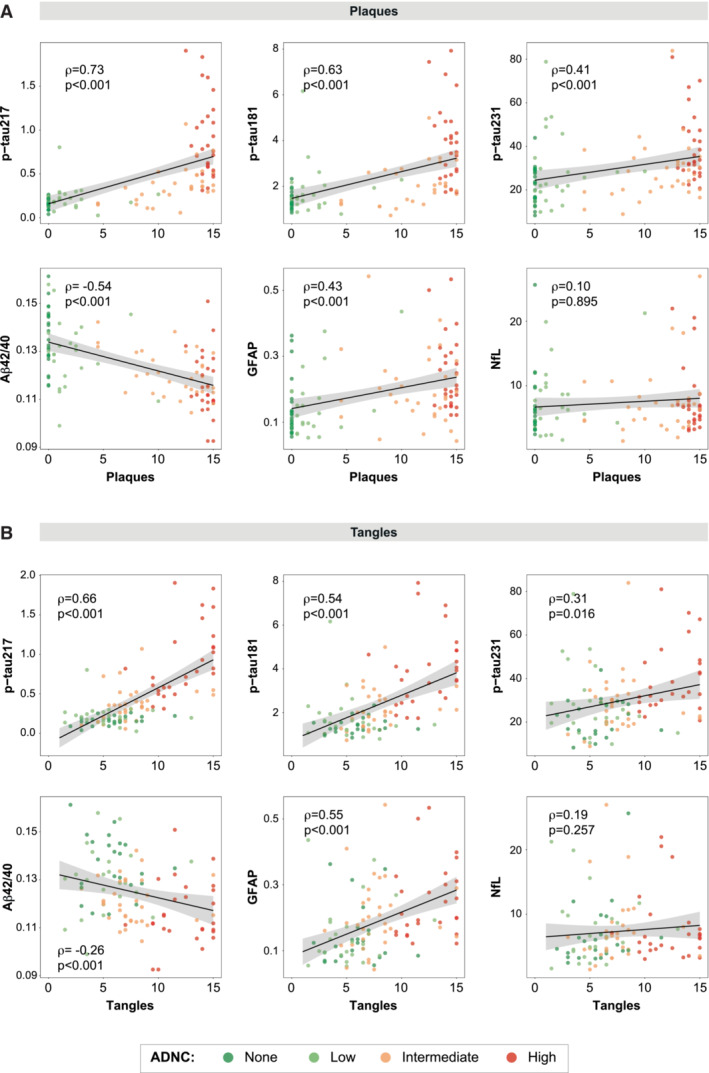
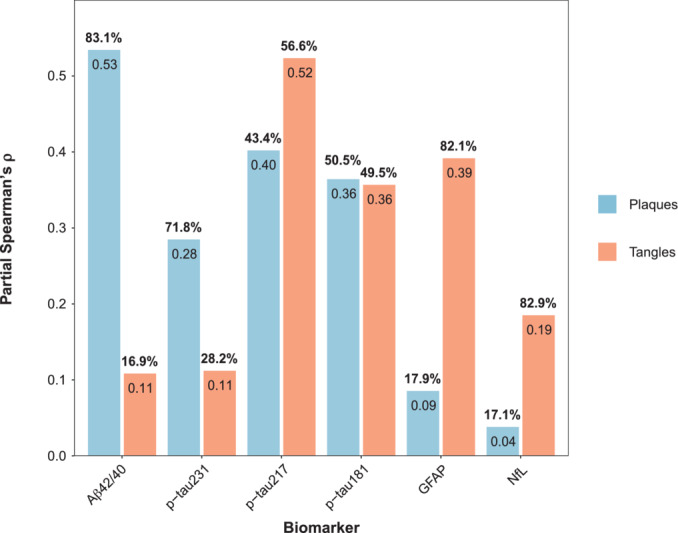
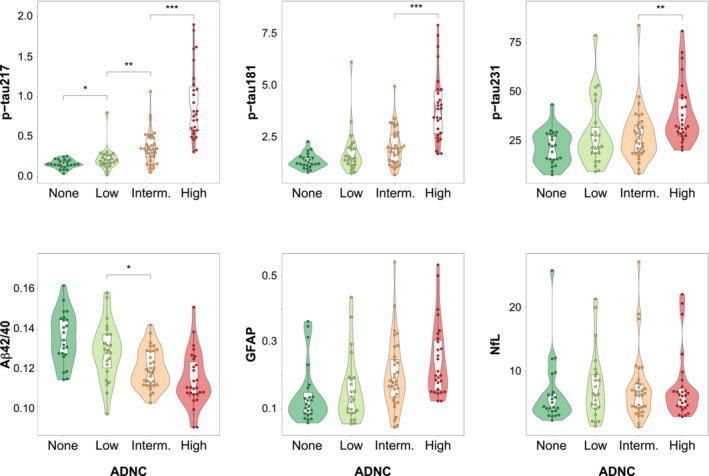
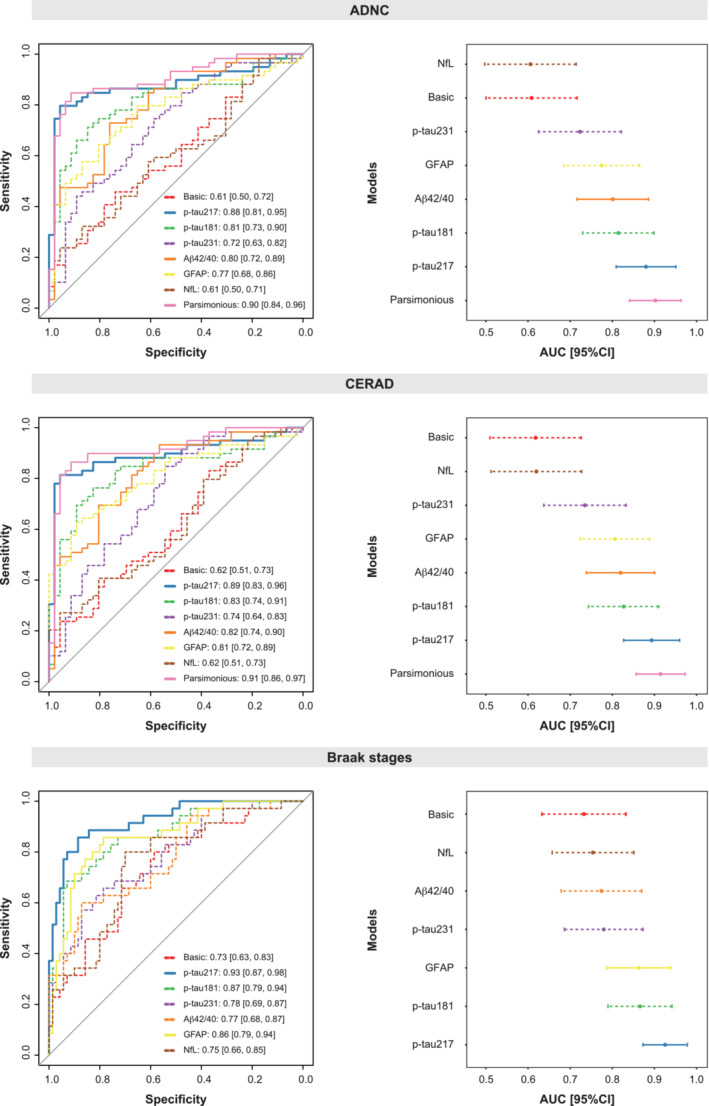
Verification
Claims the paper makes
The claims and statistics of this paper haven’t been checked yet.
Free: it reads the open-access text and checks the first 5 claims that cite a source we can check. Create a free account to check every claim.
Claims other papers make about this one
Each is checked against this paper’s own text: does it say what the citing paper says it does?
The source backs part of the claim, not all of it — or backs it for a different population, condition or comparison.
In the citing paper
“However, it is important to emphasize that head-to-head studies indicate that different assays for p-tau181 vary substantially in their diagnostic performance9,10 and may not all perform inferiorly to GFAP in all contexts34,43.”
From Diagnosis of Alzheimer's disease using plasma biomarkers adjusted to clinical probability (2024) · cites this paper as [34]
Experimental — accuracy not yet measuredThe source backs part of the claim, not all of it — or backs it for a different population, condition or comparison.
In the citing paper
“Among different p-tau variants, tau phosphorylated at threonine 217 (p-tau217) has demonstrated the highest accuracy in detecting AD pathology and predicting future cognitive decline23,27,29–31.”
From Highly accurate blood test for Alzheimer's disease is similar or superior to clinical cerebrospinal fluid tests (2024) · cites this paper as [27]
Experimental — accuracy not yet measuredThe cited source says what the claim attributes to it.
In the citing paper
“Yet certain p-tau species, but not all, are also associated with neurofibrillary tangle pathology, the secondary AD pathological hallmark.15,16,17”
From Diagnostic Accuracy of a Plasma Phosphorylated Tau 217 Immunoassay for Alzheimer Disease Pathology (2024) · cites this paper as [16]
The cited source says what the claim attributes to it.
In the citing paper
“Plasma levels of p-tau are strongly associated with PET and CSF biomarkers of AD pathology19–25, neuropathological changes associated with AD20,23,26,27 and the subsequent development of AD dementia20,23,28.”
From Highly accurate blood test for Alzheimer's disease is similar or superior to clinical cerebrospinal fluid tests (2024) · cites this paper as [27]
Self-check
Percentages, sums and reported differences re-computed from the paper’s own numbers.
The self-check needs the paper’s full text.
Citations
Cites
Neuropathological stageing of Alzheimer-related changes.
Braak, H., & Braak, E. (1991) · Acta Neuropathologica · doi:10.1007/bf00308809 · Cited by 16,123 · cited 3×
“…except NfL ( q = 0.19, P = 0.257) were also associated with the total amount of tangles in the independent models (0.26 ≤ | q | ≤ 0.66, P ≤ 0.016; Fig 1B and (Mirra et al , 1991 ) scale and Braak staging (Braak & Braak, 1991 ) refer to measures of plaque and neurofibrillary tangle, respectively.”
MethodResultInfluentialpROC: an open-source package for R and S+ to analyze and compare ROC curves
Robin, X., Turck, N., Hainard, A., Tiberti, N., Lisacek, F., Sanchez, J.-C., & Müller, M. (2011) · BMC Bioinformatics · doi:10.1186/1471-2105-12-77 · Cited by 13,697
Mirra, S. S., Heyman, A., McKeel, D., Sumi, S. M., Crain, B. J., Brownlee, L. M., Vogel, F. S., Hughes, J. P., Belle, G. V., Berg, L., et al. (1991) · Neurology · doi:10.1212/wnl.41.4.479 · Cited by 4,961
Phases of Aβ-deposition in the human brain and its relevance for the development of AD
Thal, D. R., Rüb, U., Orantes, M., & Braak, H. (2002) · Neurology · doi:10.1212/wnl.58.12.1791 · Cited by 3,490
Montine, T. J., Phelps, C. H., Beach, T. G., Bigio, E. H., Cairns, N. J., Dickson, D. W., Duyckaerts, C., Frosch, M. P., Masliah, E., Mirra, S. S., et al. (2012) · Acta Neuropathologica · doi:10.1007/s00401-011-0910-3 · Cited by 2,894
Self-citationA/T/N: An unbiased descriptive classification scheme for Alzheimer disease biomarkers
Jack, C. R., Bennett, D. A., Blennow, K., Carrillo, M. C., Feldman, H. H., Frisoni, G. B., Hampel, H., Jagust, W. J., Johnson, K. A., Knopman, D. S., et al. (2016) · Neurology · doi:10.1212/wnl.0000000000002923 · Cited by 1,864 · cited 1×
“…useful to track AD pathology across the continuum due to its relationship with both main pathological hallmarks of AD, as well as better statistical characteristics of ratios, which can account for production/clearance participants’ inter-variability (Janelidze et al , 2016; Hansson et al , 2019).”
BackgroundSelf-citationHansson, O., Zetterberg, H., Buchhave, P., Londos, E., Blennow, K., & Minthon, L. (2006) · The Lancet Neurology · doi:10.1016/s1474-4422(06)70355-6 · Cited by 1,700 · cited 1×
“The CSF p-tau/A b 42 ratio has received a lot of attention in recent years, both as a research and a clinical tool (Hansson et al , 2006; Fagan et al , 2007; Li et al , 2007; Snider et al , 2009; Mil (cid:4) a-Alom (cid:4) a et al , 2020; Salvad (cid:1) o & Larsson, 2022).”
MethodSelf-citationPalmqvist, S., Janelidze, S., Quiroz, Y. T., Zetterberg, H., Lopera, F., Stomrud, E., Su, Y., Chen, Y., Serrano, G. E., Leuzy, A., et al. (2020) · JAMA · doi:10.1001/jama.2020.12134 · Cited by 1,603 · cited 4×
“…markers have the benefit of being significantly cheaper and less invasive than established markers (i.e., cerebrospinal fluid [CSF] and positron emission tomography [PET]), while showing the excellent diagnostic performance (Karikari et al , 2020; Palmqvist et al , 2020; Jane-lidze et al , 2021a).”
BackgroundMethodInfluentialSelf-citationKarikari, T. K., Pascoal, T. A., Ashton, N. J., Janelidze, S., Benedet, A. L., Rodriguez, J. L., Chamoun, M., Savard, M., Kang, M. S., Therriault, J., et al. (2020) · The Lancet Neurology · doi:10.1016/s1474-4422(20)30071-5 · Cited by 1,316 · cited 3×
“Although p-tau181 has shown very good performance as an AD biomarker (Karikari et al , 2020, 2021; Thijssen et al , 2020; Jane-lidze et al , 2020a; Grothe et al , 2021), multiple (plasma and CSF) studies support that p-tau217 may be a more useful biomarker than p-tau181, as it has stronger…”
BackgroundResultSelf-citationJanelidze, S., Mattsson, N., Palmqvist, S., Smith, R., Beach, T. G., Serrano, G. E., Chai, X., Proctor, N. K., Eichenlaub, U., Zetterberg, H., et al. (2020) · Nature Medicine · doi:10.1038/s41591-020-0755-1 · Cited by 1,247 · cited 4×
“…biomarkers for distinguishing AD from non-AD neurodegenerative disorders (Karikari et al , 2020; Palmqvist et al , 2020; Thijssen et al , 2020; Janelidze et al , 2020a), with noninferior performance compared with CSF and PET markers (Palmqvist et al , 2019; Janelidze et al , 2020a, 2021a;…”
BackgroundMethodInfluentialSelf-citationBiomarkers for neurodegenerative diseases
Hansson, O. (2021) · Nature Medicine · doi:10.1038/s41591-021-01382-x · Cited by 1,159 · cited 3×
“The use of neuropathological data would also allow investigating whether any of these biomarkers might be useful for detecting other common co-pathologies observed in AD patients, such as Lewy bodies or TAR DNA-binding protein 43 (TDP-43; Hansson, 2021; Smirnov et al , 2022).”
BackgroundSelf-citationFagan, A. M., Roe, C. M., Xiong, C., Mintun, M. A., Morris, J. C., & Holtzman, D. M. (2007) · Archives of Neurology · doi:10.1001/archneur.64.3.noc60123 · Cited by 897 · cited 1×
“The CSF p-tau/A b 42 ratio has received a lot of attention in recent years, both as a research and a clinical tool (Hansson et al , 2006; Fagan et al , 2007; Li et al , 2007; Snider et al , 2009; Mil (cid:4) a-Alom (cid:4) a et al , 2020; Salvad (cid:1) o & Larsson, 2022).”
MethodBridel, C., van Wieringen, W. N., Zetterberg, H., Tijms, B. M., Teunissen, C. E., and the NFL Group, Alvarez-Cermeño, J. C., Andreasson, U., Axelsson, M., Bäckström, D. C., et al. (2019) · JAMA Neurology · doi:10.1001/jamaneurol.2019.1534 · Cited by 764
Self-citationAdvancing Research and Treatment for Frontotemporal Lobar Degeneration (ARTFL) investigators, Thijssen, E. H., La Joie, R., Wolf, A., Strom, A., Wang, P., Iaccarino, L., Bourakova, V., Cobigo, Y., Heuer, H., et al. (2020) · Nature Medicine · doi:10.1038/s41591-020-0762-2 · Cited by 761 · cited 4×
“…of some of these plasma biomarkers for distinguishing AD from non-AD neurodegenerative disorders (Karikari et al , 2020; Palmqvist et al , 2020; Thijssen et al , 2020; Janelidze et al , 2020a), with noninferior performance compared with CSF and PET markers (Palmqvist et al , 2019; Janelidze et…”
BackgroundInfluentialSelf-citationPlasma p-tau231: a new biomarker for incipient Alzheimer’s disease pathology.
Ashton, N. J., Pascoal, T. A., Karikari, T. K., Benedet, A. L., Lantero-Rodriguez, J., Brinkmalm, G., Snellman, A., Schöll, M., Troakes, C., Hye, A., et al. (2021) · Acta Neuropathologica · doi:10.1007/s00401-021-02275-6 · Cited by 719 · cited 5×
“Previous studies have suggested that p-tau231, both as a CSF and a plasma biomarker, may be an early AD marker tightly associated with amyloid pathology (Su (cid:1) arez-calvet et al , 2020; Ashton et al , 2021; Meyer et al , 2022; Mil (cid:4) a-Alom (cid:4) a et al , 2022; Smirnov et al , 2022).”
BackgroundMethodInfluentialSelf-citationthe Arizona Parkinson’s Disease Consortium, Beach, T. G., Adler, C. H., Lue, L., Sue, L. I., Bachalakuri, J., Henry-Watson, J., Sasse, J., Boyer, S., Shirohi, S., et al. (2009) · Acta Neuropathologica · doi:10.1007/s00401-009-0538-8 · Cited by 698 · cited 6×
“Immunohistochemical staining in 10 brain regions for p129 alpha-synuclein, as well as Thioflavin-S (for substantia nigra) was used as a secondary stain to detect Lewy bodies and were staged based on the Unified Staging System (Beach et al , 2009).”
BackgroundMethodInfluentialSelf-citationthe Dominantly Inherited Alzheimer Network, Barthélemy, N. R., Li, Y., Joseph-Mathurin, N., Gordon, B. A., Hassenstab, J., Benzinger, T. L. S., Buckles, V., Fagan, A. M., Perrin, R. J., et al. (2020) · Nature Medicine · doi:10.1038/s41591-020-0781-z · Cited by 651 · cited 1×
“…biomarker than p-tau181, as it has stronger correlations with amyloid and tau pathology proxies, earlier change, and better diagnostic accuracy (Barth (cid:1) elemy et al , 2020; Hanes et al , 2020; Palmqvist et al , 2020; Janelidze et al , 2020b, 2021a; Grothe et al , 2021; Leuzy et al , 2021).”
BackgroundBenedet, A. L., Milà-Alomà, M., Vrillon, A., Ashton, N. J., Pascoal, T. A., Lussier, F., Karikari, T. K., Hourregue, C., Cognat, E., Dumurgier, J., et al. (2021) · JAMA Neurology · doi:10.1001/jamaneurol.2021.3671 · Cited by 638 · cited 3×
“…except NfL ( q = 0.19, P = 0.257) were also associated with the total amount of tangles in the independent models (0.26 ≤ | q | ≤ 0.66, P ≤ 0.016; Fig 1B and (Mirra et al , 1991 ) scale and Braak staging (Braak & Braak, 1991 ) refer to measures of plaque and neurofibrillary tangle, respectively.”
MethodResultInfluentialSelf-citationThijssen, E. H., La Joie, R., Strom, A., Fonseca, C., Iaccarino, L., Wolf, A., Spina, S., Allen, I. E., Cobigo, Y., Heuer, H., et al. (2021) · The Lancet Neurology · doi:10.1016/s1474-4422(21)00214-3 · Cited by 607
Self-citationHansson, O., Edelmayer, R. M., Boxer, A. L., Carrillo, M. C., Mielke, M. M., Rabinovici, G. D., Salloway, S., Sperling, R., Zetterberg, H., & Teunissen, C. E. (2022) · Alzheimer's & Dementia · doi:10.1002/alz.12756 · Cited by 607 · cited 1×
“Nonetheless, there are still important topics to be addressed to optimize their usage in clinical practice, including improved interpretation of obtained plasma biomarker results and a fair head-to-head comparison, especially against gold standard neuropathological measures (Hansson et al , 2022).”
BackgroundSelf-citationPlasma GFAP is an early marker of amyloid-β but not tau pathology in Alzheimer's disease
Pereira, J. B., Janelidze, S., Smith, R., Mattsson-Carlgren, N., Palmqvist, S., Teunissen, C. E., Zetterberg, H., Stomrud, E., Ashton, N. J., Blennow, K., et al. (2021) · Brain · doi:10.1093/brain/awab223 · Cited by 598 · cited 1×
“Contrarily, previous studies have shown significant associations between this marker and amyloid pathology (as measured by CSF or PET), which were stronger than those with tau pathology (also measured with CSF or PET; Benedet et al , 2021; Pereira et al , 2021).”
ResultSelf-citationHansson, O., Lehmann, S., Otto, M., Zetterberg, H., & Lewczuk, P. (2019) · Alzheimer's Research & Therapy · doi:10.1186/s13195-019-0485-0 · Cited by 585 · cited 1×
“…useful to track AD pathology across the continuum due to its relationship with both main pathological hallmarks of AD, as well as better statistical characteristics of ratios, which can account for production/clearance participants’ inter-variability (Janelidze et al , 2016; Hansson et al , 2019).”
BackgroundSelf-citationTau biomarkers in Alzheimer's disease: towards implementation in clinical practice and trials
Ossenkoppele, R., van der Kant, R., & Hansson, O. (2022) · The Lancet Neurology · doi:10.1016/s1474-4422(22)00168-5 · Cited by 557 · cited 1×
“The recent development of plasma biomarkers for Alzheimer’s disease (AD) has revolutionized the field (Zetterberg & Bendlin, 2020; Hansson, 2021; Ossenkoppele et al , 2022), as these markers have the benefit of being significantly cheaper and less invasive than established markers (i.e.,…”
BackgroundSelf-citationPalmqvist, S., Tideman, P., Cullen, N., Zetterberg, H., Blennow, K., Initiative, T. A. D. N., Dage, J. L., Stomrud, E., Janelidze, S., Mattsson-Carlgren, N., et al. (2021) · Nature Medicine · doi:10.1038/s41591-021-01348-z · Cited by 524 · cited 1×
“We used the R package MuMIn to select the most parsimonious models to predict both continuous and dichotomous pathological measures following procedures described earlier (Palmqvist et al , 2021).”
MethodSelf-citationHead-to-head comparison of 10 plasma phospho-tau assays in prodromal Alzheimer’s disease
Janelidze, S., Bali, D., Ashton, N. J., Barthélemy, N. R., Vanbrabant, J., Stoops, E., Vanmechelen, E., He, Y., Dolado, A. O., Triana-Baltzer, G., et al. (2023) · Brain · doi:10.1093/brain/awac333 · Cited by 522 · cited 11×
“Given that the CSF p-tau/A b 42 ratio is commonly used both in research and in clinical practice, we wanted to investigate whether a plasma p-tau/A b 42 ratio would also be useful for predicting AD pathology.”
ResultInfluentialSelf-citationHead-to-Head Comparison of 8 Plasma Amyloid-β 42/40 Assays in Alzheimer Disease
Janelidze, S., Teunissen, C. E., Zetterberg, H., Allué, J. A., Sarasa, L., Eichenlaub, U., Bittner, T., Ovod, V., Verberk, I. M. W., Toba, K., et al. (2021) · JAMA Neurology · doi:10.1001/jamaneurol.2021.3180 · Cited by 494
Self-citationZetterberg, H., Skillbäck, T., Mattsson, N., Trojanowski, J. Q., Portelius, E., Shaw, L. M., Weiner, M. W., Blennow, K., & Initiative, F. T. A. D. N. (2016) · JAMA Neurology · doi:10.1001/jamaneurol.2015.3037 · Cited by 487 · cited 1×
“This is in agreement with NfL being a biomarker of nonspecific axonal degeneration (Zetterberg et al , 2016; Bridel et al , 2019), but these results should be confirmed in an independent cohort.”
ResultSelf-citationArizona Study of Aging and Neurodegenerative Disorders and Brain and Body Donation Program
Beach, T. G., Adler, C. H., Sue, L. I., Serrano, G., Shill, H. A., Walker, D. G., Lue, L., Roher, A. E., Dugger, B. N., Maarouf, C., et al. (2015) · Neuropathology · doi:10.1111/neup.12189 · Cited by 460 · cited 9×
“CAA (Beach et al , 2015 ), LBD (Beach et al , 2009 ), TDP-43 (Arnold et al , 2013 ), CWMR (Dugger et al , 2014 ), and AGD (Josephs et al , 2008 ; Sabbagh et al , 2009 ) refer to the presence (vs. absence) of these co-pathologies.”
BackgroundMethodInfluentialSelf-citationCSF A β 42/A β 40 and A β 42/A β 38 ratios: better diagnostic markers of Alzheimer disease
Janelidze, S., Zetterberg, H., Mattsson, N., Palmqvist, S., Vanderstichele, H., Lindberg, O., van Westen, D., Stomrud, E., Minthon, L., Blennow, K., et al. (2016) · Annals of Clinical and Translational Neurology · doi:10.1002/acn3.274 · Cited by 456 · cited 1×
“…useful to track AD pathology across the continuum due to its relationship with both main pathological hallmarks of AD, as well as better statistical characteristics of ratios, which can account for production/clearance participants’ inter-variability (Janelidze et al , 2016; Hansson et al , 2019).”
BackgroundSelf-citationCerebrospinal fluid p-tau217 performs better than p-tau181 as a biomarker of Alzheimer's disease
Janelidze, S., Stomrud, E., Smith, R., Palmqvist, S., Mattsson, N., Airey, D. C., Proctor, N. K., Chai, X., Shcherbinin, S., Sims, J. R., et al. (2020) · Nature Communications · doi:10.1038/s41467-020-15436-0 · Cited by 450 · cited 4×
“…biomarkers for distinguishing AD from non-AD neurodegenerative disorders (Karikari et al , 2020; Palmqvist et al , 2020; Thijssen et al , 2020; Janelidze et al , 2020a), with noninferior performance compared with CSF and PET markers (Palmqvist et al , 2019; Janelidze et al , 2020a, 2021a;…”
BackgroundMethodInfluentialSelf-citationAshton, N. J., Janelidze, S., Mattsson-Carlgren, N., Binette, A. P., Strandberg, O., Brum, W. S., Karikari, T. K., González-Ortiz, F., Di Molfetta, G., Meda, F. J., et al. (2022) · Nature Medicine · doi:10.1038/s41591-022-02074-w · Cited by 436
Self-citationPalmqvist, S., Janelidze, S., Stomrud, E., Zetterberg, H., Karl, J., Zink, K., Bittner, T., Mattsson, N., Eichenlaub, U., Blennow, K., et al. (2019) · JAMA Neurology · doi:10.1001/jamaneurol.2019.1632 · Cited by 435 · cited 2×
“…al , 2020; Palmqvist et al , 2020; Thijssen et al , 2020; Janelidze et al , 2020a), with noninferior performance compared with CSF and PET markers (Palmqvist et al , 2019; Janelidze et al , 2020a, 2021a; Ashton et al , 2021; Benedet et al , 2021; Mielke et al , 2021), as well as an important…”
BackgroundMethodSelf-citationSuárez‐Calvet, M., Karikari, T. K., Ashton, N. J., Lantero Rodríguez, J., Milà‐Alomà, M., Gispert, J. D., Salvadó, G., Minguillon, C., Fauria, K., Shekari, M., et al. (2020) · EMBO Molecular Medicine · doi:10.15252/emmm.202012921 · Cited by 401
Self-citationJanelidze, S., Berron, D., Smith, R., Strandberg, O., Proctor, N. K., Dage, J. L., Stomrud, E., Palmqvist, S., Mattsson-Carlgren, N., & Hansson, O. (2021) · JAMA Neurology · doi:10.1001/jamaneurol.2020.4201 · Cited by 381 · cited 5×
“As it has been shown recently with the plasma A b 42/40 ratio, different assays and/or platforms could lead to significantly different performances in detecting AD-related pathology (Janelidze et al , 2021b).”
BackgroundInfluentialSelf-citationBiomarkers for Alzheimer’s disease—preparing for a new era of disease-modifying therapies
Zetterberg, H., & Bendlin, B. B. (2021) · Molecular Psychiatry · doi:10.1038/s41380-020-0721-9 · Cited by 377 · cited 1×
“The recent development of plasma biomarkers for Alzheimer’s disease (AD) has revolutionized the field (Zetterberg & Bendlin, 2020; Hansson, 2021; Ossenkoppele et al , 2022), as these markers have the benefit of being significantly cheaper and less invasive than established markers (i.e.,…”
BackgroundSelf-citationMilà-Alomà, M., Ashton, N. J., Shekari, M., Salvadó, G., Ortiz-Romero, P., Montoliu-Gaya, L., Benedet, A. L., Karikari, T. K., Lantero-Rodriguez, J., Vanmechelen, E., et al. (2022) · Nature Medicine · doi:10.1038/s41591-022-01925-w · Cited by 353
Self-citationLantero Rodriguez, J., Karikari, T. K., Suárez-Calvet, M., Troakes, C., King, A., Emersic, A., Aarsland, D., Hye, A., Zetterberg, H., Blennow, K., et al. (2020) · Acta Neuropathologica · doi:10.1007/s00401-020-02195-x · Cited by 350
Self-citationKarikari, T. K., Benedet, A. L., Ashton, N. J., Lantero Rodriguez, J., Snellman, A., Suárez-Calvet, M., Saha-Chaudhuri, P., Lussier, F., Kvartsberg, H., Rial, A. M., et al. (2021) · Molecular Psychiatry · doi:10.1038/s41380-020-00923-z · Cited by 347 · cited 3×
“Although p-tau181 has shown very good performance as an AD biomarker (Karikari et al , 2020, 2021; Thijssen et al , 2020; Jane-lidze et al , 2020a; Grothe et al , 2021), multiple (plasma and CSF) studies support that p-tau217 may be a more useful biomarker than p-tau181, as it has stronger…”
BackgroundResultSelf-citationPlasma Amyloid as Prescreener for the Earliest Alzheimer Pathological Changes
Verberk, I. M. W., Slot, R. E., Verfaillie, S. C. J., Heijst, H., Prins, N. D., van Berckel, B. N. M., Scheltens, P., Teunissen, C. E., & van der Flier, W. M. (2018) · Annals of Neurology · doi:10.1002/ana.25334 · Cited by 315 · cited 1×
“Similarly, the plasma A b 42/40 ratio was also only associated with plaques when both pathologies were included in a single model, supporting its tight relationship with amyloid pathology (Verberk et al , 2018; Janelidze et al , 2021b).”
BackgroundCSF tau/Aβ 42 ratio for increased risk of mild cognitive impairment: A follow-up study
Li, G., Sokal, I., Quinn, J. F., Leverenz, J. B., Brodey, M., Schellenberg, G. D., Kaye, J. A., Raskind, M. A., Zhang, J., Peskind, E. R., et al. (2007) · Neurology · doi:10.1212/01.wnl.0000267428.62582.aa · Cited by 279
Therriault, J., Vermeiren, M., Servaes, S., Tissot, C., Ashton, N. J., Benedet, A. L., Karikari, T. K., Lantero-Rodriguez, J., Brum, W. S., Lussier, F. Z., et al. (2023) · JAMA Neurology · doi:10.1001/jamaneurol.2022.4485 · Cited by 272
Self-citationSoluble P‐tau217 reflects amyloid and tau pathology and mediates the association of amyloid with tau
Mattsson‐Carlgren, N., Janelidze, S., Bateman, R. J., Smith, R., Stomrud, E., Serrano, G. E., Reiman, E. M., Palmqvist, S., Dage, J. L., Beach, T. G., et al. (2021) · EMBO Molecular Medicine · doi:10.15252/emmm.202114022 · Cited by 261
Self-citationThe Sun Health Research Institute Brain Donation Program: Description and Eexperience, 1987–2007
Beach, T. G., Sue, L. I., Walker, D. G., Roher, A. E., Lue, L., Vedders, L., Connor, D. J., Sabbagh, M. N., & Rogers, J. (2008) · Cell and Tissue Banking · doi:10.1007/s10561-008-9067-2 · Cited by 252 · cited 2×
“Amyloid plaque and neurofibrillary tangle density were graded at standard sites in frontal, temporal, and parietal cortices, as well as the hippocampus and entorhinal cortex, as previously explained (Beach et al , 2008).”
BackgroundMethodSelf-citationMielke, M. M., Frank, R. D., Dage, J. L., Jeromin, A., Ashton, N. J., Blennow, K., Karikari, T. K., Vanmechelen, E., Zetterberg, H., Algeciras-Schimnich, A., et al. (2021) · JAMA Neurology · doi:10.1001/jamaneurol.2021.2293 · Cited by 244 · cited 4×
“Similarly, comparisons between multiple species and assays of p-tau measures showed only a modest correlation, suggesting also significantly different diagnostic performance (Mielke et al , 2021; Janelidze et al , 2022a; Ashton et al , 2022b).”
BackgroundMethodResultInfluentialSelf-citationMilà‐Alomà, M., Salvadó, G., Gispert, J. D., Vilor‐Tejedor, N., Grau‐Rivera, O., Sala‐Vila, A., Sánchez‐Benavides, G., Arenaza‐Urquijo, E. M., Crous‐Bou, M., González‐de‐Echávarri, J. M., et al. (2020) · Alzheimer's & Dementia · doi:10.1002/alz.12131 · Cited by 241
Self-citationAshton, N. J., Puig‐Pijoan, A., Milà‐Alomà, M., Fernández‐Lebrero, A., García‐Escobar, G., González‐Ortiz, F., Kac, P. R., Brum, W. S., Benedet, A. L., Lantero‐Rodriguez, J., et al. (2023) · Alzheimer's & Dementia · doi:10.1002/alz.12841 · Cited by 230
Self-citationSnider, B. J., Fagan, A. M., Roe, C., Shah, A. R., Grant, E. A., Xiong, C., Morris, J. C., & Holtzman, D. M. (2009) · Archives of Neurology · doi:10.1001/archneurol.2009.55 · Cited by 228 · cited 1×
“The CSF p-tau/A b 42 ratio has received a lot of attention in recent years, both as a research and a clinical tool (Hansson et al , 2006; Fagan et al , 2007; Li et al , 2007; Snider et al , 2009; Mil (cid:4) a-Alom (cid:4) a et al , 2020; Salvad (cid:1) o & Larsson, 2022).”
MethodLeuzy, A., Smith, R., Ossenkoppele, R., Santillo, A., Borroni, E., Klein, G., Ohlsson, T., Jögi, J., Palmqvist, S., Mattsson-Carlgren, N., et al. (2020) · JAMA Neurology · doi:10.1001/jamaneurol.2020.0989 · Cited by 222 · cited 1×
“And second, that tau PET is known to not be sensitive to early tau pathology, which may have decreased the power to detect these associations in previous studies (Mattsson et al , 2017; Leuzy et al , 2020; Soleimani-meigooni et al , 2020).”
ResultSelf-citationPlasma biomarkers for Alzheimer’s Disease in relation to neuropathology and cognitive change
Smirnov, D. S., Ashton, N. J., Blennow, K., Zetterberg, H., Simrén, J., Lantero-Rodriguez, J., Karikari, T. K., Hiniker, A., Rissman, R. A., Salmon, D. P., et al. (2022) · Acta Neuropathologica · doi:10.1007/s00401-022-02408-5 · Cited by 221
Self-citationVerberk, I. M. W., Laarhuis, M. B., van den Bosch, K. A., Ebenau, J. L., van Leeuwenstijn, M., Prins, N. D., Scheltens, P., Teunissen, C. E., & van der Flier, W. M. (2021) · The Lancet Healthy Longevity · doi:10.1016/s2666-7568(20)30061-1 · Cited by 202 · cited 1×
“…GFAP and increased risk of clinical progression and steeper rates of cognitive decline (even after adjusting for amyloid) (Rajan et al , 2020; Verberk et al , 2021; Ebenau et al , 2022), which supports a link with tau pathology given the known strong association between tau and clinical…”
BackgroundJanelidze, S., Palmqvist, S., Leuzy, A., Stomrud, E., Verberk, I. M. W., Zetterberg, H., Ashton, N. J., Pesini, P., Sarasa, L., Allué, J. A., et al. (2022) · Alzheimer's & Dementia · doi:10.1002/alz.12395 · Cited by 188 · cited 11×
“Given that the CSF p-tau/A b 42 ratio is commonly used both in research and in clinical practice, we wanted to investigate whether a plasma p-tau/A b 42 ratio would also be useful for predicting AD pathology.”
ResultInfluentialSelf-citationCullen, N. C., Leuzy, A., Palmqvist, S., Janelidze, S., Stomrud, E., Pesini, P., Sarasa, L., Allué, J. A., Proctor, N. K., Zetterberg, H., et al. (2020) · Nature Aging · doi:10.1038/s43587-020-00003-5 · Cited by 187 · cited 3×
“We used the R package MuMIn to select the most parsimonious models to predict both continuous and dichotomous pathological measures following procedures described earlier (Palmqvist et al , 2021).”
BackgroundMethodSelf-citation18F‐AV‐1451 and CSF T‐tau and P‐tau as biomarkers in Alzheimer's disease
Mattsson, N., Schöll, M., Strandberg, O., Smith, R., Palmqvist, S., Insel, P. S., Hägerström, D., Ohlsson, T., Zetterberg, H., Jögi, J., et al. (2017) · EMBO Molecular Medicine · doi:10.15252/emmm.201707809 · Cited by 177 · cited 1×
“And second, that tau PET is known to not be sensitive to early tau pathology, which may have decreased the power to detect these associations in previous studies (Mattsson et al , 2017; Leuzy et al , 2020; Soleimani-meigooni et al , 2020).”
ResultSelf-citationSoleimani-Meigooni, D. N., Iaccarino, L., La Joie, R., Baker, S., Bourakova, V., Boxer, A. L., Edwards, L., Eser, R., Gorno-Tempini, M.-L., Jagust, W. J., et al. (2020) · Brain · doi:10.1093/brain/awaa276 · Cited by 176 · cited 1×
“And second, that tau PET is known to not be sensitive to early tau pathology, which may have decreased the power to detect these associations in previous studies (Mattsson et al , 2017; Leuzy et al , 2020; Soleimani-meigooni et al , 2020).”
ResultAn accurate fully automated panel of plasma biomarkers for Alzheimer's disease
Palmqvist, S., Stomrud, E., Cullen, N., Janelidze, S., Manuilova, E., Jethwa, A., Bittner, T., Eichenlaub, U., Suridjan, I., Kollmorgen, G., et al. (2023) · Alzheimer's & Dementia · doi:10.1002/alz.12751 · Cited by 166 · cited 1×
“:3) plasma immunoassays (updated versions for A b 42 and A b 40 (Palmqvist et al , 2022)) plasma immunoassays (not commercially available) cobas e 601 and cobas e 411 analyzers (Roche Diagnostics International Ltd, Rotkreuz, Switzerland), also in-house (Palmqvist et al , 2019).”
MethodSelf-citationRemote Blood Biomarkers of Longitudinal Cognitive Outcomes in a Population Study
Rajan, K. B., Aggarwal, N. T., McAninch, E. A., Weuve, J., Barnes, L. L., Wilson, R. S., DeCarli, C., & Evans, D. A. (2020) · Annals of Neurology · doi:10.1002/ana.25874 · Cited by 147 · cited 1×
“…higher levels of plasma GFAP and increased risk of clinical progression and steeper rates of cognitive decline (even after adjusting for amyloid) (Rajan et al , 2020; Verberk et al , 2021; Ebenau et al , 2022), which supports a link with tau pathology given the known strong association between…”
BackgroundLeuzy, A., Janelidze, S., Mattsson-Carlgren, N., Palmqvist, S., Jacobs, D., Cicognola, C., Stomrud, E., Vanmechelen, E., Dage, J. L., & Hansson, O. (2021) · Neurology · doi:10.1212/wnl.0000000000012727 · Cited by 128
Self-citationArgyrophilic grains: A distinct disease or an additive pathology?
Josephs, K. A., Whitwell, J. L., Parisi, J. E., Knopman, D. S., Boeve, B. F., Geda, Y. E., Jack, C. R., Petersen, R. C., & Dickson, D. W. (2007) · Neurobiology of Aging · doi:10.1016/j.neurobiolaging.2006.10.032 · Cited by 102 · cited 6×
“Only A b 42/40 ratio levels were different between the AD group with CBD, PSP, or AGD pathology ( P = 0.038).”
BackgroundInfluentialArnold, S. J., Dugger, B. N., & Beach, T. G. (2013) · Acta Neuropathologica · doi:10.1007/s00401-013-1110-0 · Cited by 100 · cited 6×
“CAA (Beach et al , 2015 ), LBD (Beach et al , 2009 ), TDP-43 (Arnold et al , 2013 ), CWMR (Dugger et al , 2014 ), and AGD (Josephs et al , 2008 ; Sabbagh et al , 2009 ) refer to the presence (vs. absence) of these co-pathologies.”
BackgroundInfluentialSelf-citationGrothe, M. J., Moscoso, A., Ashton, N. J., Karikari, T. K., Lantero-Rodriguez, J., Snellman, A., Zetterberg, H., Blennow, K., Schöll, M., & Initiative, F. T. A. D. N. (2021) · Neurology · doi:10.1212/wnl.0000000000012513 · Cited by 93 · cited 3×
“Although p-tau181 has shown very good performance as an AD biomarker (Karikari et al , 2020, 2021; Thijssen et al , 2020; Jane-lidze et al , 2020a; Grothe et al , 2021), multiple (plasma and CSF) studies support that p-tau217 may be a more useful biomarker than p-tau181, as it has stronger…”
BackgroundSelf-citationPlasma p‐tau231, p‐tau181, PET Biomarkers, and Cognitive Change in Older Adults
Meyer, P., Ashton, N. J., Karikari, T. K., Strikwerda‐Brown, C., Köbe, T., Gonneaud, J., Pichet Binette, A., Ozlen, H., Yakoub, Y., Simrén, J., et al. (2022) · Annals of Neurology · doi:10.1002/ana.26308 · Cited by 91
Self-citationEbenau, J. L., Pelkmans, W., Verberk, I. M. W., Verfaillie, S. C. J., van den Bosch, K. A., van Leeuwenstijn, M., Collij, L. E., Scheltens, P., Prins, N. D., Barkhof, F., et al. (2022) · Neurology · doi:10.1212/wnl.0000000000200035 · Cited by 75 · cited 1×
“…GFAP and increased risk of clinical progression and steeper rates of cognitive decline (even after adjusting for amyloid) (Rajan et al , 2020; Verberk et al , 2021; Ebenau et al , 2022), which supports a link with tau pathology given the known strong association between tau and clinical symptoms.”
BackgroundHanes, J., Kovac, A., Kvartsberg, H., Kontsekova, E., Fialova, L., Katina, S., Kovacech, B., Stevens, E., Hort, J., Vyhnalek, M., et al. (2020) · Neurology · doi:10.1212/wnl.0000000000010814 · Cited by 55 · cited 1×
“…biomarker than p-tau181, as it has stronger correlations with amyloid and tau pathology proxies, earlier change, and better diagnostic accuracy (Barth (cid:1) elemy et al , 2020; Hanes et al , 2020; Palmqvist et al , 2020; Janelidze et al , 2020b, 2021a; Grothe et al , 2021; Leuzy et al , 2021).”
BackgroundSelf-citationCorrelation of Clinical Features With Argyrophilic Grains at Autopsy
Sabbagh, M. N., Sandhu, S. S., Farlow, M. R., Vedders, L., Shill, H. A., Caviness, J. N., Connor, D. J., Sue, L., Adler, C. H., & Beach, T. G. (2009) · Alzheimer Disease & Associated Disorders · doi:10.1097/wad.0b013e318199d833 · Cited by 51 · cited 2×
“CAA (Beach et al , 2015 ), LBD (Beach et al , 2009 ), TDP-43 (Arnold et al , 2013 ), CWMR (Dugger et al , 2014 ), and AGD (Josephs et al , 2008 ; Sabbagh et al , 2009 ) refer to the presence (vs. absence) of these co-pathologies.”
BackgroundSelf-citationMoscoso, A., Karikari, T. K., Grothe, M. J., Ashton, N. J., Lantero‐Rodriguez, J., Snellman, A., Zetterberg, H., Blennow, K., & Schöll, M. (2022) · Alzheimer's & Dementia · doi:10.1002/alz.12570 · Cited by 50 · cited 1×
“This is important when interpreting p-tau measures in the A/T/N (Jack et al , 2016) context, as they may be more related to A (amyloid) than previously thought, as recently suggested (Groot et al , 2022; Moscoso et al , 2022; Therriault et al , 2022).”
MethodSelf-citationGroot, C., Smith, R., Stomrud, E., Binette, A. P., Leuzy, A., Wuestefeld, A., Wisse, L. E. M., Palmqvist, S., Mattsson-Carlgren, N., Janelidze, S., et al. (2023) · Brain · doi:10.1093/brain/awac329 · Cited by 50 · cited 1×
“This is important when interpreting p-tau measures in the A/T/N (Jack et al , 2016) context, as they may be more related to A (amyloid) than previously thought, as recently suggested (Groot et al , 2022; Moscoso et al , 2022; Therriault et al , 2022).”
MethodSelf-citationSalvadó, G., Larsson, V., Cody, K. A., Cullen, N. C., Jonaitis, E. M., Stomrud, E., Kollmorgen, G., Wild, N., Palmqvist, S., Janelidze, S., et al. (2023) · Alzheimer's & Dementia · doi:10.1002/alz.12907 · Cited by 46
Self-citationDugger, B. N., Clark, C. M., Serrano, G., Mariner, M., Bedell, B. J., Coleman, R. E., Doraiswamy, P. M., Lu, M., Fleisher, A. S., Reiman, E. M., et al. (2014) · Journal of Neuropathology & Experimental Neurology · doi:10.1097/nen.0000000000000028 · Cited by 38 · cited 8×
“We observed that only plasma NfL significantly improved the prediction of the presence of CWMR (Dugger et al , 2014) As an additional analysis, we further checked whether there were differences between plasma levels in participants with only co-pathologies (e.g., CAA only) and participants with AD…”
BackgroundMethodInfluentialSelf-citationWinder, Z., Sudduth, T. L., Anderson, S., Patel, E., Neltner, J. H., Martin, B. J., Snyder, K., Abner, E. L., Jicha, G. A., Nelson, P. T., et al. (2022) · Alzheimer s & Dementia · doi:10.1002/alz.12639 · Cited by 35 · cited 2×
“…of the plasma A b 42/40 ratio, GFAP, or NfL levels to predict AD pathology seems to be lower than that of p-tau markers, although only few studies have investigated their association with neuropathologic measures of AD pathology (Thijssen et al , 2020; Smirnov et al , 2022; Winder et al , 2022).”
BackgroundSalvadó, G., Larsson, V., Cody, K. A., Cullen, N. C., Jonaitis, E. M., Stomrud, E., Kollmorgen, G., Wild, N., Palmqvist, S., Janelidze, S., et al. (2022) · Alzheimer s & Dementia · doi:10.1002/alz.066480 · Cited by 1
Self-citation
Cited by
Donanemab in Early Symptomatic Alzheimer Disease: The TRAILBLAZER-ALZ 2 Randomized Clinical Trial
Sims, J. R., Zimmer, J. A., Evans, C. D., Lu, M., Ardayfio, P., Sparks, J., Wessels, A. M., Shcherbinin, S., Wang, H., Monkul Nery, E. S., et al. (2023) · JAMA · doi:10.1001/jama.2023.13239 · Cited by 2,932
Self-citationRevised criteria for diagnosis and staging of Alzheimer's disease: Alzheimer's Association Workgroup
Jack, C. R., Andrews, J. S., Beach, T. G., Buracchio, T., Dunn, B., Graf, A., Hansson, O., Ho, C., Jagust, W., McDade, E., et al. (2024) · Alzheimer's & Dementia · doi:10.1002/alz.13859 · Cited by 2,803
Self-citationDiagnostic Accuracy of a Plasma Phosphorylated Tau 217 Immunoassay for Alzheimer Disease Pathology
Ashton, N. J., Brum, W. S., Di Molfetta, G., Benedet, A. L., Arslan, B., Jonaitis, E., Langhough, R. E., Cody, K., Wilson, R., Carlsson, C. M., et al. (2024) · JAMA Neurology · doi:10.1001/jamaneurol.2023.5319 · Cited by 884
Self-citationBlood biomarkers for Alzheimer’s disease in clinical practice and trials
Hansson, O., Blennow, K., Zetterberg, H., & Dage, J. (2023) · Nature Aging · doi:10.1038/s43587-023-00403-3 · Cited by 522
Self-citationBarthélemy, N. R., Salvadó, G., Schindler, S. E., He, Y., Janelidze, S., Collij, L. E., Saef, B., Henson, R. L., Chen, C. D., Gordon, B. A., et al. (2024) · Nature Medicine · doi:10.1038/s41591-024-02869-z · Cited by 448
“Plasma levels of p-tau are strongly associated with PET and CSF biomarkers of AD pathology 19–25 , neuropathological changes associated with AD 20,23,26,27 and the subsequent development of AD dementia 20,23,28 .”
BackgroundSelf-citation
Metadata
- Authors
- Salvadó, G., Ossenkoppele, R., Ashton, N. J., Beach, T. G., Serrano, G. E., Reiman, E. M., Zetterberg, H., Mattsson‐Carlgren, N., Janelidze, S., Blennow, K., & Hansson, O.
- Affiliations
- Lund University (SE)
- King's College London (GB)
- Banner Sun Health Research Institute (US)
- University of Arizona (US)
- Sahlgrenska University Hospital (SE)
- Corresponding author
- Salvadó, Gemma
- Hansson, Oskar
- ORCID
- Venue
- EMBO Molecular Medicine
- Published
- 2023-03-13
- Volume
- 15
- Issue
- 5
- Pages
- e17123-e17123
- ISSN
- 1757-4676 (ISSN-L)
- 1757-4684
- PMC
- PMC10165361
- OpenAlex
- W4324019853
- Cited by
- 205
- References
- 71
- Citations by year
- 2026: 52 · 2025: 70 · 2024: 62 · 2023: 20
- FWCI
- 35.94
- Type
- journal article
- Language
- en
- Open access
- gold
- doi.org
- Licence
- cc-by
- creativecommons.org/licenses/by/4.0/ (tdm)
- creativecommons.org/licenses/by/4.0/ (vor)
- Locations
- EMBO Molecular Medicine (publishedVersion, cc-by)
- PubMed Central (publishedVersion, cc-by)
- PubMed (publishedVersion)
- UCL Discovery (University College London) (submittedVersion, cc-by)
- DOAJ (DOAJ: Directory of Open Access Journals) (submittedVersion, cc-by-sa)
- Lund University Publications (Lund University) (submittedVersion)
- Pure Amsterdam UMC (submittedVersion, cc-by)
- Amsterdam UMC (VU Amsterdam) - Institutional Repository (submittedVersion, other-oa)
- Data Archiving and Networked Services (DANS) (submittedVersion, cc-by)
- Funders
- AD Strategic Fund and Alzheimer's Association (ADSF‐21‐831376‐C, ADSF‐21‐831381‐C, ADSF‐21‐831377‐C)
- ALF‐agreement (ALFGBG‐715986, ALFGBG‐965240)
- Alzheimer Drug Discovery Foundation (201809‐2016862, RDAPB‐201809‐2016615)
- Alzheimer's Association 2021 Zenith Award (ZEN‐21‐848495)
- Bluefield Project
- Erling Persson Family Foundation
- European Research Council (681712, 101053962)
- European Union Joint Program for Neurodegenerative Disorders (JPND2019‐466‐236)
- European Union Joint Programme—Neurodegenerative Disease Research (JPND2021‐00694)
- Greta och Johan Kocks stiftelser
- Hj#x00E4;rnfonden, Sweden (FO2017‐0243, ALZ2022‐0006)
- Knut och Alice Wallenbergs Stiftelse (2017‐0383)
- Konnung Gustaf och Drottning Victorias Frimurarestiftelse
- Marianne and Marcus Wallenberg Foundation (2015.0125)
- Marie Sklodowska‐Curie (101061836, 860197)
- National Institute of Health, USA (1R01AG068398‐01)
- Olav Thon Foundation
- Parkinson Foundation of Sweden (1280/20)
- Skane University Hospital Foundation (2020‐O000028)
- Stiftelsen för Gamla Tjänarinnor, Hjärnfonden, Sweden (FO2022‐0270)
- Strategic Research Area MultiPark
- Swedish Alzheimer Foundation (AF‐939932, AF‐930351, AF‐939721, AF‐968270)
- Swedish Brain Foundation (FO2021‐0293)
- Swedish Federal Government (2018‐Projekt0279)
- Swedish Research Council (2016‐00906, 2018‐02532, 2017‐00915)
- Swedish State Support for Clinical Research (ALFGBG‐71320)
- UK Dementia Research Institute at UCL (UKDRI‐1003)
- Topics
- Life Sciences › Neuroscience › Cellular and Molecular Neuroscience › Alzheimer's disease research and treatments
- Health Sciences › Medicine › Psychiatry and Mental health › Dementia and Cognitive Impairment Research
- Health Sciences › Medicine › Clinical Neurology › Cerebrospinal fluid and hydrocephalus
- Keywords
- Alzheimer's disease, plasma biomarkers, postmortem neuropathology, amyloid plaques, tau tangles, phosphorylated tau, p-tau217, p-tau181, p-tau231, amyloid-beta 42/40 ratio, glial fibrillary acidic protein, neurofilament light chain, biomarker prediction
- MeSH terms
- Neuropathology, Alzheimer Disease, Autopsy, Humans, Biomarkers, Amyloid beta-Peptides, tau Proteins, Plaque, Amyloid
About these checks
Registry, retraction, Cites and statistics results are computed, not judged, with one exception: a printed reference that no index lists is read once by a model before it counts as a citation error. Claims are extracted by a model and kept only when their quote appears verbatim in the text; each cited source is then checked, with a model’s help, for whether it says what the claim relies on. Those verdicts can be wrong — read the claim’s quote and the cited source before relying on one.
Statistics and arithmetic are recomputed, not judged.
Confidence bands are shown only for fields calibrated on our annotated test set. None is calibrated yet, so no band is shown.
What counts as a claim ›How we measure confidence ›How we check this ›
Are you an author, or do you see a problem with this page? Request a review
Data sources
Bibliographic data: Semantic Scholar, OpenAlex, Crossref.
Contains information from the Semantic Scholar Academic Graph Datasets, made available under the ODC Attribution License (ODC-BY 1.0).
Semantic Scholar’s data is described in: Kinney, R., et al. (2023). The Semantic Scholar Open Data Platform. arXiv:2301.10140.
