

RISING STARS: Androgens and immune cell function
Open accessThe DOI matches its Crossref record; 168 of the 169 references it cites were found in a registry or an index.
Abstract
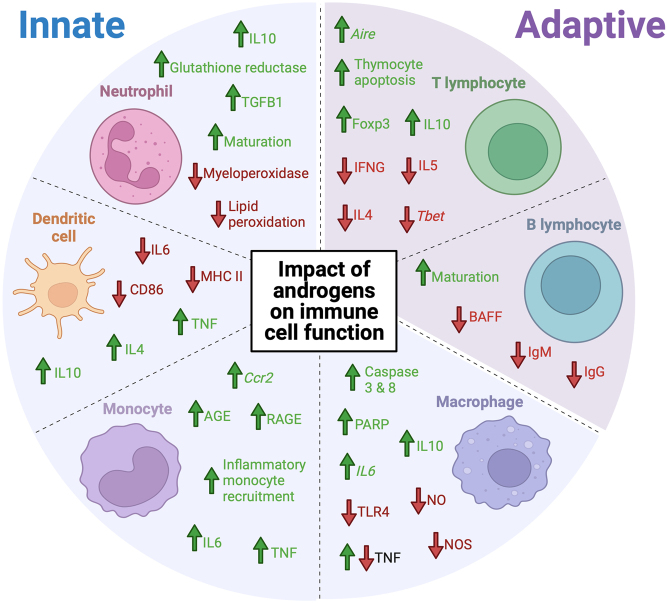
Androgens can modulate immune cell function and may contribute to differences in the prevalence and severity of common inflammatory conditions. Although most immune cells are androgen targets, our understanding of how changes in androgen bioavailability can affect immune responses is incomplete. Androgens alter immune cell composition, phenotype, and activation by modulating the expression and secretion of inflammatory mediators or by altering the development and maturation of immune cell precursors. Androgens are generally associated with having suppressive effects on the immune system, but their impacts are cell and tissue context-dependent and can be highly nuanced even within immune cell subsets. In response to androgens, innate immune cells such as neutrophils, monocytes, and macrophages increase the production of the anti-inflammatory cytokine IL-10 and decrease nitric oxide production. Androgens promote the differentiation of T cell subsets and reduce the production of inflammatory mediators, such as IFNG, IL-4 and IL-5. Additionally, androgens/androgen receptor can promote the maturation of B cells. Thus, androgens can be considered as immunomodulatory agents, but further work is required to understand the precise molecular pathways that are regulated at the intersection between endocrine and inflammatory signals. This narrative review focusses on summarising our current understanding of how androgens can alter immune cell function and how this might affect inflammatory responses in health and disease.
Overview
The claims and statistics of this paper haven’t been checked yet.
Free: it reads the open-access text and checks the first 5 claims that cite a source we can check. Create a free account to check every claim.
Integrity signals
Registry
Cites
Statistics
Figures
Verification
Claims the paper makes
The claims and statistics of this paper haven’t been checked yet.
Free: it reads the open-access text and checks the first 5 claims that cite a source we can check. Create a free account to check every claim.
Claims other papers make about this one
Each is checked against this paper’s own text: does it say what the citing paper says it does?
The source backs part of the claim, not all of it — or backs it for a different population, condition or comparison.
In the citing paper
“Changes in androgen metabolism may also have systemic effects that increase the risk of lesion formation over the life course, including changes in innate and adaptive immune cell function and inflammation,8”
From Steroid hormone profiling reveals altered adrenal androgen production in endometriosis (2026) · cites this paper as [8]
Experimental — accuracy not yet measured
Self-check
Percentages, sums and reported differences re-computed from the paper’s own numbers.
The self-check needs the paper’s full text.
Citations
Cites
International Journal of Molecular Sciences
(2024) · International Journal of Molecular Sciences · doi:10.3390/ijms · Cited by 10,111
Sex differences in immune responses
Klein, S. L., & Flanagan, K. L. (2016) · Nature Reviews Immunology · doi:10.1038/nri.2016.90 · Cited by 6,370 · cited 1×
“In general, women can generate greater innate and adaptive immune responses than men (Klein & Flanagan 2016).”
BackgroundFactors affecting wound healing
Guo, S., & DiPietro, L. A. (2010) · Journal of Dental Research · doi:10.1177/0022034509359125 · Cited by 5,792
Cellular and Molecular Immunology
Denman, A. M. (1992) · Postgraduate Medical Journal · doi:10.1136/pgmj.68.798.305 · Cited by 2,800
Clinical and Experimental Immunology
Kay, H. (1966) · PubMed Central · Cited by 2,177
Book Review: Clinical and Experimental Immunology
Kay, H. (1966) · Proceedings of the Royal Society of Medicine · doi:10.1177/003591576605900860 · Cited by 2,176
(2019) · Nature Communications · doi:10.1038/41467.2041-1723 · Cited by 1,914
Monocytes and macrophages: developmental pathways and tissue homeostasis
Ginhoux, F., & Jung, S. (2014) · Nature Reviews Immunology · doi:10.1038/nri3671 · Cited by 1,840
CD4 + T Cells: Differentiation and Functions
Luckheeram, R. V., Zhou, R., Verma, A. D., & Xia, B. (2012) · Clinical and Developmental Immunology · doi:10.1155/2012/925135 · Cited by 1,381
Inflammatory cells during wound repair: the good, the bad and the ugly
Martin, P., & Leibovich, S. J. (2005) · Trends in Cell Biology · doi:10.1016/j.tcb.2005.09.002 · Cited by 1,340 · cited 1×
“Macrophages play an important role in the regulation of tissue regeneration and wound healing (Martin & Leibovich 2005).”
Background
Research works printed but not linked: 1
- Cano RLE & Lopera HDE 2013 Introduction to T and B lymphocytes. In Autoimmunity: From Bench to Bedside. Bogota, Colombia: El Rosario University Press. (available at: https://www.ncbi.nlm.nih.gov/books/NBK459471/)
Cited by
Immune and Non-immune Interactions in the Pathogenesis of Androgenetic Alopecia
Xiao, Y., Zhang, Y., Deng, S., Yang, X., & Yao, X. (2025) · Clinical Reviews in Allergy & Immunology · doi:10.1007/s12016-025-09034-5 · Cited by 54
Steroid hormones as modulators of anti-tumoural immunity
Schwarzlmueller, P., Triebig, A. S., Assié, G., Jouinot, A., Theurich, S., Maier, T., Beuschlein, F., Kobold, S., & Kroiß, M. (2025) · Nature Reviews Endocrinology · doi:10.1038/s41574-025-01102-2 · Cited by 49
“Even though several factors contribute to this sexual dimorphism, accumulating data suggest an important role of androgens in immune regulation 49”
Yalçınkaya, A. S., Yalçınkaya, R., Sardh, F., & Landegren, N. (2025) · Frontiers in Immunology · doi:10.3389/fimmu.2024.1501364 · Cited by 47
Steroid hormone regulation of immunometabolism and inflammation
Smith, L. C., Ramar, M., Riley, G., Mathias, C. B., & Lee, J.-Y. (2025) · Frontiers in Immunology · doi:10.3389/fimmu.2025.1654034 · Cited by 30
“Glucocorticoids also promote the resolution of in fl ammation by inducing expression of scavenger receptors (e.g., CD153, CD206, and MERTK), anti-in fl ammatory cytokines (e.g., TGF-b and IL-10), and the receptor for the pro-resolving lipid mediator, lipoxin A4, in human and murine macrophages, all of which potentiate m…”
InfluentialTargeting androgen receptor signaling to enhance cancer immunotherapy
Bader, D. A., Chakraborty, B., McDonnell, D. P., & Hirschey, M. D. (2025) · Trends in Pharmacological Sciences · doi:10.1016/j.tips.2025.11.003 · Cited by 14
Fraile‐Μartinez, O., Ortega, M. A., & Montero, C. G. (2026) · International Journal of Molecular Sciences · doi:10.3390/ijms27020692 · Cited by 13
Song, L., Sun, L., Ren, Y., Wang, X., & Xian, L. (2025) · Frontiers in Immunology · doi:10.3389/fimmu.2025.1607374 · Cited by 10
Lin, J., Zhu, J., Fowke, J. H., Narayanan, R., & Liu, F. (2025) · Cancers · doi:10.3390/cancers17213414 · Cited by 7
Bustillos, C. G., Peluso, E., Sophia, L., Lechner, M. G., & Su, M. A. (2026) · Immunological Reviews · doi:10.1111/imr.70096 · Cited by 6
“This may occur through multiple mechanisms including the upregulation of IL-10 [97].”
Sex and gender differences in neurological infections
Dias, S. P., Akhvlediani, T., Bernard‐Valnet, R., Bigi, S., Eikeland, R., Pal, P. K., Pfausler, B., & Sellner, J. (2025) · Current Opinion in Neurology · doi:10.1097/wco.0000000000001389 · Cited by 5
Association of composite biomarkers with imaging burden in cerebral small vessel disease
Rao, C., Zhu, L., Gu, T., Zha, Z., & Yu, C. (2026) · Lipids in Health and Disease · doi:10.1186/s12944-025-02856-4 · Cited by 4
“Androgens promote pro-inflammatory cytokine production by innate immune cells and modulate inflammatory responses, potentially explaining why SIRI showed a correlation with CSVD burden exclusively in males [49].”
Testosterone and cancers: biological functions, molecular mechanisms and therapy
Zhou, Z., Huang, T., Li, J., Fu, L., Xu, L., Feng, X., Zhang, Z., Pan, H., Qin, K., Zhou, X., et al. (2026) · Molecular Cancer · doi:10.1186/s12943-026-02676-9 · Cited by 4
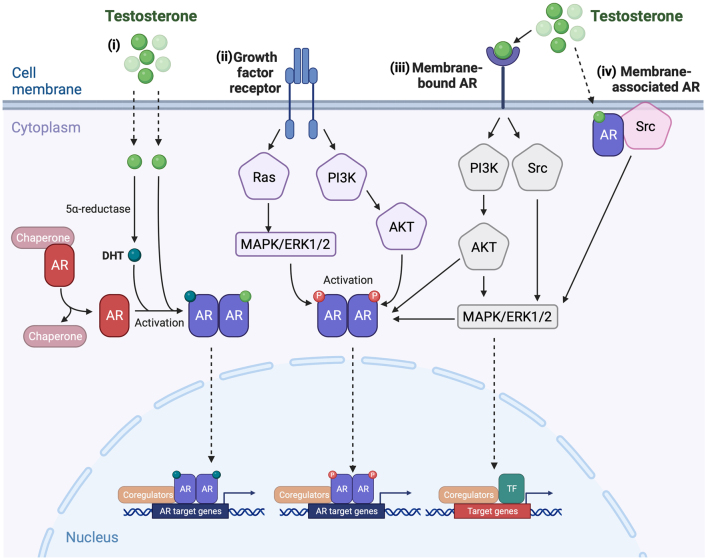
“Ligand binding induces a conformational change in AR, leading to the dissociation of these chaperones, which is a prerequisite for receptor activation [84, 85].”
Concurrent autoimmune and endocrine dysregulation in polycystic ovary syndrome
Abduljabbar, H. A., Mahmood, M. M., Al-Jbooriay, M. J., & Al‐Obaidi, M. T. (2025) · Middle East Fertility Society Journal · doi:10.1186/s43043-025-00236-7 · Cited by 4
Immune-neural regulatory mechanism of osteoporosis induced by androgen deficiency
Zhou, J., Li, W., Yang, H., & Ma, N. (2026) · PeerJ · doi:10.7717/peerj.20737 · Cited by 3
Mutant p53 as a Therapeutic Target: The Report of Its Death Was an Exaggeration
Toledo, F. (2025) · International Journal of Molecular Sciences · doi:10.3390/ijms26136446 · Cited by 4
“…appeared as a likely explanation for the frequent female-specific perinatal death, because inflammation was proposed to promote neural tube defects or embryonic death in a few mouse models [29–31], and because male embryos might be protected by the anti-inflammatory properties of androgens [31–33].”
Pu, G., Nong, G., Wei, Q., He, Y., Jia, W., Lu, Z., Qiu, G., Xie, J., & Chen, X. (2025) · BMC Pulmonary Medicine · doi:10.1186/s12890-025-03925-1 · Cited by 3
“Androgens, such as testosterone, may exert immunosuppressive effects, while estrogens tend to stimulate immune responses [29, 30].”
Gawron, I. M., Brodowicz, J., Skotniczny, K., & Jach, R. (2025) · Archives of Medical Research · doi:10.1016/j.arcmed.2025.103325 · Cited by 3
Lack of De‐Intensification Models for Female Head and Neck Cancer Patients With Favorable Prognosis
Vahl, J. M., Hahn, J., Witzleben, A. V., Schroeder, S. M., Idel, C., Wollenberg, B., Hoffmann, T. K., & Laban, S. A. (2026) · Cancer Medicine · doi:10.1002/cam4.71734 · Cited by 2
Wang, G., Tang, C., Wang, R., Xu, C., Tugang, S., & Li, G. (2025) · Frontiers in Medicine · doi:10.3389/fmed.2025.1570474 · Cited by 2
“Rebecca J A et al. (35) reviewed the functions of androgens in relation to immune cells.”
Jaber, S., Eldawra, E., Rakotopare, J., Simeonova, I., Lejour, V., Gabriel, M., Cañeque, T., Volochtchouk, V., Licaj, M., Fajac, A., et al. (2025) · eLife · doi:10.7554/elife.102434 · Cited by 3
Steroid hormone profiling reveals altered adrenal androgen production in endometriosis
Simitsidellis, I., Ainslie, R. J., Taylor, A. E., Gilligan, L. C., Shaheen, F., Blanke, S., Anderson, C., Hapangama, D., Arlt, W., Horne, A. W., et al. (2026) · European Journal of Endocrinology · doi:10.1093/ejendo/lvag109 · Cited by 1
“Changes in androgen metabolism may also have systemic effects that increase the risk of lesion formation over the life course, including changes in innate and adaptive immune cell function and inflammation, 8 which has been reported in other contexts of androgen excess such as PCOS.”
Self-citationJaber, S., Eldawra, E., Rakotopare, J., Simeonova, I., Lejour, V., Gabriel, M., Cañeque, T., Volochtchouk, V., Licaj, M., Fajac, A., et al. (2025) · eLife · doi:10.7554/elife.102434.3 · Cited by 2
Testosterone therapy for hypoactive sexual desire disorder in women
Misiuk, J., Kopeć, K., Bartoszek, A., Adamiuk, J., Marut, A., Biskup, M., Skuba, A., Załuska, K., Nykiel, S., & Świdniak, A. (2025) · Quality in Sport · doi:10.12775/qs.2025.41.58680 · Cited by 1
“[5] 3.”
An Association Analysis of Anxiety and Psoriasis: Based on the NHANES Database
Bai, J., & Ma, Y. (2025) · Brain and Behavior · doi:10.1002/brb3.70817 · Cited by 1
Associations between immunological and hormonal parameters during healthy pregnancy in mares
Feijó, L. S., Ledeck, J., Wolfsdorf, K. E., Ponthier, J., Parry, S. A., & Felippe, M. J. B. (2025) · Theriogenology · doi:10.1016/j.theriogenology.2025.117719 · Cited by 2
Kitamura, Y., Yokomoto‐Umakoshi, M., Nakano, Y., Nakatani, K., Umakoshi, H., Nakao, H., Kaneko, H., Iwahashi, N., Fujita, M., Ogasawara, T., et al. (2025) · The Journal of Clinical Endocrinology & Metabolism · doi:10.1210/clinem/dgaf632 · Cited by 1
Sex-specific influences of prenatal inflammation on offspring psychological symptoms in late midlife
Smith, E., Pike, M. R., Kring, A. M., Cogan, A. B., Breen, E. C., Cohn, B. A., Cirillo, P. M., Krigbaum, N. Y., Olino, T. M., Alloy, L. B., et al. (2026) · Psychoneuroendocrinology · doi:10.1016/j.psyneuen.2026.107791 · Cited by 1
Bahetiyaer, J., Cui, J., Li, W., Zhang, J., Sun, Y., Ai, C., Liu, S., Jiang, S., Zhang, C., & Jiang, J. (2026) · Nutrients · doi:10.3390/nu18040666 · Cited by 1
“…the expression and function of inflammatory pathways, thereby influencing individual responses to inflammatory stimuli and sensitivity to immune-modulatory therapies, potentially conferring greater benefits from probiotic immunomodulation in male patients with alcoholic liver disease [65,66].”
Zabara, D., Kozeretska, I. A., Klapoushenko, I., Anoshko, Y., Dubrovskyi, I., & Dons’koi, B. V. (2026) · Immunobiology · doi:10.1016/j.imbio.2026.153170 · Cited by 1
Luo, Z., Ji, W., An, J., He, M., Wang, H., Li, J., Ma, Y., Zhu, D., Lu, K., & Han, L. (2026) · Journal of Multidisciplinary Healthcare · doi:10.2147/jmdh.s620205 · Cited by 2
“82 However, the homeostasis of the thymus–spleen–ovarian immune axis can be disrupted by multiple factors, primarily manifesting as systemic amplification of chronic low-grade inflammation.”
Jaber, S., Eldawra, E., Rakotopare, J., Simeonova, I., Lejour, V., Gabriel, M., Cañeque, T., Volochtchouk, V., Licaj, M., Fajac, A., et al. (2025) · eLife · doi:10.7554/elife.102434.2
Дианова, Д. Г., Сергеевна, Ш. А., Dolgikh, О. V., Владимирович, Л. Д., Kirichenko, L. V., & Ukhabov, V. M. (2025) · ЗДОРОВЬЕ НАСЕЛЕНИЯ И СРЕДА ОБИТАНИЯ - ЗНиСО / PUBLIC HEALTH AND LIFE ENVIRONMENT · doi:10.35627/2219-5238/2025-33-2-37-44
Walter, M., Dinges, S. M.-T., Joseph, S. S., von Korn, P., von Gersdorff, G., Anding-Rost, K., Halle, M., & Hofmann, S. M. (2025) · SSRN Electronic Journal · doi:10.2139/ssrn.5392833
Association between inflammatory cytokines and carotid plaque in young and middle-aged adults
Dai, Z., Chen, R., Duan, J., Zhou, Y., & Yuan, W. (2025) · Biochemistry and Biophysics Reports · doi:10.1016/j.bbrep.2025.102321
“While androgens in men can promote IL-10 expression in some immune cells [39], the intensity of this regulation is far less than that of estrogen, leading to a less pronounced protective effect of IL-10 in men.”
Devarashetty, S. (2025) · American journal of student research. · doi:10.70251/hyjr2348.36721730
Monaghan, J. F., Cullen, D., Medipally, D., Suresh, R., Redmond, K. M., Fairmichael, C., Jain, S., Meade, A. D., & Lyng, F. M. (2026) · Spectrochimica Acta Part A Molecular and Biomolecular Spectroscopy · doi:10.1016/j.saa.2026.127529
Immunoendocrine Profiles in Neurocysticercosis Patients: A Case-Control Study in Honduras
Zugno-Gadea, N., Molina, L. C., Hernandez-González, M., Rueda, M. M., Bejarano, F., Betancourt, N. A., & Sánchez, A. M. L. (2026) · Tropical Medicine and Infectious Disease · doi:10.3390/tropicalmed11020051
“Androgens such as testosterone and DHT have been shown to suppress pro-inflammatory cytokine production of TNF-α , IL-1 β , and IL-6 through androgen receptor–mediated modulation of immune cell function [37–39].”
Enina, T. N., Евгеньевич, Ш. Н., Petelina, T. I., Gorbatenko, E. A., Зуева, Е. В., Repina, I. A., Davidchuk, A. S., & Gapon, L. (2026) · Arterial’naya Gipertenziya (Arterial Hypertension) · doi:10.18705/1607-419x-2025-2567
Sex Hormones Regulate T‐Cell Responses Associated With Rheumatoid Arthritis
Chowdhury, S., Ghosh, D., & Chowdhury, S. R. (2026) · Cell Biology International · doi:10.1002/cbin.70150
“Androgens, notably testosterone, have been shown to suppress immune responses by influencing T and B cell activity (Ainslie et al. 2024).”
Szczupak, M., Kobak, J., Kreczko, M. J., Wierzchowska, J., & Krupa-Nurcek, S. (2026) · Frontiers in Endocrinology · doi:10.3389/fendo.2026.1801055 · Cited by 1
“A reduction in antigen-presenting function may explain some of the observed post-exposure immunosuppression in male cohorts (28, 40).”
Chiara, F., Allegra, S., Agar, F. M. A. S., Abbadessa, G., & Francia, S. D. (2026) · Biomedicines · doi:10.3390/biomedicines14051064
“The functions of steroid hormones in controlling immune cell growth, activation, and function, as well as intracellular metabolic pathways, have been discussed in a number of publications [13–15].”
Pyatin, V. F., & Maslova, O. (2026) · Frontiers in Endocrinology · doi:10.3389/fendo.2026.1776499
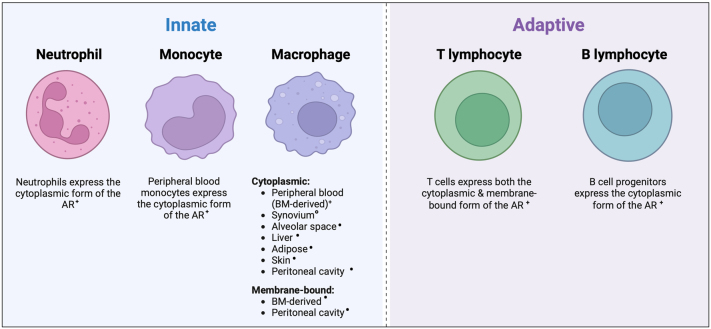
“Importantly, hormone receptors are expressed on the membrane of immune cells of both innate and adaptive immune systems (94).”
Tovar‐Parra, D., McDermott, A., Cardot, J., Juarez, M., Joao, F., Omri-Charai, R. E., Berthiaume, L., Dhawan, B., Aghigh, A., Breton, Y., et al. (2026) · Toxicological Sciences · doi:10.1093/toxsci/kfag053
Bryukhovetskiy, I., Kosianova, A. A., Zaitsev, S., Pak, O., & Polevshchikov, A. (2026) · Biomedicine & Pharmacotherapy · doi:10.1016/j.biopha.2026.119483
Immunological dynamics of the epididymis: from experimental insights to clinical translation
Pleuger, C., Silva, E. J. R., Fietz, D., Avenatti, M. C., Battistone, M. A., & Wijayarathna, R. (2026) · Reproduction and Fertility · doi:10.1530/raf-26-0007
Revisiting ESR in PCOS: an easily obtainable link to immune and metabolic dysregulation
Jin, C., Xu, Y., Xu, L., Zhang, N., Zhou, C., Shen, Y., & Pan, J. (2026) · Journal of Ovarian Research · doi:10.1186/s13048-026-02185-9
“Second, testosterone has been shown to directly enhance macrophage activation [35] and increase the abundance of circulating neutrophils [36] in PCOS women and animal models, thereby amplifying immune cascades and promoting erythrocyte aggregation.”
Marzook, F. A., Meetheen, R., Itani, M., Williamson, T. K., Osmun, M., & Checketts, J. X. (2026) · Journal of Shoulder and Elbow Arthroplasty · doi:10.1016/j.jsea.2026.100063
“2,10 Prior investigations have demonstrated an association between serum testosterone levels and Cutibacterium acnes skin colonization, a pathogen implicated in periprosthetic joint infection (PJI) following TSA.”
Yang, Q., Chen, H., Liu, Z., Hou, G., Liao, W., Sui, X., & Yang, Q. (2026) · The World Journal of Men s Health · doi:10.5534/wjmh.260053
Yu, T., Zhang, L., Li, D., & Wang, Y. (2026) · Frontiers in Immunology · doi:10.3389/fimmu.2026.1925968
Nolasco-Pérez, T. D. J., Cervantes-Candelas, L. A., Salazar-Castañón, V. H., Buendía-González, F. O., Chavira‐Ramírez, D. R., & Legorreta‐Herrera, M. (2026) · International Journal of Molecular Sciences · doi:10.3390/ijms27198649
“This interpretation is consistent with extensive evidence demonstrating that androgens modulate the function of various immune cell populations primarily through their binding to the AR [25–27].”
Chen, Y., Matthews, C. J., Dixon, O. W., Bhat, A., Rodríguez‐Ramos, T., & Dixon, B. (2026) · Developmental & Comparative Immunology · doi:10.1016/j.dci.2026.105737
Androgens Modulate Tumor–Immune Interactions in Testicular Germ Cell Tumors
Hamann, I., Klaus, L., Fruth, P., Fichtner, A., Legler, T. J., Reichardt, H. M., & Gayer, F. A. (2026) · Andrology · doi:10.1111/andr.70402
Context-dependent regulation of cytotoxic T lymphocytes by nuclear receptors
Kim, C. H. (2026) · The Journal of Immunology · doi:10.1093/jimmun/vkag261
Androgen-Mediated T-cell Suppression Drives Sex Bias in Head and Neck Squamous Cell Carcinoma
Hopen, Q., Antol, S., Amato-Menker, C. J., Duncan, B. C., Busada, J. T., Wang, L., Hu, G., & Franko, J. (2026) · Cancer Research Communications · doi:10.1158/2767-9764.crc-26-0244
Rakhshan, A., Ashjaazade, F., Dadkhahfar, S., & Araghi, F. (2026) · Journal of Cutaneous Pathology · doi:10.1111/cup.70238
Metadata
- Authors
- Ainslie, R. J., Simitsidellis, I., Kirkwood, P. M., & Gibson, D. A.
- Affiliations
- MRC Centre for Regenerative Medicine (GB)
- Corresponding author
- Gibson, Douglas A
- Venue
- Journal of Endocrinology
- Publisher
- Bioscientifica
- Published
- 2024-04-03
- Volume
- 261
- Issue
- 3
- ISSN
- 0022-0795 (ISSN-L)
- 1479-6805
- PMC
- PMC11103679
- OpenAlex
- W4393899124
- Cited by
- 48
- References
- 169
- Citations by year
- 2026: 25 · 2025: 22 · 2024: 1
- FWCI
- 2.82
- Type
- journal article
- Language
- en
- Open access
- hybrid
- doi.org
- Locations
- Journal of Endocrinology (publishedVersion, cc-by)
- PubMed Central (publishedVersion, cc-by)
- PubMed (publishedVersion)
- Edinburgh Research Explorer (University of Edinburgh) (submittedVersion, other-oa)
- Funders
- Wellcome Trust (220656/Z/20/Z)
- Medical Research Council (MR/W006804/1)
- Topics
- Health Sciences › Medicine › Endocrinology, Diabetes and Metabolism › Hormonal and reproductive studies
- Life Sciences › Biochemistry, Genetics and Molecular Biology › Endocrinology › Estrogen and related hormone effects
- Health Sciences › Medicine › Endocrinology, Diabetes and Metabolism › Adrenal Hormones and Disorders
- Keywords
- androgens, androgen receptor, immune cell function, immunomodulation, inflammation, innate immune cells, neutrophils, monocytes, macrophages, IL-10, nitric oxide, T cell differentiation, B cell maturation, inflammatory mediators, sex differences in inflammation
- MeSH terms
- Androgens, Animals, Humans, Immune System, Inflammation, Receptors, Androgen
About these checks
Registry, retraction, Cites and statistics results are computed, not judged, with one exception: a printed reference that no index lists is read once by a model before it counts as a citation error. Claims are extracted by a model and kept only when their quote appears verbatim in the text; each cited source is then checked, with a model’s help, for whether it says what the claim relies on. Those verdicts can be wrong — read the claim’s quote and the cited source before relying on one.
Statistics and arithmetic are recomputed, not judged.
Confidence bands are shown only for fields calibrated on our annotated test set. None is calibrated yet, so no band is shown.
What counts as a claim ›How we measure confidence ›How we check this ›
Are you an author, or do you see a problem with this page? Request a review
Data sources
Bibliographic data: Semantic Scholar, OpenAlex, Crossref.
Contains information from the Semantic Scholar Academic Graph Datasets, made available under the ODC Attribution License (ODC-BY 1.0).
Semantic Scholar’s data is described in: Kinney, R., et al. (2023). The Semantic Scholar Open Data Platform. arXiv:2301.10140.
