

COVID-19–Associated Orphanhood and Caregiver Death in the United States
Open accessThe DOI matches its Crossref record; 42 of the 45 references it cites were found in a registry or an index; 12 of the 22 sources its claims cite were checked for support.
Abstract
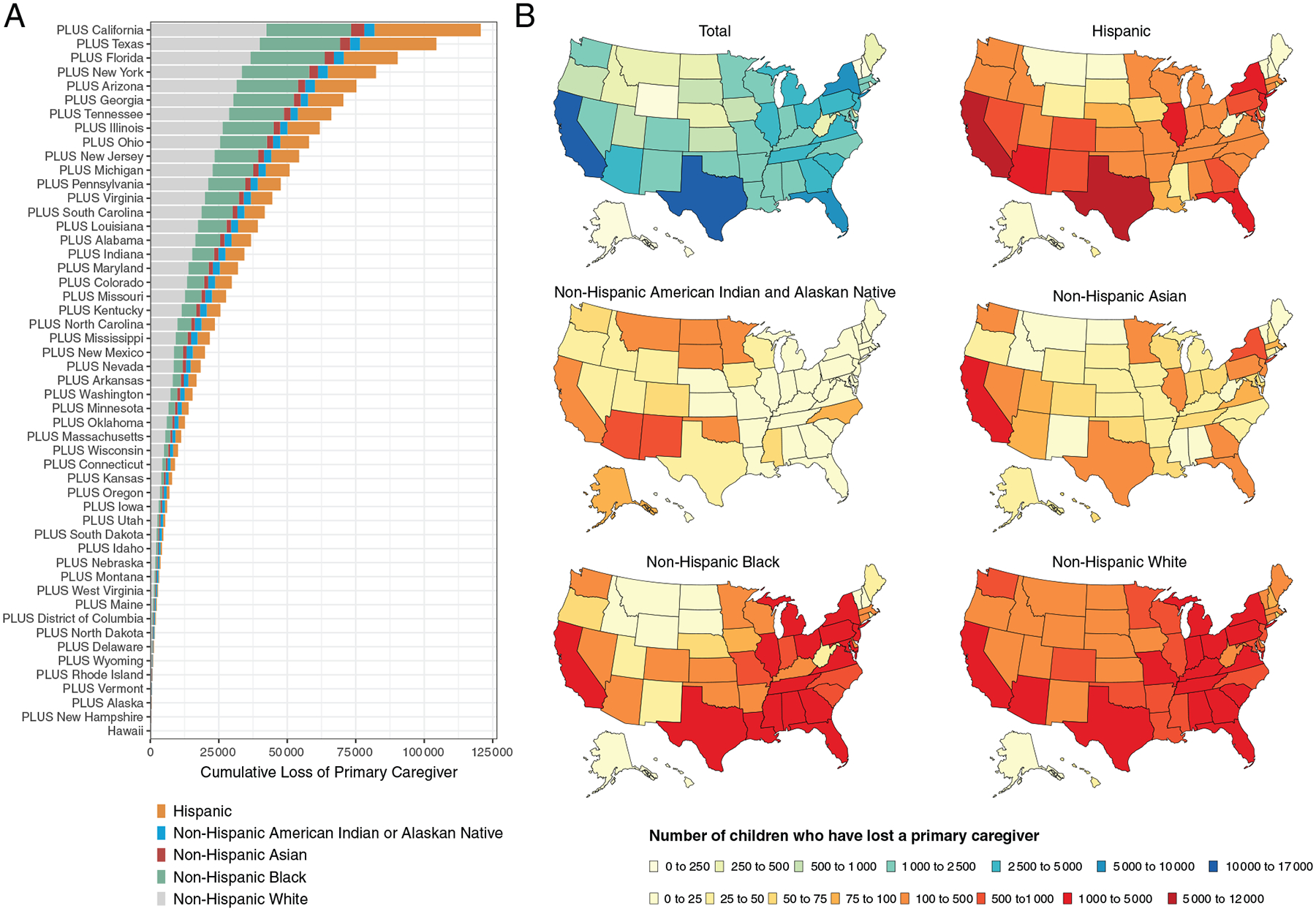
BACKGROUND: Most coronavirus disease 2019 (COVID-19) deaths occur among adults, not children, and attention has focused on mitigating COVID-19 burden among adults. However, a tragic consequence of adult deaths is that high numbers of children might lose their parents and caregivers to COVID-19–associated deaths. METHODS: We quantified COVID-19–associated caregiver loss and orphanhood in the United States and for each state using fertility and excess and COVID-19 mortality data. We assessed burden and rates of COVID-19–associated orphanhood and deaths of custodial and coresiding grandparents, overall and by race and ethnicity. We further examined variations in COVID-19–associated orphanhood by race and ethnicity for each state. RESULTS: We found that from April 1, 2020, through June 30, 2021, >140 000 children in the United States experienced the death of a parent or grandparent caregiver. The risk of such loss was 1.1 to 4.5 times higher among children of racial and ethnic minority groups compared with non-Hispanic White children. The highest burden of COVID-19–associated death of parents and caregivers occurred in Southern border states for Hispanic children, in Southeastern states for Black children, and in states with tribal areas for American Indian and/or Alaska Native populations. CONCLUSIONS: We found substantial disparities in distributions of COVID-19–associated death of parents and caregivers across racial and ethnic groups. Children losing caregivers to COVID-19 need care and safe, stable, and nurturing families with economic support, quality child care, and evidence-based parenting support programs. There is an urgent need to mount an evidence-based comprehensive response focused on those children at greatest risk in the states most affected.
Overview
CoChat Summary
TL;DR
Using fertility, excess/COVID-19 mortality, and household composition data, this modeling study estimates that >140,000 US children lost a parent or grandparent caregiver to COVID-19-associated deaths from April 1, 2020, through June 30, 2021. Loss was disproportionately concentrated among racial and ethnic minority children, with risk 1.1 to 4.5 times higher than among non-Hispanic White children.
Key findings
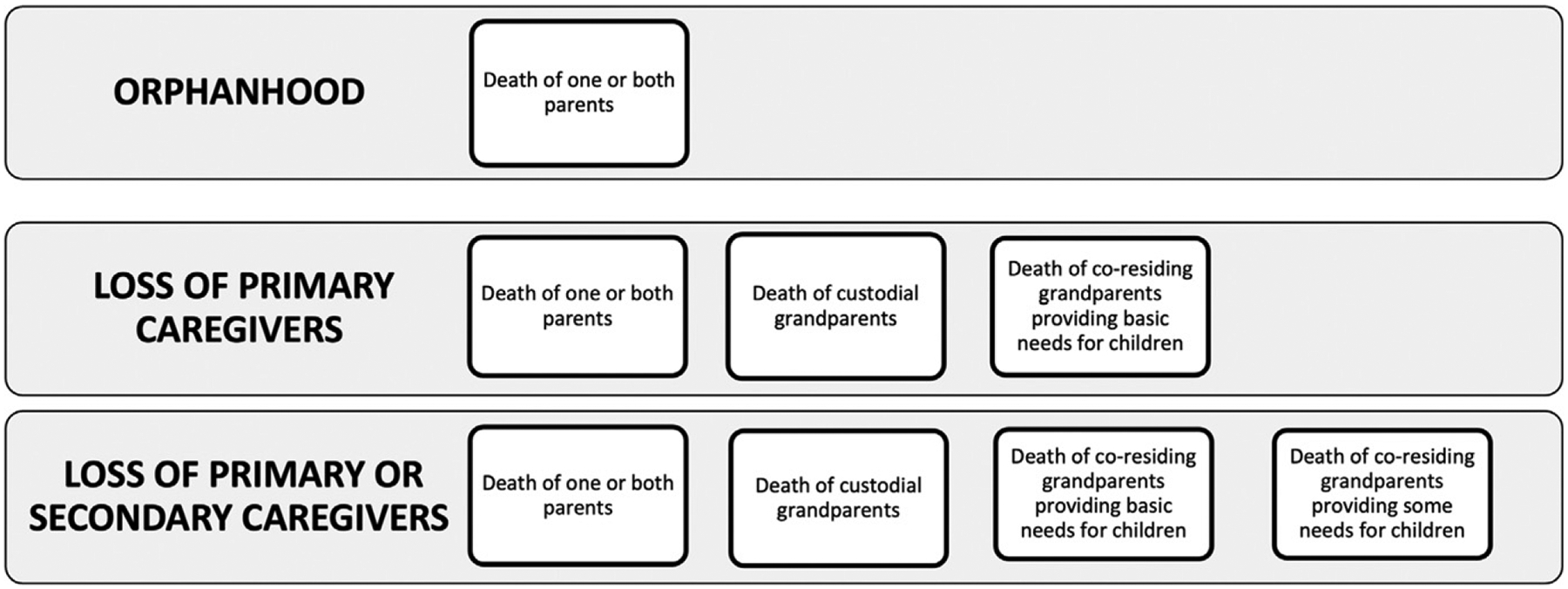
- During 15 months of the pandemic, 120,630 children experienced death of a primary caregiver, and 22,007 experienced death of a secondary caregiver, for a total of 142,637 children losing primary or secondary caregivers.
- Approximately 91,256 children in racial and ethnic minority groups experienced death of primary caregivers, compared with 51,381 non-Hispanic White children.
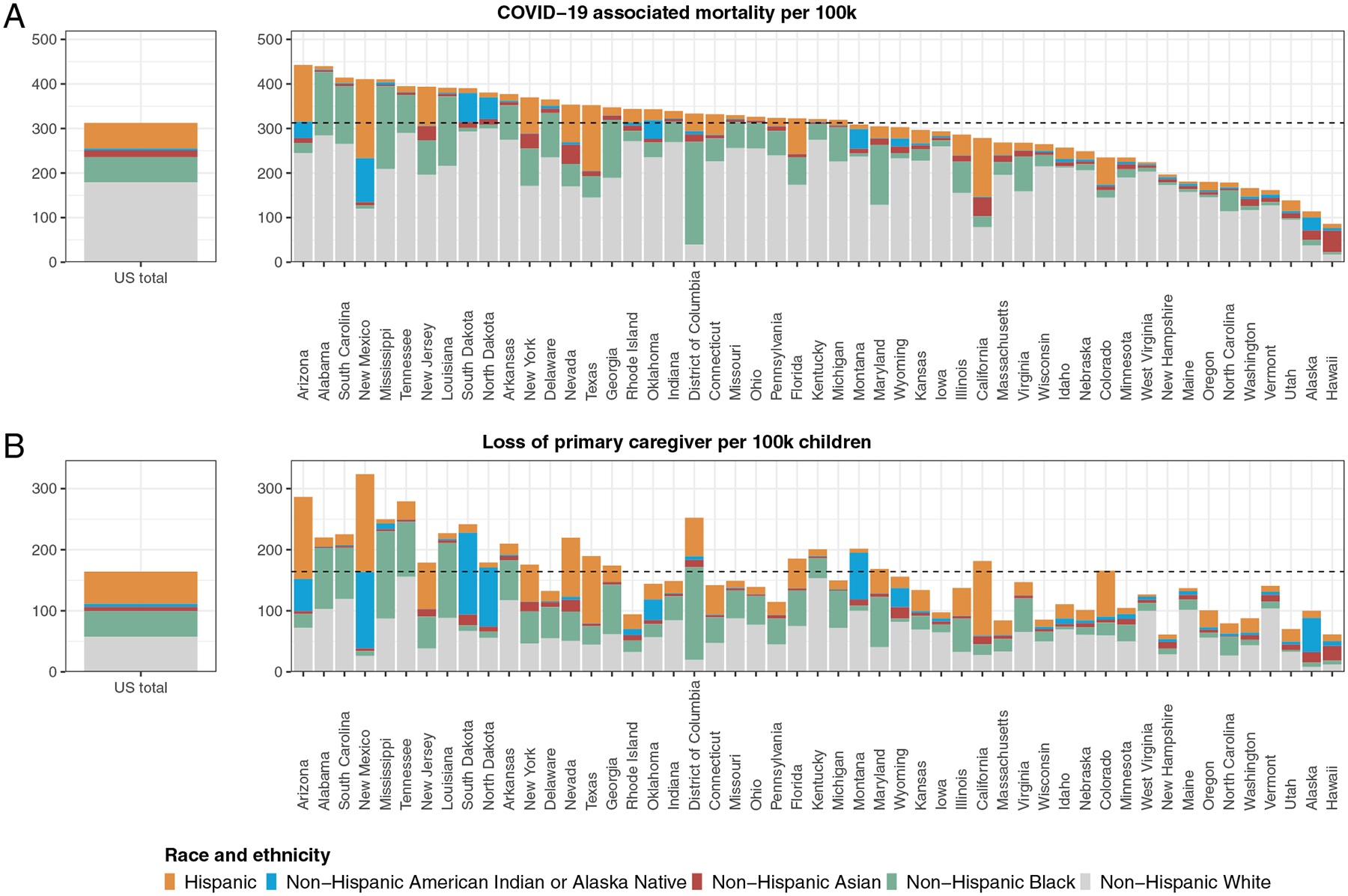
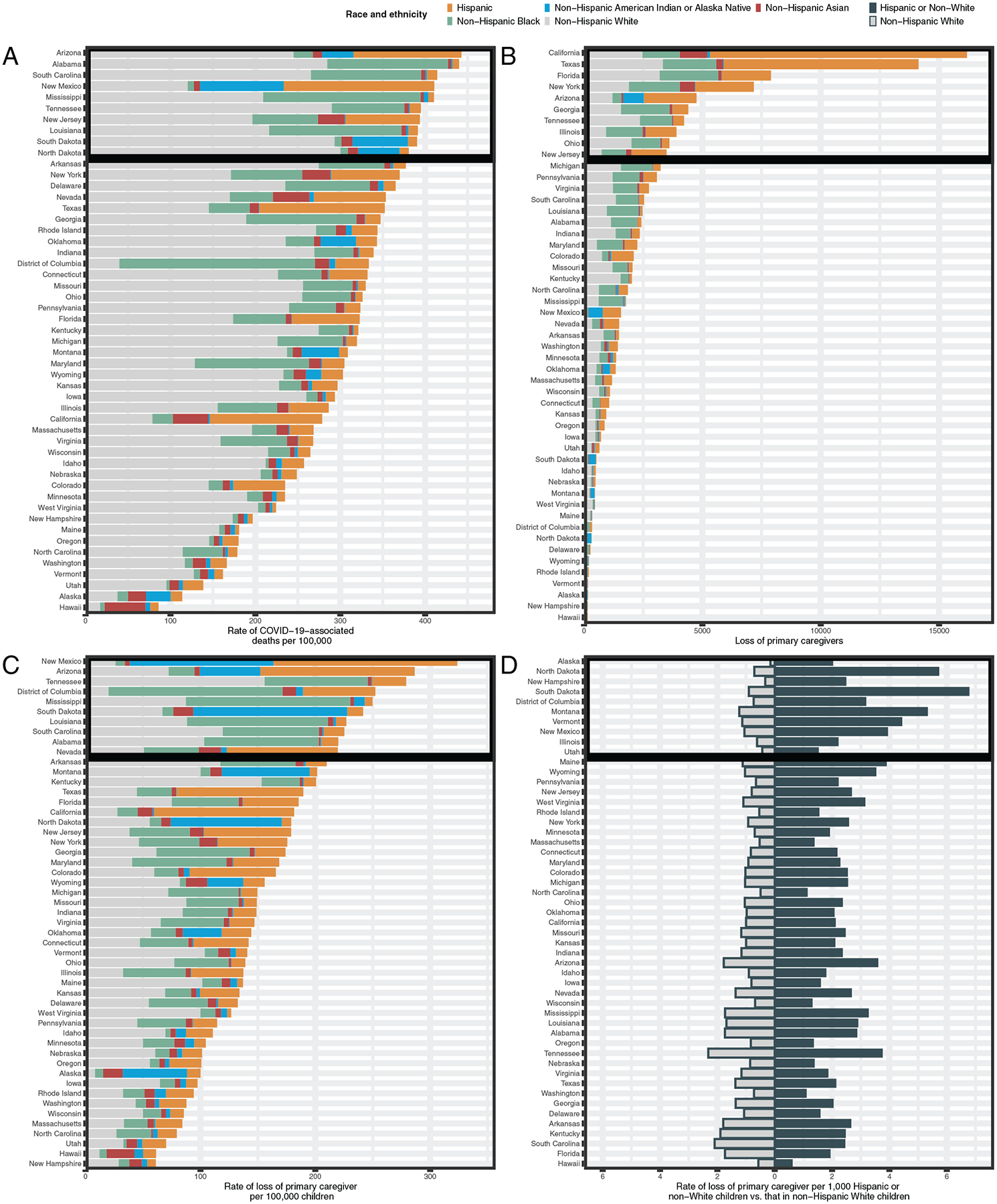
- Risk of losing a parent or grandparent caregiver was higher for all racial and ethnic groups than for White children: 1 of 753 White children, 1 of 682 Asian children, 1 of 412 Hispanic children, 1 of 310 Black children, and 1 of 168 American Indian and/or Alaska Native children.
- Compared with White children, American Indian and/or Alaska Native, Black, Hispanic, and Asian children were 4.5, 2.4, 1.8, and 1.1 times more likely, respectively, to lose a parent or caregiver.
Methods
- Observational modeling study using National Center for Health Statistics excess deaths and COVID-19 deaths from April 1, 2020, to June 30, 2021, disaggregated by state, age, sex, and race and ethnicity.
- Fertility rates from CDC Natality Online Database were combined with COVID-19-associated deaths to estimate orphanhood; 2019 US Census American Community Survey data were used to estimate coresiding grandparent caregiver loss.
- Estimates were reported as numbers and rates by race and ethnicity, with 95% bootstrap intervals from 1000 resampled data sets; rate ratios compared children’s risk across racial and ethnic groups.
Limitations
- The paper states that numbers may be underestimated because of delays or underreporting of deaths, and because ACS grandparent caregiver prevalence was available only for grandparents providing housing.
- The paper states that 2019 fertility rates were assumed constant for 2020 and 2021, and that the race of bereaved children was assumed to match that of the deceased caregiver, which may overestimate or underestimate findings by race and ethnicity.
- Evident from the text: these are modeled estimates rather than directly observed counts, and the analysis does not establish causal effects of COVID-19-associated deaths on children’s long-term outcomes.
Model-written summary. Check it against the paper before relying on it.
Integrity signals
Registry
Cites
Statistics
Figures
Verification
Claims the paper makes
6 Valid · 0 Not valid · 6 Not checked · 28 Own results and interpretations
The cited sources support only part of this claim — read each source’s verdict below.
In the paper
“To date, little attention has focused on children who suffer COVID-19–associated death of parents and coresiding grandparents serving as caregivers and the attendant loss of salient nurturing, financial support, and care.1,2,5”
§ COVID-19–Associated Orphanhood and Caregiver Death in the United States > Abstract > CONCLUSIONS:
What the sources say
- Partly supportedcites [1] Kidman R, Margolis R, Smith-Greenaway E, Verdery AM. Estimates and projections of COVID-19 and parental death in the US. JAMA Pediatr. 2021; 175(7): 745– 746 33818598 PMC8022263 sourceExperimental — accuracy not yet measured
The Results estimate how many children lost a parent to COVID-19, and the Discussion calls for support addressing bereaved children’s health, educational, and economic needs (page not available in our copy). But the paper explicitly says its estimates exclude nonparental primary caregivers; it does not specifically address coresiding grandparents or establish that these children have received little attention. (LLM, conf=0.87)
- Supportedcites [2] Hillis SD, Unwin HJT, Chen Y, Global minimum estimates of children affected by COVID-19-associated orphanhood and deaths of caregivers: a modelling study. Lancet. 2021; 398(10298): 391– 402 34298000 PMC8293949 source
The Introduction says the authors found no publications estimating global numbers of children who lost a parent or caregiver to COVID-19. The Discussion describes these children as having fallen under the radar, while the Introduction identifies grandparents’ caregiving and psychosocial, practical, and financial support. (LLM, conf=0.92)
- Not checked — no full text of the sourcecites [5] Sadruddin AFA, Ponguta LA, Zonderman AL, Wiley KS, Grimshaw A, Panter-Brick C. How do grandparents influence child health and development? A systematic review. Soc Sci Med. 2019; 239: 112476 31539783 source
plain- Asserted: passes — The authors put it forward as true.
- Checkable: unclear — It is unclear whether it could be checked against evidence.
- Load-bearing: passes — The paper’s conclusions depend on it.
- Based: passes — The paper gives a reason why it holds.
- Partly supported
The cited sources support only part of this claim — read each source’s verdict below.
In the paper
“High coronavirus disease 2019 (COVID-19) mortality rates may have severe unrecognized consequences: large-scale death of parents and caregivers for children.1,2”
§ COVID-19–Associated Orphanhood and Caregiver Death in the United States > Abstract > CONCLUSIONS:
What the sources say
- Partly supportedcites [1] Kidman R, Margolis R, Smith-Greenaway E, Verdery AM. Estimates and projections of COVID-19 and parental death in the US. JAMA Pediatr. 2021; 175(7): 745– 746 33818598 PMC8022263 sourceExperimental — accuracy not yet measured
The Results (Methods section) estimate that 37,300 children had lost a parent to COVID-19 by February 2021, supporting the claim of large-scale parental death. The Discussion states that the estimates do not include bereavement of nonparental primary caregivers, so the source does not establish the caregiver part of the claim. (LLM, conf=0.87)
- Supportedcites [2] Hillis SD, Unwin HJT, Chen Y, Global minimum estimates of children affected by COVID-19-associated orphanhood and deaths of caregivers: a modelling study. Lancet. 2021; 398(10298): 391– 402 34298000 PMC8293949 source
The Introduction describes children losing parents and caregivers as an urgent, overlooked consequence of high numbers of adult COVID-19 deaths. Its research-in-context section estimates that more than 1.5 million children lost a primary caregiver or co-residing grandparent during the first 14 months of the pandemic. (LLM, conf=0.94)
hedgedstates a possible cause- Asserted: passes — The authors put it forward as true.
- Checkable: passes — It can be checked against evidence.
- Load-bearing: passes — The paper’s conclusions depend on it.
- Based: passes — The paper gives a reason why it holds.
- Partly supported
The cited sources support only part of this claim — read each source’s verdict below.
In the paper
“With many caregiving grandparents in highest-risk ages for COVID-19 mortality, children may face a serious new adversity.20”
§ COVID-19–Associated Orphanhood and Caregiver Death in the United States > Abstract > CONCLUSIONS:
What the sources say
- Partly supportedcites [20] Sowden R, Borgstrom E, Selman LE. ‘It’s like being in a war with an invisible enemy’: a document analysis of bereavement due to COVID-19 in UK newspapers. PLoS One. 2021; 16(3): e0247904 33661955 PMC7932501 sourceExperimental — accuracy not yet measured
The Discussion (page unavailable) describes deaths among older people as more expected and COVID-19 bereavement as painful, compounded loss. It does not address how many grandparents provide care, whether caregiving grandparents are in the highest-risk ages, or the adversity their deaths may create for children (searched: grandparent, caregiving grandparents, children). (LLM, conf=0.76)
hedgedstates a possible cause- Asserted: passes — The authors put it forward as true.
- Checkable: passes — It can be checked against evidence.
- Load-bearing: passes — The paper’s conclusions depend on it.
- Based: passes — The paper gives a reason why it holds.
- Partly supported
A result the paper reports from its own data — it cites no other source for it, so there is none to check. The quote shows it is in the paper.
In the paper
“Affected children who were American Indian and/or Alaska Native were more frequently represented in Arizona 875 (18%), New Mexico 604 (39%), Oklahoma 314 (23%), Montana 175 (38%), and South Dakota 523 (55%).”
§ COVID-19–Associated Orphanhood and Caregiver Death in the United States > RESULTS > Burden of COVID-19–Associated Orphanhood and Death of Caregivers
plainstates an association- Asserted: passes — The authors put it forward as true.
- Checkable: passes — It can be checked against evidence.
- Load-bearing: unclear — It is unclear whether the paper’s conclusions depend on it.
- Based: passes — The paper gives a reason why it holds.
A result the paper reports from its own data — it cites no other source for it, so there is none to check. The quote shows it is in the paper.
In the paper
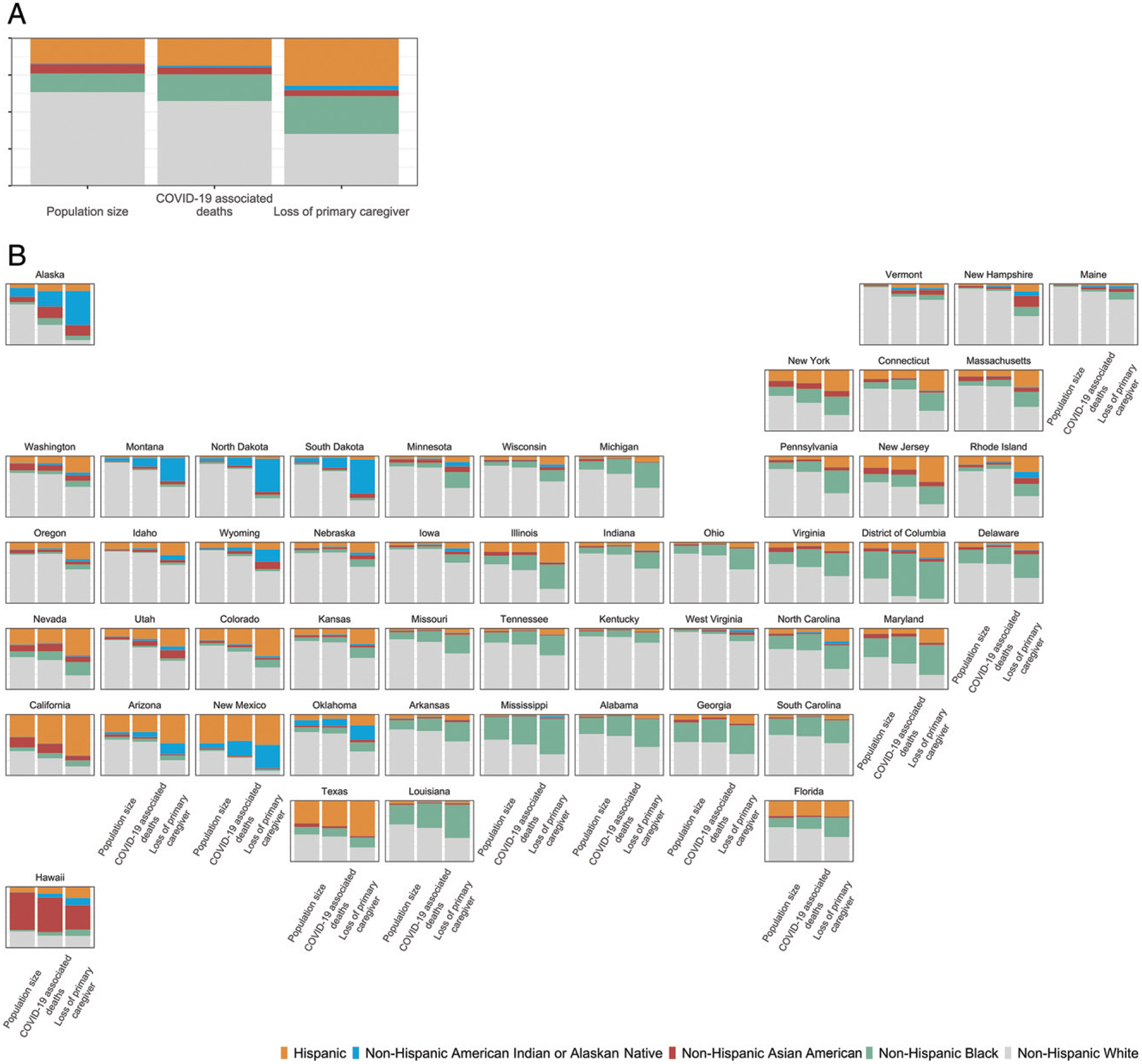
“In contrast, children of racial and ethnic minorities account for 65% of children losing primary caregivers, compared with 39% of the total population.”
§ COVID-19–Associated Orphanhood and Caregiver Death in the United States > RESULTS > Racial and Ethnic Disparities at National and State Levels
plainstates an association- Asserted: passes — The authors put it forward as true.
- Checkable: passes — It can be checked against evidence.
- Load-bearing: passes — The paper’s conclusions depend on it.
- Based: passes — The paper gives a reason why it holds.
14 more claims
Create a free account to see all 40 claims and every source verdict.
- It may state two separate claims as one. 14
- Probably not a substantial claim. 7
Claims other papers make about this one
Each is checked against this paper’s own text: does it say what the citing paper says it does?
The source backs part of the claim, not all of it — or backs it for a different population, condition or comparison.
In the citing paper
“The current findings are largely consistent with past efforts to estimate the number of caregivers who have died of COVID-19 [14]; [19].”
From Parental and Other Caregiver Loss Due to COVID-19 in the United States: Prevalence by Race, State, Relationship, and Child Age (2023) · cites this paper as [14]
Experimental — accuracy not yet measured
Self-check
Percentages, sums and reported differences re-computed from the paper’s own numbers.
Rated major: it would touch a result — a value a result rests on, reported and recomputed p-values on opposite sides of the significance level, two passages that conflict with no sign which is right, or a cited work retracted before this paper was published.
In the paper
“Approximately 91 256 children in racial and ethnic minority groups experienced death of primary caregivers, far surpassing the 51 381 of non-Hispanic White children experiencing such loss (Supplemental Information).”
§ COVID-19–Associated Orphanhood and Caregiver Death in the United States > RESULTS > Burden of COVID-19–Associated Orphanhood and Death of Caregivers
Reported 120630 · recomputed 142637
Citations
Cites
Assessing differential impacts of COVID-19 on black communities
Millett, G. A., Jones, A. T., Benkeser, D., Baral, S., Mercer, L., Beyrer, C., Honermann, B., Lankiewicz, E., Mena, L., Crowley, J. S., et al. (2020) · Annals of Epidemiology · doi:10.1016/j.annepidem.2020.05.003 · Cited by 1,217
Structural interventions to reduce and eliminate health disparities
Brown, A. F., Ma, G. X., Miranda, J., Eng, E., Castille, D., Brockie, T., Jones, P., Airhihenbuwa, C. O., Farhat, T., Zhu, L., et al. (2019) · American Journal of Public Health · doi:10.2105/ajph.2018.304844 · Cited by 465 · cited 4×
“The success of these strategies, in the context of disparities, will hinge on engaging community-led initiatives that change the systems driving structural inequities.(36,53)”
InfluentialA Profile Of Grandparents Raising Grandchildren In The United States
Fuller-Thomson, E., Minkler, M., & Driver, D. (1997) · The Gerontologist · doi:10.1093/geront/37.3.406 · Cited by 401 · cited 1×
“18,30,31 We defined loss of primary caregivers as the sum of orphanhood, death of custodial grandparents providing parental care for their grandchildren in the absence of parents, 32 or death of coresiding grandparents (living with grandchild[ren] and child’s parents) responsible for most basic…”
Tracking the reach of COVID-19 kin loss with a bereavement multiplier applied to the United States
Verdery, A. M., Smith-Greenaway, E., Margolis, R., & Daw, J. (2020) · Proceedings of the National Academy of Sciences · doi:10.1073/pnas.2007476117 · Cited by 360 · cited 1×
“During an unprecedented pandemic, many children are at risk for such loss because 23% of American children live in singleheaded households.(11,12) Children who lose caregivers to the pandemic may face intensified trauma and may have an immediate need for kinship or foster care at a time when pandemic restrictions may…”
National Center for Injury Prevention and Control (U.S.). Division of Violence Prevention., Fortson, B. L., Klevens, J., Merrick, M. T., Gilbert, L. K., & Alexander, S. P. (2016) · doi:10.15620/cdc.38864 · Cited by 334
Hillis, S. D., Unwin, H. J. T., Chen, Y., Cluver, L., Sherr, L., Goldman, P. S., Ratmann, O., Donnelly, C. A., Bhatt, S., Villaveces, A., et al. (2021) · The Lancet · doi:10.1016/s0140-6736(21)01253-8 · Cited by 317 · cited 2×
“Nationally, COVID-19–associated deaths were distributed across racial and ethnic groups in proportions similar to racial and ethnic distributions of the population (Fig 3A).”
Self-citationRomano, S. D., Blackstock, A. J., Taylor, E. V., El Burai Felix, S., Adjei, S., Singleton, C.-M., Fuld, J., Bruce, B. B., & Boehmer, T. K. (2021) · MMWR Morbidity and Mortality Weekly Report · doi:10.15585/mmwr.mm7015e2 · Cited by 273
Murthy, B. P., Sterrett, N., Weller, D., Zell, E., Reynolds, L., Toblin, R. L., Murthy, N., Kriss, J., Rose, C., Cadwell, B., et al. (2021) · MMWR. Morbidity and Mortality Weekly Report · doi:10.15585/mmwr.mm7020e3 · Cited by 230 · cited 1×
“33,34 These disparities impact orphanhood and death of caregivers among children of minority race and ethnicity at much higher rates.”
How do grandparents influence child health and development? A systematic review
Sadruddin, A. F. A., Ponguta, L. A., Zonderman, A. L., Wiley, K. S., Grimshaw, A., & Panter-Brick, C. (2019) · Social Science & Medicine · doi:10.1016/j.socscimed.2019.112476 · Cited by 228
Death of family members as an overlooked source of racial disadvantage in the United States
Umberson, D., Olson, J. S., Crosnoe, R., Liu, H., Pudrovska, T., & Donnelly, R. (2017) · Proceedings of the National Academy of Sciences · doi:10.1073/pnas.1605599114 · Cited by 218 · cited 1×
“Assessing disparities in COVID-19–associated orphanhood and death of grandparent caregivers by race and ethnicity is key to building a response framework that serves children at greatest risk and in greatest need.(23)”
Research works printed but not linked: 7
- Joint United Nations Programme on HIV/AIDS. National AIDS Spending Assessment (NASA): Classification and Definitions. Geneva, Switzerland: Joint United Nations Programme on HIV/AIDS; 2009
- Brundage S, Ramos-Callan K. COVID-19 Ripple Effect: The Impact of COVID-19 on Children in New York State. Part 1: Death of Parent or Caregiver. New York, NY: United Hospital Fund
- National Public Radio, Robert Wood Johnson Foundation, Harvard T.H. Chan School of Public Health. The Impact of Coronavirus on Households With Children. Princeton, NJ: Robert Wood Johnson Foundation; 2020
- Hillis S, Unwin HJT, Chen Y, Global minimum estimates of children affected by COVID-19-associated orphanhood and deaths of caregivers: a modeling study. Lancet. 2021; 398(10298): 391– 402 34298000 PMC8293949 · DOI · Paper page
- US Census Bureau. American Community Survey and Puerto Rico Community Survey: 2019 Subject Definitions. Washington, DC: US Census Bureau; 2019
- The Annie E. Casey Foundation. Kids, Families and COVID-19: Pandemic Pain Points and the Urgent Need to Respond. Baltimore, MD: The Annie E. Casey Foundation; 2020
- Better Care Network; Save the Children; The Alliance for Child Protection in Humanitarian Action; United Nations Children’s Fund. Guidance for Alternative Care Provision During COVID-19. Johannesburg, South Africa: Better Care Network; 2020
Cited by
Items 201–239 of 239
(2023) · Oxford University Press eBooks · doi:10.1093/med-psych/9780197699379.002.0004
Jaywant, A., Oberlin, L. E., Cherestal, S., Castellano, C. B., Wilkins, V. M., & Kanellopoulos, D. (2023) · Oxford University Press eBooks · doi:10.1093/med-psych/9780197699379.003.0014
Module 7: Reframing Unhelpful Thoughts
Jaywant, A., Oberlin, L. E., Cherestal, S., Castellano, C. B., Wilkins, V. M., & Kanellopoulos, D. (2023) · Oxford University Press eBooks · doi:10.1093/med-psych/9780197699379.003.0008
Module 9: Managing Cognitive Difficulties and “Brain Fog”
Jaywant, A., Oberlin, L. E., Cherestal, S., Castellano, C. B., Wilkins, V. M., & Kanellopoulos, D. (2023) · Oxford University Press eBooks · doi:10.1093/med-psych/9780197699379.003.0010
(2023) · Oxford University Press eBooks · doi:10.1093/med-psych/9780197699379.002.0006
Jaywant, A., Kanellopoulos, D., Oberlin, L. E., Cherestal, S., Castellano, C. B., & Wilkins, V. M. (2023) · doi:10.1093/med-psych/9780197699379.001.0001
Module 12: Putting it all Together and Managing Uncertainty
Jaywant, A., Oberlin, L. E., Cherestal, S., Castellano, C. B., Wilkins, V. M., & Kanellopoulos, D. (2023) · Oxford University Press eBooks · doi:10.1093/med-psych/9780197699379.003.0013
Jaywant, A., Oberlin, L. E., Cherestal, S., Castellano, C. B., Wilkins, V. M., & Kanellopoulos, D. (2023) · Oxford University Press eBooks · doi:10.1093/med-psych/9780197699379.005.0002
Polos, J., Harris, T., & Keller, A. (2024) · Elsevier eBooks · doi:10.1016/b978-0-323-96023-6.00063-4 · Cited by 1
The Impact of COVID-19 on Women: Highlighting Vulnerabilities and Opportunities
Lowder, K., Shapiro, D. N., & Richards, M. (2022) · JAACAP Connect · doi:10.62414/001c.92242
Alba, C., & Abbasian, V. (2024) · SSRN Electronic Journal · doi:10.2139/ssrn.4762168
Villaveces, A., Chen, Y., Tucker, S., et al. (2024) · medRxiv · doi:10.1101/2024.03.25.24304835
Self-citationLascano, D., Watkins, K. E., & Howard, C. J. (2024) · Advances in early childhood and K-12 education · doi:10.4018/979-8-3693-1451-7.ch005
Because trauma matters: School suspension
Paccione‐Dyszlewski, M. R. (2024) · The Brown University Child and Adolescent Behavior Letter · doi:10.1002/cbl.30794
Arintyas, A. P. R. D. A., Ikhwan, H., & Darwin, M. M. (2024) · SSRN Electronic Journal · doi:10.2139/ssrn.4819137 · Cited by 3
Epidemiology of Mental Health Disorders in Female Children and Adolescents
Leung, K., Alexander, L., Goicochea, S., & Cuffe, S. P. (2024) · Springer eBooks · doi:10.1007/978-3-031-58293-6_2
The Child Welfare System’s Response to the National Mental Health Crisis
Adiba, A., Lohr, W. D., Morgan, W. S., & Nanez, J. (2024) · Child and Adolescent Psychiatric Clinics of North America · doi:10.1016/j.chc.2024.05.002 · Cited by 1
Fritz-Fanning, D. (2024) · ISU Red - Research and eData (Illinois State University) · doi:10.30707/etd2024.20240827063557030583.999985
Traditional archetypes of institutions for the socialization of orphans in the Arab world
Anisimova, L. V., & Akeel, A. (2024) · Construction Materials and Products · doi:10.58224/2618-7183-2024-7-3-8
Meheux, M. (2024) · London Review of Education · doi:10.14324/lre.22.1.31
Employing Expressive Art to Explore Mexican Americans’ Grief Experiences of Loss Due to COVID-19
Feize, L., Gorabi, V., Garza, V., Baggett, C., Sarmiento, C., Tirado, M., Maldonado, A., & Daniels, M. K. (2024) · Practice · doi:10.1080/09503153.2024.2405601 · Cited by 1
“Latinx children were twice as likely to lose their parents and grandparents due to COVID-19 than White children (Hillis et al. 2021).”
Munyai, N. R., Lowane, M. P., & Kleinhans, A. V. (2024) · The Open Public Health Journal · doi:10.2174/0118749445357264241204173053
Visualizing the effects and causes of caregiver deaths on children in the USA
(2025) · Nature Medicine · doi:10.1038/s41591-024-03447-z
Bharwani, A. M., & Ladha, T. (2025) · Elsevier eBooks · doi:10.1016/b978-0-443-19170-1.00032-2
Evaluating and Reducing Subgroup Disparity in AI Models Predicting Pediatric COVID-19 Test Outcomes
Libin, A., Treitler, J. T., Vasaitis, T. S., & Shao, Y. (2024) · IEEE International Conference on Big Data (BigData) · doi:10.1109/bigdata62323.2024.10825572 · Cited by 1
American Indian Adolescent Perspectives on COVID-19 Impacts Within Great Plains Area Reservations
Johnson, G., Purvis, S. J., Beaux, K. L., et al. (2025) · Journal of Transcultural Nursing · doi:10.1177/10436596251316235
“COVID-19 also disproportionately impacted Tribal communities, where the AI/AN population experienced higher morbidity and mortality rates than Whites (Hillis et al., 2021).”
InfluentialStressful Events: Separation, Loss, Violence, and Death
Tolliver, D. G. (2025) · Elsevier eBooks · doi:10.1016/b978-0-443-10704-7.00026-7
A typology of caregiver burden for custodial Black grandmothers
Jason, K., Smith-Ruiz, D., Bryant, A., & Erving, C. L. (2025) · Journal of Women & Aging · doi:10.1080/08952841.2025.2493967 · Cited by 1
“We note that this study was not designed nor able to capture the impact of COVID-19 (For examples, see Hillis et al., 2021; Wu et al., 2021; Xu et al., 2022).”
(2022) · GrandFamilies The Contemporary Journal of Research Practice and Policy · doi:10.15453/3067-3674.1122
Mitchell, M. B., Schuurman, D. L., Beam, M. R., & Martinez, J. (2025) · OMEGA - Journal of Death and Dying · doi:10.1177/00302228251362661
Oren, E. (2021) · The Conversation · doi:10.64628/aai.sc4tfpgxy · Cited by 1
Mental Health of Adolescents Orphaned by COVID‐19 and Service System Responses: A Longitudinal Study
Rad, H. S., Ariapooran, S., & Karami, Z. (2025) · Journal of Child and Adolescent Psychiatric Nursing · doi:10.1111/jcap.70041 · Cited by 2
Good Grief: A Hopeful Look at Some “Sick Lit”
Falter, M. M. (2026) · Oxford University Press eBooks · doi:10.1093/9780191945540.003.0017
Magadla-Mateyise, A. F., & Zenzile, E. (2026) · OIDA International Journal of Sustainable Development · doi:10.64211/oidaijsd190402
SDGs 'Zero Hunger' Objective and Road Fatality in sub-Saharan AfricaPreprint
Djomo, J. M. N., Ngueuna, H. N., & Etame, D. A. T. S. (2026) · Research Square · doi:10.21203/rs.3.rs-9161031/v1
Public Health Theories of Violence
Camphausen, L. C., & Horney, J. A. (2026) · Advances in preventing and treating violence and aggression · doi:10.1007/978-3-032-17095-8_6
Antoniou, T., Gozdyra, P., Fridman, D., PAJER, K. A., Gomes, T., Penner, M., Tadrous, M., Juurlink, D. N., & Gardner, W. P. (2026) · Frontiers in Child and Adolescent Psychiatry · doi:10.3389/frcha.2026.1575531
“Family-level stressors, such as parental depression and anxiety, increased family violence, and caregiver loss, have also been identified as contributing factors (19–23).”
Reducing Restraint Use in the Pediatric Agitated Patient
Green, D. L., & Uspal, N. G. (2026) · Advances in Pediatrics · doi:10.1016/j.yapd.2026.02.001
Centering Youth in the Healing Process Through Participatory Action Research: A Systematic Review
Alvarez, A. J., & Duane, A. M. (2026) · Review of Educational Research · doi:10.3102/00346543261457441 · Cited by 4
Metadata
- Authors
- Hillis, S. D., Blenkinsop, A., Villaveces, A., Annor, F. B., Liburd, L., Massetti, G. M., Demissie, Z., Mercy, J. A., Nelson III, C. A., Cluver, L., Flaxman, S., Sherr, L., Donnelly, C. A., Ratmann, O., & Unwin, H. J. T.
- Affiliations
- Centers for Disease Control and Prevention (US)
- bDepartment of Mathematics
- dDepartment of Pediatrics, Harvard Medical School, Harvard Graduate School of Education, Harvard University and Boston Children’s Hospital, Cambridge, Massachusetts
- University of Cape Town (ZA)
- University College London (GB)
- University of Oxford (GB)
- Imperial College London (GB)
- ORCID
- Venue
- Pediatrics
- Publisher
- American Academy of Pediatrics (AAP)
- Published
- 2021-12-01
- Volume
- 148
- Issue
- 6
- ISSN
- 0031-4005 (ISSN-L)
- 1098-4275
- PMC
- PMC10896160
- OpenAlex
- W3198960517
- Cited by
- 235
- References
- 45
- Citations by year
- 2026: 9 · 2025: 18 · 2024: 42 · 2023: 84 · 2022: 72 · 2021: 10
- FWCI
- 35.42
- Type
- journal article
- Language
- en
- Open access
- hybrid
- doi.org
- Licence
- cc-by
- Locations
- PEDIATRICS (publishedVersion, cc-by)
- PubMed (publishedVersion)
- Edinburgh Research Explorer (University of Edinburgh) (publishedVersion, cc-by)
- PubMed Central (acceptedVersion, cc-by)
- arXiv (Cornell University) (submittedVersion)
- UCL Discovery (University College London) (submittedVersion)
- Explore Bristol Research (submittedVersion, cc-by)
- Spiral (Imperial College London) (submittedVersion, cc-by)
- arXiv (Cornell University) (cc-by)
- Funders
- Oak Foundation
- National Institute for Health Research Health Protection Research Unit (HPRU200907)
- National Institute for Health and Care Research (HPRU200907)
- Imperial College London
- Public Health England (HPRU200907)
- National Institutes of Health (CC999999)
- Medical Research Council (MR/R015600/1, MC_PC_19012)
- Engineering and Physical Sciences Research Council (EP/V002910/1, EP/V002910/2)
- National Institute on Drug Abuse (R34DA050289)
- Topics
- Social Sciences › Psychology › Clinical Psychology › Grief, Bereavement, and Mental Health
- Physical Sciences › Mathematics › Modeling and Simulation › COVID-19 epidemiological studies
- Social Sciences › Development › Poverty, Education, and Child Welfare
- Keywords
- COVID-19 pandemic, orphanhood, child mortality, custodial grandparents, racial and ethnic disparities, Hispanic children, Black children, American Indian and Alaska Native children, state-level variation, child care, parent support programs
About these checks
Registry, retraction, Cites and statistics results are computed, not judged, with one exception: a printed reference that no index lists is read once by a model before it counts as a citation error. Claims are extracted by a model and kept only when their quote appears verbatim in the text; each cited source is then checked, with a model’s help, for whether it says what the claim relies on. Those verdicts can be wrong — read the claim’s quote and the cited source before relying on one.
The claim verdicts this report counts are experimental: their accuracy is not yet measured.
A language model drew the claims from the paper on 2026-10-10, under version 3 of the claim definition (model deepseek-v4.1-flash, prompt extract-v3).
A second model labelled each claim on 2026-10-10 (model jev-1.13-20260917, definition revision gold-guideline-v0.2).
Cited sources are checked with a language model’s help (gpt-6-sol).
Statistics and arithmetic are recomputed, not judged.
Confidence bands are shown only for fields calibrated on our annotated test set. None is calibrated yet, so no band is shown.
What counts as a claim ›How we measure confidence ›How we check this ›
Are you an author, or do you see a problem with this page? Request a review
Data sources
Bibliographic data: Semantic Scholar, OpenAlex, Crossref.
Contains information from the Semantic Scholar Academic Graph Datasets, made available under the ODC Attribution License (ODC-BY 1.0).
Semantic Scholar’s data is described in: Kinney, R., et al. (2023). The Semantic Scholar Open Data Platform. arXiv:2301.10140.
