

Managing for Salmon Resilience in California’s Variable and Changing Climate
The DOI matches its Crossref record; 65 of the 65 references it cites were found in a registry or an index.
Abstract
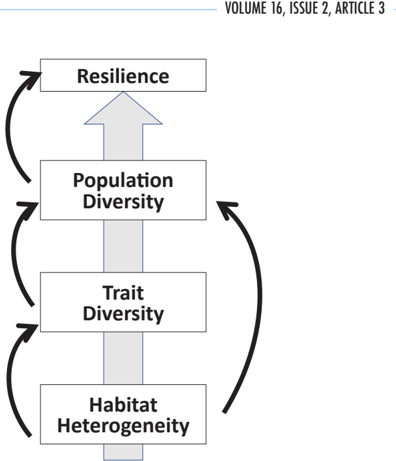
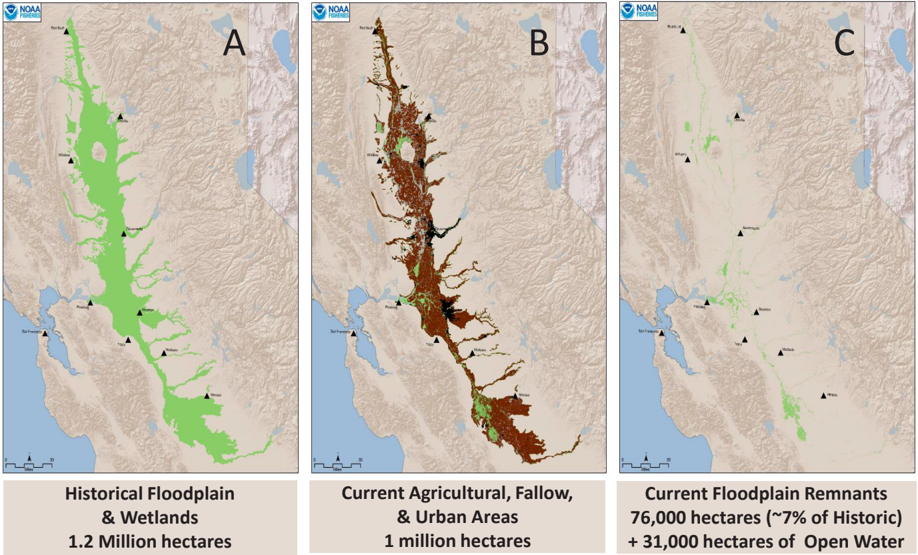
California’s salmonids are at the southern limits of their individual species’ ranges, and display a wide diversity of strategies to survive in California’s highly variable climate. Land use changes after statehood in 1850 eliminated important habitats, or blocked access to them, and reduced the abundance, productivity, and distribution of California’s salmon. Habitat simplification, fishing, hatchery impacts, and other stressors led to the loss of genetic and phenotypic (life history, morphological, behavioral, and physiological) diversity in salmonids. Limited diversity and habitat loss left California salmon with reduced capacity to cope with a variable and changing climate. Since 1976, California has experienced frequent droughts, as were common in the paleo-climatological record, but rare in the peak dam-building era of 1936–1976. Increasing temperatures and decreasing snowpacks have produced harsher conditions for California’s salmon in their current habitats than they experienced historically. The most likely way to promote salmon productivity and persistence in California is to restore habitat diversity, reconnect migratory corridors to spawning and rearing habitats, and refocus management to replenish the genetic and phenotypic diversity of these southernmost populations.
Overview
The claims and statistics of this paper haven’t been checked yet.
Free: it reads the open-access text and checks the first 5 claims that cite a source we can check. Create a free account to check every claim.
Integrity signals
Registry
Cites
Statistics
Figures
Verification
Claims the paper makes
The claims and statistics of this paper haven’t been checked yet.
Free: it reads the open-access text and checks the first 5 claims that cite a source we can check. Create a free account to check every claim.
Claims other papers make about this one
Each is checked against this paper’s own text: does it say what the citing paper says it does?
In the citing paper
“Relationships between life histories and habitat connectivity add complex dimensions to restoration planning, monitoring, and evaluation (WebTable 1; Herbold et al. 2018).”
From Applying cumulative effects to strategically advance large‐scale ecosystem restoration (2021) · cites this paper as Herbold et al. 2018
Self-check
Percentages, sums and reported differences re-computed from the paper’s own numbers.
The self-check needs the paper’s full text.
Citations
Cites
Sharpe, W. F. (1994) · The Journal of Portfolio Management · doi:10.3905/jpm.1994.409501 · Cited by 2,534 · cited 1×
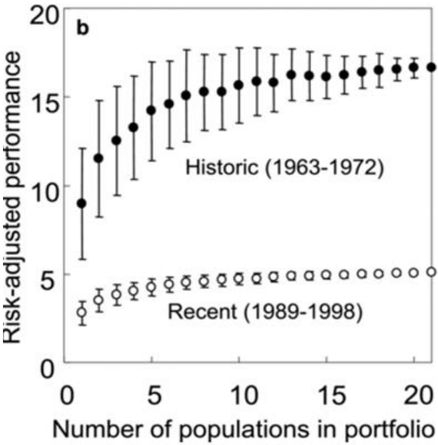
“Financial analysts use the “Sharpe Ratio” (performance divided by variability; Sharpe 1994) to estimate risk-based performance.”
MethodPopulation diversity and the portfolio effect in an exploited species
Schindler, D. E., Hilborn, R., Chasco, B., Boatright, C. P., Quinn, T. P., Rogers, L. A., & Webster, M. S. (2010) · Nature · doi:10.1038/nature09060 · Cited by 1,605 · cited 1×
“Salmon and steelhead sub-populations that vary more independently produce larger and more stable yields (Hilborn et al. 2003; Schindler et al. 2010; Moore et al. 2014).”
BackgroundNorth Pacific Gyre Oscillation links ocean climate and ecosystem change
Di Lorenzo, E., Schneider, N., Cobb, K. M., Franks, P. J. S., Chhak, K., Miller, A. J., McWilliams, J. C., Bograd, S. J., Arango, H., Curchitser, E., et al. (2008) · Geophysical Research Letters · doi:10.1029/2007gl032838 · Cited by 1,163
Biocomplexity and Fisheries Sustainability
Hilborn, R., Quinn, T. P., Schindler, D. E., & Rogers, D. E. (2003) · Proceedings of the National Academy of Sciences · doi:10.1073/pnas.1037274100 · Cited by 990
Extreme and persistent drought in California and Patagonia during mediaeval time
Stine, S. (1994) · Nature · doi:10.1038/369546a0 · Cited by 770
Patterns and processes in the California Current System
Checkley, D. M., & Barth, J. A. (2009) · Progress in Oceanography · doi:10.1016/j.pocean.2009.07.028 · Cited by 662
Fitness of hatchery‐reared salmonids in the wild
Araki, H., Berejikian, B. A., Ford, M. J., & Blouin, M. S. (2008) · Evolutionary Applications · doi:10.1111/j.1752-4571.2008.00026.x · Cited by 593
Contribution of anthropogenic warming to California drought during 2012–2014
Williams, A. P., Seager, R., Abatzoglou, J. T., Cook, B. I., Smerdon, J. E., & Cook, E. R. (2015) · Geophysical Research Letters · doi:10.1002/2015gl064924 · Cited by 587
Dettinger, M. (2011) · JAWRA Journal of the American Water Resources Association · doi:10.1111/j.1752-1688.2011.00546.x · Cited by 577
The portfolio concept in ecology and evolution
Schindler, D. E., Armstrong, J. B., & Reed, T. E. (2015) · Frontiers in Ecology and the Environment · doi:10.1890/140275 · Cited by 563
Research works printed but not linked: 26
- Biondi FC, Isaacs C, Hughes MK, Cayan DR, Berger WH. 2000. The near-1600 dry/wet knockout: Linking terrestrial and near-shore ecosystems. In: Proceedings of the 24th Annual Climate Diagnostics and Prediction Workshop.
- Enright C, Culberson SD, Burau J. 2013. Broad timescale forcing and geomorphic mediation of tidal marsh flow and temperature dynamics. Estuaries Coasts 36(6):1319-1339 https://ca.water.usgs.gov/pubs/2013/ EnrightCulbersonBurau2013.pdf
- Fiedler P, Mantua NJ. 2017. How are warm and cool years in the California Current related to ENSO? J Geophys Res Oceans 122:5936-5951. https://doi.org/10.1002/2017JC013094 · DOI
- Figge F. 2004. Bio-folio: applying portfolio theory to biodiversity. Biodiv Conserv 13:827-849. https://doi.org/10.1023/B:BIOC.0000011729.93889. · DOI · Paper page
- Fisher FW. 1994. Past and present status of Central Valley Chinook Salmon. Conserv Biol 8: 870-873. http://www.jstor.org/stable/2386533
- Hayes SA, Bond MH, Hanson CV, Freund EV, Anderson EC, Ammann AJ, MacFarlane RB. 2006. Steelhead growth in a small central California watershed: upstream and estuarine rearing patterns. Trans Am Fish Soc 137:114- 128. https://doi.org/10.1577/T07-043. · DOI
- Healey M. 1982. Juvenile Pacific salmon in estuaries: the life support system. In: Kennedy VS, editor. Estuarine comparisons. Proceedings of the Sixth Biennial International Estuarine Research Conference; 1981 Nov 1-6;
- Henery RE, Sommer TR, Goldman CR. 2010. Growth and methylmercury accumulation in juvenile Chinook Salmon in the Sacramento River and its floodplain, the Yolo Bypass, Trans Am Fish Soc 139:550-563. https://doi.org/10.1577/T08-112.1 https://doi.org/10.15447/sfews.2018v16iss2art3 · DOI
- Ingram BL, Malamud-Roam F. 2013. The west without water. [Berkeley (CA)]: University of California Press. 256 p.
- Jacox MG, Alexander MA, Mantua NJ, Scott JD, Hervieux G, Webb RS, Werner FE, 2017. Forcing of multiyear extreme ocean temperatures that impacted California current living marine resources in 2016. In: Explaining extreme events of 2016 from a climate perspective. Bull Amer Meteor Soc 98(12):S27-S33. https://doi.org/10.1175/BAMS-D-17-0119. · DOI
- Leitritz E. 1970. A history of California's fish hatcheries, 1870-1960. Fish Bulletin 150. [Sacramento (CA)]: California Department of Fish and Game. 92 p. Lindley ST, Grimes CB, Mohr MS, Peterson W, Stein J, Anderson J, Bottom D, Botsford L, Busack C, Collier T, et al. 2009. What caused the Sacramento River fall Chinook Salmon stock collapse? NOAA Technical Memorandum NMFS-SWFSC 447. Available from: ftp://ftp.pcouncil. org/pub/Salmon%20EFH/169_Lindley_et_al_2009.pdf
- Limm M, Marchetti MP. 2009. Contrasting patterns of juvenile Chinook Salmon (Oncorhynchus tshawytscha) growth, diet, and prey densities in off-channel and main stem habitats on the Sacramento River. Environ Biol Fishes 85(2):141-151. https://doi.org/10.1007/s10641-009-9473-8 · DOI · Paper page
- Mantua NJ, Hare SR, Zhang Y, Wallace JM, Francis RC. 1997: a Pacific interdecadal climate oscillation with impacts on salmon production. Bull Am Met Soc 78:1069-1079. https://doi.org/10.1175/1520- 0477(1997)078%3C1069:APICOW%3E2.0. CO;2 · DOI · Paper page
- McEvoy AF. 1986. The fisherman's problem: ecology and law in the California fisheries 1850-1980. [Cambridge (UK)]: Cambridge University Press. https://doi.org/10.1017/CB09780511583681 · doi:10.1017/cb09780511583681
- Meek M, Stephens MR, Wong AK, Tomalty K, May B, Baerwald M. 2014. Genetic characterization of California's Central Valley Chinook Salmon. Ecology 95(5):1431. https://doi.org/10.1890/13-2087R. · doi:10.1890/13-2087r.1
- Merz JE, Moyle PB. 2006. Salmon, wildlife, and wine: Marine-derived nutrients in human dominated ecosystems of Central California. Ecol App 16(3):999- 1009. Available from: https://www.ncbi.nlm.nih.gov/ pubmed/16826998
- Moore JW, Yeakle JD, Peard D, Lough J, Beere M. 2014. Life-history diversity and its importance to population stability and persistence of a migratory fish: Steelhead in two large North American watersheds. J Anim Ecol 83(5):1035-46. https://doi.org/10.1111/1365-2656.12212 https://doi.org/10.15447/sfews.2018v16iss2art3 · DOI · Paper page
- Muñoz, NJ, Farrell, AP, Heath, JW, Neff BD. 2015. Adaptive potential of a Pacific Salmon challenged by climate change. Nature Clim Change 5:163-166. https://doi.org/10.1038/nclimate2473 NMFS: National Marine Fisheries Service. 2009. Biological and conference opinion on the long-term operations of the Central Valley Project and State Water Project. Long [Beach (CA)]: NMFS. Available from: http://www. swr.noaa.gov/ocap/NMFS_Biological_ and_Conference_ Opinion_on_the_Long-Term_Operations_of_the _CVP_ and_SWP.pdf · DOI
- Ralph FM, Dettinger MD. 2012. Historical and national perspectives on extreme West Coast precipitation associated with atmospheric rivers during December 2010. Bull Amer Meteor Soc 93:783-790. https://doi.org/10.1175/BAMS-D-11-00188. · DOI · Paper page
- Ruggerone GT, Peterman RM, Dorner B, and Myers KW. 2010. Magnitude and trends in abundance of hatchery and wild Pink, Chum, and Sockeye salmon in the North Pacific Ocean. Mar Coastal Fish: Dynam Manag Ecosyst Sci [Internet] [cited 2011 Jan 09];2:306-328. https://doi.org/10.1577/C09-054. · DOI
- Sommer TR, Baxter R, Herbold B. 1997. Resilience of splittail in the Sacramento-San Joaquin Estuary. Trans Am Fish Soc 126:961-976. https://doi. org/10.1577/1548-8659(1997)126%3C0961:ROSITS% 3E2.3.CO;2 · DOI
- Swain DL, Langenbrunner B, Neelin JD, Hall A. 2018. Increasing precipitation volatility in twenty-first century California. Nature Climate Change 8:427-433. https://doi.org/10.1038/s41558-018-0140-y SWRCB: State Water Resources Control Board. 2016. Central Valley Project and State Water Project 2016 drought contingency plan for water project operations February-November 2016. Available from: http://www. waterboards.ca.gov/waterrights/water_issues/programs/ drought/docs/plans/2016dcpfebnov.pdf · DOI · Paper page
- Wells BK, Santora JA, Field JC, MacFarlane RB, Marinovic BB, Sydeman WJ. 2012. Population dynamics of Chinook Salmon (Oncorhynchus tshawytscha) relative to prey availability in the central California coastal region. Mar Ecol Prog Ser 457:125-137. Available from: http://www.jstor.org/stable/24876342 https://doi.org/10.15447/sfews.2018v16iss2art3
- Williamson KS, May B. 2005. Homogenization of fall run Chinook Salmon gene pools in the Central Valley of California, USA. N Am J Fish Manag 25:993-1009. https://doi.org/10.1577/M04-136. · DOI
- Yoshiyama RM, Fisher FW, Moyle PB. 1998. Historical abundances and decline of Chinook Salmon in the Central Valley Region of California. N Am J Fish Manag 18:487-521. https://doi.org/10.1577/1548- 8675(1998)018%3C0487:HAADOC%3E2.0. CO;2 · DOI · Paper page
- Yoshiyama RM, Moyle PB, Gerstung ER, Fisher FW. 2000. Chinook Salmon in the California Central Valley: an assessment. Fisheries 25:6-20. https://doi. org/10.1577/1548-8446(2000)025%3C0006:CSITCC%3 E2.0.CO;2 · DOI
Cited by
Crozier, L. G., McClure, M. M., Beechie, T., Bograd, S. J., Boughton, D. A., Carr, M., Cooney, T. D., Dunham, J. B., Greene, C. M., Haltuch, M. A., et al. (2019) · PLOS ONE · doi:10.1371/journal.pone.0217711 · Cited by 174
Climate change threatens Chinook salmon throughout their life cycle
Crozier, L. G., Burke, B. J., Chasco, B. E., Widener, D. L., & Zabel, R. W. (2021) · Communications Biology · doi:10.1038/s42003-021-01734-w · Cited by 170
Applying cumulative effects to strategically advance large‐scale ecosystem restoration
Diefenderfer, H. L., Steyer, G. D., Harwell, M. C., LoSchiavo, A. J., Neckles, H. A., Burdick, D. M., Johnson, G. E., Buenau, K. E., Trujillo, E., Callaway, J. C., et al. (2021) · Frontiers in Ecology and the Environment · doi:10.1002/fee.2274 · Cited by 55
“Relationships between life histories and habitat connectivity add complex dimensions to restoration planning, monitoring, and evaluation (WebTable 1; Herbold et al. 2018).”
Background
Metadata
- Authors
- Consultant, Herbold, B., Carlson, S. M., & Henery, R.
- Venue
- San Francisco Estuary and Watershed Science
- Publisher
- California Digital Library (CDL)
- Published
- 2018-08-28
- Volume
- 16
- Issue
- 2
- ISSN
- 1546-2366
- Cited by
- 47
- References
- 65
About these checks
Registry, retraction, Cites and statistics results are computed, not judged, with one exception: a printed reference that no index lists is read once by a model before it counts as a citation error. Claims are extracted by a model and kept only when their quote appears verbatim in the text; each cited source is then checked, with a model’s help, for whether it says what the claim relies on. Those verdicts can be wrong — read the claim’s quote and the cited source before relying on one.
Statistics and arithmetic are recomputed, not judged.
Confidence bands are shown only for fields calibrated on our annotated test set. None is calibrated yet, so no band is shown.
What counts as a claim ›How we measure confidence ›How we check this ›
Are you an author, or do you see a problem with this page? Request a review
Data sources
Bibliographic data: Semantic Scholar, OpenAlex, Crossref.
Contains information from the Semantic Scholar Academic Graph Datasets, made available under the ODC Attribution License (ODC-BY 1.0).
Semantic Scholar’s data is described in: Kinney, R., et al. (2023). The Semantic Scholar Open Data Platform. arXiv:2301.10140.
