

Emergency Department Visits for Suspected Suicide Attempts Among Persons Aged 12–25 Years Before and During the COVID-19 Pandemic — United States, January 2019–May 2021
Open accessThe DOI matches its Crossref record; 9 of the 10 references it cites were found in a registry or an index; 8 of the 11 sources its claims cite were checked for support.
Abstract
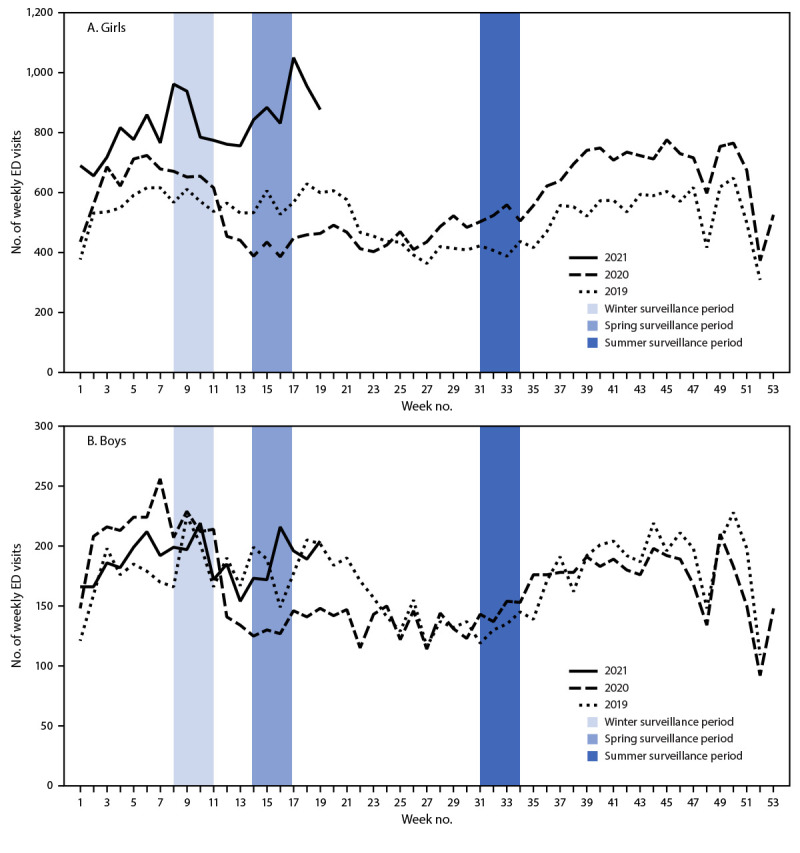
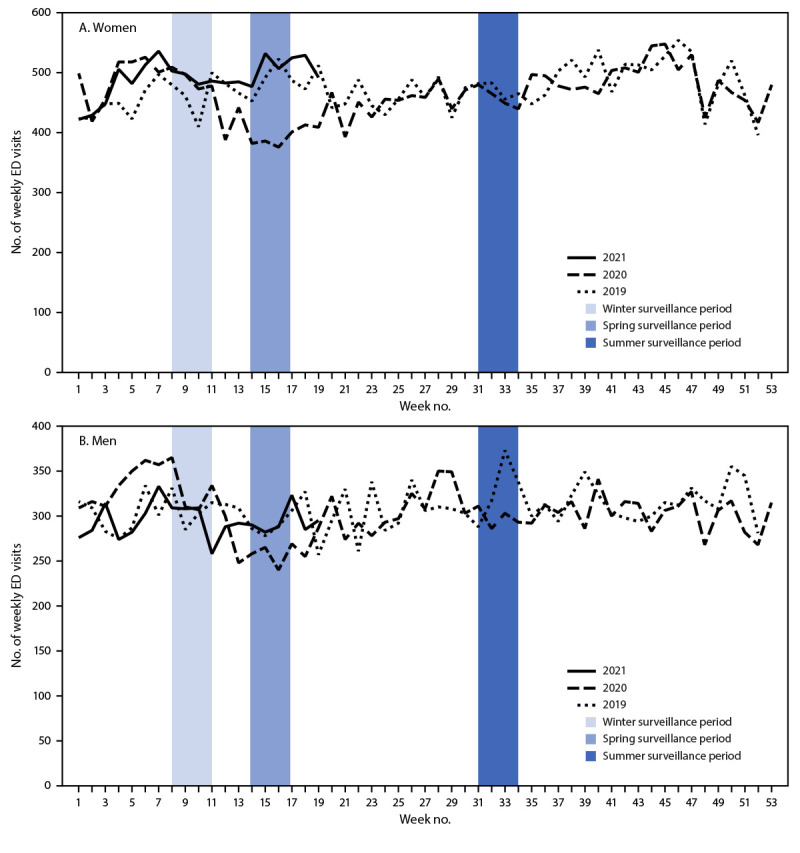
during January 1, 2019-May 15, 2021, among persons aged 12-25 years, by sex, and at three distinct phases of the COVID-19 pandemic. Compared with the corresponding period in 2019, persons aged 12-25 years made fewer ED visits for suspected suicide attempts during March 29-April 25, 2020. However, by early May 2020, ED visit counts for suspected suicide attempts began increasing among adolescents aged 12-17 years, especially among girls. During July 26-August 22, 2020, the mean weekly number of ED visits for suspected suicide attempts among girls aged 12-17 years was 26.2% higher than during the same period a year earlier; during February 21-March 20, 2021, mean weekly ED visit counts for suspected suicide attempts were 50.6% higher among girls aged 12-17 years compared with the same period in 2019. Suicide prevention measures focused on young persons call for a comprehensive approach, that is adapted during times of infrastructure disruption, involving multisectoral partnerships (e.g., public health, mental health, schools, and families) and implementation of evidence-based strategies (3) that address the range of factors influencing suicide risk.
Overview
CoChat Summary
TL;DR
CDC analyzed National Syndromic Surveillance Program emergency department (ED) data from January 2019–May 2021 and found that suspected suicide attempt ED visits among adolescents aged 12–17 years initially fell in spring 2020 but then rose, especially among girls, while counts among adults aged 18–25 years remained stable though visit rates increased. The report calls for comprehensive, adapted suicide prevention strategies for young persons.
Key findings
- Among adolescents aged 12–17 years, mean weekly ED visits for suspected suicide attempts were 22.3% higher during summer 2020 and 39.1% higher during winter 2021 than during corresponding 2019 periods; during winter 2021, visits were 50.6% higher among girls and 3.7% higher among boys.
- The rate of ED visits for suspected suicide attempts among adolescents aged 12–17 years was 2.4 times as high during spring 2020, 1.7 times as high during summer 2020, and 2.1 times as high during winter 2021 compared with corresponding 2019 periods, driven largely by females.
- Among adults aged 18–25 years, mean weekly ED visits for suspected suicide attempts dropped 16.8% during spring 2020 compared with 2019, then remained consistent with 2019 counts; however, visit rates were 1.6 times as high in spring 2020, 1.1 times as high in summer 2020, and 1.3 times as high in winter 2021.
- During spring 2020, mean weekly ED visits for suspected suicide attempts decreased 26.45% among all adolescents aged 12–17 years and 16.80% among all adults aged 18–25 years compared with 2019 reference periods.
Methods
- CDC used NSSP ED visit data covering approximately 71% of U.S. EDs in 49 states (all except Hawaii) and the District of Columbia; analyses were restricted to EDs that reported consistently during January 1, 2019–May 15, 2021 and had at least one suspected suicide attempt visit, with 41% of consistently reporting EDs having such visits.
- Suspected suicide attempts were identified using an NSSP syndrome definition combining chief complaint terms and administrative discharge diagnosis codes; these visits include suicide attempts and some nonsuicidal self-harm visits.
- Weekly counts and rates were analyzed by age group (12–17 and 18–25 years) and sex across three pandemic periods—spring 2020 (March 29–April 25), summer 2020 (July 26–August 22), and winter 2021 (February 21–March 20)—compared with corresponding 2019 periods; percent change and visit ratios with 95% CIs were calculated, with CIs excluding 1.0 considered statistically significant, using R version 4.0.5.
Limitations
- The paper states at least nine limitations: data are not nationally representative; facility participation varies; coding and reporting practices differ; initial and follow-up visits cannot be distinguished; national race and ethnicity data were unavailable; the data likely underrepresent true prevalence because less severely injured persons may have avoided emergency care; the syndrome definition excludes some but not all nonsuicidal self-harm; the sharp decline in all ED visits during the pandemic likely affected counts and proportions; and the analysis was not designed to determine causality.
- Evident from the text: the outcome is not a pure count of suicide attempts because the syndrome definition includes some nonsuicidal self-harm, and the inability to distinguish repeat visits means the number of ED visits for suspected suicide attempts might be lower than presented; both points are also stated by the authors.
Model-written summary. Check it against the paper before relying on it.
Integrity signals
Registry
Cites
Statistics
Figures
Verification
Claims the paper makes
7 Valid · 0 Not valid · 3 Not checked · 28 Own results and interpretations
The cited sources support only part of this claim — read each source’s verdict below.
In the paper
“In June 2020, 25% of surveyed adults aged 18–24 years reported experiencing suicidal ideation related to the pandemic in the past 30 days (2).”
What the sources say
- Partly supportedcites [2] Czeisler, 2020, Mental health, substance use, and suicidal ideation during the COVID-19 pandemic—United States, June 24–30, 2020., MMWR Morb Mortal Wkly Rep sourceExperimental — accuracy not yet measured
The paper reports that 25.5% of surveyed adults aged 18–24 had seriously considered suicide in the 30 days before the June 2020 survey, consistent with the claim's approximate 25%. Its survey description distinguishes suicidal ideation from outcomes explicitly measured as related to COVID-19; it does not establish that the reported ideation was related to the pandemic (main text, page not specified in our copy). (LLM, conf=0.88)
plain- Asserted: passes — The authors put it forward as true.
- Checkable: passes — It can be checked against evidence.
- Load-bearing: unclear — It is unclear whether the paper’s conclusions depend on it.
- Based: passes — The paper gives a reason why it holds.
- Partly supported
Every source the paper cites for this claim was checked and supports it.
In the paper
“the period that followed the declaration of the COVID-19 pandemic as a national emergency and a concurrent 42% decrease in the total number of U.S. ED visits (6)”
§ Emergency Department Visits for Suspected Suicide Attempts Among Persons Aged 12–25 Years Before and During the COVID-19 Pandemic — United States, January 2019–May 2021 > Discussion
What the sources say
- Supportedcites [6] Hartnett, 2020, Impact of the COVID-19 pandemic on emergency department visits—United States, January 1, 2019–May 30, 2020., MMWR Morb Mortal Wkly Rep source
The opening section states that the U.S. declared a national emergency on March 13, 2020, and that ED visits during March 29–April 25, 2020, were 42% lower than in the comparable period in 2019. The Discussion’s “What is added by this report?” section likewise reports a 42% decline. The claim describes the decrease as concurrent, not as caused by the declaration. (LLM, conf=0.94)
plainstates an association- Asserted: passes — The authors put it forward as true.
- Checkable: passes — It can be checked against evidence.
- Load-bearing: unclear — It is unclear whether the paper’s conclusions depend on it.
- Based: passes — The paper gives a reason why it holds.
- Supported
The cited sources support only part of this claim — read each source’s verdict below.
In the paper
“Compared with the rate in 2019, a 31% increase in the proportion of mental health–related emergency department (ED) visits occurred among adolescents aged 12–17 years in 2020 (1).”
- Also stated in: § What is already known about this topic? · plain
“During 2020, the proportion of mental health–related emergency department (ED) visits among adolescents aged 12–17 years increased 31% compared with that during 2019.”
What the sources say
- Partly supportedcites [1] Leeb, 2020, Mental health-related emergency department visits among children aged <18 years during the COVID-19 pandemic—United States, January 1–October 17, 2020., MMWR Morb Mortal Wkly Rep sourceExperimental — accuracy not yet measured
The results report a 31% increase for adolescents aged 12–17 compared with 2019, but specifically during weeks 12–42 of 2020 (mid-March through October). The citing sentence omits that time restriction and could be read as applying the figure to 2020 as a whole. (LLM, conf=0.85)
plainstates a cause- Asserted: passes — The authors put it forward as true.
- Checkable: passes — It can be checked against evidence.
- Load-bearing: unclear — It is unclear whether the paper’s conclusions depend on it.
- Based: passes — The paper gives a reason why it holds.
- Also stated in: § What is already known about this topic? · plain
The cited sources support only part of this claim — read each source’s verdict below.
In the paper
“research before the COVID-19 pandemic indicated that young females had both higher and increasing rates of ED visits for suicide attempts compared with males (8)”
§ Emergency Department Visits for Suspected Suicide Attempts Among Persons Aged 12–25 Years Before and During the COVID-19 Pandemic — United States, January 2019–May 2021 > Discussion
What the sources say
- Partly supportedcites [8] Mercado, 2017, Trends in emergency department visits for nonfatal self-inflicted injuries among youth aged 10 to 24 years in the United States, 2001–2015., JAMA sourceExperimental — accuracy not yet measured
The Results report that ED visit rates for self-inflicted injuries increased among females after 2009 while male rates remained stable. The paper does not establish in the available text that female rates were higher than male rates, and its definition includes injuries with nonsuicidal intent, not just suicide attempts. (LLM, conf=0.88)
hedgedstates an association- Asserted: passes — The authors put it forward as true.
- Checkable: passes — It can be checked against evidence.
- Load-bearing: unclear — It is unclear whether the paper’s conclusions depend on it.
- Based: passes — The paper gives a reason why it holds.
- Partly supported
The cited sources support only part of this claim — read each source’s verdict below.
In the paper
“However, the findings from this study suggest more severe distress among young females than has been identified in previous reports during the pandemic (1,2), reinforcing the need for increased attention to, and prevention for, this population.”
§ Emergency Department Visits for Suspected Suicide Attempts Among Persons Aged 12–25 Years Before and During the COVID-19 Pandemic — United States, January 2019–May 2021 > Discussion
What the sources say
- Supportedcites [1] Leeb, 2020, Mental health-related emergency department visits among children aged <18 years during the COVID-19 pandemic—United States, January 1–October 17, 2020., MMWR Morb Mortal Wkly Rep source
The citation identifies a previous pandemic report against which the citing authors compare their own findings; the claim of more severe distress is framed as a finding of the citing study, not of this source. The source’s results report mental health–related ED visits among children during 2020, including higher visit proportions among females than males. (LLM, conf=0.86)
- Partly supportedcites [2] Czeisler, 2020, Mental health, substance use, and suicidal ideation during the COVID-19 pandemic—United States, June 24–30, 2020., MMWR Morb Mortal Wkly Rep sourceExperimental — accuracy not yet measured
The report’s results and Table 1 (page not specified) show elevated adverse mental-health symptoms among adults aged 18–24 during the pandemic. They do not report distress specifically for young females or establish that the citing study found more severe distress than this report did; age and gender are presented separately. (LLM, conf=0.84)
hedgedstates an association- Asserted: passes — The authors put it forward as true.
- Checkable: passes — It can be checked against evidence.
- Load-bearing: passes — The paper’s conclusions depend on it.
- Based: passes — The paper gives a reason why it holds.
- Supported
22 more claims · 2 with their cited sources checked
Create a free account to see all 38 claims and to verify the 2 references still open.
- The quote only partly states this claim. 3
- It may state two separate claims as one. 5
- Probably not a substantial claim. 4
Claims other papers make about this one
Each is checked against this paper’s own text: does it say what the citing paper says it does?
The cited source says what the claim attributes to it.
In the citing paper
“The results support findings of an increase in emergency department visits for suspected suicide attempts among persons aged 12–17 years, particularly among adolescent girls, beginning in mid-2020, reported in mid-2021, based on data from the National Syndromic Surveillance Program (6).”
From Suspected Suicide Attempts by Self-Poisoning Among Persons Aged 10–19 Years During the COVID-19 Pandemic — United States, 2020–2022 (2023) · cites this paper as [6]
The cited source says what the claim attributes to it.
In the citing paper
“However, the consistency of these findings with those in other published studies highlights the association of the COVID-19 pandemic with harmful effects on youth mental health”
From Suspected Suicide Attempts by Self-Poisoning Among Persons Aged 10–19 Years During the COVID-19 Pandemic — United States, 2020–2022 (2023) · cites this paper as [6]
In the citing paper
“For youth ages 12–17 specifically, there was a 31% increase in mental health-related ED visits in 2020 compared to 2019 (Yard et al., 2021)”
From Experiences of Child and Adolescent Psychiatric Patients Boarding in the Emergency Department from Staff Perspectives: Patient Journey Mapping (2023) · cites this paper as Yard et al., 2021
In the citing paper
“Even before the pandemic, suicide was the second highest cause of death in this age group [7-9], but in 2020, emergency department (ED) visits for suspected suicide attempts increased by 30% compared to 2019 [10].”
From Chatbot-Delivered Cognitive Behavioral Therapy in Adolescents With Depression and Anxiety During the COVID-19 Pandemic: Feasibility and Acceptability Study (2022) · cites this paper as [10]
Self-check
Percentages, sums and reported differences re-computed from the paper’s own numbers.
Each contradiction between two passages listed here was confirmed by an independent check.
Rated minor: it would not touch a result — a value no result rests on, a p-value that stays on the same side of the significance level, or a conflict that is clerical, resolved elsewhere in the paper, or outside its own findings.
In the paper
§ Emergency Department Visits for Suspected Suicide Attempts Among Persons Aged 12–25 Years Before and During the COVID-19 Pandemic — United States, January 2019–May 2021
“weeks 14–17, 2019 (March 21–April 27, 2019)”
§ Emergency Department Visits for Suspected Suicide Attempts Among Persons Aged 12–25 Years Before and During the COVID-19 Pandemic — United States, January 2019–May 2021
“weeks 14–17, 2020 (March 29–April 25, 2020, Spring 2020)”
Citations
Cites
Czeisler, M. É., Lane, R. I., Petrosky, E., Wiley, J. F., Christensen, A., Njai, R., Weaver, M. D., Robbins, R., Facer-Childs, E. R., Barger, L. K., et al. (2020) · MMWR. Morbidity and Mortality Weekly Report · doi:10.15585/mmwr.mm6932a1 · Cited by 2,686
Hartnett, K. P., Kite-Powell, A., DeVies, J., Coletta, M. A., Boehmer, T. K., Adjemian, J., Gundlapalli, A. V., & Practice, N. S. S. P. C. O. (2020) · MMWR Morbidity and Mortality Weekly Report · doi:10.15585/mmwr.mm6923e1 · Cited by 1,139 · cited 1×
“Eighth, the sharp decline in all ED visits during the pandemic likely affected the number and proportion of visits for suspected suicide attempts (6).”
BackgroundSuicide mortality and coronavirus disease 2019—a perfect storm?
Reger, M. A., Stanley, I. H., & Joiner, T. E. (2020) · JAMA Psychiatry · doi:10.1001/jamapsychiatry.2020.1060 · Cited by 1,026 · cited 1×
“Some researchers have cautioned about a potential increase in suicides during the COVID-19 pandemic on account of increases in suicide risk factors; however, this study was not designed to identify the risk factors leading to increases in suspected suicide attempts, (10).”
Holland, K. M., Jones, C., Vivolo-Kantor, A. M., Idaikkadar, N., Zwald, M., Hoots, B., Yard, E., D’Inverno, A., Swedo, E., Chen, M. S., et al. (2021) · JAMA Psychiatry · doi:10.1001/jamapsychiatry.2020.4402 · Cited by 578 · cited 2×
“In addition, average ED visit rates for mental health concerns and suspected child abuse and neglect, risk factors for suicide attempts, also increased in 2020 compared with 2019 (5), potentially contributing to increases in”
BackgroundResultSelf-citationLeeb, R. T., Bitsko, R. H., Radhakrishnan, L., Martinez, P., Njai, R., & Holland, K. M. (2020) · MMWR. Morbidity and Mortality Weekly Report · doi:10.15585/mmwr.mm6945a3 · Cited by 557
Self-citationIvey-Stephenson, A. Z., Demissie, Z., Crosby, A. E., Stone, D. M., Gaylor, E., Wilkins, N., Lowry, R., & Brown, M. (2020) · MMWR Supplements · doi:10.15585/mmwr.su6901a6 · Cited by 478
Self-citationPreventing suicide : a technical package of policies, programs, and practice
National Center for Injury Prevention and Control (U.S.). Division of Violence Prevention., Stone, D., Holland, K., National Center for Injury Prevention and Control (U.S.). Division of Violence Prevention., Holland, B., Crosby, A., Davis, S., & Wilkins, N. (2017) · doi:10.15620/cdc.44275 · Cited by 214 · cited 4×
“, public health, mental health, schools, and families) and implementation of evidence-based strategies to address the range of factors influencing suicide attempts, which is a leading risk factor for suicide (3).”
BackgroundInfluentialSelf-citationMercado, M. C., Holland, K., Leemis, R. W., Stone, D. M., & Wang, J. (2017) · JAMA · doi:10.1001/jama.2017.13317 · Cited by 170
Ivey-Stephenson (2020) · doi:10.1097/nnr.0000000000000424 · Cited by 41 · cited 1×
“The difference in suspected suicide attempts by sex and the increase in suspected suicide attempts among young persons, especially adolescent females, is consistent with past research: self-reported suicide attempts are consistently higher among adolescent females than among males (7), and research before the COVID-19…”
Result
Cited by
Five-Year Trends in US Children’s Health and Well-being, 2016-2020
Lebrun-Harris, L. A., Ghandour, R. M., Kogan, M. D., & Warren, M. D. (2022) · JAMA Pediatrics · doi:10.1001/jamapediatrics.2022.0056 · Cited by 375
Jones, S. E., Ethier, K. A., Hertz, M., DeGue, S., Le, V. D., Thornton, J., Lim, C., Dittus, P. J., & Geda, S. (2022) · MMWR Supplements · doi:10.15585/mmwr.su7103a3 · Cited by 369
“7% higher among boys from February through March 2021 than during the same period in 2019 (6).”
BackgroundMadigan, S., Racine, N., Vaillancourt, T., Korczak, D. J., Hewitt, J. M. A., Pador, P., Park, J. L., McArthur, B. A., Holy, C., & Neville, R. D. (2023) · JAMA Pediatrics · doi:10.1001/jamapediatrics.2023.0846 · Cited by 354
Danielson, M. L., Claussen, A. H., Bitsko, R. H., Katz, S. M., Newsome, K., Blumberg, S. J., Kogan, M. D., & Ghandour, R. (2024) · Journal of Clinical Child & Adolescent Psychology · doi:10.1080/15374416.2024.2335625 · Cited by 347
“Numerous studies have documented that the overall trend of increases in child and adolescent depression and anxiety present before the pandemic (Bitsko et al., 2022) was exacerbated during the pandemic, particularly among adolescent girls (Radhakrishnan et al., 2022; Yard et al., 2021).”
BackgroundNational Trends in Mental Health–Related Emergency Department Visits Among Youth, 2011-2020
Bommersbach, T. J., McKean, A. J., Olfson, M., & Rhee, T. G. (2023) · JAMA · doi:10.1001/jama.2023.4809 · Cited by 328
Bertuccio, P., Amerio, A., Grande, E., La Vecchia, C., Costanza, A., Aguglia, A., Berardelli, I., Serafini, G., Amore, M., Pompili, M., et al. (2024) · eClinicalMedicine · doi:10.1016/j.eclinm.2024.102506 · Cited by 212
Suicide and Suicide Risk in Adolescents
Hua, L. L., Lee, J., Rahmandar, M. H., Sigel, E. J., COMMITTEE ON ADOLESCENCE, & COUNCIL ON INJURY, V. (2024) · Pediatrics · doi:10.1542/peds.2023-064800 · Cited by 205
Two years of COVID-19 and tourism: what we learned, and what we should have learned
Gössling, S., & Schweiggart, N. (2022) · Journal of Sustainable Tourism · doi:10.1080/09669582.2022.2029872 · Cited by 194
Gaylor, E. M., Krause, K. H., Welder, L. E., Cooper, A. C., Ashley, C. L., Mack, K. A., Crosby, A. E., Trinh, E. P., Ivey-Stephenson, A. Z., & Whittle, L. (2023) · MMWR Supplements · doi:10.15585/mmwr.su7201a6 · Cited by 160
“The COVID-19 pandemic had a differential effect on suicide risk among male and female youths (10).”
BackgroundSelf-citationNicol, G., Wang, R., Graham, S., Dodd, S., & Garbutt, J. (2022) · JMIR Formative Research · doi:10.2196/40242 · Cited by 123
“Even before the pandemic, suicide was the second highest cause of death in this age group [7-9], but in 2020, emergency department (ED) visits for suspected suicide attempts increased by 30% compared to 2019 [10].”
BackgroundSocial Media and Youth Mental Health
Weigle, P. E., & Shafi, R. M. A. (2024) · Current Psychiatry Reports · doi:10.1007/s11920-023-01478-w · Cited by 135
“Rates of suicide and self-injurious thoughts and behaviors (with and without intent for suicide) rose in young people during the Covid-19 pandemic, again concurrent with increased SMU [36–39].”
Adolescent Mental Health, Connectedness, and Mode of School Instruction During COVID-19
Hertz, M. F., Kilmer, G., Verlenden, J., Liddon, N., Rasberry, C. N., Barrios, L. C., & Ethier, K. A. (2022) · Journal of Adolescent Health · doi:10.1016/j.jadohealth.2021.10.021 · Cited by 123
Ridout, K. K., Alavi, M., Ridout, S. J., Koshy, M. T., Awsare, S., Harris, B., Vinson, D. R., Weisner, C. M., Sterling, S., & Iturralde, E. (2021) · JAMA Psychiatry · doi:10.1001/jamapsychiatry.2021.2457 · Cited by 111
Sara, G. E., Wu, J., Uesi, J., Jong, N. N., Perkes, I. E., Knight, K., O’Leary, F., Trudgett, C., & Bowden, M. R. (2022) · Australian & New Zealand Journal of Psychiatry · doi:10.1177/00048674221082518 · Cited by 120
“The US Centers for Disease Control found an initial reduction in ED visits for suicide attempts in young people, followed by a substantial later increase, including a 25–50% increase in females aged 12–17 years (Yard et al., 2021).”
MethodEmotional and Behavioral Impact of the COVID-19 Epidemic in Adolescents
Bera, L., Souchon, M., Ladsous, A., Colin, V., & Lopez-Castroman, J. (2022) · Current Psychiatry Reports · doi:10.1007/s11920-022-01313-8 · Cited by 110
Bersia, M., Koumantakis, E., Berchialla, P., Charrier, L., Ricotti, A., Grimaldi, P., Dalmasso, P., & Comoretto, R. I. (2022) · EClinicalMedicine · doi:10.1016/j.eclinm.2022.101705 · Cited by 118
Mental health and wellbeing of children and adolescents during the covid-19 pandemic
Rider, E. A., Ansari, E., Varrin, P., & Sparrow, J. (2021) · BMJ · doi:10.1136/bmj.n1730 · Cited by 134
Pediatric Mental Health Presentations and Boarding: First Year of the COVID-19 Pandemic
Ibeziako, P., Kaufman, K., Scheer, K. N., & Sideridis, G. (2022) · Hospital Pediatrics · doi:10.1542/hpeds.2022-006555 · Cited by 91
Suicide Risk and Prevention During the COVID-19 Pandemic: One Year On
Sinyor, M., Knipe, D., Borges, G., Ueda, M., Pirkis, J., Phillips, M. R., Gunnell, D., & the International COVID-19 Suicide Prevention Research Collaboration (2022) · Archives of Suicide Research · doi:10.1080/13811118.2021.1955784 · Cited by 73
“…people including US data showing an increase in emergency presentations for suspected suicide attempts in adolescent girls (O’Connor et al., 2021; Yard et al., 2021); while young people have higher rates of suicide attempts, in high-income countries they generally have substantially lower rates…”
BackgroundSuicide and Suicidal Behaviors Among Minoritized Youth
Oshin, L., Hausmann-Stabile, C., Meza, J. I., Polanco-Roman, L., Bettis, A. H., Reyes-Portillo, J., & Benton, T. D. (2022) · Child and Adolescent Psychiatric Clinics of North America · doi:10.1016/j.chc.2022.01.002 · Cited by 84
Kessler, R. C., Ruhm, C. J., Puac‐Polanco, V., Hwang, I. H., Lee, S., Petukhova, M. V., Sampson, N. A., Ziobrowski, H. N., Zaslavsky, A. M., & Zubizarreta, J. R. (2022) · JAMA Network Open · doi:10.1001/jamanetworkopen.2022.17223 · Cited by 83
Kessler, R. C., Chiu, W. T., Hwang, I. H., Puac‐Polanco, V., Sampson, N. A., Ziobrowski, H. N., & Zaslavsky, A. M. (2021) · Psychiatric Clinics of North America · doi:10.1016/j.psc.2021.11.013 · Cited by 82
“1% higher in the winter of 2021 than the winter of 2019.(64) No comparable absolute increase occurred among adults.”
Social and Relational Health Risks and Common Mental Health Problems Among US Children
Bethell, C. D., Garner, A. S., Gombojav, N., Blackwell, C. K., Heller, L., & Mendelson, T. (2021) · Child and Adolescent Psychiatric Clinics of North America · doi:10.1016/j.chc.2021.08.001 · Cited by 74
Cousien, A., Acquaviva, É., Kernéis, S., Yazdanpanah, Y., & Delorme, R. (2021) · JAMA Network Open · doi:10.1001/jamanetworkopen.2021.28611 · Cited by 73
“5 The number of suicide attempts observed at time t was decomposed as (1) a seasonal component accounting for the variations observed during the year, (2) a long-term trend, and (3) a remainder.”
MethodSounding the Alarm for Children’s Mental Health During the COVID-19 Pandemic
Benton, T. D., Njoroge, W., & Ng, W. Y. K. (2022) · Archives of Pediatrics and Adolescent Medicine · doi:10.1001/jamapediatrics.2021.6295 · Cited by 71
The Coronavirus Impact Scale: Construction, Validation, and Comparisons in Diverse Clinical Samples
Stoddard, J., Reynolds, E. K., Paris, R., Haller, S. P., Johnson, S. B., Zik, J. B., Elliotte, E., Maru, M., Jaffe, A., Mallidi, A., et al. (2023) · JAACAP Open · doi:10.1016/j.jaacop.2023.03.003 · Cited by 94
“Indeed, relative to 2019, US adolescents and young adults reported more depressive and anxiety symptoms(5) and were also more frequently evaluated in the emergency departments for suicide attempts.(6) As many authors are also US practitioners in intensive mental health services, these reports reflected our contemporar…”
Weist, M. D., Splett, J. W., Halliday, C. A., Gage, N. A., Seaman, M. A., Perkins, K. A., Perales, K., Miller, E., Collins, D., & DiStefano, C. (2022) · Journal of School Psychology · doi:10.1016/j.jsp.2022.08.002 · Cited by 69
Mental Health Emergency Department Visits by Children Before and During the COVID-19 Pandemic
Shankar, L. G., Habich, M., Rosenman, M. B., Arzu, J. L., Lales, G., & Hoffmann, J. A. (2022) · Academic Pediatrics · doi:10.1016/j.acap.2022.05.022 · Cited by 62
Woo, H. G., Park, S., Yon, H., Lee, S. W., Koyanagi, A., Jacob, L., Smith, L., Cho, W., Min, C., Lee, J., et al. (2023) · JAMA Network Open · doi:10.1001/jamanetworkopen.2023.14838 · Cited by 62
Han, V. X., Kozlowska, K., Kothur, K., Lorentzos, M., Wong, W. K., Mohammad, S. S., Savage, B., Chudleigh, C., & Dale, R. C. (2022) · Journal of Paediatrics and Child Health · doi:10.1111/jpc.15932 · Cited by 60
Wong, B. H.-C., Cross, S., Zavaleta-Ramírez, P., Bauda, I., Hoffman, P. E., Ibeziako, P. I., Nussbaum, L. A., Berger, G. E., Hassanian‐Moghaddam, H., Kapornai, K., et al. (2023) · Journal of the American Academy of Child & Adolescent Psychiatry · doi:10.1016/j.jaac.2022.11.016 · Cited by 73
National Trends in Emergency Department Visits for Suicide Attempts and Intentional Self-Harm
Bommersbach, T. J., Olfson, M., & Rhee, T. G. (2024) · American Journal of Psychiatry · doi:10.1176/appi.ajp.20230397 · Cited by 77
Santo, T. D., Sun, Y., Wu, Y., He, C., Wang, Y., Jiang, X., Li, K., Bonardi, O., Krishnan, A., Boruff, J. T., et al. (2022) · Scientific Reports · doi:10.1038/s41598-022-14746-1 · Cited by 70
Antidepressant Dispensing to US Adolescents and Young Adults: 2016–2022
Chua, K., Volerman, A., Zhang, J., Hua, J., & Conti, R. M. (2024) · PEDIATRICS · doi:10.1542/peds.2023-064245 · Cited by 78
Farah, R., Rege, S. V., Cole, R. J., & Holstege, C. P. (2023) · MMWR. Morbidity and Mortality Weekly Report · doi:10.15585/mmwr.mm7216a3 · Cited by 55
“The results support findings of an increase in emergency department visits for suspected suicide attempts among persons aged 12–17 years, particularly among adolescent girls, beginning in mid-2020, reported in mid-2021, based on data from the National Syndromic Surveillance Program (6).”
ResultWood, S. M., Pickel, J., Phillips, A. W., Baber, K. F., Chuo, J., Maleki, P., Faust, H. L., Petsis, D. T., Apple, D. E., Dowshen, N., et al. (2021) · JMIR Pediatrics and Parenting · doi:10.2196/32708 · Cited by 47
“In addition, given the increasing rates of adolescent mental health diagnoses, suicidal ideation, and suicide attempts during the pandemic [27-29], telemedicine will be an essential means of delivering evidence-based mental health care to youth, given the dearth of available in-person services [1].”
BackgroundKim, Y., Krause, T. M., & Lane, S. D. (2023) · JAMA Network Open · doi:10.1001/jamanetworkopen.2023.24183 · Cited by 60
Social connectedness and adolescent suicide risk
Arango, A., Brent, D. A., Grupp‐Phelan, J., Barney, B. J., Spirito, A., Mroczkowski, M. M., Shenoi, R., Mahabee‐Gittens, M., Casper, T. C., & King, C. A. (2023) · Journal of Child Psychology and Psychiatry · doi:10.1111/jcpp.13908 · Cited by 87
Longitudinal impact of COVID-19 pandemic on mental health of children in the ABCD study cohort
Hamatani, S., Hiraoka, D., Makita, K., Tomoda, A., & Mizuno, Y. (2022) · Scientific Reports · doi:10.1038/s41598-022-22694-z · Cited by 55
Shidhaye, R. R. (2023) · Current Opinion in Psychology · doi:10.1016/j.copsyc.2023.101661 · Cited by 67
Youth Suicide and Preceding Mental Health Diagnosis
Chaudhary, S., Hoffmann, J. A., Pulcini, C. D., Zamani, M., Hall, M., Jeffries, K. N., Myers, R., Fein, J., Zima, B. T., Ehrlich, P. F., et al. (2024) · JAMA Network Open · doi:10.1001/jamanetworkopen.2024.23996 · Cited by 49
Malone, L. A., Morrow, A. K., Chen, Y., Curtis, D. J., de Ferranti, S. D., Desai, M., Fleming, T. K., Giglia, T. M., Hall, T. A., Henning, E., et al. (2022) · PM&R · doi:10.1002/pmrj.12890 · Cited by 53
“Of note, emergency room visits for suicidal ideation and attempts started increasing in early 2020 for adolescents (ages 12–17 years) in the United States and have sustained at higher levels, especially for adolescent females.(58) TAB LE 3 (Continued)”
BackgroundBrent, D. A., Horowitz, L. M., Grupp‐Phelan, J., Bridge, J. A., Gibbons, R. D., Chernick, L. S., Rea, M. M., Cwik, M. F., Shenoi, R., Fein, J. A., et al. (2023) · JAMA Network Open · doi:10.1001/jamanetworkopen.2022.55986 · Cited by 73
Suicide Risk in Adolescents During the COVID-19 Pandemic
Lantos, J. D., Yeh, H.-W., Raza, F., Connelly, M. A., Goggin, K., & Sullivant, S. A. (2022) · PEDIATRICS · doi:10.1542/peds.2021-053486 · Cited by 66
Autolesiones y conducta suicida en niños y adolescentes. Lo que la pandemia nos ha desvelado
López, P. V., Pedreira, P. A., Martínez-Sánchez, L., Cruz, J. M. G., de Luna, C. B., Herrero, F. N., Vázquez, A. R. S., Hernández, P. J. R., & Díez‐Suárez, A. (2023) · Anales de Pediatría · doi:10.1016/j.anpedi.2022.11.006 · Cited by 99
Pediatric ICU Admissions After Adolescent Suicide Attempts During the Pandemic
Bruns, N., Willemsen, L., Stang, A., Kowall, B., Holtkamp, K., Kamp, O., Dudda, M., Hey, F., Hoffmann, F., Blankenburg, J., et al. (2022) · PEDIATRICS · doi:10.1542/peds.2021-055973 · Cited by 43
Wolff, J. C., Maron, M., Chou, T., Hood, E., Sodano, S., Cheek, S., Thompson, E., Donise, K., Katz, E., & Mannix, M. (2023) · Administration and Policy in Mental Health and Mental Health Services Research · doi:10.1007/s10488-022-01249-4 · Cited by 43
Anderson, K. N., Johns, D. E., Holland, K. M., Chen, Y., Vivolo-Kantor, A. M., Trinh, E. P., Bitsko, R. H., Leeb, R. T., Radhakrishnan, L., Bacon, S., et al. (2023) · MMWR Morbidity and Mortality Weekly Report · doi:10.15585/mmwr.mm7219a1 · Cited by 47
“adolescent mental and behavioral health crisis is ongoing,* with high pre–COVID-19 pandemic baseline rates† (1) and further increases in poor mental health (2), suicide-related behaviors (3), and drug overdose deaths (4) reported during 2020–2021.”
BackgroundSelf-citationOberg, C. N., Hodges, H. R., Gander, S., Nathawad, R., & Cutts, D. B. (2022) · Current problems in pediatric and adolescent health care · doi:10.1016/j.cppeds.2022.101181 · Cited by 56
Accuracy of ICD-10-CM encounter diagnoses from health records for identifying self-harm events
Simon, G. E., Shortreed, S. M., Boggs, J. M., Clarke, G. N., Rossom, R. C., Richards, J. E., Beck, A., Ahmedani, B. K., Coleman, K. J., Bhakta, B., et al. (2022) · Journal of the American Medical Informatics Association · doi:10.1093/jamia/ocac144 · Cited by 41
Steeg, S., John, A. M., Gunnell, D., Kapur, N., Dekel, D., Schmidt, L., Knipe, D. W., Arensman, E., Hawton, K. E., Higgins, J. P. T., et al. (2022) · The British Journal of Psychiatry · doi:10.1192/bjp.2022.79 · Cited by 48
Saunders, N. R., Toulany, A., Deb, B., Strauss, R., Vigod, S. N., Guttmann, A., Chiu, M., Huang, A., Fung, K., Chen, S., et al. (2021) · CMAJ Open · doi:10.9778/cmajo.20210100 · Cited by 48
“28,29 Despite widespread reports of an increased population-wide mental illness burden associated with the COVID-19 pandemic, 2 our findings showed no increase in acute care service use for mental health and substance use disorders after the onset of the pandemic, and, in the case of youth, a…”
Baiden, P., LaBrenz, C. A., Onyeaka, H., Muoghalu, C., Nicholas, J. K., Spoor, S. P., Bock, E., & Taliaferro, L. A. (2022) · Psychiatry Research · doi:10.1016/j.psychres.2022.114877 · Cited by 44
Kim, S., Park, J., Lee, H., Lee, H., Woo, S., Kwon, R., Kim, S., Koyanagi, A., Smith, L., Rahmati, M., et al. (2024) · World Journal of Pediatrics · doi:10.1007/s12519-024-00828-9 · Cited by 55
“It includes increasing suicide rates, particularly in female adolescents [41, 44].”
LGBTQ+ Students’ Peer Victimization and Mental Health before and during the COVID-19 Pandemic
Gill, E. K., & McQuillan, M. T. (2022) · International Journal of Environmental Research and Public Health · doi:10.3390/ijerph191811537 · Cited by 46
“Using data from emergency visits concerning attempted suicides, Yard [44] similarly revealed that suicide attempts increased among 12–25-year-old Americans from 2019 to 2021.”
MethodBaker, P. M., Mathis, V., Lecourtier, L., Simmons, S. C., Nugent, F. S., Hill, S., & Mizumori, S. J. Y. (2022) · Frontiers in Systems Neuroscience · doi:10.3389/fnsys.2022.826475 · Cited by 38
“…owl that surges from behind a hidden curtain while a hungry rat is foraging for food elicits opposite habituation to the fear related cues and willingness to enter a fear context in males and females than what is observed when using footshock and freezing as measures (Zambetti et al., 2019).”
BackgroundAdolescents, Suicide, and the COVID-19 Pandemic
Durante, J. C., & Lau, M. (2022) · Pediatric Annals · doi:10.3928/19382359-20220317-02 · Cited by 44
Amill‐Rosario, A., Lee, H., Zhang, C., & dosReis, S. (2022) · Journal of Child and Adolescent Psychopharmacology · doi:10.1089/cap.2022.0037 · Cited by 40
“…symptoms (Aman and Pearson, 2020; Fegert et al, 2020; Guessoum et al, 2020) and increased mental health-related emergency department (ED) visits (Leeb et al, 2020; Ridout et al, 2021; Yard et al, 2021), and hospitalizations were observed (Gill et al, 2021; Krass et al, 2021; Reece and Sams, 2022).”
Runkle, J. D., Yadav, S., Michael, K. D., Green, S., Weiser, J., & Sugg, M. M. (2021) · Journal of Adolescent Health · doi:10.1016/j.jadohealth.2021.10.003 · Cited by 44
The Impact of SARS-CoV-2 Infection on Youth Mental Health: A Narrative Review
Brasso, C., Bellino, S., Blua, C., Bozzatello, P., & Rocca, P. (2022) · Biomedicines · doi:10.3390/biomedicines10040772 · Cited by 40
Connections matter: Adolescent social connectedness profiles and mental well‐being over time
Oberle, E., Ji, X. R., Alkawaja, M., Molyneux, T. M., Kerai, S. M., Thomson, K., Guhn, M., Schonert-Reichl, K. A., & Gadermann, A. (2023) · Journal of Adolescence · doi:10.1002/jad.12250 · Cited by 63
Fernandez, L. G., Romero‐Ferreiro, V., Izquierdo-Izquierdo, M., Rodríguez, V., Álvarez-Mon, M. Á., Lahera, G., Santos, J. L., & Rodríguez–Jiménez, R. (2023) · Journal of Psychiatric Research · doi:10.1016/j.jpsychires.2023.04.014 · Cited by 37
Children’s Psychological Reactions to the COVID-19 Pandemic
Pfefferbaum, B. J. (2021) · Current Psychiatry Reports · doi:10.1007/s11920-021-01289-x · Cited by 36
Supporting youth mental health during the COVID‐19 pandemic
Hoffmann, J. A., & Duffy, S. J. (2021) · Academic Emergency Medicine · doi:10.1111/acem.14398 · Cited by 31
Ganga, A., Leary, O. P., Sastry, R. A., Asaad, W. F., Svokos, K. A., Oyelese, A. A., & Mermel, L. A. (2022) · Acta Neurochirurgica · doi:10.1007/s00701-022-05432-2 · Cited by 37
“1 3 more research is needed to address best practice in the management of pTBI patients [11, 21, 33].”
BackgroundZima, B. T., Edgcomb, J. B., Rodean, J., Cochran, S. D., Harle, C. A., Pathak, J., Tseng, C., & Bussing, R. (2022) · Psychiatric Services · doi:10.1176/appi.ps.202100582 · Cited by 31
Jeong, H., Park, S., Kim, J., Oh, K., & Yim, H. W. (2022) · Epidemiology and Health · doi:10.4178/epih.e2022042 · Cited by 33
“Specifically, suicide rates increased during the Spanish Flu of 1918-1919 in the United States, during the severe acute respiratory syndrome outbreak in China, as well as during the Ebola infection in Africa [40-42].”
ResultThe benefits of belonging: Students’ perceptions of their online learning experiences
DiGiacomo, D. K., Usher, E. L., Han, J., Abney, J. M., Cole, A. E., & Patterson, J. T. (2023) · Distance Education · doi:10.1080/01587919.2022.2155615 · Cited by 46
“Stressors such as lack of social support and new demands on learning were related to heightened anxiety, depression, and suicidality in adolescents (Jones et al., 2021; Yard et al., 2021).”
BackgroundParent experiences during and after adolescent suicide crisis: A qualitative study
Weissinger, G., Evans, L., Fossen, C. A. V., Winston‐Lindeboom, P., Ruan‐Iu, L., & Rivers, A. S. (2023) · International Journal of Mental Health Nursing · doi:10.1111/inm.13137 · Cited by 37
Ketamine-assisted psychotherapy in adolescents with multiple psychiatric diagnoses
Wolfson, P. E., Andries, J., Ahlers, D., & Whippo, M. (2023) · Frontiers in Psychiatry · doi:10.3389/fpsyt.2023.1141988 · Cited by 34
“From May 2020 to March 2021, the rate of emergency department visits for suspected suicide attempts increased precipitously for adolescents aged 12–17 compared to the corresponding period in 2019, particularly among female subjects (4).”
BackgroundSuicidal attempt and suicidal ideation during the COVID-19 pandemic compared to previous years
Jerónimo, M. A., Piñar, S., Samos, P., González, A. M., Bellsolà, M., Sabaté, A., Caballero, J. L., Aliart, X., Martín‐Lopez, L. M., Aceña, R. M., et al. (2021) · Revista de Psiquiatría y Salud Mental · doi:10.1016/j.rpsm.2021.11.004 · Cited by 50
In-Person Schooling and Youth Suicide: Evidence from School Calendars and Pandemic School Closures
Hansen, B., Sabia, J. J., & Schaller, J. (2022) · National Bureau of Economic Research · doi:10.3386/w30795 · Cited by 37
Developing the Blueprint for Youth Suicide Prevention
Gorzkowski, J., Horowitz, L. M., Standley, C. J., Ryan, P. C., Wei, A. X., Lau, M., & Moutier, C. Y. (2023) · Journal of Public Health Management and Practice · doi:10.1097/phh.0000000000001764 · Cited by 32
“E218 Gorzkowski Hamilton, et al • 29(5), E214–E222 Blueprint for Youth Suicide Prevention”
BackgroundInfluentialKim, M. J., Paek, S. H., Kwon, J. H., Park, S., Chung, H.-J., & Byun, Y.-H. (2022) · Children · doi:10.3390/children9020151 · Cited by 32
“The results of this study could confirm the increase in the number of suicide patients after the pandemic as in the previous study [9,26,29].”
ResultReid, J. A., Chenneville, T., Gardy, S. M., & Baglivio, M. T. (2021) · Crime & Delinquency · doi:10.1177/00111287211054729 · Cited by 25
Marqués-Feixa, L., Moya-Higueras, J., Romero, S., Santamarina-Pérez, P., Rapado‐Castro, M., Zorrilla, E. P., Martín, M., Anglada, E., Lobato, M. J., Ramírez, M., et al. (2021) · Journal of Clinical Medicine · doi:10.3390/jcm10225293 · Cited by 38
“Throughout the last year (in the context of COVID-19 pandemic), it seems that suicide attempts began to increase among adolescents aged 12–17 years, especially in girls [13,14].”
BackgroundPatterns of Suicide in the Context of COVID-19: Evidence From Three Australian States
Clapperton, A., Spittal, M. J., Dwyer, J., Garrett, A. C., Kõlves, K., Leske, S., Millar, C., Edwards, B., Stojcevski, V., Crompton, D., et al. (2021) · Frontiers in Psychiatry · doi:10.3389/fpsyt.2021.797601 · Cited by 22
“There is considerable research regarding adverse outcomes associated with the pandemic that suggests young people are disproportionately affected (20, 21).”
BackgroundKirič, B., Novak, L. L., Lušicky, P., & Radobuljac, M. D. (2022) · Frontiers in Psychiatry · doi:10.3389/fpsyt.2022.893040 · Cited by 38
“Similar to other reports, the trend of increasing frequency of emergency visits due to suicidality persisted as the pandemic progressed (21).”
ResultAchieving health equity in US suicides: a narrative review and commentary
Perry, S. W., Rainey, J. C., Allison, S. C., Bastiampillai, T. J., Wong, M., Licinio, J., Sharfstein, S. S., & Wilcox, H. C. (2022) · BMC Public Health · doi:10.1186/s12889-022-13596-w · Cited by 35
“In the summer of 2020 (July 26–August 22, 2020) and winter of 2021 (February 21–March 20, 2021), suicide attempts by US adolescents aged 12–17 yo, particularly girls, spiked as much as 51% compared to the equivalent prior year time period [182].”
BackgroundPediatric Mental Health Emergencies During 5 COVID-19 Waves in New York City
Levine, D. A., Oh, P. S., Nash, K. A., Simmons, W., Grinspan, Z. M., Abramson, E. L., Platt, S. L., & Green, C. M. (2023) · PEDIATRICS · doi:10.1542/peds.2022-060553 · Cited by 26
Tintori, A., Pompili, M., Ciancimino, G., Corsetti, G., & Cerbara, L. (2023) · Scientific Reports · doi:10.1038/s41598-023-48201-6 · Cited by 38
Editorial: COVID‐19: lessons learned for suicide prevention
Asarnow, J. R., & Chung, B. (2021) · Journal of Child Psychology and Psychiatry · doi:10.1111/jcpp.13489 · Cited by 23
Park, J., Jeon, W., Ko, Y., Choi, Y. J., Yang, H. W., & Lee, J. S. (2022) · Journal of Korean Medical Science · doi:10.3346/jkms.2022.37.e337 · Cited by 22
Self-injury and suicidal behavior in children and youth population: Learning from the pandemic
López, P. V., Pedreira, P. A., Martínez-Sánchez, L., Cruz, J. M. G., de Luna, C. B., Herrero, F. N., Vázquez, A. R. S., Hernández, P. J. R., & Díez‐Suárez, A. (2023) · Anales de Pediatría (English Edition) · doi:10.1016/j.anpede.2022.11.005 · Cited by 45
Suicide Attempts in Children Aged 10–14 Years During the First Year of the COVID-19 Pandemic
Auger, N., Low, N. C. P., Chadi, N., Israël, M., Steiger, H., Lewin, A., Ayoub, A., Healy‐Profitós, J., & Luu, T. M. (2023) · Journal of Adolescent Health · doi:10.1016/j.jadohealth.2023.01.019 · Cited by 27
Poonai, N., Freedman, S. B., Newton, A. S., Sawyer, S., Gaucher, N. O., Ali, S., Wright, B. J., Miller, M. R., Mater, A., Fitzpatrick, E. A., et al. (2023) · Canadian Medical Association Journal · doi:10.1503/cmaj.220507 · Cited by 26
Mitchell, R. H. B., Toulany, A., Chung, H., Cohen, E., Fu, L., Strauss, R., Vigod, S. N., Stukel, T. A., Moran, K. A., Guttmann, A., et al. (2023) · Canadian Medical Association Journal · doi:10.1503/cmaj.230127 · Cited by 29
“The increase in acute care visits for self-harm is consistent with data from the US 8 and France 49 but differs from the decline in emergency department visits for self-harm among older adolescents and young adults in Ontario during the first 15 months of the pandemic that was reported previously.”
Pediatric Firearm Injury Emergency Department Visits From 2017 to 2022: A Multicenter Study
Hoffmann, J. A., Carter, C. P., Olsen, C. S., Chaudhari, P. P., Chaudhary, S. S., Duffy, S. J., Glomb, N. W., Goyal, M. K., Grupp‐Phelan, J., Haasz, M., et al. (2023) · PEDIATRICS · doi:10.1542/peds.2023-063129 · Cited by 25
Digital media-related precursors to psychiatric hospitalization among youth.
Nesi, J., Burke, T. A., Caltabiano, A., Spirito, A., & Wolff, J. C. (2022) · Journal of Affective Disorders · doi:10.1016/j.jad.2022.05.013 · Cited by 21
Woolf, S. H. (2025) · PEDIATRICS · doi:10.1542/peds.2025-070849 · Cited by 38
Gimbrone, C., Rutherford, C. G., Kandula, S., Martínez‐Alés, G., Shaman, J. L., Olfson, M., Gould, M. S., Pei, S., Galanti, M., & Keyes, K. M. (2021) · PLoS ONE · doi:10.1371/journal.pone.0260931 · Cited by 22
“Further, provisional CDC estimates indicate that age-adjusted suicide rates during the first half of 2020 declined from those in 2019 [23]; however, emergency department visits related to suicide attempts for girls significantly increased over the course of the pandemic into 2021 [81], possibly explaining the inconsis…”
BackgroundGansner, M., Nisenson, M., Lin, V., Pong, S., Torous, J., & Carson, N. (2022) · JMIR Mental Health · doi:10.2196/33114 · Cited by 22
“Specifically, more recent national data show that emergency department visits for suicidal ideation increased for youth aged 12-17 years, especially for adolescent girls [2].”
Al‐Dajani, N., & Czyz, E. K. (2022) · Journal of Clinical Child & Adolescent Psychology · doi:10.1080/15374416.2022.2051525 · Cited by 29
“Further, in comparison to 2019, there was a reported increase in youth emergency department visits due to suicide-related concerns in 2020 and 2021 (Yard et al., 2021).”
Jollant, F., Roussot, A., Corruble, E., Chauvet‐Gélinier, J., Falissard, B., Mikaeloff, Y., & Quantin, C. (2022) · European Psychiatry · doi:10.1192/j.eurpsy.2022.26 · Cited by 29
Preventing Youth Suicide: Potential “Crossover Effects” of Existing School-Based Programs
Ayer, L. A., Stevens, C., Reider, E. E., Sims, B. E., Colpe, L. J., & Pearson, J. L. (2022) · Prevention Science · doi:10.1007/s11121-022-01473-2 · Cited by 29
Perozziello, A., Sousa, D., Aubriot, B., & Masson, V. D. (2023) · BMJ Open · doi:10.1136/bmjopen-2022-064305 · Cited by 24
Cutler, G. J., Bergmann, K. R., Doupnik, S. K., Hoffmann, J. A., Neuman, M. I., Rodean, J., Zagel, A. L., & Zima, B. T. (2022) · Academic Pediatrics · doi:10.1016/j.acap.2022.03.015 · Cited by 24
“7% increase.(10) Increased MH utilization during the COVID-19 pandemic extends to medical wards of hospitals, where boarding of children with MH conditions has become ubiquitous.”
BackgroundSevecke, K., Wenter, A., Schickl, M., Kranz, M., Krstic, N., & Fuchs, M. (2022) · Neuropsychiatrie · doi:10.1007/s40211-022-00423-2 · Cited by 22
Jollant, F., Blanc-Brisset, I., Cellier, M., Akkaoui, M. A., Tran, V. C., Hamel, J., Piot, M., Nourredine, M., Nisse, P., Hawton, K. E., et al. (2022) · European Journal of Epidemiology · doi:10.1007/s10654-022-00907-z · Cited by 27
Screening for Adolescent Depression and Suicide Risk
Bukstein, O. G. (2022) · JAMA · doi:10.1001/jama.2022.15223 · Cited by 20
Metadata
- Authors
- Yard, E., Radhakrishnan, L., Ballesteros, M. F., Sheppard, M., Gates, A., Stein, Z., Hartnett, K., Kite-Powell, A., Rodgers, L., Adjemian, J., Ehlman, D. C., Holland, K., Idaikkadar, N., Ivey-Stephenson, A., Martinez, P., Law, R., & Stone, D. M.
- Affiliations
- Centers for Disease Control and Prevention (US)
- Corresponding author
- Yard, Ellen
- ORCID
- Venue
- MMWR. Morbidity and Mortality Weekly Report
- Published
- 2021-06-18
- Volume
- 70
- Issue
- 24
- Pages
- 888-894
- ISSN
- 0149-2195 (ISSN-L)
- 1545-861X
- PMC
- PMC8220953
- OpenAlex
- W3171083191
- Cited by
- 617
- References
- 10
- Citations by year
- 2026: 40 · 2025: 70 · 2024: 128 · 2023: 173 · 2022: 170 · 2021: 36
- FWCI
- 77.23
- Type
- journal article
- Language
- en
- Open access
- diamond
- doi.org
- Locations
- MMWR Morbidity and Mortality Weekly Report (publishedVersion)
- PubMed Central (publishedVersion, public-domain)
- PubMed (publishedVersion)
- Topics
- Social Sciences › Psychology › Clinical Psychology › Suicide and Self-Harm Studies
- Social Sciences › Psychology › Clinical Psychology › COVID-19 and Mental Health
- Social Sciences › Health › Gun Ownership and Violence Research
- Keywords
- suicide attempts, emergency department visits, adolescents, young adults, COVID-19 pandemic, sex differences, suicide prevention, mental health services
- MeSH terms
- COVID-19, Adolescent, Adult, Child, Emergency Service, Hospital, Female, Humans, Male, Suicide, Attempted, United States, Young Adult
About these checks
Registry, retraction, Cites and statistics results are computed, not judged, with one exception: a printed reference that no index lists is read once by a model before it counts as a citation error. Claims are extracted by a model and kept only when their quote appears verbatim in the text; each cited source is then checked, with a model’s help, for whether it says what the claim relies on. Those verdicts can be wrong — read the claim’s quote and the cited source before relying on one.
The claim verdicts this report counts are experimental: their accuracy is not yet measured.
A language model drew the claims from the paper on 2026-10-10, under version 3 of the claim definition (model deepseek-v4.1-flash, prompt extract-v3).
A second model labelled each claim on 2026-10-10 (model jev-1.13-20260917, definition revision gold-guideline-v0.2).
Cited sources are checked with a language model’s help (gpt-6-sol).
Statistics and arithmetic are recomputed, not judged.
Confidence bands are shown only for fields calibrated on our annotated test set. None is calibrated yet, so no band is shown.
What counts as a claim ›How we measure confidence ›How we check this ›
Are you an author, or do you see a problem with this page? Request a review
Data sources
Bibliographic data: Semantic Scholar, OpenAlex, Crossref.
Contains information from the Semantic Scholar Academic Graph Datasets, made available under the ODC Attribution License (ODC-BY 1.0).
Semantic Scholar’s data is described in: Kinney, R., et al. (2023). The Semantic Scholar Open Data Platform. arXiv:2301.10140.
