

Aqueous extract of Psidium guajava leaves: phenolic compounds and inhibitory potential on digestive enzymes
Open accessThe DOI matches its Crossref record; 37 of the 37 references it cites were found in a registry or an index.
Abstract
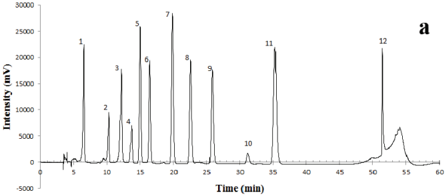
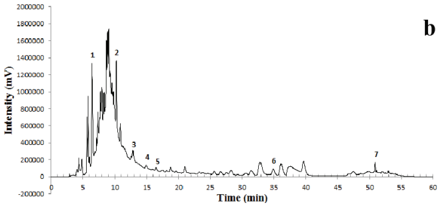
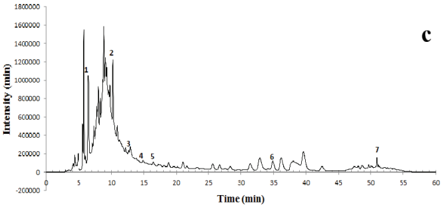
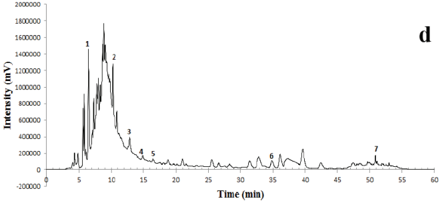
Leaves of Psidium guajava L. (guava) have been widely used in the popular way for prevention and treatment of various diseases. Thus, the objective of this study was to evaluate the inhibitory potential of leaves aqueous extract from three cultivars of P. guajava (Pedro Sato, Paluma and Século XXI) on α-amylase, α-glycosidase, lipase, and trypsin enzymes, in the presence or not of simulated gastric fluid and to determine the content of phenolic compounds by high performance liquid chromatography. All cultivars presented the same composition in phenolic compounds, but in different proportions. The compounds identified are gallic acid, epigallocatechin gallate, syringic acid, o-coumaric acid, resveratrol, quercetin, and catechin (which was the major compound in all the cultivars evaluated). In the absence of simulated gastric fluid, it was observed different inhibitions exercised by the leaves aqueous extracts from three cultivars of P. guajava on each enzyme. In presence of simulated gastric fluid, all cultivars showed increase in the inhibition of lipase and α-glycosidase, and decrease in inhibition of α-amylase and trypsin enzymes. These results indicate that P. guajava leaves aqueous extracts from all cultivars evaluated possess potential of use as an adjuvant in the treatment of obesity and other dyslipidemias.
Overview
The claims and statistics of this paper haven’t been checked yet.
Free: it reads the open-access text and checks the first 5 claims that cite a source we can check. Create a free account to check every claim.
Integrity signals
Registry
Cites
Statistics
Figures
Verification
Claims the paper makes
The claims and statistics of this paper haven’t been checked yet.
Free: it reads the open-access text and checks the first 5 claims that cite a source we can check. Create a free account to check every claim.
Claims other papers make about this one
Each is checked against this paper’s own text: does it say what the citing paper says it does?
In the citing paper
“A clinical study reported it decreases postprandial glucose, an effect attributed to α-amylase, maltase, and sucrase inhibition observed in vitro [208,210].”
From Nutritional Approaches to Enhance GLP-1 Analogue Therapy in Obesity: A Narrative Review (2025) · cites this paper as [210]
Self-check
Percentages, sums and reported differences re-computed from the paper’s own numbers.
The self-check needs the paper’s full text.
Citations
Cites
The preparation and properties of two new chromogenic substrates of trypsin
Erlanger, B. F., Kokowsky, N., & Cohen, W. (1961) · Archives of Biochemistry and Biophysics · doi:10.1016/0003-9861(61)90145-x · Cited by 3,353 · cited 2×
“…values were converted into micromoles of product based on data obtained from a standard curve elaborated with glucose for the amylase and with p-nitrophenol for glycosidase and lipase, while, for the trypsin, the molar extinction coefficient of BAPNA was determined by Erlanger et al. (1961).”
MethodBalasundram, N., Sundram, K., & Samman, S. (2006) · Food Chemistry · doi:10.1016/j.foodchem.2005.07.042 · Cited by 3,108 · cited 2×
“These compounds present several medicinal properties like antioxidants, anti-histamines, anti-inflammatory, antibacterial, anti-thrombotic (Balasundram et al. 2006), and can also be used as adjuvants in the treatment of obesity (Klaus et al.”
BackgroundInhibition of .ALPHA.-Glucosidase and .ALPHA.-Amylase by Flavonoids
TADERA, K., MINAMI, Y., TAKAMATSU, K., & MATSUOKA, T. (2006) · Journal of Nutritional Science and Vitaminology · doi:10.3177/jnsv.52.149 · Cited by 1,040 · cited 1×
“Wenzel (2013) reported that quercetin limits carbohydrate digestion and controls postprandial glucose levels in blood, thus confirming the result obtained by Tadera et al. (2006), who reported the inhibitory activity of quercetin on α-amylase.”
ResultPsidium guajava: A review of its traditional uses, phytochemistry and pharmacology
Gutiérrez, R. M. P., Mitchell, S., & Solis, R. V. (2008) · Journal of Ethnopharmacology · doi:10.1016/j.jep.2008.01.025 · Cited by 937 · cited 1×
“Gutiérrez et al. (2008) published a revision about guava highlighting pharmacological properties of bark, fruit, leaves, and roots, describing its antioxidant, hepatoprotective, anti-allergic, antimicrobial, anti-plasmodial, anti-diabetic, and antiinflammatory functions.”
BackgroundNutritional and Health Benefits of Soy Proteins
Friedman, M., & Brandon, D. L. (2001) · Journal of Agricultural and Food Chemistry · doi:10.1021/jf0009246 · Cited by 916 · cited 3×
“2007, Gholamhoseinian et al. 2010). Several studies have shown that phenolic compounds present in medicinal plants and fruits have anti-obesity properties by exerting different mechanisms of action, especially by inhibition of digestive enzymes. McDougall et al. (2005b) reported that red fruit extracts rich in phenoli…”
BackgroundResultInfluentialCho, A.-S., Jeon, S.-M., Kim, M.-J., Yeo, J., Seo, K.-I., Choi, M.-S., & Lee, M.-K. (2010) · Food and Chemical Toxicology · doi:10.1016/j.fct.2010.01.003 · Cited by 787 · cited 1×
“2007, Cho et al. 2010, Rains et al. 2011).”
Different Polyphenolic Components of Soft Fruits Inhibit α-Amylase and α-Glucosidase
McDougall, G. J., Shpiro, F., Dobson, P., Smith, P., Blake, A., & Stewart, D. (2005) · Journal of Agricultural and Food Chemistry · doi:10.1021/jf0489926 · Cited by 674 · cited 4×
“glucose levels in blood in type 2 diabetes patients (McDougall et al. 2005a).”
BackgroundInfluentialZhang, B., Deng, Z., Ramdath, D. D., Tang, Y., Chen, P. X., Liu, R., Liu, Q., & Tsao, R. (2015) · Food Chemistry · doi:10.1016/j.foodchem.2014.09.144 · Cited by 430 · cited 2×
“…like p-hydroxybenzoic acid, syringic acid, trans-p-coumaric acid, epicatechin gallate, quercetin and kaempferol presents in lentil extracts, showed to be effective inhibitors of lipase and α-glycosidase, contributing to control glucose levels in blood, as well as obesity (Zhang et al. 2015).”
BackgroundKlaus, S., Pültz, S., Thöne-Reineke, C., & Wolfram, S. (2005) · International Journal of Obesity · doi:10.1038/sj.ijo.0802926 · Cited by 423 · cited 3×
“…like antioxidants, anti-histamines, anti-inflammatory, antibacterial, anti-thrombotic (Balasundram et al. 2006), and can also be used as adjuvants in the treatment of obesity (Klaus et al. 2005, Hen et al. 2006, Alterio et al. 2007, SantiagoMora et al. 2011, Zhang et al. 2015, Vogel et al. 2015).”
BackgroundAntiobesity effects of green tea catechins: a mechanistic review
Rains, T. M., Agarwal, S., & Maki, K. C. (2011) · The Journal of Nutritional Biochemistry · doi:10.1016/j.jnutbio.2010.06.006 · Cited by 423 · cited 1×
“2007, Cho et al. 2010, Rains et al. 2011).”
Research works printed but not linked: 5
- ALTERIO AA, FAVA DAF AND NAVARRO F. 2007. Interaction of the daily ingestion of Green tea (Camellia sinensis) in the cellular metabolism and the adipose cell promoting emagrecimento. Rev Bras Obes Nut Emag 1: 27-37.
- HAIDA KS, BARON A, HAIDA KS, FACI D, HAAS J AND SILVA FJ. 2011. Compostos fenólicos totais e atividade antioxidante de duas variedades de goiaba e arruda. Rev Bras Cienc Saude 9.
- PEREIRA CA, PEREIRA LLS, CORRÊA AD, CHAGAS PMB, SOUZA SP AND SANTOS CD. 2011a. Inhibition of digestive enzymes by commercial powder extracts of Hoodia gordonii. Rev Bras Biociên 9: 265-269.
- PEREIRA LLS, SANTOS CD, SÁTIRO LC, MARCUSSI S, PEREIRA CA AND SOUZA SP. 2011b. Inhibitory activity and stability of the white bean flour extract on digestive enzymes in the presence of simulated gastric fluid. Rev Bras Farm 92: 367-372.
- SUGIMOTO S, NAKAMURA S, YAMAMOTO S, YAMASHITA C, ODA Y, MATSUDA H AND YOSHIKAWA M. 2009. Brazilian natural medicines. III. Structures of triterpene oligoglycosides and lipase inhibitors from Mate, leaves of Ilex paraguarienses. Biol Pharm Bull 57: 257-261.
Cited by
Inflammation and Oxidative Stress in an Obese State and the Protective Effects of Gallic Acid
Dludla, P. V., Nkambule, B. B., Jack, B., Mkandla, Z., Mutize, T., Silvestri, S., Orlando, P., Tiano, L., Louw, J., & Mazibuko-Mbeje, S. E. (2018) · Nutrients · doi:10.3390/nu11010023 · Cited by 286
“, 2017 [131] In vitro α-amylase, α-glycosidase, lipase, and trypsin enzymes assays on aqueous extract from three cultivars of Psidium guajava L.”
BackgroundMethodRen, G., Sun, H. G., Guo, J., Fan, J., Li, G., & Xu, S. (2019) · Food & Function · doi:10.1039/c9fo00183b · Cited by 92
Characteristics, Biological Properties and Analytical Methods of Trans-Resveratrol: A Review
Riccio, B. V. F., Fonseca‐Santos, B., Ferrari, P. C., & Chorilli, M. (2019) · Critical Reviews in Analytical Chemistry · doi:10.1080/10408347.2019.1637242 · Cited by 94
“drug can also inhibit in vitro the digestive enzymes of a-amylase, a-glycosidade, and lipase, and could have some influence on trypsin.([35])”
BackgroundPhytopharmacological Strategies in the Management of Type 2 Diabetes Mellitus
Duarte, A. M., Guarino, M. P., Barroso, S., & Gil, M. M. (2020) · Foods · doi:10.3390/foods9030271 · Cited by 75
“The potential of phenolic compounds in the treatment and prevention of obesity is due to their thermogenic effects, which corresponds to the ability to oxidize fat and decrease intestinal absorption of fats and carbohydrates, resulting in the inhibition of digestive enzymes with consequent weight loss [43].”
BackgroundInfluentialKamble, M. T., Chaiyapechara, S., Salin, K. R., Bunphimpapha, P., Chavan, B. R., Bhujel, R. C., Medhe, S. V., Kettawan, A., Thiyajai, P., Thompson, K. D., et al. (2024) · Aquaculture Reports · doi:10.1016/j.aqrep.2024.101947 · Cited by 46
Psidium guajava L.: A Systematic Review of the Multifaceted Health Benefits and Economic Importance
Takeda, L. N., Laurindo, L. F., Guiguer, É. L., Bishayee, A., Araújo, A. C., Úbeda, L. C. C., Goulart, R. D. Á., & Barbalho, S. M. (2022) · Food Reviews International · doi:10.1080/87559129.2021.2023819 · Cited by 54
Elsaeed, S., Zaki, E. G., Diab, A. A., Tarek, M.-A., & Omar, W. A. E. (2023) · Scientific Reports · doi:10.1038/s41598-023-49756-0 · Cited by 38
“4c 33,55 .”
Bioactive stilbenes from plants
Su, X., Zhou, D., & Li, N. (2022) · Studies in natural products chemistry · doi:10.1016/b978-0-323-91097-2.00006-6 · Cited by 31
Lorena, M., Ressaissi, A., & Serralheiro, M. L. (2021) · Food Chemistry Advances · doi:10.1016/j.focha.2021.100003 · Cited by 32
Magnini, R. D., Hilou, A., Millogo-Koné, H., Pagès, J., & Davin‐Regli, A. (2020) · Antibiotics · doi:10.3390/antibiotics9060323 · Cited by 29
“The extracts were stored at 4 ◦C until use [21,22].”
MethodGhaderi, F., Ebrahimi, E., Aslani, F. S., Koohi‐Hosseinabadi, O., Koohpeyma, F., Irajie, C., Tanideh, N., & Iraji, A. (2022) · BMC Complementary Medicine and Therapies · doi:10.1186/s12906-022-03655-5 · Cited by 26
Mosbah, H., Chahdoura, H., Adouni, K., Kamoun, J., Boujbiha, M. A., Gonzaléz‐Paramás, A. M., Santos‐Buelga, C., Ciudad‐Mulero, M., Morales, P., Fernández‐Ruiz, V., et al. (2019) · Journal of Food Biochemistry · doi:10.1111/jfbc.13012 · Cited by 20
Khan, F. I., Akhtar, S., Qamar, M., Ismail, T., Saeed, W., Esatbeyoglu, T., & Jafari, S. M. (2024) · Trends in Food Science & Technology · doi:10.1016/j.tifs.2024.104822 · Cited by 21
Shahid, A., Inam‐Ur‐Raheem, M., Aadil, R. M., & Israr, B. (2022) · Journal of Food Processing and Preservation · doi:10.1111/jfpp.16989 · Cited by 15
Ahmed, M. H., Aldesouki, H. M., & Badria, F. A.-E. (2020) · Biotechnology and Applied Biochemistry · doi:10.1002/bab.1956 · Cited by 14
Chen, T., He, S., Zhang, J., Wang, H., Jia, Y., Liu, Y., Xie, M., & Cheng, G. (2024) · Molecules · doi:10.3390/molecules29133181 · Cited by 12
Patil, S. A., Salve, P. S., Phatak, R. S., & Chivate, N. D. (2023) · Research Journal of Pharmacy and Technology · doi:10.52711/0974-360x.2023.00172 · Cited by 13
Seasonal Phenolic Profile, Antioxidant, and Photoprotective Activities of Psidium guajava L. Leaves
August, E. M. G., Horn, P. A., Cavichioli, N., Rebelo, A. M., Reinke, C. K., & Zeni, A. L. B. (2024) · Chemistry & Biodiversity · doi:10.1002/cbdv.202402852 · Cited by 11
Nascimento, C. P. F., Lopes, M. V. A., Bessa, J. M. R., de Andrade, A. P. C., Oliveira, L. D. S., & Eça, K. S. (2024) · International Journal of Food Science & Technology · doi:10.1111/ijfs.16914 · Cited by 11
Pereira, E. D. S., Vinholes, J. R., Camargo, T. M., Raphaelli, C. D. O., Ferri, N. M. L., Nora, L., & Vizzotto, M. (2021) · Ciência Rural · doi:10.1590/0103-8478cr20200778 · Cited by 9
Nutritional Approaches to Enhance GLP-1 Analogue Therapy in Obesity: A Narrative Review
Dias, D. D., Vasconcelos, A. R., Souza, A. C. R., Menezes, C. D., Silva, I. S. T. E., & Name, J. J. (2025) · Obesities · doi:10.3390/obesities5040088 · Cited by 8
“In vitro, it inhibits α -glucosidase and α -amylase, potentially delaying carbohydrate absorption [207].”
Methods to Evaluate the Antiobesity Effects of Medicinal Plants Using Enzyme Assays
Bandara, S., Devereaux, S., & Weerasooriya, A. D. (2023) · Obesities · doi:10.3390/obesities3010003 · Cited by 8
“1 mM CaCl2 Not given 37 ◦C for 20 min 37 ◦C for four periods of time 3,5-dinitrosalicylic acid Not given 540 [30]”
MethodNtakoulas, D. D., Pasias, I. N., Raptopoulou, K. G., Dimitriou, G., & Proestos, C. (2023) · Exploration of Foods and Foodomics · doi:10.37349/eff.2023.00002 · Cited by 8
EXPLORATION OF MEDICINAL PHYTO-DIVERSITY OF THE SEMI-ARID AREA IN PUNJAB PROVINCE, PAKISTAN
Akram, M. A., Iqbal, N., Ageel, M., Khalid, N., Alamri, S. A., Hashem, M., Abrar, M., Manan, A., Islam, W., & Noman, A. (2020) · The Journal of Animal and Plant Sciences · doi:10.36899/japs.2020.6.0166 · Cited by 7
“, 2017) and leaves aqueous extracts of Psidium guajava use for obesity and dyslipidemias (Simao et al., 2017).”
BackgroundOgbe, A. A., Gupta, S., Finnie, J. F., & Staden, J. V. (2022) · South African Journal of Botany · doi:10.1016/j.sajb.2023.05.030 · Cited by 8
Eleazu, C. O., Suleiman, J. B., Othman, Z. A., Zakaria, Z., Nna, V. U., & Mohamed, M. (2021) · Journal of Food Biochemistry · doi:10.1111/jfbc.13626 · Cited by 6
Ruas, N. R., Pereira, A., Pereira, L. L. S., Germano, C. M., da Cunha, E. F. F., de Carvalho, A. A., Lameira, O. A., Pinto, J. E. B. P., & Bertolucci, S. K. V. (2023) · Chemistry & Biodiversity · doi:10.1002/cbdv.202200760 · Cited by 5
A Review of the Phytochemistry, Traditional Uses and Antibacterial Potential of Psidium guajava
(2021) · Letters in Applied NanoBioScience · doi:10.33263/lianbs103.25062514 · Cited by 3
Alivian, G. N., Awaludin, S., Hidayat, A. I., & Purnawan, I. (2022) · Jurnal Berita Ilmu Keperawatan · doi:10.23917/bik.v15i1.17036 · Cited by 2
Anti-Lipase and Antioxidant Activities of the Selected Plant Materials
Khatlawala, V., & Roghelia, V. (2023) · The Indian Journal of Nutrition and Dietetics · doi:10.21048/ijnd.2023.60.3.33246 · Cited by 2
Abdellatif, M. M., Eliwa, H. A., Degwy, M. A. A. E. A. A. E., Shabana, S., Nassif, R. M., Mohamed, H. S., & Abdelmonem, R. (2025) · Pharmaceutics · doi:10.3390/pharmaceutics18010031 · Cited by 1
“…by plotting mean absorbance versus rutin concentration, with a coefficient of determination (R 2 ) typically of 0.9946, and total flavonoid content was calculated from the regression equation and expressed as mg rutin equivalents (RE) per g of phenolic-rich fraction or aqueous extract [31].”
InfluentialPhenolic Compounds and Health Benefits of Fruit and Leaves of Guava
Luna-Zapién, E. A., Zegbe, J. A., Meza-Velázquez, J. A., Xu, Y.-Q., & Campos-Badillo, A. D. J. (2026) · IntechOpen eBooks · doi:10.5772/intechopen.1015214 · Cited by 2
Hidayat, C., Wina, E., Ishak, A. B. L., Krisnan, R., Komarudin, K., Asmarasari, S. A., Zainal, H., Cahyaningsih, T. W., & Hoesen, Y. A. (2024) · South African Journal of Animal Science · doi:10.4314/sajas.v53i3.02 · Cited by 2
“…impact of phytogenics in improving the growth performance of broiler chickens is related to their beneficial effects on the utilization of nutrients resulting from their ability to stimulate digestive enzymes such as amylase, lipase, protease (Hashemi and Davoodi, 2011; Anderson et al., 2017).”
BackgroundHerbal Medicines for the Management of Obesity
Kılıç, C. S. (2023) · Springer eBooks · doi:10.1007/978-981-99-7703-1_6 · Cited by 1
Caicedo, W. O., Flores, A., & Pérez, M. (2018) · MOL2NET International Conference on Multidisciplinary Sciences (MOL2NET) · doi:10.3390/mol2net-04-05878
Braga, M. A., de Abreu, T. S., Trento, M. V. C., César, P. H. S., Marques, T. R., Thomasi, S. S., & Marcussi, S. (2022) · Semina Ciências Biológicas e da Saúde · doi:10.5433/1679-0367.2022v43n1p101
Self-citationALIMENTOS COM PROPRIEDADES FUNCIONAIS E DE SAÚDE: EVIDÊNCIAS E PRETENSOS EFEITOS
dos Santos, A. L. S., Minighin, E. C., de Faria, N. C., Graciano, G. F., Souza, T. C. D. M., Anastácio, L. R., de Souza, M. W. S., Hott, C. D. A., Tomaz, L. A., Gontijo, L. M. C., et al. (2023) · Edifes eBooks · doi:10.36524/9788582636176
Inhibitory potential of Phaseolus lunatus L. Seeds to Digestive Enzymes
Zaheer, M., Kalim, A., Qader, S. A. U., Ahmed, S., & Hasan, M. M. (2023) · BioSight · doi:10.46568/bios.v4i2-3.87
Physical properties and glycaemic response of tapioca noodles fortified with herb mixture
Nurdin, S. U., Arief, R. W., Rustiaty, B., Asnawi, R., Mar’atun, A. M., Arfiathi, A., Koesoemawardani, D., Yuliana, N., & Hadi, S. (2023) · International Food Research Journal · doi:10.47836/ifrj.30.4.18
HERBAL INFUSIONS AS INHIBITORS OF TRYPSIN ACTIVITY IN WATER AND POLAR ORGANIC SOLVENT–WATER SYSTEMS
Jamal, A. K., Mohammed, A., Rasheed, A. H., Al-Rubbawi, A. R., & Shahinyan, G. A. (2023) · Proceedings of the YSU B Chemical and Biological Sciences · doi:10.46991/pysu:b/2023.57.2.077
“) in the process of the digestion and absorption by organism, thus affectinf the activity of both polyphenols and digestive enzymes [8, 9].”
BackgroundFoods from the Mayan milpa: proposal for the metabolic syndrome management
Pineda, V. V., Narváez, J. J. U., Vargas, D. C., Rojas-Herrera, R. A., & Campos, M. R. S. (2025) · Journal of the Science of Food and Agriculture · doi:10.1002/jsfa.70263
Ghaderi, F., Ebrahimi, E., Sari Aslani, F., Koohi‐Hosseinabadi, O., Koohpeyma, F., Irajie, C., Tanideh, N., & Iraji, A. (2022) · Figshare · doi:10.6084/m9.figshare.20408211
Oskandar, Y. A. (2023) · Walisongo Repository (Walisongo State Islamic University)
Silva, D. P. F. D. [. (2023) · LA Referencia (Red Federada de Repositorios Institucionales de Publicaciones Científicas)
Harnessing plant‐based platform for low‐cost cellulosic sugar recovery from bioenergy crops
Maitra, S., Eilts, K. K., Bansal, R., Long, S. P., & Singh, V. (2026) · Biofuels Bioproducts and Biorefining · doi:10.1002/bbb.70187
Trajano, A. C., de Assis, C. F., Morais, A. H. D. A., & Passos, T. S. (2026) · Food Reviews International · doi:10.1080/87559129.2026.2736056
Metadata
- Authors
- SIMÃO, A. A., MARQUES, T. R., MARCUSSI, S., & CORRÊA, A. D.
- Affiliations
- Universidade Federal de Lavras (BR)
- Venue
- Anais da Academia Brasileira de Ciências
- Publisher
- FapUNIFESP (SciELO)
- Published
- 2017-06-29
- Volume
- 89
- Issue
- 3 suppl
- Pages
- 2155-2165
- ISSN
- 0001-3765 (ISSN-L)
- 1678-2690
- OpenAlex
- W2731596337
- Cited by
- 44
- References
- 37
- Citations by year
- 2026: 3 · 2025: 2 · 2024: 6 · 2023: 12 · 2022: 8 · 2021: 4 · 2020: 4 · 2019: 3 · 2018: 2
- FWCI
- 2.63
- Type
- journal article
- Language
- en
- Open access
- diamond
- doi.org
- Licence
- cc-by
- Locations
- Anais da Academia Brasileira de Ciências (publishedVersion, cc-by)
- PubMed (publishedVersion)
- LA Referencia (Red Federada de Repositorios Institucionales de Publicaciones Científicas) (publishedVersion, cc-by)
- LA Referencia (Red Federada de Repositorios Institucionales de Publicaciones Científicas) (publishedVersion, other-oa)
- Americanae (AECID Library) (submittedVersion, other-oa)
- DOAJ (DOAJ: Directory of Open Access Journals) (submittedVersion)
- LA Referencia (Red Federada de Repositorios Institucionales de Publicaciones Científicas) (submittedVersion, cc-by)
- Redalyc (Universidad Autónoma del Estado de México) (submittedVersion)
- Funders
- Coordenação de Aperfeiçoamento de Pessoal de Nível Superior
- Conselho Nacional de Desenvolvimento Científico e Tecnológico
- Fundação de Amparo à Pesquisa do Estado de Minas Gerais
- Topics
- Life Sciences › Pharmacology, Toxicology and Pharmaceutics › Pharmacology › Psidium guajava Extracts and Applications
- Health Sciences › Medicine › Endocrinology, Diabetes and Metabolism › Natural Antidiabetic Agents Studies
- Health Sciences › Medicine › Biochemistry (medical) › Phytochemicals and Antioxidant Activities
- Keywords
- guava, guava leaves, aqueous leaf extract, phenolic compounds, digestive enzyme inhibition, alpha-amylase, alpha-glycosidase, lipase, trypsin, simulated gastric fluid, catechins, obesity, dyslipidemia, antidiabetic potential, cultivar comparison
- MeSH terms
- alpha-Amylases, alpha-Glucosidases, Antioxidants, Chromatography, High Pressure Liquid, Enzyme Inhibitors, Lipase, Obesity, Phenols, Plant Extracts, Trypsin, Water, Plant Leaves, Psidium
About these checks
Registry, retraction, Cites and statistics results are computed, not judged, with one exception: a printed reference that no index lists is read once by a model before it counts as a citation error. Claims are extracted by a model and kept only when their quote appears verbatim in the text; each cited source is then checked, with a model’s help, for whether it says what the claim relies on. Those verdicts can be wrong — read the claim’s quote and the cited source before relying on one.
Statistics and arithmetic are recomputed, not judged.
Confidence bands are shown only for fields calibrated on our annotated test set. None is calibrated yet, so no band is shown.
What counts as a claim ›How we measure confidence ›How we check this ›
Are you an author, or do you see a problem with this page? Request a review
Data sources
Bibliographic data: Semantic Scholar, OpenAlex, Crossref.
Contains information from the Semantic Scholar Academic Graph Datasets, made available under the ODC Attribution License (ODC-BY 1.0).
Semantic Scholar’s data is described in: Kinney, R., et al. (2023). The Semantic Scholar Open Data Platform. arXiv:2301.10140.
