

Efeitos da idade e da aptidão aeróbica na recuperação da frequência cardíaca em homens adultos
Open accessThe DOI matches its Crossref record, with a small difference in title or year; 38 of the 38 references it cites were found in a registry or an index.
Abstract
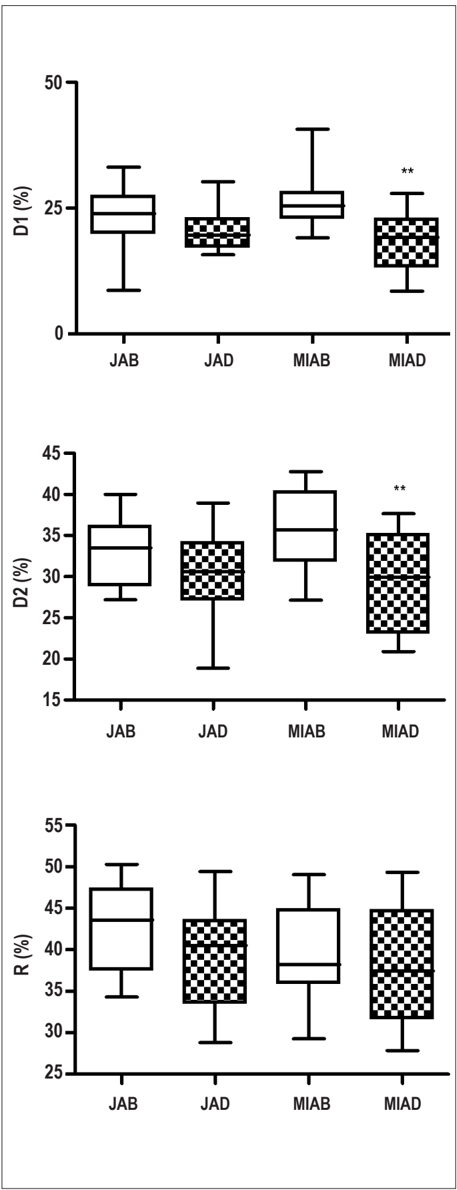
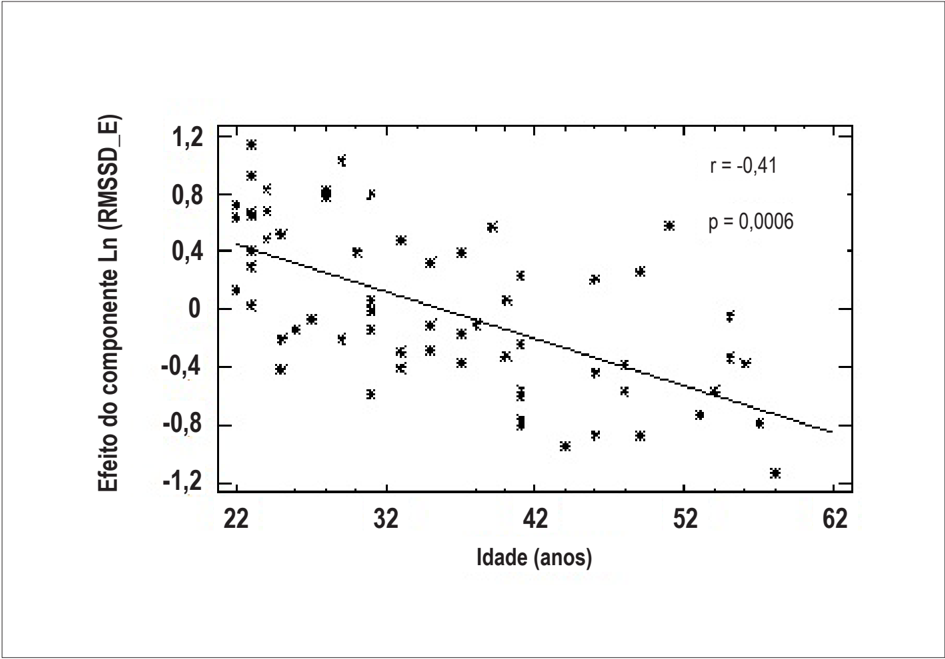
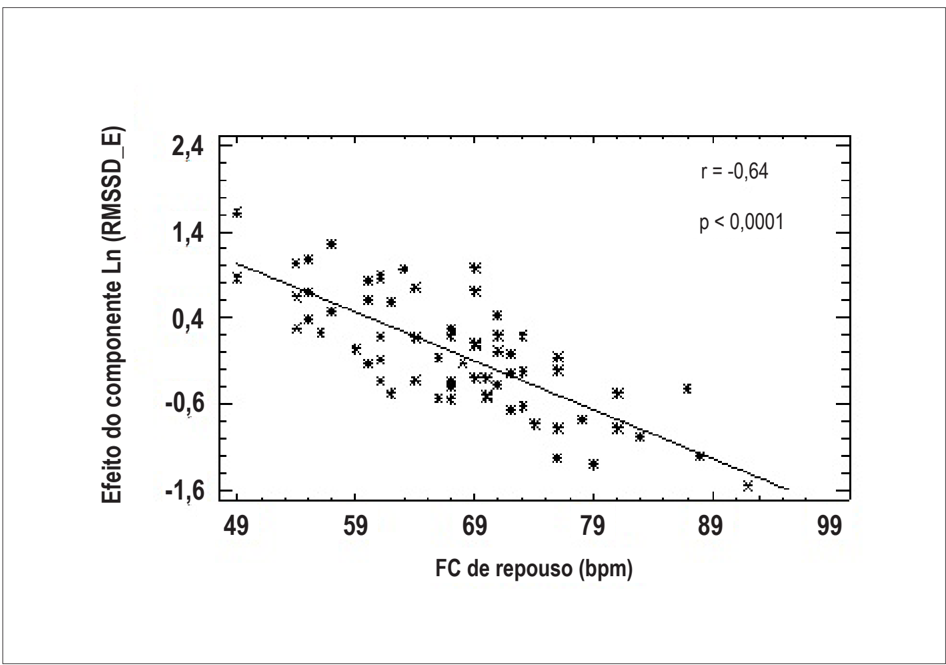
BACKGROUND: Physiological aging leads to cardiac autonomic dysfunction, which is associated with the onset and worsening of cardiovascular disease and an increased risk of death. Currently, physical exercise is considered a cardioprotective strategy and more research is needed on its benefit on cardiac autonomic function. OBJECTIVE: To evaluate the autonomic control of heart rate in healthy young and middle-aged volunteers with different levels of aerobic fitness. METHODS: The study included 68 volunteers, stratified for age and level of aerobic fitness. Based on aerobic fitness assessed by the submaximal exercise test, subjects were separated into two groups, good fitness and poor fitness. Assessment of cardiac autonomic control was performed based on measurements of heart rate variability at rest and heart rate recovery post-exercise. Analysis of variance with two factors was used to compare the variables investigated. RESULTS: The heart rate variability is significantly lower in middle-aged volunteers than in young individuals, regardless of the aerobic fitness level (p <0.01). Higher levels of aerobic fitness in middle-aged volunteers are associated with earlier post-effort vagal reentry - rate of HR decline after 1min30s: 39.6% good aerobic fitness vs. poor 28.4% (p < 0.01). CONCLUSION: Better levels of aerobic fitness act beneficially on the autonomic control of post-exercise heart rate, preserving the vagal reentry velocity in healthy middle-aged volunteers. However, it does not attenuate the decrease in heart rate variability due to the natural aging process.
Overview
The claims and statistics of this paper haven’t been checked yet.
Free: it reads the open-access text and checks the first 5 claims that cite a source we can check. Create a free account to check every claim.
Integrity signals
Registry
Cites
Statistics
Figures
Verification
Claims the paper makes
The claims and statistics of this paper haven’t been checked yet.
Free: it reads the open-access text and checks the first 5 claims that cite a source we can check. Create a free account to check every claim.
Claims other papers make about this one
Each is checked against this paper’s own text: does it say what the citing paper says it does?
The source backs part of the claim, not all of it — or backs it for a different population, condition or comparison.
In the citing paper
“Regarding the ANS, individuals with a higher cardiorespiratory capacity have a faster parasympathetic re-entry and a smaller sympathetic activity at rest [ 25 ], which contributes to a more rapid post-exercise recovery [ 25 , 28 ].”
From Involvement of Cardiorespiratory Capacity on the Acute Effects of Caffeine on Autonomic Recovery (2019) · cites this paper as [25]
Experimental — accuracy not yet measuredThe source backs part of the claim, not all of it — or backs it for a different population, condition or comparison.
In the citing paper
“During recovery from exercise HRV may be influenced by several factors, including intensity, duration, exercise modality [ 24 ] and cardiorespiratory capacity [ 25 ].”
From Involvement of Cardiorespiratory Capacity on the Acute Effects of Caffeine on Autonomic Recovery (2019) · cites this paper as [25]
Experimental — accuracy not yet measured
Self-check
Percentages, sums and reported differences re-computed from the paper’s own numbers.
The self-check needs the paper’s full text.
Citations
Cites
Pagani, M., Lombardi, F., Guzzetti, S., Rimoldi, O., Furlan, R., Pizzinelli, P., Sandrone, G., Malfatto, G., Dell'Orto, S., & Piccaluga, E. (1986) · Circulation Research · doi:10.1161/01.res.59.2.178 · Cited by 4,130
Heart-rate Recovery Immediately After Exercise as a Predictor of Mortality
Cole, C. R., Blackstone, E. H., Pashkow, F. J., Snader, C. E., & Lauer, M. S. (1999) · New England Journal of Medicine · doi:10.1056/nejm199910283411804 · Cited by 1,935
Reduced heart rate variability and mortality risk in an elderly cohort. The Framingham Heart Study
Tsuji, H., Venditti, F. J., Manders, E. S., Evans, J. C., Larson, M. G., Feldman, C. L., & Levy, D. (1994) · Circulation · doi:10.1161/01.cir.90.2.878 · Cited by 1,114
Cole, C. R., Foody, J. M., Blackstone, E. H., & Lauer, M. S. (2000) · Annals of Internal Medicine · doi:10.7326/0003-4819-132-7-200004040-00007 · Cited by 588
Effect of aging on gender differences in neural control of heart rate
Kuo, T. B. J., Lin, T., Yang, C. C. H., Li, C.-L., Chen, C.-F., & Chou, P. (1999) · American Journal of Physiology-Heart and Circulatory Physiology · doi:10.1152/ajpheart.1999.277.6.h2233 · Cited by 562
Antelmi, I., De Paula, R. S., Shinzato, A. R., Peres, C. A., Mansur, A. J., & Grupi, C. J. (2004) · The American Journal of Cardiology · doi:10.1016/j.amjcard.2003.09.065 · Cited by 555
Bonnemeier, H., Wiegand, U. K. H., Brandes, A., Kluge, N., Katus, H. A., Richardt, G., & Potratz, J. (2003) · Journal of Cardiovascular Electrophysiology · doi:10.1046/j.1540-8167.2003.03078.x · Cited by 529
Dekker, J. M., Schouten, E. G., Klootwijk, P., Pool, J., Swenne, C. A., & Kromhout, D. (1997) · American Journal of Epidemiology · doi:10.1093/oxfordjournals.aje.a009049 · Cited by 512
Bigger, J. T., Fleiss, J. L., Steinman, R. C., Rolnitzky, L. M., Schneider, W. J., & Stein, P. K. (1995) · Circulation · doi:10.1161/01.cir.91.7.1936 · Cited by 443
Levy, W. C., Cerqueira, M. D., Harp, G. D., Johannessen, K.-A., Abrass, I. B., Schwartz, R. S., & Stratton, J. R. (1998) · The American Journal of Cardiology · doi:10.1016/s0002-9149(98)00611-0 · Cited by 314
Research works printed but not linked: 2
- Barbosa PR, Barbosa-Filho J, de Sá CA. Influência da idade, sexo e doença coronária sobre a modulação autonômica do coração. Arq Bras Cardiol. 1996;67(5):325-9.
- National Consensus on Ergometry. Department of Ergometry and Cardiovascular Rehabilitation of the Brazilian Cardiology Society]. Arq Bras Cardiol. 1995;65(2):189-211.
Cited by
Peçanha, T., Silva‐Júnior, N. D., & Forjaz, C. L. D. M. (2014) · Clinical Physiology and Functional Imaging · doi:10.1111/cpf.12102 · Cited by 238
“Several cross-sectional investigations have reported faster HRR in athletes or physically trained individuals when compared with sedentary individuals (Darr et al., 1988; Imai et al., 1994; Trevizani et al., 2012).”
BackgroundResultOldham, M. A., & Ciraulo, D. A. (2014) · Chronobiology International · doi:10.3109/07420528.2013.833935 · Cited by 115
“Research on the ANS in response to exercise, which causes exercise-related elevations in sympathetic activity, would suggest that those who are younger (Trevizani et al., 2012) or better conditioned (Shin et al.”
BackgroundHeart rate recovery in elite athletes: the impact of age and exercise capacity
Suzic-Lazić, J., Dekleva, M., Soldatović, I., Leischik, R., Suzić, S., Radovanović, D., Djuric, B., Nešić, D., Lazic, M., & Mazic, S. D. (2015) · Clinical Physiology and Functional Imaging · doi:10.1111/cpf.12271 · Cited by 69
“In a healthy sedentary population, HRR is lower in older individuals (Carnethon et al., 2005; Antelmi et al., 2008; Trevizani et al., 2012).”
BackgroundResultBeneficial Effects of Physical Activity on Baroreflex Control in the Elderly
Rovere, M. T. L., & Pinna, G. D. (2014) · Annals of Noninvasive Electrocardiology · doi:10.1111/anec.12170 · Cited by 52
Heart rate variability in middle-aged sprint and endurance athletes
Deus, L. A., Sousa, C. V., Rosa, T. D. S., Filho, J. M. S., Santos, P. A., Barbosa, L. D., Aguiar, S. D. S., Souza, L. H. R., & Simões, H. G. (2018) · Physiology & Behavior · doi:10.1016/j.physbeh.2018.10.018 · Cited by 46
Guazzi, M., Arena, R. A., Pellegrino, M., Bandera, F., Generati, G., Labate, V., Alfonzetti, E., Villani, S., Gaeta, M., Halle, M., et al. (2015) · European Journal of Preventive Cardiology · doi:10.1177/2047487315580445 · Cited by 37
Bentley, R. F., Vecchiarelli, E., Banks, L., Gonçalves, P. E. O., Thomas, S. G., & Goodman, J. M. (2020) · Applied Physiology, Nutrition, and Metabolism · doi:10.1139/apnm-2020-0154 · Cited by 43
“When interpreted in isolation, EA have a faster HRR in comparison to PA. Appreciating differences in fitness, this aligns with previous work comparing trained and untrained participants (Darr et al. 1988; Du et al. 2005) as well as across fitness levels (Cole et al. 1999; Trevizani et al. 2012).”
ResultOkano, A. H., Machado, D. G. D. S., Neto, L. D. O., Farias-Junior, L. F., Agrícola, P. M. D., de Arruda, A. F. S., Fonteles, A. I., Li, L. M., Fontes, E. B., Elsangedy, H. M., et al. (2017) · International Journal of Sports Medicine · doi:10.1055/s-0042-121897 · Cited by 34
“Moreover, it has also been demonstrated that sedentary individuals present decreased vagal activity at rest and after exercise [32].”
BackgroundNasario‐Junior, O., Benchimol‐Barbosa, P. R., & Nadal, J. (2013) · Journal of Electrocardiology · doi:10.1016/j.jelectrocard.2013.12.006 · Cited by 29
“Additionally, DC showed high correlation with standard HRV variables, and has been reported to decline with age in both health [3,13,16] and disease subjects [8,9,17].”
BackgroundSelf-citationCardiac autonomic modulation in healthy elderly after different intensities of dynamic exercise
do Nascimento, L. S., Santos, A. D. C., Brasileiro, M. S. S., Brasileiro-Santos, M. D. S., Droguett, V. S. L., Marques, D. P., & de Medeiros, C. E. (2015) · Clinical Interventions in Aging · doi:10.2147/cia.s62346 · Cited by 22
“The role of aging on markers of autonomic modulation at rest or during exercise is well established.(6,27,28) In the present study, moderate exercise imposed additional sympathetic overactivity (an increased LF nu and LF/HF ratio) and greater parasympathetic withdrawal (HF nu, R-R variance) when compared to baseline a…”
ResultThe exercise heart rate profile in master athletes compared to healthy controls
Kwon, O., Park, S., Kim, Y., Min, S., Kim, Y. R., Nam, G., Choi, K., & Kim, Y. (2016) · Clinical Physiology and Functional Imaging · doi:10.1111/cpf.12226 · Cited by 16
“A slower HR recovery in older subjects has been reported (Trevizani et al., 2012).”
BackgroundSchamne, J. C., Ressetti, J. C., Lima‐Silva, A. E., & Okuno, N. M. (2020) · JCR Journal of Clinical Rheumatology · doi:10.1097/rhu.0000000000001518 · Cited by 16
Involvement of Cardiorespiratory Capacity on the Acute Effects of Caffeine on Autonomic Recovery
Gonzaga, L. A., Vanderlei, L. C. M., Gomes, R. L., Garner, D. M., & Valenti, V. E. (2019) · Medicina · doi:10.3390/medicina55050196 · Cited by 13
“Regarding the ANS, individuals with a higher cardiorespiratory capacity have a faster parasympathetic re-entry and a smaller sympathetic activity at rest [25], which contributes to a more rapid post-exercise recovery [25,28].”
BackgroundChang, S.-C., Adami, A., Lin, H.-C., Lin, Y., Chen, C. P. C., Fu, T., Hsu, C., & Huang, S. (2020) · PLoS ONE · doi:10.1371/journal.pone.0226313 · Cited by 17
“Previous studies showed that HR recovery reflects the VO2max [19-21] and training status [22, 23].”
de Faria, G. M., Lopes, E. G., Tobaldini, E., Montano, N., Cunha, T. S., Casali, K. R., & de Amorim, H. A. (2023) · Healthcare · doi:10.3390/healthcare12010031 · Cited by 11
Beltrame, T., Catai, A. M., Rebelo, A. C. S., Tamburús, N. Y., Zuttin, R. S., Takahashi, A. C. D. M., & da Silva, E. (2018) · Frontiers in Physiology · doi:10.3389/fphys.2018.00533 · Cited by 13
“In contrast, other authors (Correia et al., 2002; Craig et al., 2003; Mercuro et al., 2006; Bittner, 2009; Trevizani et al., 2012) stated that the impairments in aerobic power in women was an exclusive consequence of menopause, regardless of age.”
BackgroundResultAge-related decline in cardiac autonomic function is not attenuated with increased physical activity
Njemanze, H., Warren, C., Eggett, C. J., MacGowan, G. A., Bates, M. G. D., Siervo, M., Ivkovic, S., Trenell, M. I., & Jakovljević, D. G. (2016) · Oncotarget · doi:10.18632/oncotarget.12403 · Cited by 15
“com/oncotarget Our finding that aging in the absence of cardiovascular and other chronic diseases leads to decline in cardiac autonomic function is in agreement with those of previous studies [20-22].”
ResultValidation of StepTest4all for Assessing Cardiovascular Capacity in Young Adults
Bragada, J. A. A., Bartolomeu, R. F., Rodrigues, P. M., Rodrigues, P. M. M., Bragada, J. P., & Morais, J. E. (2022) · International Journal of Environmental Research and Public Health · doi:10.3390/ijerph191811274 · Cited by 15
“Better levels of aerobic fitness act beneficially on the autonomic control of post-exercise HR, preserving the vagal reentry velocity in healthy middle-aged adults [10].”
BackgroundHajdusek, P., Kotrč, M., Kautzner, J., Melenovský, V., Beńesová, E., Jarolím, P., & Beneš, J. (2016) · International Journal of Cardiology · doi:10.1016/j.ijcard.2016.11.083 · Cited by 10
“In controls, HRR correlated with peak VO2, exercise duration and age, reflecting physical fitness that is associated with increased vagal tone [19].”
Aerobic fitness influences rest and heart rate recovery on young men regardless of body mass index
de Araújo, J. A., Queiroz, M. G., Novelli, F. I., de Sousa, L. C. D. J. L., Tricot, G. K., Dias, A. R. L., Arsa, G., & Cambri, L. T. (2017) · Sport Sciences for Health · doi:10.1007/s11332-017-0359-4 · Cited by 9
“Studies in different populations corroborate our findings by affirming that individuals with higher aerobic fitness present lower HRrest and a higher reduction of HR during the first minutes after submaximal exercise [3], regardless of age [12].”
InfluentialBibliometric Review of the Step Test: A Comprehensive Analysis of Research Trends and Development
Sampaio, T., Marinho, D. A., Bragada, J. A. A., & Morais, J. E. (2024) · Sports Medicine - Open · doi:10.1186/s40798-024-00764-y · Cited by 9
“Improved aerobic fitness positively influences autonomic control of post-exercise heart rate and preserves vagal re-entry velocity in healthy middle-aged adults [15].”
BackgroundObjectively-Measured Free-Living Physical Activity and Heart Rate Recovery
Counts, B. R., Loenneke, J. P., & Loprinzi, P. D. (2017) · Applied Psychophysiology and Biofeedback · doi:10.1007/s10484-017-9359-z · Cited by 7
“2011) and in alignment with the present study, greater intensity of physical activity has been associated with greater HRR (Trevizani et al. 2012).”
ResultNasario‐Junior, O., Benchimol‐Barbosa, P. R., Trevizani, G. A., Marocolo, M., & Nadal, J. (2013) · Computers in Biology and Medicine · doi:10.1016/j.compbiomed.2013.09.006 · Cited by 7
“Autonomic remodeling is observed in reduced resting heart rates and increases in cardiac autonomic modulation [7] [8] [9] [10] [11] [12].”
BackgroundSelf-citationDogan, A., Bishnoi, A., Sowers, R. B., & Hernandez, M. E. (2025) · IEEE Journal of Biomedical and Health Informatics · doi:10.1109/jbhi.2025.3550092 · Cited by 9
Materko, W. (2018) · Motricidade · doi:10.6063/motricidade.12074 · Cited by 6
Relationship between peak expiratory flow and impaired functional capacity in obese individuals
Moreira, G. M. S., Ribeiro, Â. M., Carvalho, P. M. D. M., Mira, P. A. D. C., & Freitas, I. M. G. (2021) · Fisioterapia em Movimento · doi:10.1590/fm.2021.34105 · Cited by 5
Sun, W., Liu, G., & Liu, B. (2021) · Endocrine Research · doi:10.1080/07435800.2021.2011908 · Cited by 3
Heart Rate Recovery as a Novel Test for Predicting Cardiac Involvement in Beta-Thalassemia Major.
Küçükseymen, S., Yüksel, İ. Ö., Cagirci, G., Köklü, E., Karakuş, V., Çay, S., Kuş, G., Kurtoğlu, E., & Arslan, Ş. (2017) · Europe PMC (PubMed Central) · doi:10.6515/acs20161104a · Cited by 4
Cardiac autonomic changes in middle‐aged women: identification based on principal component analysis
Trevizani, G. A., Nasario‐Junior, O., Benchimol‐Barbosa, P. R., da Silva, L. P., & Nadal, J. (2014) · Clinical Physiology and Functional Imaging · doi:10.1111/cpf.12222 · Cited by 3
“Physiological changes due to ageing reflect in downregulation of cardiac autonomic modulation (Paschoal et al., 2006; Zhang, 2007; Moodithaya & Avadhany, 2012; Trevizani et al., 2012; Abhishekh et al., 2013).”
BackgroundSelf-citationShanb, A. A., Youssef, E. F., Ahsan, M., Ahmed, R., Shanab, M. E., & Alkhalik, M. Y. A. (2023) · Pedagogy of Physical Culture and Sports · doi:10.15561/26649837.2023.0402 · Cited by 2
“Exercise is essential in preventing and maintaining health in all age groups [1, 2].”
BackgroundSugiono, S., Yudha, M. D. M. N., & Basuki, N. (2023) · Physiotherapy & Health Science (PhysioHS) · doi:10.22219/physiohs.v5i1.25882 · Cited by 9
“Beberapa investigasi cross-sectional telah melaporkan HR recovery lebih cepat pada atlet atau individu yang terlatih secara fisik bila dibandingkan dengan individu yang tidak banyak bergerak (Darr et al., 1988; Imai et al., 1994; Trevizani et al., 2012).”
BackgroundHeart rate variability in soccer players and the application of unsupervised machine learning
Materko, W., Miranda, S. A. M., Bezerra, T. H. L., & Figueira, C. (2025) · Exploration of Cardiology · doi:10.37349/ec.2025.101241 · Cited by 1
Serheta, I. V., Kovalchuk, V. V., Dmytrenko, S. V., Семененко, А. І., Ocheretna, О. L., Perebetiuk, L. S., & Prokopenko, S. V. (2018) · World of Medicine and Biology · doi:10.26724/2079-8334-2018-1-63-79-83 · Cited by 1
Potenciales aplicaciones de la hipoxia intermitente: individualización del entrenamiento anaeróbico
Álvarez‐Herms, J. (2014) · Dipòsit Digital de la Universitat de Barcelona (Universitat de Barcelona)
Manzano, R. M., Kishi, M. S., da Silva, M. C. M., Ricardo, A., & Ambrozin, P. (2012)
de Santana, V. T., Rached, H. R. S., Aguillar, I. N., Gardenghi, G., Rocco, D. D. F. M., & da Silva, A. G. (2021) · Revista Brasileira de Fisiologia do Exercício · doi:10.33233/rbfex.v19i6.4502
Sorola, S. (2021) · Jyväskylä University Digital Archive (University of Jyväskylä)
Reproducibility of Heart Rate Recovery in Individuals with Low Heart Rate Recovery Response
Goldfarb, I., Steinberg, D. M., Serr, K., Segev, S., Gerber, Y., Shemesh, J., & Scheinowitz, M. (2022) · World Journal of Cardiovascular Diseases · doi:10.4236/wjcd.2022.125027
A comparative review of heart rate recovery in the human and equine athlete
Katz, L. M. (2024) · UK-Vet Equine · doi:10.12968/ukve.2024.8.4.189 · Cited by 1
Sampaio, T., Marinho, D. A., Bragada, J. A. A., & Morais, J. E. (2024) · Figshare · doi:10.6084/m9.figshare.26943918
Materko, W., Chagas, G. F., Benchimol‐Barbosa, P. R., & Nadal, J. (2026) · Journal of Functional Morphology and Kinesiology · doi:10.3390/jfmk11030355
“However, it may not fully counteract the inherent decline in resting HRV associated with biological aging [38].”
Self-citation
Metadata
- Authors
- Trevizani, G. A., Benchimol-Barbosa, P. R., & Nadal, J.
- Affiliations
- Universidade Federal do Rio de Janeiro (BR)
- Universidade Federal de Juiz de Fora (BR)
- ORCID
- Nadal, Jurandir
- Venue
- Arquivos Brasileiros de Cardiologia
- Publisher
- FapUNIFESP (SciELO)
- Published
- 2012-09
- Volume
- 99
- Issue
- 3
- Pages
- 802-810
- ISSN
- 0066-782X (ISSN-L)
- OpenAlex
- W2004042390
- Semantic Scholar
- 5ba5698506b2aed81f646fc6c0831a45cda547e0
- Cited by
- 41
- References
- 37
- Citations by year
- 2026: 1 · 2025: 2 · 2024: 3 · 2023: 3 · 2022: 2 · 2021: 4 · 2020: 3 · 2019: 1 · 2018: 4 · 2017: 4 · 2016: 2 · 2015: 3 · 2014: 5 · 2013: 3 · 2012: 1
- FWCI
- 2.47
- Type
- journal article
- Language
- en
- Open access
- diamond
- doi.org
- Licence
- cc-by-nc
- Locations
- Arquivos Brasileiros de Cardiologia (publishedVersion, cc-by-nc)
- PubMed (publishedVersion)
- LA Referencia (Red Federada de Repositorios Institucionales de Publicaciones Científicas) (publishedVersion, other-oa)
- Americanae (AECID Library) (submittedVersion, other-oa)
- DOAJ (DOAJ: Directory of Open Access Journals) (submittedVersion)
- DOAJ (DOAJ: Directory of Open Access Journals) (submittedVersion, cc-by-sa)
- Funders
- Coordenação de Aperfeiçoamento de Pessoal de Nível Superior
- Conselho Nacional de Desenvolvimento Científico e Tecnológico
- Topics
- Health Sciences › Medicine › Cardiology and Cardiovascular Medicine › Heart Rate Variability and Autonomic Control
- Health Sciences › Medicine › Physiology (medical) › Cardiovascular and exercise physiology
- Health Sciences › Medicine › Public Health, Environmental and Occupational Health › Physical Activity and Health
- Keywords
- cardiac autonomic function, heart rate recovery, heart rate variability, cardiorespiratory fitness, aging, middle-aged men, submaximal exercise testing, autonomic dysfunction
- MeSH terms
- Adult, Age Factors, Aging, Analysis of Variance, Autonomic Nervous System, Electrocardiography, Exercise Test, Heart Rate, Humans, Male, Middle Aged, Physical Fitness, Running, Young Adult
About these checks
Registry, retraction, Cites and statistics results are computed, not judged, with one exception: a printed reference that no index lists is read once by a model before it counts as a citation error. Claims are extracted by a model and kept only when their quote appears verbatim in the text; each cited source is then checked, with a model’s help, for whether it says what the claim relies on. Those verdicts can be wrong — read the claim’s quote and the cited source before relying on one.
Statistics and arithmetic are recomputed, not judged.
Confidence bands are shown only for fields calibrated on our annotated test set. None is calibrated yet, so no band is shown.
What counts as a claim ›How we measure confidence ›How we check this ›
Are you an author, or do you see a problem with this page? Request a review
Data sources
Bibliographic data: Semantic Scholar, OpenAlex, Crossref.
Contains information from the Semantic Scholar Academic Graph Datasets, made available under the ODC Attribution License (ODC-BY 1.0).
Semantic Scholar’s data is described in: Kinney, R., et al. (2023). The Semantic Scholar Open Data Platform. arXiv:2301.10140.
