

Effects of caffeine on the electrophysiological, cognitive and motor responses of the central nervous system
Open accessThe DOI matches its Crossref record; 40 of the 40 references it cites were found in a registry or an index.
Abstract
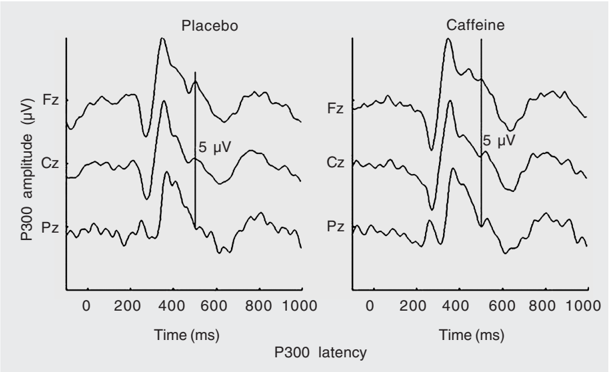
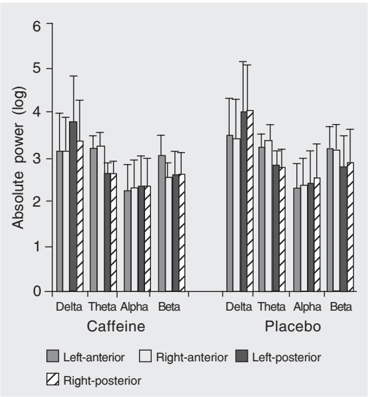
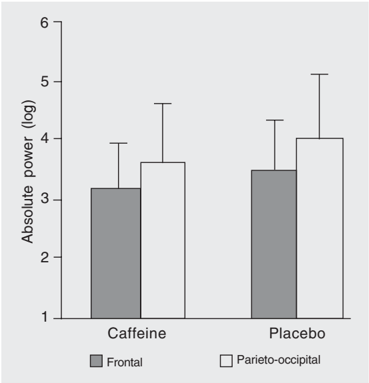
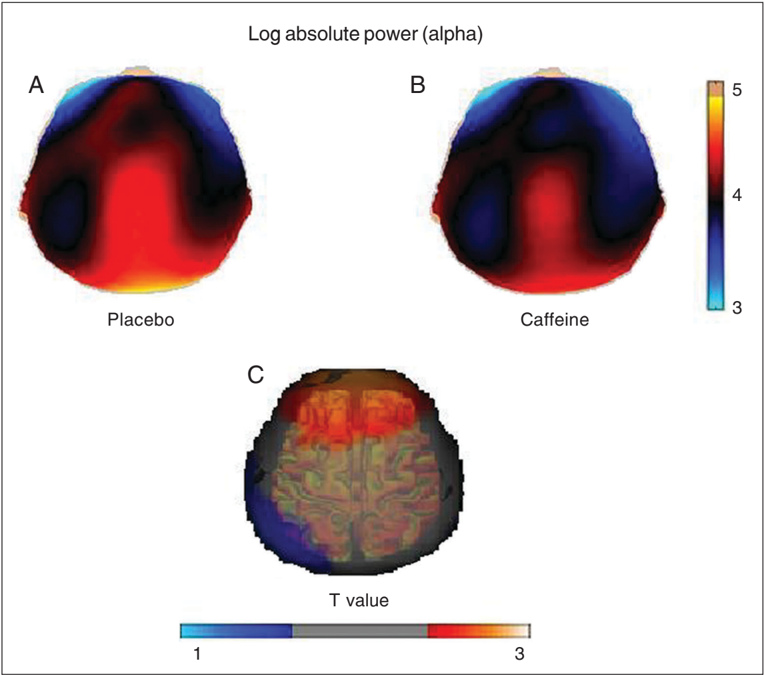
Caffeine is the most consumed psychoactive substance in the world. The effects of caffeine have been studied using cognitive and motor measures, quantitative electroencephalography (qEEG) and event-related potentials. However, these methods are not usually employed in combination, a fact that impairs the interpretation of the results. The objective of the present study was to analyze changes in electrophysiological, cognitive and motor variables with the ingestion of caffeine, and to relate central to peripheral responses. For this purpose we recorded event-related potentials and eyes-closed, resting EEG, applied the Stroop test, and measured reaction time. Fifteen volunteers took caffeine (400 mg) or placebo in a randomized, crossover, double-blind design. A significant reduction of alpha absolute power over the entire scalp and of P300 latency at the Fz electrode were observed after caffeine ingestion. These results are consistent with a stimulatory effect of caffeine, although there was no change in the attention (Stroop) test or in reaction time. The qEEG seems to be the most sensitive index of the changes produced by caffeine in the central nervous system since it proved to be capable of detecting changes that were not evident in the tests of cognitive or motor performance.
Overview
The claims and statistics of this paper haven’t been checked yet.
Free: it reads the open-access text and checks the first 5 claims that cite a source we can check. Create a free account to check every claim.
Integrity signals
Registry
Cites
Statistics
Figures
Verification
Claims the paper makes
The claims and statistics of this paper haven’t been checked yet.
Free: it reads the open-access text and checks the first 5 claims that cite a source we can check. Create a free account to check every claim.
Claims other papers make about this one
Each is checked against this paper’s own text: does it say what the citing paper says it does?
The source backs part of the claim, not all of it — or backs it for a different population, condition or comparison.
In the citing paper
“Previous studies have reported a drop in absolute alpha power during resting with eyes open on ingestion of caffeine at higher dosages, e.g., 200 mg (30) and 400 mg (31).”
From L-Theanine and Caffeine in Combination Affect Human Cognition as Evidenced by Oscillatory alpha-Band Activity and Attention Task Performance (2008) · cites this paper as [31]
Experimental — accuracy not yet measured
Self-check
Percentages, sums and reported differences re-computed from the paper’s own numbers.
The self-check needs the paper’s full text.
Citations
Cites
Picton, T. W., Bentin, S., Berg, P., Donchin, E., Hillyard, S. A., Johnson, R., Miller, G. A., Ritter, W., Ruchkin, D. S., Rugg, M. D., et al. (2000) · Psychophysiology · doi:10.1111/1469-8986.3720127 · Cited by 2,157 · cited 1×
“The ERP recordings were obtained according to standard guidelines (35).”
MethodCognitive and biological determinants of P300: an integrative review
Polich, J., & Kok, A. (1995) · Biological Psychology · doi:10.1016/0301-0511(95)05130-9 · Cited by 1,613 · cited 3×
“Some studies indicate a shortening of latency (17,18,2931), while others show an increase in amplitude (28,32).”
BackgroundEvent-related brain potentials in the study of visual selective attention
Hillyard, S. A., & Anllo-Vento, L. (1998) · Proceedings of the National Academy of Sciences · doi:10.1073/pnas.95.3.781 · Cited by 1,525 · cited 1×
“EEG and ERP data provide a neuropsychophysiological estimation of brain processes which are linked to behavior (20-23).”
BackgroundNehlig, A., Daval, J.-L., & Debry, G. (1992) · Brain Research Reviews · doi:10.1016/0165-0173(92)90012-b · Cited by 1,461 · cited 5×
“Figure 3 illustrates the results of two-way ANOVA which revealed main effects of condition (F (1,118) = 5.”
BackgroundInfluentialCentral nervous system effects of caffeine and adenosine on fatigue
Davis, J. M., Zhao, Z., Stock, H. S., Mehl, K. A., Buggy, J., & Hand, G. A. (2003) · American Journal of Physiology-Regulatory, Integrative and Comparative Physiology · doi:10.1152/ajpregu.00386.2002 · Cited by 588
P300 as a clinical assay: rationale, evaluation, and findings
Polich, J. (2000) · International Journal of Psychophysiology · doi:10.1016/s0167-8760(00)00127-6 · Cited by 480
Egner, T., & Gruzelier, J. H. (2004) · Clinical Neurophysiology · doi:10.1016/s1388-2457(03)00353-5 · Cited by 455 · cited 1×
“The spectral attributes of the EEG are susceptible to changes under cognitive demands such as attention (24,25).”
BackgroundCaffeine, fatigue, and cognition
Lorist, M. M., & Tops, M. (2003) · Brain and Cognition · doi:10.1016/s0278-2626(03)00206-9 · Cited by 342 · cited 10×
“The main concept is that caffeine modulates information processing through an effect on the perceptual system and output-related processes (9).”
BackgroundResultInfluentialNeurophysiological indices of strategy development and skill acquisition
Smith, M. E., McEvoy, L. K., & Gevins, A. (1999) · Cognitive Brain Research · doi:10.1016/s0926-6410(98)00043-3 · Cited by 284 · cited 2×
“The Stroop test evaluates focused attention and assesses the integrative power of cognitive mechanisms in reaching decisions based upon information from two different modalities (lexical and perceptual) (26).”
BackgroundElectroencephalography, Basic Principles, Clinical Applications and Related Fields
Walker, A. E. (1982) · The Journal of Nervous and Mental Disease · doi:10.1097/00005053-198211000-00020 · Cited by 271
Caffeine as an analgesic adjuvant: a review of pharmacology and mechanisms of action.
Sawynok, J., & Yaksh, T. L. (1993) · Pharmacological Reviews · doi:10.1016/s0031-6997(25)00450-8 · Cited by 246 · cited 1×
“Caffeine also exerts modulatory effects on the central nervous system (CNS), especially cognitive functions (1-4).”
BackgroundCaffeine Reduces Low-Frequency Delta Activity in the Human Sleep EEG
Landolt, H. (1995) · Neuropsychopharmacology · doi:10.1016/0893-133x(94)00079-f · Cited by 198 · cited 2×
“In this context, quantitative electroencephalography (qEEG) and event-related potentials (ERPs) have been used to monitor the effects of caffeine on brain dynamics (15-19).”
BackgroundMethodA taurine and caffeine-containing drink stimulates cognitive performance and well-being
Seidl, R., Peyrl, A., Nicham, R., & Hauser, E. (2000) · Amino Acids · doi:10.1007/s007260070013 · Cited by 193 · cited 3×
“Some studies indicate a shortening of latency (17,18, 29- 31 ), while others show an increase in amplitude (28,32).”
BackgroundInfluentialJames, J. E. (1991) · Academic Press eBooks · Cited by 184
Coffee Consumption and Cognitive Function among Older Adults
Johnson-Kozlow, M. (2002) · American Journal of Epidemiology · doi:10.1093/aje/kwf119 · Cited by 173
Caffeine and Endurance Performance
Tarnopolsky, M. A. (1994) · Sports Medicine · doi:10.2165/00007256-199418020-00004 · Cited by 170 · cited 1×
“Numerous experiments have shown that caffeine improves cognitive performance by increasing alertness and attention and by reducing fatigue (9-12).”
BackgroundThe Effects of Ginseng, Ephedrine, and Caffeine on Cognitive Performance, Mood and Energy
Lieberman, H. R. (2009) · Nutrition Reviews · doi:10.1111/j.1753-4887.2001.tb06995.x · Cited by 152 · cited 1×
“Caffeine also exerts modulatory effects on the central nervous system (CNS), especially cognitive functions (1-4).”
BackgroundDietary Caffeine Consumption Modulates fMRI Measures
Laurienti, P. J., Field, A. S., Burdette, J. H., Maldjian, J. A., Yen, Y.-F., & Moody, D. M. (2002) · NeuroImage · doi:10.1006/nimg.2002.1237 · Cited by 136 · cited 2×
“In the CNS, caffeine acts primarily as an adenosine antagonist (9, 13 ,14).”
BackgroundCaffeine and Sports Activity: A Review
Nehlig, A., & Debry, G. (1994) · International Journal of Sports Medicine · doi:10.1055/s-2007-1021049 · Cited by 109 · cited 1×
“Numerous experiments have shown that caffeine improves cognitive performance by increasing alertness and attention and by reducing fatigue (9-12).”
BackgroundEEG and Behavioral Changes following Neurofeedback Treatment in Learning Disabled Children
Fernández, T., Herrera-Morales, W. V., Harmony, T., Díaz-Comas, L., Santiago-Rodríguez, E., Sánchez, L., Bosch, J., Fernández-Bouzas, A., Otero, G., Ricardo-Garcell, J., et al. (2003) · Clinical Electroencephalography · doi:10.1177/155005940303400308 · Cited by 95
Aging, caffeine, and information processing: an event-related potential analysis
Lorist, M. M., Snel, J., Mulder, G., & Kok, A. (1995) · Electroencephalography and Clinical Neurophysiology/Evoked Potentials Section · doi:10.1016/0168-5597(95)00069-5 · Cited by 91
Kraaier, V., van Huffelen, A. C., Wieneke, G. H., van der Worp, H. B., & Bär, P. R. (1992) · Electroencephalography and Clinical Neurophysiology · doi:10.1016/0013-4694(92)90169-i · Cited by 88 · cited 1×
“In this frequency band, CNS depressors are associated with an increase of EEG power and stimulants are associated with a reduction of power over the entire scalp ( 40 ).”
BackgroundPatat, A., Rosenzweig, P., Enslen, M., Trocherie, S., Miget, N., Bozon, M.-C., Allain, H., & Gandon, J.-M. (2000) · Human Psychopharmacology: Clinical and Experimental · doi:10.1002/(sici)1099-1077(200004)15:3<153::aid-hup154>3.0.co;2-c · Cited by 88 · cited 4×
“In our investigation, subjects were studied at rest, while the effects of caffeine on behavioral aspects seem to be more evident in a fatigue situation (27,29).”
BackgroundResultInfluentialEffects of caffeine on topographic quantitative EEG
Siepmann, M., & Kirch, W. (2002) · Neuropsychobiology · doi:10.1159/000054958 · Cited by 85 · cited 5×
“Among the qEEG results, the reduction of absolute power, especially in the alpha band, agreed with reports from different laboratories (9,15,27).”
BackgroundMethodResultInfluentialGevins, A. S., Smith, M. E., & McEvoy, L. K. (2002) · Neuropsychopharmacology · doi:10.1016/s0893-133x(01)00300-1 · Cited by 81 · cited 1×
“However, the effects of this substance on the central and peripheral nervous systems, and the underlying mechanisms, are still under study (8,9).”
BackgroundDebrah, K., Murphy, J., Kerr, D., & Sherwin, R. S. (1996) · The Lancet · doi:10.1016/s0140-6736(96)91557-3 · Cited by 71
Effects of caffeine, practice, and mode of presentation on stroop task performance
Edwards, S., Brice, C. F., Craig, C., & Penri-Jones, R. (1996) · Pharmacology Biochemistry and Behavior · doi:10.1016/0091-3057(95)02116-7 · Cited by 71 · cited 2×
“The Stroop paradigm has been in use for over fifty years and has been described as the gold standard of attentional measures ( 34 ).”
MethodResultEffect of Caffeine on the Recognition of and Responses to Hypoglycemia in Humans
Kerr, D., Sherwin, R. S., Pavalkis, F., Fayad, P. B., Sikorski, L., Rife, F., Tamborlane, W. V., & During, M. J. (1993) · Annals of Internal Medicine · doi:10.7326/0003-4819-119-8-199310150-00005 · Cited by 61 · cited 2×
“In this context, quantitative electroencephalography (qEEG) and event-related potentials (ERPs) have been used to monitor the effects of caffeine on brain dynamics (15-19).”
BackgroundMethodThe Influence of Caffeine on Sustained Attention
Ruijter, J. D., Lorist, M. M., Snel, J., & de Ruiter, M. B. (2000) · Pharmacology Biochemistry and Behavior · doi:10.1016/s0091-3057(00)00229-x · Cited by 58 · cited 1×
“Rarely has it been concluded that electrophysiological measures are better than the cognitive and motor variables to identify the effects of caffeine on brain activity (9,36).”
BackgroundNotarius, C. F., Atchison, D. J., Rongen, G. A., & Floras, J. S. (2001) · American Journal of Physiology-Heart and Circulatory Physiology · doi:10.1152/ajpheart.2001.281.3.h1312 · Cited by 54 · cited 1×
“In the CNS, caffeine acts primarily as an adenosine antagonist (9,13,14).”
BackgroundGibbs, F. A., & Maltby, G. L. (1943) · Journal of Pharmacology and Experimental Therapeutics · doi:10.1016/s0022-3565(25)09467-4 · Cited by 51
International Pharmaco-EEG Group (IPEG)
Dumermuth, G., Ferber, G., Herrmann, W. M., Hinrichs, H., & Künkel, H. (2008) · Neuropsychobiology · doi:10.1159/000118367 · Cited by 41
Deslandes, A., Veiga, H., Cagy, M., Fiszman, A., Piedade, R., & Ribeiro, P. (2004) · Arquivos de Neuro-Psiquiatria · doi:10.1590/s0004-282x2004000100008 · Cited by 40 · cited 1×
“EEG and ERP data provide a neuropsychophysiological estimation of brain processes which are linked to behavior ( 20-23 ).”
BackgroundSelf-citationNeurocortical electrical activity tomography in chronic schizophrenics
Veiga, H., Deslandes, A., Cagy, M., Fiszman, A., Piedade, R. A. M., & Ribeiro, P. (2003) · Arquivos de Neuro-Psiquiatria · doi:10.1590/s0004-282x2003000500002 · Cited by 39
Self-citationden Boer, J. A., Vahlne, J. O., Post, P., Heck, A. H., Daubenton, F., & Olbrich, R. (2000) · Human Psychopharmacology Clinical and Experimental · doi:10.1002/(sici)1099-1077(200004)15:3<179::aid-hup156>3.0.co;2-n · Cited by 38
Effects of caffeine on event‐related potentials: Comparison of oddball with single‐tone paradigms
KAWAMURA, N., MAEDA, H., NAKAMURA, J., MORITA, K., & NAKAZAWA, Y. (1996) · Psychiatry and Clinical Neurosciences · doi:10.1111/j.1440-1819.1996.tb02745.x · Cited by 37 · cited 2×
“Some studies indicate a shortening of latency (17,18,2931), while others show an increase in amplitude (28,32).”
BackgroundEffects of caffeine on visual evoked potencial (P300) and neuromotor performance
Deslandes, A. C., Veiga, H., Cagy, M., Piedade, R. A. M., Pompeu, F. A. M. S., & Ribeiro, P. F. M. (2004) · Arquivos de Neuro-Psiquiatria · doi:10.1590/s0004-282x2004000300002 · Cited by 35 · cited 1×
“Few ERP experiments have attempted to correlate the modulatory effects of caffeine on cognitive processes, attention and arousal in terms of P300 amplitude and latency (16,29-32).”
BackgroundSelf-citationKirch, D. G., Taylor, T. B., Gerhardt, G. A., Benowitz, N. L., Stephen, C., & Wyatt, R. J. (1990) · Neuropharmacology · doi:10.1016/0028-3908(90)90073-z · Cited by 28
The influence of caffeine on the speed and quality of performance in typewriting.
Hollingworth, H. L. (1912) · Psychological Review · doi:10.1037/h0073935 · Cited by 18 · cited 2×
“The modulatory responses generated by caffeine were first reported in 1912 based on performance data (5,6), and electrophysiological indices have been used since 1943 (7).”
BackgroundThe Effects of Caffeine Withdrawal on Cognitive P300 Auditory and Visual Evoked Potentials
Reeves, R. R., Struve, F. A., & Patrick, G. (1999) · Clinical Electroencephalography · doi:10.1177/155005949903000110 · Cited by 11 · cited 1×
“Few ERP experiments have attempted to correlate the modulatory effects of caffeine on cognitive processes, attention and arousal in terms of P300 amplitude and latency (16,29-32).”
Background
Research works printed but not linked: 1
- Hollingworth HL (1912). The influence of caffeine on mental and motor efficiency. Archives of Psychology, 22: 1-166.
Cited by
Caffeine use in children: What we know, what we have left to learn, and why we should worry
Temple, J. L. (2009) · Neuroscience & Biobehavioral Reviews · doi:10.1016/j.neubiorev.2009.01.001 · Cited by 326
“Studies in adults show mild improvement on some cognitive tasks, including simple (Attwood et al., 2007) and choice reaction time tests (Attwood et al., 2007; van Duinen et al., 2005), but not on the Stroop task (Deslandes et al., 2005).”
Caffeine as an Attention Enhancer: Reviewing Existing Assumptions
Einöther, S. J. L., & Giesbrecht, T. (2013) · Psychopharmacology · doi:10.1007/s00213-012-2917-4 · Cited by 215
“…and De Wit 2006 N.A. RT * Tieges et al. 2009 2 60 ACC * Tieges et al. 2009 1 60 RT * Stroop task Complex ex. control Schmitt et al. 2003 N.A. Int * Deslandes et al. 2005 N.A. ACC, RT * both by reducing response speed and by improving accuracy (Owen et al. 2008; Tieges et al. 2006, 2007), and the…”
InfluentialCognition enhancers between treating and doping the mind
Lanni, C., Lenzken, S. C., Pascale, A., Del Vecchio, I., Racchi, M., Pistoia, F., & Govoni, S. (2008) · Pharmacological Research · doi:10.1016/j.phrs.2008.02.004 · Cited by 166
“thers have suggested that the observed ability of caffeine in ounteracting the performance decrement on fatigue state is due o an indirect increase of dopamine [36,37].”
BackgroundKelly, S. P., Gomez-Ramirez, M., Montesi, J. L., & Foxe, J. J. (2008) · The Journal of Nutrition · doi:10.1093/jn/138.8.1572s · Cited by 119
Iranpour, S., & Sabour, S. (2019) · Psychiatry Research · doi:10.1016/j.psychres.2018.11.004 · Cited by 115
Metadata
- Authors
- Deslandes, A. C., Veiga, H., Cagy, M., Piedade, R., Pompeu, F., & Ribeiro, P.
- Affiliations
- Universidade Federal do Rio de Janeiro (BR)
- Venue
- Brazilian Journal of Medical and Biological Research
- Publisher
- FapUNIFESP (SciELO)
- Published
- 2005-07
- Volume
- 38
- Issue
- 7
- Pages
- 1077-1086
- ISSN
- 0100-879X (ISSN-L)
- OpenAlex
- W2127163598
- Semantic Scholar
- 6542d1b12508d292bd056e4460012bba537a8896
- Cited by
- 65
- References
- 39
- Citations by year
- 2026: 3 · 2025: 3 · 2024: 4 · 2023: 4 · 2022: 4 · 2021: 3 · 2020: 4 · 2019: 2 · 2018: 3 · 2017: 1 · 2016: 2 · 2015: 6 · 2014: 2 · 2013: 2 · 2012: 6
- FWCI
- 1.91
- Type
- journal article
- Language
- en
- Open access
- gold
- doi.org
- Licence
- cc-by
- Locations
- Brazilian Journal of Medical and Biological Research (publishedVersion, cc-by)
- PubMed (publishedVersion)
- LA Referencia (Red Federada de Repositorios Institucionales de Publicaciones Científicas) (publishedVersion, other-oa)
- Americanae (AECID Library) (submittedVersion, cc-by-nc)
- DOAJ (DOAJ: Directory of Open Access Journals) (submittedVersion, cc-by-sa)
- Funders
- Coordenação de Aperfeiçoamento de Pessoal de Nível Superior
- Universidade Federal do Rio de Janeiro
- Topics
- Health Sciences › Medicine › Pharmacology (medical) › Coffee research and impacts
- Social Sciences › Psychology › Experimental and Cognitive Psychology › Sleep and Work-Related Fatigue
- Life Sciences › Neuroscience › Cognitive Neuroscience › Neural dynamics and brain function
- Keywords
- caffeine, central nervous system, event-related potentials, P300 latency, alpha power, quantitative EEG, Stroop task, reaction time, cognitive performance, motor performance, stimulant effects, placebo-controlled
- MeSH terms
- Adult, Central Nervous System Stimulants, Analysis of Variance, Caffeine, Central Nervous System, Cognition, Double-Blind Method, Electroencephalography, Electrophysiology, Female, Humans, Male, Psychomotor Performance, Reaction Time, Cross-Over Studies, Event-Related Potentials, P300
About these checks
Registry, retraction, Cites and statistics results are computed, not judged, with one exception: a printed reference that no index lists is read once by a model before it counts as a citation error. Claims are extracted by a model and kept only when their quote appears verbatim in the text; each cited source is then checked, with a model’s help, for whether it says what the claim relies on. Those verdicts can be wrong — read the claim’s quote and the cited source before relying on one.
Statistics and arithmetic are recomputed, not judged.
Confidence bands are shown only for fields calibrated on our annotated test set. None is calibrated yet, so no band is shown.
What counts as a claim ›How we measure confidence ›How we check this ›
Are you an author, or do you see a problem with this page? Request a review
Data sources
Bibliographic data: Semantic Scholar, OpenAlex, Crossref.
Contains information from the Semantic Scholar Academic Graph Datasets, made available under the ODC Attribution License (ODC-BY 1.0).
Semantic Scholar’s data is described in: Kinney, R., et al. (2023). The Semantic Scholar Open Data Platform. arXiv:2301.10140.
