

The cytotoxicity of methacryloxylethyl cetyl ammonium chloride, a cationic antibacterial monomer, is related to oxidative stress and the intrinsic mitochondrial apoptotic pathway
Open accessThe DOI matches its Crossref record; 29 of the 29 references it cites were found in a registry or an index.
Abstract
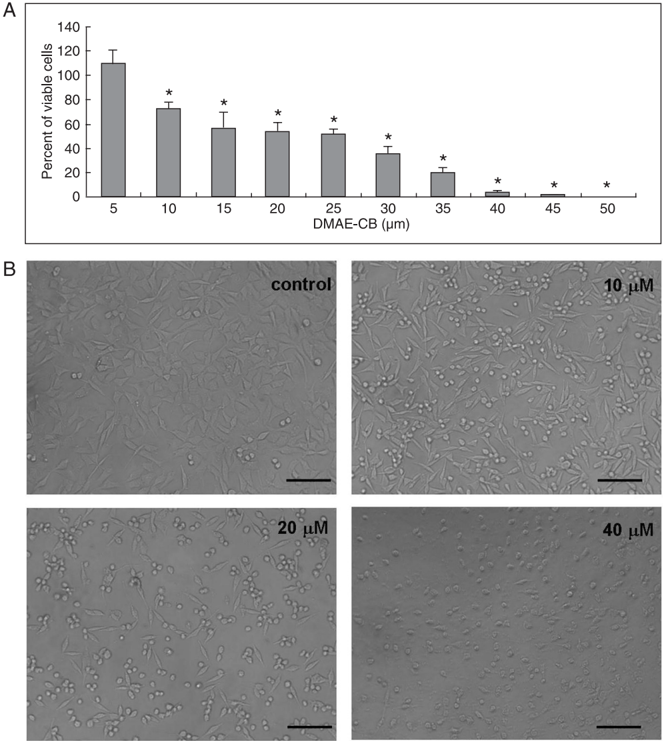
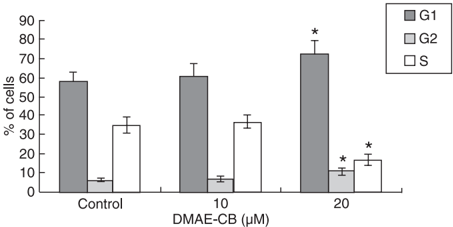
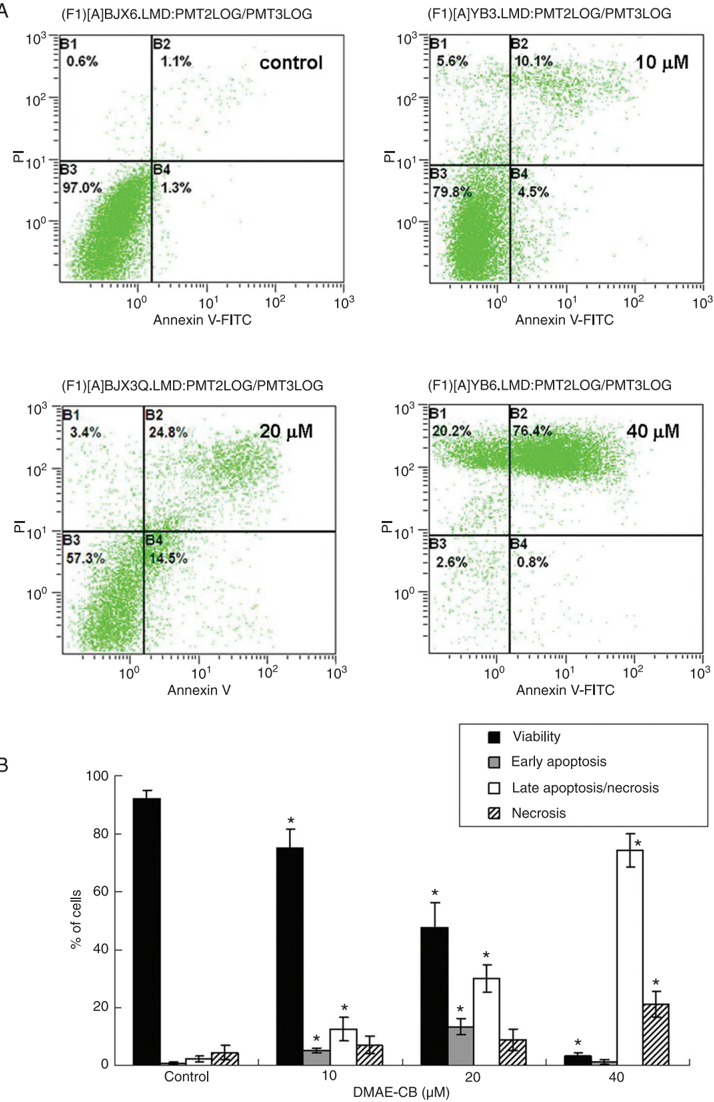
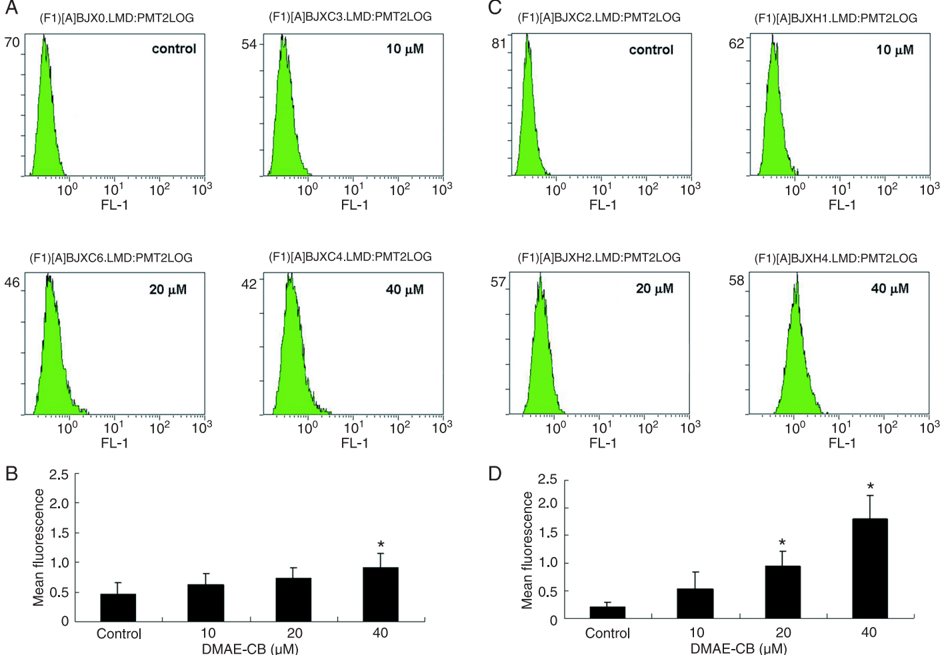
Antibacterial monomers incorporated in dentin bonding systems may have toxic effects on the pulp. Thus, the cytotoxicity of antibacterial monomers and its underlying mechanisms must be elucidated to improve the safety of antibacterial monomer application. The influence of an antibacterial monomer, methacryloxylethyl cetyl ammonium chloride (DMAE-CB), on the vitality of L929 mouse fibroblasts was tested using MTT assay. Cell cycle progression was studied using flow cytometry. Production of intracellular reactive oxygen species (ROS) after DMAE-CB treatment was measured using 2,7-dichlorodihydrofluorescein diacetate staining and flow cytometry analysis. Loss of mitochondrial membrane potential, disturbance of Bcl-2 and Bax expression, as well as release of cytochrome C were also measured using flow cytometry analysis or Western blot to explore the possible involvement of the mitochondrial-related apoptotic pathway. DMAE-CB elicited cell death in a dose-dependent manner and more than 50% of cells were killed after treatment with 30 µM of the monomer. Both necrosis and apoptosis were observed. DMAE-CB also induced G1- and G2-phase arrest. Increased levels of intracellular ROS were observed after 1 h and this overproduction was further enhanced by 6-h treatment with the monomer. DMAE-CB may cause apoptosis by disturbing the expression of Bcl-2 and Bax, reducing the mitochondrial potential and inducing release of cytochrome C. Taken together, these findings suggest that the toxicity of the antibacterial monomer DMAE-CB is associated with ROS production, mitochondrial dysfunction, cell cycle disturbance, and cell apoptosis/necrosis.
Overview
The claims and statistics of this paper haven’t been checked yet.
Free: it reads the open-access text and checks the first 5 claims that cite a source we can check. Create a free account to check every claim.
Integrity signals
Registry
Cites
Statistics
Figures
Verification
Claims the paper makes
The claims and statistics of this paper haven’t been checked yet.
Free: it reads the open-access text and checks the first 5 claims that cite a source we can check. Create a free account to check every claim.
Claims other papers make about this one
Each is checked against this paper’s own text: does it say what the citing paper says it does?
In the citing paper
“Similarly, DMAE-CB monomers cause overproduction of reactive oxygen species, cell cycle arrest, reduction in mitochondrial membrane potential and enhanced caspase-3 activity [61].”
From Quaternary ammonium-based biomedical materials: State-of-the-art, toxicological aspects and antimicrobial resistance (2017) · cites this paper as [61]
Self-check
Percentages, sums and reported differences re-computed from the paper’s own numbers.
The self-check needs the paper’s full text.
Citations
Cites
A Critical Review of the Durability of Adhesion to Tooth Tissue: Methods and Results
De Munck, J., Van Landuyt, K., Peumans, M., Poitevin, A., Lambrechts, P., Braem, M., & Van Meerbeek, B. (2005) · Journal of Dental Research · doi:10.1177/154405910508400204 · Cited by 1,981 · cited 1×
“Despite the simplified procedure of their clinical use and improved immediate bonding effectiveness, contemporary adhesive restoratives suffer from a major shortcoming of limited durability in vivo (1).”
BackgroundMitochondria, oxidative stress and cell death
Ott, M., Gogvadze, V., Orrenius, S., & Zhivotovsky, B. (2007) · Apoptosis · doi:10.1007/s10495-007-0756-2 · Cited by 1,977 · cited 1×
“Mitochondria, which are not only the main source of ROS but also an important target for the damaging effects of ROS (26), are a vital component of the intrinsic apoptotic pathway.”
BackgroundThe proto-oncogene Bcl-2 and its role in regulating apoptosis
Kroemer, G. (1997) · Nature Medicine · doi:10.1038/nm0697-614 · Cited by 1,739
Mechanisms of Cell Death in Oxidative Stress
Ryter, S. W., Kim, H. P., Hoetzel, A., Park, J. W., Nakahira, K., Wang, X., & Choi, A. M. K. (2007) · Antioxidants & Redox Signaling · doi:10.1089/ars.2007.9.49 · Cited by 1,261 · cited 1×
“Oxidants, as well as a variety of other stimuli, can induce apoptosis (20,21).”
BackgroundBoonstra, J., & Post, J. A. (2004) · Gene · doi:10.1016/j.gene.2004.04.032 · Cited by 737 · cited 1×
“Oxidants, as well as a variety of other stimuli, can induce apoptosis (20,21).”
BackgroundBcl-2-family proteins: the role of the BH3 domain in apoptosis
Kelekar, A., & Thompson, C. B. (1998) · Trends in Cell Biology · doi:10.1016/s0962-8924(98)01321-x · Cited by 653 · cited 7×
“The ranking of the cytotoxicity of these commonly used monomers in terms of IC50 values after 24 h of exposure is Bis-GMA (9.35 µM) > UDMA (17.4 µM) > TEGDMA (124.5 µM) >>> HEMA (468 µM).”
BackgroundInfluentialGenetic and Cellular Toxicology of Dental Resin Monomers
Schweikl, H., Spagnuolo, G., & Schmalz, G. (2006) · Journal of Dental Research · doi:10.1177/154405910608501001 · Cited by 571 · cited 2×
“Although the molecular mechanisms underlying the genetic and cellular toxicity of dental monomers remain to be elucidated, recent investigations have indicated that the disturbance of cellular redox balance may be an important contributor to monomer-induced DNA damage, cell-cycle arrest and eventually apoptosis in var…”
BackgroundShackelford, R. E., Kaufmann, W. K., & Paules, R. S. (2000) · Free Radical Biology and Medicine · doi:10.1016/s0891-5849(00)00224-0 · Cited by 524 · cited 1×
“ROS-induced DNA damage can subsequently cause cell cycle arrest or even apoptosis in cases of severe and irreversible damage (18,19).”
BackgroundCytotoxic Interactive Effects of Dentin Bonding Components on Mouse Fibroblasts
Ratanasathien, S., Wataha, J. C., Hanks, C. T., & Dennison, J. B. (1995) · Journal of Dental Research · doi:10.1177/00220345950740091601 · Cited by 318
IMAZATO, S. (2009) · Dental Materials Journal · doi:10.4012/dmj.28.11 · Cited by 283 · cited 1×
“Therefore, development of “bioactive” bonding materials with antibacterial activity is recognized as an important dimension of future development (2).”
BackgroundThe mitochondrial death pathway: a promising therapeutic target in diseases
Gupta, S., Kass, G. E. N., Szegezdi, E., & Joseph, B. (2009) · Journal of Cellular and Molecular Medicine · doi:10.1111/j.1582-4934.2009.00697.x · Cited by 278 · cited 1×
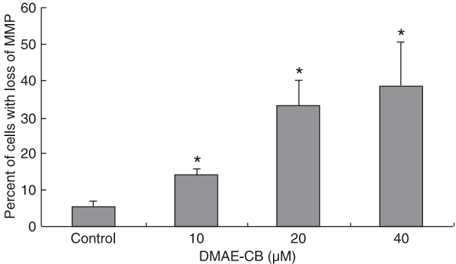
“DMAE-CB increased the percentage of cells with reduced MMP The loss of mitochondrial membrane potential is an important event in the intrinsic mitochondrial pathway of apoptosis (10).”
BackgroundChang, H.-H., Guo, M.-K., Kasten, F. H., Chang, M.-C., Huang, G.-F., Wang, Y.-L., Wang, R.-S., & Jeng, J.-H. (2005) · Biomaterials · doi:10.1016/j.biomaterials.2004.03.021 · Cited by 247 · cited 1×
“Recent invetigations have indicated that the disturbance of cellular redox balance is involved in dental monomer-related cytotoxicity (14-17).”
BackgroundStanislawski, L., Lefeuvre, M., Bourd, K., Soheili‐Majd, E., Goldberg, M., & Périanin, A. (2003) · Journal of Biomedical Materials Research Part A · doi:10.1002/jbm.a.10600 · Cited by 233 · cited 1×
“Recent invetigations have indicated that the disturbance of cellular redox balance is involved in dental monomer-related cytotoxicity (14-17).”
BackgroundLi, F., Chen, J., Chai, Z., Zhang, L., Xiao, Y., Fang, M., & Ma, S. (2009) · Journal of Dentistry · doi:10.1016/j.jdent.2008.12.004 · Cited by 182 · cited 1×
“Actually, the incorporation of DMAE-CB into dental adhesives has proved as an effective strategy to achieve bioactive bonding with reliable bacterial inhibitory effect and satisfactory bonding ability (3-5).”
BackgroundBioavailability of Components of Resin-Based Materials Which Are Applied To Teeth
Hume, W. R., & Gerzina, T. M. (1996) · Critical Reviews in Oral Biology & Medicine · doi:10.1177/10454411960070020501 · Cited by 159 · cited 1×
“Among various dental monomers, 2-hydroxyethyl methacrylate (HEMA) and triethylene glycol dimethacrylate (TEGDMA) have attracted the most attention because these hydrophilic monomers have been detected in the eluent of dental adhesives (7), and have proved to be able to reach sufficient concentrations to cause cellular…”
BackgroundNoda, M., Wataha, J. C., Kaga, M., Lockwood, P. E., Volkmann, K., & Sano, H. (2002) · Journal of Dental Research · doi:10.1177/154405910208100408 · Cited by 150 · cited 1×
“Among various dental monomers, 2-hydroxyethyl methacrylate (HEMA) and triethylene glycol dimethacrylate (TEGDMA) have attracted the most attention because these hydrophilic monomers have been detected in the eluent of dental adhesives (7), and have proved to be able to reach sufficient concentrations to cause cellular…”
BackgroundShackelford, R. E., Innes, C. L., Sieber, S. O., Heinloth, A. N., Leadon, S. A., & Paules, R. S. (2001) · Journal of Biological Chemistry · doi:10.1074/jbc.m011303200 · Cited by 127 · cited 1×
“ROS-induced DNA damage can subsequently cause cell cycle arrest or even apoptosis in cases of severe and irreversible damage (18,19).”
BackgroundTEGDMA induces mitochondrial damage and oxidative stress in human gingival fibroblasts
Lefeuvre, M. B., Amjaad, W., Goldberg, M., & Stanislawski, L. (2005) · Biomaterials · doi:10.1016/j.biomaterials.2005.01.014 · Cited by 120 · cited 1×
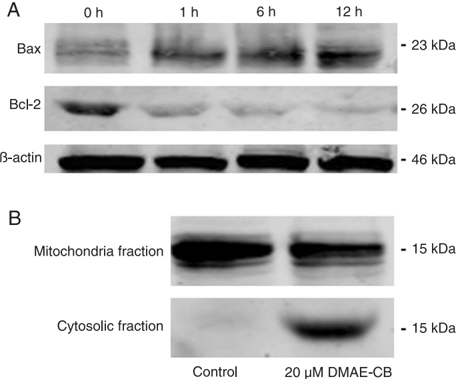
“(27) indicating that mitochondria damage was involved in the cytotoxic effect of TEGDMA (28), we found that the antibacterial monomer induced significant collapse of the mitochondrial membrane in L929 cells.”
BackgroundAnti-biofilm effect of dental adhesive with cationic monomer
Li, F., Chai, Z. G., Sun, M. N., Wang, F., Ma, S., Zhang, L., Fang, M., & Chen, J. H. (2009) · Journal of Dental Research · doi:10.1177/0022034509334499 · Cited by 116 · cited 1×
“Actually, the incorporation of DMAE-CB into dental adhesives has proved as an effective strategy to achieve bioactive bonding with reliable bacterial inhibitory effect and satisfactory bonding ability (3-5).”
BackgroundSelf-citationTEGDMA Causes Apoptosis in Primary Human Gingival Fibroblasts
Janke, V., Neuhoff, N. V., Schlegelberger, B., Leyhausen, G., & Geurtsen, W. (2003) · Journal of Dental Research · doi:10.1177/154405910308201010 · Cited by 115 · cited 6×
“The ranking of the cytotoxicity of these commonly used monomers in terms of IC50 values after 24 h of exposure is Bis-GMA (9.35 µM) > UDMA (17.4 µM) > TEGDMA (124.5 µM) >>> HEMA (468 µM).”
InfluentialParanjpe, A., Bordador, L. C., Wang, M.-Y., Hume, W. R., & Jewett, A. (2005) · Journal of Dental Research · doi:10.1177/154405910508400212 · Cited by 100 · cited 5×
“The ranking of the cytotoxicity of these commonly used monomers in terms of IC50 values after 24 h of exposure is Bis-GMA (9.35 µM) > UDMA (17.4 µM) > TEGDMA (124.5 µM) >>> HEMA (468 µM).”
InfluentialEffects of BisGMA on glutathione metabolism and apoptosis in human gingival fibroblasts in vitro
Engelmann, J., Janke, V., Volk, J., Leyhausen, G., Neuhoff, N. V., Schlegelberger, B., & Geurtsen, W. (2004) · Biomaterials · doi:10.1016/j.biomaterials.2003.11.048 · Cited by 98 · cited 5×
“The ranking of the cytotoxicity of these commonly used monomers in terms of IC50 values after 24 h of exposure is Bis-GMA (9.35 µM) > UDMA (17.4 µM) > TEGDMA (124.5 µM) >>> HEMA (468 µM).”
InfluentialXiao, Y., Ma, S., Chen, J., Chai, Z., Li, F., & Wang, Y. (2009) · Journal of Biomedical Materials Research Part B Applied Biomaterials · doi:10.1002/jbm.b.31350 · Cited by 80 · cited 1×
“Actually, the incorporation of DMAE-CB into dental adhesives has proved as an effective strategy to achieve bioactive bonding with reliable bacterial inhibitory effect and satisfactory bonding ability (3-5).”
BackgroundChang, M., Lin, L., Chan, C., Chang, H., Chen, L.-I., Lin, H.-J., Yeh, H., Tseng, W., Lin, P.-S., Lin, C.-C., et al. (2009) · Biomaterials · doi:10.1016/j.biomaterials.2009.04.034 · Cited by 79 · cited 1×
“Recent invetigations have indicated that the disturbance of cellular redox balance is involved in dental monomer-related cytotoxicity (14-17).”
BackgroundThe mechanisms of cytotoxicity of urethane dimethacrylate to Chinese hamster ovary cells
Chang, H., Chang, M., Lin, L., Lee, J., Wang, T., Huang, C., Yang, T., Lin, H.-J., & Jeng, J. (2010) · Biomaterials · doi:10.1016/j.biomaterials.2010.05.059 · Cited by 55
Marcotte, L., Barbeau, J., & Lafleur, M. (2005) · Journal of Colloid and Interface Science · doi:10.1016/j.jcis.2005.05.060 · Cited by 55 · cited 1×
“Owing to its positive charge (25), the cationic antibacterial monomer DMAE-CB, unlike other resin monomers, can easily adhere to the cell surface and alter the fluidity of the membrane, thereby disrupting its integrity and caus-”
BackgroundNishida, M., Imazato, S., Takahashi, Y., Ebisu, S., Ishimoto, T., Nakano, T., Yasuda, Y., & Saito, T. (2009) · Biomaterials · doi:10.1016/j.biomaterials.2009.11.023 · Cited by 41 · cited 2×
“br Braz J Med Biol Res 44(11) 2011 ing the cell to burst and undergo necrosis (9).”
BackgroundSturrock, J. E., & NUNN, J. F. (1978) · Mutation research. Fundamental and molecular mechanisms of mutagenesis · doi:10.1016/0027-5107(78)90231-2 · Cited by 39 · cited 1×
“ROS are a group of highly reactive molecules that can readily damage biological molecules (13).”
BackgroundSturrock, J. E., & Nunn, J. F. (1978) · Mutation research. Fundamental and molecular mechanisms of mutagenesis · doi:10.1016/0027-5107(78)90244-0 · Cited by 8
Research works printed but not linked: 1
- Shackelford RE, Kaufmann WK, Paules RS. Oxidative stress and cell cycle checkpoint function. Free Radic Biol Med 2000; 28: 1387-1404.
Cited by
Jiao, Y., Niu, L.-N., Ma, S., Li, J., Tay, F. R., & Chen, J.-H. (2017) · Progress in Polymer Science · doi:10.1016/j.progpolymsci.2017.03.001 · Cited by 639
Self-citationBiological Activities and Potential Oral Applications of N‐Acetylcysteine: Progress and Prospects
Pei, Y., Liu, H., Yang, Y., Yang, Y., Jiao, Y., Tay, F. R., & Chen, J. (2018) · Oxidative Medicine and Cellular Longevity · doi:10.1155/2018/2835787 · Cited by 165
Protective Effect of Procyanidin B2 against CCl4-Induced Acute Liver Injury in Mice
Yang, B., Zhang, X., Guan, S., & Hua, Z. (2015) · Molecules · doi:10.3390/molecules200712250 · Cited by 106
“The mitochondrial apoptotic pathway has been associated with various toxins and oxidative stress [28].”
BackgroundDevelopmental and acute toxicity of cetylpyridinium chloride in Bombina orientalis (Amphibia: Anura)
Park, C. J., Song, S. H., Kim, D. H., & Gye, M. C. (2016) · Aquatic Toxicology · doi:10.1016/j.aquatox.2016.06.022 · Cited by 41
Bibliometric Analysis of Literature Published on Antibacterial Dental Adhesive from 1996–2020
Khan, A. S., Rehman, S. U., AlMaimouni, Y. K., Ahmad, S., Khan, M., & Ashiq, M. (2020) · Polymers · doi:10.3390/polym12122848 · Cited by 45
Metadata
- Authors
- Sai, M., Le-qun, S., Yu-hong, X., Fang, L., Li, H., Shen, L., & Ji-hua, C.
- Affiliations
- Fourth Military Medical University
- Tang Du Hospital (CN)
- Kunming General Hospital of PLA, China
- Air Force Medical University (CN)
- ORCID
- Shen, Lijuan
- Venue
- Brazilian Journal of Medical and Biological Research
- Publisher
- FapUNIFESP (SciELO)
- Published
- 2011-11
- Volume
- 44
- Issue
- 11
- Pages
- 1125-1133
- ISSN
- 0100-879X (ISSN-L)
- OpenAlex
- W2154734914
- Semantic Scholar
- ca05e65eb0cbdc7f61b2ac2036b3847b7cfe318e
- Cited by
- 20
- References
- 28
- Citations by year
- 2024: 2 · 2020: 3 · 2019: 1 · 2018: 1 · 2017: 1 · 2016: 4 · 2015: 5 · 2014: 1 · 2013: 1 · 2012: 1
- FWCI
- 1.45
- Type
- journal article
- Language
- en
- Open access
- gold
- doi.org
- Licence
- cc-by-nc
- Locations
- Brazilian Journal of Medical and Biological Research (publishedVersion, cc-by-nc)
- PubMed (publishedVersion)
- LA Referencia (Red Federada de Repositorios Institucionales de Publicaciones Científicas) (publishedVersion, other-oa)
- Americanae (AECID Library) (submittedVersion, other-oa)
- DOAJ (DOAJ: Directory of Open Access Journals) (submittedVersion, cc-by-sa)
- Funders
- National Natural Science Foundation of China (30901784, 81070861, 81130078)
- Topics
- Health Sciences › Dentistry › General Dentistry › Dental materials and restorations
- Life Sciences › Biochemistry, Genetics and Molecular Biology › Molecular Biology › Cell death mechanisms and regulation
- Life Sciences › Immunology and Microbiology › Applied Microbiology and Biotechnology › Antimicrobial agents and applications
- Keywords
- antibacterial monomer, cytotoxicity, oxidative stress, reactive oxygen species, mitochondrial apoptosis, Bcl-2, Bax, cytochrome c release, mitochondrial membrane potential, cell cycle arrest, necrosis, dentin bonding systems, L929 fibroblasts
- MeSH terms
- Quaternary Ammonium Compounds, Analysis of Variance, Animals, Anti-Bacterial Agents, Fibroblasts, Methacrylates, Mitochondria, Apoptosis, Dentin-Bonding Agents, Reactive Oxygen Species, Oxidative Stress, Statistics, Nonparametric, Models, Animal, Mice
About these checks
Registry, retraction, Cites and statistics results are computed, not judged, with one exception: a printed reference that no index lists is read once by a model before it counts as a citation error. Claims are extracted by a model and kept only when their quote appears verbatim in the text; each cited source is then checked, with a model’s help, for whether it says what the claim relies on. Those verdicts can be wrong — read the claim’s quote and the cited source before relying on one.
Statistics and arithmetic are recomputed, not judged.
Confidence bands are shown only for fields calibrated on our annotated test set. None is calibrated yet, so no band is shown.
What counts as a claim ›How we measure confidence ›How we check this ›
Are you an author, or do you see a problem with this page? Request a review
Data sources
Bibliographic data: Semantic Scholar, OpenAlex, Crossref.
Contains information from the Semantic Scholar Academic Graph Datasets, made available under the ODC Attribution License (ODC-BY 1.0).
Semantic Scholar’s data is described in: Kinney, R., et al. (2023). The Semantic Scholar Open Data Platform. arXiv:2301.10140.
