

Production of surfactin by bacillus subtilis mtcc 2423 from waste frying oils
Open accessThe DOI matches its Crossref record; 19 of the 19 references it cites were found in a registry or an index.
Abstract
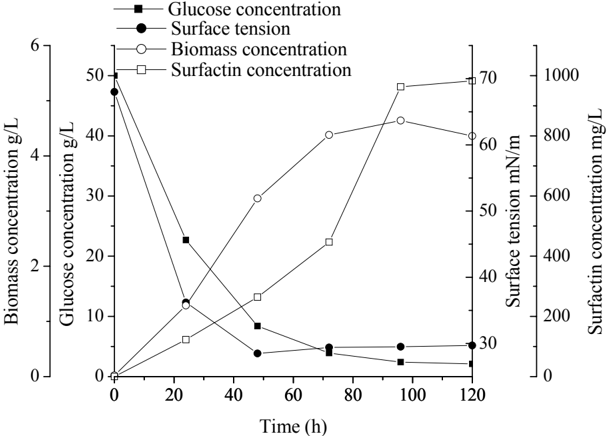
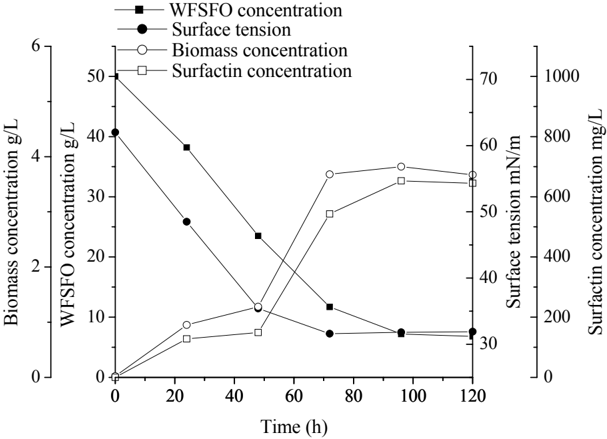
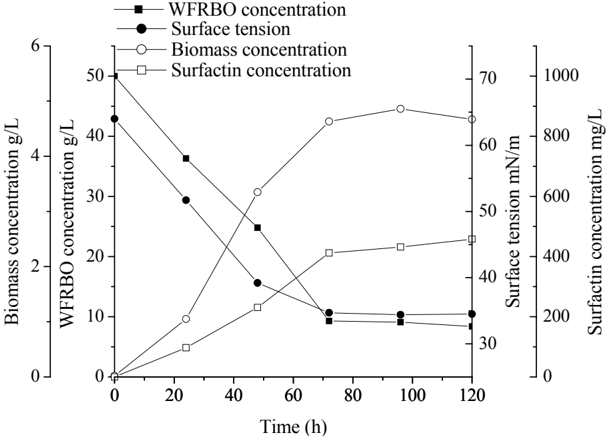
One of the obstacles in the way of wide scale industrial application of biosurfactants is the high production cost coupled with a low production rate. In order to lower the production cost surfactin production by Bacillus subtilis MTCC 2423 was studied in submerged batch cultivation using waste frying oils. It was observed that the decrease in surface tension was 56.32%, 48.5% and 46.1% with glucose, waste frying sunflower oil and waste frying rice bran oil, respectively. Biomass formation was 4.36 g/L, 3.67 g/L and 4.67 g/L for glucose, waste frying sunflower oil and waste frying rice bran oil, respectively. Product yield (g product/g substrate) was 2.1%, 1.49% and 1.1% with glucose, waste frying sunflower oil and waste frying rice bran oil as substrates. This process facilitates safe disposal of waste frying oil, as well reducing the production cost of surfactin.
Overview
The claims and statistics of this paper haven’t been checked yet.
Free: it reads the open-access text and checks the first 5 claims that cite a source we can check. Create a free account to check every claim.
Integrity signals
Registry
Cites
Statistics
Figures
Verification
Claims the paper makes
The claims and statistics of this paper haven’t been checked yet.
Free: it reads the open-access text and checks the first 5 claims that cite a source we can check. Create a free account to check every claim.
Claims other papers make about this one
Each is checked against this paper’s own text: does it say what the citing paper says it does?
The source backs part of the claim, not all of it — or backs it for a different population, condition or comparison.
In the citing paper
“When used at a very low concentration of 20 μM, they reduce the surface tension of water from 72 to 22 mN/m.”
From Influence of the Medium Composition and the Culture Conditions on Surfactin Biosynthesis by a Native Bacillus subtilis natto BS19 Strain (2021) · cites this paper as [2]
Experimental — accuracy not yet measuredThe cited source says what the claim attributes to it.
In the citing paper
“For example, attempts were made to reduce the expenditure on media components, which account for up to 50% of the total production costs of the compound [2,50].”
From Influence of the Medium Composition and the Culture Conditions on Surfactin Biosynthesis by a Native Bacillus subtilis natto BS19 Strain (2021) · cites this paper as [2]
The check wasn’t confident either way, so it gives no verdict — never disputed.
In the citing paper
“Moreover, this compound lowers the interfacial tension in the n-hexane/water system from 43 to <1 mN/m [1,2]”
From Influence of the Medium Composition and the Culture Conditions on Surfactin Biosynthesis by a Native Bacillus subtilis natto BS19 Strain (2021) · cites this paper as [2]
Experimental — accuracy not yet measured
Self-check
Percentages, sums and reported differences re-computed from the paper’s own numbers.
The self-check needs the paper’s full text.
Citations
Cites
Potential commercial applications of microbial surfactants
Banat, I. M., Makkar, R. S., & Cameotra, S. S. (2000) · Applied Microbiology and Biotechnology · doi:10.1007/s002530051648 · Cited by 1,580 · cited 2×
“foods and beverages, cosmetics and pharmaceuticals, mining and metallurgy, agrochemicals and fertilizers, environmental control and many others (Banat et al., 2000).”
Environmental applications for biosurfactants
Mulligan, C. N. (2005) · Environmental Pollution · doi:10.1016/j.envpol.2004.06.009 · Cited by 1,537 · cited 1×
“The effectiveness of a surfactant is determined by its ability to lower the surface tension, which is a measure of the surface free energy per unit area required to bring a molecule from the bulk phase to the surface (Mulligan, 2005).”
BackgroundTHE DETERMINATION OF SUGAR IN BLOOD AND SPINAL FLUID WITH ANTHRONE REAGENT
Roe, J. H. (1955) · Journal of Biological Chemistry · doi:10.1016/s0021-9258(18)71120-4 · Cited by 1,449
Recent trends in the biochemistry of surfactin
Peypoux, F., Bonmatin, J. M., & Wallach, J. (1999) · Applied Microbiology and Biotechnology · doi:10.1007/s002530051432 · Cited by 790 · cited 2×
“Because of this structure, surfactin is one of the most powerful biosurfactants and is capable of lowering the surface tension of water from 72 mN/m to 22 mN/m at a concentration as low as 20 µM (Peypoux et al., 1999).”
High- and low-molecular-mass microbial surfactants
Rosenberg, E., & Ron, E. Z. (1999) · Applied Microbiology and Biotechnology · doi:10.1007/s002530051502 · Cited by 724
Review of surfactin chemical properties and the potential biomedical applications
Seydlová, G., & Svobodová, J. (2008) · Open Medicine · doi:10.2478/s11536-008-0002-5 · Cited by 286
Production of biosurfactant and antifungal compound by fermented food isolate Bacillus subtilis 20B
Joshi, S., Bharucha, C., & Desai, A. J. (2008) · Bioresource Technology · doi:10.1016/j.biortech.2007.07.030 · Cited by 239 · cited 2×
“(Joshi et al., 2008).”
Kosaric, N. (1992) · Pure and Applied Chemistry · doi:10.1351/pac199264111731 · Cited by 223 · cited 1×
“The unique properties of biosurfactants allow their use and the possible replacement of chemically synthesized surfactants in a great number of industrial applications (Kosaric, 1992).”
Determination of antioxidant components in rice bran oil extracted by microwave-assisted method
Zigoneanu, I. G., Williams, L., Xu, Z., & Sabliov, C. M. (2007) · Bioresource Technology · doi:10.1016/j.biortech.2007.09.067 · Cited by 184 · cited 1×
“As reported by Zigoneanu et al. (2008), rice bran oil contains vitamin E and oryzanol, which aids the growth of the biomass.”
Makkar, R. S., & Cameotra, S. S. (1998) · Journal of Industrial Microbiology and Biotechnology · doi:10.1038/sj.jim.2900474 · Cited by 157 · cited 2×
“3% nitrogenous substrate at 30°C was 808 mg/L (Makkar and Cameotra, 1998).”
Influential
Research works printed but not linked: 2
- 3. Brackmann, B., Deutschland, C., Proceedings 6 th world surfactant congress CESIO. Berlin, Germany, June 21-23, paper number 112 (2004).
- 15. Raza, Z. A., Khan, M. S., Khalid Z. M., Rehman, A., Production kinetics and tensiometric Characteristics of biosurfactant from a Pseudomonas aeruginosa mutant grown on waste frying oils. Biotechnol. Lett., 28, 1653-1631 (2006).
Cited by
Elazzazy, A. M., Abdelmoneim, T. S., & Almaghrabi, O. A. (2015) · Saudi Journal of Biological Sciences · doi:10.1016/j.sjbs.2014.11.018 · Cited by 189
“Moreover, they can be used as moistening agents, dispersing agents, emulsifiers, foaming agents, beneficial food elements and detergents in many industrial regions such as: organic chemicals, pharmaceuticals and cosmetics, beverages and foods, metallurgy, mining, petroleum, petrochemicals, biological control and manag…”
BackgroundGaur, V. K., Sharma, P., Sirohi, R., Varjani, S., Taherzadeh, M. J., Chang, J.-S., Yong Ng, H., Wong, J. W. C., & Kim, S.-H. (2022) · Bioresource Technology · doi:10.1016/j.biortech.2021.126059 · Cited by 186
Rhamnolipid and surfactin production from olive oil mill waste as sole carbon source
Moya‐Ramírez, I., Tsaousi, K., Rudden, M., Marchant, R., Jurado, E., García‐Román, M., & Banat, I. M. (2015) · Bioresource Technology · doi:10.1016/j.biortech.2015.09.012 · Cited by 172
Advances on research in the use of agro-industrial waste in biosurfactant production
Rivera, Á. D., Urbina, M. Á. M., & y López, V. E. L. (2019) · World Journal of Microbiology and Biotechnology · doi:10.1007/s11274-019-2729-3 · Cited by 133
Production of a biosurfactant by Bacillus subtilis ICA56 aiming bioremediation of impacted soils
de França, Í. W. L., Lima, A. P., LEMOS, J. A. M., Lemos, C. M. G. D. F., Melo, V. M. M., de Sant’Ana, H. B., & Gonçalves, L. R. B. (2015) · Catalysis Today · doi:10.1016/j.cattod.2015.01.046 · Cited by 119
Microbial valorization of waste cooking oils for valuable compounds production – a review
Lopes, M., Miranda, S. M., & Belo, I. (2019) · Critical Reviews in Environmental Science and Technology · doi:10.1080/10643389.2019.1704602 · Cited by 111
“…Pseudomonas aeruginosa (Chen et al., 2018; Wadekar et al., 2012), but other bacterial species are known to produce surface-active agents, like Bacillus sp. (Durval et al., 2019; Hentati et al., 2019; Vedaraman & Venkatesh, 2011) and Streptomyces sp. (Santos et al., 2019), among others (Table 1).”
BackgroundLee, J., Lee, S.-E., & Lee, D. (2021) · Critical Reviews in Environmental Science and Technology · doi:10.1080/10643389.2021.1880259 · Cited by 109
“Bacillus subtilis MTCC 2423 produces surfactin, another key component of biosurfactants, from waste frying sunflower and rice bran oils (Vedaraman & Venkatesh, 2011).”
BackgroundSustainable Surfactin Production by Bacillus subtilis Using Crude Glycerol from Different Wastes
Janek, T., Gudiña, E. J., Połomska, X., Biniarz, P., Jama, D., Rodrigues, L. R., Rymowicz, W., & Lazar, Z. (2021) · Molecules · doi:10.3390/molecules26123488 · Cited by 110
“The raw materials most commonly used are wastes rich in starch, sucrose or other sugars (cassava wastewater, corn steep liquor, potato peels, wheat bran and beet molasses) [20] as well as vegetable oils or wastes resulting from their production (olive mill wastewater, rice bran oil and sunflower oil) [26,27].”
BackgroundSustainable Production of Biosurfactants and Their Applications
Marcelino, P. R. F., Gonçalves, F. A., Jimenez, I. M., Carneiro, B. C., Santos, B. B., & da Silva, S. S. (2020) · Wiley eBooks · doi:10.1002/9781119568858.ch8 · Cited by 79
Ciurko, D., Czyżnikowska, Ż., Kancelista, A., Łaba, W., & Janek, T. (2022) · International Journal of Molecular Sciences · doi:10.3390/ijms231810824 · Cited by 65
“Waste frying oils were the subject of interest of Vedaraman and Venkatesh [25].”
BackgroundResultMoshtagh, B., Hawboldt, K., & Zhang, B. (2019) · Environmental Technology · doi:10.1080/09593330.2018.1473502 · Cited by 61
Bacillus genus industrial applications and innovation: First steps towards a circular bioeconomy
Herrmann, L. W., Letti, L. A. J., Penha, R. D. O., Thomaz‐Soccol, V., Rodrigues, C., & Soccol, C. R. (2023) · Biotechnology Advances · doi:10.1016/j.biotechadv.2023.108300 · Cited by 70
Biosurfactant inducers for enhanced production of surfactin and rhamnolipids: an overview
Schmidt, V. K. D. O., Carvalho, J. D. S., de Olíveira, D., & de Andrade, C. J. (2021) · World Journal of Microbiology and Biotechnology · doi:10.1007/s11274-020-02970-8 · Cited by 64
Renewable resources for biosurfactant production by yarrowia lipolytica
FONTES, G. C., Ramos, N., Amaral, P. F. F., Nele, M., & Coelho, M. A. Z. (2012) · Brazilian Journal of Chemical Engineering · doi:10.1590/s0104-66322012000300005 · Cited by 57
“According to Weber et al. (1992), Candida (Yarrowia) species are able to incorporate fatty acid directly for biosurfactant production.”
BackgroundStructural and functional characterization of a novel biosurfactant from Bacillus sp. IITD106
Zargar, A. N., Lymperatou, A., Skiadas, I. V., Kumar, M., & Srivastava, P. (2021) · Journal of Hazardous Materials · doi:10.1016/j.jhazmat.2021.127201 · Cited by 63
Oily waste to biosurfactant: A path towards carbon neutrality and environmental sustainability
Gautam, K., Sharma, P., Gaur, V. K., Gupta, P., Pandey, U., Varjani, S., Pandey, A., Wong, J. W. C., & Chang, J. (2023) · Environmental Technology & Innovation · doi:10.1016/j.eti.2023.103095 · Cited by 58
Sousa, M., Dantas, I. T., Feitosa, F. X., de Alencar, A. E. V., Soares, S. D. A., Melo, V. M. M., Gonçalves, L. R. B., & de Sant’Ana, H. B. (2014) · Brazilian Journal of Chemical Engineering · doi:10.1590/0104-6632.20140313s00002766 · Cited by 56
Exploitation of Ultrasound Technique for Enhancement of Microbial Metabolites Production
Behzadnia, A., Moosavi‐Nasab, M., Ojha, S., & Tiwari, B. K. (2020) · Molecules · doi:10.3390/molecules25225473 · Cited by 48
“Surfactin biosurfactant Bacillus subtilis Surface tension reduction [51]”
BackgroundDini, S., Öz, F., Bekhit, A. E. A., Carne, A., & Agyei, D. (2024) · Comprehensive Reviews in Food Science and Food Safety · doi:10.1111/1541-4337.13394 · Cited by 42
Ganesan, N. G., & Rangarajan, V. (2021) · Biocatalysis and Agricultural Biotechnology · doi:10.1016/j.bcab.2021.102001 · Cited by 44
Safari, P., Hosseini, M., Lashkarbolooki, M., Ghorbani, M., & Najafpour, G. D. (2023) · Journal of Petroleum Exploration and Production Technology · doi:10.1007/s13202-023-01660-z · Cited by 45
“Vedaraman and Venkatesh (2011) obtained surfactin using frying oils (sunflower and rice bran) at concentrations up to 0.650 g/L crude extract.”
BackgroundInfluentialPrado, A. A. O. S., Santos, B. L. P., Vieira, I. M. M., Ramos, L. C., de Souza, R. R., Silva, D. P., & Ruzene, D. S. (2019) · Biotechnology Reports · doi:10.1016/j.btre.2019.e00364 · Cited by 36
“subtilis for the production of biosurfactant, but in different culture media [8,40].”
BackgroundKoim-Puchowska, B., Kłosowski, G., Dróżdż-Afelt, J. M., Mikulski, D., & Zielińska, A. (2021) · Molecules · doi:10.3390/molecules26102985 · Cited by 34
“made to reduce the expenditure on media components, which account for up to 50% of the total production costs of the compound [2,50].”
BackgroundNazareth, T. C., Zanutto, C. P., Maass, D., de Souza, A. A. U., & de Souza, S. M. D. A. G. U. (2021) · Biochemical Engineering Journal · doi:10.1016/j.bej.2021.108058 · Cited by 32
Kourmentza, K., Freitas, F., Alves, V. D., & Reis, M. A. M. (2017) · Springer eBooks · doi:10.1007/978-3-319-52666-9_2 · Cited by 32
Moshtagh, B., Hawboldt, K., & Zhang, B. (2021) · The Canadian Journal of Chemical Engineering · doi:10.1002/cjce.24254 · Cited by 34
Yasmin, A., Aslam, F., & Fariq, A. (2022) · Frontiers in Bioengineering and Biotechnology · doi:10.3389/fbioe.2022.855762 · Cited by 25
Koim-Puchowska, B., Kłosowski, G., Mikulski, D., & Menka, A. (2019) · PLOS ONE · doi:10.1371/journal.pone.0225108 · Cited by 23
“Surfactin, like other biosurfactants, is produced as a secondary metabolite in the stationary phase of microbial growth [28,32].”
BackgroundProduction of fatty-acyl-glutamate biosurfactant by Bacillus subtilis on soybean co-products
Martı, M. E., Colonna, W. J., Reznik, G. O., Pynn, M., Jarrell, K. A., Lamsal, B. P., & Glatz, C. E. (2014) · Biochemical Engineering Journal · doi:10.1016/j.bej.2014.11.011 · Cited by 23
“5 Members of the genus Bacillus grow satisfactorily and produce biosurfactants on a variety of organic waste streams such as potato effluents, orange peels, cassava processing waste, sugarcane molasses, frying oils and cheese whey [8,9,16-22].”
BackgroundRocha, P. M., Mendes, A. C. D. S., Júnior, S. D. D. O., Padilha, C. E. D. A., Leitão, A. L. O. D. S., Nogueira, C. D. C., de Macêdo, G. R., & dos Santos, E. S. (2020) · Preparative Biochemistry & Biotechnology · doi:10.1080/10826068.2020.1815055 · Cited by 22
“Vedaraman and Venkatesh([34]) observed similar trend in sur-”
BackgroundBiosurfactant Production Using Bioreactors from Industrial Byproducts
Karnwal, A. (2021) · Wiley eBooks · doi:10.1002/9781119671022.ch3 · Cited by 23
Ferreira, J. S., Lima, W. G., Parreira, A., Nascimento, L. A., Leonel, C. A., Andrade, J. T., Palumbo, J. M. C., Soares, A., & Granjeiro, P. A. (2018) · Journal of Pharmaceutical Negative Results · doi:10.4103/jpnr.jpnr_11_17 · Cited by 18
Effect of emulsification and hydrolysis pretreatments of waste frying oil on surfactin production
Valenzuela, L., Miliar, Y., Moya‐Ramírez, I., Chyhyrynets, O., García‐Román, M., & Vaz, D. A. (2019) · Journal of Chemical Technology & Biotechnology · doi:10.1002/jctb.6225 · Cited by 16
Aqif, M., Shah, M. U. H., Khan, R., Umar, M., SajjadHaider, Razak, S. I. A., Wahit, M. U., Khan, S. U., Sivapragasam, M., Ullah, S., et al. (2024) · Environmental Science and Pollution Research · doi:10.1007/s11356-024-34248-z · Cited by 14
Sengupta, D., Datta, S., & Biswas, D. (2019) · Journal of Basic Microbiology · doi:10.1002/jobm.201900080 · Cited by 14
“Rhamnolipid [23–25] produced by Pseudomonas aeruginosa or surfactin [26] produced by Bacillus subtilis are such SEPS, which have been applied in the aforesaid fields.”
Backgroundda Silva, P. F. F., da Silva, R. R., Sarubbo, L. A., & Guerra, J. M. C. (2024) · Foods · doi:10.3390/foods13244029 · Cited by 16
“The hydrophobic nature of oils extends resistance to biodegradation due to their low solubility in water, which increases their adsorption to cell surfaces and reduces their availability for degrading microorganisms [40].”
Moya‐Ramírez, I., Pegalajar-Robles, M. E., Alberton, M. D., Rufián‐Henares, J. Á., Fernández‐Arteaga, A., García‐Román, M., & Vaz, D. A. (2023) · World Journal of Microbiology and Biotechnology · doi:10.1007/s11274-023-03698-x · Cited by 14
“subtilis DSM 3526 growing in SCG were performed in 500 mL Erlenmeyer flasks containing 190 mL of a culture medium based on the described by Vedaraman and Venkatesh (Vedaraman and Venkatesh 2011): 5.”
MethodInfluentialHamzah, A. (2016) · Malaysian Journal of Analytical Science · doi:10.17576/mjas-2016-2005-03 · Cited by 13
“Similar results were shown by Vedaraman & Venkatesh [43] whereby the use of 0.”
ResultInfluentialPathania, A. S., Jana, A. K., & Jana, M. M. (2021) · Brazilian Journal of Chemical Engineering · doi:10.1007/s43153-021-00170-x · Cited by 13
“2018; Vedaraman and Venkatesh 2011) and Pseudomonas species (Chen et al.”
BackgroundDistribution and molecular characterization of biosurfactant-producing bacteria
ALYOUSIF, N. A., Al-luaibi, Y. Y. Y., & Al-Tamimi, W. H. (2020) · Biodiversitas Journal of Biological Diversity · doi:10.13057/biodiv/d210914 · Cited by 12
“…foaming, emulsifiers and agents, where BSs have exploited in various industries such as enhanced oil recovery, medicine, food processing, agriculture, pharmaceutical, cosmetics and bioremediation of organic pollutants in the environment (Vedaraman and Venkatesh 2011; Elazzazy et al. 2015).”
BackgroundExploitation of Agro-Industrial Wastes to Produce Low-Cost Microbial Surfactants
Singh, P. B., & Saini, H. S. (2013) · Springer eBooks · doi:10.1007/978-1-4614-8005-1_18 · Cited by 13
Souza, E. C., Penna, T. C. V., Arni, S. A., Domínguez, J. M., Converti, A., & Oliveira, R. P. D. S. (2017) · Brazilian Journal of Chemical Engineering · doi:10.1590/0104-6632.20170342s20150787 · Cited by 12
“The promising future of biosurfactants depends on the use of low-cost raw materials and optimization of growth conditions to increase their production (Borges et al., 2015; Cortés-Camargo et al., 2016; Das and Das, 2015; Vedaraman and Venkatesh, 2011).”
BackgroundNaeem, A. H., Mumtaz, S., Haleem, A., Qazi, M. A., Malik, Z. A., Dasti, J. I., & Ahmed, S. (2017) · Arabian Journal for Science and Engineering · doi:10.1007/s13369-017-2527-x · Cited by 10
“Surfactin synthetases are enzyme complexes responsible for surfactin production using a nucleic acid-independent method [5].”
Kinetic modeling of biosurfactant production by Bacillus subtilis N3-1P using brewery waste
Moshtagh, B., Hawboldt, K., & Zhang, B. (2021) · Chemical Product and Process Modeling · doi:10.1515/cppm-2020-0118 · Cited by 13
Microorganisms, the Ultimate Tool for Clean Label Foods?
Perpetuini, G., Chuenchomrat, P., Pereyron, V., Haure, M., Lorn, D., Quan, L.-H., Hồ, P.-H., Nguyen, T., Do, T.-Y., Phi, Q., et al. (2021) · Inventions · doi:10.3390/inventions6020031 · Cited by 10
“[19] [20] [21] [22] Lipopeptides Putisolvins I and II Surfactin Pseudofactin II Serrawettin Iturin A Fengycin Pseudomonas putida Bacillus subtilis Pseudomonas fluorescens Serratia marcenscens Bacillus amyloliquefaciens Bacillus licheniformis [23] [24] [25] [26] [27] [28]”
BackgroundBiosurfactants and bioemulsifiers for soil remediation as a green solution from waste
Beretta, G., Puddu, M., Saponaro, S., & Sezenna, E. (2026) · Reviews in Environmental Science and Bio/Technology · doi:10.1007/s11157-025-09761-3 · Cited by 8
RAFIEE, F., Fazeli, M. R., Sepahi, A. A., & Noormohammadi, Z. (2022) · Biocontrol Science · doi:10.4265/bio.27.201 · Cited by 8
Donio, M. B. S., Chelladurai, K. S., Michaelbabu, M., Uma, G., Sekar, R. R. J., & Citarasu, T. (2018) · Journal of Basic Microbiology · doi:10.1002/jobm.201800056 · Cited by 11
Biosurfactant production from cassava processing wastes
Ogidi, O. I., Izah, S. C., & Tobia, P.-E. S. (2024) · Elsevier eBooks · doi:10.1016/b978-0-443-21747-0.00012-6 · Cited by 8
Enhancing spontaneous biosurfactant production through water steeping of olive mill waste
Russo-Martínez, N., Vecino, X., Moldes, A. B., & Cruz, J. M. (2025) · Scientific Reports · doi:10.1038/s41598-025-92040-6 · Cited by 5
Surfactina: estrutura, aplicações e fatores envolvidos em sua produção
Larini, M. M., Rezende, M. I., Ribeiro, M. L. L., & Gasparin, F. G. M. (2017) · Evidência · doi:10.18593/eba.v17i2.15220 · Cited by 10
Castanho, N. R. C. M., Marco, N. D., Caetano, É. L. A., Alves, P. L. M., Pickler, T. B., Ibanez, N. L. D. A., Jozala, Â. F., & Grotto, D. (2024) · Molecules · doi:10.3390/molecules29020448 · Cited by 4
“…due to their significant role in various scientific disciplines In our research, mirroring the approach of Vedaraman and Venkatesh (2011) [24], we encountered certain challenges during the laboratory-scale biosurfactant production process, which included pre-cultivation and cultivation…”
BackgroundMulky, L., & Agarwala, R. (2026) · ChemBioEng Reviews · doi:10.1002/cben.70041 · Cited by 4
Oleic acid‐rich waste fleshing oil as a secondary carbon source for the synthesis of sophorolipids
Velappan, B., Vedaraman, N., Venkatesh, N., Sivasamy, A., & Chinnaraj, V. K. (2023) · Environmental Progress & Sustainable Energy · doi:10.1002/ep.14174 · Cited by 4
“digestibility, specificity, improved foaming properties, and stable activity at extreme pH, salinity, and temperature, facilitate their use and possible replacement of chemically synthesized surfactants in a wide range of industrial operations and environmental applications.(14) Glycolipids are a type of biosurfactant…”
BackgroundSelf-citationBacillus subtilis-based microbial cell factories
Trabelsi, H., Dhali, D., Yaseen, Y., Leclère, V., Jacques, P., & Coutte, F. (2021) · Elsevier eBooks · doi:10.1016/b978-0-12-821477-0.00002-7 · Cited by 4
Production of biosurfactants using agroindustrial wastes as substrates
Solanki, J. D., Patel, D. T., Patel, K. C., & NATARAJ, M. (2021) · Elsevier eBooks · doi:10.1016/b978-0-12-822696-4.00012-7 · Cited by 4
Mining Bacterial Diversity for Biosurfactants
Soltanighias, T., Singh, A. E., & Rahi, P. (2017) · Springer eBooks · doi:10.1007/978-981-10-5708-3_24 · Cited by 2
Martínez, M. C., González, R. O., Vázquez, H., Anraku, M., & Shirai, K. (2023) · Elsevier eBooks · doi:10.1016/b978-0-323-89928-4.00003-1 · Cited by 2
Rafiee, F., Shahbazi, S., & Ramezani, R. (2024) · Industrial Biotechnology · doi:10.1089/ind.2024.0030 · Cited by 1
“25,41 Accordingly, a 96-hour culture was utilized in this study to optimize surfactin yield.”
AVALIAÇÃO DE SUBSTRATOS DE BAIXO CUSTO NA PRODUÇÃO DE BIOSSURFACTANTES DO TIPO LIPOPEPTÍDEOS
de França, Í. W. L., LEMOS, J. A. M., NOVAIS, B., LEMOS, C. S., Melo, V. M. M., SANTANA, H. B., & GONÇALVES, L. R. B. (2015) · Anais do Congresso Brasileiro de Engenharia Química · doi:10.5151/chemeng-cobeq2014-1615-18422-180872 · Cited by 1
Efficacy Of Indigenous Microbes for Removal of Oil Contaminated Soil by Producing Biosurfactant
Niamat, H., Qurashi, A. W., Rafi, U., Khaliq, Z., & Bokhari, S. S. (2022) · Pakistan BioMedical Journal · doi:10.54393/pbmj.v5i6.542 · Cited by 1
Kavyarathna, V., Somashekhar, R., Pashumathi, N. S., Revathi, K. B., & George, K. S. (2022) · Elsevier eBooks · doi:10.1016/b978-0-12-824283-4.00005-8 · Cited by 2
BIOSURFACTANT PRODUCTION BY Yarrowia lipolytica
Journal, B., FONTES, G. C., Ramos, N., Amaral, P. F. F., Nele, M., Coelho, M. A. Z., & de Química, E. (2012)
Vilela, W. F. D. (2014) · Digital Library of Theses and Dissertations (Universidade de São Paulo) · doi:10.11606/t.75.2014.tde-21112014-160048
Kinetic evaluation of the production of Bacillus lipopeptides effective against Tuberculosis
Johannes, E. (2019) · SUNScholar (Stellenbosch University)
Screening of microorganisms producing biosurfactants from renewable substrates
Рамилевна, Б. Л., Gordeev, A. S., Kirichenko, A., Danilova, N. A., & Selivanovskaya, S. Y. (2023) · BIO Web of Conferences · doi:10.1051/bioconf/20237101103
“These microorganisms have the ability to grow on substrates that are considered potentially harmful to other non-producing microorganisms [8].”
BackgroundInfluentialBiosurfactant Production From Economical Sources
Sree, M. G., Kumari, A., Sadhana, Nagajyothi, S., Sindhuja, S., Sindhu, R., Kumar, R., Sindhu, S. C., & Panghal, A. (2025) · Wiley eBooks · doi:10.1002/9781119776550.ch6
Metadata
- Authors
- Vedaraman, N., & Venkatesh, N.
- Affiliations
- Central Leather Research Institute (IN)
- St. Joseph’s College of Engineering (IN)
- ORCID
- Vedaraman, N.
- Venue
- Brazilian Journal of Chemical Engineering
- Publisher
- FapUNIFESP (SciELO)
- Published
- 2011-06
- Volume
- 28
- Issue
- 2
- Pages
- 175-180
- ISSN
- 0104-6632 (ISSN-L)
- OpenAlex
- W1980433625
- Semantic Scholar
- 1d9a1a0268111d55dd8d0a8f9b588b66635c0d17
- Cited by
- 66
- References
- 19
- Citations by year
- 2026: 2 · 2025: 2 · 2024: 6 · 2023: 7 · 2022: 5 · 2021: 15 · 2020: 4 · 2019: 6 · 2018: 3 · 2017: 5 · 2016: 2 · 2015: 2 · 2014: 4 · 2013: 1 · 2012: 2
- FWCI
- 2.07
- Type
- journal article
- Language
- en
- Open access
- hybrid
- doi.org
- Licence
- cc-by-nc
- Locations
- Brazilian Journal of Chemical Engineering (publishedVersion, cc-by-nc)
- LA Referencia (Red Federada de Repositorios Institucionales de Publicaciones Científicas) (publishedVersion, other-oa)
- Americanae (AECID Library) (submittedVersion, cc-by-nc)
- DOAJ (DOAJ: Directory of Open Access Journals) (submittedVersion, cc-by-sa)
- Topics
- Physical Sciences › Environmental Science › Pollution › Microbial bioremediation and biosurfactants
- Physical Sciences › Chemistry › Physical and Theoretical Chemistry › Surfactants and Colloidal Systems
- Life Sciences › Biochemistry, Genetics and Molecular Biology › Biotechnology › Enzyme Production and Characterization
- Keywords
- surfactin, Bacillus subtilis, biosurfactants, waste cooking oil, sunflower oil, rice bran oil, surface tension reduction, biomass yield, product yield, waste oil disposal, production cost reduction
About these checks
Registry, retraction, Cites and statistics results are computed, not judged, with one exception: a printed reference that no index lists is read once by a model before it counts as a citation error. Claims are extracted by a model and kept only when their quote appears verbatim in the text; each cited source is then checked, with a model’s help, for whether it says what the claim relies on. Those verdicts can be wrong — read the claim’s quote and the cited source before relying on one.
Statistics and arithmetic are recomputed, not judged.
Confidence bands are shown only for fields calibrated on our annotated test set. None is calibrated yet, so no band is shown.
What counts as a claim ›How we measure confidence ›How we check this ›
Are you an author, or do you see a problem with this page? Request a review
Data sources
Bibliographic data: Semantic Scholar, OpenAlex, Crossref.
Contains information from the Semantic Scholar Academic Graph Datasets, made available under the ODC Attribution License (ODC-BY 1.0).
Semantic Scholar’s data is described in: Kinney, R., et al. (2023). The Semantic Scholar Open Data Platform. arXiv:2301.10140.
