

Antagonism of Trichoderma species on Cladosporium herbarum and their enzimatic characterization
Open accessThe DOI matches its Crossref record; 33 of the 33 references it cites were found in a registry or an index.
Abstract
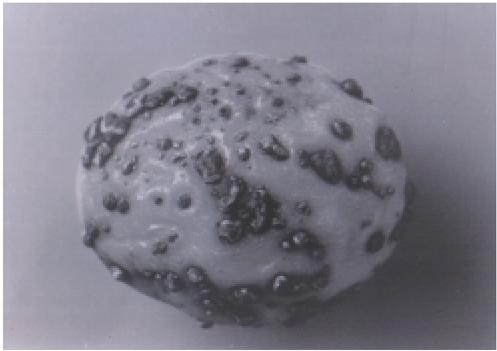
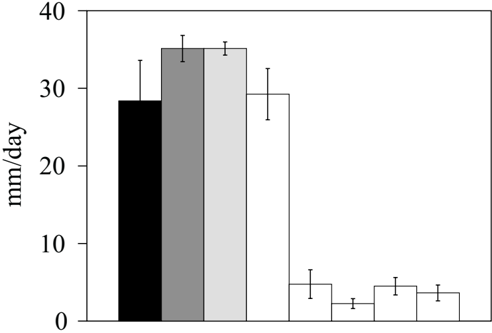
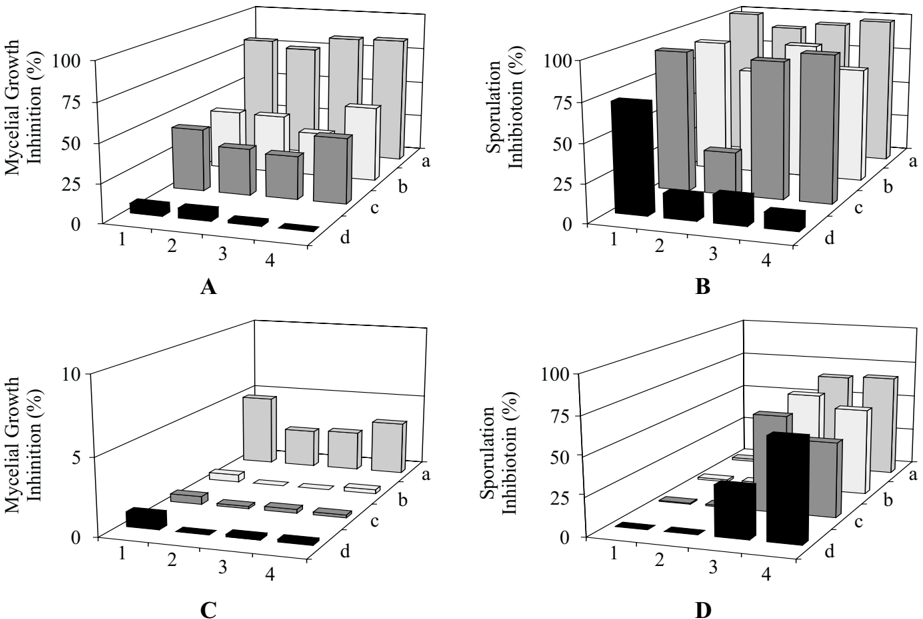
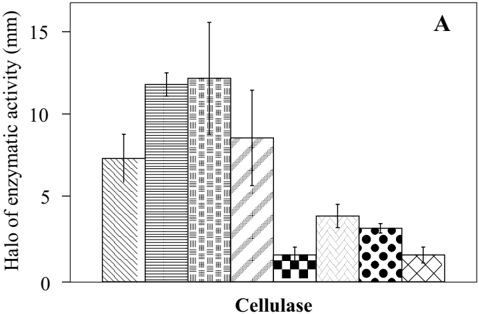
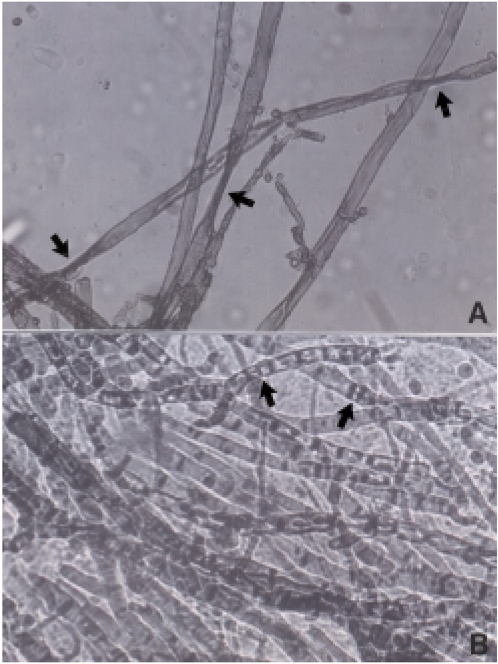
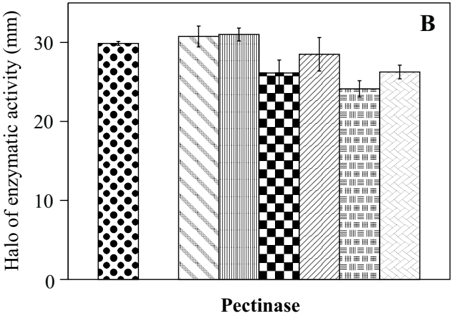
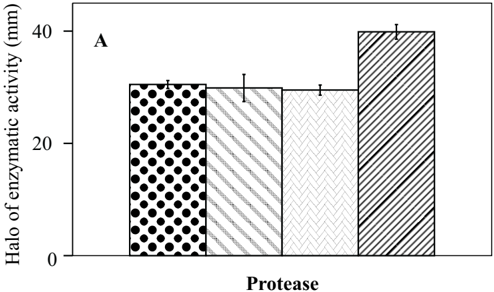
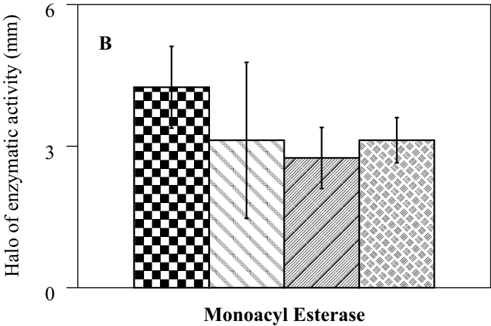
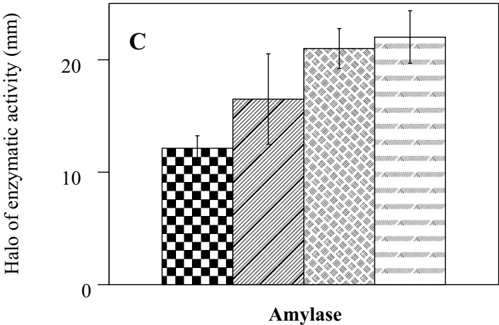
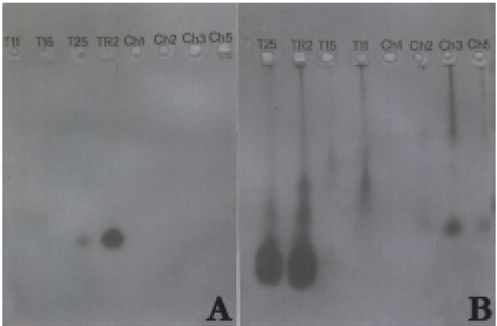
The verrucose caused by Cladosporium herbarum reduces production and quality of Passion fruit (Passiflora edulis Sims.), a largely consumed tropical fruit. This work aimed to investigate the antagonism of Trichoderma species (T. polysporum, T. koningii, T. viride and T. harzianum) against Cladosporium herbarum, and to study the production of extracellular hydrolytic enzymes by the pathogen and the antagonists. The results showed considerable antagonistic potential for the biocontrol of C. herbarum isolates by all Trichoderma species, except T. koningii. The most distinguished effect was observed for T. polysporum. In relation to the pattern of esterase obtained by electrophoresis in poliacrylamyde gel, the major activity presented by the isolates was observed after five days of incubation. The C. herbarum isolates produced extracellular enzymes, lipase, pectinase, cellulase, and protease, all possibly related to the infection process. Amylase excretion, not known to be associated with phytopathogens, was detected in Trichoderma species, but not in C. herbarum. In addition to amylase, all Trichoderma species tested produced also extracellular cellulase and pectinase, except T. koningii in relation to the latter enzyme. The demonstration of various esterase isoenzymes in zymograms of the Trichoderma species and C. herbarum isolates was markedly improved by washing the mycelia with detergents or EDTA. This fact suggested that a major fraction of extracelular enzymes may remain attached to outside fungal cell wall after being excreted.
Overview
The claims and statistics of this paper haven’t been checked yet.
Free: it reads the open-access text and checks the first 5 claims that cite a source we can check. Create a free account to check every claim.
Integrity signals
Registry
Cites
Statistics
Figures
Verification
Claims the paper makes
The claims and statistics of this paper haven’t been checked yet.
Free: it reads the open-access text and checks the first 5 claims that cite a source we can check. Create a free account to check every claim.
Self-check
Percentages, sums and reported differences re-computed from the paper’s own numbers.
The self-check needs the paper’s full text.
Citations
Cites
Ellis, M. B. (1971) · doi:10.1079/9780851986180.0000 · Cited by 2,021
More Dematiaceous Hyphomycetes
(1976) · CABI eBooks · doi:10.1079/9780851983653.0000 · Cited by 1,787
Antagonistic properties of species-groups of Trichoderma
Dennis, C., & Webster, J. (1971) · Transactions of the British Mycological Society · doi:10.1016/s0007-1536(71)80077-3 · Cited by 1,008 · cited 3×
“herbarum was tested by the method described by Lundberg and Unestan (33), and Dennis and Webster (12).”
MethodInfluentialCOCHRANE, V. W. (1959) · SOIL SCIENCE · doi:10.1097/00010694-195904000-00014 · Cited by 829
The Use of Solid Media for Detection of Enzyme Production by Fungi
Hankin, L., & Anagnostakis, S. L. (1975) · Mycologia · doi:10.1080/00275514.1975.12019782 · Cited by 792 · cited 4×
“The method of Hankin and Anagnostakis (26) was used to detect the secretion of extracellular cell wall degrading enzymes, both by the isolates of C. herbarum and Trichoderma species.”
BackgroundMethodInfluentialSpecific and sensitive plate assay for bacterial lipases
Kouker, G., & Jaeger, K. E. (1987) · Applied and Environmental Microbiology · doi:10.1128/aem.53.1.211-213.1987 · Cited by 748 · cited 1×
“herbarum, using a different kind of lipase assay (results not shown) than the method employed for monoacyl esterase, because it has been argued that soluble substrates are possibly not a good assay for lipase activity (29,41).”
MethodAntagonistic properties of species-groups of Trichoderma
Dennis, C., & Webster, J. (1971) · Transactions of the British Mycological Society · doi:10.1016/s0007-1536(71)80050-5 · Cited by 624
Trichoderma: a review of biology and systematics of the genus
Samuels, G. J. (1996) · Mycological Research · doi:10.1016/s0953-7562(96)80043-8 · Cited by 398 · cited 2×
“harzianum, named Trichodex, is used to control soilborne and phyloplane pathogens and other formulations, such as Binab-T, GlioGard and RootShield, are used to control several soilborne pathogens which cause damping-off and root rot (24,43).”
BackgroundThe Use of Solid Media for Detection of Enzyme Production by Fungi
Hankin, L., & Anagnostakis, S. L. (1975) · Mycologia · doi:10.2307/3758395 · Cited by 358
Fungitoxic Spectrum of Benzimidazole Compounds
Edgington, L. V. (1971) · Phytopathology · doi:10.1094/phyto-61-42 · Cited by 342 · cited 1×
“The inhibition percent was obtained using the formula: I% = [ (C2 – C1) / C2) ] x 100 (19), where C1 means growth of C.”
Method
Research works printed but not linked: 4
- [6]6. Claydon, N.; Allan, M.; Hanson, J.R.; Avent, A.G. Antifungal alkylpyrones of Trichoderma harzianum. Trans. Br. Mycol. Soc., 88:503-513, 1987.
- [10]10. Cook, R.J.; Baker, K.F. The nature apractice of biological control of plant pathogens. APS Press, St. Paul, 1989. 539p.
- [14]14. Dennis, C.; Webster, J. Antagonistic properties of species-groups of Trichoderma. III. Hyfal interaction. Trans. Br. Mycol. Soc., 57:363- 369, 1971c.
- [40]40. O'Donnell, J.; Dickinson, C.H. Pathonicity of Alternaria and Cladosporium isolates on Phaseolus. Trans. Br. Mycol. Soc., 74:335- 342, 1980.
Cited by
Zivkovic, S., Stojanovic, S., Ivanovic, Z., Gavrilovic, V., Popovic, T., & Balaz, J. (2010) · Archives of Biological Sciences · doi:10.2298/abs1003611z · Cited by 180
Trichoderma harzianum: a biocontrol agent against Bipolaris oryzae
Abdel-Fattah, G. M., Shabana, Y. M., Ismail, A. E., & Rashad, Y. M. (2007) · Mycopathologia · doi:10.1007/s11046-007-9032-9 · Cited by 111
Biological control of rice brown spot with native isolates of three Trichoderma species
Khalili, E., Sadravi, M., Naeimi, S., & Khosravi, V. (2012) · Brazilian Journal of Microbiology · doi:10.1590/s1517-83822012000100035 · Cited by 116
El‐Hasan, A., Walker, F., & Buchenauer, H. (2007) · Journal of Phytopathology · doi:10.1111/j.1439-0434.2007.01330.x · Cited by 72
Şesan, T. E., Oancea, A., Ștefan, L. M., Manoiu, V. S., Ghiurea, M., Răut, I., Constantinescu-Aruxandei, D., Toma, A., Savin, S., Bira, A. F., et al. (2020) · Microorganisms · doi:10.3390/microorganisms8010123 · Cited by 74
“To date, strains from Trichoderma genera were applied to Passiflora plants as bio/myco‐fungicides for the treatment of fungal diseases [57,58] or as biofertilizer to promote root growth and root function related to mineral nutrient uptake [59].”
MethodShehata, H. R., Lyons, E. M., Jordan, K. S., & Raizada, M. N. (2016) · Journal of Applied Microbiology · doi:10.1111/jam.13050 · Cited by 71
“2010), Davidiella tassiana (pear, grape, cherry and date palm) (Barbosa et al. 2001), Diplodia pinea (pine) (Waterman 1943), Fusarium avenaceum (maize, wheat) (Shaner 2003; Kang et al.”
BackgroundTrichoderma harzianum as a biocontrol agent against Alternaria alternata on tobacco
Gveroska, B., & Ziberoski, J. (2012) · Applied Technologies and Innovations · doi:10.15208/ati.2012.9 · Cited by 62
“Hyphal shrinking, cell shortening and septa thickening were found by Barbosa et al. (2001) in Cladosporium herbarum, in the presence of Trichoderma.”
BackgroundLu, B.-S., Druzhinina, I. S., Fallah, P. M., Chaverri-Echandi, P., Gradinger, C., Kubicek, C. P., & Samuels, G. J. (2004) · Mycologia · doi:10.1080/15572536.2005.11832980 · Cited by 60
“Barbosa et al (2001) found that T. polysporum was highly antagonistic to Cladosporium cladosporioides on passion fruit.”
BackgroundEl‐Hasan, A., Walker, F., Schöne, J., & Buchenauer, H. (2007) · Journal of Plant Diseases and Protection · doi:10.1007/bf03356205 · Cited by 58
Bedine, M. A. B., Sameza, M. L., Iacomı, B., Tchameni, S. N., & Boyom, F. F. (2019) · Biocontrol Science and Technology · doi:10.1080/09583157.2019.1700909 · Cited by 57
Biocontrol of seed pathogens and growth promotion of common bean seedlings by Trichoderma harzianum
Carvalho, D. D. C., de Mello, S. C. M., Lobo, M., & Geraldine, A. M. (2011) · Pesquisa Agropecuária Brasileira · doi:10.1590/s0100-204x2011000800006 · Cited by 56
“The antagonist action of T. harzianum on the pathogen occurred through a mechanism known as hyperparasitism, as reported in experimental conditions by Barbosa et al. (2001), which observed mycelium wilt and sporulation within C. herbarum hyphae.”
BackgroundPoveda, G., Gil-Durán, C., Vaca, I., Levicán, G. J., & Chávez, R. (2018) · Biological Research · doi:10.1186/s40659-018-0177-4 · Cited by 50
Fernandes, E. G., Valério, H. M., Feltrin, T., & Sand, S. T. V. D. (2012) · Brazilian Journal of Microbiology · doi:10.1590/s1517-83822012000200049 · Cited by 49
“(3) related the infection process of the phytopathogenic fungus Cladosporium herbarum to pectinase production, since this enzyme is very important in the infection process of host plant.”
BackgroundSaber, W. I. A., El-Hai, K. M. A., & Ghoneem, K. M. (2009) · Research Journal of Microbiology · doi:10.3923/jm.2009.286.300 · Cited by 57
Zhang, Y., Yu, Z., Zhang, H., & Thompson, I. P. (2017) · Environmental Science Water Research & Technology · doi:10.1039/c6ew00286b · Cited by 43
Zegeye, E. D., Santhanam, A., Gorfu, D., Tessera, M., & Kassa, B. (2011) · International Journal of Agricultural Technology · Cited by 42
Costa, D., Tavares, R. M., Baptista, P. C., & Lino‐Neto, T. (2020) · Journal of Fungi · doi:10.3390/jof6040287 · Cited by 41
“22%) x P [51] [52] Cladosporium perangustum MK111614.”
BackgroundNative isolate of Trichoderma: a biocontrol agent with unique stress tolerance properties
Mishra, N., Khan, S., & Sundari, S. K. (2016) · World Journal of Microbiology and Biotechnology · doi:10.1007/s11274-016-2086-4 · Cited by 39
Trichoderma- Foliar Pathogen Interactions
Sawant, I. S. (2014) · The Open Mycology Journal · doi:10.2174/1874437001408010058 · Cited by 37
“Cladosporium herbarum which is responsible for causing verrucose of passion fruit could be parasitized by T. harzianum, T. viride and T. koningii [28].”
BackgroundBaum, C., & Hrynkiewicz, K. (2006) · Journal of Plant Nutrition and Soil Science · doi:10.1002/jpln.200521922 · Cited by 36
Saber, W. I. A., El‐Naggar, N. E., & Abdal-Aziz, S. A. A. (2010) · Research Journal of Microbiology · doi:10.3923/jm.2010.1.20 · Cited by 36
Trichoderma Secondary Metabolites: Their Biochemistry and Possible Role in Disease Management
Patil, A. S., Patil, S. R., & Paikrao, H. M. (2016) · Springer eBooks · doi:10.1007/978-981-10-0388-2_6 · Cited by 41
In vitro screening for enzymatic activity of Trichoderma species for biocontrol potential
Cherkupally, R., Hindumathi, A., & Bhoomi, N. R. (2017) · Annals of Plant Sciences · doi:10.21746/aps.2017.6.11.11 · Cited by 32
Tang, P., Li, J., Li, T., Tian, L., Sun, Y., Xie, W., He, Q., Chang, H., Tiraferri, A., & Liu, B. (2020) · Journal of Hazardous Materials · doi:10.1016/j.jhazmat.2020.124166 · Cited by 31
“The Cladosporium fungi can 370 produce extracellular hydrolytic enzymes, like monoacyl esterase, protease, and pectinolytic 371 enzymes (Barbosa et al., 2001).”
BackgroundPandey, A. K., Kumar, A., Samota, M. K., & Tanti, A. (2022) · Pesticide Biochemistry and Physiology · doi:10.1016/j.pestbp.2022.105279 · Cited by 28
In vitro evaluation of biological control agents against Rhizoctonia solani
Seema, M., & Devaki, N. S. (2012) · International Journal of Agricultural Technology · Cited by 25
Community Analysis of Seed-Associated Microbes in Forage Crops using Culture-Independent Methods
Ikeda, S., Fuji, S.-I., Sato, T., Ytow, N., Ezura, H., Minamisawa, K., & Fujimura, T. (2006) · Microbes and Environments · doi:10.1264/jsme2.21.112 · Cited by 25
MORPHOLOGICAL CHARACTERISTICS OF FOUR Trichoderma ISOLATES AND TWO ENDOPHYTIC Fusarium ISOLATES
Soesanto, L., Utami, D. S., & Rahayuniati, R. F. (2011) · Cited by 23
Es-Soufi, R., Tahiri, H., Azaroual, L., Oualkadi, A. E., Martin, P., Badoc, A., & Lamarti, A. (2020) · Advances in Microbiology · doi:10.4236/aim.2020.103008 · Cited by 18
“Its growth during the confrontation is faster than that of the pathogen (Figure 2(b)), hence a significant advantage in the competition for space and nutrients, even before deploying its arsenal of mycotoxins [26].”
BackgroundMetabolomics analysis of mycelial exudates provides insights into fungal antagonists of Armillaria
Zhan, J., Yuan, J., Liu, J., Zhang, F., Yu, F., & Wang, Y. (2023) · Mycology: An International Journal on Fungal Biology · doi:10.1080/21501203.2023.2238753 · Cited by 17
“Antagonism between co-cultured mycelia of different fungal species has been widely observed (Barbosa et al. 2001; Raziq and Fox 2003; Qualhato et al. 2013).”
BackgroundPapazlatani, C. V., Kolovou, M., Gkounou, E. E., Azis, K., Mavriou, Ζ., Testembasis, S., Karaoglanidis, G. S., Ntougias, S., & Karpouzas, D. G. (2022) · Environmental Pollution · doi:10.1016/j.envpol.2022.119030 · Cited by 16
Bordbar, F. T., Etebarian, H. R., Sahebani, N., & Rohani, H. (2010) · Journal of Plant Protection Research · doi:10.2478/v10045-010-0025-1 · Cited by 16
“The effectiveness of Trichoderma sp. as biological control agents (BC-agents) against postharvest disease was proved in a number of studies (Sivakumar et al. 2000; Barbosa et al. 2001; Wantoch-Rekowski 2004).”
BackgroundGo, W. Z., H’ng, P. S., Wong, M., Chin, K. L., Ujang, S., & Noran, A. S. (2019) · Archives of Phytopathology and Plant Protection · doi:10.1080/03235408.2019.1587821 · Cited by 14
“The rapid growth characteristic gives Trichoderma a significant advantage in the competition for space and nutrients with the pathogenic fungi (Barbosa et al. 2001).”
BackgroundAntarctic Permafrost: An Unexplored Fungal Microhabitat at the Edge of Life
da Silva, T. H., Silva, D. A. S., Thomazini, A., Schaefer, C. E. G. R., & Rosa, L. H. (2019) · Springer eBooks · doi:10.1007/978-3-030-18367-7_7 · Cited by 15
Mahgoub, S. A., Kedra, E. G. A., Abdelfattah, H., Abdelbasit, H. M., Alamoudi, S. A., Al-Quwaie, D. A. H., Selim, S., Alsharari, S. S., Saber, W. I. A., & El-Mekkawy, R. M. (2022) · Fermentation · doi:10.3390/fermentation8090437 · Cited by 13
“Louis, MO, USA) and kept at 28 ◦C for five days [30].”
BackgroundGeweely, N. S., & Afifi, H. A. M. (2011) · Geomicrobiology Journal · doi:10.1080/01490451.2010.498296 · Cited by 14
“antagonistic activity of T. reesei has been shown to be efficient against Cladosporium and Alternaria (Barbosa et al. 2001).”
BackgroundInfluentialMarchi, C. E., Borges, M. D. F., & Mizubuti, E. S. G. (2006) · Summa Phytopathologica · doi:10.1590/s0100-54052006000400005 · Cited by 13
Escudero‐Leyva, E., Granados-Montero, M. D. M., Orozco-Ortiz, C., Araya-Valverde, E., Alvarado‐Picado, E., Chaves‐Fallas, J. M., Aldrich‐Wolfe, L., & Chaverri-Echandi, P. (2023) · Journal of Applied Microbiology · doi:10.1093/jambio/lxad090 · Cited by 12
Yamazaki, Y., Tojo, M., Hoshino, T., Kida, K., Sakamoto, T., Ihara, H., Yumoto, I., Tronsmo, A. M., & Kanda, H. (2010) · Fungal ecology · doi:10.1016/j.funeco.2010.06.002 · Cited by 12
Krishnamurthy, R., Padma, P. R., & Dhandapani, K. (2020) · Journal of Pure and Applied Microbiology · doi:10.22207/jpam.14.1.55 · Cited by 12
Guimarães, G. R., Pereira, F. S., Matos, F. S., de Mello, S. C. M., & Carvalho, D. D. C. (2014) · Tropical Plant Pathology · doi:10.1590/s1982-56762014000500007 · Cited by 12
Romero‐Cortés, T., Pérez, P. A. L., Ramírez‐Lepe, M., & Cuervo-Parra, J. A. (2016) · Chilean journal of agricultural & animal science · doi:10.4067/s0719-38902016000100004 · Cited by 11
Foganholi, A. P. D. A. M., Daniel, J. F. D. S., Santiago, D. C., Orives, J. R., Pereira, J., & Faria, T. D. J. (2015) · Semina Ciências Agrárias · doi:10.5433/1679-0359.2015v36n5p3091 · Cited by 10
Microbiological characteristics of the węgierka zwykła plum orchard in submontane region
Tuszyński, T., & Satora, P. (2003) · Polish Journal of Food and Nutrition Sciences · Cited by 10
Arzanlou, M., Khodaei, S., Narmani, A., Babai‐Ahari, A., & Motallebi-Azar, A. (2013) · Archives of Phytopathology and Plant Protection · doi:10.1080/03235408.2013.853453 · Cited by 10
“alternata is due to rapid colonisation of substrate by biocontrol agents which provide a suitable condition to tenure the nutrition and place, before commencement of secretion of exudates (Dennis & Webster 1971c; Barbosa et al. 2001).”
BackgroundEndophytic fungal isolates from apple tissue: Latent pathogens lurking within?
Nwe, L. L., Casonato, S. G., & Jones, E. E. (2024) · Fungal Biology · doi:10.1016/j.funbio.2024.05.003 · Cited by 9
El-Katatny, M. H., El-Katatny, M. S., Fadl-Allah, E. M., & Emam, A. S. (2011) · Archives of Phytopathology and Plant Protection · doi:10.1080/03235400903266438 · Cited by 10
“The effectiveness of Trichoderma sp. as biological control agents (BC-agents) against certain diseases has been proved in a number of studies (Sivakumar et al. 2000; Barbosa et al. 2001; Wantoch-Rekowski 2004).”
BackgroundFarwell, L. H., Deakin, G., Harris, A. L., Fagg, G., Passey, T., Verheecke‐Vaessen, C., Magan, N., & Xu, X. (2023) · Horticulturae · doi:10.3390/horticulturae9020128 · Cited by 8
Naguleswaran, V., Pakeerathan, K., Mikunthan, G., & Lanka, S. S. (2014) · Cited by 8
Abdallah, R. A. B., Hassine, M., Jabnoun‐Khiareddine, H., & Daami‐Remadi, M. (2023) · Brazilian Journal of Microbiology · doi:10.1007/s42770-023-00925-3 · Cited by 7
SenGupta, K., Karmakar, B., Roy, S., Kaur, A., & Gupta-Bhattacharya, S. (2023) · Air Quality Atmosphere & Health · doi:10.1007/s11869-023-01316-1 · Cited by 7
Piegza, M., Stolaś, J., Kancelista, A., & Witkowska, D. (2009) · Acta Scientiarum Polonorum. Biotechnologia · Cited by 7
Fungi as an Alternative to Agrochemicals to Control Plant Diseases
Emoghene, A. O., & Futughe, A. E. (2016) · Fungal biology · doi:10.1007/978-3-319-42852-9_3 · Cited by 7
Es-Soufi, R., Bouzdoudi, B. E., Bouras, M., Kbiach, M. L. E., Badoc, A., & Lamarti, A. (2017) · Advances in Microbiology · doi:10.4236/aim.2017.711058 · Cited by 7
“This rapid growth suggests a mycoparasitism, at least in the experimental conditions tested, and gives Trichoderma an important advantage in the competition for nutrients and space with phytopathogenic fungi [22].”
BackgroundSim, C. S. F., Cheow, Y. L., Ng, S. L., & Ting, A. S. Y. (2018) · Biological Control · doi:10.1016/j.biocontrol.2018.12.004 · Cited by 6
Bolmanis, E., Grigs, O., Didrihsone, E., Senkovs, M., & Nikolajeva, V. (2024) · Biotechnology Letters · doi:10.1007/s10529-024-03481-4 · Cited by 5
“C. herbarum produces rot diseases in a number of important fruit crops, e.g. pear, grape and cherry, surface mold on raisins and figs, and also damages corn and rye (Barbosa et al. 2001).”
Valiyambath, V. K., Thomas, T. A., George, P., Leela, N. K., Kaprakkaden, A., Subraya, K. K., Raghavan, D., & Ravindran, P. (2024) · World Journal of Microbiology and Biotechnology · doi:10.1007/s11274-024-04131-7 · Cited by 5
“Daily observations on colony and conidial characteristics were recorded for seven days (Barbosa et al. 2001).”
Tsarelunga, А. А., & Blagoveschenskaya, Е. Y. (2024) · Biology Bulletin Reviews · doi:10.1134/s2079086424030095 · Cited by 5
“Alternaria spp. (Pleosporales, Pleosporomycetidae, Dothideomycetes, Pezizomycotina, Ascomycota) and Cladosporium spp. (Capnodiales, Dothideomycetidae, Dothideomycetes, Pezizomycotina, Ascomycota) have a dark coloration of both mycelium and conidia.”
InfluentialRahnama, K., Oghaz, N. A., Derakhshan, N., & Jayawardena, R. S. (2025) · Studies in Fungi · doi:10.48130/sif-0025-0015 · Cited by 4
Cladosporium: Causal agent of scab in purple passion fruit or gulupa (Passiflora edulis Sims.)
Riascos, D., Quiroga, I. A., Gómez, R., & Hoyos-Carvajal, L. (2012) · Agricultural Sciences · doi:10.4236/as.2012.32034 · Cited by 4
“Pathogenicity Tests in Vitro Obtained results suggest to Cladosporium as the causal agent of scab in gulupa due to the expression of disease symptoms on leaves and fruit after artificial inoculation, consistent with reports of symptoms and etiology of the disease in Brazil and Australia [13].”
InfluentialAntagonism ofTrichodermaorGliocladiumSpecies on Two Phytopathogenic Species ofFusarium
Shoulkamy, M. A., Guebitz, G. M., El-Katatny, M. H., Shaban, G. M., & Abdelzaher, H. M. A. (2006) · Journal of Natural Fibers · doi:10.1300/j395v03n02_01 · Cited by 5
“Barbosa et al. (2001) reported that the toxic action was evident in various alterations of the hyphal structure of Cladosporium herbarum grown together with Trichoderma species, and it is similar to the effects described in other systems of mixed cultures (Dennis and Webster, 1971; Lee and Wu,…”
ResultBiological, Chemical and Electrolyzed Water Methods for Controlling some Date Palm Diseases in Egypt
Mansour, M., Saber, M., Ahmed, R., & Youssef, K. (2023) · Egyptian Journal of Chemistry · doi:10.21608/ejchem.2023.241973.8775 · Cited by 3
“These results are in harmony with [27] who mentioned that colonies of T. harzianum develop faster than isolates of the tested fungi i.e.”
ResultEfficacy of Corn and Rice Seed-borne Mycoflora in Controlling Aflatoxigenic Aspergillus flavus
Madbouly, A. K., & Abdel-Wahhab, M. A. (2014) · Dialnet (Universidad de la Rioja) · Cited by 3
Caracterização genética e fisiológica de Crinipellis perniciosa.
Lana, T. G. (2004) · Digital Library of Theses and Dissertations (Universidade de São Paulo) · doi:10.11606/t.11.2004.tde-21072004-085335 · Cited by 3
“Fitopatologia Brasileira, v.21, n.4, 1996a. BASTOS, C.N. Mycoparasitic nature of the antagonism between Trichoderma viride and Crinipellis perniciosa.”
BackgroundInfluentialMarini-Macouzet, C., Muñoz, L., Gonzalez-Rubio, A., Eguiarte, L. E., Souza, V., & Vélez, P. (2020) · Mycobiology · doi:10.1080/12298093.2020.1788271 · Cited by 2
“These interactions range from moderate to low antagonistic patterns by Cladosporium cladosporioides [43,44], to growth inhibition by fungi such as Trichoderma and Ralstonia pickettii on rich media [45].”
BackgroundWasike, M. J. (2014) · Cited by 2
Protocols of Clean Pot Media for Containerized Mango Nursery
Chohan, S., Abid, M. A., Gill, S., & Malik, M. T. (2025) · Springer eBooks · doi:10.1007/978-3-031-87035-4_16 · Cited by 1
MAURYA, N., Kumar, B., Singh, R. P., Tewari, R., & Bisht, A. S. (2025) · The Indian Journal of Agricultural Sciences · doi:10.56093/ijas.v95i7.146308 · Cited by 1
Yoder, J. A., Benoit, J. B., Condon, M. R., & Zettler, L. W. (2011) · Fungal ecology · doi:10.1016/j.funeco.2011.06.003 · Cited by 1
Controle biológico da podridão radicular em plantas de limão Cravo
Corrêa, É. B., Kupper, K. C., & de Goes, A. (2011) · Citrus Research & Technology · doi:10.5935/2236-3122.20110015 · Cited by 1
Barbieri, M., de Ávila, V. S., Maciel, C. G., Noal, G., Muniz, M. F. B., & Dörr, A. C. (2013) · Revista Monografias Ambientais · doi:10.5902/2236130810822 · Cited by 1
Ladjouzi, R., Bachir‐bey, M., Zaïdi, F., & Yahiaoui-Zaidi, R. (2023) · Acta Phytopathologica et Entomologica Hungarica · doi:10.1556/038.2023.00150 · Cited by 1
Tsarelunga, А. А., & Blagoveschenskaya, Е. Y. (2023) · Журнал общей биологии · doi:10.31857/s0044459623040073 · Cited by 1
Ropek, D. R., Krysa, A., Rola, A., & Frączek, K. (2014) · Polish Journal of Agronomy · doi:10.26114/pja.iung.190.2014.16.08 · Cited by 1
Kosicka-Dziechciarek, D., & Tatuśko‐Krygier, N. (2017) · Woda-Środowisko-Obszary Wiejskie
Analytical Interpretation of the Beneficial Interaction Between Microorganisms and Grasses
Machado, R. G. (2017) · InTech eBooks · doi:10.5772/intechopen.69272
Kania, H., Pongener, N., Devi, H. M., Ao, N. T., & Devi, H. S. (2023) · ORYZA- An International Journal on Rice · doi:10.35709/ory.2023.60.2.3
Spantidos, T.-N., Douka, D., Katinakis, P. K., & Venieraki, A. (2026) · Applied Sciences · doi:10.3390/app16020624
Farwell, L. H., Harris, A. L., Deakin, G., Magan, N., & Xu, X. (2026) · Frontiers in Horticulture · doi:10.3389/fhort.2026.1778140
Hossain, M. A., Nadira, S., Zohura, F. T., Atikur, R. M., Zahidul, I., Anamika, P., & Khalil, M. I. (2026) · Plant Science Today · doi:10.14719/pst.13730
A review on management strategies for brown spot disease in rice: Insights from Nepal
Puspa, R. C., Rawal, J. S., Gautam, B., & Chapagaee, P. (2026) · CABI Reviews · doi:10.1079/cabireviews.2026.0035
Biocontrol Effect of Trichoderma harzianum on Selected Fungal Pathogens by Dual Plate Method
Shubha, C, M. A., Geethanjali, R., Prathibha, K. Y., Sultana, S., Sultana, R., R., H. B., V., S. P. K., & Banu, M. (2023) · TWIST
Nabieva, I. A., Николаевна, Я. Н., Mamatvaliyev, I. T. U., Abdumajidov, A. A., & Miratayev, A. A. (2026) · Universum Technical sciences · doi:10.32743/unitech.2026.151.10.23450
Metadata
- Authors
- Barbosa, M. A. G., Rehn, K. G., Menezes, M., & Mariano, R. D. L. R.
- Affiliations
- Universidade Federal Rural de Pernambuco (BR)
- Venue
- Brazilian Journal of Microbiology
- Publisher
- FapUNIFESP (SciELO)
- Published
- 2001-06
- Volume
- 32
- Issue
- 2
- ISSN
- 1517-8382 (ISSN-L)
- OpenAlex
- W2115456201
- Semantic Scholar
- 4c2a21deb8526e77430ca4424b8f3d4fbb7f1e21
- Cited by
- 80
- References
- 30
- Citations by year
- 2026: 3 · 2025: 3 · 2024: 4 · 2023: 9 · 2022: 3 · 2020: 6 · 2019: 4 · 2018: 2 · 2017: 4 · 2016: 6 · 2015: 1 · 2014: 6 · 2013: 1 · 2012: 4
- FWCI
- 0.45
- Type
- journal article
- Language
- en
- Open access
- hybrid
- doi.org
- Licence
- cc-by-nc
- Locations
- Brazilian Journal of Microbiology (publishedVersion, cc-by-nc)
- LA Referencia (Red Federada de Repositorios Institucionales de Publicaciones Científicas) (publishedVersion, other-oa)
- Americanae (AECID Library) (submittedVersion, cc-by-nc)
- DOAJ (DOAJ: Directory of Open Access Journals) (submittedVersion)
- Topics
- Life Sciences › Agricultural and Biological Sciences › Plant Science › Plant Pathogens and Fungal Diseases
- Life Sciences › Agricultural and Biological Sciences › Plant Science › Plant-Microbe Interactions and Immunity
- Life Sciences › Agricultural and Biological Sciences › Plant Science › Fungal Plant Pathogen Control
- Keywords
- Trichoderma, Cladosporium herbarum, biological control, fungal antagonism, Passiflora edulis, extracellular enzymes, esterase isozymes, lipase, pectinase, cellulase, proteolytic enzymes, amylase, Trichoderma polysporum, Trichoderma harzianum, Trichoderma viride, Trichoderma koningii, fungal cell wall
About these checks
Registry, retraction, Cites and statistics results are computed, not judged, with one exception: a printed reference that no index lists is read once by a model before it counts as a citation error. Claims are extracted by a model and kept only when their quote appears verbatim in the text; each cited source is then checked, with a model’s help, for whether it says what the claim relies on. Those verdicts can be wrong — read the claim’s quote and the cited source before relying on one.
Statistics and arithmetic are recomputed, not judged.
Confidence bands are shown only for fields calibrated on our annotated test set. None is calibrated yet, so no band is shown.
What counts as a claim ›How we measure confidence ›How we check this ›
Are you an author, or do you see a problem with this page? Request a review
Data sources
Bibliographic data: Semantic Scholar, OpenAlex, Crossref.
Contains information from the Semantic Scholar Academic Graph Datasets, made available under the ODC Attribution License (ODC-BY 1.0).
Semantic Scholar’s data is described in: Kinney, R., et al. (2023). The Semantic Scholar Open Data Platform. arXiv:2301.10140.
