

Gene therapy: advances, challenges and perspectives
Open accessThe DOI matches its Crossref record; 27 of the 27 references it cites were found in a registry or an index.
Abstract
The ability to make site-specific modifications to the human genome has been an objective in medicine since the recognition of the gene as the basic unit of heredity. Thus, gene therapy is understood as the ability of genetic improvement through the correction of altered (mutated) genes or site-specific modifications that target therapeutic treatment. This therapy became possible through the advances of genetics and bioengineering that enabled manipulating vectors for delivery of extrachromosomal material to target cells. One of the main focuses of this technique is the optimization of delivery vehicles (vectors) that are mostly plasmids, nanostructured or viruses. The viruses are more often investigated due to their excellence of invading cells and inserting their genetic material. However, there is great concern regarding exacerbated immune responses and genome manipulation, especially in germ line cells. In vivo studies in in somatic cell showed satisfactory results with approved protocols in clinical trials. These trials have been conducted in the United States, Europe, Australia and China. Recent biotechnological advances, such as induced pluripotent stem cells in patients with liver diseases, chimeric antigen receptor T-cell immunotherapy, and genomic editing by CRISPR/Cas9, are addressed in this review.
Overview
The claims and statistics of this paper haven’t been checked yet.
Free: it reads the open-access text and checks the first 5 claims that cite a source we can check. Create a free account to check every claim.
Integrity signals
Registry
Cites
Statistics
Figures
Verification
Claims the paper makes
The claims and statistics of this paper haven’t been checked yet.
Free: it reads the open-access text and checks the first 5 claims that cite a source we can check. Create a free account to check every claim.
Claims other papers make about this one
Each is checked against this paper’s own text: does it say what the citing paper says it does?
In the citing paper
“These viruses show good safety when administered to target tissues, do not integrate in the recipient genome, successfully transduce retinal cells, and can carry genes of around 30 kb long.4,29,54–56”
From Gene Therapy for Retinal Degenerative Diseases: Progress, Challenges, and Future Directions (2023) · cites this paper as [54]
In the citing paper
“However, these vectors tend to be rapidly cleared due to the presence of neutralizing antibodies from pre-existing immunity.4,29,54–56”
From Gene Therapy for Retinal Degenerative Diseases: Progress, Challenges, and Future Directions (2023) · cites this paper as [54]
In the citing paper
“The AAV vectors are a common vector choice in ocular and non-ocular gene therapies, offering benefits such as a long duration of transgene expression, extremely low risk of insertional mutagenesis, only a mild inflammatory response, and low possibility of germline transmission.29,54”
From Gene Therapy for Retinal Degenerative Diseases: Progress, Challenges, and Future Directions (2023) · cites this paper as [54]
In the citing paper
“However, they carry risks for insertional mutagenesis and germline transmission and may elicit more inflammatory responses than AAVs.54,56,73”
From Gene Therapy for Retinal Degenerative Diseases: Progress, Challenges, and Future Directions (2023) · cites this paper as [54]
Self-check
Percentages, sums and reported differences re-computed from the paper’s own numbers.
The self-check needs the paper’s full text.
Citations
Cites
A Programmable Dual-RNA–Guided DNA Endonuclease in Adaptive Bacterial Immunity
Jinek, M., Chylinski, K., Fonfara, I., Hauer, M., Doudna, J. A., & Charpentier, E. (2012) · Science · doi:10.1126/science.1225829 · Cited by 17,116 · cited 1×
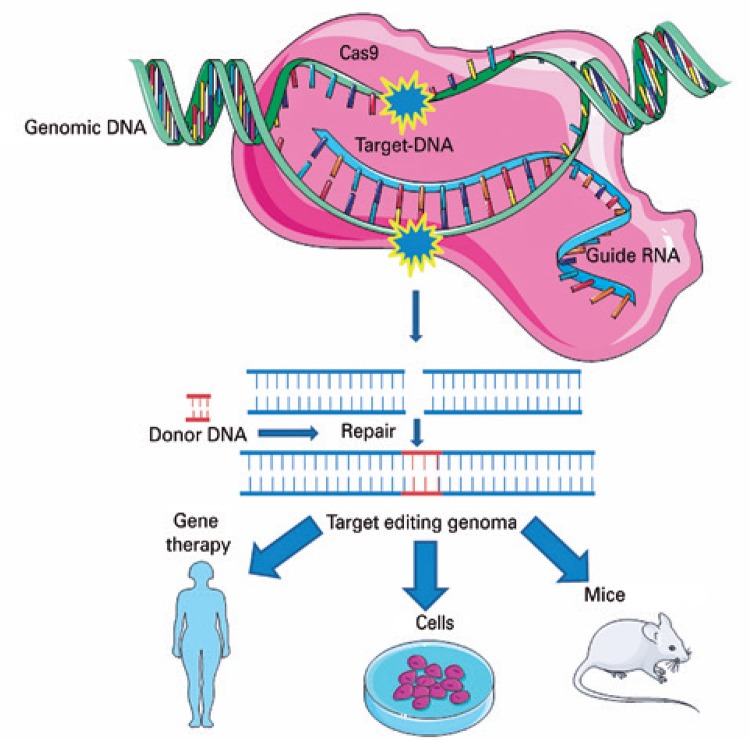
“RNA guide, which guides the complex to the target; and the target DNA, as is shown in figure 2.(25,26) of inactivation (knockout gene − KO), integration of exogenous sequences (knock-in), and allele substitution, among others.”
BackgroundMultiplex Genome Engineering Using CRISPR/Cas Systems
Cong, L., Ran, F. A., Cox, D., Lin, S., Barretto, R., Habib, N., Hsu, P. D., Wu, X., Jiang, W., Marraffini, L. A., et al. (2013) · Science · doi:10.1126/science.1231143 · Cited by 15,339 · cited 1×
“RNA guide, which guides the complex to the target; and the target DNA, as is shown in figure 2.(25,26) of inactivation (knockout gene − KO), integration of exogenous sequences (knock-in), and allele substitution, among others.”
BackgroundChimeric Antigen Receptor T Cells for Sustained Remissions in Leukemia
Maude, S. L., Frey, N., Shaw, P. A., Aplenc, R., Barrett, D. M., Bunin, N. J., Chew, A., Gonzalez, V. E., Zheng, Z., Lacey, S. F., et al. (2014) · New England Journal of Medicine · doi:10.1056/nejmoa1407222 · Cited by 5,413 · cited 1×
“For example, the CD19 antigen can be found in normal or malignant B cells, and the CAR design for the CD19 target in not capable of distinguishing them.(20,22) Other common toxicity for CAR-T therapy (and many other types of immunotherapy for cancer) is the cytokine release syndrome (CRS).”
BackgroundCurrent concepts in the diagnosis and management of cytokine release syndrome.
Lee, D. W., Gardner, R., Porter, D. L., Louis, C. U., Ahmed, N., Jensen, M., Grupp, S. A., & Mackall, C. L. (2014) · Blood · doi:10.1182/blood-2014-05-552729 · Cited by 2,806 · cited 1×
“Activation of the immune system after CAR-T infusion can induce a rapid increase in the levels of inflammatory cytokines.(20,23) New developments in the design of vectors and trials with CAR-T provide balance and reinforcement in safety for amplification of the clinical application.”
BackgroundEshhar, Z., Waks, T., Gross, G., & Schindler, D. G. (1993) · Proceedings of the National Academy of Sciences · doi:10.1073/pnas.90.2.720 · Cited by 1,658 · cited 1×
“,(16) was marked by the fusion of a single chain fragment variable (scFv) to a transmembrane domain and an intracellular signaling unit: chain CD3 zeta.”
BackgroundGross, G., Waks, T., & Eshhar, Z. (1989) · Proceedings of the National Academy of Sciences · doi:10.1073/pnas.86.24.10024 · Cited by 1,590 · cited 1×
“,(16) was marked by the fusion of a single chain fragment variable (scFv) to a transmembrane domain and an intracellular signaling unit: chain CD3 zeta.(17,18) This design combined the active element of a well-characterized monoclonal antibody with a signaling domain, increasing the recognition of the tumor-specific e…”
BackgroundCellular immunity to viral antigens limits E1-deleted adenoviruses for gene therapy.
Yang, Y., Nunes, F. A., Berencsi, K., Furth, E. E., Gönczöl, E., & Wilson, J. M. (1994) · Proceedings of the National Academy of Sciences · doi:10.1073/pnas.91.10.4407 · Cited by 1,575 · cited 1×
“(5) Within this context, included are polymers that form networks that capture a gene and release its load when they penetrate the cells, such as DNA microinjections,(10) cationic polymers,(11) cationic liposomes,(12,13) and particle bombardment.(14) Each exogenous material introduction technique differs from the othe…”
BackgroundGene Editing of CCR5 in Autologous CD4 T Cells of Persons Infected with HIV
Tebas, P., Stein, D., Tang, W. W., Frank, I., Wang, S. Q., Lee, G., Spratt, S. K., Surosky, R. T., Giedlin, M. A., Nichol, G., et al. (2014) · New England Journal of Medicine · doi:10.1056/nejmoa1300662 · Cited by 1,357 · cited 3×
“possibly, such trials could be previously tested in animal models.(4,30) These recent publications rekindled the debate regarding genetic editing.”
BackgroundCRISPR interference: RNA-directed adaptive immunity in bacteria and archaea
Marraffini, L. A., & Sontheimer, E. J. (2010) · Nature Reviews Genetics · doi:10.1038/nrg2749 · Cited by 919 · cited 2×
“one of the primary biotechnological tools for gene edition.(24) Originating in the immune-adaptive system of”
BackgroundState-of-the-art gene-based therapies: the road ahead
Kay, M. A. (2011) · Nature Reviews Genetics · doi:10.1038/nrg2971 · Cited by 666 · cited 2×
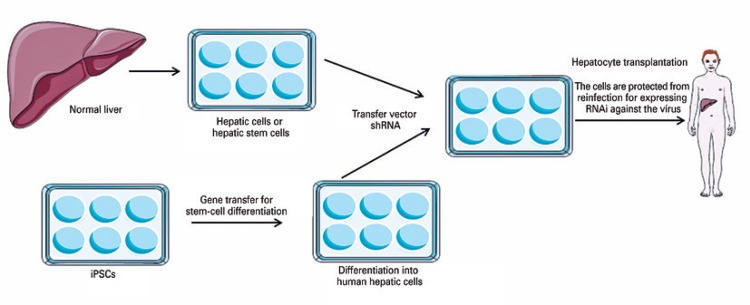
“, hepatitis B virus and hepatitis C virus), which require a liver transplant, may be likely to undergo the hepatic transplantation of mature hepatocytes or those derived from iPS.(15) Not only the transfer of genes might be needed to convert stem cells into hepatocytes; since the transplanted cells are susceptible to…”
BackgroundZhong, X.-S., Matsushita, M., Plotkin, J., Riviere, I., & Sadelain, M. (2010) · Molecular Therapy · doi:10.1038/mt.2009.210 · Cited by 543 · cited 3×
“According to other studies, this last generation shows greater persistence of the T cells in comparison with the second generation of CAR.”
ResultInfluentialDeWitt, M. A., Magis, W., Bray, N. L., Wang, T., Berman, J. R., Urbinati, F., Heo, S.-J., Mitros, T., Muñoz, D. P., Boffelli, D., et al. (2016) · Science Translational Medicine · doi:10.1126/scitranslmed.aaf9336 · Cited by 477
Co-stimulation in T cell responses
Chambers, C. A., & Allison, J. P. (1997) · Current Opinion in Immunology · doi:10.1016/s0952-7915(97)80087-8 · Cited by 415 · cited 1×
“This recipient acts as a second activating event of the route, enabling a marked proliferation of T cells along with an increased expression of cytokines.(19) The most recent generation of CAR incorporated the addition of a co-stimulatory domain addition to increase the CAR function.”
BackgroundVectors and delivery systems in gene therapy.
Gardlík, R., Pálffy, R., Hodosy, J., Lukács, J., Turňa, J., & Celec, P. (2005) · PubMed · Cited by 329
A brief history of gene therapy
Friedmann, T. (1992) · Nature Genetics · doi:10.1038/ng1092-93 · Cited by 273 · cited 1×
“These genetic advances prepared the scenario for the emergence of genetic engineering with the production of new drugs and antibodies, and as of 1980, gene therapy has been incorporated by scientists.(2,3) In this review, we cover gene therapy, the different methodologies of genetic engineering used for this technique…”
BackgroundPlank, C., Tang, M. X., Wolfe, A. R., & Szoka, F. C. (1999) · Human Gene Therapy · doi:10.1089/10430349950019101 · Cited by 230 · cited 1×
“(5) Within this context, included are polymers that form networks that capture a gene and release its load when they penetrate the cells, such as DNA microinjections,(10) cationic polymers,(11) cationic liposomes,(12,13) and particle bombardment.”
BackgroundDelivery and Specificity of CRISPR/Cas9 Genome Editing Technologies for Human Gene Therapy
Gori, J. L., Hsu, P. D., Maeder, M. L., Shen, S., Welstead, G. G., & Bumcrot, D. (2015) · Human Gene Therapy · doi:10.1089/hum.2015.074 · Cited by 189 · cited 2×
“(25,26) of inactivation (knockout gene − KO), integration of exogenous sequences (knock-in), and allele substitution, among others.(27,28) The guide RNA hybridizes with the target DNA.”
BackgroundHuman gene therapy: a brief overview of the genetic revolution.
Misra, S. (2013) · PubMed · Cited by 161
McDonnell, W. M., & Askari, F. K. (1996) · New England Journal of Medicine · doi:10.1056/nejm199601043340110 · Cited by 148
Caplen, N. J., Kinrade, E., Sorgi, F., Gao, X., Gruenert, D. C., Geddes, D. M., Coutelle, C. C., Huang, L., Alton, E. W. F. W., & Williamson, R. (1995) · PubMed · Cited by 95
Nabel, G. J., Chang, A. E., Nabel, E. G., Plautz, G. E., Ensminger, W. D., Fox, B. A., Felgner, P. L., Shu, S., & Cho, K. (1994) · Human Gene Therapy · doi:10.1089/hum.1994.5.1-57 · Cited by 82 · cited 1×
“(5) Within this context, included are polymers that form networks that capture a gene and release its load when they penetrate the cells, such as DNA microinjections,(10) cationic polymers,(11) cationic liposomes,(12,13) and particle bombardment.”
BackgroundCAR T-Cell Therapy: Progress and Prospects
Wilkins, O., Keeler, A. M., & Flotte, T. R. (2017) · Human Gene Therapy Methods · doi:10.1089/hgtb.2016.153 · Cited by 68 · cited 4×
“In summary, the most recent forms of CAR include scFv, the initial chain of CD3-ζ, along with the stimulatory chains of CD28 and CD134 or CD137.(20) With the third CAR generation, Zhong et al.”
BackgroundInfluentialHuman somatic cell gene therapy
Bank, A. (1996) · BioEssays · doi:10.1002/bies.950181210 · Cited by 57 · cited 1×
“2017;15(3):369-75 large groups: gene therapy of the germline(7) and gene therapy of somatic cells.(8) In germline gene therapy, the stem cells, e.”
BackgroundGene-editing research in human embryos gains momentum
Callaway, E. (2016) · Nature · doi:10.1038/532289a · Cited by 55
Second Chinese team reports gene editing in human embryos
Callaway, E. (2016) · Nature · doi:10.1038/nature.2016.19718 · Cited by 21 · cited 2×
“On the other hand, American research groups remained conservative, reiterating their position of not supporting this type of experiment and declaring that they await improvement in the techniques and of the definitions of ethical issues.(30)”
BackgroundMatthews, Q. L., & Curiel, D. T. (2007) · Southern Medical Journal · doi:10.1097/smj.0b013e31802e645f · Cited by 19 · cited 1×
“2017;15(3):369-75 large groups: gene therapy of the germline(7) and gene therapy of somatic cells.”
Background[Gene therapy of hereditary diseases].
Ek, G. (2000) · PubMed · Cited by 5
Research works printed but not linked: 4
- Mukherjee S Genetic therapies: posthuman gene therapy Mukherjee S The gene: an intimate history Nova York Scribner 2016 Chap. 34 415
- Linden R Gene therapy: what it is, what it is not and what it will be Estud Av 2010 24 70 31 69
- Parham P Antigen recognition by T lymphocytes Parham P The immune system 3rd Nova York Garland Science 2009 Chap. 5 113
- Vieira GV Cecílio NT Arruda LM Sales KU Visão geral do mecanismo básico de ação Pereira TC organizador Introdução à técnica de CRISPR Ribeirão Preto Cubo 2016 Cap. 2 54
Cited by
Recent advances in the development of gene delivery systems.
Sung, Y., & Kim, S. (2019) · Biomaterials Research · doi:10.1186/s40824-019-0156-z · Cited by 458
“DNA-based viral vectors are lentivirus, poxvirus, adenovirus, adeno-associated virus, retrovirus, human foamy virus (HFV) and herpes virus [24].”
Gene therapy: Comprehensive overview and therapeutic applications
Sayed, N., Allawadhi, P., Khurana, A., Singh, V., Navik, U., Pasumarthi, S. K., Khurana, I., Banothu, A. K., Weiskirchen, R., & Bharani, K. K. (2022) · Life Sciences · doi:10.1016/j.lfs.2022.120375 · Cited by 337
Stimuli-Responsive Materials for Tissue Engineering and Drug Delivery
Municoy, S., Álvarez Echazú, M. I., Antezana, P. E., Galdopórpora, J. M., Olivetti, C., Mebert, A. M., Foglia, M. L., Tuttolomondo, M. V., Alvarez, G. S., Hardy, J. G., et al. (2020) · International Journal of Molecular Sciences · doi:10.3390/ijms21134724 · Cited by 289
“More often than not, secondary effects arise from non-specific interactions with cells and tissues, so that vehicles that react to specific stimuli would be promising carriers for the targeted delivery of drugs and genes [19,20].”
BackgroundBiologics, theranostics, and personalized medicine in drug delivery systems
Puccetti, M., Pariano, M., Schoubben, A., Giovagnoli, S., & Ricci, M. (2024) · Pharmacological Research · doi:10.1016/j.phrs.2024.107086 · Cited by 212
Magnetite Nanoparticles in Magnetic Hyperthermia and Cancer Therapies: Challenges and Perspectives
Włodarczyk, A., Gorgoń, S., Radoń, A., & Bajdak-Rusinek, K. (2022) · Nanomaterials · doi:10.3390/nano12111807 · Cited by 209
Metadata
- Authors
- Gonçalves, G. A. R., & Paiva, R. D. M. A.
- Affiliations
- Hospital Israelita Albert Einstein, Brazil
- Hospital Israelita Albert Einstein (BR)
- Venue
- Einstein (São Paulo)
- Publisher
- FapUNIFESP (SciELO)
- Published
- 2017-09
- Volume
- 15
- Issue
- 3
- Pages
- 369-375
- ISSN
- 1679-4508 (ISSN-L)
- PMC
- PMC5823056
- OpenAlex
- W2944013917
- Cited by
- 351
- References
- 27
- Citations by year
- 2026: 25 · 2025: 47 · 2024: 76 · 2023: 63 · 2022: 55 · 2021: 39 · 2020: 23 · 2019: 16 · 2018: 6
- FWCI
- 8.17
- Type
- journal article
- Language
- en
- Open access
- diamond
- doi.org
- Licence
- cc-by
- Locations
- Einstein (São Paulo) (publishedVersion, cc-by)
- PubMed Central (publishedVersion, cc-by)
- PubMed (publishedVersion)
- LA Referencia (Red Federada de Repositorios Institucionales de Publicaciones Científicas) (publishedVersion, other-oa)
- Americanae (AECID Library) (submittedVersion, cc-by)
- DOAJ (DOAJ: Directory of Open Access Journals) (submittedVersion)
- Topics
- Life Sciences › Biochemistry, Genetics and Molecular Biology › Genetics › Virus-based gene therapy research
- Life Sciences › Biochemistry, Genetics and Molecular Biology › Molecular Biology › CRISPR and Genetic Engineering
- Life Sciences › Biochemistry, Genetics and Molecular Biology › Molecular Biology › RNA Interference and Gene Delivery
- Keywords
- gene therapy, gene delivery vectors, viral vectors, plasmid vectors, genome editing, CRISPR/Cas9, induced pluripotent stem cells, liver disease, immune response to gene therapy, clinical trials, somatic cells, germline modification
- MeSH terms
- Gene Editing, Animals, Genetic Vectors, Humans, Receptors, Antigen, T-Cell, Genetic Therapy, CRISPR-Cas Systems
About these checks
Registry, retraction, Cites and statistics results are computed, not judged, with one exception: a printed reference that no index lists is read once by a model before it counts as a citation error. Claims are extracted by a model and kept only when their quote appears verbatim in the text; each cited source is then checked, with a model’s help, for whether it says what the claim relies on. Those verdicts can be wrong — read the claim’s quote and the cited source before relying on one.
Statistics and arithmetic are recomputed, not judged.
Confidence bands are shown only for fields calibrated on our annotated test set. None is calibrated yet, so no band is shown.
What counts as a claim ›How we measure confidence ›How we check this ›
Are you an author, or do you see a problem with this page? Request a review
Data sources
Bibliographic data: Semantic Scholar, OpenAlex, Crossref.
Contains information from the Semantic Scholar Academic Graph Datasets, made available under the ODC Attribution License (ODC-BY 1.0).
Semantic Scholar’s data is described in: Kinney, R., et al. (2023). The Semantic Scholar Open Data Platform. arXiv:2301.10140.
