

Hot water extract of Chlorella vulgaris induced DNA damage and apoptosis
Open accessThe DOI matches its Crossref record; 34 of the 38 references it cites were found in a registry or an index, and 1 are not checked yet.
Abstract
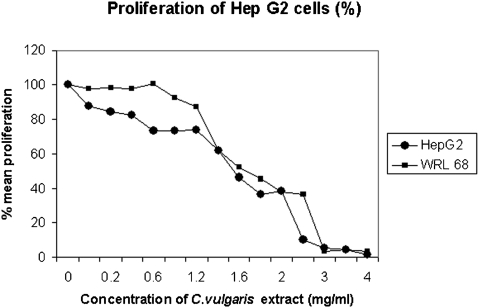
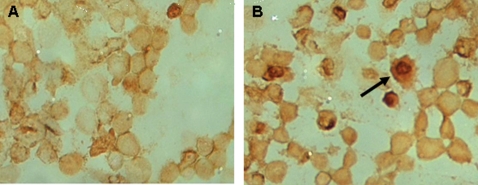
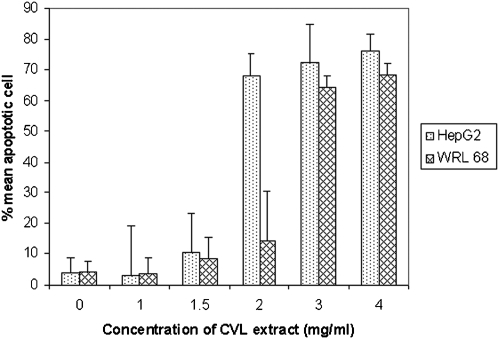
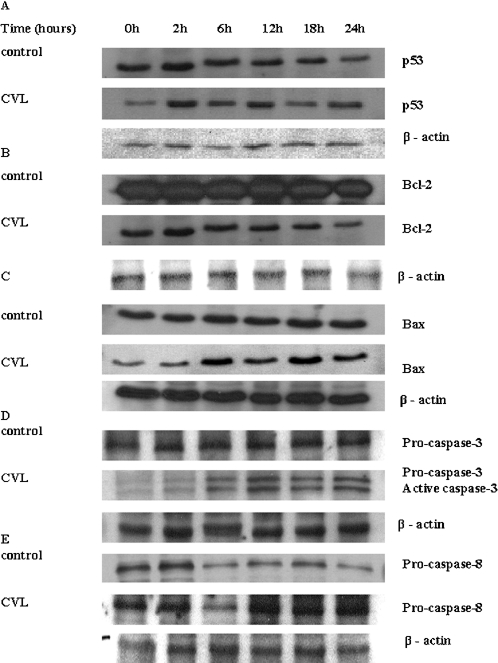
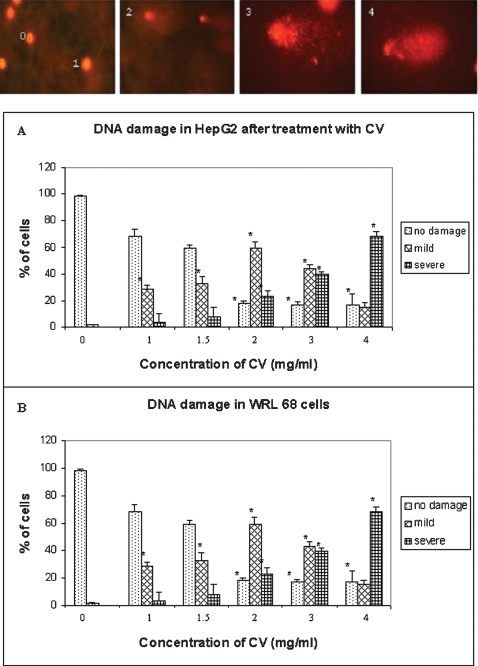
OBJECTIVES: The aim of this study was to determine the antiproliferative and apoptotic effects of hot water extracts of Chlorella vulgaris on hepatoma cell line HepG2. INTRODUCTION: The search for food and spices that can induce apoptosis in cancer cells has been a major study interest in the last decade. Chlorella vulgaris, a unicellular green algae, has been reported to have antioxidant and anti-cancer properties. However, its chemopreventive effects in inhibiting the growth of cancer cells have not been studied in great detail. METHODS: HepG2 liver cancer cells and WRL68 normal liver cells were treated with various concentrations (0-4 mg/ml) of hot water extract of C. vulgaris after 24 hours incubation. Apoptosis rate was evaluated by TUNEL assay while DNA damage was assessed by Comet assay. Apoptosis proteins were evaluated by Western blot analysis. RESULTS: Chlorella vulgaris decreased the number of viable HepG2 cells in a dose dependent manner (p < 0.05), with an IC50 of 1.6 mg/ml. DNA damage as measured by Comet assay was increased in HepG2 cells at all concentrations of Chlorella vulgaris tested. Evaluation of apoptosis by TUNEL assay showed that Chlorella vulgaris induced a higher apoptotic rate (70%) in HepG2 cells compared to normal liver cells, WRL68 (15%). Western blot analysis showed increased expression of pro-apoptotic proteins P53, Bax and caspase-3 in the HepG2 cells compared to normal liver cells WRL68, and decreased expression of the anti-apoptotic protein Bcl-2. CONCLUSIONS: Chlorella vulgaris may have anti-cancer effects by inducing apoptosis signaling cascades via an increased expression of P53, Bax and caspase-3 proteins and through a reduction of Bcl-2 protein, which subsequently lead to increased DNA damage and apoptosis.
Overview
The claims and statistics of this paper haven’t been checked yet.
Free: it reads the open-access text and checks the first 5 claims that cite a source we can check. Create a free account to check every claim.
Integrity signals
Registry
Cites
Statistics
Figures
Verification
Claims the paper makes
The claims and statistics of this paper haven’t been checked yet.
Free: it reads the open-access text and checks the first 5 claims that cite a source we can check. Create a free account to check every claim.
Claims other papers make about this one
Each is checked against this paper’s own text: does it say what the citing paper says it does?
The cited source says what the claim attributes to it.
In the citing paper
“crude extracts of Chlorella and Aphanizomenon flos-aquae have been shown to trigger selective apoptosis of liver cancer (HepG2) and leukaemia (AML) cells (Bechelli et al., 2011; Yusof et al., 2010).”
From Cyanobacteria and microalgae in supporting human habitation on Mars (2022) · cites this paper as Yusof et al., 2010
Self-check
Percentages, sums and reported differences re-computed from the paper’s own numbers.
The self-check needs the paper’s full text.
Citations
Cites
A simple technique for quantitation of low levels of DNA damage in individual cells
Singh, N. P., McCoy, M. T., Tice, R. R., & Schneider, E. L. (1988) · Experimental Cell Research · doi:10.1016/0014-4827(88)90265-0 · Cited by 10,828 · cited 2×
“DNA Damage Measurement by Comet Assay The assay was performed as described by Singh et al.(23) Thirty microlitres of the HepG2 cell suspension (,400,000 cells/ml) was mixed with 80 ml of 1% low melting point (LMP) agarose and added to fully frosted slides that had”
MethodThe Release of Cytochrome c from Mitochondria: A Primary Site for Bcl-2 Regulation of Apoptosis
Kluck, R. M., Bossy-Wetzel, E., Green, D. R., & Newmeyer, D. D. (1997) · Science · doi:10.1126/science.275.5303.1132 · Cited by 4,714
Primary liver cancer: Worldwide incidence and trends
Bosch, F. X., Ribes, J., Díaz, M., & Cléries, R. (2004) · Gastroenterology · doi:10.1053/j.gastro.2004.09.011 · Cited by 2,477
Lowe, S. W., & Lin, A. W. (2000) · Carcinogenesis · doi:10.1093/carcin/21.3.485 · Cited by 1,876
Liu, X., Zou, H., Slaughter, C., & Wang, X. (1997) · Cell · doi:10.1016/s0092-8674(00)80197-x · Cited by 1,834
Antonsson, B., & Martinou, J.-C. (2000) · Experimental Cell Research · doi:10.1006/excr.2000.4839 · Cited by 792
Norbury, C. J., & Zhivotovsky, B. (2004) · Oncogene · doi:10.1038/sj.onc.1207532 · Cited by 701
The role of DNA fragmentation in apoptosis
Bortner, C. D., Oldenburg, N. B. E., & Cidlowski, J. A. (1995) · Trends in Cell Biology · doi:10.1016/s0962-8924(00)88932-1 · Cited by 608 · cited 2×
“2).(24) The percentange of apoptosis of HepG2 and WRL68 cells as induced by C.”
BackgroundLarrosa, M., Tomás-Barberán, F. A., & Espín, J. C. (2006) · The Journal of Nutritional Biochemistry · doi:10.1016/j.jnutbio.2005.09.004 · Cited by 461
Injected cytochrome c induces apoptosis
Zhivotovsky, B., Orrenius, S., Brustugun, O. T., & Døskeland, S. O. (1998) · Nature · doi:10.1038/35060 · Cited by 351
Research works printed but not linked: 1
- Benchimol S P53‐dependent pathway of apoptosis Cell Death Differ 2001 8 1049 51 10.1038/sj.cdd.4400918 11687883 · DOI · Paper page
Cited by
Yamanaka, K., Haraguchi, Y., Takahashi, H., Kawashima, I., & Shimizu, T. (2023) · Scientific Reports · doi:10.1038/s41598-023-27629-w · Cited by 132
New Drugs from the Sea: Pro-Apoptotic Activity of Sponges and Algae Derived Compounds
Ercolano, G., Cicco, P. D., & Ianaro, A. (2019) · Marine Drugs · doi:10.3390/md17010031 · Cited by 115
“A sulphated polysaccharide, extracted from Ulva intestinalis, is found to have anticancer activity on human hepatoma HepG2 cell line.”
BackgroundInfluentialChemical Compounds, Bioactivities, and Applications of Chlorella vulgaris in Food, Feed and Medicine
Mendes, A. R., Spínola, M. P., Lordelo, M., & Prates, J. A. M. (2024) · Applied Sciences · doi:10.3390/app142310810 · Cited by 95
Cyanobacteria and microalgae in supporting human habitation on Mars
Mapstone, L. J., Leite, M. N., Purton, S., Crawford, I. A., & Dartnell, L. (2022) · Biotechnology Advances · doi:10.1016/j.biotechadv.2022.107946 · Cited by 92
“…triggers apoptosis in breast and cervical (MCF7 and HeLa) cancer cells (Li et al., 2006), and crude extracts of Chlorella and Aphanizomenon flos-aquae have been shown to trigger selective apoptosis of liver cancer (HepG2) and leukaemia (AML) cells (Bechelli et al., 2011; Yusof et al., 2010).”
Lin, P.-Y., Tsai, C.-T., Chuang, W.-L., Chao, Y.-H., Pan, I.-H., Chen, Y.-K., Lin, C.-C., & Wang, B.-Y. (2017) · BMC Complementary and Alternative Medicine · doi:10.1186/s12906-017-1611-9 · Cited by 79
“vulgaris has been shown to have anti-cancer effects by inducing apoptosis signaling cascades in the hepatoma cell line HepG2 [15] and in rat models of liver cancer [16].”
BackgroundNg, J. Y., Chua, M. L., Zhang, C., Hong, S., Kumar, Y., Gokhale, R. D., & Ee, P. L. R. (2020) · Frontiers in Bioengineering and Biotechnology · doi:10.3389/fbioe.2020.564667 · Cited by 82
Aliahmat, N. S., Noor, M. R. M., Yusof, W. J. W., Makpol, S., Ngah, W. Z. W., & Yusof, Y. A. M. (2012) · Clinics · doi:10.6061/clinics/2012(12)16 · Cited by 75
Self-citationNew insights into Chlorella vulgaris applications
Al-Hammadi, M. S., & Güngörmüşler, M. (2024) · Biotechnology and Bioengineering · doi:10.1002/bit.28666 · Cited by 79
“…properties of C. vulgaris extracts were highlighted by increasing the levels of the proteins Bax, P53, and caspase ‐ 3 while decreasing the amount of the protein Bcl ‐ 2, which causes apoptosis and DNA damage (Yusof et al., 2010 The extracts prolonged the shelf life of sardine for 3 days.”
BackgroundSenousy, H. H., Ellatif, S. A. A., & Ali, S. (2020) · Environmental Science and Pollution Research · doi:10.1007/s11356-020-08332-z · Cited by 72
Siddiqui, S., Ahmad, R., Khan, M. A., Upadhyay, S., Husain, I., & Srivastava, A. (2019) · Scientific Reports · doi:10.1038/s41598-018-36475-0 · Cited by 65
Reyna-Martinez, R., Gomez-Flores, R., López-Chuken, U., Quintanilla-Licea, R., Caballero-Hernandez, D., Rodríguez-Padilla, C., Beltrán-Rocha, J. C., & Tamez-Guerra, P. (2018) · PeerJ · doi:10.7717/peerj.4358 · Cited by 51
A review on current and future advancements for commercialized microalgae species
Wong, J. F., Hong, H. J., Foo, S. C., Yap, M. K. K., & Tan, J. W. (2022) · Food Science and Human Wellness · doi:10.1016/j.fshw.2022.04.007 · Cited by 46
Abolhasani, M. H., Safavi, M., Goodarzi, M. T., Kassaee, S. M., & Azin, M. (2018) · DARU Journal of Pharmaceutical Sciences · doi:10.1007/s40199-018-0213-5 · Cited by 58
“Studies on the bioactivities of marine algae revealed that chemopreventive agents prevent growth of cancer cells and induce apoptosis by targeting signaling molecules, such as caspases [12].”
Hamouda, R. A., Latif, A. A. E., Elkaw, E. M., Alotaibi, A. S., Alenzi, A. M., & Hamza, H. A. (2022) · Molecules · doi:10.3390/molecules27051602 · Cited by 50
“Hot water extract of Chlorella vulgaris decreased the number of viable HepG2 cells due to increased DNA damage and apoptosis [57].”
BackgroundHussein, H. A., Mohamad, H., Ghazaly, M. M., Laith, A. A., & Abdullah, M. A. (2019) · Journal of Applied Phycology · doi:10.1007/s10811-019-01905-7 · Cited by 49
Cytotoxic Effect of Clerosterol Isolated from Codium fragile on A2058 Human Melanoma Cells
Kim, A., Lee, Y., Kang, S.-H., Kim, G., Kim, H. J., & Hyun, J. W. (2013) · Marine Drugs · doi:10.3390/md11020418 · Cited by 47
“The mechanisms underlying Chlorella vulgaris-induced apoptosis were investigated in another study, which examined the expression and activity of the tumor suppressor protein, p53 and a host of pro- and anti-apoptotic proteins, such as Bcl-2, Bax and caspases 3 and 8 [29].”
Dong, N., Xue, C., Yang, Y., Chang, Y., Wang, Y., Guo, H., Liu, Y., & Wang, Y. (2022) · Food Research International · doi:10.1016/j.foodres.2022.112438 · Cited by 31
Josephine, A., Sivasankarasubbiah, K. T., Sreelatha, T., Rangamaran, V. R., Dharani, G., & Ramalingam, K. (2018) · Journal of Applied Phycology · doi:10.1007/s10811-018-1430-5 · Cited by 31
“Initially, the biomass was processed for the extraction of CGF by hot water treatment (Yusof et al. 2010), and the spent biomass thus obtained was investigated for sequential extraction of lipid and carotenoids.”
BackgroundMethodInfluentialJosephine, A., Niveditha, C., Radhika, A., Shali, A. B., Kumar, T. S., Dharani, G., & Kirubagaran, R. (2015) · Biomass and Bioenergy · doi:10.1016/j.biombioe.2015.02.016 · Cited by 28
“[17] Yusof YA, Saad SM, Makpol S, Shamaan NA, Ngah WZ.”
BackgroundMethodResultInfluentialLin, H.-C., Chou, S., Chuang, M.-Y., Liao, T.-Y., Tsai, W.-S., & Chiu, T. (2012) · Food Chemistry · doi:10.1016/j.foodchem.2012.04.105 · Cited by 30
Dong, N., Jiang, B., Chang, Y., Wang, Y., & Xue, C. (2024) · Journal of Agricultural and Food Chemistry · doi:10.1021/acs.jafc.4c00624 · Cited by 24
Muszyńska, B., Krakowska, A., Lazur, J., Jękot, B., Zimmer, Ł., Szewczyk, A., Sułkowska‐Ziaja, K., Poleszak, E., & Opoka, W. (2017) · Journal of Applied Phycology · doi:10.1007/s10811-017-1357-2 · Cited by 24
“Yusof et al. (2010) demonstrated the in vitro antitumor activity using HepG2 hepatocellular carcinoma cells after incubating the cells with extracts of C. vulgaris obtained using a hot method.”
BackgroundMethodStanković, N., Kostić, I., Jovanović, B., Savić‐Zdravković, D., Matić, S. L., Bašić, J., Cvetković, T., Simeunović, J. B., & Milošević, D. (2020) · The Science of The Total Environment · doi:10.1016/j.scitotenv.2020.138666 · Cited by 22
Kumar, T. S., Josephine, A., Sreelatha, T., Dusthackeer, A., Mahizhaveni, B., Dharani, G., Kirubagaran, R., & Kumar, S. R. (2019) · Journal of Ethnopharmacology · doi:10.1016/j.jep.2019.112392 · Cited by 21
Azlan, N. Z., Ghafar, N. A., Yusof, Y. A. M., & Makpol, S. (2020) · Journal of Applied Phycology · doi:10.1007/s10811-020-02195-0 · Cited by 22
Self-citationAbdullah, M. A., & Hussein, H. A. (2021) · Bioresources and Bioprocessing · doi:10.1186/s40643-021-00396-0 · Cited by 19
Arifin, K. T., Sulaiman, S., Saad, S., Damanhuri, H. A., Ngah, W. Z. W., & Yusof, Y. A. M. (2017) · BMC Cancer · doi:10.1186/s12885-017-3883-3 · Cited by 17
Self-citationKunte, M., & Desai, K. B. (2018) · PubMed Central · doi:10.22074/cellj.2018.5277 · Cited by 16
“Chlorella species were explored for various activities such as anti-inflammatory, antiangiogenic anti-proliferative, anti-ageing, anti-oxidant, apoptosis inducing activities (7-13).”
BackgroundIn Vitro and in Vivo Cytotoxic Effects of Chlorella Against Various types of Cancer
Ahmad Raus, R., Adzahar, N. S., Basri, D. F., Latif, E. S., & Sallehudin, N. J. (2020) · IIUM Medical Journal Malaysia · doi:10.31436/imjm.v20i1.1765 · Cited by 13
Prophyletic origin of algae as potential repository of anticancer compounds
Tripathi, R., Shalini, R., & Singh, R. K. (2020) · Elsevier eBooks · doi:10.1016/b978-0-12-821710-8.00007-2 · Cited by 15
Čmiková, N., Kowalczewski, P. Ł., Kmiecik, D., Klimowicz, P., Drożdżyńska, A., Ślachciński, M., Królak, J., Matić, S. L., Markovic, T., Popović, S., et al. (2025) · Open Chemistry · doi:10.1515/chem-2025-0150 · Cited by 9
Chlorella spp. as an Emerging Source for Anticancer Remedy and Nutraceuticals: An Advance Study
Ferdous, U. T., Khan, S. A., Shakoor, A., Uddin, S., Nazarudin, M. F., & Zia, A. W. (2025) · Food Reviews International · doi:10.1080/87559129.2025.2493740 · Cited by 8
Józefczyk, A., Adamczuk, G., Humeniuk, E., Iwan, M., Kubik, J., Łubek-Nguyen, A., Porębska, K., Madej, B., Czerwonka, M., & Korga-Plewko, A. (2025) · Food and Chemical Toxicology · doi:10.1016/j.fct.2025.115271 · Cited by 7
Blas-Valdivia, V., Ortiz-Butrón, R., Sánchez, R. R., Torres-Manzo, A. P., Hernández-García, A., & Cano-Europa, E. (2012) · InTech eBooks · doi:10.5772/32550 · Cited by 7
“Hot water extract of Chlorella vulgaris induced DNA damage and apoptosis (Yusof et al., 2010) The extract of Chlorella vulgaris inhibited DNA synthesis, causing apoptosis and it increases p53, caspase-3, and Bax expression in hepatoma cells (HEpG2) Attenuating effect of Chlorella supplementation on oxidative stress an…”
BackgroundSun, X. L., Cui, Y., Wang, Q., Tang, S., Cao, X., Luo, H., He, Z., Hu, X., Nie, X., Yang, Y., et al. (2018) · Journal of Agricultural and Food Chemistry · doi:10.1021/acs.jafc.8b00139 · Cited by 7
Rzeska, W., Chojnacki, M., Adamiak, A., Semczuk, A., & Lemieszek, M. K. (2025) · International Journal of Molecular Sciences · doi:10.3390/ijms26189142 · Cited by 5
“…we assume that Chlorella Growth Factor (CGF) is responsible for the described beneficial influence on human endometrial adenocarcinoma cells, since its great anticancer potential was earlier observed in other types of cancers, including breast [7,20,54], colon [11], liver [25,33,55] and lung [19].”
Green microalgae as a potential source of trypanocide compounds
Júnior, J. N. D. S., da Silva, A. C., Oliveira, K. K. D. S., Moreira, L. R., Caires, S. D. F. F. D. S., da Silva, A. J., Moura, Y. A. S., Marques, D. D. A. V., Bezerra, R. P., de Lorena, V. M. B., et al. (2023) · Natural Product Research · doi:10.1080/14786419.2023.2169688 · Cited by 5
“Yusof et al. (2010) reported that microalgae such as C. vulgaris present protective effects on WRL68 cells against severe DNA damage, showing be potentially non-toxic to mammalian cells.”
Zin, M. T., Kaewkod, T., Chaipoot, S., Kanthakat, G., Cheirsilp, B., Chen, Y.-Y., & Srinuanpan, S. (2025) · Algal Research · doi:10.1016/j.algal.2025.104210 · Cited by 4
Al-Shajrawi, O. M., Tarawneh, I. A. M., Din, T. A. D. A. T., & Afolabi, H. A. (2024) · Molecular and Clinical Oncology · doi:10.3892/mco.2024.2801 · Cited by 4
Senhorinho, G. N. A., Lannér, C., Laamanen, C. A., Lima, S. T. D. C., & Scott, J. A. (2024) · International Journal on Algae · doi:10.1615/interjalgae.v26.i3.20 · Cited by 5
Gastric and hepatic protective effects of algal components
Raghavendran, H. R. B., Sathivel, A., & Rekha, S. (2013) · Elsevier eBooks · doi:10.1533/9780857098689.2.416 · Cited by 3
Chou, S., Lin, H.-C., Chuang, M.-Y., & Chiu, T. (2014) · Journal of Food Biochemistry · doi:10.1111/jfbc.12079 · Cited by 3
“Recently, several studies have reported on dietary supplements from seaweeds that cause apoptosis in cancer cells such as Capsosiphon fulvescens glycoprotein, which exhibited pro-apoptotic signaling in human gastric cancer cells, and Chlorella vulgaris, which may exert anticancer effects by inducing apoptosis signalin…”
BackgroundAbdelrahman, A. M., Mohammed, A. A., Badawy, M. M. M., & bassuony, W. I. E. (2023) · Cell Biochemistry and Function · doi:10.1002/cbf.3861 · Cited by 3
“…alkaloids, flavonoids, triterpenes, glycosides, tannins, triterpenes, and phenols in amounts of 71.6, 50.9, 62.4, 57.5, 23.17, 47.2, and 90.9g/mg. 31 Transforming growth factor β (TGF ‐ β ) is one of the most potent and common profibrogenic cytokine, and its expression increases in practically…”
BackgroundInfluentialLukyanov, V. A., Gorbunova, S. Y., & Avsiyan, A. L. (2024) · Bioresource Technology Reports · doi:10.1016/j.biteb.2024.101907 · Cited by 7
Venkatraman, A., Moovendhan, M., Kumar, C., Ramesh, S., Albert, A., Panchatcharam, S., Yacoob, S. A. M., Bhuvana, P., Yogananth, N., & Kuppusamy, S. G. (2022) · Biomass Conversion and Biorefinery · doi:10.1007/s13399-022-02786-6 · Cited by 3
Gille, A., Trautmann, A., Gomez, M. R., Bischoff, S. C., Posten, C. H., & Briviba, K. (2019) · Journal of Agricultural and Food Chemistry · doi:10.1021/acs.jafc.9b03457 · Cited by 4
Nagabhushana, S., YOHANNAN, A. S. K., MALAMMANAVAR, S. G., Mookkan, P., & IWARx, K. (2025) · Notulae Scientia Biologicae · doi:10.55779/nsb17112276 · Cited by 2
Josephine, A., Kumar, T. S., Sekar, A. K., Rajakumar, S., Kirubagaran, R., & Dharani, G. (2025) · Chemical Papers · doi:10.1007/s11696-025-04466-x · Cited by 1
Chlorella vulgaris: A miracle plant?
Yusof, Y. A. M., Basri, M. H., Mokti, N. A., Saad, S., Sulaiman, S., Yahaya, N. S. B., Azamai, E. S. M., Makpol, S., & Ngah, W. Z. W. (2011) · International Conference on Modeling, Simulation, and Applied Optimization · doi:10.1109/icmsao.2011.5775638 · Cited by 1
Self-citationEffect of Foods on Antitumor Activity of Doxorubicin, Melphalan and Methotrexate
Iwamoto, S., Sunaga, K., Harada, S., Ohkubo, A., & Tsuda, T. (2011) · Nippon Eiyo Shokuryo Gakkaishi · doi:10.4327/jsnfs.64.393 · Cited by 1
Mohammed, F. Z., Barakat, L. A. A., Gad, E. M., & Shetya, N. M. (2019) · Asian Journal of Research in Biochemistry · doi:10.9734/ajrb/2019/v5i430104 · Cited by 1
“Apoptosis induction is considered to be an active cancer therapy strategy [43].”
BackgroundREVISÃO INTEGRATIVA SOBRE ATIVIDADE ANTITUMORAL DE MICROALGAS E CIANOBACTÉRIAS
Bezerra, R. P., de Arruda, M. C. S., Calaça, P. R. D. A., Cavalcanti, V. L. R., Brandão, R., & Porto, A. L. F. (2021) · Revista Valore · doi:10.22408/reva602021554e-6001 · Cited by 3
Arifin, K. T., Shansuddin, N. I., Karim, N. A., & Makpol, S. (2021) · Sains Malaysiana · doi:10.17576/jsm-2022-5108-06 · Cited by 3
“Subsequently, the harvested cells were boiled at 100 °C for 20 min using reflux method, followed by centrifugation at 17 ,220 xg (Eppendorf ® 5810, Hamburg,Germany) for 20 min (Yusof et al. 2010).”
MethodSelf-citationMartinez, R. C. G., & Raúl, G. (2017) · El Repositorio Academico Digital de la UANL (Universidad Autónoma de Nuevo León) · Cited by 2
Preliminary Biological Assessments of Some Algae Basis Biomaterials
Marian, T., Radu, N., Voicescu, M., Nistor, C. L., Pirvu, L. C., Mihaila, M. A., & Bostan, M. (2025) · Journal of Marine Science and Engineering · doi:10.3390/jmse13020318
Leong, H. J.-Y., Dong, T. H., & Teoh, M. (2025) · Applied Phycology · doi:10.1080/26388081.2025.2558516 · Cited by 1
“This process is driven by the activation of apoptosis signalling cascades, involving the upregulation of p53, Bax, and caspase-3 proteins, as well as the downregulation of the anti-apoptotic Bcl-2 protein (El-Fayoumy et al., 2021; Yusof et al., 2010).”
Abdullah, M. A. B., & Hussein, H. A. (2021) · Figshare · doi:10.6084/m9.figshare.14633792
Nutraceutical Properties of Microalgae of the Genus Chlorella Beijerinck
Calvo-Chaves, K. A., & Díaz-Godínez, G. (2026) · International Journal on Algae · doi:10.1615/interjalgae.v28.i2.50
Rebecca, F. S., Sharmila, R., Vijay, J. S., Tolasa, F. T., Nivedha, R. P., Augustine, T., Ezhilan, J., & Wadajo, S. R. (2026) · Scientific Reports · doi:10.1038/s41598-026-58687-5
Parimalachelvam, G., Nagendran, N., & Balakrishnan, S. (2024) · Science Academique · doi:10.66339/sa.ls.2023.039
Badr, N. R. M. T. M. (2024) · Journal of chemical health risks
Metadata
- Authors
- Yusof, Y. A. M., Md. Saad, S., Makpol, S., Shamaan, N. A., & Ngah, W. Z. W.
- Affiliations
- National University of Malaysia (MY)
- Universiti Sains Islam Malaysia (MY)
- Corresponding author
- Yusof, Yasmin Anum Mohd
- Venue
- Clinics
- Publisher
- Elsevier BV
- Published
- 2010-01
- Volume
- 65
- Issue
- 12
- Pages
- 1371-1377
- ISSN
- 1807-5932 (ISSN-L)
- PMC
- PMC3020351
- OpenAlex
- W2116746191
- Cited by
- 62
- References
- 38
- Citations by year
- 2026: 1 · 2025: 8 · 2024: 6 · 2023: 3 · 2022: 5 · 2021: 4 · 2020: 6 · 2019: 6 · 2018: 9 · 2017: 3 · 2015: 1 · 2014: 2 · 2013: 2 · 2012: 4
- FWCI
- 3.92
- Type
- journal article
- Language
- en
- Open access
- gold
- doi.org
- Licence
- cc-by-nc
- www.elsevier.com/tdm/userlicense/1.0/ (tdm)
- www.elsevier.com/legal/tdmrep-license (tdm)
- creativecommons.org/licenses/by-nc/3.0/ (vor, 444 d)
- Locations
- Clinics (publishedVersion, cc-by-nc)
- PubMed Central (publishedVersion, cc-by-nc)
- PubMed (publishedVersion)
- Americanae (AECID Library) (publishedVersion, other-oa)
- LA Referencia (Red Federada de Repositorios Institucionales de Publicaciones Científicas) (publishedVersion, other-oa)
- DOAJ (DOAJ: Directory of Open Access Journals) (submittedVersion)
- LA Referencia (Red Federada de Repositorios Institucionales de Publicaciones Científicas) (submittedVersion, other-oa)
- Funders
- Kementerian Sains, Teknologi dan Inovasi
- Ministério da Ciência, Tecnologia e Inovação
- Topics
- Life Sciences › Agricultural and Biological Sciences › Aquatic Science › Seaweed-derived Bioactive Compounds
- Life Sciences › Agricultural and Biological Sciences › Plant Science › Medicinal Plant Research
- Physical Sciences › Energy › Renewable Energy, Sustainability and the Environment › Algal biology and biofuel production
- Keywords
- Chlorella vulgaris, hot water extract, apoptosis, DNA damage, HepG2 cells, hepatocellular carcinoma, antiproliferative activity, p53, Bax, Bcl-2, caspase-3, green algae, chemoprevention, anticancer activity
- MeSH terms
- DNA Damage, Hot Temperature, Humans, Plant Extracts, Water, Tumor Suppressor Protein p53, Apoptosis, Chlorella vulgaris, Apoptosis Regulatory Proteins, Hep G2 Cells
About these checks
Registry, retraction, Cites and statistics results are computed, not judged, with one exception: a printed reference that no index lists is read once by a model before it counts as a citation error. Claims are extracted by a model and kept only when their quote appears verbatim in the text; each cited source is then checked, with a model’s help, for whether it says what the claim relies on. Those verdicts can be wrong — read the claim’s quote and the cited source before relying on one.
Statistics and arithmetic are recomputed, not judged.
Confidence bands are shown only for fields calibrated on our annotated test set. None is calibrated yet, so no band is shown.
What counts as a claim ›How we measure confidence ›How we check this ›
Are you an author, or do you see a problem with this page? Request a review
Data sources
Bibliographic data: Semantic Scholar, OpenAlex, Crossref.
Contains information from the Semantic Scholar Academic Graph Datasets, made available under the ODC Attribution License (ODC-BY 1.0).
Semantic Scholar’s data is described in: Kinney, R., et al. (2023). The Semantic Scholar Open Data Platform. arXiv:2301.10140.
