

Hot water extract of Chlorella vulgaris induced DNA damage and apoptosis
Open accessThe DOI matches its Crossref record; 34 of the 38 references it cites were found in a registry or an index, and 1 are not checked yet.
Abstract
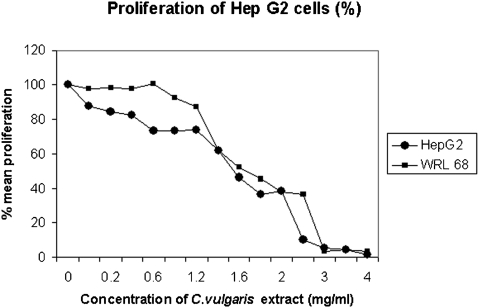
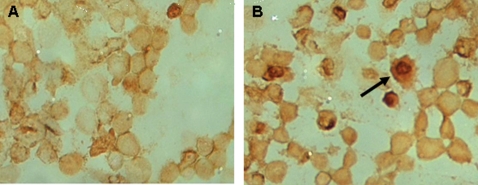
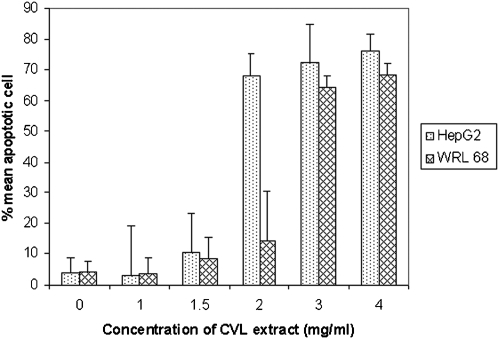
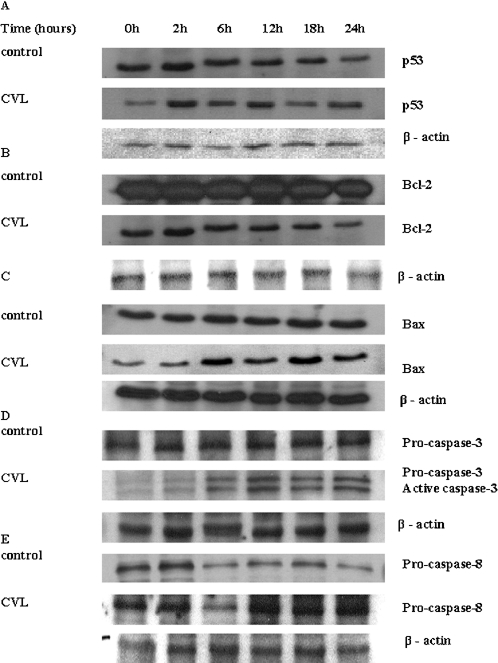
OBJECTIVES: The aim of this study was to determine the antiproliferative and apoptotic effects of hot water extracts of Chlorella vulgaris on hepatoma cell line HepG2. INTRODUCTION: The search for food and spices that can induce apoptosis in cancer cells has been a major study interest in the last decade. Chlorella vulgaris, a unicellular green algae, has been reported to have antioxidant and anti-cancer properties. However, its chemopreventive effects in inhibiting the growth of cancer cells have not been studied in great detail. METHODS: HepG2 liver cancer cells and WRL68 normal liver cells were treated with various concentrations (0-4 mg/ml) of hot water extract of C. vulgaris after 24 hours incubation. Apoptosis rate was evaluated by TUNEL assay while DNA damage was assessed by Comet assay. Apoptosis proteins were evaluated by Western blot analysis. RESULTS: Chlorella vulgaris decreased the number of viable HepG2 cells in a dose dependent manner (p < 0.05), with an IC50 of 1.6 mg/ml. DNA damage as measured by Comet assay was increased in HepG2 cells at all concentrations of Chlorella vulgaris tested. Evaluation of apoptosis by TUNEL assay showed that Chlorella vulgaris induced a higher apoptotic rate (70%) in HepG2 cells compared to normal liver cells, WRL68 (15%). Western blot analysis showed increased expression of pro-apoptotic proteins P53, Bax and caspase-3 in the HepG2 cells compared to normal liver cells WRL68, and decreased expression of the anti-apoptotic protein Bcl-2. CONCLUSIONS: Chlorella vulgaris may have anti-cancer effects by inducing apoptosis signaling cascades via an increased expression of P53, Bax and caspase-3 proteins and through a reduction of Bcl-2 protein, which subsequently lead to increased DNA damage and apoptosis.
Overview
The claims and statistics of this paper haven’t been checked yet.
Free: it reads the open-access text and checks the first 5 claims that cite a source we can check. Create a free account to check every claim.
Integrity signals
Registry
Cites
Statistics
Figures
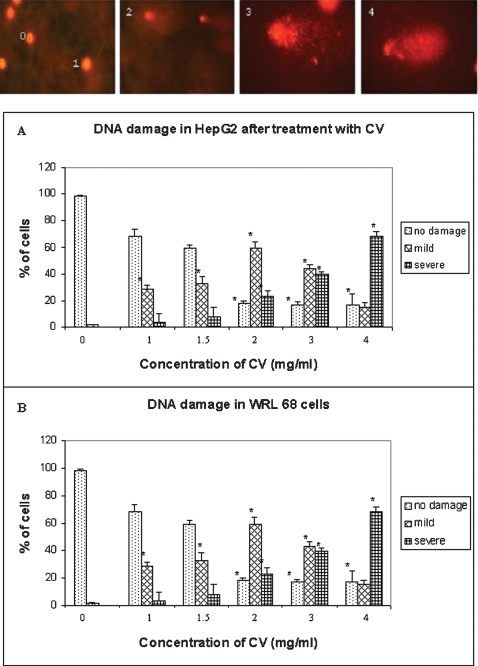
Verification
Claims the paper makes
The claims and statistics of this paper haven’t been checked yet.
Free: it reads the open-access text and checks the first 5 claims that cite a source we can check. Create a free account to check every claim.
Claims other papers make about this one
Each is checked against this paper’s own text: does it say what the citing paper says it does?
The cited source says what the claim attributes to it.
In the citing paper
“crude extracts of Chlorella and Aphanizomenon flos-aquae have been shown to trigger selective apoptosis of liver cancer (HepG2) and leukaemia (AML) cells (Bechelli et al., 2011; Yusof et al., 2010).”
From Cyanobacteria and microalgae in supporting human habitation on Mars (2022) · cites this paper as Yusof et al., 2010
Self-check
Percentages, sums and reported differences re-computed from the paper’s own numbers.
The self-check needs the paper’s full text.
Citations
Cites
A simple technique for quantitation of low levels of DNA damage in individual cells
Singh, N. P., McCoy, M. T., Tice, R. R., & Schneider, E. L. (1988) · Experimental Cell Research · doi:10.1016/0014-4827(88)90265-0 · Cited by 10,828 · cited 2×
“DNA Damage Measurement by Comet Assay The assay was performed as described by Singh et al.(23) Thirty microlitres of the HepG2 cell suspension (,400,000 cells/ml) was mixed with 80 ml of 1% low melting point (LMP) agarose and added to fully frosted slides that had”
MethodThe Release of Cytochrome c from Mitochondria: A Primary Site for Bcl-2 Regulation of Apoptosis
Kluck, R. M., Bossy-Wetzel, E., Green, D. R., & Newmeyer, D. D. (1997) · Science · doi:10.1126/science.275.5303.1132 · Cited by 4,714
Primary liver cancer: Worldwide incidence and trends
Bosch, F. X., Ribes, J., Díaz, M., & Cléries, R. (2004) · Gastroenterology · doi:10.1053/j.gastro.2004.09.011 · Cited by 2,477
Lowe, S. W., & Lin, A. W. (2000) · Carcinogenesis · doi:10.1093/carcin/21.3.485 · Cited by 1,876
Liu, X., Zou, H., Slaughter, C., & Wang, X. (1997) · Cell · doi:10.1016/s0092-8674(00)80197-x · Cited by 1,834
Antonsson, B., & Martinou, J.-C. (2000) · Experimental Cell Research · doi:10.1006/excr.2000.4839 · Cited by 792
Norbury, C. J., & Zhivotovsky, B. (2004) · Oncogene · doi:10.1038/sj.onc.1207532 · Cited by 701
The role of DNA fragmentation in apoptosis
Bortner, C. D., Oldenburg, N. B. E., & Cidlowski, J. A. (1995) · Trends in Cell Biology · doi:10.1016/s0962-8924(00)88932-1 · Cited by 608 · cited 2×
“2).(24) The percentange of apoptosis of HepG2 and WRL68 cells as induced by C.”
BackgroundLarrosa, M., Tomás-Barberán, F. A., & Espín, J. C. (2006) · The Journal of Nutritional Biochemistry · doi:10.1016/j.jnutbio.2005.09.004 · Cited by 461
Injected cytochrome c induces apoptosis
Zhivotovsky, B., Orrenius, S., Brustugun, O. T., & Døskeland, S. O. (1998) · Nature · doi:10.1038/35060 · Cited by 351
Cancer-preventive isothiocyanates: measurement of human exposure and mechanism of action
Zhang, Y. (2004) · Mutation Research - Fundamental and Molecular Mechanisms of Mutagenesis · doi:10.1016/j.mrfmmm.2004.04.017 · Cited by 320 · cited 1×
“Some of these dietary agents include epigallocatechin-3-gallate (EGCG), found in green tea,(10) curcumin in turmeric,(11) genistein in soybeans,(12) lycopene in tomatoes,(13) anthocyanins in pomegranates(14) and isothiocyanates in broccoli.(15) Copyright 2010 CLINICS – This is an Open Access article distributed under…”
BackgroundOptimization of accelerated solvent extraction of antioxidants from Spirulina platensis microalga
Herrero, M., Martín-Álvarez, P. J., Señoráns, F. J., Cifuentes, A., & Ibáñez, E. (2005) · Food Chemistry · doi:10.1016/j.foodchem.2004.09.037 · Cited by 235
Ganoderma lucidum extract induces cell cycle arrest and apoptosis in MCF‐7 human breast cancer cell
Hu, H., Ahn, N., Yang, X., Lee, Y., & Kang, K. (2002) · International Journal of Cancer · doi:10.1002/ijc.10707 · Cited by 232
Apoptosis and Its Role in Human Disease
Barr, P. J., & Tomei, L. D. (1994) · Bio/Technology · doi:10.1038/nbt0594-487 · Cited by 225 · cited 1×
“has been associated with delaying or inhibiting cancer growth.(6,7) Much of cancer research over the past two”
BackgroundThe Apoptosis-Necrosis Continuum: Insights from Genetically Altered Mice
Zeiss, C. J. (2003) · Veterinary Pathology · doi:10.1354/vp.40-5-481 · Cited by 218 · cited 1×
“liferation with dysregulation of apoptosis that is responsible for initiating cancer and its progression.(8,9) Many”
BackgroundApoptosis by dietary factors: the suicide solution for delaying cancer growth
Khan, N., Afaq, F., & Mukhtar, H. (2006) · Carcinogenesis · doi:10.1093/carcin/bgl243 · Cited by 213 · cited 3×
“Many chemopreventive agents have been associated with antiproliferative and apoptotic effects on cancer cells because of their high antioxidant activity, targeting signaling molecules, and preventing or protecting cells from further damage or transformation into cancer cells.(7) Chlorella vulgaris has been shown to ex…”
BackgroundBrusselmans, K., De Schrijver, E., Heyns, W., Verhoeven, G., & Swinnen, J. V. (2003) · International Journal of Cancer · doi:10.1002/ijc.11317 · Cited by 205
p53-dependent pathways of apoptosis
Benchimol, S. (2001) · Cell Death & Differentiation · doi:10.1038/sj.cdd.4400918 · Cited by 201
Merchant, R. E., & Andre, C. A. (2001) · PubMed · Cited by 182
Rodríguez‐García, I., & Guil‐Guerrero, J. L. (2007) · Food Chemistry · doi:10.1016/j.foodchem.2007.11.059 · Cited by 169 · cited 1×
“Chlorella vulgaris has been shown to exhibit high antioxidant activity compared to other microalgae.(25) The antiproliferative effect of C.”
BackgroundWang, J. (2001) · Cell Death & Differentiation · doi:10.1038/sj.cdd.4400938 · Cited by 166
Lee, S. M., Li, M. L. Y., Tse, Y. C., Leung, S. C. L., Lee, M. M. S., Tsui, S. K., Fung, K., Lee, C. Y., & Waye, M. M. Y. (2002) · Life Sciences · doi:10.1016/s0024-3205(02)01962-8 · Cited by 146
Efficacy of Dietary Antioxidants to Prevent Oxidative Damage and Inhibit Chronic Disease
Frei, B. B. (2004) · Journal of Nutrition · doi:10.1093/jn/134.11.3196s · Cited by 137
Jackson, P. E., & Groopman, J. D. (1999) · Best Practice & Research Clinical Gastroenterology · doi:10.1053/bega.1999.0047 · Cited by 102
Su, S.-J., Chow, N.-H., Kung, M.-L., Hung, T.-C., & Chang, K.-L. (2003) · Nutrition and Cancer · doi:10.1207/s15327914nc4501_13 · Cited by 99
Phyllanthus urinaria triggers the apoptosis and Bcl-2 down-regulation in Lewis lung carcinoma cells
Huang, S., Yang, R.-C., Yang, L.-J., Lee, P.-N., & Pang, J. S. (2003) · Life Sciences · doi:10.1016/s0024-3205(03)00016-x · Cited by 97
YASUKAWA, K., AKIHISA, T., KANNO, H., KAMINAGA, T., IZUMIDA, M., SAKOH, T., TAMURA, T., & TAKIDO, M. (1996) · Biological and Pharmaceutical Bulletin · doi:10.1248/bpb.19.573 · Cited by 96
Tsai, J., Chang, W., Jeng, J., Ho, M., Lin, Z., & Tsai, J. (1994) · Liver International · doi:10.1111/j.1600-0676.1994.tb00055.x · Cited by 92
Liu, C., Russell, R. M., & Wang, X. (2006) · Journal of Nutrition · doi:10.1093/jn/136.1.106 · Cited by 90
Induction of apoptosis by the aqueous extract of Rubus coreanum in HT-29 human colon cancer cells
Kim, E. J., Lee, Y.-J., Shin, H., & Park, J. H. Y. (2005) · Nutrition · doi:10.1016/j.nut.2005.02.012 · Cited by 87
Gao, X., Deeb, D., Jiang, H., Liu, Y. B., Dulchavsky, S. A., & Gautam, S. C. (2005) · PubMed · Cited by 76
Hasegawa, T., Matsuguchi, T., Noda, K., Tanaka, K., Kumamoto, S., Shoyama, Y., & Yoshikai, Y. (2002) · International Immunopharmacology · doi:10.1016/s1567-5769(02)00002-4 · Cited by 70 · cited 2×
“vulgaris extract has an anti-cancer effect on mice-induced fibrosarcoma.(22)”
BackgroundMolecular mechanism of hepatocarcinogenesis
Sheu, J. (1997) · Journal of Gastroenterology and Hepatology · doi:10.1111/j.1440-1746.1997.tb00514.x · Cited by 47
The Molecular Perspective: Bcl‐2 and Apoptosis
Goodsell, D. S. (2002) · Stem Cells · doi:10.1634/stemcells.20-4-355 · Cited by 38
Cho, K., Park, H., Park, H., et al. (2009) · Open Access System for Information Sharing (Pohang University of Science and Technology) · doi:10.1634/stemcells.20 · Cited by 2
Research works printed but not linked: 1
- Benchimol S P53‐dependent pathway of apoptosis Cell Death Differ 2001 8 1049 51 10.1038/sj.cdd.4400918 11687883 · DOI · Paper page
Cited by
Yamanaka, K., Haraguchi, Y., Takahashi, H., Kawashima, I., & Shimizu, T. (2023) · Scientific Reports · doi:10.1038/s41598-023-27629-w · Cited by 132
New Drugs from the Sea: Pro-Apoptotic Activity of Sponges and Algae Derived Compounds
Ercolano, G., Cicco, P. D., & Ianaro, A. (2019) · Marine Drugs · doi:10.3390/md17010031 · Cited by 115
“A sulphated polysaccharide, extracted from Ulva intestinalis, is found to have anticancer activity on human hepatoma HepG2 cell line.”
BackgroundInfluentialChemical Compounds, Bioactivities, and Applications of Chlorella vulgaris in Food, Feed and Medicine
Mendes, A. R., Spínola, M. P., Lordelo, M., & Prates, J. A. M. (2024) · Applied Sciences · doi:10.3390/app142310810 · Cited by 95
Cyanobacteria and microalgae in supporting human habitation on Mars
Mapstone, L. J., Leite, M. N., Purton, S., Crawford, I. A., & Dartnell, L. (2022) · Biotechnology Advances · doi:10.1016/j.biotechadv.2022.107946 · Cited by 92
“…triggers apoptosis in breast and cervical (MCF7 and HeLa) cancer cells (Li et al., 2006), and crude extracts of Chlorella and Aphanizomenon flos-aquae have been shown to trigger selective apoptosis of liver cancer (HepG2) and leukaemia (AML) cells (Bechelli et al., 2011; Yusof et al., 2010).”
Lin, P.-Y., Tsai, C.-T., Chuang, W.-L., Chao, Y.-H., Pan, I.-H., Chen, Y.-K., Lin, C.-C., & Wang, B.-Y. (2017) · BMC Complementary and Alternative Medicine · doi:10.1186/s12906-017-1611-9 · Cited by 79
“vulgaris has been shown to have anti-cancer effects by inducing apoptosis signaling cascades in the hepatoma cell line HepG2 [15] and in rat models of liver cancer [16].”
Background
Metadata
- Authors
- Yusof, Y. A. M., Md. Saad, S., Makpol, S., Shamaan, N. A., & Ngah, W. Z. W.
- Affiliations
- National University of Malaysia (MY)
- Universiti Sains Islam Malaysia (MY)
- Corresponding author
- Yusof, Yasmin Anum Mohd
- Venue
- Clinics
- Publisher
- Elsevier BV
- Published
- 2010-01
- Volume
- 65
- Issue
- 12
- Pages
- 1371-1377
- ISSN
- 1807-5932 (ISSN-L)
- PMC
- PMC3020351
- OpenAlex
- W2116746191
- Cited by
- 62
- References
- 38
- Citations by year
- 2026: 1 · 2025: 8 · 2024: 6 · 2023: 3 · 2022: 5 · 2021: 4 · 2020: 6 · 2019: 6 · 2018: 9 · 2017: 3 · 2015: 1 · 2014: 2 · 2013: 2 · 2012: 4
- FWCI
- 3.92
- Type
- journal article
- Language
- en
- Open access
- gold
- doi.org
- Licence
- cc-by-nc
- www.elsevier.com/tdm/userlicense/1.0/ (tdm)
- www.elsevier.com/legal/tdmrep-license (tdm)
- creativecommons.org/licenses/by-nc/3.0/ (vor, 444 d)
- Locations
- Clinics (publishedVersion, cc-by-nc)
- PubMed Central (publishedVersion, cc-by-nc)
- PubMed (publishedVersion)
- Americanae (AECID Library) (publishedVersion, other-oa)
- LA Referencia (Red Federada de Repositorios Institucionales de Publicaciones Científicas) (publishedVersion, other-oa)
- DOAJ (DOAJ: Directory of Open Access Journals) (submittedVersion)
- LA Referencia (Red Federada de Repositorios Institucionales de Publicaciones Científicas) (submittedVersion, other-oa)
- Funders
- Kementerian Sains, Teknologi dan Inovasi
- Ministério da Ciência, Tecnologia e Inovação
- Topics
- Life Sciences › Agricultural and Biological Sciences › Aquatic Science › Seaweed-derived Bioactive Compounds
- Life Sciences › Agricultural and Biological Sciences › Plant Science › Medicinal Plant Research
- Physical Sciences › Energy › Renewable Energy, Sustainability and the Environment › Algal biology and biofuel production
- Keywords
- Chlorella vulgaris, hot water extract, apoptosis, DNA damage, HepG2 cells, hepatocellular carcinoma, antiproliferative activity, p53, Bax, Bcl-2, caspase-3, green algae, chemoprevention, anticancer activity
- MeSH terms
- DNA Damage, Hot Temperature, Humans, Plant Extracts, Water, Tumor Suppressor Protein p53, Apoptosis, Chlorella vulgaris, Apoptosis Regulatory Proteins, Hep G2 Cells
About these checks
Registry, retraction, Cites and statistics results are computed, not judged, with one exception: a printed reference that no index lists is read once by a model before it counts as a citation error. Claims are extracted by a model and kept only when their quote appears verbatim in the text; each cited source is then checked, with a model’s help, for whether it says what the claim relies on. Those verdicts can be wrong — read the claim’s quote and the cited source before relying on one.
Statistics and arithmetic are recomputed, not judged.
Confidence bands are shown only for fields calibrated on our annotated test set. None is calibrated yet, so no band is shown.
What counts as a claim ›How we measure confidence ›How we check this ›
Are you an author, or do you see a problem with this page? Request a review
Data sources
Bibliographic data: Semantic Scholar, OpenAlex, Crossref.
Contains information from the Semantic Scholar Academic Graph Datasets, made available under the ODC Attribution License (ODC-BY 1.0).
Semantic Scholar’s data is described in: Kinney, R., et al. (2023). The Semantic Scholar Open Data Platform. arXiv:2301.10140.
