

The effects of heated vegetable oils on blood pressure in rats
Open accessThe DOI matches its Crossref record; 34 of the 39 references it cites were found in a registry or an index.
Abstract
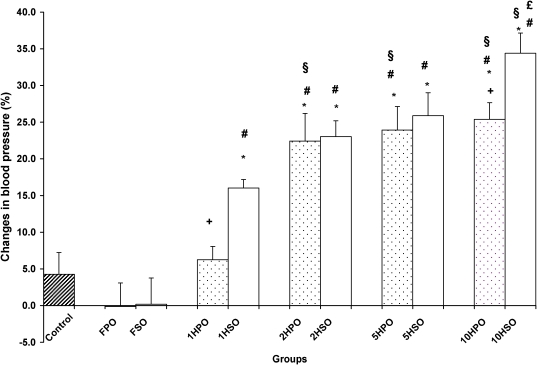
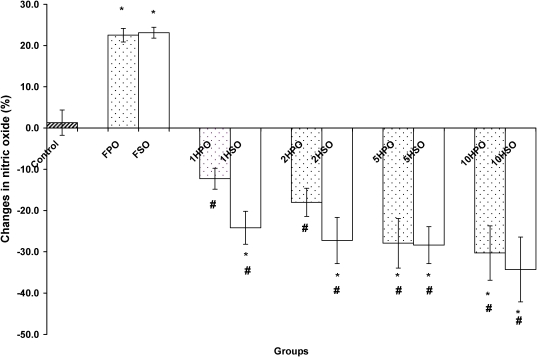
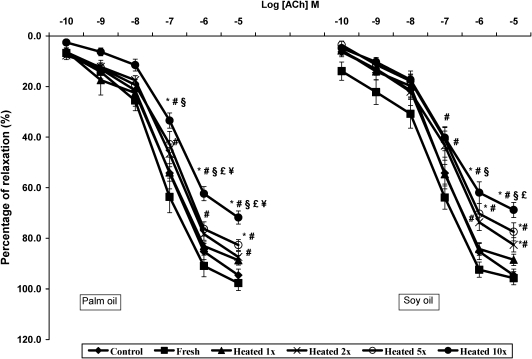
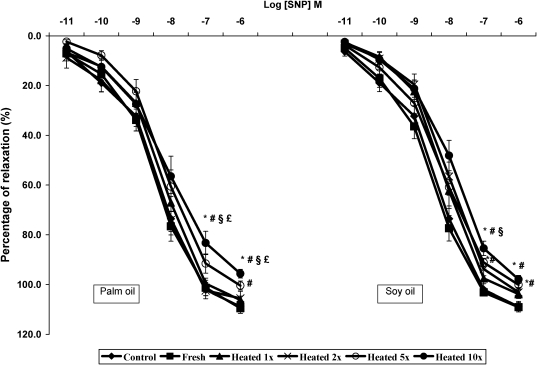
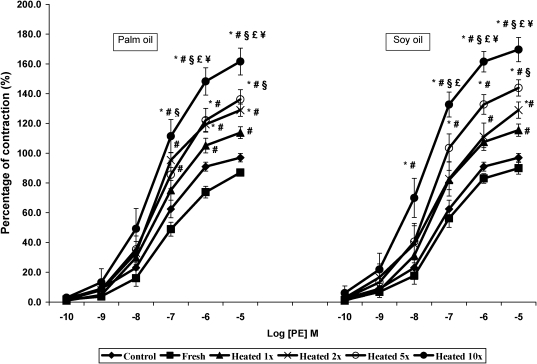
OBJECTIVES: The goal of this study was to determine the possible mechanism that is involved in the blood pressure-raising effect of heated vegetable oils. METHODS: Adult male Sprague-Dawley rats were divided into 11 groups; the control group was fed with rat chow, and the other groups were fed with chow that was mixed with 15% weight/weight palm or soy oils, which were either in a fresh form or heated once, twice, five, or ten times. Blood pressures were measured at the baseline and throughout the 24-week study. Plasma nitric oxide levels were assessed prior to treatment and at the end of the study. Following 24 weeks, the rats were sacrificed to investigate their vascular reactivity using the thoracic aorta. RESULTS: Palm and soy oils had no detrimental effects on blood pressure, and they significantly elevated the nitric oxide contents and reduced the contractile responses to phenylephrine. However, trials using palm and soy oils that were repeatedly heated showed an increase in blood pressure, enhanced phenylephrine-induced contractions, reduced acetylcholine- and sodium nitroprusside-induced relaxations relative to the control and rats that were fed fresh vegetable oils. CONCLUSIONS: The blood pressure-raising effect of the heated vegetable cooking oils is associated with increased vascular reactivity and a reduction in nitric oxide levels. The chronic consumption of heated vegetable oils leads to disturbances in endogenous vascular regulatory substances, such as nitric oxide. The thermal oxidation of the cooking oils promotes the generation of free radicals and may play an important contributory role in the pathogenesis of hypertension in rats.
Overview
The claims and statistics of this paper haven’t been checked yet.
Free: it reads the open-access text and checks the first 5 claims that cite a source we can check. Create a free account to check every claim.
Integrity signals
Registry
Cites
Statistics
Figures
Verification
Claims the paper makes
The claims and statistics of this paper haven’t been checked yet.
Free: it reads the open-access text and checks the first 5 claims that cite a source we can check. Create a free account to check every claim.
Claims other papers make about this one
Each is checked against this paper’s own text: does it say what the citing paper says it does?
The cited source doesn’t support the claim as written.
In the citing paper
“ovariectomized adult female Sprague-Dawley rats with suppressed resistance to atherosclerosis were developed by putting the animal on a 15% w/w of heated vegetable oil diet.”
From Cardiovascular disease models: A game changing paradigm in drug discovery and screening (2019) · cites this paper as [121]
Checked by a reasoning model — may be wrong.
Experimental — accuracy not yet measuredThe source backs part of the claim, not all of it — or backs it for a different population, condition or comparison.
In the citing paper
“The same diet over a longer period (16–24 weeks) promoted atherosclerosis in male subjects [120,121].”
From Cardiovascular disease models: A game changing paradigm in drug discovery and screening (2019) · cites this paper as [121]
Experimental — accuracy not yet measured
Self-check
Percentages, sums and reported differences re-computed from the paper’s own numbers.
The self-check needs the paper’s full text.
Citations
Cites
Nitric oxide: physiology, pathophysiology, and pharmacology.
Moncada, S., Palmer, R. M., & Higgs, E. A. (1991) · Pharmacological Reviews · doi:10.1016/s0031-6997(25)06663-3 · Cited by 15,525
The L-Arginine-Nitric Oxide Pathway
Epstein, F. H., Moncada, S., & Higgs, A. (1993) · New England Journal of Medicine · doi:10.1056/nejm199312303292706 · Cited by 6,678
Mensink, R. P., & Katan, M. B. (1990) · New England Journal of Medicine · doi:10.1056/nejm199008163230703 · Cited by 1,424 · cited 2×
“particular.(10) The fats that are found in processed foods are”
Psaltopoulou, T., Naska, A., Orfanos, P., Trichopoulos, D., Mountokalakis, T., & Trichopoulou, A. (2004) · The American Journal of Clinical Nutrition · doi:10.1093/ajcn/80.4.1012 · Cited by 516 · cited 1×
“The consumption of a diet that is rich in monounsaturated fatty acids (MUFAs) and polyunsaturated fatty acids (PUFAs), such as olive oil and fish oil, has been found to decrease blood pressure (BP).(1,2) Conversely, diets that are rich in saturated fatty acids (SFAs) have been found to increase BP.”
Hermann, M., Flammer, A., & Lüscher, T. F. (2006) · The Journal of Clinical Hypertension · doi:10.1111/j.1524-6175.2006.06032.x · Cited by 354 · cited 1×
“NO plays a vital contributory role in BP regulation.(17) The impairment of NO bioavailability may be an important aspect to the pathogenesis of diet-induced hypertension that follows the prolonged intake of heated vegetable oils.”
Endothelial Function in Hypertension: The Role of Superoxide Anion
McIntyre, M., Bohr, D. F., & Dominiczak, A. F. (1999) · Hypertension · doi:10.1161/01.hyp.34.4.539 · Cited by 354
Effect of Soybean Protein on Blood Pressure: A Randomized, Controlled Trial
He, J., Gu, D., Wu, X., Chen, J., Duan, X., Chen, J., & Whelton, P. K. (2005) · Annals of Internal Medicine · doi:10.7326/0003-4819-143-1-200507050-00004 · Cited by 212 · cited 7×
“The consumption of a diet that is rich in monounsaturated fatty acids (MUFAs) and polyunsaturated fatty acids (PUFAs), such as olive oil and fish oil, has been found to decrease blood pressure (BP).1,2 Conversely, diets that are rich in saturated fatty acids (SFAs) have been found to increase BP.3,4 The pathogenesis o…”
InfluentialMahn, K., Borrás, C., Knock, G. A., Taylor, P., Khan, I. Y., Sugden, D., Poston, L., Ward, J. P., Sharpe, R. M., Viña, J., et al. (2005) · The FASEB Journal · doi:10.1096/fj.05-4008fje · Cited by 196 · cited 1×
“Dietary soy has been shown to enhance nitric oxide synthase expression, which further promotes NO production.(24) The identification of increased plasma NO metabolite levels after 24 weeks in both of the”
Carr, A., & Frei, B. (2000) · Free Radical Biology and Medicine · doi:10.1016/s0891-5849(00)00225-2 · Cited by 190 · cited 2×
“It has been suggested that natural antioxidants found in fresh oils may provide protective effects by decreasing oxidative stress or stimulating NO formation, which subsequently preserves the bioavailability of NO.21 Soy intake was also inversely associated with BP.22,23 Dietary soy has been shown to enhance nitric ox…”
Hypertension is related to the degradation of dietary frying oils
Soriguer, F., Rojo-Martínez, G., Dobarganes, M. C., García Almeida, J. M., Esteva, I., Beltrán, M., Ruiz De Adana, M. S., Tinahones, F., Gómez-Zumaquero, J. M., García-Fuentes, E., et al. (2003) · The American Journal of Clinical Nutrition · doi:10.1093/ajcn/78.6.1092 · Cited by 185 · cited 7×
“The consumption of a diet that is rich in monounsaturated fatty acids (MUFAs) and polyunsaturated fatty acids (PUFAs), such as olive oil and fish oil, has been found to decrease blood pressure (BP).1,2 Conversely, diets that are rich in saturated fatty acids (SFAs) have been found to increase BP.3,4 The pathogenesis o…”
Influential
Research works printed but not linked: 2
- Gupta MK Frying oil Shahidi F, editor. Edible Oil and Food Products: Products and Applications New Jersey John Wiley & Sons Inc 2005 1 31
- Adam SK Sulaiman NA Mat Top AG Jaarin K Heating reduces vitamin E content in palm and soy oils Malays J Biochem Molec Biol 2007 15 76 9
Cited by
Cardiovascular disease models: A game changing paradigm in drug discovery and screening
Savoji, H., Mohammadi, M. H., Rafatian, N., Toroghi, M. K., Wang, E. Y., Zhao, Y., Korolj, A., Ahadian, S., & Radisic, M. (2019) · Biomaterials · doi:10.1016/j.biomaterials.2018.09.036 · Cited by 223
Animal models in cardiovascular research: hypertension and atherosclerosis
Leong, X.-F., Ng, C.-Y., & Jaarin, K. (2015) · BioMed Research International · doi:10.1155/2015/528757 · Cited by 203
“Furthermore, systematic reviewsmay improve the quality and translational value of animal research to human trial [18].”
BackgroundSelf-citationMechanisms of the antihypertensive effects of Nigella sativa oil in L-NAME-induced hypertensive rats
Jaarin, K., Foong, W. D., Yeoh, M. H., Kamarul, Z. Y. N., Qodriyah, H. M. S., Azman, A., Zuhair, J. S. F., Juliana, A. H., & Kamisah, Y. (2015) · Clinics · doi:10.6061/clinics/2015(11)07 · Cited by 102
Self-citationLipidomic Analysis of Oxidized Fatty Acids in Plant and Algae Oils
Richardson, C. E., Hennebelle, M., Otoki, Y., Zamora, D., Yang, J., Hammock, B. D., & Taha, A. Y. (2017) · Journal of Agricultural and Food Chemistry · doi:10.1021/acs.jafc.6b05559 · Cited by 71
Potential Health Implications of the Consumption of Thermally-Oxidized Cooking Oils – a Review
Falade, A. O., Oboh, G., & Okoh, A. I. (2016) · Polish Journal of Food and Nutrition Sciences · doi:10.1515/pjfns-2016-0028 · Cited by 77
Siti, H. N., Mohamed, S., & Kamisah, Y. (2022) · Pharmaceuticals · doi:10.3390/ph15020167 · Cited by 54
“Heating causes chemical changes like thermal oxidation and polymerization in the oil, leading to a configuration change in the fatty acids from cis to trans [61].”
BackgroundHamsi, M. A., Othman, F. B., Das, S., Kamisah, Y., Thent, Z. C., Qodriyah, H. M. S., Zakaria, Z., Emran, A., Subermaniam, K., & Jaarin, K. (2014) · Alexandria Journal of Medicine · doi:10.1016/j.ajme.2014.02.002 · Cited by 66
“This was in accordance with a previous study which used sweet potato for frying.(36) Reason for using sweet potato in this study is because we do not want the fried food such as fish or meat to interfere with the oil’s peroxide value.”
ResultSelf-citationPazoki, R., Εvangelou, Ε., Mosén-Ansorena, D., Pinto, R. C., Karaman, İ., Blakeley, P., Gill, D., Zuber, V., Elliott, P., Tzoulaki, I., et al. (2019) · Nature Communications · doi:10.1038/s41467-019-11451-y · Cited by 58
Reheated Palm Oil Consumption and Risk of Atherosclerosis: Evidence at Ultrastructural Level
Xian, T. K., Omar, N. A., Ying, L. W., Hamzah, A., Raj, S., Jaarin, K., Othman, F. B., & Hussan, F. (2012) · Evidence-based Complementary and Alternative Medicine · doi:10.1155/2012/828170 · Cited by 43
“The study found that the consumption of repeatedly heated oil resulted in high blood pressure [27].”
BackgroundSelf-citationFalade, A. O., & Oboh, G. (2015) · International Journal of Food Science · doi:10.1155/2015/806524 · Cited by 50
“The repeated heating of edible oils that are rich in polyunsaturated fatty acids as in arachis oil has been reported to increase the formation of toxic compounds, which are associated with an increased risk of hypertension [26].”
BackgroundLeong, X.-F., Salimon, J., Mustafa, M. R., & Jaarin, K. (2012) · Europe PMC (PubMed Central) · Cited by 30
Self-citationMariana, R. R., Susanti, E., Hidayati, L., & Wahab, R. A. (2020) · AIP conference proceedings · doi:10.1063/5.0002656 · Cited by 26
Toxicity of Lipid Oxidation Products Consumed in the Diet
Schaich, K. M. (2020) · Wiley eBooks · doi:10.1002/047167849x.bio116 · Cited by 24
Famurewa, A. C., Nwankwo, O. E., Folawiyo, A. M., Igwe, E. C., Epete, M. A., & Ufebe, O. G. (2017) · Acta Scientiarum Polonorum Technologia Alimentaria · doi:10.17306/j.afs.0513 · Cited by 18
Udomkun, P., Innawong, B., & Jumrusjumroendee, N. (2018) · LWT · doi:10.1016/j.lwt.2018.06.035 · Cited by 13
Sukalingam, K., Jaarin, K., Saad, Q. H. M., Mohamed, S., & Othman, F. B. (2016) · International Journal of Pharmacology · doi:10.3923/ijp.2016.514.522 · Cited by 13
Self-citationConsiderations for choosing an optimal animal model of cardiovascular disease
Parikh, M., & Pierce, G. N. (2023) · Canadian Journal of Physiology and Pharmacology · doi:10.1139/cjpp-2023-0206 · Cited by 13
Heated Oil and Its Effect on Health
Jaarin, K., Masbah, N., & Kamisah, Y. (2018) · Elsevier eBooks · doi:10.1016/b978-0-12-811442-1.00010-9 · Cited by 15
Self-citationContributing factors common to COVID‑19 and gastrointestinal cancer
Kostoff, R. N., Briggs, M. B., Kanduc, D., Shores, D. R., Kovatsi, L., Drakoulis, N., Porter, A. L., Tsatsakis, A. M., & Spandidos, D. A. (2021) · Oncology Reports · doi:10.3892/or.2021.8227 · Cited by 11
Zarei, M., Acharya, P., & Talahalli, R. R. (2020) · British Journal Of Nutrition · doi:10.1017/s0007114520003967 · Cited by 11
“the blood pressure(31), possibly through the up-regulation of vascular adhesion molecules, including ICAM-1(32).”
BackgroundEffects of Consuming Repeatedly Heated Edible Oils on Cardiovascular Diseases: A Narrative Review
Soundararajan, P., Parthasarathy, S., Sakthivelu, M., Karuppiah, K. M., Velusamy, P., Gopinath, S. C. B., & Pachaiappan, R. (2023) · Current Medicinal Chemistry · doi:10.2174/0109298673250752230921090452 · Cited by 11
Benmeziane, F., Araba, K., & Belahcene, A. (2024) · The North African Journal of Food and Nutrition Research · doi:10.51745/najfnr.8.17.21-31 · Cited by 8
Chaturvedi, P., Moseki, P., & Mazunga, K. B. (2016) · Cited by 8
OXIDATIVE CHANGES IN REPEATEDLY HEATED VEGETABLE OILS
YEE, T. P. (2018) · Journal of Oil Palm Research · doi:10.21894/jopr.2018.0051 · Cited by 7
Deep-frying palm olein oil-fried street falafel induces testicular toxicity in rats
GadAllah, A. M., Mohamed, M. A., & Azab, M. (2023) · Toxicology Reports · doi:10.1016/j.toxrep.2023.09.006 · Cited by 6
“Repeated Consumption of deep-frying oil cause deleterious health effects as hypertension [13], increase lipid peroxidation and LDL [14], atherosclerosis [15], risk of cardiovascular diseases [16], impaired liver and kidney functions [17], carcinogenic effects [18].”
BackgroundBalakrishnan, J., Dhavamani, S., & Shanmugam, K. (2024) · Cell Biochemistry and Biophysics · doi:10.1007/s12013-024-01301-0 · Cited by 6
“Repeatedly heated cooking oil showed obvious changes in protective antioxidant properties, active micronutrients, and other heat-labile vitamins in the oil [17].”
Chatuphonprasert, W., Sriset, Y., & Jarukamjorn, K. (2019) · Polish Journal of Food and Nutrition Sciences · doi:10.31883/pjfns-2019-0009 · Cited by 7
“Oxidative stress has been identi fi ed as a risk factor for metabolic diseases such as insulin resistance [Chao et al ., 2007], hypertension [Jaarin et al ., 2011], and atherosclerosis [Ng et al ., 2014].”
Zakaria, E. M., Mohammed, E., Alsemeh, A. E., Eltaweel, A. M., & Elrashidy, R. A. (2024) · Toxicology Mechanisms and Methods · doi:10.1080/15376516.2024.2365431 · Cited by 6
“…chronic consumption of multiple-heated cooking oils (MhO) has emerged as a potential health hazard (Ng et al. 2014). experimental studies have linked the chronic intake of MhO to the risk of atherosclerosis in post-menopausal (adam et al. 2008), and hypertension rat models (Jaarin et al. 2011).”
Murwani, R., Susilaningsih, N., Ariyanto, D. O., & Ambariyanto, A. (2024) · Narra J · doi:10.52225/narra.v4i2.853 · Cited by 5
Effects of Vegetable Oil Reused for Frying on the Liver of Albino Rats
Maduelosi, N. J. (2019) · Science Journal of Chemistry · doi:10.11648/j.sjc.20190701.12 · Cited by 5
Cytotoxicity of Used Frying Oil Recovered by Different Adsorbents
Somnuk, C., Innawong, B., & Tirawattanawanich, C. (2013) · Agriculture and Natural Resources · Cited by 5
In Vivo Models for Evaluation of Drug Efficacy: Demand and Challenges
Asthana, S., Shukla, V., & Tripathi, A. (2023) · Springer eBooks · doi:10.1007/978-981-19-7952-1_5 · Cited by 5
Assessment of the Genotoxic Potential of Repeatedly Heated Cooking Oil In Wistar Rats
Rekhadevi, P. V. (2024) · Biochemical Genetics · doi:10.1007/s10528-024-10952-w · Cited by 3
“…reported histological changes by use of repeatedly heated mustard oil (Islam et al. 2020); blood pressure elevation using palm/soy oils (Leong et al. 2009; Jaarin et al. 2011), coconut oil (Kamisah et al. 2016) corn oil (Das et al. 2017), and glucose malabsorption by palm oil (Obembe et al. 2011).”
Murwani, R., Kurniati, Y. A. E., Ambariyanto, A., & Sinskey, A. J. (2024) · Journal of Food Safety · doi:10.1111/jfs.13165 · Cited by 3
Extra Virgin Olive Oil and Palm Oil Diets Reduce Blood Pressure via Katp/Bkca Ion Channels in Rats
Nkanu, E. E., Owu, D. U., & Osim, E. E. (2019) · Journal of Applied Sciences · doi:10.3923/jas.2019.537.543 · Cited by 3
Can the Image Processing Technique Be Potentially Used to Evaluate Quality of Frying Oil?
Udomkun, P., Innawong, B., & Sopa, W. (2019) · Journal of Food Quality · doi:10.1155/2019/6580320 · Cited by 2
Dielectric and Colorimetric Analysis on Thermal Degradation of Cooking Oil
Meng, C. E., Zakaria, A., Bakar, S. A., Kheng, E. S., Norali, A. N., Nasir, N. F. M., Fhan, K. S., Majid, M. S. A., Yee, L. K., & Ridzuan, M. J. M. (2021) · Lecture notes in mechanical engineering · doi:10.1007/978-981-16-0866-7_64 · Cited by 2
The Risk of Human Health Damage when Consuming Palm Oil
Antipova, R., Komisova, T., & Sak, A. (2018) · Ukraïnsʹkij žurnal medicini bìologìï ta sportu · doi:10.26693/jmbs03.06.275 · Cited by 2
Sneha, P., Paul, Y., Venugopal, M., & Narayanankutty, A. (2021) · bioRxiv (Cold Spring Harbor Laboratory) · doi:10.1101/2021.02.03.429519 · Cited by 2
“Lipid peroxidation products are recognized as a driving force in hypertension (Jaarin et al. 2011), dyslipidemia and oxidative stress (Adam et al. 2008, Liu et al. 2014), impaired glycerolipid metabolism as well as gut microbiota (Zhou et al. 2016),.non-alcoholic fatty liver (Konishi et al. 2006,…”
BackgroundMariana, R. R., Kiranawati, T. M., & Martiningtyas, A. (2023) · Jurnal Pengabdian West Science · doi:10.58812/jpws.v2i11.733 · Cited by 1
Penumetcha, M., Arora, P., Zhang, X., & Ganji, V. (2014) · Nutrition & Food Science · doi:10.1108/nfs-11-2013-0125 · Cited by 1
Effect of Mangosteen Peel Extract on SGOT and SGPT in Rats Fed Reused Cooking Oil
Widyastuti, E., Maharani, N., & Utomo, A. W. (2018) · Sains Medika Jurnal Kedokteran dan Kesehatan · doi:10.30659/sainsmed.v9i2.2286 · Cited by 1
Антіпова, Р. В., Комісова, Т. Є., & Сак, А. Е. (2020) · Біорізноманіття екологія та експериментальна біологія · doi:10.34142/2708-5848.2020.22.1.01 · Cited by 1
Iqbal, Z., Manoharan, S., Elamaran, M., Jasmin, K., & Kushha, R. (2015) · Figshare · doi:10.6084/m9.figshare.1404920 · Cited by 1
Cardiovascular research in CLINICS
Rocha-e-Silva, M. (2013) · Clinics · doi:10.6061/clinics/2013(06)01
Saavedra, F., Gordillo, G. C., Zúñiga, H., Apesteguía, J. A., & Ostos, H. (2015) · Ciencia e Investigación · doi:10.15381/ci.v18i1.13600
“El incremento de especies reactivas del oxigeno (ROS, por sus siglas en inglés) y el balance alterado entre óxido nítrico (NO) y compuestos oxigenados reactivos, conduce a una deteriorada biodisponibilidad de NO, que resulta en una disminución vasorelajante endotelio-dependiente que conduce a hipertensión (7).”
BackgroundMariana, R. R., Susanti, E., Hidayati, L., & Rosalía (2020) · IOP Conference Series Earth and Environmental Science · doi:10.1088/1755-1315/462/1/012019
Voon, P. T., Yap, S.-Y., Fatah, M. A., & Ng, Y. T. (2022) · Andrologia · doi:10.1111/and.14416
Dahniar, D., Basri, R. F., & Sukma, R. (2023) · JURNAL ILMU KEDOKTERAN DAN KESEHATAN · doi:10.33024/jikk.v10i8.10225
Liver response to the consumption of fried sunflower oil
Macri, E. V., Touceda, V., Wiszniewski, M., Cacciagiú, L. D., Zago, V., Puntarulo, S., Pellegrino, N., Lifshitz, F., Friedman, S., & Miksztowicz, V. (2024) · The Journal of Nutritional Biochemistry · doi:10.1016/j.jnutbio.2024.109734
Noseer, E. A., Mohammed, F. F., Roomi, A. B., El-Saied, M. A., Abdelazeem, S., Mohamed, A. A., & Metwally, A. A. (2025) · Food Bioscience · doi:10.1016/j.fbio.2025.107550
Metadata
- Authors
- Jaarin, K., Mustafa, M. R., & Leong, X.-F.
- Affiliations
- National University of Malaysia (MY)
- University of Malaya (MY)
- Corresponding author
- Jaarin, Kamsiah
- Venue
- Clinics
- Publisher
- Elsevier BV
- Published
- 2011-12
- Volume
- 66
- Issue
- 12
- Pages
- 2125-2132
- ISSN
- 1807-5932 (ISSN-L)
- PMC
- PMC3226610
- OpenAlex
- W2139619319
- Cited by
- 49
- References
- 39
- Citations by year
- 2025: 1 · 2024: 7 · 2023: 5 · 2022: 2 · 2021: 3 · 2020: 5 · 2019: 5 · 2018: 5 · 2017: 3 · 2016: 3 · 2015: 4 · 2014: 2 · 2013: 2 · 2012: 2
- FWCI
- 1.31
- Type
- journal article
- Language
- en
- Open access
- gold
- doi.org
- Licence
- cc-by-nc
- www.elsevier.com/tdm/userlicense/1.0/ (tdm)
- www.elsevier.com/legal/tdmrep-license (tdm)
- creativecommons.org/licenses/by-nc/3.0/ (vor, 19 d)
- Locations
- Clinics (publishedVersion, cc-by-nc)
- Europe PMC (PubMed Central) (publishedVersion, cc-by-nc)
- PubMed Central (publishedVersion, cc-by-nc)
- PubMed (publishedVersion)
- LA Referencia (Red Federada de Repositorios Institucionales de Publicaciones Científicas) (publishedVersion, other-oa)
- The University of Malaya Research Repository (University of Malaya) (acceptedVersion)
- Americanae (AECID Library) (submittedVersion, cc-by-nc)
- DOAJ (DOAJ: Directory of Open Access Journals) (submittedVersion, cc-by-sa)
- LA Referencia (Red Federada de Repositorios Institucionales de Publicaciones Científicas) (submittedVersion, other-oa)
- Funders
- Universiti Malaya
- Universiti Kebangsaan Malaysia
- Topics
- Health Sciences › Medicine › Physiology (medical) › Nitric Oxide and Endothelin Effects
- Physical Sciences › Chemistry › Organic Chemistry › Edible Oils Quality and Analysis
- Life Sciences › Biochemistry, Genetics and Molecular Biology › Biochemistry › Eicosanoids and Hypertension Pharmacology
- Keywords
- blood pressure, hypertension, palm oil, soybean oil, nitric oxide, vascular reactivity, phenylephrine-induced contraction, thermal oxidation, free radicals, cooking oil consumption, thoracic aorta
- MeSH terms
- Palm Oil, Acetylcholine, Animals, Aorta, Thoracic, Blood Pressure, Endothelium, Vascular, Hot Temperature, Male, Nitric Oxide, Nitroprusside, Plant Oils, Soybean Oil, Vasoconstriction, Vasodilation, Rats, Sprague-Dawley, Rats
About these checks
Registry, retraction, Cites and statistics results are computed, not judged, with one exception: a printed reference that no index lists is read once by a model before it counts as a citation error. Claims are extracted by a model and kept only when their quote appears verbatim in the text; each cited source is then checked, with a model’s help, for whether it says what the claim relies on. Those verdicts can be wrong — read the claim’s quote and the cited source before relying on one.
Statistics and arithmetic are recomputed, not judged.
Confidence bands are shown only for fields calibrated on our annotated test set. None is calibrated yet, so no band is shown.
What counts as a claim ›How we measure confidence ›How we check this ›
Are you an author, or do you see a problem with this page? Request a review
Data sources
Bibliographic data: Semantic Scholar, OpenAlex, Crossref.
Contains information from the Semantic Scholar Academic Graph Datasets, made available under the ODC Attribution License (ODC-BY 1.0).
Semantic Scholar’s data is described in: Kinney, R., et al. (2023). The Semantic Scholar Open Data Platform. arXiv:2301.10140.
