

The DOI matches its Crossref record; 88 of the 88 references it cites were found in a registry or an index.
SqueezeBERT: What can computer vision teach NLP about efficient neural networks?
Open accessAbstract
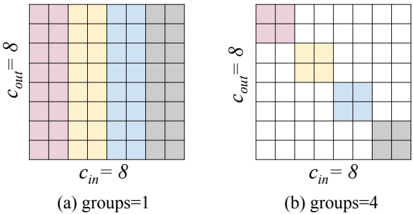
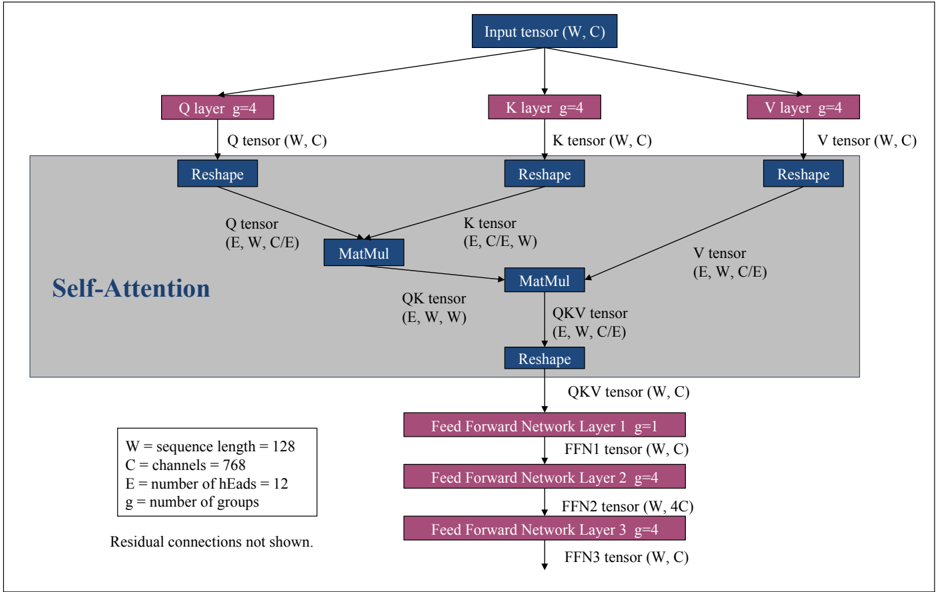
Humans read and write hundreds of billions of messages every day.Further, due to the availability of large datasets, large computing systems, and better neural network models, natural language processing (NLP) technology has made significant strides in understanding, proofreading, and organizing these messages.Thus, there is a significant opportunity to deploy NLP in myriad applications to help web users, social networks, and businesses.Toward this end, we consider smartphones and other mobile devices as crucial platforms for deploying NLP models at scale.However, today's highly-accurate NLP neural network models such as BERT and RoBERTa are extremely computationally expensive, with BERT-base taking 1.7 seconds to classify a text snippet on a Pixel 3 smartphone.To begin to address this problem, we draw inspiration from the computer vision community, where work such as MobileNet has demonstrated that grouped convolutions (e.g., depthwise convolutions) can enable speedups without sacrificing accuracy.We demonstrate how to replace several operations in self-attention layers with grouped convolutions and use this technique in a novel network architecture called Squeeze-BERT, which runs 4.3x faster than BERT-base on the Pixel 3 while achieving competitive accuracy on the GLUE test set.A PyTorch-based implementation of Squeeze-BERT is available as part of the Hugging Face Transformers library: https:// huggingface.co/squeezebert
Overview
The claims and statistics of this paper haven’t been checked yet.
Run the check — free, no account needed. It reads the open-access text and checks the sources it cites.
Integrity signals
Registry
Cites
Statistics
Figures
Verification
Claims the paper makes
The claims and statistics of this paper haven’t been checked yet.
Run the check — free, no account needed. It reads the open-access text and checks the sources it cites.
Claims other papers make about this one
Each is checked against this paper’s own text: does it say what the citing paper says it does?
In the citing paper
“Moreover, models such as MobileBERT and SqueezeBERT employ bottleneck layers and grouped convolutions, leading to a 3× to 4× reduction in latency while maintaining >90% of the original model’s accuracy.”
From Tiny Language Models for Automation and Control: Overview, Potential Applications, and Future Research Directions (2025) · cites this paper as [103]
Self-check
Percentages, sums and reported differences re-computed from the paper’s own numbers.
The self-check needs the paper’s full text.
Citations
Cites
Deep Residual Learning for Image Recognition
He, K., Zhang, X., Ren, S., & Sun, J. (2016) · 2016 IEEE Conference on Computer Vision and Pattern Recognition (CVPR) · doi:10.1109/cvpr.2016.90 · Cited by 235,474
Vaswani, A., Shazeer, N., Parmar, N., Uszkoreit, J., Jones, L., Gomez, A. N., Kaiser, L., & Polosukhin, I. (2017) · arXiv · doi:10.48550/arxiv.1706.03762 · Cited by 120,404
Very Deep Convolutional Networks for Large-Scale Image Recognition
Simonyan, K., & Zisserman, A. (2014) · arXiv · doi:10.48550/arxiv.1409.1556 · Cited by 114,148
ImageNet classification with deep convolutional neural networks
Krizhevsky, A., Sutskever, I., & Hinton, G. E. (2017) · Communications of the ACM · doi:10.1145/3065386 · Cited by 112,155
U-Net: Convolutional Networks for Biomedical Image Segmentation
Ronneberger, O., Fischer, P., & Brox, T. (2015) · Lecture notes in computer science · doi:10.1007/978-3-319-24574-4_28 · Cited by 99,404
BERT: Pre-training of Deep Bidirectional Transformers for Language Understanding
Devlin, J., Chang, M.-W., Lee, K., & Toutanova, K. (2018) · arXiv · doi:10.48550/arxiv.1810.04805 · Cited by 73,173
BERT: Pre-training of Deep Bidirectional Transformers for Language Understanding
Devlin, J., Chang, M.-W., Lee, K., & Toutanova, K. (2019) · Proceedings of the 2019 Conference of the North American Chapter of the Association for Computational Linguistics: Human Language Technologies, Volume 1 (Long and Short Papers) · doi:10.18653/v1/n19-1423 · Cited by 54,325
Densely Connected Convolutional Networks
Huang, G., Liu, Z., Van Der Maaten, L., & Weinberger, K. Q. (2017) · 2017 IEEE Conference on Computer Vision and Pattern Recognition (CVPR) · doi:10.1109/cvpr.2017.243 · Cited by 48,566
Microsoft COCO: Common Objects in Context
Lin, T.-Y., Maire, M., Belongie, S., Hays, J., Perona, P., Ramanan, D., Dollár, P., & Zitnick, C. L. (2014) · Lecture Notes in Computer Science · doi:10.1007/978-3-319-10602-1_48 · Cited by 45,460
ImageNet Large Scale Visual Recognition Challenge
Russakovsky, O., Deng, J., Su, H., Krause, J., Satheesh, S., Ma, S., Huang, Z., Karpathy, A., Khosla, A., Bernstein, M., et al. (2015) · International Journal of Computer Vision · doi:10.1007/s11263-015-0816-y · Cited by 39,380
Research works printed but not linked: 3
- William B. Dolan and Chris Brockett. 2005. Auto- matically constructing a corpus of sentential para- phrases. In Proceedings of the International Work- shop on Paraphrasing.
- Zhanghao Wu, Zhijian Liu, Ji Lin, Yujun Lin, and Song Han. 2020. Lite transformer with long short term attention. In ICLR.
- Ji Xin, Raphael Tang, Jaejun Lee, Yaoliang Yu, and Jimmy Lin. 2020. Deebert: Dynamic early exiting for accelerating bert inference. In ACL.
Cited by
Sorted by citations
Trends in AI inference energy consumption: Beyond the performance-vs-parameter laws of deep learning
Desislavov, R., Martínez-Plumed, F., & Hernández-Orallo, J. (2023) · Sustainable Computing: Informatics and Systems · doi:10.1016/j.suscom.2023.100857 · Cited by 269
“There are many models that focus on being efficient instead of reaching high score, and this is reflected in their names too (e.g., MobileBERT [Sun et al., 2020] and SqueezeBERT [Iandola et al., 2020]).”
BackgroundBERT applications in natural language processing: a review
Gardazi, N. M., Daud, A. Y., Malik, M. K., Bukhari, A. A., Alsahfi, T., & Alshemaimri, B. K. (2025) · Artificial Intelligence Review · doi:10.1007/s10462-025-11162-5 · Cited by 354
ADAHESSIAN: An Adaptive Second Order Optimizer for Machine Learning
Yao, Z., Gholami, A., Shen, S., Mustafa, M., Keutzer, K., & Mahoney, M. W. (2021) · Proceedings of the AAAI Conference on Artificial Intelligence · doi:10.1609/aaai.v35i12.17275 · Cited by 257
Self-citationEnd-to-End Transformer-Based Models in Textual-Based NLP
Rahali, A., & Akhloufi, M. A. (2023) · AI · doi:10.3390/ai4010004 · Cited by 209
Zhang, H., & Shafiq, M. O. (2024) · Journal Of Big Data · doi:10.1186/s40537-023-00842-0 · Cited by 180
Metadata
- Authors
- Iandola, F., Shaw, A., Krishna, R., & Keutzer, K.
- Affiliations
- University of California, Berkeley (US)
- Venue
- Proceedings of SustaiNLP: Workshop on Simple and Efficient Natural Language Processing
- Published
- 2020
- Pages
- 124-135
- OpenAlex
- W3036463250
- Cited by
- 114
- References
- 77
- Citations by year
- 2026: 6 · 2025: 15 · 2024: 10 · 2023: 30 · 2022: 21 · 2021: 27 · 2020: 5
- FWCI
- 6.40
- Type
- conference paper
- Language
- en
- Open access
- hybrid
- doi.org
- Licence
- cc-by
- Locations
- Workshop on Simple and Efficient Natural Language Processing (SustaiNLP) (publishedVersion, cc-by)
- arXiv (Cornell University) (submittedVersion)
- arXiv (Cornell University)
- Funders
- Samsung
- Topics
- Physical Sciences › Computer Science › Computer Vision and Pattern Recognition › Advanced Neural Network Applications
- Physical Sciences › Computer Science › Artificial Intelligence › Topic Modeling
- Physical Sciences › Computer Science › Artificial Intelligence › Natural Language Processing Techniques
- Keywords
- efficient neural networks, group convolution, depthwise convolution, self-attention, BERT, RoBERTa, mobile deployment, computational efficiency, GLUE benchmark
About these checks
Registry, retraction, Cites and statistics results are computed, not judged, with one exception: a printed reference that no index lists is read once by a model before it counts as a citation error. Claims are extracted by a model and kept only when their quote appears verbatim in the text; each cited source is then checked, with a model’s help, for whether it says what the claim relies on. Those verdicts can be wrong — read the claim’s quote and the cited source before relying on one.
Statistics and arithmetic are recomputed, not judged.
Confidence bands are shown only for fields calibrated on our annotated test set. None is calibrated yet, so no band is shown.
What counts as a claim ›How we measure confidence ›How we check this ›
Are you an author, or do you see a problem with this page? Request a review
