

The DOI matches its Crossref record; 88 of the 88 references it cites were found in a registry or an index.
SqueezeBERT: What can computer vision teach NLP about efficient neural networks?
Open accessAbstract
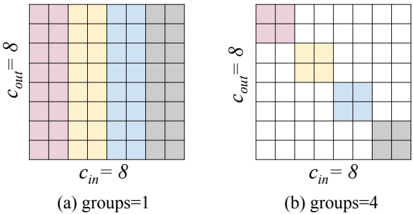
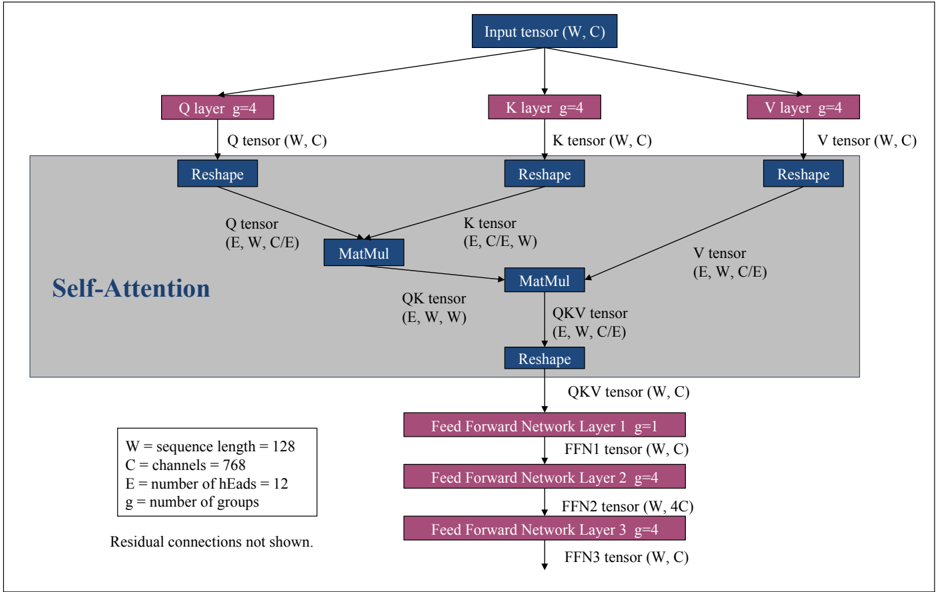
Humans read and write hundreds of billions of messages every day.Further, due to the availability of large datasets, large computing systems, and better neural network models, natural language processing (NLP) technology has made significant strides in understanding, proofreading, and organizing these messages.Thus, there is a significant opportunity to deploy NLP in myriad applications to help web users, social networks, and businesses.Toward this end, we consider smartphones and other mobile devices as crucial platforms for deploying NLP models at scale.However, today's highly-accurate NLP neural network models such as BERT and RoBERTa are extremely computationally expensive, with BERT-base taking 1.7 seconds to classify a text snippet on a Pixel 3 smartphone.To begin to address this problem, we draw inspiration from the computer vision community, where work such as MobileNet has demonstrated that grouped convolutions (e.g., depthwise convolutions) can enable speedups without sacrificing accuracy.We demonstrate how to replace several operations in self-attention layers with grouped convolutions and use this technique in a novel network architecture called Squeeze-BERT, which runs 4.3x faster than BERT-base on the Pixel 3 while achieving competitive accuracy on the GLUE test set.A PyTorch-based implementation of Squeeze-BERT is available as part of the Hugging Face Transformers library: https:// huggingface.co/squeezebert
Overview
The claims and statistics of this paper haven’t been checked yet.
Run the check — free, no account needed. It reads the open-access text and checks the sources it cites.
Integrity signals
Registry
Cites
Statistics
Figures
Verification
Claims the paper makes
The claims and statistics of this paper haven’t been checked yet.
Run the check — free, no account needed. It reads the open-access text and checks the sources it cites.
Claims other papers make about this one
Each is checked against this paper’s own text: does it say what the citing paper says it does?
In the citing paper
“Moreover, models such as MobileBERT and SqueezeBERT employ bottleneck layers and grouped convolutions, leading to a 3× to 4× reduction in latency while maintaining >90% of the original model’s accuracy.”
From Tiny Language Models for Automation and Control: Overview, Potential Applications, and Future Research Directions (2025) · cites this paper as [103]
Self-check
Percentages, sums and reported differences re-computed from the paper’s own numbers.
The self-check needs the paper’s full text.
Citations
Cites
Deep Residual Learning for Image Recognition
He, K., Zhang, X., Ren, S., & Sun, J. (2016) · 2016 IEEE Conference on Computer Vision and Pattern Recognition (CVPR) · doi:10.1109/cvpr.2016.90 · Cited by 235,474
Vaswani, A., Shazeer, N., Parmar, N., Uszkoreit, J., Jones, L., Gomez, A. N., Kaiser, L., & Polosukhin, I. (2017) · arXiv · doi:10.48550/arxiv.1706.03762 · Cited by 120,404
Very Deep Convolutional Networks for Large-Scale Image Recognition
Simonyan, K., & Zisserman, A. (2014) · arXiv · doi:10.48550/arxiv.1409.1556 · Cited by 114,148
ImageNet classification with deep convolutional neural networks
Krizhevsky, A., Sutskever, I., & Hinton, G. E. (2017) · Communications of the ACM · doi:10.1145/3065386 · Cited by 112,155
U-Net: Convolutional Networks for Biomedical Image Segmentation
Ronneberger, O., Fischer, P., & Brox, T. (2015) · Lecture notes in computer science · doi:10.1007/978-3-319-24574-4_28 · Cited by 99,404
BERT: Pre-training of Deep Bidirectional Transformers for Language Understanding
Devlin, J., Chang, M.-W., Lee, K., & Toutanova, K. (2018) · arXiv · doi:10.48550/arxiv.1810.04805 · Cited by 73,173
BERT: Pre-training of Deep Bidirectional Transformers for Language Understanding
Devlin, J., Chang, M.-W., Lee, K., & Toutanova, K. (2019) · Proceedings of the 2019 Conference of the North American Chapter of the Association for Computational Linguistics: Human Language Technologies, Volume 1 (Long and Short Papers) · doi:10.18653/v1/n19-1423 · Cited by 54,325
Densely Connected Convolutional Networks
Huang, G., Liu, Z., Van Der Maaten, L., & Weinberger, K. Q. (2017) · 2017 IEEE Conference on Computer Vision and Pattern Recognition (CVPR) · doi:10.1109/cvpr.2017.243 · Cited by 48,566
Microsoft COCO: Common Objects in Context
Lin, T.-Y., Maire, M., Belongie, S., Hays, J., Perona, P., Ramanan, D., Dollár, P., & Zitnick, C. L. (2014) · Lecture Notes in Computer Science · doi:10.1007/978-3-319-10602-1_48 · Cited by 45,460
ImageNet Large Scale Visual Recognition Challenge
Russakovsky, O., Deng, J., Su, H., Krause, J., Satheesh, S., Ma, S., Huang, Z., Karpathy, A., Khosla, A., Bernstein, M., et al. (2015) · International Journal of Computer Vision · doi:10.1007/s11263-015-0816-y · Cited by 39,380
Fully convolutional networks for semantic segmentation
Long, J., Shelhamer, E., & Darrell, T. (2015) · 2015 IEEE Conference on Computer Vision and Pattern Recognition (CVPR) · doi:10.1109/cvpr.2015.7298965 · Cited by 38,834
PyTorch: An Imperative Style, High-Performance Deep Learning Library
Paszke, A., Gross, S., Massa, F., Lerer, A., Bradbury, J., Chanan, G., Killeen, T., Lin, Z., Gimelshein, N., Antiga, L., et al. (2019) · arXiv · doi:10.48550/arxiv.1912.01703 · Cited by 31,473
Feature Pyramid Networks for Object Detection
Lin, T.-Y., Dollar, P., Girshick, R., He, K., Hariharan, B., & Belongie, S. (2017) · 2017 IEEE Conference on Computer Vision and Pattern Recognition (CVPR) · doi:10.1109/cvpr.2017.106 · Cited by 30,939
Language Models are Few-Shot Learners
Brown, T. B., Mann, B., Ryder, N., Subbiah, M., Kaplan, J., Dhariwal, P., Neelakantan, A., Shyam, P., Sastry, G., Askell, A., et al. (2020) · arXiv · doi:10.48550/arxiv.2005.14165 · Cited by 23,372
Xception: Deep Learning with Depthwise Separable Convolutions
Chollet, F. (2017) · 2017 IEEE Conference on Computer Vision and Pattern Recognition (CVPR) · doi:10.1109/cvpr.2017.195 · Cited by 20,380
Encoder-Decoder with Atrous Separable Convolution for Semantic Image Segmentation
Chen, L.-C., Zhu, Y., Papandreou, G., Schroff, F., & Adam, H. (2018) · Lecture Notes in Computer Science · doi:10.1007/978-3-030-01234-2_49 · Cited by 20,054
MobileNets: Efficient Convolutional Neural Networks for Mobile Vision Applications
Howard, A. G., Zhu, M., Chen, B., Kalenichenko, D., Wang, W., Weyand, T., Andreetto, M., & Adam, H. (2017) · arXiv · doi:10.48550/arxiv.1704.04861 · Cited by 19,015
EfficientNet: Rethinking Model Scaling for Convolutional Neural Networks
Tan, M., & Le, Q. V. (2019) · arXiv · doi:10.48550/arxiv.1905.11946 · Cited by 17,072
RoBERTa: A Robustly Optimized BERT Pretraining Approach
Liu, Y., Ott, M., Goyal, N., Du, J., Joshi, M., Chen, D., Levy, O., Lewis, M., Zettlemoyer, L., & Stoyanov, V. (2019) · arXiv · doi:10.48550/arxiv.1907.11692 · Cited by 16,515
Convolutional Neural Networks for Sentence Classification
Kim, Y. (2014) · Proceedings of the 2014 Conference on Empirical Methods in Natural Language Processing (EMNLP) · doi:10.3115/v1/d14-1181 · Cited by 14,831
Distilling the Knowledge in a Neural Network
Hinton, G., Vinyals, O., & Dean, J. (2015) · arXiv · doi:10.48550/arxiv.1503.02531 · Cited by 14,204
Decoupled Weight Decay Regularization
Loshchilov, I., & Hutter, F. (2017) · arXiv · doi:10.48550/arxiv.1711.05101 · Cited by 12,522
Aggregated Residual Transformations for Deep Neural Networks
Xie, S., Girshick, R., Dollar, P., Tu, Z., & He, K. (2017) · 2017 IEEE Conference on Computer Vision and Pattern Recognition (CVPR) · doi:10.1109/cvpr.2017.634 · Cited by 12,465
The Cityscapes Dataset for Semantic Urban Scene Understanding
Cordts, M., Omran, M., Ramos, S., Rehfeld, T., Enzweiler, M., Benenson, R., Franke, U., Roth, S., & Schiele, B. (2016) · 2016 IEEE Conference on Computer Vision and Pattern Recognition (CVPR) · doi:10.1109/cvpr.2016.350 · Cited by 12,433
Backpropagation Applied to Handwritten Zip Code Recognition
LeCun, Y., Boser, B., Denker, J. S., Henderson, D., Howard, R. E., Hubbard, W., & Jackel, L. D. (1989) · Neural Computation · doi:10.1162/neco.1989.1.4.541 · Cited by 11,891
ShuffleNet: An Extremely Efficient Convolutional Neural Network for Mobile Devices
Zhang, X., Zhou, X., Lin, M., & Sun, J. (2018) · 2018 IEEE/CVF Conference on Computer Vision and Pattern Recognition · doi:10.1109/cvpr.2018.00716 · Cited by 9,982
EfficientDet: Scalable and Efficient Object Detection
Tan, M., Pang, R., & Le, Q. V. (2019) · arXiv · Cited by 9,841 · cited 1×
“On this path of techniques, applying ideas such as BiFPNs [55], striding, and dilation [56] may also yield interesting results.”
MethodMulti-scale context aggregation by dilated convolutions
Yu, F., & Koltun, V. (2015) · arXiv · doi:10.48550/arxiv.1511.07122 · Cited by 7,738
Recursive Deep Models for Semantic Compositionality Over a Sentiment Treebank
Socher, R., Perelygin, A., Wu, J., Chuang, J., Manning, C. D., Ng, A., & Potts, C. (2013) · Proceedings of the 2013 Conference on Empirical Methods in Natural Language Processing · doi:10.18653/v1/d13-1170 · Cited by 6,878
SQuAD: 100,000+ Questions for Machine Comprehension of Text
Rajpurkar, P., Zhang, J., Lopyrev, K., & Liang, P. (2016) · Proceedings of the 2016 Conference on Empirical Methods in Natural Language Processing · doi:10.18653/v1/d16-1264 · Cited by 6,208
SqueezeNet: AlexNet-level accuracy with 50x fewer parameters and <0.5MB model size
Iandola, F. N., Han, S., Moskewicz, M. W., Ashraf, K., Dally, W. J., & Keutzer, K. (2016) · arXiv · doi:10.48550/arxiv.1602.07360 · Cited by 6,201
Self-citationFukushima, K. (1980) · Biological Cybernetics · doi:10.1007/bf00344251 · Cited by 5,759
Comparison of the predicted and observed secondary structure of T4 phage lysozyme
Matthews, B. W. (1975) · Biochimica et Biophysica Acta (BBA) - Protein Structure · doi:10.1016/0005-2795(75)90109-9 · Cited by 5,399
Google's Neural Machine Translation System: Bridging the Gap between Human and Machine Translation
Wu, Y., Schuster, M., Chen, Z., Le, Q. V., Norouzi, M., Macherey, W., Krikun, M., Cao, Y., Gao, Q., Macherey, K., et al. (2016) · arXiv · doi:10.48550/arxiv.1609.08144 · Cited by 5,319
DistilBERT, a distilled version of BERT: smaller, faster, cheaper and lighter
Sanh, V., Debut, L., Chaumond, J., & Wolf, T. (2019) · arXiv · doi:10.48550/arxiv.1910.01108 · Cited by 4,653
ALBERT: A Lite BERT for Self-supervised Learning of Language Representations
Lan, Z., Chen, M., Goodman, S., Gimpel, K., Sharma, P., & Soricut, R. (2019) · arXiv · doi:10.48550/arxiv.1909.11942 · Cited by 4,308
HuggingFace's Transformers: State-of-the-art Natural Language Processing
Wolf, T., Debut, L., Sanh, V., Chaumond, J., Delangue, C., Moi, A., Cistac, P., Rault, T., Louf, R., Funtowicz, M., et al. (2019) · arXiv · doi:10.48550/arxiv.1910.03771 · Cited by 3,347
A Broad-Coverage Challenge Corpus for Sentence Understanding through Inference
Williams, A., Nangia, N., & Bowman, S. (2018) · Proceedings of the 2018 Conference of the North American Chapter of the Association for Computational Linguistics: Human Language Technologies, Volume 1 (Long Papers) · doi:10.18653/v1/n18-1101 · Cited by 3,342
Microsoft COCO: Common Objects in Context
Lin, T.-Y., Maire, M., Belongie, S., Bourdev, L., Girshick, R., Hays, J., Perona, P., Ramanan, D., Zitnick, C. L., & Dollár, P. (2014) · arXiv · doi:10.48550/arxiv.1405.0312 · Cited by 2,579
Longformer: The Long-Document Transformer
Beltagy, I., Peters, M. E., & Cohan, A. (2020) · arXiv · doi:10.48550/arxiv.2004.05150 · Cited by 2,281
Zhu, Y., Kiros, R., Zemel, R., Salakhutdinov, R., Urtasun, R., Torralba, A., & Fidler, S. (2015) · 2015 IEEE International Conference on Computer Vision (ICCV) · doi:10.1109/iccv.2015.11 · Cited by 2,264
ELECTRA: Pre-training Text Encoders as Discriminators Rather Than Generators
Clark, K., Luong, M.-T., Le, Q. V., & Manning, C. D. (2020) · arXiv · doi:10.48550/arxiv.2003.10555 · Cited by 1,844
TinyBERT: Distilling BERT for natural language understanding
Jiao, X., Yin, Y., Shang, L., Jiang, X., Chen, X., Li, L., Wang, F., & Liu, Q. (2020) · Findings of the Association for Computational Linguistics: EMNLP 2020 · doi:10.18653/v1/2020.findings-emnlp.372 · Cited by 1,786
The PASCAL Recognising Textual Entailment Challenge
Dagan, I., Glickman, O., & Magnini, B. (2006) · Lecture notes in computer science · doi:10.1007/11736790_9 · Cited by 1,674
SemEval-2017 Task 1: Semantic Textual Similarity Multilingual and Crosslingual Focused Evaluation
Cer, D., Diab, M., Agirre, E., Lopez-Gazpio, I., & Specia, L. (2017) · Proceedings of the 11th International Workshop on Semantic Evaluation (SemEval-2017) · doi:10.18653/v1/s17-2001 · Cited by 1,562
Going Deeper with Convolutions
Szegedy, C., Liu, W., Jia, Y., Sermanet, P., Reed, S., Anguelov, D., Erhan, D., Vanhoucke, V., & Rabinovich, A. (2014) · arXiv · doi:10.48550/arxiv.1409.4842 · Cited by 1,461
Multi-Task Deep Neural Networks for Natural Language Understanding
Liu, X., He, P., Chen, W., & Gao, J. (2019) · Proceedings of the conference - Association for Computational Linguistics. Meeting · doi:10.18653/v1/p19-1441 · Cited by 1,353
FBNet: Hardware-Aware Efficient ConvNet Design via Differentiable Neural Architecture Search
Wu, B., Keutzer, K., Dai, X., Zhang, P., Wang, Y., Sun, F., Wu, Y., Tian, Y., Vajda, P., & Jia, Y. (2019) · IEEE Computer Society Conference on Computer Vision and Pattern Recognition/Proceedings - IEEE Computer Society Conference on Computer Vision and Pattern Recognition/Proceedings · doi:10.1109/cvpr.2019.01099 · Cited by 1,349
Self-citationEfficient Transformers: A Survey
Tay, Y., Dehghani, M., Bahri, D., & Metzler, D. (2020) · arXiv · doi:10.48550/arxiv.2009.06732 · Cited by 1,267
Neural Network Acceptability Judgments
Warstadt, A., Singh, A., & Bowman, S. R. (2019) · Transactions of the Association for Computational Linguistics · doi:10.1162/tacl_a_00290 · Cited by 1,215
MobileBERT: a Compact Task-Agnostic BERT for Resource-Limited DevicesPreprint
Sun, Z., Yu, H., Song, X.-D., Liu, R.-J., Yang, Y., & Zhou, D. (2020) · Annual Meeting of the Association for Computational Linguistics · doi:10.48550/arxiv.2004.02984 · Cited by 1,128
Automatically Constructing a Corpus of Sentential Paraphrases.
Dolan, W. B., & Brockett, C. (2005) · Cited by 1,101
Language (Technology) is Power: A Critical Survey of “Bias” in NLP
Blodgett, S. L., Barocas, S., Daumé III, H., & Wallach, H. (2020) · Proceedings of the 58th Annual Meeting of the Association for Computational Linguistics · doi:10.18653/v1/2020.acl-main.485 · Cited by 1,050 · cited 2×
“We direct the interested reader to work by Blodgett et al. [65] and Sun et al. [66] for more details and suggestions on how to minimize the bias in datasets and the neural networks that learn from them.”
BackgroundMethodPatient Knowledge Distillation for BERT Model Compression
Sun, S., Cheng, Y., Gan, Z., & Liu, J. (2019) · Conference on Empirical Methods in Natural Language Processing (EMNLP) · doi:10.18653/v1/d19-1441 · Cited by 931
Large Batch Optimization for Deep Learning: Training BERT in 76 minutesPreprint
You, Y., Li, J., Reddi, S. J., Hseu, J., Kumar, S., Bhojanapalli, S., Song, X., Demmel, J. W., Keutzer, K., & Hsieh, C. (2019) · arXiv (Cornell University) · doi:10.48550/arxiv.1904.00962 · Cited by 890
Self-citationLevesque, H. J., Davis, E., & Morgenstern, L. (2011) · Cited by 879
Linformer: Self-Attention with Linear Complexity
Wang, S., Li, B. Z., Khabsa, M., Fang, H., & Ma, H. (2020) · arXiv · doi:10.48550/arxiv.2006.04768 · Cited by 867
Japanese and Korean voice search
Schuster, M., & Nakajima, K. (2012) · 2012 IEEE International Conference on Acoustics, Speech and Signal Processing (ICASSP) · doi:10.1109/icassp.2012.6289079 · Cited by 862
Well-Read Students Learn Better: On the Importance of Pre-training Compact ModelsPreprint
Turc, I., Chang, M.-W., Lee, K., & Toutanova, K. (2019) · arXiv (Cornell University) · doi:10.48550/arxiv.1908.08962 · Cited by 859
MobileBERT: a Compact Task-Agnostic BERT for Resource-Limited Devices
Sun, Z., Yu, H., Song, X., Liu, R., Yang, Y., & Zhou, D. (2020) · Proceedings of the 58th Annual Meeting of the Association for Computational Linguistics · doi:10.18653/v1/2020.acl-main.195 · Cited by 757
CTRL: A Conditional Transformer Language Model for Controllable Generation
Keskar, N. S., McCann, B., Varshney, L. R., Xiong, C., & Socher, R. (2019) · arXiv · doi:10.48550/arxiv.1909.05858 · Cited by 751
The pascal recognising textual entailment challenge
Dagan, I., & Glickman, O. (2005) · Cited by 587
Pay Less Attention with Lightweight and Dynamic ConvolutionsPreprint
Wu, F., Fan, A., Baevski, A., Dauphin, Y., & Auli, M. (2019) · arXiv (Cornell University) · doi:10.48550/arxiv.1901.10430 · Cited by 585
GLUE: A Multi-Task Benchmark and Analysis Platform for Natural Language Understanding
Wang, A., Singh, A., Michael, J., Hill, F., Levy, O., & Bowman, S. R. (2018) · arXiv · doi:10.48550/arxiv.1804.07461 · Cited by 562
The Woman Worked as a Babysitter: On Biases in Language Generation
Sheng, E., Chang, K.-W., Natarajan, P., & Peng, N. (2019) · Proceedings of the 2019 Conference on Empirical Methods in Natural Language Processing and the 9th International Joint Conference on Natural Language Processing (EMNLP-IJCNLP) · doi:10.18653/v1/d19-1339 · Cited by 537 · cited 1×
“However, Sheng et al. investigate biases regarding race, gender, and sexual orientation in a GPT-2 self-attention model trained on a language-modeling (text-generation) task [63].”
BackgroundThe Seventh PASCAL Recognizing Textual Entailment Challenge.
Bentivogli, L., Clark, P. E., Dagan, I., & Giampiccolo, D. (2008) · Cited by 533
Mitigating Gender Bias in Natural Language Processing: Literature Review
Sun, T., Gaut, A., Tang, S., Huang, Y., ElSherief, M., Zhao, J., Mirza, D., Belding, E., Chang, K.-W., & Wang, W. Y. (2019) · Proceedings of the 57th Annual Meeting of the Association for Computational Linguistics · doi:10.18653/v1/p19-1159 · Cited by 492
Zafrir, O., Boudoukh, G., Izsak, P., & Wasserblat, M. (2019) · 2019 Fifth Workshop on Energy Efficient Machine Learning and Cognitive Computing - NeurIPS Edition (EMC2-NIPS) · doi:10.1109/emc2-nips53020.2019.00016 · Cited by 442
Zafrir, O., Boudoukh, G., Izsak, P., & Wasserblat, M. (2019) · arXiv · doi:10.48550/arxiv.1910.06188 · Cited by 441
Q-BERT: Hessian Based Ultra Low Precision Quantization of BERT
Shen, S., Dong, Z., Ye, J., Ma, L., Yao, Z., Gholami, A., Mahoney, M. W., & Keutzer, K. (2020) · Proceedings of the AAAI Conference on Artificial Intelligence · doi:10.1609/aaai.v34i05.6409 · Cited by 437
Self-citationFireCaffe: Near-Linear Acceleration of Deep Neural Network Training on Compute Clusters
Iandola, F., Moskewicz, M. W., Ashraf, K. M., & Keutzer, K. (2016) · IEEE Computer Society Conference on Computer Vision and Pattern Recognition/Proceedings - IEEE Computer Society Conference on Computer Vision and Pattern Recognition/Proceedings · doi:10.1109/cvpr.2016.284 · Cited by 299
Self-citationSo, D. R., Liang, C., & Le, Q. V. (2019) · arXiv · doi:10.48550/arxiv.1901.11117 · Cited by 277
Movement pruning: Adaptive sparsity by fine-tuning
Sanh, V., Wolf, T., & Rush, A. M. (2020) · arXiv · doi:10.48550/arxiv.2005.07683 · Cited by 218
BERT-of-Theseus: Compressing BERT by Progressive Module Replacing
Xu, C., Zhou, W., Ge, T., Wei, F., & Zhou, M. (2020) · Conference on Empirical Methods in Natural Language Processing (EMNLP) · doi:10.18653/v1/2020.emnlp-main.633 · Cited by 213
Funnel-Transformer: Filtering out Sequential Redundancy for Efficient Language ProcessingPreprint
Dai, Z., Lai, G., Yang, Y., & Le, Q. V. (2020) · arXiv (Cornell University) · doi:10.48550/arxiv.2006.03236 · Cited by 159
Assessing Social and Intersectional Biases in Contextualized Word RepresentationsPreprint
Tan, Y. C., & Celis, L. E. (2019) · arXiv (Cornell University) · doi:10.48550/arxiv.1911.01485 · Cited by 142
TinyBERT: Distilling BERT for Natural Language UnderstandingPreprint
Jiao, X., Yin, Y., Shang, L., et al. (2019) · arXiv (Cornell University) · doi:10.48550/arxiv.1909.10351 · Cited by 133
Fixing the train-test resolution discrepancy: FixEfficientNet
Touvron, H., Vedaldi, A., Douze, M., & Jégou, H. (2020) · arXiv · doi:10.48550/arxiv.2003.08237 · Cited by 88
A Surprisingly Robust Trick for the Winograd Schema Challenge
Kocijan, V., Cretu, A.-M., Camburu, O.-M., Yordanov, Y., & Lukasiewicz, T. (2019) · Proceedings of the 57th Annual Meeting of the Association for Computational Linguistics · doi:10.18653/v1/p19-1478 · Cited by 81
SqueezeNAS: Fast Neural Architecture Search for Faster Semantic Segmentation
Shaw, A., Daniel, H., Landola, F., & Sidhu, S. (2019) · IEEE International Conference on Computer Vision Workshops · doi:10.1109/iccvw.2019.00251 · Cited by 81
Self-citationFastBERT: a Self-distilling BERT with Adaptive Inference TimePreprint
Liu, W., Zhou, P., Zhao, Z., Wang, Z., Deng, H., & Ju, Q. (2020) · arXiv (Cornell University) · doi:10.48550/arxiv.2004.02178 · Cited by 49
Quantifying Gender Bias in Different Corpora
Babaeianjelodar, M., Lorenz, S., Gordon, J., Matthews, J. N., & Freitag, E. (2020) · International World Wide Web Conference (WWW) · doi:10.1145/3366424.3383559 · Cited by 42
Small neural nets are beautiful
Iandola, F., & Keutzer, K. (2017) · International Conference on Hardware/Software Codesign and System Synthesis · doi:10.1145/3125502.3125606 · Cited by 35
Self-citationBERT-of-Theseus: Compressing BERT by Progressive Module ReplacingPreprint
Xu, C., Zhou, W., Ge, T., et al. (2020) · arXiv (Cornell University) · doi:10.48550/arxiv.2002.02925 · Cited by 33
MobileBERT: Task-Agnostic Compression of BERT by Progressive Knowledge Transfer
Sun, Z., Yu, H., Song, X., Liu, R., Yang, Y., & Zhou, D. (2019) · Cited by 9
Transformer on a DietPreprint
Wang, C., Ye, Z., Zhang, A., Zhang, Z., & Smola, A. J. (2020) · arXiv (Cornell University) · doi:10.48550/arxiv.2002.06170 · Cited by 5
Sentence Encoders on STILTs: Supplementary Training on Intermediate Labeled-data Tasks
Phang, J., Févry, T., & Bowman, S. R. (2018) · arXiv · doi:10.48550/arxiv.1811.01088
The Right Tool for the Job: Matching Model and Instance Complexities
Schwartz, R., Stanovsky, G., Swayamdipta, S., Dodge, J., & Smith, N. A. (2020) · arXiv · doi:10.48550/arxiv.2004.07453
Research works printed but not linked: 3
- William B. Dolan and Chris Brockett. 2005. Auto- matically constructing a corpus of sentential para- phrases. In Proceedings of the International Work- shop on Paraphrasing.
- Zhanghao Wu, Zhijian Liu, Ji Lin, Yujun Lin, and Song Han. 2020. Lite transformer with long short term attention. In ICLR.
- Ji Xin, Raphael Tang, Jaejun Lee, Yaoliang Yu, and Jimmy Lin. 2020. Deebert: Dynamic early exiting for accelerating bert inference. In ACL.
Cited by
Sorted by citations
Trends in AI inference energy consumption: Beyond the performance-vs-parameter laws of deep learning
Desislavov, R., Martínez-Plumed, F., & Hernández-Orallo, J. (2023) · Sustainable Computing: Informatics and Systems · doi:10.1016/j.suscom.2023.100857 · Cited by 269
“There are many models that focus on being efficient instead of reaching high score, and this is reflected in their names too (e.g., MobileBERT [Sun et al., 2020] and SqueezeBERT [Iandola et al., 2020]).”
BackgroundBERT applications in natural language processing: a review
Gardazi, N. M., Daud, A. Y., Malik, M. K., Bukhari, A. A., Alsahfi, T., & Alshemaimri, B. K. (2025) · Artificial Intelligence Review · doi:10.1007/s10462-025-11162-5 · Cited by 354
ADAHESSIAN: An Adaptive Second Order Optimizer for Machine Learning
Yao, Z., Gholami, A., Shen, S., Mustafa, M., Keutzer, K., & Mahoney, M. W. (2021) · Proceedings of the AAAI Conference on Artificial Intelligence · doi:10.1609/aaai.v35i12.17275 · Cited by 257
Self-citationEnd-to-End Transformer-Based Models in Textual-Based NLP
Rahali, A., & Akhloufi, M. A. (2023) · AI · doi:10.3390/ai4010004 · Cited by 209
Zhang, H., & Shafiq, M. O. (2024) · Journal Of Big Data · doi:10.1186/s40537-023-00842-0 · Cited by 180
Metadata
- Authors
- Iandola, F., Shaw, A., Krishna, R., & Keutzer, K.
- Affiliations
- University of California, Berkeley (US)
- Venue
- Proceedings of SustaiNLP: Workshop on Simple and Efficient Natural Language Processing
- Published
- 2020
- Pages
- 124-135
- OpenAlex
- W3036463250
- Cited by
- 114
- References
- 77
- Citations by year
- 2026: 6 · 2025: 15 · 2024: 10 · 2023: 30 · 2022: 21 · 2021: 27 · 2020: 5
- FWCI
- 6.40
- Type
- conference paper
- Language
- en
- Open access
- hybrid
- doi.org
- Licence
- cc-by
- Locations
- Workshop on Simple and Efficient Natural Language Processing (SustaiNLP) (publishedVersion, cc-by)
- arXiv (Cornell University) (submittedVersion)
- arXiv (Cornell University)
- Funders
- Samsung
- Topics
- Physical Sciences › Computer Science › Computer Vision and Pattern Recognition › Advanced Neural Network Applications
- Physical Sciences › Computer Science › Artificial Intelligence › Topic Modeling
- Physical Sciences › Computer Science › Artificial Intelligence › Natural Language Processing Techniques
- Keywords
- efficient neural networks, group convolution, depthwise convolution, self-attention, BERT, RoBERTa, mobile deployment, computational efficiency, GLUE benchmark
About these checks
Registry, retraction, Cites and statistics results are computed, not judged, with one exception: a printed reference that no index lists is read once by a model before it counts as a citation error. Claims are extracted by a model and kept only when their quote appears verbatim in the text; each cited source is then checked, with a model’s help, for whether it says what the claim relies on. Those verdicts can be wrong — read the claim’s quote and the cited source before relying on one.
Statistics and arithmetic are recomputed, not judged.
Confidence bands are shown only for fields calibrated on our annotated test set. None is calibrated yet, so no band is shown.
What counts as a claim ›How we measure confidence ›How we check this ›
Are you an author, or do you see a problem with this page? Request a review
