

Benchmarking Zero-shot Text Classification: Datasets, Evaluation and Entailment Approach
Open accessThe DOI matches its Crossref record; 32 of the 32 references it cites were found in a registry or an index.
Abstract
Wenpeng Yin, Jamaal Hay, Dan Roth. Proceedings of the 2019 Conference on Empirical Methods in Natural Language Processing and the 9th International Joint Conference on Natural Language Processing (EMNLP-IJCNLP). 2019.
Overview
The claims and statistics of this paper haven’t been checked yet.
Free: it reads the open-access text and checks the first 5 claims that cite a source we can check. Create a free account to check every claim.
Integrity signals
Registry
Cites
Statistics
Figures
Verification
Claims the paper makes
The claims and statistics of this paper haven’t been checked yet.
Free: it reads the open-access text and checks the first 5 claims that cite a source we can check. Create a free account to check every claim.
Claims other papers make about this one
Each is checked against this paper’s own text: does it say what the citing paper says it does?
The source backs part of the claim, not all of it — or backs it for a different population, condition or comparison.
In the citing paper
“This is evidenced by LLMs impressive zero-shot and few-shot learning ability [18,132], as well as the fact that in-context learning does not require weight update, which mechanically prevents unfavorable fine-tuning-related behavior like catastrophic forgetting.”
From Harnessing the power of llms in practice: a survey on chatGPT and beyond (2024) · cites this paper as [132]
Experimental — accuracy not yet measuredThe source backs part of the claim, not all of it — or backs it for a different population, condition or comparison.
In the citing paper
“LLMs have been shown to outperform previous zero-shot methods [132].”
From Harnessing the power of llms in practice: a survey on chatGPT and beyond (2024) · cites this paper as [132]
Experimental — accuracy not yet measured
Self-check
Percentages, sums and reported differences re-computed from the paper’s own numbers.
The self-check needs the paper’s full text.
Citations
Cites
BERT: Pre-training of Deep Bidirectional Transformers for Language Understanding
Devlin, J., Chang, M.-W., Lee, K., & Toutanova, K. (2018) · arXiv · doi:10.48550/arxiv.1810.04805 · Cited by 73,173 · cited 6×
“Regarding this label-fully-unseen evaluation, apart from our entailment models and three unsupervised baselines “Majority”, “Word2Vec” and “ESA”, we also report the following baseline: Wikipedia-based : We train a binary clas-sifier based on BERT on a dataset collected from Wikipedia.”
MethodInfluentialBERT: Pre-training of Deep Bidirectional Transformers for Language Understanding
Devlin, J., Chang, M.-W., Lee, K., & Toutanova, K. (2019) · Proceedings of the 2019 Conference of the North American Chapter of the Association for Computational Linguistics: Human Language Technologies, Volume 1 (Long and Short Papers) · doi:10.18653/v1/n19-1423 · Cited by 54,325 · cited 6×
“Regarding this label-fully-unseen evaluation, apart from our entailment models and three unsupervised baselines “Majority”, “Word2Vec” and “ESA”, we also report the following baseline: Wikipedia-based : We train a binary clas-sifier based on BERT on a dataset collected from Wikipedia.”
MethodInfluentialDistributed Representations of Words and Phrases and their Compositionality
Mikolov, T., Sutskever, I., Chen, K., Corrado, G., & Dean, J. (2013) · arXiv · doi:10.48550/arxiv.1310.4546 · Cited by 24,533 · cited 2×
“• Word2Vec 5 (Mikolov et al., 2013): Both the representations of the text and the labels are the addition of word embeddings element-wisely.”
BackgroundGLUE: A Multi-Task Benchmark and Analysis Platform for Natural Language Understanding
Wang, A., Singh, A., Michael, J., Hill, F., Levy, O., & Bowman, S. (2018) · Proceedings of the 2018 EMNLP Workshop BlackboxNLP: Analyzing and Interpreting Neural Networks for NLP · doi:10.18653/v1/w18-5446 · Cited by 4,222 · cited 11×
“For label-partially-unseen setup in which we intentionally provide annotated data, we first pretrain BERT on the MNLI/FEVER/RTE, then fine-tune on the provided training data.”
BackgroundMethodInfluentialA Broad-Coverage Challenge Corpus for Sentence Understanding through Inference
Williams, A., Nangia, N., & Bowman, S. (2018) · Proceedings of the 2018 Conference of the North American Chapter of the Association for Computational Linguistics: Human Language Technologies, Volume 1 (Long Papers) · doi:10.18653/v1/n18-1101 · Cited by 3,342 · cited 2×
“, 2019), and train it on three mainstream entailment datasets: MNLI (Williams et al., 2018), GLUE RTE (Dagan et al.”
BackgroundMethodCharacter-level Convolutional Networks for Text Classification
Zhang, X., Zhao, J., & LeCun, Y. (2015) · arXiv (Cornell University) · doi:10.48550/arxiv.1509.01626 · Cited by 3,205 · cited 1×
“We use the large-scale Yahoo dataset released by Zhang et al. (2015).”
MethodComputing semantic relatedness using Wikipedia-based explicit semantic analysis
Gabrilovich, E., & Markovitch, S. (2007) · Cited by 1,981
The PASCAL Recognising Textual Entailment Challenge
Dagan, I., Glickman, O., & Magnini, B. (2006) · Lecture Notes in Computer Science · doi:10.1007/11736790_9 · Cited by 1,628
(2018) · International Conference on Learning Representations · Cited by 1,621
FEVER: a Large-scale Dataset for Fact Extraction and VERification
Thorne, J., Vlachos, A., Christodoulopoulos, C., & Mittal, A. (2018) · Proceedings of the 2018 Conference of the North American Chapter of the Association for Computational Linguistics: Human Language Technologies, Volume 1 (Long Papers) · doi:10.18653/v1/n18-1074 · Cited by 1,343 · cited 1×
“In this work, we make use of the widely-recognized state of the art entailment technique – BERT (Devlin et al., 2019), and train it on three mainstream entailment datasets: MNLI (Williams et al., 2018), GLUE RTE (Dagan et al., 2005; Wang et al., 2019) and FEVER 3 (Thorne et al., 2018), respectively.”
Method
Research works printed but not linked: 2
- [8]8. Chenliang Li, Jian Xing, Aixin Sun, and Zongyang Ma. 2016a. Effective document labeling with very few seed words: A topic model approach. In CIKM, pages 85-94.
- [11]11. Tomas Mikolov, Ilya Sutskever, Kai Chen, Gregory S. Corrado, and Jeffrey Dean. 2013. Distributed repre- sentations of words and phrases and their composi- tionality. In NIPS, pages 3111-3119.
Cited by
Items 701–800 of 867
Literature Review on Use of Chatbots as an Internal Work Tool in Organizations
Espinoza, J. R. B., Millán, N. D. C. O., & Sánchez, C. A. F. (2025) · IEEE Technology and Engineering Management Conference - Latin America (TEMSCON LATAM) · doi:10.1109/temsconlatam65810.2025.11238965
“GPT-4o is the most advanced and versatile model, with high intelligence, suitable for complex tasks with text and image inputs [13] and the fourth model used is BART, a transformer model used for text generation, translation and understanding based on zero-shot classification [14].”
Yu, Y., Yao, Z., & Yuan, F. (2025) · ACIS International Conference on Software Engineering, Artificial Intelligence, Networking and Parallel/Distributed Computing (SNPD) · doi:10.1109/snpd65828.2025.11252544
“For example, Yin et al.[13] defined a template as “The topic of this document is [Z]” for text classification.”
Hasan, K., Rafy, M. F., & Srivastava, A. K. (2025) · North American Power Symposium (NAPS) · doi:10.1109/naps66256.2025.11272266
“Recent transformer-based language models like BERT and RoBERTa have significantly improved this approach, enabling effective handling of emerging topics [26].”
Comparative Study of BERT and ChatGPT for Multi-Label Cyberbullying Detection with Intensity Scoring
Tay, N. X. R., Chua, H. N., Jasser, M. B., Issa, B., & ALDharhani, G. S. (2025) · IEEE International Conference on System Engineering and Technology (ICSET) · doi:10.1109/icset65917.2025.11284038
“Transformer-based Large Language Models (LLMs), such as BERT [5] and ChatGPT [6], provide deeper semantic representation and zero-shot learning capabilities, enabling classification without domain-specific retraining [7].”
Using generative AI to track emotional cues and identify team development stages in student projects
Barrios-Fleitas, Y., Lasconi, G., González, C. S. G., & Rensink, A. (2025) · IEEE Digital Education and MOOCS Conference (DEMOcon) · doi:10.1109/democon65705.2025.11282893
“LLMs can classify and interpret text with minimal training, including zero-shot classification [6, 21], making them well-suited to process team communications such as chat logs or reflective journals.”
Matching Tasks with Industry Groups for Augmenting Commonsense KnowledgePreprint
Singh, R., Pawar, S., & Palshikar, G. K. (2025) · arXiv (Cornell University) · doi:10.48550/arxiv.2505.07440
“3. zero_shot_tc : A zero-shot text classification (Yin et al., 2019) technique based on Natural Language Inference (NLI) approach.”
Philippy, F., Guo, S., Lothritz, C., Klein, J., & Bissyandé, T. F. (2025) · arXiv (Cornell University) · doi:10.48550/arxiv.2503.19469
Interpretable classification and summarization of crisis events from microblogs
Nguyen, T. H. (2024) · Institutional Repository of Leibniz Universität Hannover (Leibniz Universität Hannover) · doi:10.15488/17782
Computational analysis and mitigation of textual media bias
Chen, W.-F. (2024) · Habilitation Regulations of the Faculty of Mechanical Engineering (University of Paderborn) · doi:10.17619/unipb/1-1965
Advancing social insights through NLP
Huang, C. (2024) · Iowa Research Online (The University of Iowa) · doi:10.25820/etd.007451
Beyond Supervised Learning: Applications and Implications of Zero-shot Text Classification
Borst, J. (2024) · Qucosa (Saxon State and University Library Dresden)
Mayer, C. (2024) · MADOC (University of Mannheim)
Prédiction de la détérioration du comportement à l’aide de l’apprentissage automatique
Tshimula, J. M. (2022) · Knowledge UdeS (Institutional Deposit of the University of Sherbrooke)
Text Simplification with Deep Neural Network Using Knowledge Transfer
He, W. (2023) · ePrints Soton (University of Southampton)
ゼロショット分類による自動トピックラベリングの語用論的アプローチ
周, 子., シュウ, シ., & ZHOU, Z. (2024) · Terrestrial Environment Research Center (University of Tsukuba)
Hizkuntza Anitzeko Erlazio Semantikoen Erauzketa Medikuntzaren Domeinuan
Sainz, O. (2020) · Communities in ADDI (University of the Basque Country)
Unsupervised zero-shot classification of Finnish documents using pre-trained language models
Leal, R. (2020) · Helda - University of Helsinki Institutional Repository
Deep Learning Models for Topic Classification and Disentanglement
Liu, H. (2023) · QSpace (Queen's University Library)
Explaining Unintuitive Feature Importance Explanations
Qu, J. (2025) · Carolina Digital Repository (University of North Carolina at Chapel Hill) · doi:10.17615/pbr7-sj68
Hebrew Diacritics Restoration using Visual RepresentationPreprint
Elboher, Y., & Pinter, Y. (2025) · arXiv (Cornell University) · doi:10.48550/arxiv.2510.26521
“Specifically, zero-shot classification leverages the representations learned by pretrained models to classify categories not encountered during training (Yin et al., 2019).”
Uzun, I. (2025) · ELECTRICAL AND COMPUTER SYSTEMS · doi:10.15276/eltecs.43.119.2025.6
Ikasketa-adibide urriko Informazio-Erauzketa
Sainz Jiménez, O. (2024) · Communities in ADDI (University of the Basque Country)
Designing Operations to Inspire Trust
Balakrishnan, M. (2024) · Digital Access to Scholarship at Harvard (DASH) (Harvard University)
Riccardo, R., & Sofia, S. (2025) · EFSA Supporting Publications · doi:10.2903/sp.efsa.2025.en-9827
Tracking Academic Topic Evolution From the Perspective of Author Interest Shifts
Jiang, W., Zhang, Y. X., Wang, M., Mo, H., Hussain, O. K., Dong, D., & Zhang, W. (2025) · IEEE International Conference on e-Business Engineering (ICEBE) · doi:10.1109/icebe68123.2025.00015
“Leveraging a pre-trained language model BART [37], we transform the classification task into a textual entailment problem, evaluating whether a topic label L is supported by a text T .”
Huang, D., Li, Z., Yu, J. G., & Zhou, Y. (2026) · Information · doi:10.3390/info17010058
“[45] manually constructed word lists associated with relevant topics.”
Contextual stance classification using prompt engineering
Digiampietri, L. A. (2023) · LA Referencia (Red Federada de Repositorios Institucionales de Publicaciones Científicas)
Application of large language models: zero-shot learning
Pillai, A. S., Tanev, H., & Tedesco, R. (2026) · Elsevier eBooks · doi:10.1016/b978-0-443-33592-1.00009-7
HiIntent: A Collaborative Hierarchical Framework for Zero-Shot Intent Detection
Wang, S., Wei, Z., Chang, W., Guangjun, S., & Yu, J. (2025) · Conference proceedings/Conference proceedings - IEEE International Conference on Systems, Man, and Cybernetics · doi:10.1109/smc58881.2025.11343444
“Tree-search methods such as Hier-0Shot-TC [18] traverse the hierarchy top-down using entailment prompts, but are prone to cascading errors and lack robustness under zero-shot conditions.”
Nadaf, S., & Chavan, U. B. (2025) · International Conference for Advancement in Technology (ICONAT) · doi:10.1109/iconat66879.2025.11362770
“Transformer-based models fine-tuned on MNLI, such as BART and RoBERTa, have achieved state-of-the-art results [7].”
Gao, W., & He, W. (2026) · Symmetry · doi:10.3390/sym18020319
kishore, B. K., & Ganesha, K. S. (2026) · Advances in computational intelligence and robotics book series · doi:10.4018/979-8-3373-2747-1.ch008
Uniyal, D., Bashar, M. A., & Nayak, R. (2026) · Communications in computer and information science · doi:10.1007/978-981-95-6786-7_34
“The third approach leverages mBERT, fine-tuned on the English annotations and applied in a zero-shot manner [9] to original-language tweets.”
Cho, Y.-J., & Woo, T. (2026) · Journal of Digital Contents Society · doi:10.9728/dcs.2026.27.1.1
TigerNav: Development of a Virtual Assistant Using an Autoregressive Model for Indoor Navigation
Juan, R. A. N. S., Baetiong, E. J. Q., Bantayao, S. J., Mangali, M. J. M., Sumo, C. K. P., & Pangaliman, M. M. S. (2025) · IEEE Region 10 Conference (TENCON) · doi:10.1109/tencon66050.2025.11374916
“The curated data were classified as unconventional or unstructured using the bart-large-mnli sentence transformer with zero-shot classification [10].”
(2024) · Language Resources and Evaluation Conference (LREC) · doi:10.63317/3qf3r8pwtkvp
Kim, J., Weber, I., & Zagheni, E. (2026) · International Migration Review · doi:10.1177/01979183261427417
Hamzic, D., Wurzenberger, M., Skopik, F., Landauer, M., Linauer, L., & Rauber, A. (2025) · IEEE International Conference on Big Data (BigData) · doi:10.1109/bigdata66926.2025.11401490
“While recent studies [1], [3] have explored the performance of zero-shot classification [18] in comparison to few-shot fine-tuning [17] and fully supervised approaches, a comprehensive evaluation across these methods is still missing.”
Fang, Q., Li, Y., Wu, J., Long, Y., Hu, J., & Qian, S. (2026) · Knowledge-Based Systems · doi:10.1016/j.knosys.2026.115711
Open-domain dialogue generation with deep learning (本文)
チョウ, イ., Zhang, Y., & 張, 逸. (2023) · Institutional Repositories DataBase (IRDB)
Contragen: a Multi-Agent Generation Framework for Enterprise Contradictions Detection
Mantravadi, A., Dalmia, S., Mukherji, A., Dave, N., & Mittal, A. (2025) · IEEE ... International Conference on Data Mining workshops · doi:10.1109/icdmw69685.2025.00053
Hernández, K. A. S., TRIVIÑO, K. J. P., & Cortés, M. C. T. (2026) · SSRN Electronic Journal · doi:10.2139/ssrn.6408602
Shome, D., Sengupta, A., & Mahata, S. K. (2026) · International Conference on Electronics, Materials Engineering & Nano-Technology (IEMENTech) · doi:10.1109/iementech202669403.2026.11434306
Быкова, А. С. (2025) · Электронный архив ЮУрГУ (South Ural State University)
Baratto, M., Paletto, L., Esposito, R., & Maggiora, M. (2026) · Journal of Artificial Societies and Social Simulation · doi:10.18564/jasss.5992
Packiam, R. S. L., & Murugappan, A. (2026) · Lecture notes in networks and systems · doi:10.1007/978-3-032-13555-1_33
Towards automatic understanding of narrative audiovisual content
Reboud, A. (2022) · theses.fr (ABES) · doi:10.70675/7b1296fez9f91z4484z8448z8040d28ab833 · Cited by 1
Tailored to Fail? Gendered Communication in Credit MarketsPreprint
Neshat, N., & Kim, Y. (2026) · SSRN Electronic Journal · doi:10.2139/ssrn.6446378
Schleider, T. (2022) · theses.fr (ABES) · doi:10.70675/6f2b45eez5308z4992z9e4azd2a0ac72f19d
Argument Mining with Customized and Feature-lnjected Large Language Models
Mushtaq, U. (2023) · theses.fr (ABES) · doi:10.70675/805e9f95z56afz4453zb477zd7f0103d5406
Ren, R., Wang, J., Chen, T., Williams, C., Khan, M. S., Kirksey, M., Maalouf, D. B., Poeran, J., & Sideris, A. (2026) · Regional Anesthesia & Pain Medicine · doi:10.1136/rapm-2026-107803
Bere, R. W. M., & Mauritsius, T. (2026) · International Seminar on Intelligent Business and Edge-Computing Research (ISIBER) · doi:10.1109/isiber68248.2026.11470009
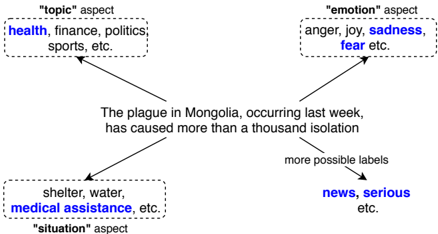
“Prior work has also benchmarked entailmentbased zero-shot text classification and shown its practicality across diverse label “aspects” (e.g., topic, emotion, situation), motivating the use of NLI-style zero-shot inference for aspect assignment in low-resource annotation settings [18].”
Kardam, N. (2026) · ResearchWorks at the University of Washington (University of Washington)
Rehmat, N., Saeed, M. S., Haq, I. U., & Malik, K. (2026) · arXiv (Cornell University) · doi:10.48550/arxiv.2604.27335
“Early approaches based on natural language inference (NLI) frame classification as textual entailment, scoring candidate labels via a premise–hypothesis structure [33].”
InfluentialDecode the Law: Towards Legal Text Simplification with Large Language Models
Rabbani, M. D., Roy, S., Mitra, S., & Saha, T. (2026) · Language Resources and Evaluation Conference (LREC) · doi:10.63317/2i7en3xycmhi
“We adopted this method to convert the legal texts and its corresponding simplified texts into vector embeddings and computed the cosine similarity to (Yin et al., 2019).”
Buitrago‐García, D., Courvoisier, D. S., Capderou, S., Iudici, M., & Mongin, D. (2026) · JMIR Medical Informatics · doi:10.2196/77943
“Zero-shot classification models [10] represent a third, less explored option with potential advantages.”
Arachchilage, C. D. P., Yu, Q., Webb, J., & Hunte, R. (2026) · Smart innovation, systems and technologies · doi:10.1007/978-3-032-20121-8_19
Yleiskäyttöisiä tekoälyjärjestelmiä ja niiden hallintoa koskevan sidosryhmien välisen puheen kehitys
Kajava, K. (2025) · Aaltodoc (Aalto University)
Ramanan, K., Krishna, R. G., & Shree, M. G. (2026) · International Conference on Data Science, Agents & Artificial Intelligence (ICDSAAI) · doi:10.1109/icdsaai69492.2026.11505191
Beyond Jailbreak: Unveiling Risks in LLM Applications Arising from Blurred Capability Boundaries
Zhang, Y., Cui, S., Liu, B., Yu, J., Zhang, M., Shi, F., & Zheng, H. (2026) · Network and Distributed System Security Symposium · doi:10.14722/ndss.2026.242941
Birkenmaier, L. (2026) · RWTH Publications (RWTH Aachen) · doi:10.18154/rwth-2026-04597
Knowledge-aware Methods for Explainable Decision Support in Lifelong Learning
Afreen, N. (n.d.) · UNICA IRIS Institutional Research Information System (University of Cagliari)
Singh, A., Shree, R., Satyarthi, S., Pandey, D., & Singh, V. (2026) · Research Square · doi:10.21203/rs.3.rs-9777425/v1
Schirrmeister, T., & Goerlich, L. (2026) · Lecture notes in information systems and organisation · doi:10.1007/978-3-032-08486-6_1
Knowledge Graph-Enhanced Zero-Shot Topic Classification: A Multi-Strategy Comparative StudyPreprint
Akter, S., Vohra, Y., Shukla, A., & Sarkar, S. (2026) · arXiv (Cornell University) · doi:10.48550/arxiv.2605.30465
(2026) · International Research Journal of Modernization in Engineering Technology and Science · doi:10.56726/irjmets96681
Fine-Grained Semantic Classification of Disaster-Related Social Media Text for Emergency Management
Wang, X., & Yang, T. (2026) · Applied Sciences · doi:10.3390/app16115621
Serverless News Aggregation Through Semantic Event Clustering and Multi-Feed Recommendation
Paliwal, D., Goyal, P., Goel, T., & Bhowmik, C. (2026) · International Conference on Intelligent Computing and Automation for Sustainable Solutions (ICASS) · doi:10.1109/icass69550.2026.11547575
“• Unique articles are processed intensively: summarization via a MapReduce technique [18] and hierarchical zero-shot classification [19] to assign 18 top-level categories and specific sub-topic tags.”
Can News Predict the Market? Limits of Zero-Shot Financial NLP and the Role of Explainable AIPreprint
Karaoglu, A. M., & Gowda, S. N. (2026) · arXiv (Cornell University) · doi:10.48550/arxiv.2606.12210
“An alternative is NLI-based classification, where labels are expressed as hypotheses and the model predicts the degree of entailment between the input text and each candidate hypothesis [33].”
Alam, M., Aonty, S. S., Mahmud, S. N., Swachha, N. R., & Wazih, A. T. (2026) · Journal of Engineering Research and Sciences · doi:10.55708/js0506004
“We use the joeddav/xlm-roberta-large-xnli model [31] as a zero‑shot classifier.”
Mapping industrial lobbying strategies in the EU PFAS restriction using AI-assisted text analysis
Sadia, M., Bastos, N., van Asselt, J., Timmerman, T., Põldma, M., & van Wezel, A. P. (2026) · Environment International · doi:10.1016/j.envint.2026.110398
“A three-run ensemble of GPT-4o-mini with zero-shot prompting (Pietron et al., 2024; Yin et al., 2019) was adopted as the main configuration.”
Aşkın, O. (2026) · The Turkish Online Journal of Design Art and Communication · doi:10.7456/tojdac.1929009
Santos, L. F. F. M. (2026) · Applied Sciences · doi:10.3390/app16136608
Political Inconsistency Detection Across Legislative Speech and Public Communications
Pramuk, S. M. (2026) · DigitalCommons - CalPoly (California State Polytechnic University)
Zhang, J., 楊, 倬., Lei, S., Liu, B., Wang, Z., 翁旭峰, Amaratunga, G. A. J., Lin, Y., & Wang, H. (2026) · International Conference on Computer Supported Cooperative Work in Design (CSCWD) · doi:10.1109/cscwd68734.2026.11582679
“The baseline methods we selected are as follows: Hier-0-shot-TC [23] and Hier-doc2vec [24] are the zero-shot methods, another type is weakly supervised method, e.g. WeSHClass [25], TaxoClass [26] and TELEClass [20].”
Qureshi, S., Ali, U., Shaikh, S., Kastrati, Z., Shaikh, G. M., Imran, A. S., & Daudpota, S. M. (2026) · International Conference on Computing, Mathematics and Engineering Technologies (iCoMET) · doi:10.1109/icomet69771.2026.11591555
“In parallel, entailment-based formulations have been explored for zero-shot text classification by scoring label hypotheses against an input text [10].”
InfluentialBekhit, M., Rashed, E. A., Othman, W., & Hussain, W. (2026) · Learning and Technology Conference (L&T) · doi:10.1109/lt68265.2026.11592534
Yu, S., & Kim, W. (2026) · Journalism and Media · doi:10.3390/journalmedia7030136
“The model is based on a natural language inference framework and can classify input text by assessing the semantic match between text and candidate labels without requiring a task-specific training set (He et al., 2020; Yin et al., 2019).”
Santos, M. T., Clabough, E. B. D., & Byron, T. (2026) · Journal of Undergraduate Neuroscience Education · doi:10.59390/001c.163545
“BART was selected for three reasons: it is open-source and freely available, it runs locally on a standard laptop without requiring cloud computing or API access, and it has demonstrated strong performance on zero-shot classification benchmarks (Yin et al., 2019).”
Improving Unsupervised Zero-Shot Intent Classification with Dynamic Candidate Selection
Hu, R., Khosmood, F., & Edalat, A. (2026) · Lecture notes in networks and systems · doi:10.1007/978-3-032-20897-2_32
Remelgado, H., Gomes, M., Silva, E. C. E., & Bicho, E. G. (2026) · IFIP advances in information and communication technology · doi:10.1007/978-3-032-30801-6_24
Text Psychometrics: Assessing psychological constructs in text using natural language processing
Low, D. M., Mair, P., Nock, M. K., & Ghosh, S. S. (2026) · PLOS Digital Health · doi:10.1371/journal.pdig.0001757
You, J., Lee, K., & Kwon, H.-Y. (2026) · International ACM SIGIR Conference on Research and Development in Information Retrieval (SIGIR) · doi:10.1145/3805712.3809651
“Document extraction from C4 employs a two-stage methodology: (1) frequency-based keyword filtering ( ≥ 3 occurrences) and (2) NLI-based semantic verification by the BART-large-MNLI model [34] ( 𝑒𝑛𝑡𝑎𝑖𝑙𝑚𝑒𝑛𝑡 ≥ 0 .”
BÜYÜKTAŞ, S., & Büyüktaş, P. (2026) · Cognitive Models and Artificial Intelligence Conference (AICCONF) · doi:10.1109/aicconf69182.2026.11600632
“The hypothesis entails the premise in the form of “This text is about <topic>"[12].”
KG-ESG: Explainable Real-Time ESG News Intelligence with Knowledge Graphs and GraphRAG
Nassar, O., Jafari, F., & King, D. (2026) · International Symposium on AI-Driven Engineering Systems (ISADES) · doi:10.1109/isades69945.2026.11608094
Towards Faithful and Bias-Aware Local POI Recommendation with Large Language Models
Kongthong, S., & Darapisut, S. (2026) · International Conference on Electrical Engineering/Electronics, Computer, Telecommunications and Information Technology (ECTI-CON) · doi:10.1109/ecti-con68836.2026.11608417
Lipianina-Honcharenko, K. (2026) · International Journal of Data Science and Analytics · doi:10.1007/s41060-026-01213-7
“…with current practice in large-scale thematic classification when gold-standard labels are unavailable, and prior work has shown that NLI-oriented zero-shot approaches can provide stable and interpretable results when hypotheses are carefully formulated and thresholds are selected cautiously [17].”
Affective Speech-to-Speech Chatbot for Context-Aware Human-Machine Interaction
Kumar, C. A., Prajwal, A., Satvika, A., Rithvik, B., & Thrishal, S. S. (2026) · International Conference on Computer Networks, Big Data and IoT (ICCBI) · doi:10.1109/iccbi68589.2026.11619693
“Intent recognizer runs zero-shot natural language inference with BART-MNLI [12] over ten candidate labels: greeting, farewell, question, complaint, request, gratitude, confusion, agreement, disagreement, and emotional distress.”
Bjarsch, T., Holland, M., Drechsler, K., & Schilp, J. (2026) · Advanced Engineering Materials · doi:10.1002/adem.202503152
SemiAdapt-Instruct: Extensible Instruction Tuning via Latent Domain-Specialised AdaptersPreprint
McGiff, J., Mekaoui, S., Shanahan, R., & Nikolov, N. S. (2026) · arXiv (Cornell University) · doi:10.48550/arxiv.2608.05161
“Zero-shot classification via natural language inference enables domain assignment using predefined label categories without task-specific training (Yin et al., 2019).”
Zero-Shot Learning Using Semantic Embeddings for Unseen Class Prediction
Sivaram, T. H., Sree, N. S., Sai, P. R., Kumar, C. R., & Bavuna, A. (2026) · IEEE Global Symposium on Emerging and Communication Technologies (GSEACT) · doi:10.1109/gseact68539.2026.11620087
“The methodology is based on a natural language inference (NLI) formulation, and it leverages pretrained transformer-based language models to extract semantic relations between text and labels [1], [2].”
InfluentialVincy Snega, C., & Ragupathi, T. (2026) · International Conference on Data Science and Business Systems (ICDSBS) · doi:10.1109/icdsbs69077.2026.11634792
Turan, S. C., Çıplak, Z., Sarıkaş, A., & Yıldız, K. (2026) · Journal of Engineering Research · doi:10.1016/j.jer.2026.08.006
Aksenov, K., & Simakhin, D. (2026) · International Siberian workshops and tutorials on electron devices and materials · doi:10.1109/edm69524.2026.11632003
“In previous work[2], we evaluated several approaches to multiclass text classification on a dataset of user requests, including zero-shot[3], few-shot(SetFit)[4], and full fine-tuning methods.”
Automatic Multi-Dimensional Food Text Tagging Using Adaptive Neuro-Symbolic AI Framework
Hemashree, M., Banerjee, S., & Deepak, G. (2026) · IEEE Access · doi:10.1109/access.2026.3724197
“Zero-shot DistilBERT ( ‡ ) scores tags by [CLS] -to- [CLS] cosine similarity [35]; Zero-shot NLI ( ‡ ) uses a cross-encoder NLI model [14] with the hypothesis template ‘‘This food is {tag}.’’”
Discrete Diffusion Language Models Are Training-Free Multi-Label Classifiers *
Kumar, P. (2026) · Society for Industrial and Applied Mathematics eBooks · doi:10.1137/1.9781611979329.35
Metadata
- Authors
- Yin, W., Hay, J., & Roth, D.
- Affiliations
- University of Pennsylvania (US)
- Venue
- Proceedings of the 2019 Conference on Empirical Methods in Natural Language Processing and the 9th International Joint Conference on Natural Language Processing (EMNLP-IJCNLP)
- Published
- 2019
- Pages
- 3912-3921
- OpenAlex
- W2970200208
- Cited by
- 537
- References
- 30
- Citations by year
- 2026: 66 · 2025: 86 · 2024: 75 · 2023: 141 · 2022: 94 · 2021: 64 · 2020: 11
- FWCI
- 16.17
- Type
- conference paper
- Language
- en
- Open access
- hybrid
- doi.org
- Licence
- cc-by
- Locations
- Conference on Empirical Methods in Natural Language Processing (EMNLP) (publishedVersion, cc-by)
- Funders
- U.S. Department of Defense
- Defense Advanced Research Projects Agency (HR0011-15-C-0113)
- Advanced Research Projects Agency
- Topics
- Physical Sciences › Computer Science › Artificial Intelligence › Topic Modeling
- Physical Sciences › Computer Science › Artificial Intelligence › Domain Adaptation and Few-Shot Learning
- Physical Sciences › Computer Science › Artificial Intelligence › Natural Language Processing Techniques
- Keywords
- zero-shot text classification, benchmarking, evaluation metrics, logical consequence, cross-domain classification
About these checks
Registry, retraction, Cites and statistics results are computed, not judged, with one exception: a printed reference that no index lists is read once by a model before it counts as a citation error. Claims are extracted by a model and kept only when their quote appears verbatim in the text; each cited source is then checked, with a model’s help, for whether it says what the claim relies on. Those verdicts can be wrong — read the claim’s quote and the cited source before relying on one.
Statistics and arithmetic are recomputed, not judged.
Confidence bands are shown only for fields calibrated on our annotated test set. None is calibrated yet, so no band is shown.
What counts as a claim ›How we measure confidence ›How we check this ›
Are you an author, or do you see a problem with this page? Request a review
Data sources
Bibliographic data: Semantic Scholar, OpenAlex, Crossref.
Contains information from the Semantic Scholar Academic Graph Datasets, made available under the ODC Attribution License (ODC-BY 1.0).
Semantic Scholar’s data is described in: Kinney, R., et al. (2023). The Semantic Scholar Open Data Platform. arXiv:2301.10140.
