

Benchmarking Zero-shot Text Classification: Datasets, Evaluation and Entailment Approach
Open accessThe DOI matches its Crossref record; 32 of the 32 references it cites were found in a registry or an index.
Abstract
Wenpeng Yin, Jamaal Hay, Dan Roth. Proceedings of the 2019 Conference on Empirical Methods in Natural Language Processing and the 9th International Joint Conference on Natural Language Processing (EMNLP-IJCNLP). 2019.
Overview
The claims and statistics of this paper haven’t been checked yet.
Free: it reads the open-access text and checks the first 5 claims that cite a source we can check. Create a free account to check every claim.
Integrity signals
Registry
Cites
Statistics
Figures
Verification
Claims the paper makes
The claims and statistics of this paper haven’t been checked yet.
Free: it reads the open-access text and checks the first 5 claims that cite a source we can check. Create a free account to check every claim.
Claims other papers make about this one
Each is checked against this paper’s own text: does it say what the citing paper says it does?
The source backs part of the claim, not all of it — or backs it for a different population, condition or comparison.
In the citing paper
“This is evidenced by LLMs impressive zero-shot and few-shot learning ability [18,132], as well as the fact that in-context learning does not require weight update, which mechanically prevents unfavorable fine-tuning-related behavior like catastrophic forgetting.”
From Harnessing the power of llms in practice: a survey on chatGPT and beyond (2024) · cites this paper as [132]
Experimental — accuracy not yet measuredThe source backs part of the claim, not all of it — or backs it for a different population, condition or comparison.
In the citing paper
“LLMs have been shown to outperform previous zero-shot methods [132].”
From Harnessing the power of llms in practice: a survey on chatGPT and beyond (2024) · cites this paper as [132]
Experimental — accuracy not yet measured
Self-check
Percentages, sums and reported differences re-computed from the paper’s own numbers.
The self-check needs the paper’s full text.
Citations
Cites
BERT: Pre-training of Deep Bidirectional Transformers for Language Understanding
Devlin, J., Chang, M.-W., Lee, K., & Toutanova, K. (2018) · arXiv · doi:10.48550/arxiv.1810.04805 · Cited by 73,173 · cited 6×
“Regarding this label-fully-unseen evaluation, apart from our entailment models and three unsupervised baselines “Majority”, “Word2Vec” and “ESA”, we also report the following baseline: Wikipedia-based : We train a binary clas-sifier based on BERT on a dataset collected from Wikipedia.”
MethodInfluentialBERT: Pre-training of Deep Bidirectional Transformers for Language Understanding
Devlin, J., Chang, M.-W., Lee, K., & Toutanova, K. (2019) · Proceedings of the 2019 Conference of the North American Chapter of the Association for Computational Linguistics: Human Language Technologies, Volume 1 (Long and Short Papers) · doi:10.18653/v1/n19-1423 · Cited by 54,325 · cited 6×
“Regarding this label-fully-unseen evaluation, apart from our entailment models and three unsupervised baselines “Majority”, “Word2Vec” and “ESA”, we also report the following baseline: Wikipedia-based : We train a binary clas-sifier based on BERT on a dataset collected from Wikipedia.”
MethodInfluentialDistributed Representations of Words and Phrases and their Compositionality
Mikolov, T., Sutskever, I., Chen, K., Corrado, G., & Dean, J. (2013) · arXiv · doi:10.48550/arxiv.1310.4546 · Cited by 24,533 · cited 2×
“• Word2Vec 5 (Mikolov et al., 2013): Both the representations of the text and the labels are the addition of word embeddings element-wisely.”
BackgroundGLUE: A Multi-Task Benchmark and Analysis Platform for Natural Language Understanding
Wang, A., Singh, A., Michael, J., Hill, F., Levy, O., & Bowman, S. (2018) · Proceedings of the 2018 EMNLP Workshop BlackboxNLP: Analyzing and Interpreting Neural Networks for NLP · doi:10.18653/v1/w18-5446 · Cited by 4,222 · cited 11×
“For label-partially-unseen setup in which we intentionally provide annotated data, we first pretrain BERT on the MNLI/FEVER/RTE, then fine-tune on the provided training data.”
BackgroundMethodInfluentialA Broad-Coverage Challenge Corpus for Sentence Understanding through Inference
Williams, A., Nangia, N., & Bowman, S. (2018) · Proceedings of the 2018 Conference of the North American Chapter of the Association for Computational Linguistics: Human Language Technologies, Volume 1 (Long Papers) · doi:10.18653/v1/n18-1101 · Cited by 3,342 · cited 2×
“, 2019), and train it on three mainstream entailment datasets: MNLI (Williams et al., 2018), GLUE RTE (Dagan et al.”
BackgroundMethodCharacter-level Convolutional Networks for Text Classification
Zhang, X., Zhao, J., & LeCun, Y. (2015) · arXiv (Cornell University) · doi:10.48550/arxiv.1509.01626 · Cited by 3,205 · cited 1×
“We use the large-scale Yahoo dataset released by Zhang et al. (2015).”
MethodComputing semantic relatedness using Wikipedia-based explicit semantic analysis
Gabrilovich, E., & Markovitch, S. (2007) · Cited by 1,981
The PASCAL Recognising Textual Entailment Challenge
Dagan, I., Glickman, O., & Magnini, B. (2006) · Lecture Notes in Computer Science · doi:10.1007/11736790_9 · Cited by 1,628
(2018) · International Conference on Learning Representations · Cited by 1,621
FEVER: a Large-scale Dataset for Fact Extraction and VERification
Thorne, J., Vlachos, A., Christodoulopoulos, C., & Mittal, A. (2018) · Proceedings of the 2018 Conference of the North American Chapter of the Association for Computational Linguistics: Human Language Technologies, Volume 1 (Long Papers) · doi:10.18653/v1/n18-1074 · Cited by 1,343 · cited 1×
“In this work, we make use of the widely-recognized state of the art entailment technique – BERT (Devlin et al., 2019), and train it on three mainstream entailment datasets: MNLI (Williams et al., 2018), GLUE RTE (Dagan et al., 2005; Wang et al., 2019) and FEVER 3 (Thorne et al., 2018), respectively.”
Method
Research works printed but not linked: 2
- [8]8. Chenliang Li, Jian Xing, Aixin Sun, and Zongyang Ma. 2016a. Effective document labeling with very few seed words: A topic model approach. In CIKM, pages 85-94.
- [11]11. Tomas Mikolov, Ilya Sutskever, Kai Chen, Gregory S. Corrado, and Jeffrey Dean. 2013. Distributed repre- sentations of words and phrases and their composi- tionality. In NIPS, pages 3111-3119.
Cited by
Items 201–300 of 867
Sainz, O., de Lacalle, O. L., Agirre, E., & Rigau, G. (2023) · Global WordNet Conference (GWC) · doi:10.18653/v1/2023.gwc-1.40 · Cited by 18
Generative AI for Business Strategy: Using Foundation Models to Create Business Strategy ToolsPreprint
Nguyen, S. T., & Tulabandhula, T. (2023) · arXiv (Cornell University) · doi:10.48550/arxiv.2308.14182 · Cited by 18
“Once we have obtained the unsigned network, we proceed to determine the types of relationships using the ZSC Bart-Large-Mnli (Yin et al., 2019).”
BackgroundMethodGeneral Decision Models: Benchmarking and Insights Beyond JevPreprint
Duan, F., Lin, J., Wang, J., Xiang, J., Wu, J., Zhang, X., Yan, H., Wang, S., & Wei, Z. (2026) · arXiv (Cornell University) · doi:10.48550/arxiv.2610.03935 · Cited by 20
Improving In-Context Few-Shot Learning via Self-Supervised Training
Chen, M., Du, J., Pasunuru, R., Mihaylov, T., Iyer, S., Stoyanov, V., & Kozareva, Z. (2022) · Proceedings of the 2022 Conference of the North American Chapter of the Association for Computational Linguistics: Human Language Technologies · doi:10.18653/v1/2022.naacl-main.260 · Cited by 17
Generative AI outperforms humans in social media engagement: Evidence from GPT-4 and the FIIT model
Huang, J., & Zhou, A. Y. (2025) · Public Relations Review · doi:10.1016/j.pubrev.2025.102643 · Cited by 17
Zero-Shot-BERT-Adapters: a Zero-Shot Pipeline for Unknown Intent Detection
Comi, D., Christofidellis, D., Piazza, P., & Manica, M. (2023) · Findings of the Association for Computational Linguistics: EMNLP (Findings of EMNLP) · doi:10.18653/v1/2023.findings-emnlp.47 · Cited by 17
“We also explore the effects of pretraining leveraging an NLI adaptation of Banking77 (Yin et al., 2019).”
MethodProximal Causal Inference With Text Data
Chen, J., Bhattacharya, R., & Keith, K. A. (2024) · neural information processing systems · doi:10.52202/079017-4320 · Cited by 17
Learning from noisy out-of-domain corpus using dataless classification
Jin, Y., Wanvarie, D., & Le, P. T. V. (2020) · Natural Language Engineering · doi:10.1017/s1351324920000340 · Cited by 17
Zero-Shot Text Classification with Semantically Extended Graph Convolutional Network
Liu, T., Hu, Y., Gao, J., Sun, Y., & Yin, B. (2021) · Proceedings - International Conference on Pattern Recognition/Proceedings/International Conference on Pattern Recognition · doi:10.1109/icpr48806.2021.9411914 · Cited by 17
“Differently, the BERT model usually solve the zero-shot text classification problem form a different perspective,which is transforming the problem into a text entailment or question answer problem [11], [12].”
MethodPetrou, N., Christodoulou, C., Anastasiou, A., Pallis, G., & Dikaiakos, M. D. (2023) · Scientific Reports · doi:10.1038/s41598-023-32952-3 · Cited by 19
“This processing results in a large dataset, named LinCFNA, which consists of a total 320,960 time-stamped articles, both fake and real, each characterized by 534 different linguistic features.”
CLIPText: A New Paradigm for Zero-shot Text Classification
Qin, L., Wang, W., Chen, Q., & Che, W. (2023) · Findings of the Association for Computational Linguistics: ACL (Findings of ACL) · doi:10.18653/v1/2023.findings-acl.69 · Cited by 17
“RTE employ train a entailment model based on bert-base-uncased with RTE dataset; (5) MNLI (Yin et al., 2019) 2021) to obtain results.”
BackgroundMethodInfluentialBonagiri, A., Li, L., Oak, R., Babar, Z., Wojcieszak, M., & Chhabra, A. (2025) · arXiv (Cornell University) · doi:10.48550/arxiv.2501.13976 · Cited by 17
Few-shot and Zero-shot Approaches to Legal Text Classification: A Case Study in the Financial Sector
Sarkar, R., Ojha, A. K., Megaro, J., Mariano, J., Herard, V., & McCrae, J. P. (2021) · Natural Legal Language Processing Workshop (NLLP) · doi:10.18653/v1/2021.nllp-1.10 · Cited by 16
“Yin et al. (2019) suggested method for using pre-trained natural language inference models as sequence classifiers.”
MethodExploring Pre-Trained Language Models to Build Knowledge Graph for Metal-Organic Frameworks (MOFs)
An, Y., Greenberg, J., Hu, X. T., Kalinowski, A., Fang, X., Zhao, X., McClellan, S., Uribe‐Romo, F. J., Langlois, K., Furst, J. D., et al. (2022) · IEEE International Conference on Big Data (BigData) · doi:10.1109/bigdata55660.2022.10020568 · Cited by 16
“developed manual approaches using verbalizers [14], [25], [38], [51] and automatic methods through paraphrasing [26], pruning [43], and label decomposition [12].”
MethodZero-shot text classification with knowledge resources under label-fully-unseen setting
Wang, Y., Wang, W., Chen, Q., Huang, K., Nguyen, A., & De, S. (2024) · Neurocomputing · doi:10.1016/j.neucom.2024.128580 · Cited by 16
Zero-Shot and Few-Shot Learning for Telugu News Classification: A Large Language Model Approach
Boyina, K., Reddy, G. M., Akshita, G., & Nair, P. C. (2024) · International Conference on Computing, Communication and Networking Technologies (ICCCNT) · doi:10.1109/icccnt61001.2024.10724558 · Cited by 16
“A study delves into zero-shot text classification (0SHOT-TC) using large language models (LLMs) on diverse datasets like Yahoo (for topic detection), UnifyEmotion (for emotion detection), and SituationTyping (for situation frame detection) [11].”
MethodLearning with Less: Knowledge Distillation from Large Language Models via Unlabeled Data
Li, J., Nag, S., Liu, H., Tang, X., Sarwar, S. M., Cui, L., Gu, H., Wang, S., He, Q. F., & Tang, J. (2025) · Findings of the Association for Computational Linguistics: NAACL · doi:10.18653/v1/2025.findings-naacl.142 · Cited by 16
Probabilistic Ensembles of Zero- and Few-Shot Learning Models for Emotion Classification
Basile, A., Pérez-Torró, G., & Franco-Salvador, M. (2021) · International conference Recent advances in natural language processing · doi:10.26615/978-954-452-072-4_016 · Cited by 16
“Yin et al. (2019) and Wang et al. (2021) use templates to generate synthetic data for framing text-classification as entailment.”
BackgroundMethodInfluentialSiu, G. A., & Hutchings, A. (2023) · IEEE European Symposium on Security and Privacy Workshops (EuroS&PW) · doi:10.1109/eurospw59978.2023.00023 · Cited by 16
Questions about Contracts: Prompt Templates for Structured Answer Generation
Roegiest, A., Chitta, R., Donnelly, J., Lash, M., Vtyurina, A., & Longtin, F. (2023) · Natural Legal Language Processing Workshop (NLLP) · doi:10.18653/v1/2023.nllp-1.8 · Cited by 16
“Prior to the rise of LLMs for generative tasks, a common use case was to perform some form of matching between questions and answers (Veer-anna et al., 2016; Yin et al., 2019) based upon LLM embeddings of questions, potentially additional context, and the possible answers.”
MethodContrastive classification: A label-independent generalization model for text classification
Liang, Y., Tohti, T., & Hamdulla, A. (2024) · Expert Systems with Applications · doi:10.1016/j.eswa.2023.123130 · Cited by 16
Cheng, H., Sheng, B., Lee, A., Chaudary, V., Atanasov, A. G., Liu, N., Qiu, Y., Wong, T. Y., Tham, Y.-C., & Zheng, Y. (2024) · doi:10.1101/2024.03.25.586710 · Cited by 15
LLM-Sentry: A Model-Agnostic Human-in-the-Loop Framework for Securing Large Language Models
Irtiza, S., Akbar, K. A., Yasmeen, A., Khan, L. R., Daescu, O., & Thuraisingham, B. M. (2024) · IEEE International Conference on Trust, Privacy and Security in Intelligent Systems and Applications (TPS-ISA) · doi:10.1109/tps-isa62245.2024.00036 · Cited by 15
A metadata survey of photothermal membranes for solar-driven membrane distillation
Aytaç, E., Ahmed, F. E., Aziz, F., Khayet, M., & Hilal, N. (2025) · Separation and Purification Technology · doi:10.1016/j.seppur.2025.132565 · Cited by 15
Shaikh, S., Yayilgan, S. Y., Abomhara, M., & Zoto, E. (2025) · Social Network Analysis and Mining · doi:10.1007/s13278-025-01434-x · Cited by 15
“For our case, m = ten and the selected ZSL models are m 1 , m 2 , m 3 , m 4 , m 5 , m 6 , m 7 , m 8 , m 9 , and m 10 . m 1 — Facebook bart-large-mnli 6 (Yin et al. 2019): This ZSL model is trained on top of BART language model using MultiNLI (MNLI) dataset.”
Evaluating Natural Language Processing Algorithms for Improved Hazard and Operability Analysis
Elhosary, E., & Moselhi, O. (2025) · Geodata and AI. · doi:10.1016/j.geoai.2025.100026 · Cited by 15
Low-shot Learning in Natural Language Processing
Xia, C., Zhang, C., Zhang, J., Liang, T., Peng, H. M., & Yu, P. S. (2020) · IEEE International Conference on Cognitive Machine Intelligence (CogMI) · doi:10.1109/cogmi50398.2020.00031 · Cited by 15
“The research on zero-shot learning in NLP is still in its infancy [23].”
BackgroundEnhancing Class Understanding Via Prompt-Tuning For Zero-Shot Text Classification
Dan, Y., Zhou, J., Chen, Q., Bai, Q., & He, L. (2022) · IEEE International Conference on Acoustics Speech and Signal Processing · doi:10.1109/icassp43922.2022.9746200 · Cited by 15
Automated Identification of Eviction Status From Electronic Health Record Notes
Yao, Z., Tsai, J., Liu, W., Levy, D. A., Druhl, E., Reisman, J. I., & Yu, H. (2023) · Journal of the American Medical Informatics Association · doi:10.1093/jamia/ocad081 · Cited by 15
“For example, [31] uses a prompt such as ”the topic of this document is [Z].”
BackgroundMethodData Augmentation and Large Language Model for Legal Case Retrieval and Entailment
Bui, M.-Q., Do, D.-T., Le, N.-K., Nguyen, D.-H., Nguyen, K.-V.-H., Anh, T. P. N., & Nguyen, L.-M. (2024) · The Review of Socionetwork Strategies · doi:10.1007/s12626-024-00158-2 · Cited by 17
“– Zero-shot model : We experiment with models MonoT5, a variance of T5 model [18] and BART-NLI [33], a variance of denoising autoencoder for pretraining sequence-to-sequence model (BART) – Large Language Models : We experiment with T0 model, a encoder-decoder model[26] and mT0 [16], a multilingual…”
Knowledge-Enriched Prompt for Low-Resource Named Entity Recognition
Hou, W., Zhao, W., Liu, X., & Guo, W. (2024) · ACM Transactions on Asian and Low-Resource Language Information Processing · doi:10.1145/3659948 · Cited by 15
“It has been used with good results in NLP, such as text classification [7, 33], text generation [2], and QA [11].”
MethodMedical Coding with Biomedical Transformer Ensembles and Zero/Few-shot Learning
Ziletti, A., Akbik, A., Berns, C., Herold, T., Legler, M., & Viell, M. (2022) · Conference of the North American Chapter of the Association for Computational Linguistics: Human Language Technologies (NAACL-HLT) · doi:10.18653/v1/2022.naacl-industry.21 · Cited by 15
“Yin et al. (2019) propose to treat zero/few-shot text classification as a textual entailment problem.”
BackgroundTowards Open-Domain Topic Classification
Ding, H., Yang, J., Deng, Y., Zhang, H., & Roth, D. (2022) · doi:10.18653/v1/2022.naacl-demo.10 · Cited by 15
“Later on, (Yin et al., 2019) called this protocol “label fully unseen" and proposed an entailment approach to transfer knowledge from textual entailment to text classification.”
BackgroundMethodInfluentialSelf-citationDual Bidirectional Graph Convolutional Networks for Zero-shot Node Classification
Yue, Q., Liang, J., Cui, J., & Bai, L. (2022) · ACM SIGKDD Conference on Knowledge Discovery and Data Mining (KDD) · doi:10.1145/3534678.3539316 · Cited by 15
“Besides, there are some zero-shot learning methods in the field of natural language processing [2, 29, 30].”
BackgroundUnraveling Social Perceptions & Behaviors towards Migrants on Twitter
Khatua, A., & Nejdl, W. (2022) · Proceedings of the International AAAI Conference on Web and Social Media · doi:10.1609/icwsm.v16i1.19311 · Cited by 15
Kate, M., & Neethirajan, S. R. (2025) · bioRxiv (Cold Spring Harbor Laboratory) · doi:10.1101/2025.03.03.641174 · Cited by 15
“Research by Yin et al. [2019] highlights the effectiveness of this model in zero-shot text classification tasks, where it can classify inputs into specified categories without requiring task-specific fine-tuning.”
Argument Detection in Student Essays under Resource Constraints
Kashefi, O., Chan, S., & Somasundaran, S. (2023) · Workshop on Argument Mining (ArgMining) · doi:10.18653/v1/2023.argmining-1.7 · Cited by 14
“This framework can be extended to zero-shot classification by casting the classification task as an entailment problem, where the input serves as the premise, and the hypothesis corresponds to a descriptive representation of the target class (Yin et al., 2019).”
BackgroundThe speed of news in Twitter (X) versus radio
Brannon, W., & Roy, D. K. (2024) · Scientific Reports · doi:10.1038/s41598-024-61921-7 · Cited by 14
Aspect-based sentiment analysis through zero-shot text classification and impact-asymmetry analysis
Kwon, W. (2025) · International Journal of Hospitality Management · doi:10.1016/j.ijhm.2025.104397 · Cited by 14
ZS4IE: A toolkit for Zero-Shot Information Extraction with simple Verbalizations
Sainz, O., Qiu, H., de Lacalle, O. L., Agirre, E., & Min, B. (2022) · doi:10.18653/v1/2022.naacl-demo.4 · Cited by 14
A Communication Theory Perspective on Prompting Engineering Methods for Large Language Models
Song, Y., He, Y., Zhao, X.-F., Gu, H., Jiang, D., Yang, H., & Fan, L. (2024) · Journal of Computer Science and Technology · doi:10.1007/s11390-024-4058-8 · Cited by 15
“…from four aspects: prompt template engineering [8, 9, 10, 11, 12, 13, 14, 15, 16, 17, 18, 19, 20, 21, 22, 23, 24], prompt answering engineering [25, 9, 26, 11, 10, 12, 27, 17, 28, 29, 30], and multi-turn prompting and multi-prompt learning [10, 31, 17, 32, 33, 34, 35, 36, 37, 38, 39, 40, 41].…”
InfluentialDeath of the Dictionary? – The Rise of Zero-Shot Sentiment Classification
Borst, J., Burghardt, M., & Klähn, J. (2023) · Qucosa (Saxon State and University Library Dresden) · Cited by 14
Manino, E., Rozanova, J., Carvalho, D. S., Freitas, A., & Cordeiro, L. C. (2022) · Findings of the Association for Computational Linguistics: ACL (Findings of ACL) · doi:10.18653/v1/2022.findings-acl.185 · Cited by 14
Releasing the Inner Jev: A Simple Recipe for Open Decision ModelsPreprint
Geuter, J., Cheng, A., & Alvarez-Melis, D. (2026) · arXiv (Cornell University) · doi:10.48550/arxiv.2610.17205 · Cited by 14
“A separate line of work handles labels supplied in natural language: Yin et al. (2019) formulate zero-shot classification as entailment between the input and candidate label hypotheses, while GLiClass (Stepanov et al., 2025) jointly encodes the input and candidate labels and scores them in a single…”
Laurer, M., van Atteveldt, W., Casas, A., & Welbers, K. (2024) · Communication Methods and Measures · doi:10.1080/19312458.2024.2378690 · Cited by 13
“…variants of this approach exist, from instructing GPT models (Brown et al., 2020; OpenAI, 2023), to prompting masked language models like BERT (Schick & Schütze, 2021), to combining universal tasks like Natural Language Inference (NLI) with BERT models (Laurer et al., 2023a; Yin et al., 2019).”
Automated prompt engineering pipelines: fine-tuning LLMs for enhanced response accuracy
Hendawi, S., Kanan, T. G., Elbes, M. W., Mughaid, A. S., & AlZu’bi, S. M. F. (2025) · Expert Systems with Applications · doi:10.1016/j.eswa.2025.129689 · Cited by 15
Philippy, F., Haddadan, S., & Guo, S. (2024) · Language Resources and Evaluation Conference (LREC) · doi:10.63317/5dq5ktg5bnrh · Cited by 13
Zero and Few-Shot Learning for Author Profiling
Chinea-Ríos, M., Müller, T., Sarracén, G. L. D. L. P., Rangel, F., & Franco-Salvador, M. (2022) · Lecture notes in computer science · doi:10.1007/978-3-031-08473-7_31 · Cited by 13
Listening to what the system tells us: Innovative auditing for distributed systems
Pilla, P. D., Pareschi, R., Salzano, F., & Zappone, F. (2023) · Frontiers in Computer Science · doi:10.3389/fcomp.2022.1020946 · Cited by 13
For living well, behaviors and circumstances matter just as much as psychological traits
Hobbs, W., & Ong, A. D. (2023) · Proceedings of the National Academy of Sciences · doi:10.1073/pnas.2212867120 · Cited by 14
Chekili, A., & Hernandez, I. (2023) · Organizational Research Methods · doi:10.1177/10944281231175904 · Cited by 15
“We used a zero-shot transformer model (Yin et al., 2019), which scores how similar each abstract was to the following statements which were based on the descriptions provided in Su et al. (2009): “ interacting with people and others ” and “ working with machines, materials, tools.”
MethodMultilingual Multi-Target Stance Recognition in Online Public Consultations
Barrière, V., & Balahur, A. (2023) · Mathematics · doi:10.3390/math11092161 · Cited by 13
Detecting Fine-Grained Emotions in Literature
Rei, L., & Mladenić, D. (2023) · Applied Sciences · doi:10.3390/app13137502 · Cited by 14
Paakki, H., Vepsäläinen, H., Salovaara, A., & Zafar, B. (2023) · ACM Transactions on Computer-Human Interaction · doi:10.1145/3635143 · Cited by 13
“While the action pairs in Table 3 adhere to social norms, we consider (based on [82]) norm violations (i.e., asymmetric responses that go against the expectation presented in the table) to be informative in trolling as well as in aggression.”
BackgroundMethodBeyond Good Intentions: Reporting the Research Landscape of NLP for Social Good
Adauto, F. G., Jin, Z., Schölkopf, B., Hope, T., Sachan, M., & Mihalcea, R. F. (2023) · Findings of the Association for Computational Linguistics: EMNLP (Findings of EMNLP) · doi:10.18653/v1/2023.findings-emnlp.31 · Cited by 13
Leveraging Codebook Knowledge with NLI and ChatGPT for Zero-Shot Political Relation Classification
Hu, Y., Parolin, E. S., Khan, L. R., Brandt, P. T., Osorio, J., & D'Orazio, V. J. (2024) · Proceedings of the conference - Association for Computational Linguistics. Meeting · doi:10.18653/v1/2024.acl-long.35 · Cited by 13
Xu, H., Chen, M., Huang, L., Vučetić, S., & Yin, W. (2024) · Findings of the Association for Computational Linguistics: ACL (Findings of ACL) · doi:10.18653/v1/2024.findings-acl.276 · Cited by 13
Self-citationNeRFmentation: Improving Monocular Depth Estimation with NeRF-Based Data Augmentation
Feldmann, C., Siegenheim, N., Hars, N., Rabuzin, L., Ertugrul, M., Wolfart, L., Pollefeys, M., Bauer, Z., & Oswald, M. R. (2025) · Lecture notes in computer science · doi:10.1007/978-3-031-91907-7_6 · Cited by 13
Using Emotion Embeddings to Transfer Knowledge between Emotions, Languages, and Annotation Formats
Chochlakis, G., Mahajan, G., Baruah, S., Burghardt, K., Lerman, K., & Narayanan, S. S. (2023) · IEEE International Conference on Acoustics Speech and Signal Processing · doi:10.1109/icassp49357.2023.10095597 · Cited by 13
“Very few works explicitly study zero-shot emotion recognition in text with transformer-based models [28, 22].”
BackgroundRodríguez-Cantelar, M., Estecha-Garitagoitia, M., D’Haro, L. F., Matía, F., & de Córdoba, R. (2023) · Applied Sciences · doi:10.3390/app13169055 · Cited by 13
Template-based Approach to Zero-shot Intent Recognition
Lamanov, D., Burnyshev, P., Artemova, K., Malykh, V., Bout, A., & Piontkovskaya, I. (2022) · International Conference on Natural Language Generation · doi:10.18653/v1/2022.inlg-main.2 · Cited by 13
ZARA: Improving Few-Shot Self-Rationalization for Small Language Models
Chen, W., Yen, A.-Z., Wu, C.-K., Huang, H., & Chen, H. (2023) · Findings of the Association for Computational Linguistics: EMNLP (Findings of EMNLP) · doi:10.18653/v1/2023.findings-emnlp.310 · Cited by 13
The Economics of Financial Scams: Evidence from Initial Coin Offerings *Preprint
Phua, J. W. K., Sang, B., Wei, C., & Yu, G. Y. (2022) · SSRN Electronic Journal · doi:10.2139/ssrn.4064453 · Cited by 13
QAID: Question Answering Inspired Few-shot Intent DetectionPreprint
Yehudai, A., Vetzler, M., Mass, Y., Lazar, K., Cohen, D., & Carmeli, B. (2023) · arXiv (Cornell University) · doi:10.48550/arxiv.2303.01593 · Cited by 13
“The idea of exploiting class names was proposed in the setting of zero and few-shot classification by a few past works (Meng et al., 2020; Yin et al., 2019; Basile et al., 2021).”
BackgroundZero-Shot Classification of Art With Large Language Models
Tojima, T., & Yoshida, M. (2025) · IEEE Access · doi:10.1109/access.2025.3532995 · Cited by 13
“In subsequent studies, zero-shot classifier use knowledge bases created from Wikipedia [13], text entitlement [14], [15], DBpedia and 20newsgroups [16], and compared with small to large dataset differences [17].”
Justifying AI regulation: Examining multi-stakeholder responses to the AI Act
Kajava, K., Torres, A. P. G., Rannisto, A., & Sakai, S. (2025) · Telematics and Informatics · doi:10.1016/j.tele.2025.102278 · Cited by 12
Elucidating the dynamics of salinity gradient energy research
Khayet, M., Aytaç, E., Essalhi, M., Cipollina, A., García-Fernández, L., Contreras-Martínez, J., García-Payo, C., Ruiz-García, A., & Figoli, A. (2025) · Renewable and Sustainable Energy Reviews · doi:10.1016/j.rser.2025.115812 · Cited by 12
Can Sustainability Disclosure Affect Crowdfunding Success?
Barone, S. (2025) · Business Strategy and the Environment · doi:10.1002/bse.70010 · Cited by 12
Evaluating Paraphrastic Robustness in Textual Entailment Models
Verma, D., Lal, Y. K., Sinha, S., Durme, B. V., & Poliak, A. (2023) · Proceedings of the conference - Association for Computational Linguistics. Meeting · doi:10.18653/v1/2023.acl-short.76 · Cited by 12
Tackling Hallucinations in Neural Chart Summarization
Islam, S. O. U., Škrjanec, I., Dušek, O., & Demberg, V. (2023) · International Conference on Natural Language Generation · doi:10.18653/v1/2023.inlg-main.30 · Cited by 13
An, J., Hong, J., Kang, H., Yeom, S., Jung, D., Hong, T., Jeong, K., & Lee, J. (2025) · Building and Environment · doi:10.1016/j.buildenv.2025.112920 · Cited by 12
Towards Low-Resource Real-Time Assessment of Empathy in Counselling
Wu, Z., Helaoui, R., Recupero, D. R., & Riboni, D. (2021) · Workshop on Computational Linguistics and Clinical Psychology (CLPsych) · doi:10.18653/v1/2021.clpsych-1.22 · Cited by 12
“We also build unsupervised baselines for the task by a) formulating binary empathy clas-sification as natural language inference (NLI), as proposed by Yin et al. (2019), and b) tackling the surrogate task of client-counsellor agreement via NLI, under the assumption that an empathetic reply from the…”
MethodInfluentialExploring Universal Sentence Encoders for Zero-shot Text Classification
Sarkar, S., Feng, D., & Santu, S. K. K. (2022) · Conference of the Asia-Pacific Chapter of the Association for Computational Linguistics and the International Joint Conference on Natural Language Processing (AACL-IJCNLP) · doi:10.18653/v1/2022.aacl-short.18 · Cited by 12
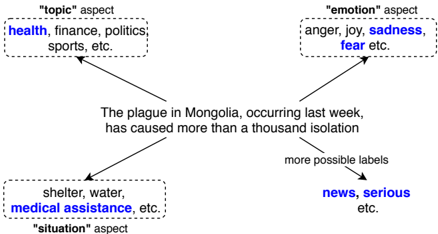
“The idea of zero-shot TC was coined by Yin et al. (2019), and in this paper, we have specifically focused on Definition-Wild 0SHOT-TC discussed by Yin et al. (2019), a visual depiction of which is presented in Figure 1.”
BackgroundMethodInfluentialTowards a Generative Approach for Emotion Detection and ReasoningPreprint
Bhaumik, A., & Strzalkowski, T. (2024) · arXiv (Cornell University) · doi:10.48550/arxiv.2408.04906 · Cited by 12
“Current state of the art zero-shot emotion detection systems prompt textual entailment models using the the fixed set of emotion labels for a dataset (Wenpeng Yin and Roth, 2019).”
BackgroundCLIPMulti: Explore the performance of multimodal enhanced CLIP for zero-shot text classification
Wang, P., Li, D., Hu, X., Wang, Y., & Zhang, Y. (2024) · Computer Speech & Language · doi:10.1016/j.csl.2024.101748 · Cited by 11
Examining and Adapting Time for Multilingual Classification via Mixture of Temporal Experts
Liu, W., Han, G., & Huang, X. (2025) · Conference of the North American Chapter of the Association for Computational Linguistics: Human Language Technologies (NAACL-HLT) · doi:10.18653/v1/2025.naacl-long.313 · Cited by 13
Lin, Y., Thackway, W., Soundararaj, B., Eagleson, S., Han, H., & Pettit, C. J. (2025) · Environment and Planning B Urban Analytics and City Science · doi:10.1177/23998083251369142 · Cited by 11
“Instead, ZSL transfers learned knowledge from previously encountered classes to categorise new, unseen data (Yin et al., 2019).”
Xia, M., Jiang, Z., Wang, H., Zhao, J., Hu, T., & Chen, G. (2025) · Conference on Empirical Methods in Natural Language Processing (EMNLP) · doi:10.18653/v1/2025.emnlp-main.918 · Cited by 11
“For baseline BART-NLI and UP, we use BART-Large-MNLI (Yin et al., 2019) and mpnet-all (Reimers and Gurevych, 2019) as the pre-trained language model, following their original implementation.”
Jaradeh, A., & Kurdy, M.-B. (2023) · IEEE Access · doi:10.1109/access.2023.3300737 · Cited by 11
“Yin et al. [37] proposed a method for using pre-trained Natural Language Inference (NLI) models as a ready-made zero-shot sequence classifiers.”
MethodNo that’s not what I meant: Handling Third Position Repair in Conversational Question Answering
Balaraman, V., Eshghi, A., Konstas, I., & Papaioannou, I. A. (2023) · Annual Meeting of the Special Interest Group on Discourse and Dialogue · doi:10.18653/v1/2023.sigdial-1.52 · Cited by 11
Efficiently Aligned Cross-Lingual Transfer Learning for Conversational Tasks using Prompt-Tuning
Tu, L., Qu, J., Yavuz, S., Joty, S., Liu, W., Xiong, C., & Zhou, Y. (2024) · Findings of the Association for Computational Linguistics: EACL · doi:10.18653/v1/2024.findings-eacl.85 · Cited by 11
Dataset for Identification of Homophobia and Transphobia for Telugu, Kannada, and Gujarati
Kumaresan, P. K., Ponnusamy, R., Sharma, D., Buitelaar, P., & Chakravarthi, B. R. (2024) · Language Resources and Evaluation Conference (LREC) · doi:10.63317/4rrkji667e6j · Cited by 11
WhyAct: Identifying Action Reasons in Lifestyle Vlogs
Ignat, O., Castro, S., Miao, H., Li, W., & Mihalcea, R. F. (2021) · Conference on Empirical Methods in Natural Language Processing (EMNLP) · doi:10.18653/v1/2021.emnlp-main.392 · Cited by 11
“We use a pre-trained NLI model (Yin et al., 2019) as a zero-shot sequence classifier.”
MethodOntology-Driven Scientific Literature Classification Using Clustering and Self-supervised Learning
Pan, Z., Soong, P., & Rafatirad, S. (2022) · Lecture notes on data engineering and communications technologies · doi:10.1007/978-981-19-2600-6_10 · Cited by 11
A Comprehensive Empirical Study on Personalized Dialogue Generation
Cho, I., Wang, D., Takahashi, R., & Saito, H. (2023) · Journal of Natural Language Processing · doi:10.5715/jnlp.30.959 · Cited by 11
Unsupervised Label-aware Event Trigger and Argument ClassificationPreprint
Zhang, H., Wang, H., & Roth, D. (2020) · arXiv (Cornell University) · doi:10.48550/arxiv.2012.15243 · Cited by 11
“Solving NLP problems without using annotations has been explored in many NLP tasks including text classification (Chang et al., 2008; Yin et al., 2019), entity typing (Zhou et al., 2018), sequence classification (Rei and S o gaard, 2018), and intent detection (Xia et al., 2018).”
MethodSelf-citationMultilingual and tunisian dialect analysis of banking app reviews using LLMs
Mahouachi, R., & Mahersia, H. (2025) · Expert Systems with Applications · doi:10.1016/j.eswa.2025.128260 · Cited by 10
iPrOp: Interactive Prompt Optimization for Large Language Models with a Human in the Loop
Li, J., & Klinger, R. (2025) · Proceedings of the conference - Association for Computational Linguistics. Meeting · doi:10.18653/v1/2025.acl-srw.18 · Cited by 10
Zhao, J., Song, R., Yue, C., Wang, Z., & Xu, H. (2023) · Information Processing & Management · doi:10.1016/j.ipm.2023.103442 · Cited by 10
Learning to Select from Multiple Options
Du, J., Yin, W., Xia, C., & Yu, P. S. (2023) · Proceedings of the AAAI Conference on Artificial Intelligence · doi:10.1609/aaai.v37i11.26500 · Cited by 10
Self-citationNeighboring Words Affect Human Interpretation of Saliency Explanations
Jacovi, A., Schuff, H., Adel, H., Vu, N. T., & Goldberg, Y. (2023) · Findings of the Association for Computational Linguistics: ACL (Findings of ACL) · doi:10.18653/v1/2023.findings-acl.750 · Cited by 10
Wang, Z., Wang, T., Mekala, D., & Shang, J. (2023) · Findings of the Association for Computational Linguistics: ACL (Findings of ACL) · doi:10.18653/v1/2023.findings-acl.244 · Cited by 10
Harth, P., Jähde, O., Schneider, S., Horn, N., & Buchkremer, R. (2023) · Algorithms · doi:10.3390/a16090403 · Cited by 10
“…experiment’s quality criteria of DBSCAN clustering The resulting 140 clusters Before all reviews were fed into the facebook/bart-large-mnli model [60,61], tests were done with a small sample group of 1000 reviews to determine a way to get additional results that could be processed and deliver…”
MethodInferring skin–brain–skin connections from infodemiology data using dynamic Bayesian networks
Scutari, M., Kérob, D., & Salah, S. (2024) · Scientific Reports · doi:10.1038/s41598-024-60937-3 · Cited by 10
“Training on massive corpus makes them more accurate in classifying diseases even with little to no fine-tuning (respectively, zero-shot classification without additional supervised learning [44] and with few-shot classification with a very small number of examples [45]).”
BackgroundCruciata, P., Pulizzotto, D., & Beaudry, C. (2024) · Technological Forecasting and Social Change · doi:10.1016/j.techfore.2024.123455 · Cited by 10
Poesina, E., Caragea, C., & Ionescu, R. T. (2024) · Proceedings of the conference - Association for Computational Linguistics. Meeting · doi:10.18653/v1/2024.acl-long.15 · Cited by 10
Translate and Classify: Improving Sequence Level Classification for English-Hindi Code-Mixed Data
Gautam, D., Gupta, K., & Shrivastava, M. (2021) · Workshop on Computational Approaches to Code Switching · doi:10.18653/v1/2021.calcs-1.3 · Cited by 10
CoMe-KE: A New Transformers Based Approach for Knowledge Extraction in Conflict and Mediation Domain
Parolin, E. S., Hu, Y., Khan, L. R., Osorio, J., Brandt, P. T., & D'Orazio, V. J. (2021) · IEEE International Conference on Big Data (BigData) · doi:10.1109/bigdata52589.2021.9672080 · Cited by 10
Contextualizing Language Models for Norms Diverging from Social Majority
Kiehne, N., Kroll, H., & Balke, W. (2022) · Findings of the Association for Computational Linguistics: EMNLP (Findings of EMNLP) · doi:10.18653/v1/2022.findings-emnlp.339 · Cited by 10
“Here, we want to show a possible connection of moral reasoning and natural language inference in a zero-shot paradigm (Yin et al., 2019).”
Background
Metadata
- Authors
- Yin, W., Hay, J., & Roth, D.
- Affiliations
- University of Pennsylvania (US)
- Venue
- Proceedings of the 2019 Conference on Empirical Methods in Natural Language Processing and the 9th International Joint Conference on Natural Language Processing (EMNLP-IJCNLP)
- Published
- 2019
- Pages
- 3912-3921
- OpenAlex
- W2970200208
- Cited by
- 537
- References
- 30
- Citations by year
- 2026: 66 · 2025: 86 · 2024: 75 · 2023: 141 · 2022: 94 · 2021: 64 · 2020: 11
- FWCI
- 16.17
- Type
- conference paper
- Language
- en
- Open access
- hybrid
- doi.org
- Licence
- cc-by
- Locations
- Conference on Empirical Methods in Natural Language Processing (EMNLP) (publishedVersion, cc-by)
- Funders
- U.S. Department of Defense
- Defense Advanced Research Projects Agency (HR0011-15-C-0113)
- Advanced Research Projects Agency
- Topics
- Physical Sciences › Computer Science › Artificial Intelligence › Topic Modeling
- Physical Sciences › Computer Science › Artificial Intelligence › Domain Adaptation and Few-Shot Learning
- Physical Sciences › Computer Science › Artificial Intelligence › Natural Language Processing Techniques
- Keywords
- zero-shot text classification, benchmarking, evaluation metrics, logical consequence, cross-domain classification
About these checks
Registry, retraction, Cites and statistics results are computed, not judged, with one exception: a printed reference that no index lists is read once by a model before it counts as a citation error. Claims are extracted by a model and kept only when their quote appears verbatim in the text; each cited source is then checked, with a model’s help, for whether it says what the claim relies on. Those verdicts can be wrong — read the claim’s quote and the cited source before relying on one.
Statistics and arithmetic are recomputed, not judged.
Confidence bands are shown only for fields calibrated on our annotated test set. None is calibrated yet, so no band is shown.
What counts as a claim ›How we measure confidence ›How we check this ›
Are you an author, or do you see a problem with this page? Request a review
Data sources
Bibliographic data: Semantic Scholar, OpenAlex, Crossref.
Contains information from the Semantic Scholar Academic Graph Datasets, made available under the ODC Attribution License (ODC-BY 1.0).
Semantic Scholar’s data is described in: Kinney, R., et al. (2023). The Semantic Scholar Open Data Platform. arXiv:2301.10140.
