

Cloze-driven Pretraining of Self-attention Networks
Open accessThe DOI matches its Crossref record; 38 of the 38 references it cites were found in a registry or an index.
Abstract
Alexei Baevski, Sergey Edunov, Yinhan Liu, Luke Zettlemoyer, Michael Auli. Proceedings of the 2019 Conference on Empirical Methods in Natural Language Processing and the 9th International Joint Conference on Natural Language Processing (EMNLP-IJCNLP). 2019.
Overview
The claims and statistics of this paper haven’t been checked yet.
Free: it reads the open-access text and checks the first 5 claims that cite a source we can check. Create a free account to check every claim.
Integrity signals
Registry
Cites
Statistics
Figures
Verification
Claims the paper makes
The claims and statistics of this paper haven’t been checked yet.
Free: it reads the open-access text and checks the first 5 claims that cite a source we can check. Create a free account to check every claim.
Claims other papers make about this one
Each is checked against this paper’s own text: does it say what the citing paper says it does?
The check wasn’t confident either way, so it gives no verdict — never disputed.
In the citing paper
“ULMFiT consists of 3 phases: 1) pre-training LM on general-domain data; 2) fine-tuning LM on target data; 3) fine-tuning on the target task.”
From Pre-trained models for natural language processing: A survey (2020) · cites this paper as [38]
Experimental — accuracy not yet measuredIn the citing paper
“ULMFiT (Universal Language Model Fine-tuning) [38] attempted to fine-tune pre-trained LM for text classification (TC) and achieved state-of-the-art results on six widely-used TC datasets.”
From Pre-trained models for natural language processing: A survey (2020) · cites this paper as [38]
In the citing paper
“ULMFiT also investigates some e ective fine-tuning strategies, including discriminative fine-tuning, slanted triangular learning rates, and gradual unfreezing.”
From Pre-trained models for natural language processing: A survey (2020) · cites this paper as [38]
In the citing paper
“Instead of fine-tuning all the layers simultaneously, gradual unfreezing [38] is also an e ective method that gradually unfreezes layers of PTMs starting from the top layer.”
From Pre-trained models for natural language processing: A survey (2020) · cites this paper as [38]
In the citing paper
“This may suggest that in some cases, continued pretraining on any additional data is useful, as noted in Baevski et al. (2019).”
From Don’t Stop Pretraining: Adapt Language Models to Domains and Tasks (2020) · cites this paper as Baevski et al. (2019)
Self-check
Percentages, sums and reported differences re-computed from the paper’s own numbers.
The self-check needs the paper’s full text.
Citations
Cites
Deep Residual Learning for Image Recognition
He, K., Zhang, X., Ren, S., & Sun, J. (2016) · 2016 IEEE Conference on Computer Vision and Pattern Recognition (CVPR) · doi:10.1109/cvpr.2016.90 · Cited by 235,474 · cited 1×
“Sub-blocks are surrounded by a residual connection (He et al., 2015).”
BackgroundVaswani, A., Shazeer, N., Parmar, N., Uszkoreit, J., Jones, L., Gomez, A. N., Kaiser, L., & Polosukhin, I. (2017) · arXiv · doi:10.48550/arxiv.1706.03762 · Cited by 120,404 · cited 3×
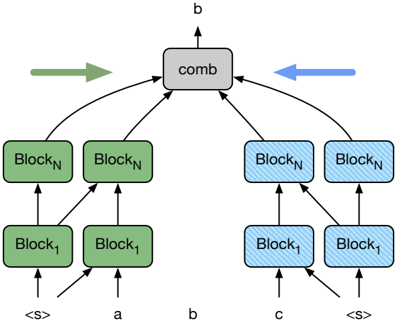
“The structure of the blocks follows most of the architectural choices described in Vaswani et al. (2017).”
BackgroundMethodAdam: A Method for Stochastic Optimization
Kingma, D. P., & Ba, J. (2014) · arXiv · doi:10.48550/arxiv.1412.6980 · Cited by 98,946 · cited 2×
“We fine tune with the Adam optimizer (Kingma and Ba, 2015).”
MethodBERT: Pre-training of Deep Bidirectional Transformers for Language Understanding
Devlin, J., Chang, M.-W., Lee, K., & Toutanova, K. (2018) · arXiv · doi:10.48550/arxiv.1810.04805 · Cited by 73,173 · cited 12×
“BERT tailors pretraining to capture dependencies between sentences via a next sentence prediction task as well as by constructing training examples of sentence-pairs with input markers that distinguish between tokens of the two sentences.”
BackgroundMethodResultInfluentialBERT: Pre-training of Deep Bidirectional Transformers for Language Understanding
Devlin, J., Chang, M.-W., Lee, K., & Toutanova, K. (2019) · Proceedings of the 2019 Conference of the North American Chapter of the Association for Computational Linguistics: Human Language Technologies, Volume 1 (Long and Short Papers) · doi:10.18653/v1/n19-1423 · Cited by 54,325 · cited 12×
“BERT tailors pretraining to capture dependencies between sentences via a next sentence prediction task as well as by constructing training examples of sentence-pairs with input markers that distinguish between tokens of the two sentences.”
BackgroundMethodResultInfluentialDeep Contextualized Word Representations
Peters, M., Neumann, M., Iyyer, M., Gardner, M., Clark, C., Lee, K., & Zettlemoyer, L. (2018) · Proceedings of the 2018 Conference of the North American Chapter of the Association for Computational Linguistics: Human Language Technologies, Volume 1 (Long Papers) · doi:10.18653/v1/n18-1202 · Cited by 11,983 · cited 13×
“We evaluate two ways of stacking: (1) ELMo-style, where the pretrained models are not fine-tuned but are linearly combined at different depths, and (2) with fine-tuning, where we set different learning rates for the task-specific layers but otherwise update all of the parameters during the task-specific training.”
BackgroundMethodResultInfluentialSelf-citationRecursive Deep Models for Semantic Compositionality Over a Sentiment Treebank
Socher, R., Perelygin, A., Wu, J., Chuang, J., Manning, C. D., Ng, A., & Potts, C. (2013) · Proceedings of the 2013 Conference on Empirical Methods in Natural Language Processing · doi:10.18653/v1/d13-1170 · Cited by 6,878 · cited 1×
“Second, the Stanford Sentiment Treebank (SST-2; Socher et al., 2013) requires to judge if movie reviews have positive or negative sentiment; evaluation is in terms of accuracy (acc).”
BackgroundSQuAD: 100,000+ Questions for Machine Comprehension of Text
Rajpurkar, P., Zhang, J., Lopyrev, K., & Liang, P. (2016) · Proceedings of the 2016 Conference on Empirical Methods in Natural Language Processing · doi:10.18653/v1/d16-1264 · Cited by 6,208 · cited 3×
“Finally, there are four natural laguage inference tasks: the Multi-Genre Natural Language Inference (MNLI; Williams et al., 2018), the Stanford Question Answering Dataset (QNLI; Rajpurkar et al., 2016), the Recognizing Textual Entailment (RTE; Dagan et al., 2006, Bar Haim et al., 2006, Ciampiccolo et al., 2007 Bentivo…”
BackgroundMethodSGDR: Stochastic Gradient Descent with Warm Restarts
Loshchilov, I., & Hutter, F. (2016) · arXiv · doi:10.48550/arxiv.1608.03983 · Cited by 5,309 · cited 1×
“The learning rate is linearly warmed up from 10 − 7 to 1 for 16K steps and then annealed using a cosine learning rate schedule with a single phase to 0.0001 (Loshchilov and Hutter, 2016).”
MethodInfluentialOn the difficulty of training recurrent neural networks
Pascanu, R., Mikolov, T., & Bengio, Y. (2012) · arXiv · doi:10.48550/arxiv.1211.5063 · Cited by 4,310 · cited 1×
“1 (Pascanu et al., 2013).”
Research works printed but not linked: 6
- Danilo Giampiccolo, Bernardo Magnini, Ido Dagan, and Bill Dolan. 2007. The pascal recognizing textual entailment challenge. Proc. of the ACL- PASCAL workshop on textual entailment and para- phrasing.
- Edouard Grave, Piotr Bojanowski, Prakhar Gupta, Ar- mand Joulin, and Tomas Mikolov. 2018. Learning word vectors for 157 languages. In Proc. of LREC.
- Bryan McCann, James Bradbury, Caiming Xiong, and Richard Socher. 2017. Learned in translation: Con- textualized word vectors. In Proc. of NIPS.
- Myle Ott, Sergey Edunov, David Grangier, and Michael Auli. 2018. Scaling neural machine trans- lation. In Proc. of WMT.
- Matthew E Peters, Mark Neumann, Mohit Iyyer, Matt Gardner, Christopher Clark, Kenton Lee, and Luke Zettlemoyer. 2018. Deep contextualized word rep- resentations. In Proc. of ACL.
- Rico Sennrich, Barry Haddow, and Alexandra Birch. 2016. Neural machine translation of rare words with subword units. In Proc. of ACL.
Cited by
Items 101–200 of 234
Pretrained transformer framework on pediatric claims data for population specific tasks
Zeng, X., Linwood, S. L., & Liu, C. (2022) · Scientific Reports · doi:10.1038/s41598-022-07545-1 · Cited by 15
van Dam, T., van der Heijden, F., de Bekker, P., Nieuwschepen, B., Otten, M., & Izadi, M. (2024) · IEEE/ACM International Conference on AI Foundation Models and Software Engineering (FORGE) · doi:10.1145/3650105.3652289 · Cited by 19
“UniXcoder was trained using Masked Language Modeling [5, 12] and Denoising [33] to facilitate code understanding, and trained using Unidirectional Language Modeling [31] for auto-regressive tasks such as code completion.”
MethodThe Transformers’ Ability to Implement for Solving Intricacies of Language Processing
Singh, P. N., & Behera, S. (2022) · Asian Conference on Innovation in Technology (ASIANCON) · doi:10.1109/asiancon55314.2022.9909423 · Cited by 16
“[23] showed a new strategy for pre-training a bi-directional transformer model that increases performance across a variety of language comprehension issues.”
BackgroundDelayed Combination of Feature Embedding in Bidirectional LSTM CRF for NER
Ronran, C., Lee, S., & Jang, H. J. (2020) · Applied Sciences · doi:10.3390/app10217557 · Cited by 15
“[50] Cloze-style LM embedding CNN CNN Large and fine-tune 93.”
Adelani, D. I., Hedderich, M. A., Zhu, D., Berg, E. V. D., & Klakow, D. (2020) · arXiv (Cornell University) · doi:10.48550/arxiv.2003.08370 · Cited by 17
“For high-resource languages like English, this is a well-studied problem with complex state-of-the-art systems reaching close to or above 90% F1-score on the standard datasets CoNLL03 (Baevski et al., 2019) and Ontonotes (Akbik et al.”
BackgroundTraining Experimental Language Models with Low Resources, for the Hungarian Language
Yang, Z. G., & Váradi, T. (2023) · Acta Polytechnica Hungarica · doi:10.12700/aph.20.5.2023.5.11 · Cited by 18
Zeng, C., & Li, S. (2021) · Wireless Communications and Mobile Computing · doi:10.1155/2021/5375334 · Cited by 15
“Improving the diversity of data domains and increasing the amount of data can result in improved performance in downstream tasks [9, 30].”
BackgroundRetractedGFMRC: A machine reading comprehension model for named entity recognition
Fei, Y., & Xu, X. (2023) · Pattern Recognition Letters · doi:10.1016/j.patrec.2023.06.011 · Cited by 15
Learning Architectures from an Extended Search Space for Language Modeling
Li, Y., Hu, C., Zhang, Y., Xu, N., Jiang, Y., Xiao, T., Zhu, J., Liu, T., & Li, C. (2020) · Proceedings of the conference - Association for Computational Linguistics. Meeting · doi:10.18653/v1/2020.acl-main.592 · Cited by 17
Learning Lexical Subspaces in a Distributional Vector Space
Arora, K., Chakraborty, A., & Cheung, J. C. K. (2020) · Transactions of the Association for Computational Linguistics · doi:10.1162/tacl_a_00316 · Cited by 16
“The current state of the art for NER is Baevski et al. (2019). The authors also use the model proposed by Peters et al.”
BackgroundMethodTransfer Learning for Automated Test Case Prioritization Using XCSF
Rosenbauer, L., Pätzel, D., Stein, A., & Hähner, J. (2021) · Lecture notes in computer science · doi:10.1007/978-3-030-72699-7_43 · Cited by 16
Phan, T. H. V., & Do, P. (2021) · Neural Computing and Applications · doi:10.1007/s00521-021-06477-7 · Cited by 15
“This task is widely used in question answering systems [7] [8], cloze style [9], emotion analysis [10], neural machine translation [11], and automatic question generation [3], in which automatic question generation is a challenge that has been interested in recent years.”
BackgroundA Broad-coverage Corpus for Finnish Named Entity Recognition
Luoma, J., Oinonen, M., Pyykönen, M., Laippala, V., & Pyysalo, S. (2020) · Language Resources and Evaluation · Cited by 62
Handling Rare Entities for Neural Sequence Labeling
Li, Y., Li, H., Yao, K., & Li, X. (2020) · Proceedings of the conference - Association for Computational Linguistics. Meeting · doi:10.18653/v1/2020.acl-main.574 · Cited by 16
“The best performing models have been us-ing pre-training models on large corpus (Baevski et al., 2019) or incorporating fine-tuning on existing pre-trained models (Liu et al., 2019a) such as BERT (Devlin et al., 2018).”
MethodGholami, E., Motamedi, M., & Aravindakshan, A. (2022) · ACM SIGKDD Conference on Knowledge Discovery and Data Mining (KDD) · doi:10.1145/3534678.3539432 · Cited by 20
“The idea is to randomly mask an item (or items) and use remaining information on both left and right to predict masked item(s) [1, 5].”
BackgroundNeural Network Algorithm for Detection of New Word Meanings Denoting Named Entities
Bochkarev, V. V., Khristoforov, S. V., Shevlyakova, A. V., & Solovyev, V. D. (2022) · IEEE Access · doi:10.1109/access.2022.3186681 · Cited by 14
“5% was obtained on this corpus in [44] by using neural networks.”
BackgroundMethodTowards a Standardized Dataset on Indonesian Named Entity Recognition
Khairunnisa, S. O., Imankulova, A., & Komachi, M. (2020) · Conference of the Asia-Pacific Chapter of the Association for Computational Linguistics and the International Joint Conference on Natural Language Processing: Student Research Workshop (AACL-IJCNLP SRW) · doi:10.18653/v1/2020.aacl-srw.10 · Cited by 20
“The current state-of-the-art NER model to date was created by fine-tuning a cloze-driven pre-trained bidirectional transformer model (Baevski et al., 2019).”
MethodTest Case Prioritization using Transfer Learning in Continuous Integration Environments
Mamata, R., Azim, A., Liscano, R., Smith, K., Chang, Y.-K., Seferi, G., & Tauseef, Q. (2023) · doi:10.1109/ast58925.2023.00023 · Cited by 17
“In natural language processing and computer vision, the standard practice is to select a pre-trained model that performs sensibly well on a large dataset [34], [35].”
BackgroundStudy of Named Entity Recognition methods in biomedical field
Śniegula, A., Poniszewska-Marańda, A., & Chomątek, Ł. (2019) · Procedia Computer Science · doi:10.1016/j.procs.2019.09.466 · Cited by 12
Research on fine-tuning strategy of sentiment analysis model based on BERT
Li, X., Wang, X., & Liu, H. (2021) · International Conference on Communications, Information System and Computer Engineering (CISCE) · doi:10.1109/cisce52179.2021.9445882 · Cited by 11
Khan, M., Penfield, J., Suman, A., & Crowell, S. (2025) · Heliyon · doi:10.1016/j.heliyon.2025.e42215 · Cited by 11
A Comparison of Discrete Latent Variable Models for Speech Representation Learning
Zhou, H., Baevski, A., & Auli, M. (2021) · IEEE International Conference on Acoustics Speech and Signal Processing · doi:10.1109/icassp39728.2021.9413680 · Cited by 12
“Self-supervised work in natural language processing also heavily relies on objectives that require predicting future information or missing parts of the sequence [23, 24].”
BackgroundSelf-citationRecent Progress of Named Entity Recognition over the Most Popular Datasets
Albared, M., Ocaña, M. G., Ghareb, A. S., & Al-Moslmi, T. (2019) · International Conference of Intelligent Computing and Engineering (ICOICE) · doi:10.1109/icoice48418.2019.9035170 · Cited by 11
Natural language processing for African languagesPreprint
Adelani, D. I. (2025) · arXiv (Cornell University) · doi:10.48550/arxiv.2507.00297 · Cited by 12
Named Entity Recognition for Icelandic: Annotated Corpus and Models
Ingólfsdóttir, S. L., Guðjónsson, Á. A., & Loftsson, H. (2020) · Lecture notes in computer science · doi:10.1007/978-3-030-59430-5_4 · Cited by 23
SeqScore: Addressing Barriers to Reproducible Named Entity Recognition Evaluation
Palen-Michel, C., Holley, N., & Lignos, C. (2021) · Workshop on Evaluation and Comparison of NLP Systems (Eval4NLP) · doi:10.18653/v1/2021.eval4nlp-1.5 · Cited by 21
Li, Y., Nair, P., Pelrine, K., & Rabbany, R. (2022) · Findings of the Association for Computational Linguistics: ACL (Findings of ACL) · doi:10.18653/v1/2022.findings-acl.225 · Cited by 20
“Other popular architectures for NER include bidirectional LSTM + CRF (Lample et al., 2016), enhanced with character-level contextualized representations (Ak-bik et al., 2018) and contextualized word representations (CWR) based on a bidirectional transformer (Alexei et al., 2019).”
MethodExploring Segment Representations for Neural Semi-Markov Conditional Random Fields
Liu, Y., Che, W., Qin, B., & Liu, T. (2020) · IEEE/ACM Transactions on Audio Speech and Language Processing · doi:10.1109/taslp.2020.2964960 · Cited by 9
“17 points lower than the SOTA results of cloze-driven self-attention network [46].”
Self-citationStudy of Artificial Intelligence-Assisted English Oral Teaching
Wang, J., Zhang, J., Chen, L., & Dai, J. (2024) · Scientific Journal of Intelligent Systems Research · doi:10.54691/8965yk53 · Cited by 12
“Since the second half of 2022, with ChatGPT as the representative of LLM becoming a social focus, the introduction of various generative artificial intelligence technologies has provided strong technical support for foreign language speaking auxiliary training and teaching[3,4].”
BackgroundKabal, O., Harzallah, M., Guillet, F., & Ichise, R. (2024) · Procedia Computer Science · doi:10.1016/j.procs.2024.09.436 · Cited by 9
Low Resource Sequence Tagging using Sentence Reconstruction
Perl, T., Chaudhury, S., & Giryes, R. (2020) · Proceedings of the conference - Association for Computational Linguistics. Meeting · doi:10.18653/v1/2020.acl-main.239 · Cited by 9
Datasets and Performance Metrics for Greek Named Entity Recognition
Bartziokas, N., Mavropoulos, T., & Kotropoulos, C. L. (2020) · Hellenic Conference on Artificial Intelligence · doi:10.1145/3411408.3411437 · Cited by 16
“The best models achieve an F 1 -score of around 92-93% in CoNLL2003 dataset [42], 92.2% using Embeddings from Language Models (ELMo) [36], 92.8% with Bidirectional Encoder Representations from Transformers (BERT) [13], 93.09% using FLAIR model [1], and 93.5% in [3].”
MethodInfluentialCalibreNet: Calibration Networks for Multilingual Sequence Labeling
Liang, S., Shou, L., Pei, J., Gong, M., Zuo, W., & Jiang, D. (2021) · ACM International Conference on Web Search and Data Mining (WSDM) · doi:10.1145/3437963.3441728 · Cited by 12
“Recently, combining neural networks as the representation layer with CRF models has further boosted the state-of-the-art performance [2, 13].”
BackgroundPartially Supervised Named Entity Recognition via the Expected Entity Ratio Loss
Effland, T., & Collins, M. (2021) · Transactions of the Association for Computational Linguistics · doi:10.1162/tacl_a_00429 · Cited by 12
“, 2019) that do not use ensembles or NER-specific pretraining (Luoma and Pyysalo, 2020; Baevski et al., 2019; Yamada et al., 2020).”
BackgroundTowards the Named Entity Recognition Methods in Biomedical Field
Śniegula, A., Poniszewska-Marańda, A., & Chomątek, Ł. (2020) · Lecture notes in computer science · doi:10.1007/978-3-030-38919-2_31 · Cited by 13
Integrating Knowledge Into End-to-End Speech Recognition From External Text-Only Data
Bai, Y., Yi, J., Tao, J., Wen, Z., Tian, Z., & Zhang, S. (2021) · IEEE/ACM Transactions on Audio Speech and Language Processing · doi:10.1109/taslp.2021.3066274 · Cited by 14
“Previous work [35] also uses two stacks of transformers.”
BackgroundMethodIdentification of Fine-Grained Location Mentions in Crisis Tweets
Khanal, S., Traskowsky, M., & Caragea, D. (2022) · Language Resources and Evaluation Conference (LREC) · doi:10.63317/3fumh6xw9vrj · Cited by 11
Self-Attention Gazetteer Embeddings for Named-Entity RecognitionPreprint
Peshterliev, S., Dupuy, C., & Kiss, I. (2020) · arXiv (Cornell University) · doi:10.48550/arxiv.2004.04060 · Cited by 10
“Baevski et al. (2019) is the current state-of-the-art language model that uses cloze-driven pretraining.”
BackgroundSemantic-Enhanced Training Data Augmentation Methods for Long-Tail Entity Recognition Models
Mesbah, S. (2020) · Data Archiving and Networked Services (DANS) · doi:10.4233/uuid:dbbfe1fc-bf63-45f0-8cf2-28ed7dab90eb · Cited by 8
Clustering of Social Media Messages for Humanitarian Aid Response during CrisisPreprint
Padhee, S., Saha, T. K., Tetreault, J., & Jaimes, A. (2020) · arXiv (Cornell University) · doi:10.48550/arxiv.2007.11756 · Cited by 9
“, 2018], Named entity recognition [Baevski et al., 2019] etc.”
BackgroundMethodPre-Training Transformers as Energy-Based Cloze ModelsPreprint
Clark, K., Luong, M.-T., Le, Q. V., & Manning, C. D. (2020) · arXiv (Cornell University) · doi:10.48550/arxiv.2012.08561 · Cited by 13
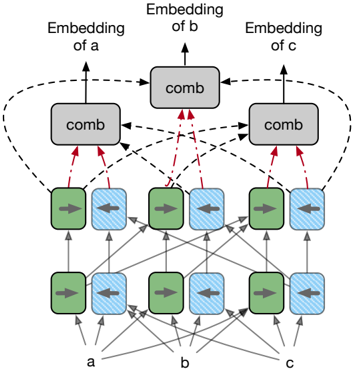
“In particular, we use a two-tower cloze model as proposed by Baevski et al. (2019), which is more accurate than a language model because it uses context to both sides of each token.”
BackgroundMethodInfluentialFederated Learning in Named Entity Recognition
Luboshnikov, E., & Makarov, I. (2021) · Communications in computer and information science · doi:10.1007/978-3-030-71214-3_8 · Cited by 8
“The Bi-directional Transformer in a cloze-style manner [3] reaches (93.”
BackgroundHLE-UPC at SemEval-2021 Task 5: Multi-Depth DistilBERT for Toxic Spans Detection
Palliser-Sans, R., & Rial-Farràs, A. (2021) · International Workshop on Semantic Evaluation (SemEval) · doi:10.18653/v1/2021.semeval-1.131 · Cited by 9
“However, we can also find some other attentionbased models using CNNs (Baevski et al., 2019) or even recurrent architectures such as Jiang et al.”
MethodText Summarization of Product Titles.
Xiao, J., & Munro, R. (2019) · International ACM SIGIR Conference on Research and Development in Information Retrieval (SIGIR) · Cited by 16
Triple E - Effective Ensembling of Embeddings and Language Models for NER of Historical German.
Schweter, S., & März, L. (2020) · CLEF (Working Notes) · Cited by 16
Time-Aware PolarisX: Auto-Growing Knowledge Graph
Ahn, Y.-S., & Jeong, O. (2021) · Computers, materials & continua/Computers, materials & continua (Print) · doi:10.32604/cmc.2021.015636 · Cited by 7
Entity Resolution in Open-domain Conversations
Shang, M., Wang, T., Eric, M., Chen, J., Wang, J., Welch, M., Deng, T., Grewal, A., Wang, H., Liu, Y., et al. (2021) · Conference of the North American Chapter of the Association for Computational Linguistics: Human Language Technologies (NAACL-HLT) · doi:10.18653/v1/2021.naacl-industry.4 · Cited by 11
“…in NER with the help of Convolutional Neural Networks (CNNs), Bidirectional Recurrent Neural Networks (Bi-RNNs), and attention mechanisms along with a CRF decoder (Chiu and Nichols, 2016; Akbik et al., 2018; Ghaddar and Langlais, 2018; Jiang et al., 2019; Baevski et al., 2019; Yamada et al., 2020).”
MethodSelf-citationHELD: Hierarchical entity-label disambiguation in named entity recognition task using deep learning
Oliveira, B. S. N., de Oliveira, A. F., de Lira, V. M., da Silva, T. L. C., & de Macêdo, J. A. F. (2022) · Intelligent Data Analysis · doi:10.3233/ida-205720 · Cited by 6
Neural Correction Model for Open-Domain Named Entity RecognitionPreprint
Zhu, M., Deng, Z., Xiong, W., Yu, M., Zhang, M., & Wang, W. Y. (2019) · arXiv (Cornell University) · doi:10.48550/arxiv.1909.06058 · Cited by 6
“Baevski et al. (2019) present a pre-trained bi-directional transformer model using cloze-style word reconstruction task.”
MethodInfluentialChinese Medical Named Entity Recognition Based on Fusion of Global Features and Multi-Local Features
Sun, H., Wang, J., Li, B., Cao, X., Zang, J., Xue, C., & Zhang, Z. (2023) · IEEE Access · doi:10.1109/access.2023.3339610 · Cited by 5
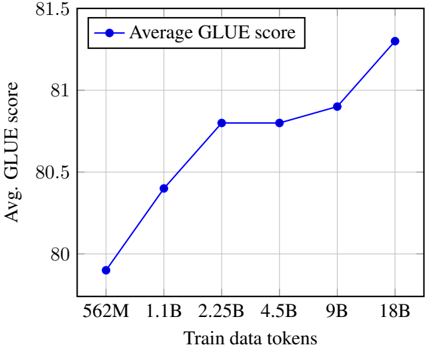
“Baevski et al. [16] proposed an approach for pre-training bidirectional trans-former models to solve lexical reconstruction tasks in cloze tests, demonstrating improved syntactic performance in GLUE experiments.”
MethodRecognition of Named Entities in the Russian Subcorpus Google Books Ngram
Bochkarev, V. V., Khristoforov, S. V., & Shevlyakova, A. V. (2020) · Lecture notes in computer science · doi:10.1007/978-3-030-60887-3_2 · Cited by 5
Lifting news into a journalistic knowledge platform
Al-Moslmi, T., & Ocaña, M. G. (2020) · NORA - Norwegian Open Research Archives · Cited by 5
Neural text summarization for Hungarian
Yang, Z. G. (2022) · Acta Linguistica Academica · doi:10.1556/2062.2022.00577 · Cited by 8
Task-adaptive Pre-training of Language Models with Word Embedding Regularization
Nishida, K., Nishida, K., & Yoshida, S. (2021) · Findings of the Association for Computational Linguistics: ACL (Findings of ACL) · doi:10.18653/v1/2021.findings-acl.398 · Cited by 11
“It is known that the performance of PTLMs tends to improve as the amount of pre-training corpora increases (Baevski et al., 2019; Lan et al., 2019).”
BackgroundA Two-Step Optimised BERT-Based NLP Algorithm for Extracting Sentiment from Financial News
Olaniyan, R., Stamate, D., & Pu, I. M. (2021) · Artificial Intelligence Applications and Innovations · doi:10.1007/978-3-030-79150-6_58 · Cited by 3
“Moreover, the foundation of these models, the language model (LM) pre-training, is considered effective as the initial step required when developing natural language models (Dai and Le [4], Dolan and Brockett [28], Howard and Ruder [18], Baevski et al. [1]).”
Towards Open-Domain Named Entity Recognition via Neural Correction Models.Preprint
Zhu, M., Deng, Z., Xiong, W., Yu, M., Zhang, M., & Wang, W. Y. (2019) · arXiv (Cornell University) · Cited by 6
Locally-Contextual Nonlinear CRFs for Sequence LabelingPreprint
Shah, H., Xiao, T. Z., & Barber, D. (2021) · arXiv (Cornell University) · doi:10.48550/arxiv.2103.16210 · Cited by 5
“GCDT (Liu et al., 2019) improves an RNN-based architecture by augmenting it with a sentence-level representation which captures wider contextual information.”
BackgroundSpeech2Slot: An End-to-End Knowledge-based Slot Filling from SpeechPreprint
Wang, P., Ye, X., Zhou, X., Xie, J., & Wang, H. (2021) · arXiv (Cornell University) · doi:10.48550/arxiv.2105.04719 · Cited by 5
“(2018); Baevski et al. (2019). In the slot filling part of SLU, most studies Jiang et al.”
BackgroundInfluentialEnd-to-end entity extraction from OCRed texts using summarization models
Villa-García, P. A., Alonso-Calvo, R., & García-Remesal, M. (2024) · Neural Computing and Applications · doi:10.1007/s00521-024-10422-9 · Cited by 5
“…[17] have achieved excellent results when combined with other components, such as bidirectional long short-term memory (Bi-LSTM) with a conditional random field (CRF) [22], contextualized character embeddings [1], character convolutional neural network (CNN) encoding and other pretrained models [3].”
Automated Corpus Annotation for Cybersecurity Named Entity Recognition with Small Keyword Dictionary
Kashihara, K., Sandhu, H. S., & Shakarian, J. (2021) · Lecture notes in networks and systems · doi:10.1007/978-3-030-82199-9_11 · Cited by 4
Multilinguals at SemEval-2022 Task 11: Transformer Based Architecture for Complex NER
Pandey, A., Daw, S., & Pudi, V. (2022) · International Workshop on Semantic Evaluation (SemEval) · doi:10.18653/v1/2022.semeval-1.224 · Cited by 4
Learning Robust Food Ontology Alignment
Mijalcheva, V., Davcheva, A., Gramatikov, S., Jovanovik, M., Trajanov, D., & Stojanov, R. (2022) · IEEE International Conference on Big Data (BigData) · doi:10.1109/bigdata55660.2022.10020417 · Cited by 8
“Language models have enabled the development of state-of-the-art NER systems that are able to extract entities such as organizations, locations, diseases, drugs, foods, etc. [6], [10], [22].”
BackgroundMethodCould KeyWord Masking Strategy Improve Language Model?
Borovikova, M., Ferré, A., Bossy, R., Roche, M., & Nédellec, C. (2023) · Lecture notes in computer science · doi:10.1007/978-3-031-35320-8_19 · Cited by 7
Toward Robust Food Ontology Mapping
Stojanov, R., Kocev, I., Gramatikov, S., Popovski, G., Seljak, B. K., & Eftimov, T. (2020) · IEEE International Conference on Big Data (BigData) · doi:10.1109/bigdata50022.2020.9378066 · Cited by 4
“Language models have enabled the development of state-of-the-art NER systems that are able to extract entities such as Organizations, Locations, Deceases, Drugs, Foods etc [5], [9], [16].”
BackgroundTMR: Evaluating NER Recall on Tough Mentions
Tu, J., & Lignos, C. (2021) · Conference of the European Chapter of the Association for Computational Linguistics: Student Research Workshop (EACL SRW) · doi:10.18653/v1/2021.eacl-srw.21 · Cited by 5
Data Centric Domain Adaptation for Historical Text with OCR Errors
März, L., Schweter, S., Poerner, N., Roth, B., & Schütze, H. (2021) · Lecture notes in computer science · doi:10.1007/978-3-030-86331-9_48 · Cited by 5
Sequence-to-Sequence Models for Extracting Information from Registration and Legal Documents
Pires, R., de Souza, F. C., Rosa, G. J. M., Lotufo, R., & Nogueira, R. F. (2022) · Lecture notes in computer science · doi:10.1007/978-3-031-06555-2_6 · Cited by 6
BERT memorisation and pitfalls in low-resource scenarios.Preprint
Tänzer, M., Ruder, S., & Rei, M. (2021) · arXiv (Cornell University) · Cited by 6
Desmet, B., Porcino, J., Zirikly, A., Newman-Griffis, D. R., Divita, G., & Rasch, E. K. (2020) · White Rose Research Online (University of Leeds, The University of Sheffield, University of York) · Cited by 9
IsiXhosa Named Entity Recognition Resources
Eiselen, R., & Bukula, A. (2022) · ACM Transactions on Asian and Low-Resource Language Information Processing · doi:10.1145/3531478 · Cited by 4
Log and Execution Trace Analytics System
Abbasli, N., & Ganiz, M. C. (2021) · International Conference on Innovations in Intelligent Systems and Applications (INISTA) · doi:10.1109/inista52262.2021.9548437 · Cited by 4
Rouhizadeh, H., & Teodoro, D. (2022) · International Workshop on Semantic Evaluation (SemEval) · doi:10.18653/v1/2022.semeval-1.212 · Cited by 3
“Over the last decade, deep learning approaches have significantly improved the results of different NER tasks (Baevski et al., 2019; Akbik et al., 2018).”
BackgroundLanguage Model Adaptation for Downstream Tasks using Text Selection
Liang, J., Martinez, A., & Morita, H. (2022) · 2022 4th International Conference on Natural Language Processing (ICNLP) · doi:10.1109/icnlp55136.2022.00058 · Cited by 4
“VAMPIRE [7] is a TAPT text selection method that uses the k-NN algorithm to select the nearest neighbors of the down-320 stream task data.”
MethodNAMED ENTITY RECOGNITION USING OPENAI GPT SERIES MODELS
Павлишенко, Б. М., & Drozdov, I. (2023) · Electronics and Information Technologies · doi:10.30970/eli.23.5 · Cited by 3
Cross-domain NER in the data-poor scenarios for human mobility knowledge
Jiang, Y., Jin, F., Chen, M., Liu, G., He, P., & Yuan, Y. (2024) · GeoInformatica · doi:10.1007/s10707-024-00513-z · Cited by 3
“Baevski et al. [11] proposed a novel cloze-driven pre-training regime based on a bi-directional Transformer, which is trained with a cloze-style objective and predicts the center word given all left and right context.”
Karakoltzidis, A., Karakitsios, S., & Sarigiannis, D. A. (2025) · NAM journal. · doi:10.1016/j.namjnl.2025.100012 · Cited by 3
“As the number of entries in the training datasets increases the capabilities of such models learning representations is significantly improved (Baevski et al., 2019; Radford et al., 2019; Rives et al., 2021).”
Masked ELMo: An evolution of ELMo towards fully contextual RNN language modelsPreprint
Senay, G., & Salin, E. (2020) · arXiv.org · doi:10.48550/arxiv.2010.04302 · Cited by 2
“Few studies on RNN-based models have been published since ELMo (Peters et al., 2018; Baevski et al., 2019).”
BackgroundRecognising Biomedical Names: Challenges and SolutionsPreprint
Dai, X. (2021) · arXiv (Cornell University) · doi:10.48550/arxiv.2106.12230 · Cited by 6
Ni, J. (2023) · DR-NTU (Nanyang Technological University) · doi:10.32657/10356/168430 · Cited by 4
Improving neural machine translation of languages with little data and rich morphology
Dhar, P. (2024) · University of Groningen research database (University of Groningen / Centre for Information Technology) · doi:10.33612/diss.859674171 · Cited by 3
When External Knowledge Does Not Aggregate in Named Entity Recognition
Privatto, P. I. M., & Guilherme, I. R. (2021) · Lecture notes in computer science · doi:10.1007/978-3-030-91699-2_42 · Cited by 2
The Advance of Deep Learning Based Named Entity Recognition
Li, W. (2022) · Highlights in Science Engineering and Technology · doi:10.54097/hset.v12i.1368 · Cited by 2
Choosing What to Mask: More Informed Masking for Multimodal Machine Translation
Sato, J., Caseli, H. D. M., & Specia, L. (2023) · Proceedings of the conference - Association for Computational Linguistics. Meeting · doi:10.18653/v1/2023.acl-srw.35 · Cited by 9
“Pre-trained language models have achieved remarkable results on several Natural Language Processing (NLP) tasks (Devlin et al., 2019; Liu et al., 2019; Baevski et al., 2019; Yang et al., 2019; Joshi et al., 2020; Clark et al., 2020; Lan et al., 2020; Zhuang et al., 2021).”
BackgroundMulti-domain adaptation for named entity recognition with multi-aspect relevance learning
Li, J., Liu, J., Chen, Y., & Xu, J. (2022) · Language Resources and Evaluation · doi:10.1007/s10579-022-09590-8 · Cited by 2
“…out the current adaptive pre-training methods and divides them into two categories: Domain-Adaptive Pre-training (DAPT) (Alsentzer et al., 2019; Baevski et al., 2019; Devlin et al., 2019; Lee et al., 2020; Sun et al., 2019) and Task-Adaptive Pre-training (TAPT) (Han & Eisenstein, 2019; Howard…”
MethodPandey, A., Daw, S., Unnam, N. B., & Pudi, V. (2022) · International Workshop on Semantic Evaluation (SemEval) · doi:10.18653/v1/2022.semeval-1.201 · Cited by 4
Representation, information extraction, and summarization for automatic multimedia understanding
Harrando, I. (2022) · theses.fr (ABES) · doi:10.70675/702b8ba3z3acaz4ce3za9b9zf2cb1609e328 · Cited by 2
Fine Tuning Named Entity Extraction Models for the Fantasy Domain
Sivaganeshan, A., & de Silva, N. (2023) · Moratuwa Engineering Research Conference (MERCon) · doi:10.1109/mercon60487.2023.10355501 · Cited by 1
“Also, there are methods [4, 19, 20] which use pre-trained transformer-based models.”
MethodMishra, V., Duvvuri, V., & Chintalapati, R. (2025) · Communications in computer and information science · doi:10.1007/978-981-96-6400-9_26 · Cited by 2
L-CNN: An Improved Convolutional Neural Network to Capture Long-Distance Dependencies
Sun, H., Xu, C., Wu, Y., Zou, S., & Wan, F. (2020) · Advances in intelligent systems and computing · doi:10.1007/978-981-15-3588-8_14 · Cited by 2
Named Entity Recognition using Ensemble Learning
Ramachandran, R., Arutchelvan, K., & selvan, S. A. (2020) · International Research Journal on Advanced Science Hub · doi:10.47392/irjash.2020.63 · Cited by 1
An Exploration of Semi-supervised Text Classification
Lien, H.-Y., Biermann, D., Palumbo, F., & Goodwin, M. (2022) · Communications in computer and information science · doi:10.1007/978-3-031-08223-8_39 · Cited by 1
Alajrami, A., Margatina, K., & Αλέτρας, Ν. (2023) · Conference on Empirical Methods in Natural Language Processing (EMNLP) · doi:10.18653/v1/2023.emnlp-main.563 · Cited by 5
Yuan, W., Yang, M., Gu, H., & Xu, G. (2024) · Journal of Intelligent & Fuzzy Systems · doi:10.3233/jifs-237280 · Cited by 1
“The most frequently employed method is BiLSTM-CRF [17], which notably served as the primary framework in achieving state-of-the-art performance in [29, 30].”
Building a Large Corpus and Pre-trained Language Models from National and Local Assembly Minutes
Nagafuchi, K., Kimura, Y., Kadowaki, K., & Araki, K. (2024) · Journal of Natural Language Processing · doi:10.5715/jnlp.31.707 · Cited by 2
Wei, Y., & Fan, J. (2025) · Journal Of Big Data · doi:10.1186/s40537-025-01236-0 · Cited by 1
“This method has evolved fast in recent years, with models such as the BiLSTM-CRF model [72], CNN-CRF [73], and Bert [74] emerging [75, 76].”
Kashihara, K., Shakarian, J., & Baral, C. R. (2020) · Advances in intelligent systems and computing · doi:10.1007/978-3-030-55187-2_28 · Cited by 1
Common-Knowledge Concept Recognition for SEVAPreprint
Krishnan, J., Coronado, P. L., Purohit, H., & Rangwala, H. (2020) · arXiv (Cornell University) · doi:10.48550/arxiv.2003.11687 · Cited by 3
“(Baevski et al. 2019) is the current top-performing NER model for CoNLL2003 shared task (Sang and De Meulder 2003).”
MethodMultifaceted NLP analysis of hate speech and kinetic actions descriptions online
Alzeer, B. (2019) · Summit (Simon Fraser University)
Exploration of fine-tuning and inference time of large pre-trained language models in NLP
Короткова, А. Ю. (2020) · Open access LMU (Ludwid Maxmilian's Universitat Munchen) · doi:10.5282/ubm/epub.75187 · Cited by 1
Metadata
- Authors
- Baevski, A., Edunov, S., Liu, Y., Zettlemoyer, L., & Auli, M.
- Affiliations
- Meta (Israel) (IL)
- Venue
- Proceedings of the 2019 Conference on Empirical Methods in Natural Language Processing and the 9th International Joint Conference on Natural Language Processing (EMNLP-IJCNLP)
- Published
- 2019
- Pages
- 5359-5368
- OpenAlex
- W2920812691
- Cited by
- 215
- References
- 35
- Citations by year
- 2026: 2 · 2025: 8 · 2024: 15 · 2023: 18 · 2022: 36 · 2021: 50 · 2020: 67 · 2019: 19
- FWCI
- 16.45
- Type
- conference paper
- Language
- en
- Open access
- hybrid
- doi.org
- Licence
- cc-by
- Locations
- Conference on Empirical Methods in Natural Language Processing (EMNLP) (publishedVersion, cc-by)
- arXiv (Cornell University) (submittedVersion)
- arXiv (Cornell University)
- Topics
- Physical Sciences › Computer Science › Artificial Intelligence › Topic Modeling
- Physical Sciences › Computer Science › Artificial Intelligence › Natural Language Processing Techniques
- Physical Sciences › Computer Science › Artificial Intelligence › Domain Adaptation and Few-Shot Learning
- Keywords
- cloze task, self-attention network, pre-training, language model pretraining, language modeling
About these checks
Registry, retraction, Cites and statistics results are computed, not judged, with one exception: a printed reference that no index lists is read once by a model before it counts as a citation error. Claims are extracted by a model and kept only when their quote appears verbatim in the text; each cited source is then checked, with a model’s help, for whether it says what the claim relies on. Those verdicts can be wrong — read the claim’s quote and the cited source before relying on one.
Statistics and arithmetic are recomputed, not judged.
Confidence bands are shown only for fields calibrated on our annotated test set. None is calibrated yet, so no band is shown.
What counts as a claim ›How we measure confidence ›How we check this ›
Are you an author, or do you see a problem with this page? Request a review
Data sources
Bibliographic data: Semantic Scholar, OpenAlex, Crossref.
Contains information from the Semantic Scholar Academic Graph Datasets, made available under the ODC Attribution License (ODC-BY 1.0).
Semantic Scholar’s data is described in: Kinney, R., et al. (2023). The Semantic Scholar Open Data Platform. arXiv:2301.10140.
