

Cloze-driven Pretraining of Self-attention Networks
Open accessThe DOI matches its Crossref record; 38 of the 38 references it cites were found in a registry or an index.
Abstract
Alexei Baevski, Sergey Edunov, Yinhan Liu, Luke Zettlemoyer, Michael Auli. Proceedings of the 2019 Conference on Empirical Methods in Natural Language Processing and the 9th International Joint Conference on Natural Language Processing (EMNLP-IJCNLP). 2019.
Overview
The claims and statistics of this paper haven’t been checked yet.
Free: it reads the open-access text and checks the first 5 claims that cite a source we can check. Create a free account to check every claim.
Integrity signals
Registry
Cites
Statistics
Figures
Verification
Claims the paper makes
The claims and statistics of this paper haven’t been checked yet.
Free: it reads the open-access text and checks the first 5 claims that cite a source we can check. Create a free account to check every claim.
Claims other papers make about this one
Each is checked against this paper’s own text: does it say what the citing paper says it does?
The check wasn’t confident either way, so it gives no verdict — never disputed.
In the citing paper
“ULMFiT consists of 3 phases: 1) pre-training LM on general-domain data; 2) fine-tuning LM on target data; 3) fine-tuning on the target task.”
From Pre-trained models for natural language processing: A survey (2020) · cites this paper as [38]
Experimental — accuracy not yet measuredIn the citing paper
“ULMFiT (Universal Language Model Fine-tuning) [38] attempted to fine-tune pre-trained LM for text classification (TC) and achieved state-of-the-art results on six widely-used TC datasets.”
From Pre-trained models for natural language processing: A survey (2020) · cites this paper as [38]
In the citing paper
“ULMFiT also investigates some e ective fine-tuning strategies, including discriminative fine-tuning, slanted triangular learning rates, and gradual unfreezing.”
From Pre-trained models for natural language processing: A survey (2020) · cites this paper as [38]
In the citing paper
“Instead of fine-tuning all the layers simultaneously, gradual unfreezing [38] is also an e ective method that gradually unfreezes layers of PTMs starting from the top layer.”
From Pre-trained models for natural language processing: A survey (2020) · cites this paper as [38]
In the citing paper
“This may suggest that in some cases, continued pretraining on any additional data is useful, as noted in Baevski et al. (2019).”
From Don’t Stop Pretraining: Adapt Language Models to Domains and Tasks (2020) · cites this paper as Baevski et al. (2019)
Self-check
Percentages, sums and reported differences re-computed from the paper’s own numbers.
The self-check needs the paper’s full text.
Citations
Cites
Deep Residual Learning for Image Recognition
He, K., Zhang, X., Ren, S., & Sun, J. (2016) · 2016 IEEE Conference on Computer Vision and Pattern Recognition (CVPR) · doi:10.1109/cvpr.2016.90 · Cited by 235,474 · cited 1×
“Sub-blocks are surrounded by a residual connection (He et al., 2015).”
BackgroundVaswani, A., Shazeer, N., Parmar, N., Uszkoreit, J., Jones, L., Gomez, A. N., Kaiser, L., & Polosukhin, I. (2017) · arXiv · doi:10.48550/arxiv.1706.03762 · Cited by 120,404 · cited 3×
“The structure of the blocks follows most of the architectural choices described in Vaswani et al. (2017).”
BackgroundMethodAdam: A Method for Stochastic Optimization
Kingma, D. P., & Ba, J. (2014) · arXiv · doi:10.48550/arxiv.1412.6980 · Cited by 98,946 · cited 2×
“We fine tune with the Adam optimizer (Kingma and Ba, 2015).”
MethodBERT: Pre-training of Deep Bidirectional Transformers for Language Understanding
Devlin, J., Chang, M.-W., Lee, K., & Toutanova, K. (2018) · arXiv · doi:10.48550/arxiv.1810.04805 · Cited by 73,173 · cited 12×
“BERT tailors pretraining to capture dependencies between sentences via a next sentence prediction task as well as by constructing training examples of sentence-pairs with input markers that distinguish between tokens of the two sentences.”
BackgroundMethodResultInfluentialBERT: Pre-training of Deep Bidirectional Transformers for Language Understanding
Devlin, J., Chang, M.-W., Lee, K., & Toutanova, K. (2019) · Proceedings of the 2019 Conference of the North American Chapter of the Association for Computational Linguistics: Human Language Technologies, Volume 1 (Long and Short Papers) · doi:10.18653/v1/n19-1423 · Cited by 54,325 · cited 12×
“BERT tailors pretraining to capture dependencies between sentences via a next sentence prediction task as well as by constructing training examples of sentence-pairs with input markers that distinguish between tokens of the two sentences.”
BackgroundMethodResultInfluentialDeep Contextualized Word Representations
Peters, M., Neumann, M., Iyyer, M., Gardner, M., Clark, C., Lee, K., & Zettlemoyer, L. (2018) · Proceedings of the 2018 Conference of the North American Chapter of the Association for Computational Linguistics: Human Language Technologies, Volume 1 (Long Papers) · doi:10.18653/v1/n18-1202 · Cited by 11,983 · cited 13×
“We evaluate two ways of stacking: (1) ELMo-style, where the pretrained models are not fine-tuned but are linearly combined at different depths, and (2) with fine-tuning, where we set different learning rates for the task-specific layers but otherwise update all of the parameters during the task-specific training.”
BackgroundMethodResultInfluentialSelf-citationRecursive Deep Models for Semantic Compositionality Over a Sentiment Treebank
Socher, R., Perelygin, A., Wu, J., Chuang, J., Manning, C. D., Ng, A., & Potts, C. (2013) · Proceedings of the 2013 Conference on Empirical Methods in Natural Language Processing · doi:10.18653/v1/d13-1170 · Cited by 6,878 · cited 1×
“Second, the Stanford Sentiment Treebank (SST-2; Socher et al., 2013) requires to judge if movie reviews have positive or negative sentiment; evaluation is in terms of accuracy (acc).”
BackgroundSQuAD: 100,000+ Questions for Machine Comprehension of Text
Rajpurkar, P., Zhang, J., Lopyrev, K., & Liang, P. (2016) · Proceedings of the 2016 Conference on Empirical Methods in Natural Language Processing · doi:10.18653/v1/d16-1264 · Cited by 6,208 · cited 3×
“Finally, there are four natural laguage inference tasks: the Multi-Genre Natural Language Inference (MNLI; Williams et al., 2018), the Stanford Question Answering Dataset (QNLI; Rajpurkar et al., 2016), the Recognizing Textual Entailment (RTE; Dagan et al., 2006, Bar Haim et al., 2006, Ciampiccolo et al., 2007 Bentivo…”
BackgroundMethodSGDR: Stochastic Gradient Descent with Warm Restarts
Loshchilov, I., & Hutter, F. (2016) · arXiv · doi:10.48550/arxiv.1608.03983 · Cited by 5,309 · cited 1×
“The learning rate is linearly warmed up from 10 − 7 to 1 for 16K steps and then annealed using a cosine learning rate schedule with a single phase to 0.0001 (Loshchilov and Hutter, 2016).”
MethodInfluentialOn the difficulty of training recurrent neural networks
Pascanu, R., Mikolov, T., & Bengio, Y. (2012) · arXiv · doi:10.48550/arxiv.1211.5063 · Cited by 4,310 · cited 1×
“1 (Pascanu et al., 2013).”
Research works printed but not linked: 6
- Danilo Giampiccolo, Bernardo Magnini, Ido Dagan, and Bill Dolan. 2007. The pascal recognizing textual entailment challenge. Proc. of the ACL- PASCAL workshop on textual entailment and para- phrasing.
- Edouard Grave, Piotr Bojanowski, Prakhar Gupta, Ar- mand Joulin, and Tomas Mikolov. 2018. Learning word vectors for 157 languages. In Proc. of LREC.
- Bryan McCann, James Bradbury, Caiming Xiong, and Richard Socher. 2017. Learned in translation: Con- textualized word vectors. In Proc. of NIPS.
- Myle Ott, Sergey Edunov, David Grangier, and Michael Auli. 2018. Scaling neural machine trans- lation. In Proc. of WMT.
- Matthew E Peters, Mark Neumann, Mohit Iyyer, Matt Gardner, Christopher Clark, Kenton Lee, and Luke Zettlemoyer. 2018. Deep contextualized word rep- resentations. In Proc. of ACL.
- Rico Sennrich, Barry Haddow, and Alexandra Birch. 2016. Neural machine translation of rare words with subword units. In Proc. of ACL.
Cited by
RoBERTa: A Robustly Optimized BERT Pretraining Approach
Liu, Y., Ott, M., Goyal, N., Du, J., Joshi, M., Chen, D., Levy, O., Lewis, M., Zettlemoyer, L., & Stoyanov, V. (2019) · arXiv · doi:10.48550/arxiv.1907.11692 · Cited by 16,515
“Baevski et al. (2019) demonstrate that increasing data size can result in improved end-task performance.”
BackgroundSelf-citationExploring the Limits of Transfer Learning with a Unified Text-to-Text Transformer
Raffel, C., Shazeer, N., Roberts, A., Lee, K., Narang, S., Matena, M., Zhou, Y., Li, W., & Liu, P. J. (2019) · arXiv · doi:10.48550/arxiv.1910.10683 · Cited by 10,929
“Some recent notable exceptions (Baevski et al., 2019; Liu et al., 2019c; Yang et al., 2019) have compared pre-training on a new large (often Common Crawl-sourced) data set to using a smaller preexisting data set (often Wikipedia).”
BackgroundMethodInfluentialRives, A., Meier, J., Sercu, T., Goyal, S., Lin, Z., Liu, J., Guo, D., Ott, M., Zitnick, C. L., Ma, J., et al. (2021) · Proceedings of the National Academy of Sciences · doi:10.1073/pnas.2016239118 · Cited by 3,286
Don’t Stop Pretraining: Adapt Language Models to Domains and Tasks
Gururangan, S., Marasović, A., Swayamdipta, S., Lo, K., Beltagy, I., Downey, D., & Smith, N. A. (2020) · Proceedings of the 58th Annual Meeting of the Association for Computational Linguistics · doi:10.18653/v1/2020.acl-main.740 · Cited by 2,103
A Survey on Deep Learning for Named Entity Recognition
Li, J., Sun, A., Han, J., & Li, C. (2022) · IEEE Transactions on Knowledge and Data Engineering · doi:10.1109/tkde.2020.2981314 · Cited by 1,567
“beddings, there are significant performance improvements [103], [107], [108], [132]–[138].”
BackgroundMethodInfluentialPre-trained models for natural language processing: A survey
Qiu, X., Sun, T., Xu, Y., Shao, Y., Dai, N., & Huang, X. (2020) · Science China Technological Sciences · doi:10.1007/s11431-020-1647-3 · Cited by 1,591
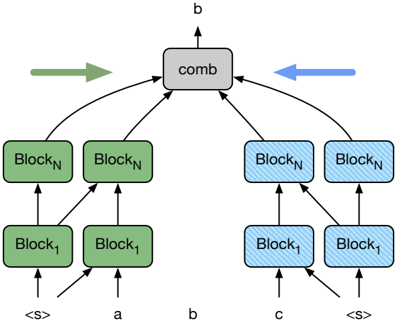
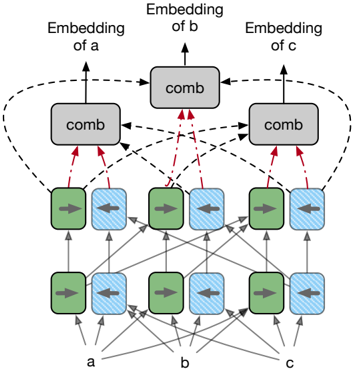
“[5] proposed a two-tower model that the forward tower operates the left-to-right LM and the backward tower operates the right-to-left LM.”
BackgroundA primer in BERTology: What we know about how BERT works
Rogers, A., Kovaleva, O., & Rumshisky, A. (2020) · Transactions of the Association for Computational Linguistics · doi:10.1162/tacl_a_00349 · Cited by 1,552
“Several studies explored the benefits of increasing the corpus volume (Liu et al., 2019b; Conneau et al., 2019; Baevski et al., 2019) and longer training (Liu et al.”
Backgroundwav2vec: Unsupervised Pre-Training for Speech Recognition
Schneider, S., Baevski, A., Collobert, R., & Auli, M. (2019) · Interspeech 2019 · doi:10.21437/interspeech.2019-1873 · Cited by 1,290
Self-citationUnified Language Model Pre-training for Natural Language Understanding and Generation
Dong, L., Yang, N., Wang, W., Wei, F., Liu, X., Wang, Y., Gao, J., Zhou, M., & Hon, H.-W. (2019) · arXiv · doi:10.48550/arxiv.1905.03197 · Cited by 1,225
“Language model (LM) pre-training has substantially advanced the state of the art across a variety of natural language processing tasks (Dai and Le, 2015; Peters et al., 2018; Howard and Ruder, 2018; Radford et al., 2018; Devlin et al., 2018; Baevski et al., 2019).”
BackgroundLUKE: Deep Contextualized Entity Representations with Entity-aware Self-attention
Yamada, I., Asai, A., Shindo, H., Takeda, H., & Matsumoto, Y. (2020) · Proceedings of the 2020 Conference on Empirical Methods in Natural Language Processing (EMNLP) · doi:10.18653/v1/2020.emnlp-main.523 · Cited by 590
MiniLM: Deep Self-Attention Distillation for Task-Agnostic Compression of Pre-Trained Transformers
Wang, W., Wei, F., Dong, L., Bao, H., Yang, N., & Zhou, M. (2020) · arXiv · doi:10.48550/arxiv.2002.10957 · Cited by 703
“Unsupervised pre-training of language models (Peters et al., 2018; Howard & Ruder, 2018; Radford et al., 2018; Devlin et al., 2018; Baevski et al., 2019; Song et al., 2019; Dong et al., 2019; Yang et al., 2019; Joshi et al., 2019; Liu et al., 2019; Lewis et al., 2019; Raffel et al., 2019) has achieved significant impr…”
BackgroundMethodMultitask Prompted Training Enables Zero-Shot Task Generalization
Sanh, V., Webson, A., Raffel, C., Bach, S. H., Sutawika, L., Alyafeai, Z., Chaffin, A., Stiegler, A., Scao, T. L., Raja, A., et al. (2021) · arXiv · doi:10.48550/arxiv.2110.08207 · Cited by 612
XLS-R: Self-supervised Cross-lingual Speech Representation Learning at Scale
Babu, A., Wang, C., Tjandra, A., Lakhotia, K., Xu, Q., Goyal, N., Singh, K., von Platen, P., Saraf, Y., Pino, J., et al. (2022) · Interspeech 2022 · doi:10.21437/interspeech.2022-143 · Cited by 586
Self-citationvq-wav2vec: Self-Supervised Learning of Discrete Speech Representations
Baevski, A., Schneider, S., & Auli, M. (2019) · arXiv (Cornell University) · doi:10.48550/arxiv.1910.05453 · Cited by 388
Self-citationOverview of the Transformer-based Models for NLP Tasks
Gillioz, A., Casas, J., Mugellini, E., & Khaled, O. A. (2020) · Annals of Computer Science and Information Systems · doi:10.15439/2020f20 · Cited by 385
“(II) As the results of [32] and [14] demonstrate, the accuracy of the end-task performance relies on the wide variety of trained data.”
BackgroundCCNet: Extracting High Quality Monolingual Datasets from Web Crawl Data
Wenzek, G., Lachaux, M.-A., Conneau, A., Chaudhary, V., Guzmán, F., Joulin, A., & Grave, É. (2019) · arXiv (Cornell University) · doi:10.48550/arxiv.1911.00359 · Cited by 231
“More recently, Baevski et al. (2019) pre-trained a BERT-like model on Common Crawl as preprocessed in Grave et al. (2018).”
MethodRives, A., Meier, J., Sercu, T., Goyal, S., Lin, Z., Liu, J., Guo, D., Ott, M., Zitnick, C. L., Ma, J., et al. (2019) · doi:10.1101/622803 · Cited by 3,280
“The ability to learn such representations improves significantly with larger training datasets (Baevski et al., 2019; Radford et al., 2019).”
BackgroundAre All Languages Created Equal in Multilingual BERT?
Wu, S., & Dredze, M. (2020) · Proceedings of the 5th Workshop on Representation Learning for NLP · doi:10.18653/v1/2020.repl4nlp-1.16 · Cited by 234
Less training, more repairing please: revisiting automated program repair via zero-shot learning
Xia, C. S., & Zhang, L. (2022) · Proceedings of the 30th ACM Joint European Software Engineering Conference and Symposium on the Foundations of Software Engineering · doi:10.1145/3540250.3549101 · Cited by 231
“We view the problem as a cloze task [1, 67] where we replace the buggy snippet with blanks/masks and query pre-trained models [6] to fill the blanks with the correct code snippet.”
MethodNamed Entity Extraction for Knowledge Graphs: A Literature Overview
Al-Moslmi, T., Gallofre Ocana, M., L. Opdahl, A., & Veres, C. (2020) · IEEE Access · doi:10.1109/access.2020.2973928 · Cited by 229
Visualizing and Understanding the Effectiveness of BERT
Hao, Y., Dong, L., Wei, F., & Xu, K. (2019) · Proceedings of the 2019 Conference on Empirical Methods in Natural Language Processing and the 9th International Joint Conference on Natural Language Processing (EMNLP-IJCNLP) · doi:10.18653/v1/d19-1424 · Cited by 166
“Language model pre-training has achieved strong performance in many NLP tasks (Peters et al., 2018; Howard and Ruder, 2018a; Radford et al., 2018; Devlin et al., 2018; Baevski et al., 2019; Dong et al., 2019).”
BackgroundAutomated Concatenation of Embeddings for Structured Prediction
Wang, X., Jiang, Y., Bach, N., Wang, T., Huang, Z., Huang, F., & Tu, K. (2021) · Proceedings of the 59th Annual Meeting of the Association for Computational Linguistics and the 11th International Joint Conference on Natural Language Processing (Volume 1: Long Papers) · doi:10.18653/v1/2021.acl-long.206 · Cited by 144
“Previous work (Baker et al., 2017; Zoph & Le, 2017; Xie & Yuille, 2017) designs a global search space (Elsken et al., 2019) which incorporates structures from handcrafted architectures. For example, Zoph & Le (2017) designed a chained-structured search space with skip connections.”
BackgroundOpportunities and challenges of text mining in materials research
Kononova, O., He, T., Huo, H., Trewartha, A., Olivetti, E. A., & Ceder, G. (2021) · iScience · doi:10.1016/j.isci.2021.102155 · Cited by 182
“Despite significant effort, the accuracy of the NER for chemical names and formulas is still relatively low compared to the general state-of-the-art NER models (Baevski et al., 2019; Li et al., 2020).”
BackgroundImproving Named Entity Recognition by External Context Retrieving and Cooperative Learning
Wang, X., Jiang, Y., Bách, N., Wang, T., Huang, Z., Huang, F., & Tu, K. (2021) · doi:10.18653/v1/2021.acl-long.142 · Cited by 218
Structured Prediction as Translation between Augmented Natural LanguagesPreprint
Paolini, G., Athiwaratkun, B., Krone, J., Ma, J., Achille, A., Anubhai, R., dos Santos, C. N., Xiang, B., & Soatto, S. (2021) · arXiv (Cornell University) · doi:10.48550/arxiv.2101.05779 · Cited by 432
“ClozeCNN (Baevski et al., 2019) leverages a cloze-driven pre-training.”
Nested Named Entity Recognition via Second-best Sequence Learning and Decoding
Shibuya, T., & Hovy, E. H. (2020) · Transactions of the Association for Computational Linguistics · doi:10.1162/tacl_a_00334 · Cited by 179
Effectiveness of self-supervised pre-training for speech recognition
Baevski, A., Auli, M., & Mohamed, A. (2019) · arXiv (Cornell University) · doi:10.48550/arxiv.1911.03912 · Cited by 93
“…model (Devlin et al., 2018; Liu et al., 2019) with only the masked language modeling task on each set of inputs in the same way as described in (Baevski et al., 2019b), namely by choosing tokens for masking with probability of 0.05, expanding each chosen token to a span of 10 masked tokens…”
BackgroundMethodInfluentialSelf-citationCode and Named Entity Recognition in StackOverflow
Tabassum, J., Maddela, M., Xu, W., & Ritter, A. (2020) · Proceedings of the 58th Annual Meeting of the Association for Computational Linguistics · doi:10.18653/v1/2020.acl-main.443 · Cited by 105
Contrastive self-supervised learning: review, progress, challenges and future research directions
Kumar, P., Rawat, P., & Chauhan, S. (2022) · International Journal of Multimedia Information Retrieval · doi:10.1007/s13735-022-00245-6 · Cited by 143
Pre-trained language model representations for language generation
Edunov, S., Baevski, A., & Auli, M. (2019) · Proceedings of the 2019 Conference of the North American Chapter of the Association for Computational Linguistics: Human Language Technologies, Volume 1 (Long and Short Papers) · doi:10.18653/v1/n19-1409 · Cited by 122
“The bi-directional model solves a cloze-style token prediction task at training time (Baevski et al., 2019 N = 12 transformer blocks.”
BackgroundSelf-citationOn the use of BERT for Neural Machine Translation
Clinchant, S., Jung, K. W., & Nikoulina, V. (2019) · Proceedings of the 3rd Workshop on Neural Generation and Translation · doi:10.18653/v1/d19-5611 · Cited by 103
“In addition, the ELMO embedding are compared with the clozestyle BERT (Baevski et al., 2019) ones.”
MethodInfluentialEffectiveness of Self-Supervised Pre-Training for ASR
Baevski, A., & Mohamed, A. (2020) · ICASSP 2020 - 2020 IEEE International Conference on Acoustics, Speech and Signal Processing (ICASSP) · doi:10.1109/icassp40776.2020.9054224 · Cited by 98
“Recently impressive results have been reported for representation learning, that generalizes to different downstream tasks, through self-supervised learning for NLP and speech [21, 22, 11, 14, 1].”
BackgroundSelf-citationDeepStruct: Pretraining of Language Models for Structure Prediction
Wang, C., Liu, X., Chen, Z., Hong, H., Tang, J., & Song, D. X. (2022) · Findings of the Association for Computational Linguistics: ACL (Findings of ACL) · doi:10.18653/v1/2022.findings-acl.67 · Cited by 172
On the Theory of Transfer Learning: The Importance of Task DiversityPreprint
Tripuraneni, N., Jordan, M. I., & Jin, C. (2020) · arXiv (Cornell University) · doi:10.48550/arxiv.2006.11650 · Cited by 292
“However, the practical purview of transfer learning has extended far beyond the scope of computer vision and classical ML application domains such as deep reinforcement learning [Baevski et al., 2019], to problems such as protein engineering and design [Elnaggar et al., 2020].”
BackgroundExploring Cross-sentence Contexts for Named Entity Recognition with BERT
Luoma, J., & Pyysalo, S. (2020) · International Conference on Computational Linguistics · doi:10.18653/v1/2020.coling-main.78 · Cited by 117
Language Models for Code Completion: A Practical Evaluation
Izadi, M., Katzy, J., van Dam, T., Otten, M., Popescu, R. M., & van Deursen, A. (2024) · ACM/IEEE International Conference on Software Engineering: Companion Proceedings (ICSE-Companion) · doi:10.1145/3597503.3639138 · Cited by 131
Provable Meta-Learning of Linear RepresentationsPreprint
Tripuraneni, N., Jin, C., & Jordan, M. I. (2020) · arXiv (Cornell University) · doi:10.48550/arxiv.2002.11684 · Cited by 217
“ranging from deep reinforcement learning (Baevski et al., 2019) to natural language processing (Ando & Zhang, 2005; Liu et al.”
BackgroundLearning Rich Representation of Keyphrases from Text
Kulkarni, M., Mahata, D., Arora, R., & Bhowmik, R. (2022) · Findings of the Association for Computational Linguistics: NAACL 2022 · doi:10.18653/v1/2022.findings-naacl.67 · Cited by 55
Improving Named Entity Recognition with Attentive Ensemble of Syntactic Information
Nie, Y., Tian, Y., Song, Y., Ao, X., & Wan, X. (2020) · Findings of the Association for Computational Linguistics: EMNLP (Findings of EMNLP) · doi:10.18653/v1/2020.findings-emnlp.378 · Cited by 98
Non-Autoregressive Machine Translation with Disentangled Context Transformer
Kasai, J., Cross, J., Ghazvininejad, M., & Gu, J. (2020) · arXiv (Cornell University) · doi:10.48550/arxiv.2001.05136 · Cited by 56
“Baevski et al. (2019) train their two tower model with the cloze objective again for general-purpose pretraining.”
DWIE: An entity-centric dataset for multi-task document-level information extraction
Zaporojets, K., Deleu, J., Develder, C., & Demeester, T. (2021) · Information Processing & Management · doi:10.1016/j.ipm.2021.102563 · Cited by 110
Pre-Training Transformers as Energy-Based Cloze Models
Clark, K., Luong, M.-T., Le, Q. V., & Manning, C. D. (2020) · Conference on Empirical Methods in Natural Language Processing (EMNLP) · doi:10.18653/v1/2020.emnlp-main.20 · Cited by 93
“In particular, we use a two-tower cloze model as proposed by Baevski et al. (2019), which is more accurate than a language model because it uses context to both sides of each token.”
BackgroundMethodInfluentialEnhance Robustness of Sequence Labelling with Masked Adversarial Training
Chen, L., Liu, X., Ruan, W., & Lu, J. (2020) · Findings of the Association for Computational Linguistics: EMNLP (Findings of EMNLP) · doi:10.18653/v1/2020.findings-emnlp.28 · Cited by 77
“Only Baevski et al. (2019) reported higher F1-score (93.5 vs 93.48) using a pre-trained CNN model.”
MethodInfluentialQuantity doesn’t buy quality syntax with neural language models
van Schijndel, M., Mueller, A., & Linzen, T. (2019) · Proceedings of the 2019 Conference on Empirical Methods in Natural Language Processing and the 9th International Joint Conference on Natural Language Processing (EMNLP-IJCNLP) · doi:10.18653/v1/d19-1592 · Cited by 65
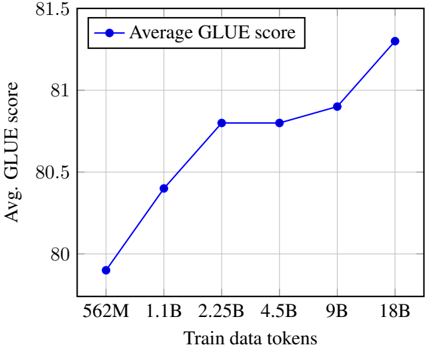
“Dra-matically increasing the pre-training corpus for a BERT-like model from 562M words to 18G words only leads to a modest improvement in its natu-ral language inference accuracy, from 81.7% to 82.3% (Baevski et al., 2019).”
InfluentialInformation Extraction from Text Intensive and Visually Rich Banking Documents
Oral, B., Emekligil, E., Arslan, S., & Eryiğit, G. (2020) · Information Processing & Management · doi:10.1016/j.ipm.2020.102361 · Cited by 75
A Survey on Self-supervised Pre-training for Sequential Transfer Learning in Neural NetworksPreprint
Mao, H. H. (2020) · arXiv (Cornell University) · doi:10.48550/arxiv.2007.00800 · Cited by 73
“Discrete latent models have also been combined with prediction-based methods for self-supervised speech recognition (Baevski et al., 2019b).”
MethodMemorisation versus Generalisation in Pre-trained Language Models
Tänzer, M., Ruder, S., & Rei, M. (2022) · Proceedings of the conference - Association for Computational Linguistics. Meeting · doi:10.18653/v1/2022.acl-long.521 · Cited by 98
Augmented Natural Language for Generative Sequence Labeling
Athiwaratkun, B., dos Santos, C. N., Krone, J., & Xiang, B. (2020) · Conference on Empirical Methods in Natural Language Processing (EMNLP) · doi:10.18653/v1/2020.emnlp-main.27 · Cited by 81
Pre-trained Language Model based Ranking in Baidu Search
Zou, L., Zhang, S., Cai, H., Ma, D., Cheng, S., Wang, S., Shi, D., Cheng, Z., & Yin, D. (2021) · ACM SIGKDD Conference on Knowledge Discovery and Data Mining (KDD) · doi:10.1145/3447548.3467147 · Cited by 89
“[19] shows that the second phase of pre-training in-domain data leads to performance gains under both high- and low-resource settings [2, 3, 31, 52].”
BackgroundFine-tuning BERT for Low-Resource Natural Language Understanding via Active Learning
Grießhaber, D., Maucher, J., & Vu, N. T. (2020) · International Conference on Computational Linguistics · doi:10.18653/v1/2020.coling-main.100 · Cited by 85
Train No Evil: Selective Masking for Task-Guided Pre-Training
Gu, Y., Zhang, Z., Wang, X., Liu, Z., & Sun, M. (2020) · Conference on Empirical Methods in Natural Language Processing (EMNLP) · doi:10.18653/v1/2020.emnlp-main.566 · Cited by 78
Language Models for Code Completion: A Practical Evaluation
Izadi, M., Katzy, J., van Dam, T., Otten, M., Popescu, R. M., & van Deursen, A. (2024) · arXiv · doi:10.48550/arxiv.2402.16197 · Cited by 57
End-to-End Named Entity Recognition from English Speech
Yadav, H. N., Ghosh, S., Yu, Y., & Shah, R. R. (2020) · Interspeech (USB) · doi:10.21437/interspeech.2020-2482 · Cited by 77
Which *BERT? A Survey Organizing Contextualized Encoders
Xia, P., Wu, S., & Durme, B. V. (2020) · Conference on Empirical Methods in Natural Language Processing (EMNLP) · doi:10.18653/v1/2020.emnlp-main.608 · Cited by 78
Improving Chinese Named Entity Recognition by Large-Scale Syntactic Dependency Graph
Zhu, P. F., Cheng, D., Yang, F., Luo, Y., Huang, D., Qian, W., & Zhou, A. (2022) · IEEE/ACM Transactions on Audio Speech and Language Processing · doi:10.1109/taslp.2022.3153261 · Cited by 60
A Transformer Based Approach To Detect Suicidal Ideation Using Pre-Trained Language Models
Haque, F., Nur, R. U., Jahan, S. A., Mahmud, Z., & Shah, F. M. (2020) · International Conference on Computer and Information Technology (ICCIT) · doi:10.1109/iccit51783.2020.9392692 · Cited by 63
“ROBERTa: BERT pre-trained model depends on the dataset size and Baevski et al [17]. illustrate that the increase of dataset can give better accuracy in tasks.”
Method1% VS 100%: Parameter-Efficient Low Rank Adapter for Dense Predictions
Yin, D., Yang, Y., Wang, Z., Yu, H., Wei, K., & Sun, X. (2023) · IEEE Computer Society Conference on Computer Vision and Pattern Recognition/Proceedings - IEEE Computer Society Conference on Computer Vision and Pattern Recognition/Proceedings · doi:10.1109/cvpr52729.2023.01926 · Cited by 90
“Teams with sufficient computation resources utilise enormous datasets [2, 9, 40, 50] to train superior backbones [4, 32, 40, 48] and optimise the models with ideal performances.”
BackgroundAlleviating Digitization Errors in Named Entity Recognition for Historical Documents
Boroş, E., Hamdi, A. T. E., Pontes, E. L., Cabrera-Diego, L. A., Moreno, J. G., Sidère, N., & Doucet, A. (2020) · Conference on Computational Natural Language Learning · doi:10.18653/v1/2020.conll-1.35 · Cited by 74
“These recent large-scale language models methods such as BERT (Devlin et al., 2019) and ELMo (Peters et al., 2018) further enhanced the performance of NER, yielding state-of-the-art performances (Peters et al., 2017, 2018; Baevski et al., 2019).”
BackgroundMethodDomain-matched Pre-training Tasks for Dense Retrieval
Oğuz, B., Lakhotia, K., Gupta, A., Lewis, P., Karpukhin, V., Piktus, A., Chen, X., Riedel, S., Yih, S., Gupta, S., et al. (2022) · Findings of the Association for Computational Linguistics: NAACL · doi:10.18653/v1/2022.findings-naacl.114 · Cited by 66
Cost-effective Selection of Pretraining Data: A Case Study of Pretraining BERT on Social Media
Dai, X., Karimi, S., Hachey, B., & Paris, C. L. (2020) · Findings of the Association for Computational Linguistics: EMNLP (Findings of EMNLP) · doi:10.18653/v1/2020.findings-emnlp.151 · Cited by 57
BERTRAM: Improved Word Embeddings Have Big Impact on Contextualized Model Performance
Schick, T., & Schütze, H. (2020) · Proceedings of the 58th Annual Meeting of the Association for Computational Linguistics · doi:10.18653/v1/2020.acl-main.368 · Cited by 40
Self-Supervised Representations Improve End-to-End Speech Translation
Wu, A., Wang, C., Pino, J., & Gu, J. (2020) · Interspeech (USB) · doi:10.21437/interspeech.2020-3094 · Cited by 52
Kiran, R., Kumar, P., & Bhasker, B. (2020) · Expert Systems with Applications · doi:10.1016/j.eswa.2020.113488 · Cited by 46
Improving aspect-level sentiment analysis with aspect extraction
Majumder, N., Bhardwaj, R., Poria, S., Gelbukh, A. F., & Hussain, A. (2020) · Neural Computing and Applications · doi:10.1007/s00521-020-05287-7 · Cited by 50
Beheshti-NER: Persian Named Entity Recognition Using BERTPreprint
Taher, E., Hoseini, S. A., & Shamsfard, M. (2020) · arXiv (Cornell University) · doi:10.48550/arxiv.2003.08875 · Cited by 52
“(Baevski et al., 2019) used a novel method for training bidirectional transformer which could over perform previous work and achieved state of the art result in English NER.”
MethodImproving speech recognition models with small samples for air traffic control systems
Lin, Y., Li, Q., Yang, B., Yan, Z., Tan, H., & Chen, Z. (2021) · Neurocomputing · doi:10.1016/j.neucom.2020.08.092 · Cited by 43
Pre-trained Language Model Representations for Language GenerationPreprint
Edunov, S., Baevski, A., & Auli, M. (2019) · arXiv (Cornell University) · doi:10.48550/arxiv.1903.09722 · Cited by 48
“The bi-directional model solves a cloze-style token prediction task at training time (Baevski et al., 2019 N = 12 transformer blocks.”
BackgroundSelf-citationAndreadis, S. T., Antzoulatos, G. S., Mavropoulos, T., Giannakeris, P., Tzionis, G., Pantelidis, N., Ioannidis, K., Καρακώστας, Α., Gialampoukidis, I., Vrochidis, S., et al. (2021) · Online Social Networks and Media · doi:10.1016/j.osnem.2021.100134 · Cited by 46
“2019 [65] (not reported) (not reported) 93.”
Natural Language Processing Methods for Language Modeling
Nemeskey, D. M. (2021) · Eötvös Loránd Tudományegyetem · doi:10.15476/elte.2020.066 · Cited by 88
Pretraining model for biological sequence data
Song, B., Li, Z., Lin, X., Wang, J., Wang, T., & Fu, X. (2021) · Briefings in Functional Genomics · doi:10.1093/bfgp/elab025 · Cited by 39
“A variety of NLP pretrainingmodels [18, 69, 88] used LM orMLM as a pretraining task.”
MethodThe Chilean Waiting List Corpus: a new resource for clinical Named Entity Recognition in Spanish
Pablo Báez, B., Villena, F., Rojas, M. S., Durán, M., & Dunstan, J. (2020) · Clinical Natural Language Processing Workshop (ClinicalNLP) · doi:10.18653/v1/2020.clinicalnlp-1.32 · Cited by 48
“Nowadays, the best results for the original 2003 NER task (Sang and De Meulder, 2003) are self-attention networks (Baevski et al., 2019), differentiable neural architecture search methods (Jiang et al., 2019), and LSTM-CRF enriched with ELMo, BERT, and Flair contextual embeddings (Strakov´a et al.,…”
BackgroundMed7: A transferable clinical natural language processing model for electronic health records
Kormilitzin, A., Vaci, N., Liu, Q., & Nevado‐Holgado, A. J. (2021) · Artificial Intelligence in Medicine · doi:10.1016/j.artmed.2021.102086 · Cited by 187
Banner: A Cost-Sensitive Contextualized Model for Bangla Named Entity Recognition
Ashrafi, I., Mohammad, M., Mauree, A. S., Nijhum, G. M. A., Karim, R., Mohammed, N., & Momen, S. (2020) · IEEE Access · doi:10.1109/access.2020.2982427 · Cited by 39
“[3] proposed a bi-directional transformer architecture which used character CNN embeddings.”
MethodCapitalization and punctuation restoration: a survey
Păiș, V., & Tufis, D. I. (2021) · Artificial Intelligence Review · doi:10.1007/s10462-021-10051-x · Cited by 42
“Most of current named entity recognizers are usually used later in the processing pipeline, requiring additional features such as part-of-speech tagging, like Stanford NER (Finkel et al. 2005) or NCRF++ (Yang and Zhang 2018), or at least sentence boundaries, like the system of Baevski et al. (2019).”
BackgroundMethodA Literature Review on Bidirectional Encoder Representations from Transformers
Shreyashree, S., Sunagar, P., Rajarajeswari, S., & Kanavalli, A. (2022) · Lecture notes in networks and systems · doi:10.1007/978-981-16-6723-7_23 · Cited by 48
Towards Lingua Franca Named Entity Recognition with BERTPreprint
Moon, T., Awasthy, P., Ni, J., & Florian, R. (2019) · arXiv (Cornell University) · doi:10.48550/arxiv.1912.01389 · Cited by 33
“The current SotA in English CoNLL’03 is obtained by (Baevski et al. 2019), who pretrain a two-tower attention model on a cloze task and then apply the resulting embedding to obtain SotA results on the GLUE tasks, and obtain 93.5 F1 on the English CoNLL’03 dataset.”
MethodInfluentialGarcía-Barragán, Á., Sakor, A., Vidal, M.-E., Menasalvas, E., Gonzalez, J. C. S., Provencio, M., & Robles, V. (2024) · Medical & Biological Engineering & Computing · doi:10.1007/s11517-024-03227-4 · Cited by 43
“State-of-the-art NER techniques predominantly rely mainly on deep learning methods [24], incorporating input representations such as GloVe with BERT document-level embeddings [25], Cloze-style language model embeddings [26], or GloVe with aggregated contextual embeddings [27].”
InfluentialKaushik, D., Kiela, D., Lipton, Z. C., & Yih, W.-T. (2021) · Annual Meeting of the Association for Computational Linguistics · doi:10.18653/v1/2021.acl-long.517 · Cited by 40
“Prior works have hypothesized that the bigger size and increased diversity of the pretraining corpus of RoBERTa (compared to those of BERT and ELECTRA) might somehow be responsible for RoBERTa’s better out-of-domain generalization, (Baevski et al., 2019; Hendrycks et al., 2020; Tu et al., 2020).”
ResultDomain-matched Pre-training Tasks for Dense RetrievalPreprint
Oğuz, B., Lakhotia, K., Gupta, A., Lewis, P., Karpukhin, V., Piktus, A., Chen, X., Riedel, S., Yih, W.-T., Gupta, S., et al. (2021) · arXiv (Cornell University) · doi:10.48550/arxiv.2107.13602 · Cited by 49
“, 2018), bi-directional (Peters et al., 2018; Baevski et al., 2019), masked (Devlin et al.”
BackgroundNamed Entity Recognition - Is There a Glass Ceiling?
Ziembicki, D., Biecek, P., Stanisławek, T., Wróblewska, A., & Wójcicka, A. (2019) · ReIn UW (University of Warsaw) · doi:10.18653/v1/k19-1058 · Cited by 29
“Fine tune Bi-Transformer LM with CNN token encoding (Baevski et al., 2019) 93.”
MethodAutomatic Extraction of Nested Entities in Clinical Referrals in Spanish
Pablo Báez, B., Bravo-Márquez, F., Dunstan, J., Rojas, M. S., & Villena, F. (2022) · ACM Transactions on Computing for Healthcare · doi:10.1145/3498324 · Cited by 32
“Nowadays, the best results for the original 2003 NER task [71] are selfattention networks [4], differentiable neural architecture search methods [28], and the Long Short-Term Memory with Conditional Random Field (LSTM-CRF) approach enriched with Embeddings from Language Models (ELMo), Bidirectional Encoding Representa…”
MethodRetrieval Contrastive Learning for Aspect-Level Sentiment Classification
Jian, Z., Li, J., Wu, Q., & Yao, J. (2023) · Information Processing & Management · doi:10.1016/j.ipm.2023.103539 · Cited by 30
Doc2KG: Transforming Document Repositories to Knowledge Graphs
Stylianou, N., Vlachava, D., Konstantinidis, I., Bassiliades, N., & Peristeras, V. (2022) · International Journal on Semantic Web and Information Systems · doi:10.4018/ijswis.295552 · Cited by 30
Domain-Adaptive Pretraining Methods for Dialogue Understanding
Wu, H., Xu, K., Song, L., Jin, L., Zhang, H., & Song, L. (2021) · doi:10.18653/v1/2021.acl-short.84 · Cited by 28
“stream tasks can also benefit from domain-adaptive pretraining? To answer this question, later work (Baevski et al., 2019; Gururangan et al., 2020) has demonstrated that continued pretraining on the unlabeled data in the target domain can further contribute to the corresponding downstream task.”
Enhancing named entity recognition with external knowledge from large language model
Li, Q., Xie, T., Zhang, J., Ma, K., Su, J., Yang, K., & Wang, H. (2025) · Knowledge-Based Systems · doi:10.1016/j.knosys.2025.113471 · Cited by 24
Enriching Source Code with Contextual Data for Code Completion Models: An Empirical Study
van Dam, T., Izadi, M., & van Deursen, A. (2023) · International Conference on Mining Software Repositories (MSR) · doi:10.1109/msr59073.2023.00035 · Cited by 25
“UniXcoder was pre-trained using MLM [15, 32], Unidirectional Language Modeling (ULM) [33], and denoising objectives [17].”
MethodShahzad, M., Amin, A., Esteves, D., & Ngomo, A.-C. N. (2021) · Proceedings of the ... International Florida Artificial Intelligence Research Society Conference · doi:10.32473/flairs.v34i1.128538 · Cited by 26
Recent Trends and Advances in Deep Learning-Based Sentiment Analysis
Ahmet, A., & Abdullah, T. (2020) · Algorithms for intelligent systems · doi:10.1007/978-981-15-1216-2_2 · Cited by 23
Mavropoulos, T., Symeonidis, S., Tsanousa, A., Giannakeris, P., Rousi, M., Kamateri, E., Μεδίτσκος, Γ., Ioannidis, K., Vrochidis, S., & Kompatsiaris, I. Y. (2021) · Journal of Intelligent Information Systems · doi:10.1007/s10844-021-00648-7 · Cited by 22
“This approach has improved results even further and newer systems present f1-scores of around 92-93 in the Conll2003 dataset, as can be seen in ELMo (Peters et al. 2018) (92.2 F1), BERT (Devlin et al. 2018) (92.8 F1), Flair (Akbik et al. 2018) (93.09 F1) and in Baevski et al. (2019) (93.5 F1).”
BackgroundInfluentialPre-trained Language Model-based Retrieval and Ranking for Web Search
Zou, L., Lu, W., Liu, Y., Cai, H., Chu, X., Ma, D., Shi, D., Sun, Y., Cheng, Z., Gu, S., et al. (2022) · ACM Transactions on the Web · doi:10.1145/3568681 · Cited by 24
“[28] shows that the second phase of pre-training in-domain data leads to performance gains under both high- and low-resource settings [2, 3, 48, 101].”
BackgroundSelf-citationSelf-Influence Guided Data Reweighting for Language Model Pre-training
Thakkar, M., Bolukbasi, T., Ganapathy, S., Vashishth, S., Chandar, S., & Talukdar, P. P. (2023) · Conference on Empirical Methods in Natural Language Processing (EMNLP) · doi:10.18653/v1/2023.emnlp-main.125 · Cited by 49
Transfer learning for predicting virus-host protein interactions for novel virus sequences
Lanchantin, J., Weingarten, T., Sekhon, A., Miller, C. L., & Qi, Y. (2021) · ACM International Conference on Bioinformatics, Computational Biology, and Health Informatics (ACM-BCB) · doi:10.1145/3459930.3469527 · Cited by 29
Kang, K., Jin, K., Yang, S., Jang, S., Choo, J., & Kim, Y. (2021) · Conference of the North American Chapter of the Association for Computational Linguistics: Human Language Technologies (NAACL-HLT) · doi:10.18653/v1/2021.naacl-main.317 · Cited by 27
Automatic Curation of Court Documents: Anonymizing Personal Data
Garat, D., & Wonsever, D. (2022) · Information · doi:10.3390/info13010027 · Cited by 32
“5% F1 score over the CoNLL-2003 corpus [41].”
BackgroundInformation extraction from weakly structured radiological reports with natural language queries
Dada, A., Ufer, T. L., Kim, M., Hasin, M., Spieker, N., Forsting, M., Nensa, F., Egger, J., & Kleesiek, J. (2023) · European Radiology · doi:10.1007/s00330-023-09977-3 · Cited by 24
“An extensive dataset is crucial for training BERT models [16].”
Bhattacharjee, K., Ballesteros, M., Anubhai, R., Muresan, S., Ma, J., Ladhak, F., & Al-Onaizan, Y. (2020) · Conference on Empirical Methods in Natural Language Processing (EMNLP) · doi:10.18653/v1/2020.emnlp-main.636 · Cited by 23
Entity linking for English and other languages: a survey
Guellil, I., García‐Domínguez, A., Lewis, P. R., Hussain, S., & Smith, G. (2024) · Knowledge and Information Systems · doi:10.1007/s10115-023-02059-2 · Cited by 21
Sense-aware BERT and Multi-task Fine-tuning for Multimodal Sentiment Analysis
Fang, L., Liu, G., & Zhang, R. (2022) · International Joint Conference on Neural Networks (IJCNN) · doi:10.1109/ijcnn55064.2022.9892116 · Cited by 20
“Pre-trained language models (PLMs) have been widely applied in natural language processing, and have significantly improved the state of the art across various natural language processing tasks [1], [17], [18].”
BackgroundA Chinese Named Entity Recognition Method Based on ERNIE-BiLSTM-CRF for Food Safety Domain
Yuan, T., Qin, X., & Wei, C. (2023) · Applied Sciences · doi:10.3390/app13052849 · Cited by 17
Metadata
- Authors
- Baevski, A., Edunov, S., Liu, Y., Zettlemoyer, L., & Auli, M.
- Affiliations
- Meta (Israel) (IL)
- Venue
- Proceedings of the 2019 Conference on Empirical Methods in Natural Language Processing and the 9th International Joint Conference on Natural Language Processing (EMNLP-IJCNLP)
- Published
- 2019
- Pages
- 5359-5368
- OpenAlex
- W2920812691
- Cited by
- 215
- References
- 35
- Citations by year
- 2026: 2 · 2025: 8 · 2024: 15 · 2023: 18 · 2022: 36 · 2021: 50 · 2020: 67 · 2019: 19
- FWCI
- 16.45
- Type
- conference paper
- Language
- en
- Open access
- hybrid
- doi.org
- Licence
- cc-by
- Locations
- Conference on Empirical Methods in Natural Language Processing (EMNLP) (publishedVersion, cc-by)
- arXiv (Cornell University) (submittedVersion)
- arXiv (Cornell University)
- Topics
- Physical Sciences › Computer Science › Artificial Intelligence › Topic Modeling
- Physical Sciences › Computer Science › Artificial Intelligence › Natural Language Processing Techniques
- Physical Sciences › Computer Science › Artificial Intelligence › Domain Adaptation and Few-Shot Learning
- Keywords
- cloze task, self-attention network, pre-training, language model pretraining, language modeling
About these checks
Registry, retraction, Cites and statistics results are computed, not judged, with one exception: a printed reference that no index lists is read once by a model before it counts as a citation error. Claims are extracted by a model and kept only when their quote appears verbatim in the text; each cited source is then checked, with a model’s help, for whether it says what the claim relies on. Those verdicts can be wrong — read the claim’s quote and the cited source before relying on one.
Statistics and arithmetic are recomputed, not judged.
Confidence bands are shown only for fields calibrated on our annotated test set. None is calibrated yet, so no band is shown.
What counts as a claim ›How we measure confidence ›How we check this ›
Are you an author, or do you see a problem with this page? Request a review
Data sources
Bibliographic data: Semantic Scholar, OpenAlex, Crossref.
Contains information from the Semantic Scholar Academic Graph Datasets, made available under the ODC Attribution License (ODC-BY 1.0).
Semantic Scholar’s data is described in: Kinney, R., et al. (2023). The Semantic Scholar Open Data Platform. arXiv:2301.10140.
