

Cloze-driven Pretraining of Self-attention Networks
Open accessThe DOI matches its Crossref record; 38 of the 38 references it cites were found in a registry or an index.
Abstract
Alexei Baevski, Sergey Edunov, Yinhan Liu, Luke Zettlemoyer, Michael Auli. Proceedings of the 2019 Conference on Empirical Methods in Natural Language Processing and the 9th International Joint Conference on Natural Language Processing (EMNLP-IJCNLP). 2019.
Overview
The claims and statistics of this paper haven’t been checked yet.
Free: it reads the open-access text and checks the first 5 claims that cite a source we can check. Create a free account to check every claim.
Integrity signals
Registry
Cites
Statistics
Figures
Verification
Claims the paper makes
The claims and statistics of this paper haven’t been checked yet.
Free: it reads the open-access text and checks the first 5 claims that cite a source we can check. Create a free account to check every claim.
Claims other papers make about this one
Each is checked against this paper’s own text: does it say what the citing paper says it does?
The check wasn’t confident either way, so it gives no verdict — never disputed.
In the citing paper
“ULMFiT consists of 3 phases: 1) pre-training LM on general-domain data; 2) fine-tuning LM on target data; 3) fine-tuning on the target task.”
From Pre-trained models for natural language processing: A survey (2020) · cites this paper as [38]
Experimental — accuracy not yet measuredIn the citing paper
“ULMFiT (Universal Language Model Fine-tuning) [38] attempted to fine-tune pre-trained LM for text classification (TC) and achieved state-of-the-art results on six widely-used TC datasets.”
From Pre-trained models for natural language processing: A survey (2020) · cites this paper as [38]
In the citing paper
“ULMFiT also investigates some e ective fine-tuning strategies, including discriminative fine-tuning, slanted triangular learning rates, and gradual unfreezing.”
From Pre-trained models for natural language processing: A survey (2020) · cites this paper as [38]
In the citing paper
“Instead of fine-tuning all the layers simultaneously, gradual unfreezing [38] is also an e ective method that gradually unfreezes layers of PTMs starting from the top layer.”
From Pre-trained models for natural language processing: A survey (2020) · cites this paper as [38]
In the citing paper
“This may suggest that in some cases, continued pretraining on any additional data is useful, as noted in Baevski et al. (2019).”
From Don’t Stop Pretraining: Adapt Language Models to Domains and Tasks (2020) · cites this paper as Baevski et al. (2019)
Self-check
Percentages, sums and reported differences re-computed from the paper’s own numbers.
The self-check needs the paper’s full text.
Citations
Cites
Deep Residual Learning for Image Recognition
He, K., Zhang, X., Ren, S., & Sun, J. (2016) · 2016 IEEE Conference on Computer Vision and Pattern Recognition (CVPR) · doi:10.1109/cvpr.2016.90 · Cited by 235,474 · cited 1×
“Sub-blocks are surrounded by a residual connection (He et al., 2015).”
BackgroundVaswani, A., Shazeer, N., Parmar, N., Uszkoreit, J., Jones, L., Gomez, A. N., Kaiser, L., & Polosukhin, I. (2017) · arXiv · doi:10.48550/arxiv.1706.03762 · Cited by 120,404 · cited 3×
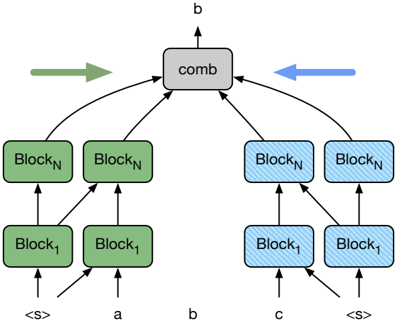
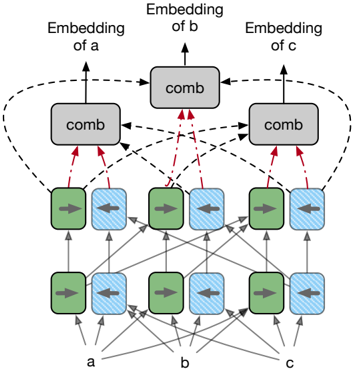
“The structure of the blocks follows most of the architectural choices described in Vaswani et al. (2017).”
BackgroundMethodAdam: A Method for Stochastic Optimization
Kingma, D. P., & Ba, J. (2014) · arXiv · doi:10.48550/arxiv.1412.6980 · Cited by 98,946 · cited 2×
“We fine tune with the Adam optimizer (Kingma and Ba, 2015).”
MethodBERT: Pre-training of Deep Bidirectional Transformers for Language Understanding
Devlin, J., Chang, M.-W., Lee, K., & Toutanova, K. (2018) · arXiv · doi:10.48550/arxiv.1810.04805 · Cited by 73,173 · cited 12×
“BERT tailors pretraining to capture dependencies between sentences via a next sentence prediction task as well as by constructing training examples of sentence-pairs with input markers that distinguish between tokens of the two sentences.”
BackgroundMethodResultInfluentialBERT: Pre-training of Deep Bidirectional Transformers for Language Understanding
Devlin, J., Chang, M.-W., Lee, K., & Toutanova, K. (2019) · Proceedings of the 2019 Conference of the North American Chapter of the Association for Computational Linguistics: Human Language Technologies, Volume 1 (Long and Short Papers) · doi:10.18653/v1/n19-1423 · Cited by 54,325 · cited 12×
“BERT tailors pretraining to capture dependencies between sentences via a next sentence prediction task as well as by constructing training examples of sentence-pairs with input markers that distinguish between tokens of the two sentences.”
BackgroundMethodResultInfluentialDeep Contextualized Word Representations
Peters, M., Neumann, M., Iyyer, M., Gardner, M., Clark, C., Lee, K., & Zettlemoyer, L. (2018) · Proceedings of the 2018 Conference of the North American Chapter of the Association for Computational Linguistics: Human Language Technologies, Volume 1 (Long Papers) · doi:10.18653/v1/n18-1202 · Cited by 11,983 · cited 13×
“We evaluate two ways of stacking: (1) ELMo-style, where the pretrained models are not fine-tuned but are linearly combined at different depths, and (2) with fine-tuning, where we set different learning rates for the task-specific layers but otherwise update all of the parameters during the task-specific training.”
BackgroundMethodResultInfluentialSelf-citationRecursive Deep Models for Semantic Compositionality Over a Sentiment Treebank
Socher, R., Perelygin, A., Wu, J., Chuang, J., Manning, C. D., Ng, A., & Potts, C. (2013) · Proceedings of the 2013 Conference on Empirical Methods in Natural Language Processing · doi:10.18653/v1/d13-1170 · Cited by 6,878 · cited 1×
“Second, the Stanford Sentiment Treebank (SST-2; Socher et al., 2013) requires to judge if movie reviews have positive or negative sentiment; evaluation is in terms of accuracy (acc).”
BackgroundSQuAD: 100,000+ Questions for Machine Comprehension of Text
Rajpurkar, P., Zhang, J., Lopyrev, K., & Liang, P. (2016) · Proceedings of the 2016 Conference on Empirical Methods in Natural Language Processing · doi:10.18653/v1/d16-1264 · Cited by 6,208 · cited 3×
“Finally, there are four natural laguage inference tasks: the Multi-Genre Natural Language Inference (MNLI; Williams et al., 2018), the Stanford Question Answering Dataset (QNLI; Rajpurkar et al., 2016), the Recognizing Textual Entailment (RTE; Dagan et al., 2006, Bar Haim et al., 2006, Ciampiccolo et al., 2007 Bentivo…”
BackgroundMethodSGDR: Stochastic Gradient Descent with Warm Restarts
Loshchilov, I., & Hutter, F. (2016) · arXiv · doi:10.48550/arxiv.1608.03983 · Cited by 5,309 · cited 1×
“The learning rate is linearly warmed up from 10 − 7 to 1 for 16K steps and then annealed using a cosine learning rate schedule with a single phase to 0.0001 (Loshchilov and Hutter, 2016).”
MethodInfluentialOn the difficulty of training recurrent neural networks
Pascanu, R., Mikolov, T., & Bengio, Y. (2012) · arXiv · doi:10.48550/arxiv.1211.5063 · Cited by 4,310 · cited 1×
“1 (Pascanu et al., 2013).”
Research works printed but not linked: 6
- Danilo Giampiccolo, Bernardo Magnini, Ido Dagan, and Bill Dolan. 2007. The pascal recognizing textual entailment challenge. Proc. of the ACL- PASCAL workshop on textual entailment and para- phrasing.
- Edouard Grave, Piotr Bojanowski, Prakhar Gupta, Ar- mand Joulin, and Tomas Mikolov. 2018. Learning word vectors for 157 languages. In Proc. of LREC.
- Bryan McCann, James Bradbury, Caiming Xiong, and Richard Socher. 2017. Learned in translation: Con- textualized word vectors. In Proc. of NIPS.
- Myle Ott, Sergey Edunov, David Grangier, and Michael Auli. 2018. Scaling neural machine trans- lation. In Proc. of WMT.
- Matthew E Peters, Mark Neumann, Mohit Iyyer, Matt Gardner, Christopher Clark, Kenton Lee, and Luke Zettlemoyer. 2018. Deep contextualized word rep- resentations. In Proc. of ACL.
- Rico Sennrich, Barry Haddow, and Alexandra Birch. 2016. Neural machine translation of rare words with subword units. In Proc. of ACL.
Cited by
Items 201–234 of 234
Using Triangle Exchange Mechanism to Accelerate the Pre-training Convergence Speed of BERT
Liao, J., Wang, N., & Yang, G. (2020) · doi:10.1145/3445815.3445856
CRank: Reusable Word Importance Ranking for Text Adversarial Attack
Chen, X., & Liu, B. (2021) · Applied Sciences · doi:10.3390/app11209570
Koehl, P. (2021) · Faculty Opinions – Post-Publication Peer Review of the Biomedical Literature · doi:10.3410/f.739876259.793585293
Applying the language acquisition model to the solution small language processing tasks
Kachkou, D. I. (2022) · Informatics · doi:10.37661/1816-0301-2022-19-1-96-110
A hybrid structured-neural dialog system for automated counseling
Ólafsson, S. (2021) · Digital Repository Service (Northeastern University) · doi:10.17760/d20413990 · Cited by 1
Spontaneous Emerging Preference in Two-tower Language ModelPreprint
He, Z., & Toyoizumi, T. (2022) · arXiv (Cornell University) · doi:10.48550/arxiv.2210.07041 · Cited by 1
“One example is the two-tower GPT [Baevski et al., 2019] language model, which performs cloze-style language modeling.”
BackgroundA Systematic Study of Various Approaches and Problem Areas of Named Entity Recognition
Madan, M., Rani, A., & Bhateja, N. (2023) · Lecture notes in electrical engineering · doi:10.1007/978-981-99-0601-7_42
Poornima, K., Cauvery, N. K., & Hemavathy, R. (2023) · SSRN Electronic Journal · doi:10.2139/ssrn.4522516
An Anchor Learning Approach for Citation Field Learning
Yuan, Z., Chen, B., Dai, Y., Li, Y., Zheng, H.-T., & Zhang, R. (2024) · IEEE International Conference on Acoustics Speech and Signal Processing · doi:10.1109/icassp48485.2024.10448007
“The pre-train-then-fine-tune paradigm has shown significant improvement for various NLP tasks [15, 16].”
BackgroundCross-lingual Information Extraction for the Assessment and Prevention of Adverse Drug Reactions
Raithel, L. (2024) · theses.fr (ABES) · doi:10.70675/5478ceccz18cdz4fcbzb106z2fb1ec257de2 · Cited by 3
Quantity doesn't buy quality syntax with neural language models
van Schijndel, M., Mueller, A., & Linzen, T. (2019) · Figshare · doi:10.5281/zenodo.3556942
Deep Cross Lingual Semantic Search For CLIR System
Venkateswari, G., Chandrika, P., Nausheen, S., & Veena, P. M. (2024) · IARJSET · doi:10.17148/iarjset.2024.11333
Punctuation and Capitalization Restoration using Bi-LSTM Network
Bansal, A. (2019) · International Journal of Science and Research (IJSR) · doi:10.21275/sr24809041216
-, D. B., -, K. S., -, A. B., & -, S. M. A. H. (2024) · International Journal For Multidisciplinary Research · doi:10.36948/ijfmr.2024.v06i06.32271
Identify the Named Entities Using Deep Learning and Reinforcement Approach
Naghavi, M., Ahangar, M. R. H., & jezeh, A. A. (2024) · Archives de l'Institut d'Hessarek. · doi:10.61186/jsdp.21.3.97
Jia, Y., & Li, A. (2025) · Lecture notes in computer science · doi:10.1007/978-981-96-3528-3_3
Huang, L., Zhu, Y., Li, Y., Yan, T., Yu, X. F., Wei, D., Xing, Z., & Li, J. (2025) · Applied Sciences · doi:10.3390/app15168879
CEEF: Contextual-Entity Embedding Fusion for Named Entity Recognition
Du, M., & Ye, W. (2025) · IEEE International Conference on Pattern Recognition and Machine Learning (PRML) · doi:10.1109/prml66062.2025.11159786
Rozpoznávání pojmenovaných entit v historických textových dokumentech
Vacek, M. (2020) · Digital Library (University of West Bohemia)
Named entity recognition for Icelandic : annotated corpus and neural models
Ingólfsdóttir, S. L. (2020) · Skemman · Cited by 2
Khanal, S. (2022) · K-State Research Exchange (Kansas State University) · Cited by 1
Building Multilingual Terminological Bridges Between Language-Specific Knowledge Silos
Chaplynskyi, D., Wittenborg, T., Kosa, V., Rabby, G., Ignatenko, O. P., Auer, S., & Ermolayev, V. (2025) · Communications in computer and information science · doi:10.1007/978-3-032-10477-9_20
HelBERT: A BERT-Based Pretraining Model for Public Procurement Tasks in Portuguese
Lima, W. E. M., Silva, V. R. D., da Silva, J. C., Rabêlo, R. A. L., & de Paiva, A. C. (2026) · Journal of the Brazilian Computer Society · doi:10.5753/jbcs.2026.5511 · Cited by 1
“The pretraining strategy employed was masked language modeling (MLM) proposed by Baevski et al .”
Classification of health product defect reports by deep learning
Sancenón, V., Huang, Y., Zou, L., Teo, D. C. H., Dorajoo, S. R., Ang, P. S., Goh, H. L., & Ta, A. W. A. (2026) · Scientific Reports · doi:10.1038/s41598-026-43961-3
“More recent strategies leverage on conditioning a pre-trained frozen model to perform a task by providing a few demonstrations (few shot learning) 42 or by reformulating the task as a cloze question (zero shot learning) 43,44 .”
Inférences et explications dans les réseaux lexico-sémantiques
Cousot, K. (2019) · theses.fr (ABES) · doi:10.70675/4272e1c6z85acz44c5z8952zf0dec5ce1133
Fouille de texte et extraction d'informations dans les données cliniques
Dalloux, C. (2020) · theses.fr (ABES) · doi:10.70675/d09cc9c4z1370z404cz96b2zb4f16b7d15c8 · Cited by 3
A Data-driven Approach to Natural Language Processing for Contemporary and Historical French
Suárez, P. O. (2022) · theses.fr (ABES) · doi:10.70675/9b4a07fdza641z489fza523zddeee03a6544 · Cited by 1
Analysis and control of online interactions through neural natural language processing
Laugier, L. (2022) · theses.fr (ABES) · doi:10.70675/4743aa15z209az4addz8f29z95150aa230b8 · Cited by 2
Schleider, T. (2022) · theses.fr (ABES) · doi:10.70675/6f2b45eez5308z4992z9e4azd2a0ac72f19d
Garat, D. (2026) · LA Referencia (Red Federada de Repositorios Institucionales de Publicaciones Científicas)
Seventy Years of Cloze Testing: a review
Špetla, D., & Foltýnek, T. (2026) · Praxis Educativa · doi:10.5212/praxeduc.v.21.26859.075
“The cloze test has also inspired natural language processing engineers, be it in pretraining and finetuning language models (Hoang et al., 2018; Baevski et al., 2019), or in creating datasets for model training and evaluation (Xie et al., 2018; Lewis et al., 2019; Schick & Schütze, 2021).”
ARGUMENTATION MINING OF ARGUMENTATIVE ESSAYS
Demaria, R. (n.d.) · Institutional Research Information System University of Turin (University of Turin)
End-to-end modeling for code-switching automatic speech recognition
Zhang, F. (2024) · Illinois Digital Environment for Access to Learning and Scholarship (University of Illinois at Urbana-Champaign)
LAMB: A Modern Contextual Language Model for LatinPreprint
McCarthy, A. (2026) · arXiv (Cornell University) · doi:10.48550/arxiv.2610.31723
Metadata
- Authors
- Baevski, A., Edunov, S., Liu, Y., Zettlemoyer, L., & Auli, M.
- Affiliations
- Meta (Israel) (IL)
- Venue
- Proceedings of the 2019 Conference on Empirical Methods in Natural Language Processing and the 9th International Joint Conference on Natural Language Processing (EMNLP-IJCNLP)
- Published
- 2019
- Pages
- 5359-5368
- OpenAlex
- W2920812691
- Cited by
- 215
- References
- 35
- Citations by year
- 2026: 2 · 2025: 8 · 2024: 15 · 2023: 18 · 2022: 36 · 2021: 50 · 2020: 67 · 2019: 19
- FWCI
- 16.45
- Type
- conference paper
- Language
- en
- Open access
- hybrid
- doi.org
- Licence
- cc-by
- Locations
- Conference on Empirical Methods in Natural Language Processing (EMNLP) (publishedVersion, cc-by)
- arXiv (Cornell University) (submittedVersion)
- arXiv (Cornell University)
- Topics
- Physical Sciences › Computer Science › Artificial Intelligence › Topic Modeling
- Physical Sciences › Computer Science › Artificial Intelligence › Natural Language Processing Techniques
- Physical Sciences › Computer Science › Artificial Intelligence › Domain Adaptation and Few-Shot Learning
- Keywords
- cloze task, self-attention network, pre-training, language model pretraining, language modeling
About these checks
Registry, retraction, Cites and statistics results are computed, not judged, with one exception: a printed reference that no index lists is read once by a model before it counts as a citation error. Claims are extracted by a model and kept only when their quote appears verbatim in the text; each cited source is then checked, with a model’s help, for whether it says what the claim relies on. Those verdicts can be wrong — read the claim’s quote and the cited source before relying on one.
Statistics and arithmetic are recomputed, not judged.
Confidence bands are shown only for fields calibrated on our annotated test set. None is calibrated yet, so no band is shown.
What counts as a claim ›How we measure confidence ›How we check this ›
Are you an author, or do you see a problem with this page? Request a review
Data sources
Bibliographic data: Semantic Scholar, OpenAlex, Crossref.
Contains information from the Semantic Scholar Academic Graph Datasets, made available under the ODC Attribution License (ODC-BY 1.0).
Semantic Scholar’s data is described in: Kinney, R., et al. (2023). The Semantic Scholar Open Data Platform. arXiv:2301.10140.
