

The DOI matches its Crossref record; 62 of the 63 references it cites were found in a registry or an index, and 1 are not checked yet.
Multimodal Language Analysis in the Wild: CMU-MOSEI Dataset and Interpretable Dynamic Fusion Graph
Open accessAbstract
AmirAli Bagher Zadeh, Paul Pu Liang, Soujanya Poria, Erik Cambria, Louis-Philippe Morency. Proceedings of the 56th Annual Meeting of the Association for Computational Linguistics (Volume 1: Long Papers). 2018.
Overview
The claims and statistics of this paper haven’t been checked yet.
Run the check — free, no account needed. It reads the open-access text and checks the sources it cites.
Integrity signals
Registry
Cites
Statistics
Figures
Verification
Claims the paper makes
The claims and statistics of this paper haven’t been checked yet.
Run the check — free, no account needed. It reads the open-access text and checks the sources it cites.
Claims other papers make about this one
Each is checked against this paper’s own text: does it say what the citing paper says it does?
The source backs part of the claim, not all of it — or backs it for a different population, condition or comparison.
In the citing paper
“This dataset encompasses 3837 videos collected from over 1000 distinctive YouTube speakers, with a reasonably balanced gender distribution of 57% male and 43% female speakers, highlighting the dataset’s focus on inclusivity.”
From A Survey of Deep Learning-Based Multimodal Emotion Recognition: Speech, Text, and Face (2023) · cites this paper as [30]
Experimental — accuracy not yet measuredThe source backs part of the claim, not all of it — or backs it for a different population, condition or comparison.
In the citing paper
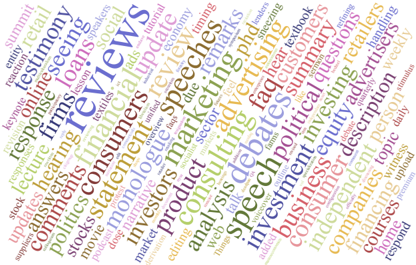
“The thematic diversity of the CMU-MOSEI dataset is notable, with a spread across 250 different themes. The three predominant themes are comments (16.2%), debates (2.9%), and consultations (1.8%), while the rest of the themes are nearly evenly distributed.”
From A Survey of Deep Learning-Based Multimodal Emotion Recognition: Speech, Text, and Face (2023) · cites this paper as [30]
Experimental — accuracy not yet measuredThe source backs part of the claim, not all of it — or backs it for a different population, condition or comparison.
In the citing paper
“One of CMU-MOSEI’s unique characteristics is its annotations at the utterance level, with 23,259 samples annotated in this manner.”
From A Survey of Deep Learning-Based Multimodal Emotion Recognition: Speech, Text, and Face (2023) · cites this paper as [30]
Experimental — accuracy not yet measuredThe cited source says what the claim attributes to it.
In the citing paper
“The CMU Multimodal Opinion Sentiment and Emotion Intensity (CMU-MOSEI) dataset [30] is a crucial resource in multimodal sentiment analysis and emotion recognition, distinguished by its scale, which is unmatched in the field.”
From A Survey of Deep Learning-Based Multimodal Emotion Recognition: Speech, Text, and Face (2023) · cites this paper as [30]
The cited source says what the claim attributes to it.
In the citing paper
“We generate open-ended AQAs about speech using the four commonly used datasets IEMOCAP [23], MOSEI [24], LibriTTS [25], and Vox-Celeb2 [26,27].”
From Joint Audio and Speech Understanding (2023) · cites this paper as [24]
Self-check
Percentages, sums and reported differences re-computed from the paper’s own numbers.
The self-check needs the paper’s full text.
Citations
Cites
Breiman, L. (2001) · Machine Learning · doi:10.1023/a:1010933404324 · Cited by 133,538
Hochreiter, S., & Schmidhuber, J. (1997) · Neural Computation · doi:10.1162/neco.1997.9.8.1735 · Cited by 102,318
Cortes, C., & Vapnik, V. (1995) · Machine Learning · doi:10.1007/bf00994018 · Cited by 59,421
Cortes, C., & Vapnik, V. N. (1995) · Machine Learning · doi:10.1023/a:1022627411411 · Cited by 34,565
Glove: Global Vectors for Word Representation
Pennington, J., Socher, R., & Manning, C. (2014) · Proceedings of the 2014 Conference on Empirical Methods in Natural Language Processing (EMNLP) · doi:10.3115/v1/d14-1162 · Cited by 34,071
FaceNet: A unified embedding for face recognition and clustering
Schroff, F., Kalenichenko, D., & Philbin, J. (2015) · 2015 IEEE Conference on Computer Vision and Pattern Recognition (CVPR) · doi:10.1109/cvpr.2015.7298682 · Cited by 15,267
Bidirectional recurrent neural networks
Schuster, M., & Paliwal, K. K. (1997) · IEEE Transactions on Signal Processing · doi:10.1109/78.650093 · Cited by 10,172
Speech recognition with deep recurrent neural networks
Graves, A., Mohamed, A.-R., & Hinton, G. (2013) · 2013 IEEE International Conference on Acoustics, Speech and Signal Processing · doi:10.1109/icassp.2013.6638947 · Cited by 8,893
The Stanford CoreNLP Natural Language Processing Toolkit
Manning, C. D., Surdeanu, M., Bauer, J., Finkel, J. R., Bethard, S. J., & McClosky, D. (2014) · Annual Meeting of the Association for Computational Linguistics: System Demonstrations (ACL Demo) · doi:10.3115/v1/p14-5010 · Cited by 7,252
Thumbs up?: sentiment classification using machine learning techniques
Pang, B., Lee, L., & Vaithyanathan, S. (2002) · Proceedings of the ACL-02 conference on Empirical methods in natural language processing - EMNLP '02 · doi:10.3115/1118693.1118704 · Cited by 7,024
Research works printed but not linked: 3
- Gilles Degottex, John Kane, Thomas Drugman, Tuomo Raitio, and Stefan Scherer. 2014. Covarep-a col- laborative voice analysis repository for speech tech- nologies. In Acoustics, Speech and Signal Process- ing (ICASSP), 2014 IEEE International Conference on. IEEE, pages 960-964.
- Devamanyu Hazarika, Soujanya Poria, Amir Zadeh, Erik Cambria, Louis-Philippe Morency, and Roger Zimmerman. 2018. Memn: Multimodal emotional memory network for emotion recognition in dyadic conversational videos. In NAACL.
- Julian Georg Zilly, Rupesh Kumar Srivastava, Jan Koutník, and Jürgen Schmidhuber. 2016. Re- current Highway Networks. arXiv preprint arXiv:1607.03474 . · arXiv
Cited by
Sorted by citations
Items 901–1,000 of 1,003
A Method with Universal Transformer for Multimodal Sentiment Analysis
Ai, H., Liu, Y., Fang, J., & Rashid, S. F. (2022) · doi:10.1145/3573942.3573968 · Cited by 1
“We evaluated our proposed method on two benchmark datasets for multimodal sentiment analysis, CMU-MOSI (CMU Multi-modal Opinion-level Sentiment Intensity) [15] and CMU-MOSEI (CMU Multi-modal Opinion Sentiment and Emotion Intensity) [16].”
MethodMultimodal Emotion Detection based on Visual and Thermal Source Fusion
Tian, P., Li, D., & Zhang, D. (2023) · International Conference on Multimedia and Image Processing (ICMIP) · doi:10.1145/3599589.3599590 · Cited by 1
Multimodal Sentiment Analysis for Personality Prediction
Taralrud, H. P. F., Salah, A. A., Imran, A. S., & Kastrati, Z. (2023) · International Conference on Frontiers of Information Technology (FIT) · doi:10.1109/fit60620.2023.00020 · Cited by 1
“The CNN model is trained on the CMU-MOSEI [29] dataset and is solely used for audio feature extraction.”
MethodMeasuring Similarity of Dual-Modal Academic Data Based on Multi-Fusion Representation Learning
Zhang, L., Gao, Q., Liu, M., Gu, Z., & Lang, B. (2024) · IEEE Access · doi:10.1109/access.2024.3427731 · Cited by 1
“Reference [30] introduced the CMU Multimodal Viewpoint Emotion and Emotion Intensity (CMU-MOSEI), which is by far the largest sentiment analysis and sentiment recognition dataset, and they proposed a powerful multimodal fusion technique called Dynamic Fusion Graph (DFG).”
BackgroundMethodCRGMR: A Contextualized RGAT and GraphTransformer Method for Multimodal Emotion Recognition
Guoshun, C., Liu, S., Bi, X., Chen, Q., & Meng, T. (2024) · Chinese Control Conference (CCC) · doi:10.23919/ccc63176.2024.10661855 · Cited by 1
“DialogueTRM[14] suggests using a hierarchical Transformer to manage different contextual preferences within each modality and introduces a multi-granularity interaction fusion module to learn the distinct contributions of utterances across modalities.”
MethodSentiment Confidence Separation: A Trust-Optimized Framework for Multimodal Sentiment Classification
Tang, Z., Shi, M., Yang, Z., Zhou, X., Chen, C., & Zhou, J. T. (2024) · IEEE International Conference on Multimedia and Expo (ICME) · doi:10.1109/icme57554.2024.10687630 · Cited by 1
“CMU Multimodal Opinion Sentiment and Emotion Intensity (CMU-MOSEI) [13] expands the data with a higher number of samples over CMU-MOSI.”
BackgroundResultSimple Attention-Based Mechanism for Multimodal Emotion Classification
Elabd, M., & Jaf, S. (2024) · International Conference on Automation and Computing (ICAC) · doi:10.1109/icac61394.2024.10718849 · Cited by 1
“Further advances include multi-view sequential learning models [7] and dynamic fusion graphs [8] Dutta et al [9] proposed a hierarchical cross-attention model approach using recurrent and co-attention neural network models trained on text and audio data.”
BackgroundTransferring Personality Knowledge to Multimodal Sentiment Analysis
Zhu, K., Liu, X., Xie, H., Cai, C., Fu, R., Li, G., Wen, Z., Tao, J., Fan, C., Lv, Z., et al. (2024) · International Symposium on Chinese Spoken Language Processing (ISCSLP) · doi:10.1109/iscslp63861.2024.10800671 · Cited by 1
“In our experimental setup, we adjusted the following hyperparameters for the CMU-MOSI [31] and CMU-MOSEI [32] datasets: Batch Size: Set to 256 for both datasets.”
Cross-Modality Disentangled Information Bottleneck Strategy for Multimodal Sentiment Analysis
Deng, Z., Huang, G., Zhong, G., Yuan, X., Huang, L., & Pun, C. (2024) · Conference proceedings/Conference proceedings - IEEE International Conference on Systems, Man, and Cybernetics · doi:10.1109/smc54092.2024.10831481 · Cited by 1
Sentiment Analysis of Multimodal Content: A Fusion of Visual and Textual Clues
Khan, I., & Kadu, S. (2024) · International Conference on Innovation and Novelty in Engineering and Technology (INNOVA) · doi:10.1109/innova63080.2024.10846981 · Cited by 1
TDMER: A Task-Driven Method for Multimodal Emotion Recognition
Xu, Q., Gu, Y., Li, C., Zhang, H., Lin, H. X., & Liu, L. (2025) · IEEE International Conference on Acoustics Speech and Signal Processing · doi:10.1109/icassp49660.2025.10889666 · Cited by 1
“Our evaluations utilized the CMU-MOSI [32] and CMU-MOSEI [33] benchmark datasets for multimodal emotion recognition, both comprising audio, text, and video modalities.”
Babu, E. K., Mistry, K., Anwar, N., & Li, Z. (2024) · International Conference on Machine Learning and Cybernetics · doi:10.1109/icmlc63072.2024.10935259 · Cited by 1
“This multimodal approach became feasible with advancements in machine learning and the availability of large-scale emotional datasets such as IEMOCAP [12] and CMU-MOSEI[13].”
‘What the X’ in Anglophone government meetings: Areal distribution, emotionality, and euphemism
Coats, S. (2025) · Lingua · doi:10.1016/j.lingua.2025.103947 · Cited by 1
AGCL: Attention Aggregation Contrastive Learning for Multimodal Emotion Analysis
Wang, S. (2025) · International Symposium on Computer Applications and Information Systems (ISCAIS) · doi:10.1109/iscait64916.2025.11010588 · Cited by 1
“E XPERIMENTS In this section, we conduct experiments on three multimodal fine-grained sentiment analysis task datasets—CMU-MOSI[1], CMU-MOSEI[2], and IEMOCAP[3].”
Multi-Dilated Transformer for Multimodal Sentiment Analysis
Xie, S., Hu, Z., Xie, X., Mao, Y., Zhen, X., & Zeng, X. (2025) · International Seminar on Artificial Intelligence, Networking and Information Technology (AINIT) · doi:10.1109/ainit65432.2025.11035582 · Cited by 1
Adaptive Agent Semantic Aggregation Network for Multimodal Sentiment Analysis
Su, Y., & Zhao, X. Y. (2025) · International Conference on Multimedia Retrieval · doi:10.1145/3731715.3733266 · Cited by 1
Exploring Feature Interactions for Multimodal Sentiment Analysis
Xu, D., & Zhang, C. (2025) · International Journal of Cognitive Informatics and Natural Intelligence · doi:10.4018/ijcini.383754 · Cited by 1
Gong, X., Xue, Z., Liu, T., Sun, Y., & Zhang, Y. (2025) · Multimedia Systems · doi:10.1007/s00530-025-01895-2 · Cited by 1
Multimodal sentiment analysis based on slice aggregation and dynamic fusion
Zhan, Z., Cao, D., Chen, Z., Cheng, H., & Yu, Z. (2025) · CCF Transactions on Pervasive Computing and Interaction · doi:10.1007/s42486-025-00195-y · Cited by 2
“Then, similar to Zadeh et al. (2018), we use the interpolation method to align the audio and video.”
Dynamic Learning Balance based on Information Bottleneck theory for alleviating modality degradation
Lu, N., Tan, Z., Han, M., & Qian, J. (2025) · Information Fusion · doi:10.1016/j.inffus.2025.103542 · Cited by 2
VideoConviction: A Multimodal Benchmark for Human Conviction and Stock Market Recommendations
Galarnyk, M., Kejriwal, V., Shah, A., Bhardwaj, Y., Meyer, N. W., Krishnan, A. V., & Chava, S. (2025) · ACM SIGKDD Conference on Knowledge Discovery and Data Mining (KDD) · doi:10.1145/3711896.3737417 · Cited by 2
“Some of them [2, 7, 11], annotate sentiment and emotion but assess only conveyed emotions, not the strength of conviction.”
Umair, M., Rashid, N., Khan, U. S., Hamza, A., Zeb, A., Nawaz, T. H., & Ansari, A. R. (2025) · Results in Engineering · doi:10.1016/j.rineng.2025.106601 · Cited by 1
Emotion AI for Human-Centered Leadership and Training
Nisha, A. R., Subramani, A. K., & Ranjithaa, K. C. (2025) · Advances in computational intelligence and robotics book series · doi:10.4018/979-8-3373-3658-9.ch015 · Cited by 1
A Character-Image-Modality and Multi-Label Auxiliary Model for Chinese Sentiment Analysis
Wang, L., Chen, Z., Zhang, M., & Palade, V. (2025) · IEEE Access · doi:10.1109/access.2025.3598452 · Cited by 1
“Currently, commonly used datasets in published multimodal sentiment analysis research include MOSI [6], VCGII [7], MVSO-EN [8], Flickr [9], CMU-MOSEI [10], UR_FUNNY [11], B-T4SA [12], and CH-SIMS [13].”
The feature deep fusion model for multimodal emotion analysis based on transformer
Zhou, Y. (2025) · Journal of Computational Methods in Sciences and Engineering · doi:10.1177/14727978251366547 · Cited by 1
Lu, H., Liu, D., Yang, L. T., Zhao, R., Lv, S., Wang, J., & Peng, X. T. (2025) · IEEE Transactions on Consumer Electronics · doi:10.1109/tce.2025.3599517 · Cited by 1
“To enable a more effective comparison with the methods in MER, the RAVDESS and CMU-MOSEI datasets [35], [36] were chosen.”
Zeng, B., Wang, J., Cai, L., Yao, Y., Li, R., & Chen, W. (2025) · doi:10.1109/icnlp65360.2025.11108675 · Cited by 1
“In this work, we use three public MSA datasets, MOSI [10], MOSEI [11], and SIMS [12].”
Chang, H.-Y., Liu, A.-S., Lin, Y., Liu, C., Lee, L.-E., Chen, F., Hung, S., & Fu, L. (2025) · IEEE Journal of Biomedical and Health Informatics · doi:10.1109/jbhi.2025.3604933 · Cited by 1
“2) CMU-MOSEI Dataset: The CMU-MOSEI dataset [32] is an enlarged version of CMU-MOSI, which contains 22,856 video segments (utterances) extracted from over 5,000 videos, 1,000 distinct speakers, and 250 different topics.”
MSAF-CF: A Multimodal Sentiment Analysis Framework Based on Feature Enhancement and Cross-Fusion
Wei, Z., Chen, R., & Sun, J. (2025) · IEEE Access · doi:10.1109/access.2025.3605712 · Cited by 1
“The CMU-MOSEI [30] (CMU Multimodal Opinion Sentiment and Emotion Intensity) dataset represents an extensive expansion of CMU-MOSI, featuring a larger scale and broader thematic diversity.”
Multimodal Sentiment Analysis and Depression Detection of Social Media Users Based on MLP
Wu, Z. (2025) · IEEE International Conference on Image Processing and Computer Applications (ICIPCA) · doi:10.1109/icipca65645.2025.11138825 · Cited by 1
“The multimodal emotion analysis experiment uses the MOSI and MOSEI datasets, which are common benchmark datasets in the field of multimodal emotion analysis, sourced from YouTube [14,15].”
Multi-Task Hypergraph-Attention Framework for Multimodal Sentiment Analysis
Wang, Y., Yang, Z., Wang, L., Liu, M., & Chen, Y. (2025) · IEEE Vehicular Technology Conference · doi:10.1109/vtc2025-spring65109.2025.11174446 · Cited by 1
Wei, Y., & Chen, J. (2025) · The Journal of Supercomputing · doi:10.1007/s11227-025-07930-3 · Cited by 2
“In the experiments of this study, we will use two datasets, CMU-MOSI [63] and CMU-MOSEI [64], to test our algorithms.”
EmoDuo: A Dual-Tower Framework for Efficient and Robust Multimodal Sentiment Analysis
Su, J. (2025) · International Conference on Artificial Intelligence, Big Data and Algorithms (CAIBDA) · doi:10.1109/caibda65784.2025.11183281 · Cited by 1
“We test the performance of EmoDuo on two datasets: CMU Multimodal Opinion-level Sentiment Intensity (CMU-MOSI) [17] and CMU Multimodal Opinion Sentiment and Emotion Intensity (CMU-MOSEI) [18].”
Dong, Z., Guo, H., Xu, W., Zhao, H., & Zhang, Z. (2025) · IEEE Journal of Selected Topics in Signal Processing · doi:10.1109/jstsp.2025.3622051 · Cited by 2
“Restrictions apply.”
MDMU:Multimodal Dynamic Mamba UNet for Multimodal sentiment analysis
Li, W., Huang, J., Xue, B., Shao, W., Liu, Y., & Tang, X. (2025) · IEEE International Conference on Multimedia and Expo (ICME) · doi:10.1109/icme59968.2025.11209923 · Cited by 1
“A. Experiments Setup 1) Datasets: This work uses the three most widely adopted datasets in the MSA field: CMU-MOSI [25], CMU-MOSEI [26], and SIMS [27].”
FSRF: Factorization-guided Semantic Recovery for Incomplete Multimodal Sentiment Analysis
Liu, Z., Chu, P., Dong, S., Zhang, C., Li, M., & Wang, J. (2025) · IEEE International Conference on Multimedia and Expo (ICME) · doi:10.1109/icme59968.2025.11210154 · Cited by 1
“MOSEI [25], an MSA dataset with 23,454 movie video clips, which is split into 16,326 training, 1,871 validation, and 4,659 testing samples.”
A Lightweight Two-Stage Attention-Gating Network for Efficient Multimodal Sentiment Analysis
Wang, Y., Xie, W., Yang, Z., Xu, C., Lin, Y., & Chen, Y. (2025) · IEEE Sensors Journal · doi:10.1109/jsen.2025.3626046 · Cited by 1
“The CMU-MOSEI dataset [39] is similar to CMU-MOSI but features a larger data scale.”
Amd'SaEr: Arabic Multimodal Dataset for Sentiment Analysis and Emotion Recognition
Haouhat, A., Bellaouar, S., Nehar, A., & Cherroun, H. (2025) · ACM Transactions on Asian and Low-Resource Language Information Processing · doi:10.1145/3774880 · Cited by 1
“Since around 2017, more advanced methods then surfaced, such as attention-based architectures [81], which learn cross-modal dependencies by dynamically attending to relevant features across different modalities [24, 73, 78, 79, 93, 96].”
Multimodal Sentiment Analysis via Progressive Fusion of Audio-Visual Affective Descriptions
Ou, L., & Li, Z. (2025) · ACM International Conference on Information and Knowledge Management (CIKM) · doi:10.1145/3746252.3761386 · Cited by 1
“We conduct experiments on three publicly available Multimodal Sentiment Analysis datasets: CMU-MOSI[39], CMU-MOSEI[40], and CH-SIMS[34].”
MKDF: Knowledge Distillation Based Lightweight Multimodal Framework for Emotion Recognition
Wang, Y., Sun, Y., Qiao, B., Wang, C., Li, Z., & Yang, S. (2025) · Communications in computer and information science · doi:10.1007/978-981-95-4091-4_6 · Cited by 1
Multi-Level Interaction for Emotion Recognition From Unaligned Speech and Text
Han, L., Chen, X., Jia, M., & Bao, C. (2025) · IEEE Transactions on Affective Computing · doi:10.1109/taffc.2025.3630662 · Cited by 1
“Examples include IEMOCAP [27], CMU-MOSEI [29], MELD [28], and RAVDESS [30], among others.”
Hussein, A., Hussien, M., Hassona, A., Minker, W., Salem, M. A. ‐., & Sharaf, N. (2026) · Language Resources and Evaluation · doi:10.1007/s10579-026-09941-9 · Cited by 2
Hassani, S. M., & Kangavari, M. R. (2025) · ETRI Journal · doi:10.4218/etrij.2025-0058 · Cited by 1
“We used the MOSEI data-set [51] to learn a combination of emotional speech representations.”
Multimodal Sentiment Analysis with Missing Modality: A Knowledge-Transfer Approach
Liu, W., & Zhan, H. (2025) · Asia-Pacific Signal and Information Processing Association Annual Summit and Conference (APSIPA ASC) · doi:10.1109/apsipaasc65261.2025.11249068 · Cited by 2
“CMU-MOSEI [16] consists of 23,454 video clips from YouTube, and each sample is assigned a sentiment score by human annotators, ranging from -3 (strongly negative) to 3 (strongly positive).”
Effectively Obtaining Acoustic, Visual, and Textual Data from Videos
León, J. E., & Carrasco, M. (2025) · Applied Sciences · doi:10.3390/app152312654 · Cited by 2
Retrieval-Augmented Multimodal Depression Detection
Hou, R., Teng, S., Liu, J., Chai, S., Li, Y., Lin, L., & Chen, Y.-W. (2025) · Annual International Conference of the IEEE Engineering in Medicine and Biology Society (EMBC) · doi:10.1109/embc58623.2025.11254056 · Cited by 1
“2) CMU-MOSEI Dataset: The CMU-MOSEI dataset [9] is a large-scale multimodal dataset curated for sentiment and emotion analysis.”
Multimodal Sentiment Analysis with Contrastive Constraint Propagation
Wang, G., & Zhang, M. (2025) · ACM International Conference on Multimedia in Asia (MMAsia) · doi:10.1145/3743093.3771056 · Cited by 1
“To ensure fair comparison with existing benchmarks, we evaluate on two standard multimodal datasets:CMU Multmodal Sentiment Intensity (MOSI) [23] and CMU Multimodal Opinion Sentiment and Emotion Intensity(MOSEI) [24].”
Dai, Y., Li, Y., Li, J., & Lu, G. (2025) · IEEE Transactions on Affective Computing · doi:10.1109/taffc.2025.3613302 · Cited by 1
“To verify the effectiveness of HMRF, we conduct experiments on three MSA benchmark datasets, including MOSI [34], MOSEI [35], and SIMS [36].”
Cui, L., Liu, S., Wang, L., & Yang, S. (2025) · International Joint Conference on Neural Networks (IJCNN) · doi:10.1109/ijcnn64981.2025.11229039 · Cited by 1
“We evaluate the effectiveness of our proposed method on two widely recognized benchmark datasets, CMU-MOSI [11] and CMU-MOSEI [12].”
Multimodal Approach for Depression Detection on Social Media: A Systematic Literature Review
Hanif, A. F., & Utami, E. (2025) · International Conference on Cybernetics and Intelligent System (ICORIS) · doi:10.1109/icoris67789.2025.11295991 · Cited by 1
Naveen, V., & Sountharrajan, S. (2025) · IEEE Access · doi:10.1109/access.2025.3648722 · Cited by 2
“Despite this progress, most studies have concentrated on generic datasets such as CMU-MOSI and CMU-MOSEI [34], with relatively limited attention to domain-specific applications such as customer product reviews.”
Pan, L., & Li, H. (2025) · IEEE Access · doi:10.1109/access.2025.3649994 · Cited by 1
“CMU-MOSEI [31]: 3,228 monologue videos were collected from YouTube.”
Wang, H., Yu, B., Xi, Z., Zhao, S., & Yang, Y. (2026) · IEEE Transactions on Multimedia · doi:10.1109/tmm.2026.3651100 · Cited by 2
“CMU-MOSEI [63]: The CMU-MOSEI dataset is a comprehensive multimodal sentiment analysis dataset comprising 23,453 video clips from 1,000 speakers across 250 topics.”
Text-Dominant Disentangled Fusion Network for Multimodal Sentiment Analysis
Xiao, T., Wang, Z., Ouyang, G., & Li, J. (2025) · IFAC-PapersOnLine · doi:10.1016/j.ifacol.2025.12.454 · Cited by 1
Confidence-guided dynamic sequential fusion for multimodal sentiment analysis
Xia, R., Lin, Y., Qin, G., He, L., & Li, Y. (2026) · World Wide Web · doi:10.1007/s11280-025-01401-8 · Cited by 1
“We conduct experiments on two publicly available benchmark datasets in MSA: CMU-MOSI [36], CMU-MOSEI [37].”
A Review of Multimodal Sentiment Analysis in Online Public Opinion Monitoring
Liu, S., & Li, T. (2026) · Informatics · doi:10.3390/informatics13010010 · Cited by 1
G-TBML: GAN-enhanced Transformer-based Multimodal Binding Learning Model
Qu, W., & Wei, B. (2025) · International Conference on Machine Learning and Computer Application (ICMLCA) · doi:10.1109/icmlca66850.2025.11336479 · Cited by 1
“This paper utilized two widely recognized public datasets for multimodal sentiment analysis: CMU-MOSI [28] and CMU-MOSE [29] .”
Multimodal Classroom Climate Recognition: Dataset, Method, Application
Lu, W., Chen, Y., Yang, Y., Song, R., Wang, T., & Bian, C. (2026) · IEEE Transactions on Affective Computing · doi:10.1109/taffc.2025.3647130 · Cited by 1
“It is pretrained on 262 hours of unlabeled emotional speech from five public datasets IEMOCAP [67], MELD [68], CMU-MOSEI [69], MEAD [70], and MSP-Podcast [71] through a teacher–student online distillation mechanism.”
Koulouris, D., Τζιομάκα, Μ., Zafeiriou, A., Pinitas, K., Kallipolitis, A., Menychtas, A., & Maglogiannis, I. (2025) · South-East Europe Design Automation, Computer Engineering, Computer Networks and Social Media Conference (SEEDA-CECNSM) · doi:10.1109/seeda-cecnsm68644.2025.11329599 · Cited by 1
Zheng, K., Sun, L., Cui, Y., Guo, L., & Zhang, J. (2026) · Lecture notes in computer science · doi:10.1007/978-981-95-6960-1_24 · Cited by 1
BiMER: Rethinking Multimodal Emotion Recognition with Bidirectional Representation Learning
Hidayati, S. C., Samuel, K. D., Lee, J. R., Anistyasari, Y., & Pan, T.-Y. (2025) · International Symposium on Intelligent Signal Processing and Communication Systems (ISPACS) · doi:10.1109/ispacs68724.2025.11383230 · Cited by 1
“Second, large-scale datasets such as CMU-MOSEI [13] suffer from severe class imbalance.”
Sun, Z., Liu, H., Li, Y., Li, H., Zhang, W., & Song, T. (2026) · Journal of King Saud University - Computer and Information Sciences · doi:10.1007/s44443-026-00610-z · Cited by 2
“The schedule uses dataset-specific warm-up lengths of 40 epochs on RAVDESS, 15 epochs on CREMA-D, and 10 epochs on CMU-MOSEI, with CosineAnnealingWarmRestarts configured as T 0 = 40.”
InfluentialMultimodal sentiment analysis based on dual perspective modeling
Gulanbaier, T., Hao, W., & Wushouer, M. (2026) · Multimedia Systems · doi:10.1007/s00530-026-02213-0 · Cited by 1
“The CMU-MOSEI (CMU Multimodal Opinion Sentiment and Emotion Intensity) dataset [ 22 ] is another prominent multimodal sentiment analysis dataset released by Carnegie Mellon University.”
Refined separated representation learning and conflict alleviation for multimodal sentiment analysis
Zheng, Y., Lu, A., Peng, S., Chen, Y., & Peng, X. (2026) · Journal of King Saud University - Computer and Information Sciences · doi:10.1007/s44443-026-00568-y · Cited by 1
Liu, K., Liu, Y., Wei, L., Tang, C., Zhan, Y., Chen, Z., & Chen, Z. (2026) · IEEE Transactions on Multimedia · doi:10.1109/tmm.2026.3673532 · Cited by 2
“Restrictions apply. commonly used in many current datasets [19], is susceptible to subjective individual differences, such as identity and profession, resulting in an average low Cronbach’s Alpha of 0.799.”
InfluentialMIME: Mutual information-guided mixture of experts for robust multimodal sentiment analysis
Zhang, D., Xiao, Q., He, X., & Zhang, J. (2026) · Journal of King Saud University - Computer and Information Sciences · doi:10.1007/s44443-026-00587-9 · Cited by 1
Fusion-Aware Unified Semantic Communication for Multimodal AIoT Service
Liu, C.-Y., Chiu, T.-C., & Huang, Y. (2025) · Globecom · doi:10.1109/globecom59602.2025.11432275 · Cited by 1
“To validate the MDF-SC system performance, we use the public multimodal sentiment analysis dataset CMU-MOSEI (Carnegie Mellon University Multimodal Opinion Sentiment and Emotion Intensity) [17] as a benchmark for multimodal sentiment analysis and emotion recognition.”
Zheng, N., Tang, Y., Chen, J., Liu, H., & Chen, Q. (2026) · Journal of King Saud University - Computer and Information Sciences · doi:10.1007/s44443-026-00671-0 · Cited by 1
“• We conduct comprehensive experiments on the MOSI (Zadeh et al. 2016) and MOSEI (Zadeh et al. 2018) datasets, where HiGraMI achieves state-of-the-art (SOTA) performance on most metrics across various data missing scenarios, validating its effectiveness and robustness in multimodal sentiment analysis tasks.”
InfluentialCCAF: Coarse-to-fine Cross-Modal Alignment and Fusion for Multimodal Sentiment Analysis
Zhao, X., Yang, S., & Tang, B. (2026) · International World Wide Web Conference (WWW) · doi:10.1145/3774904.3792569 · Cited by 1
“CMU-MOSEI [50] is also collected from YouTube and consists of 22,856 video segments with a broader range of video types. accuracy (Acc7).”
Tomashenko, N., Miao, X., Champion, P., Meyer, S., Panariello, M., Wang, X., Evans, N., Emmanuel Vincent, A., Yamagishi, J., & Todisco, M. (2026) · Computer Speech & Language · doi:10.1016/j.csl.2026.101988 · Cited by 1
A contrastive graph-transformer network model for multimodal sentiment analysis
Do, H. N., Phan, H. T., & Nguyên, N. T. (2026) · Applied Intelligence · doi:10.1007/s10489-026-07235-9 · Cited by 1
“CMU-MOSEI [47] extends CMU-MOSI in size and diversity, including more than 23,453 video segments from more than 1,000 speakers covering 250 topics, such as reviews, debates, and consultations.”
Jamil, S., Ali, T., Nawaz, A., & Shahid, A. (2026) · PLoS ONE · doi:10.1371/journal.pone.0346770 · Cited by 1
Hybrid Progressive Fusion Network for Multimodal Sentiment Analysis
Li, X., Leng, J., Cheng, X., Wang, T., & Zhang, X. (2026) · IEEE International Conference on Acoustics Speech and Signal Processing · doi:10.1109/icassp55912.2026.11461705 · Cited by 1
GCR-TE: Grounded generative counterfactual rewriting for text enhanced multimodal sentiment analysis
Ji, S., & Yang, B. (2026) · Array · doi:10.1016/j.array.2026.100849 · Cited by 1
Zhuang, Y., Liu, M., Bai, W., Zhang, Y., Zhang, X., Deng, J., & Ren, F. (2025) · IEEE/CVF International Conference on Computer Vision (ICCV) · doi:10.1109/iccv51701.2025.00440 · Cited by 3
“Specifically, we evaluate CMAD on one MSA dataset (MO-SEI [46]), and four MER datasets: IEMOCAP [3], MUS-tARD [4], UR-FUNNY [9], and CHERMA [33].”
Depression and anxiety characterization and detection with multimodal deep learning
Lu, T., Cho, L., Qiu, Z., Wang, Y., Niu, W., Leung, Y. W., Wang, Y., Zhang, H., Chang, W. C., Tanveer, M., et al. (2026) · Nature Mental Health · doi:10.1038/s44220-026-00632-6 · Cited by 2
“…meta-learning or prototypical networks can first train on related tasks (for example, emotion recognition from datasets such as CMU-MOSEI (CMU Multimodal Opinion Sentiment and Emotion Intensity) 108 or IEMOCAP (Interactive Emotional Dyadic Motion Capture) 109 ) to learn task-agnostic patterns.”
Arthanari, S., & Moon, Y.-K. (2026) · Alexandria Engineering Journal · doi:10.1016/j.aej.2026.04.060 · Cited by 1
Yang, J., Shi, R., Du, X., Xie, Y., & Wang, W. (2026) · IEEE Transactions on Learning Technologies · doi:10.1109/tlt.2026.3691830 · Cited by 1
“CMU-MOSEI [18] is an extension of CMU-MOSI.”
Puri, A., Sangal, A. L., Verma, H. K., & Mahajan, S. (2026) · Knowledge and Information Systems · doi:10.1007/s10115-026-02787-1 · Cited by 1
Dynamic Interaction-Aware and Causality-Disentangled Framework for Multimodal Sentiment Analysis
Jian, H., Chen, D. F., Lei, B., & Jinhua, S. (2026) · International Seminar on Artificial Intelligence, Networking and Information Technology (AINIT) · doi:10.1109/ainit70033.2026.11557593 · Cited by 1
“The routing matrices guide feature transformation through a sparse linear combination:”
Zhang, T., Dahlan, H. A., Rosdi, F., & Wang, X. (2026) · Journal of the Chinese Institute of Engineers · doi:10.1080/02533839.2026.2683464 · Cited by 1
Causal mixture-of-experts for robust multimodal fusion
Yang, L., Long, X., Zeng, Y., Chen, H., Xiao, Y., & Yang, J. (2026) · Pattern Recognition · doi:10.1016/j.patcog.2026.114306 · Cited by 1
Adaptive Multimodal Contrastive Fusion framework for anomaly detection of psychological sandtray
Liu, Q., Niu, X., Jiang, Z., Zhang, S., Wang, Y., Song, H., Wang, Z., & Liu, J. (2026) · Knowledge-Based Systems · doi:10.1016/j.knosys.2026.116538 · Cited by 1
Hierarchical joint fuzzy network for multimodal emotion recognition in conversations
Zhong, H., Zhang, Q., Zhao, F., & Guo, R. (2026) · Engineering Applications of Artificial Intelligence · doi:10.1016/j.engappai.2026.115552 · Cited by 1
GICA: gate-controlled information bottleneck cross-modal attention network
Qiang, Y., & Shen, J. (2026) · Pattern Analysis and Applications · doi:10.1007/s10044-026-01731-x · Cited by 1
“The precise evaluation metrics are presented in Table 2.”
Xu, X., Fu, C., Lin, C., & Chen, J. C. (2026) · IEEE Transactions on Mobile Computing · doi:10.1109/tmc.2026.3716620 · Cited by 1
Рюмина, Е. В., Axyonov, A., Koryakovskaya, D., Abdulkadirov, T., Egorova, A., Fedchin, S., Zaburdaev, A., Salova, I., Savchenko, A., & Ryumin, D. (2026) · IEEE Access · doi:10.1109/access.2026.3723020 · Cited by 1
“For multi-label ER on MOSEI, we report mean Weighted Accuracy (mWACC) and mean Macro F1-score (mMF1) [10].”
Zhang, W., Ding, J., Liu, H., Han, T., Liu, Y., & Yang, L. T. (2026) · Big Data Mining and Analytics · doi:10.26599/bdma.2025.9020110 · Cited by 1
Label-Aware Entropic Distributional Contrastive Alignment for Multimodal Sentiment Analysis
Wang, M., Meng, X., & Wang, C. (2026) · Entropy · doi:10.3390/e28101062 · Cited by 1
“We evaluate the method on three widely used MSA benchmarks: CMU-MOSI [1], CMU-MOSEI [2], and CH-SIMS [3].”
Reinforcement Learning and Affective Computing
Tian, L., Oviatt, S. L., Muszyński, M., Chamberlain, B. C., Healey, J., & Sano, A. (2022) · ACM eBooks · doi:10.1145/3502398.3502405 · Cited by 1
Peng, T., Wang, W., & Huang, S. (2022) · IEEE International Symposium on Information Theory (ISIT) · doi:10.1109/isit50566.2022.9834618 · Cited by 1
Tree-Based Mix-Order Polynomial Fusion Network for Multimodal Sentiment Analysis
Tang, J., Hou, M., Jin, X., Zhang, J., Zhao, Q., & Kong, W. (2023) · Systems · doi:10.3390/systems11010044 · Cited by 1
Multimodal Emotion Analysis Model based on Interactive Attention Mechanism
Zhou, B., & Li, X. (2023) · Frontiers in Computing and Intelligent Systems · doi:10.54097/fcis.v3i2.7512 · Cited by 1
Cross-Modal Semantic Fusion Video Emotion Analysis Based on Attention Mechanism
Zhao, L., & Pan, Z. (2023) · International Conference on Cloud Computing and Big Data Analytics (ICCCBDA) · doi:10.1109/icccbda56900.2023.10154781 · Cited by 1
“And Graph_ Compared with MFN model, CSFVEA model improved 1.97% and 0.99% respectively in the accuracy of two-classification (Acc-2) and three-classification (ACC-3) on the dataset, and the weighted average F1 value increased 2.45%.”
BackgroundMethodInfluentialZhang, Q., Shi, L., Liu, P., & Xu, L. (2023) · International Joint Conference on Neural Networks (IJCNN) · doi:10.1109/ijcnn54540.2023.10191402 · Cited by 1
“To evaluate our approach, we used two popular multimodal datasets, CMU-MOSI, and CMU-MOSEI.”
BackgroundInfluentialA Multi-View Co-Learning Method for Multimodal Sentiment Analysis
Geng, W., Bian, Y., & Li, X. (2023) · IEEE International Conference on Multimedia and Expo (ICME) · doi:10.1109/icme55011.2023.00238 · Cited by 1
“Experiments on the MOSI and MOSEI datasets demonstrate its good generalization ability.”
MethodInfluentialPSRMER: Proactive Services Recommendation Driven-by Multimodal Emotion Recognition
Liu, Z., Huang, G., Chu, D., & Sun, Y. (2023) · IEEE International Conference on Web Services (ICWS) · doi:10.1109/icws60048.2023.00070 · Cited by 1
“To verify the effectiveness of the proposed model, extensive validation experiments are conducted on two public datasets, CMU-MOSI(CMU Multimodal Opinion-level Sentiment Intensity) [39] and CMU-MOSEI(CMU Multimodal Opinion Sentiment and Emotion Intensity) [29].”
Feature Refinement via Canonical Correlation Analysis for Multimodal Emotion Recognition
Cho, S., Wee, K., & Chun, T. Y. (2023) · International Conference on Control, Automation and Systems (ICCAS) · doi:10.23919/iccas59377.2023.10316831 · Cited by 1
“[2] consists of 23,453 sentence utterance videos from 1,000 distinct speakers for multimodal sentiment analysis and emotion recognition.”
BackgroundRuan, Y.-P., Zheng, S., Huang, J., Zhang, X., Liu, Y., & Li, T. (2023) · Asia-Pacific Signal and Information Processing Association Annual Summit and Conference (APSIPA ASC) · doi:10.1109/apsipaasc58517.2023.10317512 · Cited by 1
“The current available multi-modal datasets for emotion or sentiment analysis are most non-conversational , such as CMU-MOSI [15], CMU-MOSEI [16], MOUD [17], ICT-MMMO [18], YouTube [19], and CH-SIMS [20].”
BackgroundDvoynikova, A., & Karpov, A. A. (2023) · Computational Linguistics and Intellectual Technologies · doi:10.28995/2075-7182-2023-22-51-61 · Cited by 2
“In this article, we solve 2 important tasks: preprocessing the CMU-MOSEI [7] database, and bimodal multitask recognition of emotions and sentiments with different approaches to fusion modalities.”
BackgroundMethod
Metadata
- Authors
- Bagher Zadeh, A., Liang, P. P., Poria, S., Cambria, E., & Morency, L.-P.
- Affiliations
- California Miramar University (US)
- Nanyang Technological University (SG)
- Agency for Science, Technology and Research (SG)
- Venue
- Proceedings of the 56th Annual Meeting of the Association for Computational Linguistics (Volume 1: Long Papers)
- Published
- 2018
- Pages
- 2236-2246
- ISSN
- 0736-587X (ISSN-L)
- OpenAlex
- W2883409523
- Cited by
- 1,433
- References
- 62
- Citations by year
- 2026: 281 · 2025: 300 · 2024: 266 · 2023: 202 · 2022: 153 · 2021: 113 · 2020: 73 · 2019: 39 · 2018: 6
- FWCI
- 17.41
- Type
- conference paper
- Language
- en
- Open access
- hybrid
- doi.org
- Licence
- cc-by
- Locations
- Proceedings of the conference - Association for Computational Linguistics. Meeting (publishedVersion, cc-by)
- Funders
- National Science Foundation
- Topics
- Physical Sciences › Computer Science › Computer Vision and Pattern Recognition › Multimodal Machine Learning Applications
- Physical Sciences › Computer Science › Artificial Intelligence › Sentiment Analysis and Opinion Mining
- Physical Sciences › Computer Science › Artificial Intelligence › Speech and dialogue systems
- Keywords
- CMU-MOSEI, multimodal fusion, emotion recognition
About these checks
Registry, retraction, Cites and statistics results are computed, not judged, with one exception: a printed reference that no index lists is read once by a model before it counts as a citation error. Claims are extracted by a model and kept only when their quote appears verbatim in the text; each cited source is then checked, with a model’s help, for whether it says what the claim relies on. Those verdicts can be wrong — read the claim’s quote and the cited source before relying on one.
Statistics and arithmetic are recomputed, not judged.
Confidence bands are shown only for fields calibrated on our annotated test set. None is calibrated yet, so no band is shown.
What counts as a claim ›How we measure confidence ›How we check this ›
Are you an author, or do you see a problem with this page? Request a review
