

The DOI matches its Crossref record; 1 of the 1 references it cites were found in a registry or an index.
A Framework for Identifying and Prioritizing SNPs in Genes of the Hypothalamic- Pituitary-Gonadal Axis in Guzerat Cattle Using Amplicon-Based NGS
Open accessPreprint — published as 10.1186/s12863-025-01365-8 · Paper page
Abstract
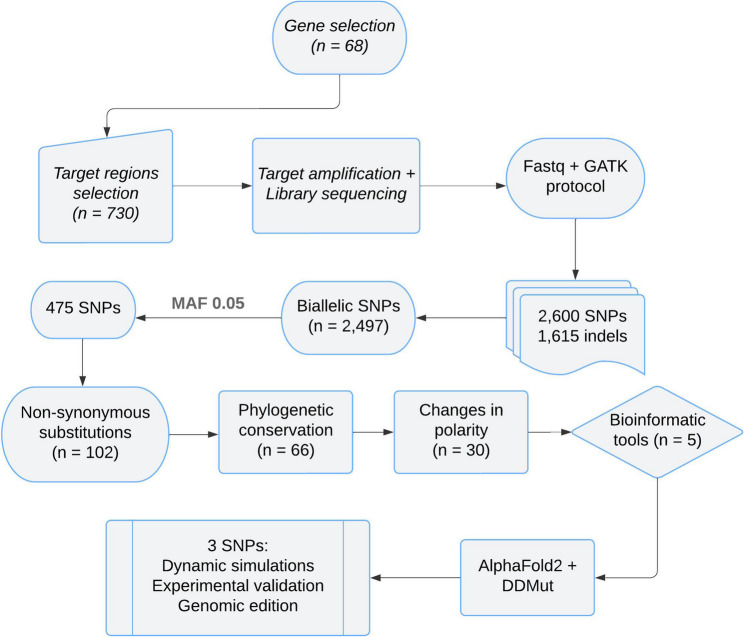
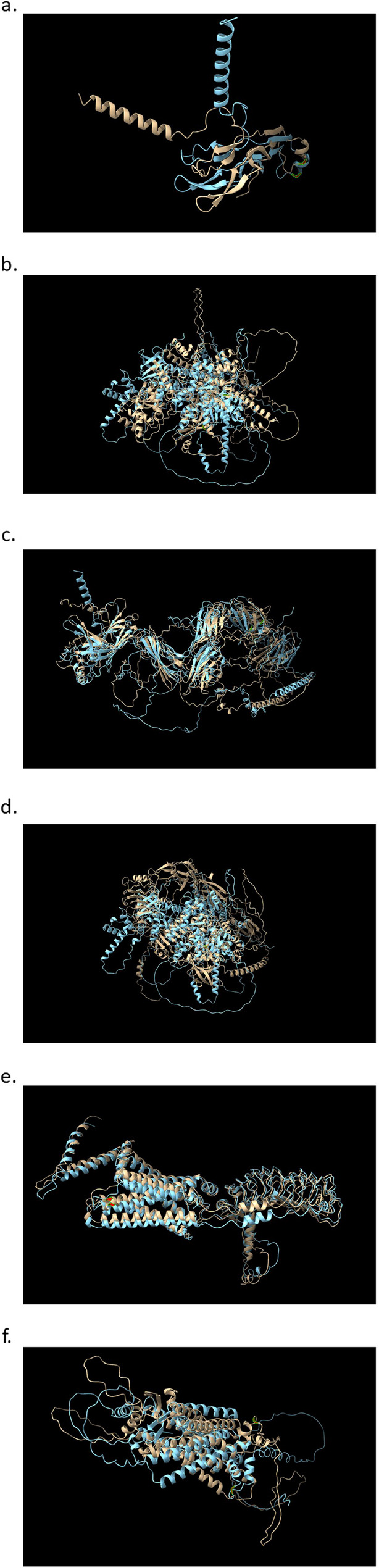
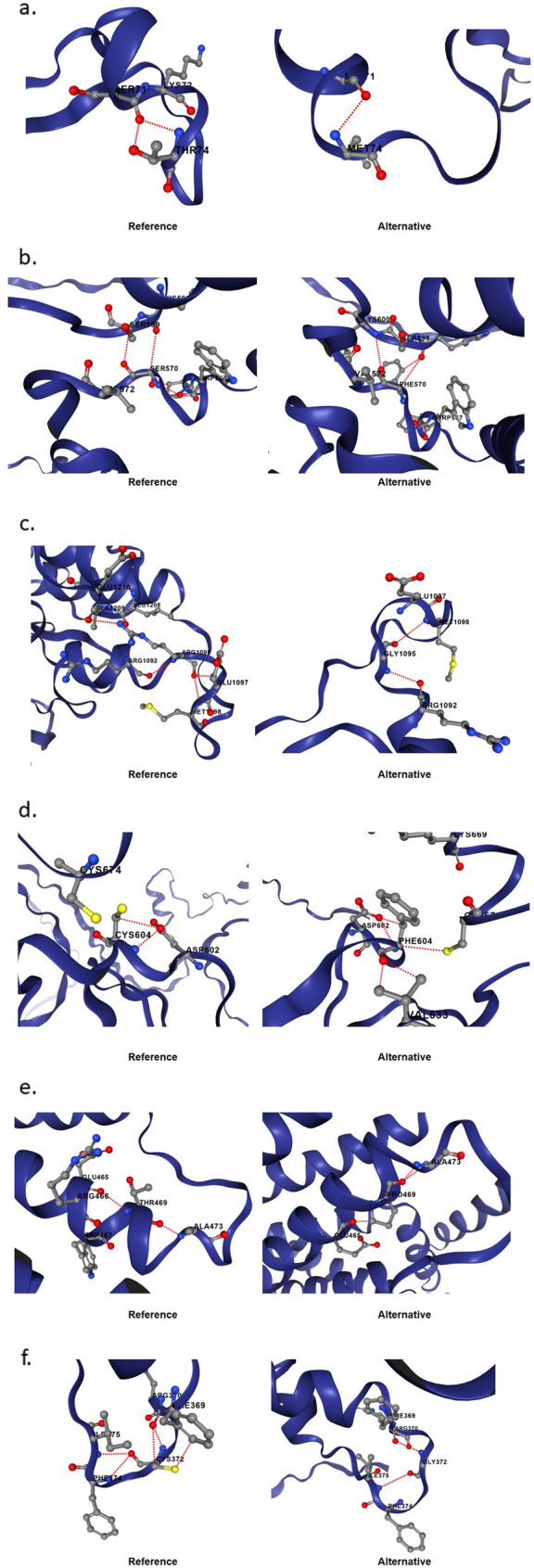
The combined use of NGS technologies with bioinformatics tools has significantly advanced research by enabling comprehensive analyses of entire genomes, specific genomic regions of interest, and transcriptomes. Targeted NGS methods, which focus on smaller genome fractions, are widely used to study genetic diseases, epigenetic modifications, microbiomes, and environmental DNA, among other applications. This study aimed to develop a roadmap for detecting and selecting polymorphisms in candidate genes by integrating amplicon NGS-Target techniques with bioinformatics analyses. Sixty-eight genes associated with the hypothalamic-pituitary-gonadal (HPG) axis were selected to develop the amplicon NGS assay, comprising 730 regions that cover a total of 136,274 bp. This method was used to sequence 75 Guzerat cattle, a dual-purpose breed from Brazil, renowned for their high rusticity and adaptability. This Zebu cattle exhibit certain limitations, such as delayed puberty onset, which can reduce reproductive efficiency. Using the GATK protocol a total of 2,600 SNPs and 1,615 indels were detected. A series of consecutive filtering steps (maf, the detection of non-synonymous substitution, phylogenetic amino acid conservation, and biochemical properties) were used, resulting in a subset of 30 candidate SNPs. Then, these polymorphisms were analysed using bioinformatic tools (SIFT, PANTHER, PolyPhen2, and MutPred), identifying 5 SNPs with high effect on the protein. Their structure and stability were estimated using AlphaFold and DDMut. Finally, 3 candidate polymorphisms ( IGF1R, LHCGR, TAC3R ) with potentially significant effects on the protein remained to be validated through dynamic simulations or in vitro and in vivo experimental assays.
Overview
The claims and statistics of this paper haven’t been checked yet.
Run the check — free, no account needed. It reads the open-access text and checks the sources it cites.
Integrity signals
Registry
Cites
Statistics
Figures
Verification
Claims the paper makes
The claims and statistics of this paper haven’t been checked yet.
Run the check — free, no account needed. It reads the open-access text and checks the sources it cites.
Self-check
Percentages, sums and reported differences re-computed from the paper’s own numbers.
The self-check needs the paper’s full text.
Citations
Cites
Highly accurate protein structure prediction with AlphaFold
Jumper, J., Evans, R., Pritzel, A., Green, T., Figurnov, M., Ronneberger, O., Tunyasuvunakool, K., Bates, R., Žídek, A., Potapenko, A., et al. (2021) · Nature · doi:10.1038/s41586-021-03819-2 · Cited by 43,764
Research works printed but not linked: 56
- Chaudhary AP. Kankrej breed: An incredible germplasm of Zebu cattle. IJAPM. 2016;32(3–4):150–60.
- Peixoto MGC, Poggian CF, Verneque RS, Egito AA, Carvalho MRS, Penna VM, Bergmann JAG, Viccini LF, Machado MA. Genetic basis and inbreeding in the Brazilian Guzerat (Bos indicus) subpopulation selected for milk production. Livest Sci. 2010;131:2–3. https://doi.org/10.1016/j.livsci.2010.03.015. · DOI
- Ribeiro RF. The ox from the four corners of the world: The historic origins of the Brazilian beef industry. J Polit Econ. 2012;1:315–40.
- Pereira LS, Brunes LC, Baldi F, do Carmo AS, Soares BB, Magnabosco V, et al. Genetic association between feed efficiency, growth, scrotal circumference, and carcass traits in Guzerat cattle. Trop Anim Health Prod. 2023;55:132. https://doi.org/10.1007/s11250-023-03552-0. · DOI
- Turner JW. Genetic and biological aspects of Zebu adaptability. J Anim Sci. 1980;50(6):1201–5. · DOI
- Carrara ER, Peixoto MGCD, Veroneze R, Silva FF e., Ramos PVB, Bruneli FAT et al. Genetic study of quantitative traits supports the use of Guzerá as dual-purpose cattle. Anim Biosci. 2022;35:955–63. https://doi.org/10.5713/ab.21.0458 · DOI
- Nogueira GP. Puberty in South American Bos indicus (Zebu) cattle. Anim Reprod Sci. 2004;82–83:361–72. https://doi.org/10.1016/j.anireprosci.2004.04.007. · DOI
- Ojeda SR, Dubay C, Lomniczi A, Kaidar G, Matagne V, Sandau US, Dissen GA. Gene networks and the neuroendocrine regulation of puberty. Mol Cell Endocrinol. 2010;324(1–2):3–11. https://doi.org/10.1016/j.mce.2009.12.003. · DOI
- Harstine BR. Invited review: Focusing on bull management and puberty attainment in the genomic era. J Anim Sci. 2018;34(6):523–32. https://doi.org/10.15232/pas.2018-01784. · DOI
- Yohe S, Thyagarajan B. Review of Clinical Next-Generation Sequencing. Arch Pathol Lab Med. 2017;141(11):1544–57. https://doi.org/10.5858/arpa.2016-0501-RA. · DOI
- Fuentes-Pardo AP, Ruzzante DE. Whole-genome sequencing approaches for conservation biology: Advantages, limitations and practical recommendations. Mol Ecol. 2017;26:5369–406. https://doi.org/10.1111/mec.14264. · DOI
- Mertes F, Elsharawy A, Sauer S, van Helvoort JM, van der Zaag PJ, Franke A, Nilsson M, Lehrach H, Brookes AJ. Targeted enrichment of genomic DNA regions for next-generation sequencing. Brief Funct Genomics. 2011;10(6):374–86. https://doi.org/10.1093/bfgp/elr033. · DOI
- Gurgul A, Miksza-Cybulska A, Szmatoła T, Jasielczuk I, Piestrzyńska-Kajtoch A, Fornal A, et al. Genotyping-by-sequencing performance in selected livestock species. Genomics. 2019;111:186–95. https://doi.org/10.1016/j.ygeno.2018.02.002. · DOI
- Domrazek K, Jurka P. Application of Next-Generation Sequencing (NGS) Techniques for Selected Companion Animals. Anim (Basel). 2024;14(11):1578. https://doi.org/10.3390/ani14111578. · DOI
- Kozarewa I, Armisen J, Gardner AF, Slatko BE, Hendrickson CL. Overview of target enrichment strategies. Curr Protoc Mol Biol. 2015;112. https://doi.org/10.1002/0471142727.mb0721s112. 7.21.1–23. · DOI
- Samorodnitsky E, Jewell BM, Hagopian R, Miya J, Wing MR, Lyon E, Damodaran S, Bhatt D, Reeser JW, Datta J, Roychowdhury S. Evaluation of Hybridization Capture Versus Amplicon-Based Methods for Whole-Exome Sequencing. Hum Mutat. 2015;36(9):903–14. https://doi.org/10.1002/humu.22825. · DOI · Paper page
- Fernández ME, Loaiza Echeverri AM, Henry M, Drummond M, Andrade de Oliveira DA, Demyda Peyrás S, Cunha Cardoso D, Giovambattista G, Liron JP. Bovine thyroglobulin gene polymorphisms and their association with sexual precocity in Guzerat bulls. Reprod Domest Anim. 2017;52(5):911–3. https://doi.org/10.1111/rda.12989. · DOI
- McKenna A, Hanna M, Banks E, Sivachenko A, Cibulskis K, Kernytsky A, Garimella K, Altshuler D, Gabriel S, Daly M, DePristo MA. The Genome Analysis Toolkit: A MapReduce framework for analyzing next-generation DNA sequencing data. Genome Res. 2010;20(3):1297–303. · DOI · Paper page
- Li H, Durbin R. Fast and accurate short read alignment with Burrows-Wheeler transform. Bioinformatics. 2009;25(14):1754–60. https://doi.org/10.1093/bioinformatics/btp324. · DOI · Paper page
- Li H, Handsaker B, Wysoker A, Fennell T, Ruan J, Homer N, Marth G, Abecasis G, Durbin R. Bioinformatics. 2009;25(16):2078–9. https://doi.org/10.1093/bioinformatics/btp352. 1000 Genome Project Data Processing Subgroup, The Sequence Alignment/Map format and SAMtools. · DOI · Paper page
- Poplin R, Ruano-Rubio V, DePristo MA, Fennell TJ, Carneiro MO, Van der Auwera GA, Kling DE, Gauthier LD, Levy-Moonshine A, Roazen D, Shakir K, Thibault J, Chandran S, Whelan C, Lek M, Gabriel S, Daly MJ, Neale B, MacArthur DG, Banks E. Scaling accurate genetic variant discovery to tens of thousands of samples. bioRxiv. 2017;201178. 10.1101/201178. · DOI · Paper page
- DePristo MA, Banks E, Poplin R, Garimella KV, Maguire JR, Hartl C, et al. A framework for variant discovery in genomes and exomes using second-generation sequencing. Nat Genet. 2011;43(5):491–8. · DOI
- Cingolani P, Platts A, Wang L, Coon M, Nguyen T, Wang L, Land SJ, Lu X, Ruden DM. A program for annotating and predicting the effects of single nucleotide polymorphisms, SnpEff: SNPs in the genome of Drosophila melanogaster strain w1118; iso-2; iso-3. Fly (Austin). 2012;6(2):80–92. 10.4161/fly.19695. · DOI · Paper page
- Robinson JT, Thorvaldsdóttir H, Winckler W, Guttman M, Lander ES, Getz G, et al. Integrative genomics viewer. Nat Biotechnol. 2011;29:24–6. https://doi.org/10.1038/nbt.1754. · DOI · Paper page
- Chang CC, Chow CC, Tellier LC, Vattikuti S, Purcell SM, Lee JJ. Second-generation PLINK: rising to the challenge of larger and richer datasets. GigaScience. 2015;4(1):7. https://doi.org/10.1186/s13742-015-0047-8. · DOI · Paper page
- Tamura K, Stecher G, Kumar S. MEGA11: Molecular Evolutionary Genetics Analysis Version 11. Mol Biol Evol. 2021;38(7):3022–7. https://doi.org/10.1093/molbev/msab120. · DOI · Paper page
- Ng PC, Henikoff S. SIFT: Predicting amino acid changes that affect protein function. Nucleic Acids Res. 2003;31(13):3812–4. https://doi.org/10.1093/nar/gkg509. · DOI
- Thomas PD, Ebert D, Muruganujan A, Mushayahama T, Albou L-P, Mi H. PANTHER: Making genome-scale phylogenetics accessible to all. Protein Sci. 2022;31(1):8–22. https://doi.org/10.1002/pro.4218. · DOI · Paper page
- Adzhubei IA, Schmidt S, Peshkin L, Ramensky VE, Gerasimova A, Bork P, et al. A method and server for predicting damaging missense mutations. Nat Methods. 2010;7:248–9. https://doi.org/10.1038/nmeth0410-248. · DOI · Paper page
- Pejaver V, Urresti J, Lugo-Martinez J, Pagel KA, Lin GN, Nam H, Mort M, Cooper DN, Sebat J, Iakoucheva LM, Mooney SD, Radivojac P. Inferring the molecular and phenotypic impact of amino acid variants with MutPred2. Nat Commun. 2020;11:5918. https://doi.org/10.1038/s41467-020-19669-x. · DOI · Paper page
- Berman HM, Westbrook J, Feng Z, Gilliland G, Bhat TN, Weissig H, Shindyalov IN, Bourne PE. The Protein Data Bank. Nucleic Acids Res. 2000;28(1):235–42. · DOI · Paper page
- Tunyasuvunakool K, Adler J, Wu Z, Green T, Zielinski M, Žídek A, Bridgland A, Cowie A, Meyer C, Laydon A, Velankar S, Kleywegt GJ, Bateman A, Evans R, Pritzel A, Figurnov M, Ronneberger O, Bates R, Kohl SAA, Potapenko A, Ballard AJ, Romera-Paredes B, Nikolov S, Jain R, Clancy E, Reiman D, Petersen S, Senior AW, Kavukcuoglu K, Birney E, Kohli P, Jumper J, Hassabis D. Highly accurate protein structure prediction for the human proteome. Nat. 2021;596(7873):590–6. 10.1038/s41586-021-03828-1. · DOI · Paper page
- Mariani V, Biasini M, Barbato A, Schwede T. lDDT: a local superposition-free score for comparing protein structures and models using distance difference tests. Bioinform. 2013;29(21):2722–8. 10.1093/bioinformatics/btt473. · DOI · Paper page
- Meng EC, Goddard TD, Pettersen EF, Couch GS, Pearson ZJ, Morris JH, Ferrin TE. UCSF ChimeraX: Tools for structure building and analysis. Protein Sci. 2023;32(11):e4792. https://doi.org/10.1002/pro.4792. · DOI
- Zhou Y, Pan Q, Pires DEV, Rodrigues CHM, Ascher DB. DDMut: predicting effects of mutations on protein stability using deep learning. Nucleic Acids Res. 2023;51(W1):122–8. https://doi.org/10.1093/nar/gkad472. · DOI
- Daetwyler H, Capitan A, Pausch H, Stothard P, van Binsbergen R, Brøndum RF, et al. Whole-genome sequencing of 234 bulls facilitates mapping of monogenic and complex traits in cattle. Nat Genet. 2014;46:858–65. https://doi.org/10.1038/ng.3034. · DOI
- Wong LL, Razali SA, Deris ZM, Danish-Daniel M, Tan MP, Nor SAM, et al. Application of second-generation sequencing (SGS) and third generation sequencing (TGS) in aquaculture breeding program. Aquaculture. 2022;548:737633. https://doi.org/10.1016/j.aquaculture.2021.737633. · DOI
- Browne TN, Freeman M. Next generation sequencing: Forensic applications and policy considerations. WIREs Forensic Sci. 2024. https://doi.org/10.1002/wfs2.1531. · DOI
- Giovambattista G, Peral-García P. Genética de los Animales Domésticos. Buenos Aires: Editorial Inter-Médica; 2010. p. 272.
- Garrick DJ, Ruvinsky A. Surrey. The Genetics of Cattle. United Kingdom: CABI; 2015. · DOI
- Das A, Panitz F, Gregersen VR, Bendixen C, Holm L. Deep sequencing of Danish Holstein dairy cattle for variant detection and insight into potential loss-of-function variants in protein coding genes. BMC Genomics. 2015;16:1043. https://doi.org/10.1186/s12864-015-2249-y. · DOI
- Hayes BJ, Daetwyler HD. 1000 Bull Genomes Project to Map Simple and Complex Genetic Traits in Cattle: Applications and Outcomes. Annu Rev Anim Biosci. 2019;7:89–102. https://doi.org/10.1146/annurev-animal-020518-115024. · DOI
- Zhang F, Qu K, Chen N, Hanif Q, Jia Y, Huang Y, et al. Genome-wide SNPs and InDels characteristics of three Chinese cattle breeds. Anim (Basel). 2019;9:596. https://doi.org/10.3390/ani9090596. · DOI
- Jacques F, Bolivar P, Pietras K, Hammarlund EU. Roadmap to the study of gene and protein phylogeny and evolution-A practical guide. PLoS ONE. 2023;18(2). https://doi.org/10.1371/journal.pone.0279597. · DOI
- Zabeau L, Defeau D, Iserentant H, Vandekerckhove J, Peelman F, Tavernier J. Leptin receptor activation depends on critical cysteine residues in its fibronectin type III subdomains. J Biol Chem. 2005;280(24):22632–40. https://doi.org/10.1074/jbc.M413308200. · DOI
- Kulshreshtha S, Chaudhary V, Goswami GK, Mathur N. Computational approaches for predicting mutant protein stability. J Comput Aided Mol Des. 2016;30:401–12. https://doi.org/10.1007/s10822-016-9914-3. · DOI
- Dehghanpoor R, Ricks E, Hursh K, Gunderson S, Farhoodi R, Haspel N, et al. Predicting the effect of single and multiple mutations on protein structural stability. Molecules. 2018;23(2):251. https://doi.org/10.3390/molecules23020251. · DOI
- Girmay S, Ahmad HI, Zahra QA. A Simulation Analysis and Screening of Deleterious Nonsynonymous Single Nucleotide Polymorphisms (nsSNPs) in Sheep LEP Gene. Biomed Res Int. 2022;2022:7736485. https://doi.org/10.1155/2022/7736485. · DOI
- Ali A, Rehman MU, Ahmad SM, Mehraj T, Hussain I, Nadeem A, Mir MUR, Ganie SA. In Silico Tools for Analysis of Single-Nucleotide Polymorphisms in the Bovine Transferrin Gene. Anim (Basel). 2022;12(6):693. https://doi.org/10.3390/ani12060693. · DOI
- Matosinho CGR, Rosse IC, Fonseca PAS, de Oliveira FS, Dos Santos FG, Araújo FMG, et al. Identification and in silico characterization of structural and functional impacts of genetic variants in milk protein genes in the Zebu breeds Guzerat and Gyr. Trop Anim Health Prod. 2021;53:524. https://doi.org/10.1007/s11250-021-02970-2. · DOI
- Campo A, Dufour S, Rousseau K. Tachykinins, new players in the control of reproduction and food intake: A comparative review in mammals and teleosts. Front Endocrinol (Lausanne). 2022;13:1056939. https://doi.org/10.3389/fendo.2022.1056939. · DOI
- Li M, Lu X, Xia H, Zhang C, Wang X, Chen Z, Zhang H, Qu K, Huang B, Moore S, Mao Y, Yang Z. In-depth characterization of the pituitary transcriptome in Simmental and Chinese native cattle. Domest Anim Endocrinol. 2019;66:35–42. https://doi.org/10.1016/j.domaniend.2018.09.003. · DOI
- Naval-Sánchez M, Porto-Neto LR, Cardoso DF, Hayes BJ, Daetwyler D, Kijas J, Reverter A. Selection signatures in tropical cattle are enriched for promoter and coding regions and reveal missense mutations in the damage response gene HELB. Genet Sel Evol. 2020;52:27. https://doi.org/10.1186/s12711-020-00546-6. · DOI · Paper page
- Yang WC, Yang LG, Riaz H, Tang KQ, Chen L, Li SJ. Effects in cattle of genetic variation within the IGF1R gene on the superovulation performance and pregnancy rates after embryo transfer. Anim Reprod Sci. 2013;143:24–9. https://doi.org/10.1016/j.anireprosci.2013.10.008. · DOI
- Yang WC, Tang KQ, Li SJ, Chao LM, Yang LG. Polymorphisms of the bovine luteinizing hormone/choriogonadotropin receptor (LHCGR) gene and its association with superovulation traits. Mol Biol Rep. 2012;39:2481–248. https://doi.org/10.1007/s11033-011-0999-4. · DOI
- Hubbard RE, Kamran Haider M. (2010). Hydrogen Bonds in Proteins: Role and Strength. In eLS, editor. https://doi.org/10.1002/9780470015902.a0003011.pub2 · DOI
Metadata
- Authors
- Marcuzzi, O., Calcaterra, F., Olivera, L. H., Arizmendi, A., Henry, M. R. J. M., Cardoso, D. C., Echeverri, A. M. L., Liron, J. P., Fernández, M. E., de Oliveira, D. A. A., & Giovambattista, G.
- Affiliations
- Consejo Nacional de Investigaciones Científicas y Técnicas (AR)
- Universidade Federal de Minas Gerais (BR)
- Escola de Veterinária da Universidade Federal de Minas Gerais
- Universidad Nacional de La Plata
- Corresponding author
- Giovambattista, Guillermo
- ORCID
- Venue
- BMC Genomic Data
- Published
- 2025-05-19
- Volume
- 26
- Issue
- 1
- Pages
- 79-79
- ISSN
- 2730-6844 (ISSN-L)
- PMC
- PMC12570696
- OpenAlex
- W4415618322
- Cited by
- 1
- References
- 1
- Citations by year
- 2025: 1
- FWCI
- 0.58
- Type
- journal article
- Language
- en
- Open access
- gold
- doi.org
- Licence
- Locations
- BMC Genomic Data (publishedVersion, cc-by-nc-nd)
- Research Square (acceptedVersion, cc-by)
- Europe PMC (PubMed Central) (publishedVersion, cc-by-nc-nd)
- PubMed (publishedVersion)
- El Servicio de Difusión de la Creación Intelectual (National University of La Plata) (submittedVersion, cc-by-nc-sa)
- DOAJ (DOAJ: Directory of Open Access Journals) (submittedVersion, cc-by-sa)
- Funders
- Consejo Nacional de Investigaciones Científicas y Técnicas (PUE-2016)
- Universidad Nacional de La Plata
- Topics
- Life Sciences › Biochemistry, Genetics and Molecular Biology › Genetics › Genetic and phenotypic traits in livestock
- Life Sciences › Biochemistry, Genetics and Molecular Biology › Genetics › Genetic Mapping and Diversity in Plants and Animals
- Life Sciences › Biochemistry, Genetics and Molecular Biology › Genetics › Genomics and Rare Diseases
- Keywords
- hypothalamic-pituitary-gonadal axis, Guzerat cattle, single nucleotide polymorphisms, candidate gene selection, delayed puberty, IGF-1 receptor, LHCGR, protein stability prediction, non-synonymous variants, Bos indicus
- MeSH terms
- Animals, Cattle, Hypothalamo-Hypophyseal System, Male, Computational Biology, Polymorphism, Single Nucleotide, High-Throughput Nucleotide Sequencing
About these checks
Registry, retraction, Cites and statistics results are computed, not judged, with one exception: a printed reference that no index lists is read once by a model before it counts as a citation error. Claims are extracted by a model and kept only when their quote appears verbatim in the text; each cited source is then checked, with a model’s help, for whether it says what the claim relies on. Those verdicts can be wrong — read the claim’s quote and the cited source before relying on one.
Statistics and arithmetic are recomputed, not judged.
Confidence bands are shown only for fields calibrated on our annotated test set. None is calibrated yet, so no band is shown.
What counts as a claim ›How we measure confidence ›How we check this ›
Are you an author, or do you see a problem with this page? Request a review
Data sources
Bibliographic data: Semantic Scholar, OpenAlex, Crossref.
Contains information from the Semantic Scholar Academic Graph Datasets, made available under the ODC Attribution License (ODC-BY 1.0).
Semantic Scholar’s data is described in: Kinney, R., et al. (2023). The Semantic Scholar Open Data Platform. arXiv:2301.10140.
