

The DOI matches its Crossref record; 6 of the 6 references it cites were found in a registry or an index.
Explainable Deepfake and Spoofing Detection: An Attack Analysis Using SHapley Additive exPlanations
Open accessAbstract
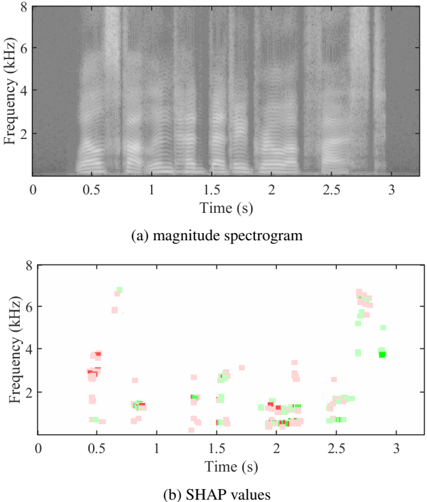
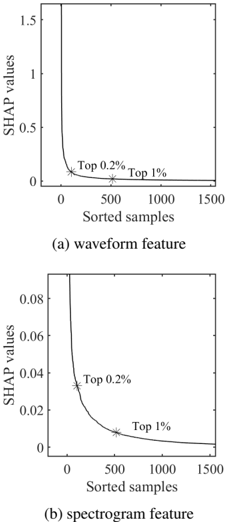
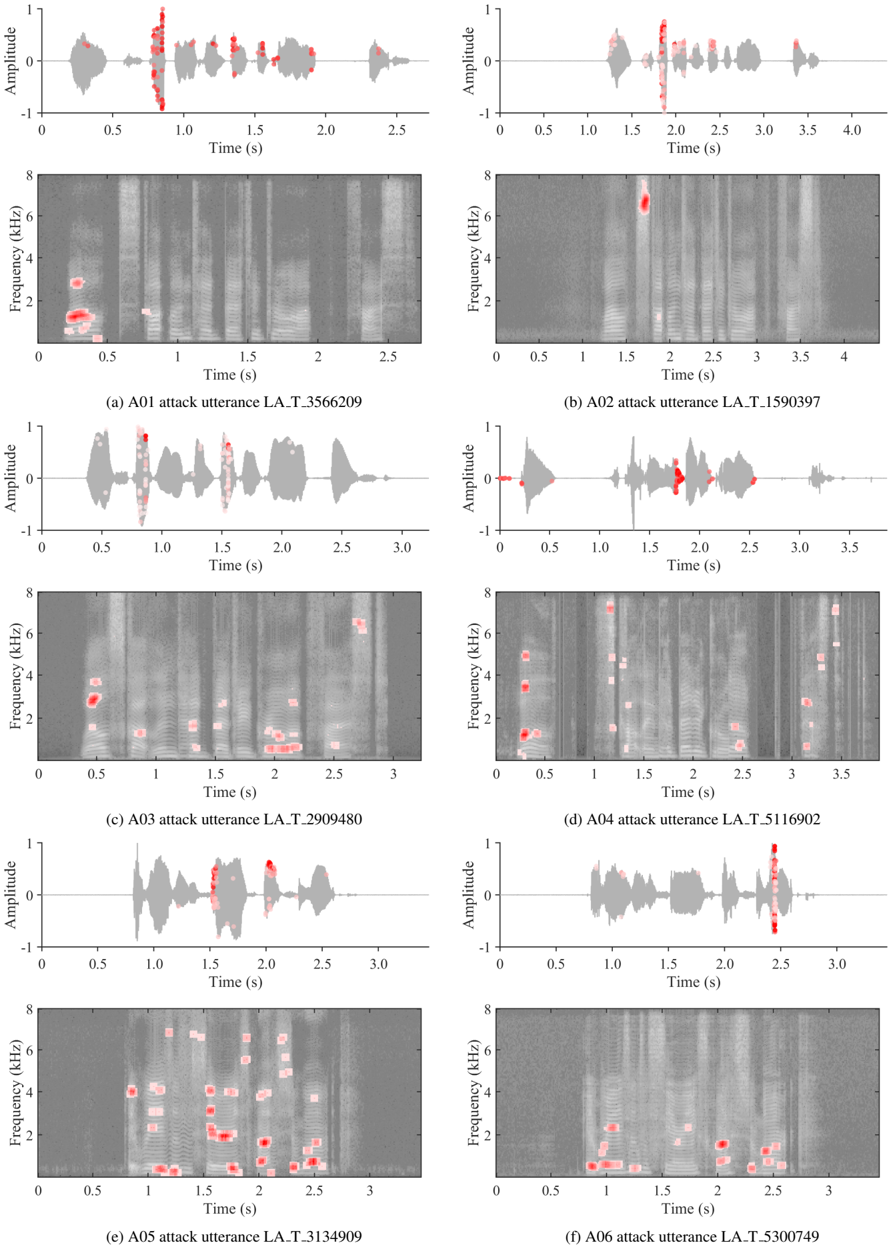
Despite several years of research in deepfake and spoofing detection for automatic speaker verification, little is known about the artefacts that classifiers use to distinguish between bona fide and spoofed utterances. An understanding of these is crucial to the design of trustworthy, explainable solutions. In this paper we report an extension of our previous work to better understand classifier behaviour to the use of SHapley Additive exPlanations (SHAP) to attack analysis. Our goal is to identify the artefacts that characterise utterances generated by different attacks algorithms. Using a pair of classifiers which operate either upon raw waveforms or magnitude spectrograms, we show that visualisations of SHAP results can be used to identify attack-specific artefacts and the differences and consistencies between synthetic speech and converted voice spoofing attacks.
Overview
The claims and statistics of this paper haven’t been checked yet.
Free: it reads the open-access text and checks the first 5 claims that cite a source we can check. Create a free account to check every claim.
Integrity signals
Registry
Cites
Statistics
Figures

Verification
Claims the paper makes
The claims and statistics of this paper haven’t been checked yet.
Free: it reads the open-access text and checks the first 5 claims that cite a source we can check. Create a free account to check every claim.
Claims other papers make about this one
Each is checked against this paper’s own text: does it say what the citing paper says it does?
The source backs part of the claim, not all of it — or backs it for a different population, condition or comparison.
In the citing paper
“Furthermore, the study demonstrated that different types of spoofing attacks often leave unique traces in specific frequency bands, suggesting that detection models can significantly enhance their discrimination capabilities by concentrating on these regions.”
From Audio Deepfake Detection: What Has Been Achieved and What Lies Ahead (2025) · cites this paper as [166]
Experimental — accuracy not yet measuredThe source backs part of the claim, not all of it — or backs it for a different population, condition or comparison.
In the citing paper
“Their findings revealed significant differences in how these models focused on speech and nonspeech intervals, with some models relying more heavily on silence duration rather than speech content to determine authenticity [167].”
From Audio Deepfake Detection: What Has Been Achieved and What Lies Ahead (2025) · cites this paper as [166]
Experimental — accuracy not yet measured
Self-check
Percentages, sums and reported differences re-computed from the paper’s own numbers.
The self-check needs the paper’s full text.
Citations
Cites
The publisher hasn’t deposited this paper’s reference list.
Research works printed but not linked: 31
- [1]1. G. Lavrentyeva, S. Novoselov, A. Tseren, M. Volkova, A. Gorlanov and A. Kozlov, "STC antispoofing systems for the ASVspoof2019 challenge," in Proc. Interspeech, 2019, pp. 1033-1037.
- [2]2. V. Peddinti, D. Povey and S. Khudanpur, "A time delay neural network architecture for efficient modeling of long temporal contexts," in Proc. Interspeech, 2015, pp. 3214- 3218.
- [3]3. C.-I. Lai, N. Chen, J. Villalba and N. Dehak, "ASSERT: Anti-spoofing with squeeze-excitation and residual net- works," in Proc. Interspeech, 2019, pp. 1013-1017.
- [4]4. D. S. Park, W. Chan, Y. Zhang, C.-C. Chiu, B. Zoph, E. D. Cubuk et al., "SpecAugment: A simple data augmentation method for automatic speech recognition," in Proc. Inter- speech, 2019, pp. 2613-2617.
- [5]5. A. Nautsch, X. Wang, N. Evans, T. Kinnunen, V. Vestman, M. Todisco et al., "ASVspoof 2019: spoofing counter- measures for the detection of synthesized, converted and replayed speech," IEEE Transactions on Biometrics, Be- havior, and Identity Science, vol. 3, no. 2, pp. 252-265, 2021.
- [6]6. X. Li, N. Li, C. Weng, X. Liu, D. Su, D. Yu et al., "Re- play and synthetic speech detection with Res2Net archi- tecture," in Proc. ICASSP, 2021, pp. 6354-6358.
- [8]8. T. Chen, A. Kumar, P. Nagarsheth, G. Sivaraman and E. Khoury, "Generalization of audio deepfake detection," in Proc. Odyssey, 2020, pp. 132-137.
- [9]9. A. Tomilov, A. Svishchev, M. Volkova, A. Chirkovskiy, A. Kondratev and G. Lavrentyeva, "STC Antispoofing Systems for the ASVspoof2021 Challenge," in Proc. ASVspoof 2021 Workshop, 2021, pp. 61-67.
- [10]10. X. Chen, Y. Zhang, G. Zhu and Z. Duan, "UR Channel- Robust Synthetic Speech Detection System for ASVspoof 2021," in Proc. ASVspoof 2021 Workshop, 2021, pp. 75- 82.
- [11]11. H. Tak, J. Patino, M. Todisco, A. Nautsch, N. Evans and A. Larcher, "End-to-end anti-spoofing with RawNet2," in Proc. ICASSP, 2021, pp. 6369-6373.
- [12]12. W. Ge, J. Patino, M. Todisco and N. Evans, "Raw differen- tiable architecture search for speech deepfake and spoof- ing detection," in Proc. ASVspoof 2021 Workshop, 2021, pp. 22-28.
- [13]13. G. Hua, A. B.-j. Teoh and H. Zhang, "Towards end-to- end synthetic speech detection," IEEE Signal Processing Letters, vol. 28, pp. 1265-1269, 2021.
- [14]14. H. Tak, J.-w. Jung, J. Patino, M. Kamble, M. Todisco and N. Evans, "End-to-end spectro-temporal graph attention networks for speaker verification anti-spoofing and speech deepfake detection," in Proc. ASVspoof 2021 Workshop, 2021, pp. 1-8.
- [15]15. J.-w. Jung, H.-S. Heo, H. Tak, H.-j. Shim, J. S. Chung, B.-J. Lee et al., "AASIST: Audio anti-spoofing using in- tegrated spectro-temporal graph attention networks," in Proc. ICASSP (to appear), 2022.
- [16]16. A. B. Arrieta, N. Díaz-Rodríguez, J. Del Ser, A. Bennetot, S. Tabik, A. Barbado et al., "Explainable artificial intel- ligence (XAI): Concepts, taxonomies, opportunities and challenges toward responsible AI," Information Fusion, vol. 58, pp. 82-115, 2020.
- [17]17. A. Adadi and M. Berrada, "Peeking inside the black- box: a survey on explainable artificial intelligence (XAI)," IEEE access, vol. 6, pp. 52138-52160, 2018.
- [18]18. B. Chettri, S. Mishra, B. L. Sturm and E. Benetos, "Analysing the predictions of a CNN-based replay spoof- ing detection system," in 2018 IEEE Spoken Language Technology Workshop (SLT), 2018, pp. 92-97.
- [19]19. Y. Zhang, W. Wang and P. Zhang, "The effect of silence and dual-band fusion in anti-spoofing system," in Proc. Interspeech, 2021, pp. 4279-4283.
- [21]21. H. Muckenhirn, A. Abrol, M. Magimai-Doss and S. Mar- cel, "Understanding and visualizing raw waveform-based CNNs," in Proc. Interspeech, 2019, pp. 2345-2349.
- [22]22. S. Sivasankaran, E. Vincent and D. Fohr, "Explaining deep learning models for speech enhancement," in Proc. Interspeech, 2021, pp. 696-700.
- [23]23. S. M. Lundberg, S.-I. Lee and D. Fohr, "A unified ap- proach to interpreting model predictions," in Advances in Neural Information Processing Systems, 2017, pp. 4765- 4774.
- [24]24. W. Ge, J. Patino, M. Todisco and N. Evans, "Explaining deep learning models for spoofing and deepfake detection with SHapley Additive exPlanations," in Proc. ICASSP (to appear), 2022.
- [26]26. H. Dinkel, N. Chen, Y. Qian and K. Yu, "End-to-end spoofing detection with raw waveform CLDNNS," in Proc. ICASSP, 2017, pp. 4860-4864.
- [27]27. Y. Ma, Z. Ren and S. Xu, "RW-Resnet: A novel speech anti-spoofing model using raw waveform," in Proc. Inter- speech, 2021, pp. 4144-4148.
- [30]30. D. Kingma and J. Ba, "Adam: A method for stochas- tic optimization," in Proc. International Conference on Learning Representations (ICLR), 2017, pp. 1-15.
- [32]32. X. Wang, J. Yamagishi, M. Todisco, H. Delgado, A. Nautsch, N. Evans et al., "ASVspoof 2019: A large-scale public database of synthesized, converted and replayed speech," Computer Speech & Language, vol. 64, 2020.
- [34]34. N. Müller, F. Dieckmann, P. Czempin, R. Canals, K. Böttinger and J. Williams, "Speech is silver, silence is golden: What do ASVspoof-trained models really learn?," in Proc. ASVspoof 2021 Workshop, 2021, pp. 55-60.
- [35]35. E. Morise, F. Yokomori and K. Ozawa, "WORLD: A vocoder-based high-quality speech synthesis system for real-time applications," IEICE Trans. on Information and Systems, vol. 99, no. 7, pp. 1877-1884, 2016.
- [36]36. M. Schröder, M. Charfuelan, S. Pammi and I. Steiner, "Open source voice creation toolkit for the MARY TTS Platform," in Proc. Interspeech, 2011, pp. 3253-3256.
- [37]37. Z. Wu, T. Kinnunen, N. Evans, J. Yamagishi, C. Hanilc ¸i, M. Sahidullah et al., "ASVspoof 2015: the first automatic speaker verification spoofing and countermeasures chal- lenge," in Proc. Interspeech, 2015, pp. 2037-2041.
- [38]38. D. Matrouf, J. Bonastre and C. Fredouille, "Effect of speech transformation on impostor acceptance," in Proc. ICASSP, 2006, pp. 933-936.
Cited by
Deepfake Media Forensics: Status and Future Challenges
Amerini, I., Barni, M., Battiato, S., Bestagini, P., Boato, G., Bruni, V., Caldelli, R., De Natale, F., De Nicola, R., Guarnera, L., et al. (2025) · Journal of Imaging · doi:10.3390/jimaging11030073 · Cited by 113
Audio Deepfake Detection: What Has Been Achieved and What Lies Ahead
Zhang, B., Cui, H., Nguyen, V., & Whitty, M. (2025) · Sensors · doi:10.3390/s25071989 · Cited by 72
Towards Frequency Band Explainability in Synthetic Speech Detection
Salvi, D., Bestagini, P., & Tubaro, S. (2023) · European Signal Processing Conference (EUSIPCO) · doi:10.23919/eusipco58844.2023.10289804 · Cited by 30
Firc, A., Malinka, K., & Hanáček, P. (2025) · Cybersecurity · doi:10.1186/s42400-024-00346-1 · Cited by 33
What Does an Audio Deepfake Detector Focus on? A Study in the Time Domain
Grinberg, P., Kumar, A., Koppisetti, S., & Bharaj, G. (2025) · IEEE International Conference on Acoustics Speech and Signal Processing · doi:10.1109/icassp49660.2025.10887568 · Cited by 17
Metadata
- Authors
- Ge, W., Todisco, M., & Evans, N.
- Affiliations
- EURECOM (FR)
- Venue
- The Speaker and Language Recognition Workshop (Odyssey 2022)
- Publisher
- ISCA
- Published
- 2022-06-28
- Pages
- 70-76
- OpenAlex
- W4225904138
- Cited by
- 18
- References
- 0
- Citations by year
- 2026: 6 · 2025: 9 · 2024: 1 · 2023: 2
- FWCI
- 1.66
- Type
- conference paper
- Language
- en
- Open access
- green
- arxiv.org
- Licence
- cc-by
- Locations
- The Speaker and Language Recognition Workshop (Odyssey) (publishedVersion)
- arXiv (Cornell University) (submittedVersion, cc-by)
- HAL (submittedVersion)
- arXiv (Cornell University) (cc-by)
- Funders
- European Commission (HORIZON2020, 860813)
- Agence Nationale de la Recherche
- Topics
- Physical Sciences › Computer Science › Artificial Intelligence › Speech Recognition and Synthesis
- Physical Sciences › Computer Science › Signal Processing › Biometric Identification and Security
- Physical Sciences › Computer Science › Computer Vision and Pattern Recognition › Digital Media Forensic Detection
- Keywords
- deepfake detection, anti-spoofing, speaker verification, SHAP, explainable AI, attack analysis, synthetic speech, voice spoofing, spectrogram features, waveform features
About these checks
Registry, retraction, Cites and statistics results are computed, not judged, with one exception: a printed reference that no index lists is read once by a model before it counts as a citation error. Claims are extracted by a model and kept only when their quote appears verbatim in the text; each cited source is then checked, with a model’s help, for whether it says what the claim relies on. Those verdicts can be wrong — read the claim’s quote and the cited source before relying on one.
Statistics and arithmetic are recomputed, not judged.
Confidence bands are shown only for fields calibrated on our annotated test set. None is calibrated yet, so no band is shown.
What counts as a claim ›How we measure confidence ›How we check this ›
Are you an author, or do you see a problem with this page? Request a review
How to cite
Cite CoChat for the checks on this page, and the paper for its own findings.
- This page
- CoChat. (2026). Citation check: Explainable Deepfake and Spoofing Detection: An Attack Analysis Using SHapley Additive exPlanations. https://app.cochat.ai/papers/10.21437/odyssey.2022-10
- The paper
- Ge, W., Todisco, M., & Evans, N. (2022). Explainable Deepfake and Spoofing Detection: An Attack Analysis Using SHapley Additive exPlanations. The Speaker and Language Recognition Workshop (Odyssey 2022). https://doi.org/10.21437/odyssey.2022-10
Data sources
Bibliographic data: Semantic Scholar, OpenAlex, Crossref.
Contains information from the Semantic Scholar Academic Graph Datasets, made available under the ODC Attribution License (ODC-BY 1.0).
Semantic Scholar’s data is described in: Kinney, R., et al. (2023). The Semantic Scholar Open Data Platform. arXiv:2301.10140.
