

Intranasal Corticosteroids: Topical Potency, Systemic Activity and Therapeutic Index
Open accessThe DOI matches its Crossref record; 63 of the 63 references it cites were found in a registry or an index.
Abstract
Intranasal corticosteroid (INCS) therapy is the preferred treatment option for allergic rhinitis (AR). Although all INCSs for the treatment of AR are considered safe and effective, differences in potency, molecular structure features and physicochemical and pharmacokinetic properties could result in differences in clinical efficacy and safety. Higher glucocorticoid receptor (GR) binding affinity of INCS is associated with higher lipophilicity, nasal tissue retention and topical potency. Higher topical potency is also accompanied by low oral bioavailability and high systemic clearance conferring low systemic exposure, reduced potential for systemic adverse effects and an improved therapeutic index. It has been shown that adverse events related to systemic exposure of INCSs in children are low. Although INCSs mostly produce low systemic effects, use of an INCS with low systemic exposure in patients on multiple corticosteroid (CS) therapies could help reduce the total systemic burden of CS therapy. Despite differences in topical potency, physicochemical and pharmacokinetic properties between INCSs, clinical studies of INCSs in the treatment of AR generally show no clinically important differences between these compounds, and poor correlation between INCS topical potency and clinical response. However, the lack of head-to-head comparisons of INCSs in clinical studies conducted in more severe AR patients should be noted. This narrative review provides an assessment of the therapeutic relevance of topical potency and the physicochemical and pharmacokinetic properties of INCSs and describes for the first time the relationship between topical potency and therapeutic index using pharmacological features of INCSs. It concludes that higher GR binding affinity and topical potency can potentially improve the therapeutic index of an INCS. Therefore, both efficacy and systemic exposure profiles should be considered when comparing INCS regimens in terms of therapeutic equivalence, to aid clinical decision-making and avoid the assumption that all INCS formulations are the same when considering treatment options.
Overview
The claims and statistics of this paper haven’t been checked yet.
Free: it reads the open-access text and checks the first 5 claims that cite a source we can check. Create a free account to check every claim.
Integrity signals
Registry
Cites
Statistics
Figures
Verification
Claims the paper makes
The claims and statistics of this paper haven’t been checked yet.
Free: it reads the open-access text and checks the first 5 claims that cite a source we can check. Create a free account to check every claim.
Claims other papers make about this one
Each is checked against this paper’s own text: does it say what the citing paper says it does?
The source backs part of the claim, not all of it — or backs it for a different population, condition or comparison.
In the citing paper
“However, several intra-nasal glucocorticoids have high bioavailability and glucocorticoid receptor binding affinity, which can result in significant systemic exposure after prolonged use (113).”
From European Society of Endocrinology and Endocrine Society Joint Clinical Guideline: Diagnosis and Therapy of Glucocorticoid-induced Adrenal Insufficiency (2024) · cites this paper as [113]
Experimental — accuracy not yet measured
Self-check
Percentages, sums and reported differences re-computed from the paper’s own numbers.
The self-check needs the paper’s full text.
Citations
Cites
Summary of product characteristics
(2013) · Pharmaceutical Medicine · doi:10.1093/med/9780199609147.003.0027 · Cited by 1,905
The diagnosis and management of rhinitis: An updated practice parameter
WALLACE, D., DYKEWICZ, M., BERNSTEIN, D., BLESSINGMOORE, J., COX, L., KHAN, D., LANG, D., NICKLAS, R., OPPENHEIMER, J., & PORTNOY, J. (2008) · Journal of Allergy and Clinical Immunology · doi:10.1016/j.jaci.2008.06.003 · Cited by 1,096
Efficacy and Safety of Inhaled Corticosteroids: New Developments
BARNES, P. J., PEDERSEN, S., & BUSSE, W. W. (1998) · American Journal of Respiratory and Critical Care Medicine · doi:10.1164/ajrccm.157.3.157315 · Cited by 749
Effect of Inhaled Glucocorticoids in Childhood on Adult Height
Kelly, H. W., Sternberg, A. L., Lescher, R., Fuhlbrigge, A. L., Williams, P., Zeiger, R. S., Raissy, H. H., Van Natta, M. L., Tonascia, J., & Strunk, R. C. (2012) · New England Journal of Medicine · doi:10.1056/nejmoa1203229 · Cited by 371
Schenkel, E. J., Skoner, D. P., Bronsky, E. A., Miller, S. D., Pearlman, D. S., Rooklin, A., Rosen, J. P., Ruff, M. E., Vandewalker, M. L., Wanderer, A., et al. (2000) · Pediatrics · doi:10.1542/peds.105.2.e22 · Cited by 354
A comparison of the efficacy and safety of inhaled corticosteroids in asthma
Pedersen, S., & O'Byrne, P. (1997) · Allergy · doi:10.1111/j.1398-9995.1997.tb05047.x · Cited by 352 · cited 1×
“Also, because INCSs differ in pharmacokinetic properties, including systemic absorption and activity after administration, studies using different INCSs and delivery devices such as ANS and MDI may not be directly comparable to each other.(59) Differences in, for example, performance and ease-ofuse of different delive…”
Skoner, D. P., Rachelefsky, G. S., Meltzer, E. O., Chervinsky, P., Morris, R. M., Seltzer, J. M., Storms, W. W., & Wood, R. A. (2000) · Pediatrics · doi:10.1542/peds.105.2.e23 · Cited by 306
Inhaled corticosteroids: potency, dose equivalence and therapeutic index
Daley‐Yates, P. T. (2015) · British Journal of Clinical Pharmacology · doi:10.1111/bcp.12637 · Cited by 260 · cited 9×
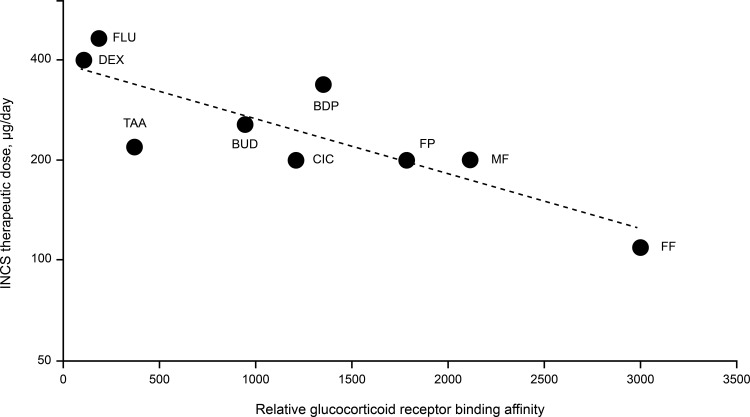
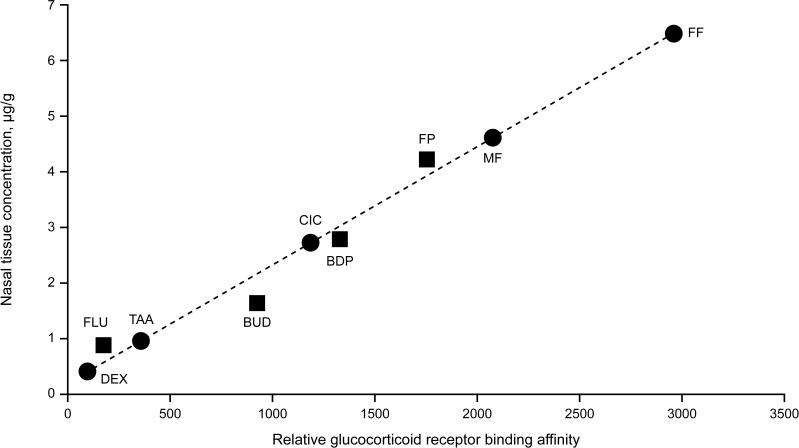
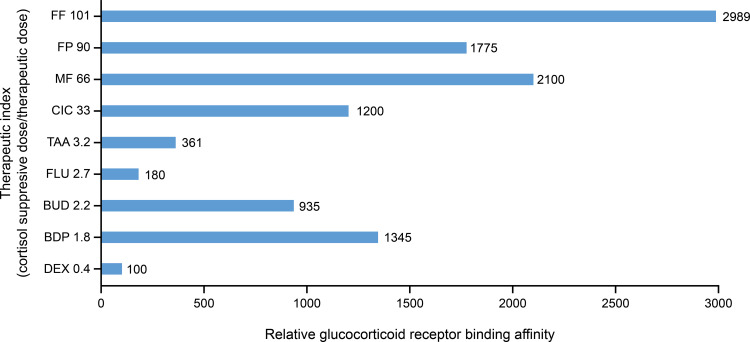
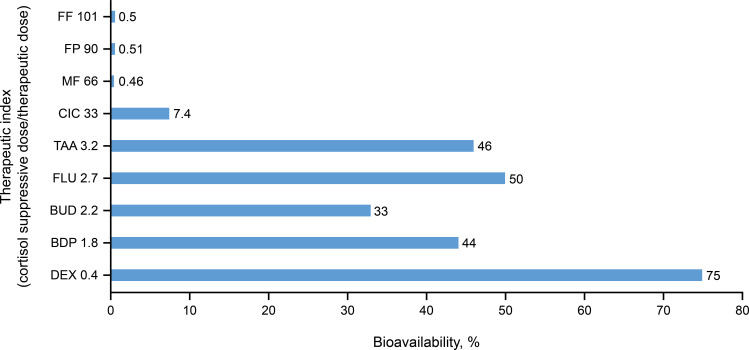
“833).(12,32,34,35,38,62) Abbreviations: BDP, beclomethasone dipropionate; BUD, budesonide; CIC, ciclesonide; DEX, dexamethasone; FF, fluticasone furoate; FLU, flunisolide; FP, fluticasone propionate; INCS, intranasal corticosteroid; MF, mometasone furoate; TAA, triamcinolone acetonide.”
BackgroundResultInfluentialSelf-citationDerendorf, H., & Meltzer, E. O. (2008) · Allergy · doi:10.1111/j.1398-9995.2008.01750.x · Cited by 233 · cited 5×
“While increased topical potency at intranasal sites can potentially improve efficacy, systemic absorption of INCSs could pose safety risks as INCSs could interact with GRs found throughout the body.(1) Therefore, INCSs with increased topical potency are not considered to offer a therapeutic advantage over INCSs with l…”
BackgroundResultInfluentialDaley‐Yates, P. T., Price, A. C., Sisson, J. R., Pereira, A., & Dallow, N. (2001) · British Journal of Clinical Pharmacology · doi:10.1046/j.0306-5251.2001.01374.x · Cited by 225 · cited 4×
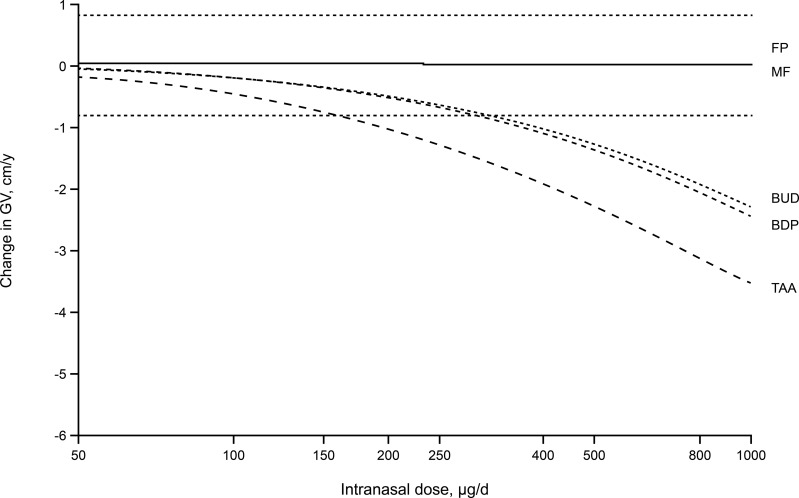
“Finally, clinical trials of INCSs mostly include patients with moderate AR symptoms who are able to participate in a study for 2 to 4 weeks, taking only a placebo as treatment for their symptoms; whereas it might be easier to determine differences Figure 2 Relationship between relative glucocorticoid receptor binding…”
BackgroundInfluentialSelf-citation
Research works printed but not linked: 1
- Daley-Yates P, Richards DH. Pharmacokinetics (PK) and Pharmacodynamic (PD) relationships for Intranasal Corticosteroids (INCS). J Allergy Clin Immunol. 2001; 107(2, Supplement): S313.
Cited by
Beuschlein, F., Else, T., Bancos, I., Hahner, S., Hamidi, O., van Hulsteijn, L., Husebye, E. S., Karavitaki, N., Prete, A., Vaidya, A., et al. (2024) · The Journal of Clinical Endocrinology & Metabolism · doi:10.1210/clinem/dgae250 · Cited by 172
Beuschlein, F., Else, T., Bancos, I., Hahner, S., Hamidi, O., van Hulsteijn, L. T., Husebye, E. S., Karavitaki, N., Prete, A., Vaidya, A., et al. (2024) · European Journal of Endocrinology · doi:10.1093/ejendo/lvae029 · Cited by 157
Rollema, C., van Roon, E. N., van Boven, J. F. M., Hagedoorn, P., Klemmeier, T., Kocks, J., Metting, E., Elberink, H. N. G. O., Peters, T. T. A., Giorgi, M. R. M. S., et al. (2022) · Clinical & Experimental Allergy · doi:10.1111/cea.14212 · Cited by 40
The olfactory bulb: A neuroendocrine spotlight on feeding and metabolism
Stark, R. (2024) · Journal of Neuroendocrinology · doi:10.1111/jne.13382 · Cited by 46
Palmer, J. N., Adappa, N. D., Chandra, R. K., Davis, G. E., Mahdavinia, M., Messina, J. C., Ow, R. A., Patel, Z. M., Peters, A. T., Sacks, H. J., et al. (2024) · The Journal of Allergy and Clinical Immunology In Practice · doi:10.1016/j.jaip.2023.12.016 · Cited by 34
Metadata
- Authors
- Daley-Yates, P. T., Larenas-Linnemann, D., Bhargave, C., & Verma, M.
- Affiliations
- GlaxoSmithKline (India) (IN)
- Venue
- Journal of Asthma and Allergy
- Publisher
- Informa UK Limited
- Published
- 2021-09
- Volume
- Volume 14
- Pages
- 1093-1104
- ISSN
- 1178-6965 (ISSN-L)
- PMC
- PMC8436259
- OpenAlex
- W3197423053
- Cited by
- 49
- References
- 62
- Citations by year
- 2026: 15 · 2025: 13 · 2024: 12 · 2023: 6 · 2022: 3
- FWCI
- 0.83
- Type
- journal article
- Language
- en
- Open access
- gold
- doi.org
- Licence
- Locations
- Journal of Asthma and Allergy (publishedVersion, cc-by-nc)
- Europe PMC (PubMed Central) (publishedVersion, cc-by-nc)
- PubMed Central (publishedVersion, cc-by-nc)
- PubMed (publishedVersion)
- DOAJ (DOAJ: Directory of Open Access Journals) (acceptedVersion)
- Dove Medical Press (Taylor and Francis Group) (submittedVersion, cc-by-nc)
- Funders
- GlaxoSmithKline
- Topics
- Health Sciences › Medicine › Immunology and Allergy › Allergic Rhinitis and Sensitization
- Life Sciences › Pharmacology, Toxicology and Pharmaceutics › Pharmaceutical Science › Advanced Drug Delivery Systems
- Health Sciences › Medicine › Otorhinolaryngology › Sinusitis and nasal conditions
- Keywords
- intranasal corticosteroids, allergic rhinitis, therapeutic index, lipophilicity, oral bioavailability, systemic exposure, pharmacokinetics, physicochemical properties, systemic side effects, children, therapeutic equivalence
About these checks
Registry, retraction, Cites and statistics results are computed, not judged, with one exception: a printed reference that no index lists is read once by a model before it counts as a citation error. Claims are extracted by a model and kept only when their quote appears verbatim in the text; each cited source is then checked, with a model’s help, for whether it says what the claim relies on. Those verdicts can be wrong — read the claim’s quote and the cited source before relying on one.
Statistics and arithmetic are recomputed, not judged.
Confidence bands are shown only for fields calibrated on our annotated test set. None is calibrated yet, so no band is shown.
What counts as a claim ›How we measure confidence ›How we check this ›
Are you an author, or do you see a problem with this page? Request a review
How to cite
Cite CoChat for the checks on this page, and the paper for its own findings.
- This page
- CoChat. (2026). Citation check: Intranasal Corticosteroids: Topical Potency, Systemic Activity and Therapeutic Index. https://app.cochat.ai/papers/10.2147/jaa.s321332
- The paper
- Daley-Yates, P. T., Larenas-Linnemann, D., Bhargave, C., & Verma, M. (2021). Intranasal Corticosteroids: Topical Potency, Systemic Activity and Therapeutic Index. Journal of Asthma and Allergy. https://doi.org/10.2147/jaa.s321332
Data sources
Bibliographic data: Semantic Scholar, OpenAlex, Crossref.
Contains information from the Semantic Scholar Academic Graph Datasets, made available under the ODC Attribution License (ODC-BY 1.0).
Semantic Scholar’s data is described in: Kinney, R., et al. (2023). The Semantic Scholar Open Data Platform. arXiv:2301.10140.
