

A Pilot Study of Virtual Reality in Hemodialysis for Mitigating Pain and Anxiety: User Experiences and Perceptions
Open accessThe DOI matches its Crossref record; 42 of the 42 references it cites were found in a registry or an index; 14 of the 32 sources its claims cite were checked for support.
Abstract
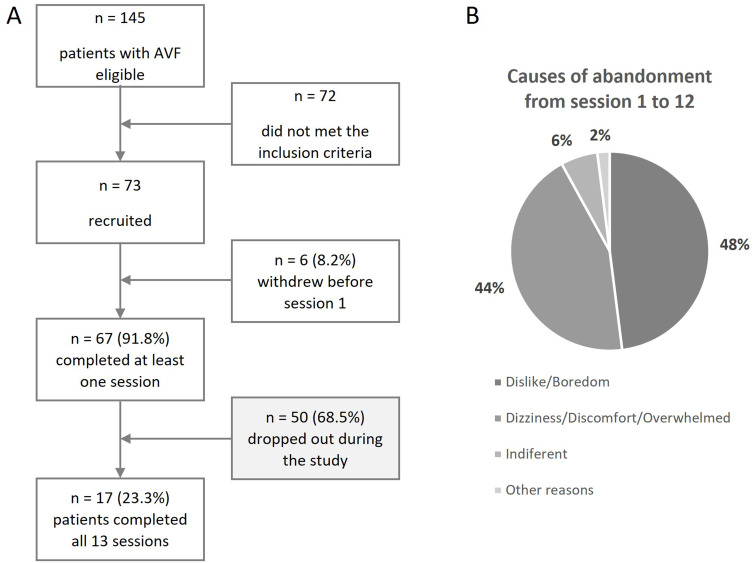
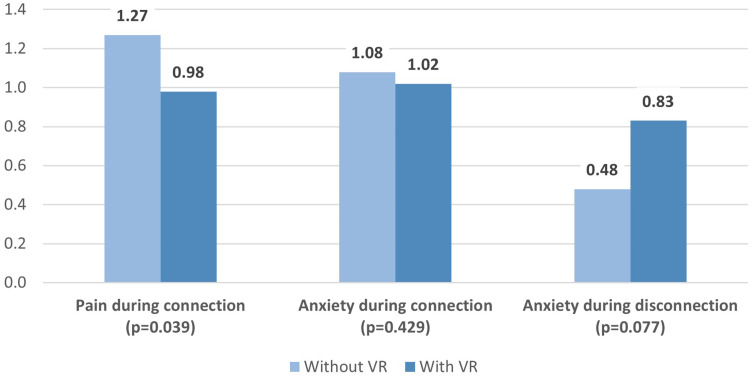
Background: Virtual reality (VR) helps control symptoms during procedures in chronic patients. This study analyzes VR’s effect on pain and anxiety in hemodialysis (HD) patients at two points: the vascular access puncture and disconnection. Methods: A prospective, non-randomized, crossover, multicenter pilot study assessing pre-and post-intervention outcomes with VR headsets. The intervention group used VR for up to 13 sessions, around the puncture, and at the end of the session. Pain was measured with the Faces Pain Scale-Revised (FPS-R) and anxiety with the Visual Analogue Scale for Anxiety (VAS-A). Usability and patient satisfaction with VR were also evaluated. Results: A total of 73 patients (66.2 ± 13.3 years, 67% men) were included. At the start, 8.2% declined to wear the VR headset. The average number of sessions with the headset was 6.5 ± 4.8, with 23.3% completing all 13 sessions. Pain during punctures significantly improved with VR (1.26 vs 0.97; p = 0.039), while anxiety improved non-significantly. Anxiety during disconnection slightly increased, but also not significantly. Patients with higher initial pain and anxiety levels during puncture and disconnection showed significant improvement, while those with lower initial levels worsened (p < 0.05 in all cases). The HD population showed varying levels of acceptance of VR. Conclusion: VR headsets help reduce pain during punctures, especially in patients with more intense pain. The effect on anxiety reduction during punctures or at the end of the session is inconclusive, with better results in those with higher anxiety levels. VR acceptance in the HD population is variable. © 2025 Rodríguez de Galvis et al.
Overview
CoChat Summary
## TL;DR
This multicenter prospective crossover pilot study in 73 hemodialysis patients found that virtual reality reduced pain during arteriovenous fistula puncture, but its effects on anxiety were inconclusive. Acceptance was mixed: usability ratings were generally high, yet only 23.3% completed all 13 VR sessions and many patients did not find it beneficial.
## Key findings
- Among 73 participants (66.2 ± 13.4 years; 67.1% men), VR significantly reduced puncture pain: 1.27 without VR vs 0.98 with VR; p = 0.039.
- Puncture anxiety decreased slightly but not significantly: 1.08 vs 1.02; p = 0.429; anxiety during disconnection increased but was also not significant: 0.48 without VR vs 0.83 with VR; p = 0.077.
- Benefits were concentrated in patients with higher baseline symptoms: those who improved had higher starting pain during puncture (2.50 vs 1.27; p < 0.001), higher puncture anxiety (1.81 vs 0.39; p = 0.002), and higher disconnection anxiety (1.54 vs 0.12; p < 0.001).
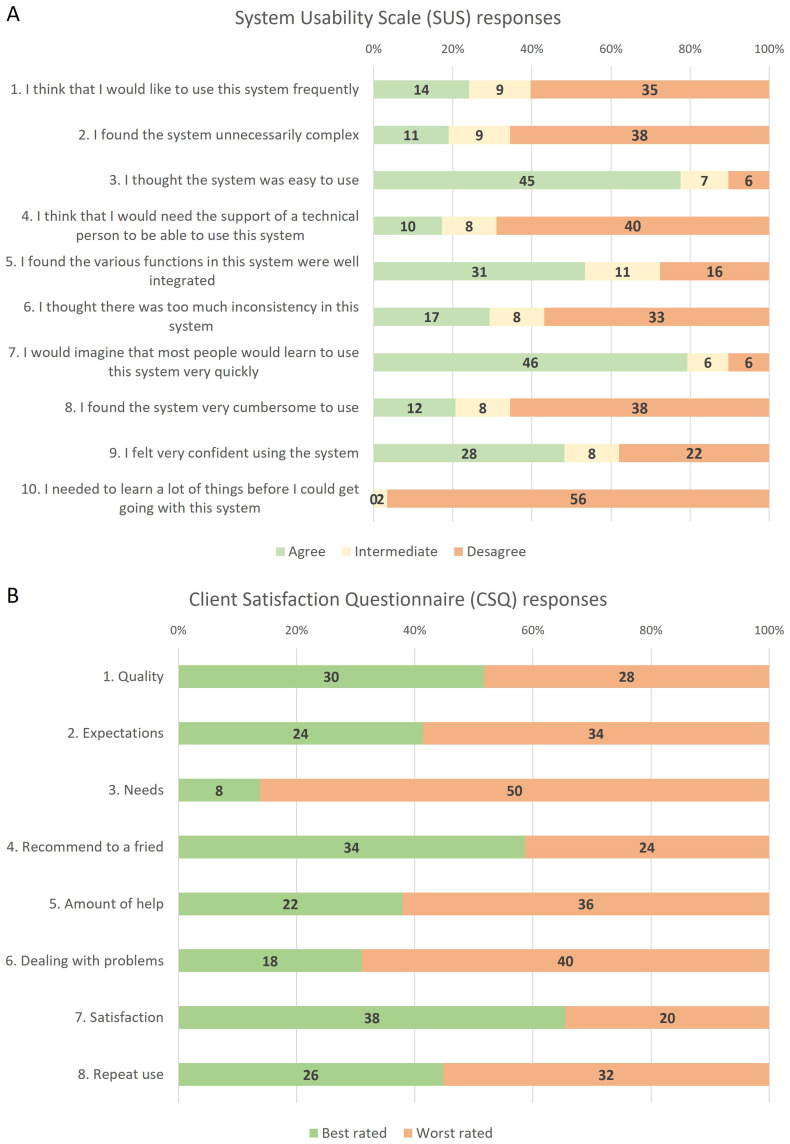
- Usability was rated positively by most patients: 77.6% considered the application easy to use and 79.3% thought most people would learn it quickly, but only 48.3% felt confident using it; 65.5% reported being satisfied, while 86.2% said it had not helped improve their well-being.
## Methods
- Prospective, non-randomized, multicenter crossover pilot study conducted from April to December 2023 in three outpatient dialysis centers.
- 73 hemodialysis patients with arteriovenous fistulae were included; each served as their own control and underwent up to 26 sessions total, with VR used for up to 13 sessions before switching conditions.
- Outcomes were assessed with FPS-R for pain, VAS-A for anxiety, plus SUS and CSQ-8 for usability and satisfaction; analyses used descriptive statistics, chi-squared tests, and t-tests with p ≤ 0.05.
## Limitations
- The paper states that many patients did not complete the VR exposure: only 23.3% completed all 13 sessions, and dropout was common.
- The authors note possible novelty effect, limited interactivity/content, and discomfort as factors that may have influenced effectiveness, especially for anxiety.
- Evident from the text: outcome sample sizes varied by measure (n = 62 for pain, 59 for puncture anxiety, 57 for disconnection anxiety), and some patients were unavailable due to death, transplantation, or transfer, which may have affected completeness of follow-up.
Model-written summary. Check it against the paper before relying on it.
Integrity signals
Registry
Cites
Statistics
Figures

Verification
Claims the paper makes
8 Valid · 2 Not valid · 7 Not checked · 27 Own results and interpretations
Some cited sources support this claim and some don’t — read each source’s verdict below.
In the paper
“The more immersive the VR, the greater the analgesic effect.25,27,29,43,44”
§ A Pilot Study of Virtual Reality in Hemodialysis for Mitigating Pain and Anxiety: User Experiences and Perceptions > Discussion
What the sources say
- Supportedcites [25] Atzori B, Vagnoli L, Graziani D, et al. An exploratory study on the effectiveness of virtual reality analgesia for children and adolescents with kidney diseases undergoing venipuncture. Int J Environ Res Public Health. 2022; 19(4): 2291. doi: 10.3390/ijerph19042291 35206481 PMC8872518 source
The Discussion (§4.2, Limitations) states that several laboratory studies found greater VR analgesia when the system was made more immersive. The paper presents this as evidence from those studies, not as a comparison tested in its own venipuncture study. (LLM, conf=0.92)
- Not checked — no full text of the sourcecites [27] Chuan A, Zhou JJ, Hou RM, Stevens CJ, Bogdanovych A. Virtual reality for acute and chronic pain management in adult patients: a narrative review. Anaesthesia. 2021; 76(5): 695– 704. doi: 10.1111/anae.15202 32720308 source
- Not checked — no full text of the sourcecites [29] Chow H, Hon J, Chua W, Chuan A. Effect of virtual reality therapy in reducing pain and anxiety for cancer-related medical procedures: a systematic narrative review. J Pain Symptom Manage. 2021; 61(2): 384– 394. doi: 10.1016/j.jpainsymman.2020.08.016 32822755 source
- Partly supportedcites [43] Tesarz J, Herpel C, Meischner M, et al. Effects of virtual reality on psychophysical measures of pain: superiority to imagination and nonimmersive conditions. Pain. 2024; 165(4): 796– 810. doi: 10.1097/j.pain.0000000000003083 37878478 PMC10949219 sourceExperimental — accuracy not yet measured
The Conclusions report that immersive VR reduced pain sensitivity more than a nonimmersive control condition, specifically through effects on pain thresholds. The study compares those conditions; it does not establish that each increase in VR immersion produces a greater analgesic effect. (LLM, conf=0.82)
- Disputedcites [44] Guenther M, Görlich D, Bernhardt F, et al. Virtual reality reduces pain in palliative care-A feasibility trial. BMC Palliat Care. 2022; 21(1): 169. doi: 10.1186/s12904-022-01058-4 36195865 PMC9533542 sourceExperimental — accuracy not yet measured
The Discussion (page unavailable) reports that 3D headset VR produced a stronger sense of presence than a 2D display, but found no significant difference in pain reduction between them. That comparison runs contrary to the unqualified claim that greater immersion produces greater analgesia. The paper's own trial found pain reduction after VR but did not compare levels of immersion. (LLM, conf=0.82)
Checked by a reasoning model — may be wrong.
plainstates a cause- Asserted: passes — The authors put it forward as true.
- Checkable: passes — It can be checked against evidence.
- Load-bearing: unclear — It is unclear whether the paper’s conclusions depend on it.
- Based: passes — The paper gives a reason why it holds.
- Supported
The cited sources that could be checked couldn’t confirm or dispute this claim.
In the paper
“However, no significant age differences were found in our study, consistent with other research.46”
§ A Pilot Study of Virtual Reality in Hemodialysis for Mitigating Pain and Anxiety: User Experiences and Perceptions > Discussion
What the sources say
- Could not verifycites [46] Teh JJ, Pascoe DJ, Hafeji S, et al. Efficacy of virtual reality for pain relief in medical procedures: a systematic review and meta-analysis. BMC Med. 2024; 22(1): 64. doi: 10.1186/s12916-024-03266-6 38355563 PMC10865524 sourceExperimental — accuracy not yet measured
The Outcomes > Pain and Outcomes > Anxiety passages compare VR’s effects across age groups, but neither assesses satisfaction with VR. Searches for satisfaction and age found no passage reporting whether satisfaction differed significantly by age; the cited paper therefore does not verify the attributed claim. (LLM, conf=0.72)
plain- Asserted: passes — The authors put it forward as true.
- Checkable: passes — It can be checked against evidence.
- Load-bearing: passes — The paper’s conclusions depend on it.
- Based: passes — The paper gives a reason why it holds.
- Could not verify
The cited sources support only part of this claim — read each source’s verdict below.
In the paper
“Other studies have shown that the level of immersion in VR is important for the effectiveness in managing HD session symptoms.42”
§ A Pilot Study of Virtual Reality in Hemodialysis for Mitigating Pain and Anxiety: User Experiences and Perceptions > Discussion
What the sources say
- Partly supportedcites [42] Gurz D, Coimbatore Dada K, Naga Nyshita V, et al. The impact of virtual reality (VR) gaming and casual/social gaming on the quality of life, depression, and dialysis tolerance in patients with chronic kidney disease: a narrative review. Cureus. 2023; 15(9): e44904. doi: 10.7759/cureus.44904 37814762 PMC10560511 sourceExperimental — accuracy not yet measured
The Review says the level of immersion is an important indicator of how effectively VR manages pain during hemodialysis. It also discusses other dialysis-session symptoms, but does not link the level of immersion to VR’s effectiveness in managing those symptoms. The claim extends a pain-specific point to symptoms more generally. (LLM, conf=0.84)
plainstates a cause- Asserted: passes — The authors put it forward as true.
- Checkable: passes — It can be checked against evidence.
- Load-bearing: passes — The paper’s conclusions depend on it.
- Based: passes — The paper gives a reason why it holds.
- Partly supported
The sources with a verdict support this claim; the rest weren’t checked yet, have no full text we could read, or their verdicts aren’t rated yet.
In the paper
“Recent studies have demonstrated in patients undergoing HD treatment that the use of VR headsets during AVF puncture can significantly reduce perceived pain, anxiety, and physiological stress markers, highlighting its potential as a safe, simple, and cost-effective non-pharmacological tool in hemodialysis care.16–18”
§ A Pilot Study of Virtual Reality in Hemodialysis for Mitigating Pain and Anxiety: User Experiences and Perceptions > Introduction
What the sources say
- Supportedcites [16] Elzeky ME, Salameh B, Reshia FAA, Sabry AA, Shahine NF, Mohamed EA. The effect of virtual reality distraction on haemodialysis patients’ pain and anxiety during arteriovenous fistula puncture: a randomised controlled trial. J Res Nurs. 2024; 29(6): 421– 434. doi: 10.1177/17449871241252005 39512631 PMC11539160 source
The Results (page unavailable) report significantly lower pain, state anxiety, systolic blood pressure and heart rate in the VR group after AVF puncture. The Conclusion and recommendations (page unavailable) also describes VR distraction as a potentially safe, cost-effective non-pharmacological therapy. The physiological finding concerns systolic blood pressure and heart rate; the Discussion says other measured haemodynamic parameters did not fall significantly. (LLM, conf=0.92)
- Not checked — no full text of the sourcecites [17] Şen H, Lafcı Bakar D. The effect of virtual reality glasses on pain and patient satisfaction in arteriovenous fistula cannulation procedure. Appl Nurs Res. 2024; 79: 151841. doi: 10.1016/j.apnr.2024.151841 39256013 source
- Not checked — no full text of the sourcecites [18] Ersoy NA, Kesik G, Dede F. Effect of virtual reality video application on fistula puncture-associated pain in patients undergoing hemodialysis: assessor-blinded randomized trial. J Vasc Access. 2024; 1: 11297298241295447. doi: 10.1177/11297298241295447 39487577 source
boostedstates a cause- Asserted: passes — The authors put it forward as true.
- Checkable: passes — It can be checked against evidence.
- Load-bearing: passes — The paper’s conclusions depend on it.
- Based: passes — The paper gives a reason why it holds.
- Supported
The cited sources support only part of this claim — read each source’s verdict below.
In the paper
“In the case of patients undergoing HD, there is limited evidence regarding the efficacy, safety, and acceptability of VR in alleviating the symptoms associated with the dialysis session.34,35”
§ A Pilot Study of Virtual Reality in Hemodialysis for Mitigating Pain and Anxiety: User Experiences and Perceptions > Discussion
What the sources say
- Not checked — no full text of the sourcecites [34] Hernandez R, Burrows B, Mhem B, et al. Mindfulness-based virtual reality intervention in hemodialysis patients: a pilot study on end-user perceptions and safety. Kidney360. 2021; 2(3): 435– 444. doi: 10.34067/KID.0005522020 35369024 PMC8786010 source
- Partly supportedcites [35] Hosseini T, Hooshmandja M, Noaparast M, Mojtahedzadeh R, Mohammadi A. Virtual reality exposure therapy to decrease anxiety before surgical invasive procedures in hemodialysis patients: an interventional study. BMC Nephrol. 2024; 25(1): 30. doi: 10.1186/s12882-024-03461-w 38267868 PMC10807114 sourceExperimental — accuracy not yet measured
The Conclusion (page unavailable) says there is “little scientific experience” with VR for stress reduction and notes possible dizziness and nausea. But this study evaluated anxiety before invasive surgical procedures in hemodialysis patients, not symptoms during dialysis sessions; it does not assess acceptability or characterize the evidence base for all three outcomes named in the claim. (LLM, conf=0.82)
plain- Asserted: passes — The authors put it forward as true.
- Checkable: passes — It can be checked against evidence.
- Load-bearing: passes — The paper’s conclusions depend on it.
- Based: passes — The paper gives a reason why it holds.
17 more claims
Create a free account to see all 44 claims and to verify the 2 references still open.
- Probably not a substantial claim. 12
- It may state two separate claims as one. 14
Citations
Cites
Raja, S. N., Carr, D. B., Cohen, M., Finnerup, N. B., Flor, H., Gibson, S., Keefe, F. J., Mogil, J. S., Ringkamp, M., Sluka, K. A., et al. (2020) · Pain · doi:10.1097/j.pain.0000000000001939 · Cited by 5,223
The validity of pain intensity measures: what do the NRS, VAS, VRS, and FPS-R measure?
Thong, I. S. K., Jensen, M. P., Miró, J., & Tan, G. (2018) · Scandinavian Journal of Pain · doi:10.1515/sjpain-2018-0012 · Cited by 652 · cited 1×
“Pain was measured with the Faces Pain Scale - Revised (FPS-R), 19 and anxiety with the validated visual analogue scale for anxiety (VAS-A).”
Indovina, P., Barone, D., Gallo, L., Chirico, A., De Pietro, G., & Giordano, A. (2018) · The Clinical Journal of Pain · doi:10.1097/ajp.0000000000000599 · Cited by 388
Virtual Reality and Medical Inpatients: A Systematic Review of Randomized, Controlled Trials.
(2017) · PubMed Central · Cited by 341
Windich-Biermeier, A., Sjoberg, I., Dale, J. C., Eshelman, D., & Guzzetta, C. E. (2007) · Journal of Pediatric Oncology Nursing · doi:10.1177/1043454206296018 · Cited by 243 · cited 1×
“14,15 16–18 However, further research is needed to deepen our understanding of patients’ pain and anxiety perceptions across multiple sessions, as well as adherence to VR use, their satisfaction over time, and the technique’s usability.”
Reliability, validity and sensitivity of a computerized visual analog scale measuring state anxiety
Abend, R., Dan, O., Maoz, K., Raz, S., & Bar-Haim, Y. (2014) · Journal of Behavior Therapy and Experimental Psychiatry · doi:10.1016/j.jbtep.2014.06.004 · Cited by 217 · cited 1×
“20 The first measure, the FPS-R (Faces Pain Scale–Revised), presents six faces ranging from “no pain” to “very much pain”, allowing patients to indicate their pain intensity.”
Head-mounted virtual reality and mental health: critical review of current research
Jerdan, S. W., Grindle, M., van Woerden, H. C., & Kamel Boulos, M. N. (2018) · JMIR Serious Games · doi:10.2196/games.9226 · Cited by 187 · cited 1×
“11–13 It is considered one of the most effective techniques for reducing pain and emotional distress.”
Chiu, P. L., Li, H., Yap, K. Y., Lam, K.-M. C., Yip, P.-L. R., & Wong, C. L. (2023) · JAMA Network Open · doi:10.1001/jamanetworkopen.2023.40588 · Cited by 171
Czech, O., Wrzeciono, A., Rutkowska, A., Guzik, A., Kiper, P., & Rutkowski, S. (2021) · Journal of Clinical Medicine · doi:10.3390/jcm10153248 · Cited by 151 · cited 1×
“There are four types of VR commonly recognized: 24 desktop VR (like computer video games), augmented VR (like road navigation systems), mixed VR (which combines real and virtual objects), and immersive VR.”
Virtual reality for acute and chronic pain management in adult patients: a narrative review
Chuan, A., Zhou, J. J., Hou, R. M., Stevens, C. J., & Bogdanovych, A. (2021) · Anaesthesia · doi:10.1111/anae.15202 · Cited by 135
Research works printed but not linked: 5
- Carrasco MP, Edrm A, Palomo SV, Leiva MIL. Pain perception according to manner of arteriovenous fistula cannulation in patients undergoing hemodialysis. In: Systematic Review. Vol. 22. Enfermeria Nefrologica. Sociedad Espanola de Enfermeria Nefrologica; 2019: 10– 17.
- LaValle SM. Virtual Reality. Cambridge: Cambridge University Press; 2017: 418.
- Huguet A. Realidad virtual y manejo del dolor. 2007. Available from: https://www.researchgate.net/publication/28229388. Accessed July 1, 2025.
- Brooke J. SUS: a “quick and dirty” usability scale. In: Jordan PW, Thomas B, Weerdmeester B, McClelland IL, editors. Usability Evaluation in Industry. London: Taylor & Francis; 1996: 189– 194.
- Attkisson CC, Greenfield TK. The UCSF Client Satisfaction Scales: I. The Client Satisfaction Questionnaire-8. In ME Mauruish (Ed.). The use of phsicological testing for treatment planning and outcomes assessment 3rd Mahwah, NJ: Lawrence Erlbaum Associates. 2004; 3: 799– 811.
Cited by
Extended reality digital technologies in nephrology and dialysis: a scoping review
Burrai, F., Micheluzzi, V., Giaconi, G. L., Sotgia, M., & Senatore, M. (2026) · Giornale di Clinica Nefrologica e Dialisi · doi:10.33393/gcnd.2026.3762
“Improvements were most apparent among patients with higher baseline pain and anxiety, whereas those with low baseline symptoms showed smaller benefits or occasional worsening, underscoring the importance of patient selection and titration (14).”
Viggiano, D., Pellegrino, G., Natale, P., Buonincontri, V., Gigliotti, G., Genualdo, R., Nappi, F., Nicola, L. D., Iodice, C., Iannuzzi, M. G., et al. (2026) · BMJ Open · doi:10.1136/bmjopen-2026-120700
“13 14 Similarly, VR head-sets were also tested in these patients 1 day before the session (n=47) with improvement in pruritus and anxiety.”
Sessa, C., Lomeo, E., Morale, W., Gianni, T., Bonerba, B., Grandaliano, G., & Pesce, F. (2026) · Sensors · doi:10.3390/s26196089
Metadata
- Authors
- Rodríguez de Galvis, S., Guerrero Rodríguez, E., Audije-Gil, J., Hernández, S., Argilés-Huguet, M., Botella, A., Burgos Villulas, M., Casaux-Huertas, A., González Sánchez, I., Marín López, M. T., Manso, P., Hernán, D., Dapena, F., & Arenas Jiménez, M.
- Affiliations
- Fundación Renal Española (ES)
- Corresponding author
- Audije-Gil, Julia
- ORCID
- Venue
- Patient Preference and Adherence
- Publisher
- Informa UK Limited
- Published
- 2025-07
- Volume
- Volume 19
- Pages
- 2069-2079
- ISSN
- 1177-889X (ISSN-L)
- PMC
- PMC12279062
- OpenAlex
- W4412594893
- Cited by
- 3
- References
- 40
- Citations by year
- 2026: 3
- FWCI
- 2.47
- Type
- journal article
- Language
- en
- Open access
- gold
- doi.org
- Licence
- Locations
- Patient Preference and Adherence (publishedVersion, cc-by-nc)
- PubMed Central (publishedVersion, cc-by-nc)
- PubMed (publishedVersion)
- Dove Medical Press (Taylor and Francis Group) (submittedVersion, cc-by-nc)
- DOAJ (DOAJ: Directory of Open Access Journals) (submittedVersion, cc-by-sa)
- Topics
- Physical Sciences › Computer Science › Human-Computer Interaction › Virtual Reality Applications and Impacts
- Health Sciences › Medicine › Pediatrics, Perinatology and Child Health › Pediatric Pain Management Techniques
- Health Sciences › Medicine › Nephrology › Dialysis and Renal Disease Management
- Keywords
- virtual reality, hemodialysis, procedural pain, anxiety, pain intensity, anxiety levels, patient satisfaction, usability, end-stage renal disease
About these checks
Registry, retraction, Cites and statistics results are computed, not judged, with one exception: a printed reference that no index lists is read once by a model before it counts as a citation error. Claims are extracted by a model and kept only when their quote appears verbatim in the text; each cited source is then checked, with a model’s help, for whether it says what the claim relies on. Those verdicts can be wrong — read the claim’s quote and the cited source before relying on one.
The claim verdicts this report counts are experimental: their accuracy is not yet measured.
A language model drew the claims from the paper on 2026-10-11, under version 3 of the claim definition (model deepseek-v4.1-flash, prompt extract-v3).
A second model labelled each claim on 2026-10-11 (model jev-1.13-20260917, definition revision gold-guideline-v0.2).
Cited sources are checked with a language model’s help (gpt-6-sol).
Statistics and arithmetic are recomputed, not judged.
Confidence bands are shown only for fields calibrated on our annotated test set. None is calibrated yet, so no band is shown.
What counts as a claim ›How we measure confidence ›How we check this ›
Are you an author, or do you see a problem with this page? Request a review
How to cite
Cite CoChat for the checks on this page, and the paper for its own findings.
- This page
- CoChat. (2026). Citation check: A Pilot Study of Virtual Reality in Hemodialysis for Mitigating Pain and Anxiety: User Experiences and Perceptions. https://app.cochat.ai/papers/10.2147/ppa.s517622
- The paper
- Rodríguez de Galvis, S., Guerrero Rodríguez, E., Audije-Gil, J., Hernández, S., Argilés-Huguet, M., Botella, A., Burgos Villulas, M., Casaux-Huertas, A., González Sánchez, I., Marín López, M. T., Manso, P., Hernán, D., Dapena, F., & Arenas Jiménez, M. (2025). A Pilot Study of Virtual Reality in Hemodialysis for Mitigating Pain and Anxiety: User Experiences and Perceptions. Patient Preference and Adherence. https://doi.org/10.2147/ppa.s517622
Data sources
Bibliographic data: Semantic Scholar, OpenAlex, Crossref.
Contains information from the Semantic Scholar Academic Graph Datasets, made available under the ODC Attribution License (ODC-BY 1.0).
Semantic Scholar’s data is described in: Kinney, R., et al. (2023). The Semantic Scholar Open Data Platform. arXiv:2301.10140.
