

The DOI matches its Crossref record; 85 of the 85 references it cites were found in a registry or an index.
The role of androgen receptor mutations in prostate cancer progression.
Open accessAbstract
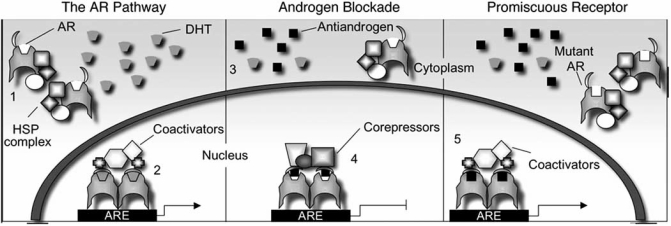
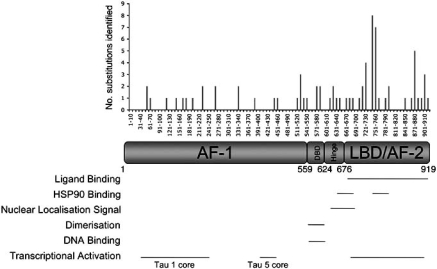
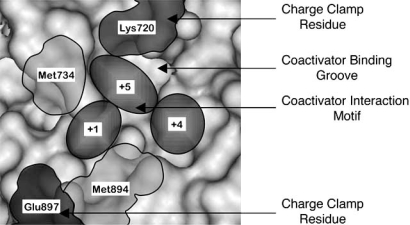
Prostate tumour growth is almost always dependent upon the androgen receptor pathway and hence therapies aimed at blocking this signalling axis are useful tools in the management of this disease. Unfortunately such therapies invariably fail; and the tumour progresses to an "androgen-independent" stage. In such cases androgen receptor expression is almost always maintained and much evidence exists to suggest that it may still be driving growth. One mechanism by which the receptor is thought to remain active is mutation. This review summarises the present data on androgen receptor mutations in prostate cancer, and how such substitutions offer a growth advantage by affecting cofactor interactions or by reducing ligand specificity. Such alterations appear to have a subsequent effect upon gene expression suggesting that tumours may "behave" differently dependent upon the ligand promoting growth and if a mutation is present.
Overview
The claims and statistics of this paper haven’t been checked yet.
Run the check — free, no account needed. It reads the open-access text and checks the sources it cites.
Integrity signals
Registry
Cites
Statistics
Figures
Verification
Claims the paper makes
The claims and statistics of this paper haven’t been checked yet.
Run the check — free, no account needed. It reads the open-access text and checks the sources it cites.
Claims other papers make about this one
Each is checked against this paper’s own text: does it say what the citing paper says it does?
In the citing paper
“Activating mutations of the AR have the capacity to create a promiscuous receptor, alter interactions with coregulatory proteins, and impair intramolecular N-C interactions (71).”
From Minireview: Alternative Activation Pathways for the Androgen Receptor in Prostate Cancer (2011) · cites this paper as [71]
In the citing paper
“Approximately 70 different missense mutations have been described in patient samples, with varying consequences upon AR activity.”
From Minireview: Alternative Activation Pathways for the Androgen Receptor in Prostate Cancer (2011) · cites this paper as [71]
Self-check
Percentages, sums and reported differences re-computed from the paper’s own numbers.
The self-check needs the paper’s full text.
Citations
Cites
The nuclear receptor superfamily: the second decade
Mangelsdorf, D. J., Thummel, C., Beato, M., Herrlich, P., Schütz, G., Umesono, K., Blumberg, B., Kastner, P., Mark, M., Chambon, P., et al. (1995) · Cell · doi:10.1016/0092-8674(95)90199-x · Cited by 6,964
Gene regulation by steroid hormones
Beato, M. (1989) · Cell · doi:10.1016/0092-8674(89)90237-7 · Cited by 3,383
Molecular basis of agonism and antagonism in the oestrogen receptor
Brzozowski, A. M., Pike, A. C. W., Dauter, Z., Hubbard, R. E., Bonn, T., Engström, O., Öhman, L., Greene, G. L., Gustafsson, J.-Å., & Carlquist, M. (1997) · Nature · doi:10.1038/39645 · Cited by 3,355
MOLECULAR MECHANISMS OF ACTION OF STEROID/THYROID RECEPTOR SUPERFAMILY MEMBERS
Tsai, M., & O’Malley, B. W. (1994) · Annual Review of Biochemistry · doi:10.1146/annurev.bi.63.070194.002315 · Cited by 2,887
Androgen receptor gene mutations in X-linked spinal and bulbar muscular atrophy
Spada, A. L., Wilson, E. M., Lubahn, D. B., Harding, A., & Fischbeck, K. (1991) · Nature · doi:10.1038/352077a0 · Cited by 2,801
The development of androgen-independent prostate cancer.
Feldman, B. J., & Feldman, D. (2001) · Nature reviews. Cancer · doi:10.1038/35094009 · Cited by 2,326
A signature motif in transcriptional co-activators mediates binding to nuclear receptors
Heery, D. M., Kalkhoven, E., Hoare, S., & Parker, M. G. (1997) · Nature · doi:10.1038/42750 · Cited by 2,128
Steroid Receptor Interactions with Heat Shock Protein and Immunophilin Chaperones*
Pratt, W. B., & Toft, D. O. (1997) · Endocrine Reviews · doi:10.1210/edrv.18.3.0303 · Cited by 1,791
Mutation of the Androgen-Receptor Gene in Metastatic Androgen-Independent Prostate Cancer
Taplin, M., Bubley, G. J., Shuster, T. D., Frantz, M. E., Spooner, A. E., Ogata, G. K., Keer, H. N., & Balk, S. P. (1995) · New England Journal of Medicine · doi:10.1056/nejm199505253322101 · Cited by 1,243
Crystal structure of the RAR-γ ligand-binding domain bound to all-trans retinoic acid
Renaud, J., Rochel, N., Ruff, M., Vivat, V., Chambon, P., Gronemeyer, H., & Moras, D. (1995) · Nature · doi:10.1038/378681a0 · Cited by 1,118
Pike, A. C. W., Brzozowski, A. M., Hubbard, R. E., Bonn, T., Thorsell, A., Engström, O., Ljunggren, J., Gustafsson, J., & Carlquist, M. (1999) · The EMBO Journal · doi:10.1093/emboj/18.17.4608 · Cited by 990
A canonical structure for the ligand-binding domain of nuclear receptors
Wurtz, J., Bourguet, W., Renaud, J., Vivat, V., Chambon, P., Moras, D., & Gronemeyer, H. (1996) · Nature Structural Biology · doi:10.1038/nsb0196-87 · Cited by 986
Determinants of target gene specificity for steroid/thyroid hormone receptors
Umesono, K., & Evans, R. M. (1989) · Cell · doi:10.1016/0092-8674(89)90051-2 · Cited by 948
Structure and specificity of nuclear receptor–coactivator interactionsPreprint
Darimont, B. D., Wagner, R. L., Apriletti, J. W., Stallcup, M. R., Kushner, P. J., Baxter, J. D., Fletterick, R. J., & Yamamoto, K. R. (1998) · Genes & Development · doi:10.1101/gad.12.21.3343 · Cited by 921
The crystal structure of the nuclear receptor for vitamin D bound to its natural ligand
Rochel, N., Wurtz, J. M., Mitschler, A., Klaholz, B., & Moras, D. (2000) · Molecular Cell · doi:10.1016/s1097-2765(00)80413-x · Cited by 842
Formation of the Androgen Receptor Transcription Complex
Shang, Y., Myers, M., & Brown, M. A. (2002) · Molecular Cell · doi:10.1016/s1097-2765(02)00471-9 · Cited by 673
Atomic structure of progesterone complexed with its receptor
Williams, S. P., & Sigler, P. B. (1998) · Nature · doi:10.1038/30775 · Cited by 659
The nuclear receptor superfamily
Robinson‐Rechavi, M., Escrivá, H., & Laudet, V. (2003) · Journal of Cell Science · doi:10.1242/jcs.00247 · Cited by 615
Structural Evidence for Ligand Specificity in the Binding Domain of the Human Androgen Receptor
Matias, P. M., Donner, P., Coelho, R., Thomaz, M., Peixoto, C., Macedo, S., Otto, N., Joschko, S., Scholz, P., Wegg, A., et al. (2000) · Journal of Biological Chemistry · doi:10.1074/jbc.m004571200 · Cited by 608
Mader, S., Kumar, V., de Verneuil, H., & Chambon, P. (1989) · Nature · doi:10.1038/338271a0 · Cited by 500
Sack, J. S., Kish, K. F., Wang, C., Attar, R. M., Kiefer, S. E., An, Y., Wu, G. Y., Scheffler, J. E., Salvati, M. E., Krystek, S. R., et al. (2001) · Proceedings of the National Academy of Sciences · doi:10.1073/pnas.081565498 · Cited by 491
The Promoter of the Prostate-Specific Antigen Gene Contains a Functional Androgen Responsive Element
Riegman, P. H. J., Vlietstra, R. J., van der Korput, J. A. G. M., Brinkmann, A. O., & Trapman, J. (1991) · Molecular Endocrinology · doi:10.1210/mend-5-12-1921 · Cited by 448
Kazemi‐Esfarjani, P., Trifiro, M. A., & Pinsky, L. (1995) · Human Molecular Genetics · doi:10.1093/hmg/4.4.523 · Cited by 447
Veldscholte, J., Berrevoets, C., Ris‐Stalpers, C., Kuiper, G. G. J. M., Jenster, G. W., Trapman, J., Brinkmann, A. O., & Mulder, E. (1992) · The Journal of Steroid Biochemistry and Molecular Biology · doi:10.1016/0960-0760(92)90401-4 · Cited by 442
He, B., Kemppainen, J., & Wilson, E. M. (2000) · Journal of Biological Chemistry · doi:10.1074/jbc.m002807200 · Cited by 441
The structure of the nuclear hormone receptors
Kumar, R., & Thompson, E. B. (1999) · Steroids · doi:10.1016/s0039-128x(99)00014-8 · Cited by 433
Jenster, G., van der Korput, H. A. G. M., Trapman, J., & Brinkmann, A. O. (1995) · Journal of Biological Chemistry · doi:10.1074/jbc.270.13.7341 · Cited by 419
Cleutjens, K. B. J. M., Eekelen, C. C. E.-V., van der Korput, H. A. G. M., Brinkmann, A. O., & Trapman, J. (1996) · Journal of Biological Chemistry · doi:10.1074/jbc.271.11.6379 · Cited by 408
Structural basis of androgen receptor binding to selective androgen response elements
Shaffer, P. L., Jivan, A., Dollins, D. E., Claessens, F., & Gewirth, D. T. (2004) · Proceedings of the National Academy of Sciences · doi:10.1073/pnas.0401123101 · Cited by 400
Egea, P. F., Mitschler, A., Rochel, N., Ruff, M., Chambon, P., & Moras, D. (2000) · The EMBO Journal · doi:10.1093/emboj/19.11.2592 · Cited by 348
Ham, J., Thomson, A. A., Needham, M., Webb, P., & Parker, M. G. (1988) · Nucleic Acids Research · doi:10.1093/nar/16.12.5263 · Cited by 339
Hormonal, cellular, and molecular regulation of normal and neoplastic prostatic development
Cunha, G. R., Ricke, W. A., Thomson, A. A., Marker, P. C., Risbridger, G. P., Hayward, S. W., Wang, Y. Z., Donjacour, A. A., & Kurita, T. (2004) · The Journal of Steroid Biochemistry and Molecular Biology · doi:10.1016/j.jsbmb.2004.10.017 · Cited by 322
Zhou, Z. X., Sar, M., Simental, J. A., Lane, M. V., & Wilson, E. M. (1994) · Journal of Biological Chemistry · doi:10.1016/s0021-9258(17)36806-0 · Cited by 312
The androgen receptor gene mutations database (ARDB): 2004 update
Gottlieb, B., Beitel, L. K., Wu, J. H., & Trifiro, M. A. (2004) · Human Mutation · doi:10.1002/humu.20044 · Cited by 311
Hsing, A. W., Gao, Y., Wu, G., Wang, X., Deng, J., Chen, Y., Sesterhenn, I. A., Mostofi, F. K., Bénichou, J., & Chang, C. (2000) · PubMed · Cited by 311
Androgen receptor mutations in prostate cancer.
Barrack, E. R. (1996) · PubMed · Cited by 300
Tyagi, R. K., Lavrovsky, Y., Ahn, S., Song, C. S., Chatterjee, B., & Roy, A. K. (2000) · Molecular Endocrinology · doi:10.1210/mend.14.8.0497 · Cited by 291
Cato, A. C., Henderson, D., & Ponta, H. (1987) · The EMBO Journal · doi:10.1002/j.1460-2075.1987.tb04763.x · Cited by 278
The androgen receptor gene mutations database
Gottlieb, B. (1996) · Nucleic Acids Research · doi:10.1093/nar/24.1.151 · Cited by 271
Androgen receptor mutations in prostate cancer.
Marcelli, M., Ittmann, M., Mariani, S., Sutherland, R. W., Nigam, R., Murthy, L., Zhao, Y., DiConcini, D., Puxeddu, E., Esen, A., et al. (2000) · PubMed · Cited by 264
Crystal Structure of the Ligand Binding Domain of the Human Nuclear Receptor PPARγ
Uppenberg, J., Svensson, C., Jaki, M., Bertilsson, G., Jendeberg, L., & Berkenstam, A. L. (1998) · Journal of Biological Chemistry · doi:10.1074/jbc.273.47.31108 · Cited by 261
Androgen Receptor Structural and Functional Elements: Role and Regulation in Prostate Cancer
Dehm, S. M., & Tindall, D. J. (2007) · Molecular Endocrinology · doi:10.1210/me.2007-0223 · Cited by 252
Androgen receptor CAG repeat lengths in prostate cancer: correlation with age of onset
Hardy, D. O., Scher, H. I., Bogenreider, T., Sabbatini, P. J., Zhang, Z., Nanus, D. M., & Catterall, J. F. (1996) · The Journal of Clinical Endocrinology & Metabolism · doi:10.1210/jcem.81.12.8954049 · Cited by 248
Recognition and Accommodation at the Androgen Receptor Coactivator Binding Interface
Hur, E., Pfaff, S. J., Payne, E. S., Grøn, H., Buehrer, B. M., & Fletterick, R. J. (2004) · PLoS Biology · doi:10.1371/journal.pbio.0020274 · Cited by 234
Langley, E., Kemppainen, J. A., & Wilson, E. M. (1998) · Journal of Biological Chemistry · doi:10.1074/jbc.273.1.92 · Cited by 233
Structural and functional consequences of glutamine tract variation in the androgen receptor
Buchanan, G. (2004) · Human Molecular Genetics · doi:10.1093/hmg/ddh181 · Cited by 225
Dahlman‐Wright, K., Wright, A. P. H., Gustafsson, J.-Α., & Carlstedt‐Duke, J. (1991) · Journal of Biological Chemistry · doi:10.1016/s0021-9258(18)49960-7 · Cited by 221
Hsiao, P., Lin, D., Nakao, R., & Chang, C. (1999) · Journal of Biological Chemistry · doi:10.1074/jbc.274.29.20229 · Cited by 221
Modulation of Androgen Receptor Activation Function 2 by Testosterone and Dihydrotestosterone
Askew, E. B., Gampe, R. T., Stanley, T. B., Faggart, J. L., & Wilson, E. M. (2007) · Journal of Biological Chemistry · doi:10.1074/jbc.m703268200 · Cited by 211
Doesburg, P., Kuil, C. W., Berrevoets, C., Steketee, K., Faber, P. W., Mulder, E., Brinkmann, A. O., & Trapman, J. (1997) · Biochemistry · doi:10.1021/bi961775g · Cited by 209
Lu, S., Tsai, S. Y., & Tsai, M. (1997) · PubMed · Cited by 174
Dependence of Selective Gene Activation on the Androgen Receptor NH2- and COOH-terminal Interaction
He, B., Lee, L. W., Minges, J. T., & Wilson, E. M. (2002) · Journal of Biological Chemistry · doi:10.1074/jbc.m202809200 · Cited by 168
Molecular Determinants of the Estrogen Receptor-Coactivator Interface
Mak, H. Y., Hoare, S., Henttu, P. M. A., & Parker, M. G. (1999) · Molecular and Cellular Biology · doi:10.1128/mcb.19.5.3895 · Cited by 166
Protein Secretion and Secretory Processes in Male Accessory Sex Glands
Aumüller, G., & Seitz, J. (1990) · International review of cytology · doi:10.1016/s0074-7696(08)60660-9 · Cited by 154
Haelens, A., Tanner, T., Denayer, S., Callewaert, L., & Claessens, F. (2007) · Cancer Research · doi:10.1158/0008-5472.can-06-1701 · Cited by 153
Functional analysis of 44 mutant androgen receptors from human prostate cancer.
Shi, X., Ma, A., Xia, L. P., Kung, H.-J., & White, R. D. (2002) · PubMed · Cited by 150
Androgen Receptor: Structural Domains and Functional Dynamics after Ligand‐Receptor Interaction
Roy, A. K., Tyagi, R. K., Song, C. S., Lavrovsky, Y., Ahn, S., Oh, T., & Chatterjee, B. (2001) · Annals of the New York Academy of Sciences · doi:10.1111/j.1749-6632.2001.tb04001.x · Cited by 132
Han, G., Foster, B. A., Mistry, S. G., Buchanan, G., Harris, J. M., Tilley, W. D., & Greenberg, N. M. (2001) · Journal of Biological Chemistry · doi:10.1074/jbc.m008207200 · Cited by 123
Freedman, L. P., & Luisi, B. F. (1993) · Journal of Cellular Biochemistry · doi:10.1002/jcb.240510205 · Cited by 122
Buchanan, G., Yang, M., Harris, J. M., Nahm, H. S., Han, G., Moore, N. L. T., Bentel, J. M., Matusik, R. J., Horsfall, D. J., Marshall, V. R., et al. (2001) · Molecular Endocrinology · doi:10.1210/mend.15.1.0581 · Cited by 122
Distinct recognition modes of FXXLF and LXXLL motifs by the androgen receptor
Dubbink, H. J., Hersmus, R., Verma, C. S., van der Korput, H. A. G. M., Berrevoets, C. A., van Tol, J., Ziel-van der Made, A. C. J., Brinkmann, A. O., Pike, A. C. W., & Trapman, J. (2004) · Molecular Endocrinology · doi:10.1210/me.2003-0375 · Cited by 118
Androgen receptor corepressors: An overview
Wang, L., Hsu, C., & Chang, C. (2004) · The Prostate · doi:10.1002/pros.20170 · Cited by 115
Induced α-Helix Structure in AF1 of the Androgen Receptor upon Binding Transcription Factor TFIIF
Kumar, R., Betney, R., Li, J., Thompson, E. B., & McEwan, I. J. (2004) · Biochemistry · doi:10.1021/bi035934p · Cited by 107
Transcriptional regulation of prostate kallikrein-like genes by androgen
Wolf, D. A., Schulz, P. J., & Fittler, F. (1992) · Molecular Endocrinology · doi:10.1210/mend.6.5.1376410 · Cited by 98
Skeletal muscle response to tenotomy
Jamali, A. A., Afshar, P., Abrams, R. A., & Lieber, R. L. (2000) · Muscle & Nerve · doi:10.1002/(sici)1097-4598(200006)23:6 · Cited by 97
Duff, J. M., & McEwan, I. J. (2005) · Molecular Endocrinology · doi:10.1210/me.2005-0231 · Cited by 92
Science behind total androgen blockade: from gene to combination therapy.
Labrie, F., Bèlanger, A., Dupont, A., The, V. L., Simard, J., & Labrie, C. (1993) · PubMed · Cited by 91
Mechanisms of androgen receptor signalling via steroid receptor coactivator-1 in prostate.
Powell, S. M., Christiaens, V., Voulgaraki, D., Waxman, J., Claessens, F., & Bevan, C. L. (2004) · Endocrine Related Cancer · doi:10.1677/erc.0.0110117 · Cited by 90
Verrijdt, G., Schoenmakers, E., Alen, P., Haelens, A., Peeters, B., Rombauts, W., & Claessens, F. (1999) · Molecular Endocrinology · doi:10.1210/mend.13.9.0347 · Cited by 85
Functional domains of the human androgen receptor
Jenster, G., van der Korput, J. A. G. M., Trapman, J., & Brinkmann, A. O. (1992) · The Journal of Steroid Biochemistry and Molecular Biology · doi:10.1016/0960-0760(92)90402-5 · Cited by 80
McEwan, I. J., Lavery, D. N., Fischer, K., & Watt, K. (2007) · Nuclear Receptor Signaling · doi:10.1621/nrs.05001 · Cited by 80
Brooke, G. N., Parker, M. G., & Bevan, C. L. (2008) · Oncogene · doi:10.1038/sj.onc.1210955 · Cited by 79
Gregory, C. W., Johnson, R. T., Presnell, S. C., Mohler, J. L., & French, F. S. (2001) · Journal of Andrology · doi:10.1002/j.1939-4640.2001.tb02213.x · Cited by 68
Endocrine Therapy for Prostate Cancer
Labrie, F. (1991) · Endocrinology and Metabolism Clinics of North America · doi:10.1016/s0889-8529(18)30247-0 · Cited by 65
McDonald, S. M., Brive, L., Agus, D. B., Scher, H. I., & Ely, K. R. (2000) · PubMed · Cited by 64
Berrevoets, C., Veldscholte, J., & Mulder, E. A. (1993) · The Journal of Steroid Biochemistry and Molecular Biology · doi:10.1016/0960-0760(93)90313-l · Cited by 63
Steroid/nuclear receptor coactivators
Chen, J. D. (2000) · Vitamins and hormones · doi:10.1016/s0083-6729(00)58032-7 · Cited by 61
Nuclear receptors spring into action
Parker, M. G., & White, R. (1996) · Nature Structural Biology · doi:10.1038/nsb0296-113 · Cited by 61
Ozers, M. S., Marks, B. D., Gowda, K., Kupcho, K. R., Ervin, K. M., Rosier, T. D., Qadir, N., Eliason, H. C., Riddle, S. M., & Shekhani, M. S. (2006) · Biochemistry · doi:10.1021/bi061321b · Cited by 59
Callewaert, L., Verrijdt, G., Christiaens, V., Haelens, A., & Claessens, F. (2003) · Journal of Biological Chemistry · doi:10.1074/jbc.m210744200 · Cited by 59
Moilanen, A., Rouleau, N., Ikonen, T., Palvimo, J. J., & Jänne, O. A. (1997) · FEBS Letters · doi:10.1016/s0014-5793(97)00791-6 · Cited by 56
Bourguet, W., Ruff, M., Bonnier, D., Granger, F., Boeglin, M., Chambon, P., Moras, D., & Gronemeyer, H. (1995) · Protein Expression and Purification · doi:10.1006/prep.1995.1079 · Cited by 38
Whitaker, H. C., Hanrahan, S. J., Totty, N., Gamble, S. C., Waxman, J., Cato, A. C. B., Hurst, H. C., & Bevan, C. L. (2004) · Clinical Cancer Research · doi:10.1158/1078-0432.ccr-04-0388 · Cited by 37
Lavery, D. N., & McEwan, I. J. (2006) · Biochemical Society Transactions · doi:10.1042/bst0341054 · Cited by 36
Tanner, T., Claessens, F., & Haelens, A. (2004) · Annals of the New York Academy of Sciences · doi:10.1196/annals.1329.068 · Cited by 34
Research works printed but not linked: 3
- [59]Brooks J Walsh P A.R Darracott Vaughan E Wein A Anatomy of the lower urinary tract and male genitalia Campbell's Urology 2002 London Saunders 41 80
- [64]Shepherd DL Harris M Thompson I Syrigos K Radical Prostatectomy in the management of localised prostate cancer Prostate Cancer: Biology, Diagnosis and Management 2001 Oxford Oxford University Press 229 242
- [72]Taplin M-E Bubley GJ Shuster TD Frantz ME Spooner AE Ogata GK Keer HN Balk SP Mutation of the androgen-receptor gene in metastatic androgen-independent prostate cancer N. Engl. J. Med 1995 332 1393 1398 7723794
Cited by
Sorted by citations
Bisphenol A (BPA) and cell signaling pathways
Murata, M., & Kang, J. (2017) · Biotechnology Advances · doi:10.1016/j.biotechadv.2017.12.002 · Cited by 366
Drug resistance in metastatic castration-resistant prostate cancer
Šeruga, B., Ocaña, A., & Tannock, I. F. (2010) · Nature Reviews Clinical Oncology · doi:10.1038/nrclinonc.2010.136 · Cited by 346
Partners in crime: deregulation of AR activity and androgen synthesis in prostate cancer
Knudsen, K. E., & Penning, T. M. (2010) · Trends in Endocrinology and Metabolism · doi:10.1016/j.tem.2010.01.002 · Cited by 291
Steroid Hormone Receptors in Prostate Cancer: A Hard Habit to Break?
Attard, G., Cooper, C. S., & de Bono, J. S. (2009) · Cancer Cell · doi:10.1016/j.ccr.2009.11.006 · Cited by 242
Shen, Z., Zhou, L., Zhang, C., & Xu, J. (2019) · Cancer Letters · doi:10.1016/j.canlet.2019.10.006 · Cited by 194
Metadata
- Authors
- Brooke, G., & Bevan, C.
- Affiliations
- Imperial College London (GB)
- Corresponding author
- Bevan, C.
- ORCID
- Venue
- Current Genomics
- Publisher
- Bentham Science Publishers Ltd.
- Published
- 2009-03-01
- Volume
- 10
- Issue
- 1
- Pages
- 18-25
- ISSN
- 1389-2029 (ISSN-L)
- PMC
- PMC2699836
- OpenAlex
- W2082107721
- Cited by
- 181
- References
- 83
- Citations by year
- 2026: 4 · 2025: 8 · 2024: 5 · 2023: 8 · 2022: 7 · 2021: 12 · 2020: 11 · 2019: 8 · 2018: 14 · 2017: 7 · 2016: 11 · 2015: 17 · 2014: 13 · 2013: 12 · 2012: 12
- FWCI
- 12.39
- Type
- journal article
- Language
- en
- Open access
- green
- www.ncbi.nlm.nih.gov
- Licence
- cc-by
- Locations
- Current Genomics (publishedVersion)
- Europe PMC (PubMed Central) (publishedVersion, cc-by)
- PubMed Central (publishedVersion, cc-by)
- PubMed (publishedVersion)
- Open Access at Essex (University of Essex) (submittedVersion)
- Topics
- Life Sciences › Biochemistry, Genetics and Molecular Biology › Cancer Research › Prostate Cancer Treatment and Research
- Health Sciences › Medicine › Urology › Prostate Cancer Diagnosis and Treatment
- Life Sciences › Biochemistry, Genetics and Molecular Biology › Molecular Biology › Chromatin Remodeling and Cancer
- Keywords
- androgen receptor, androgen receptor mutations, prostate cancer progression, castration-resistant prostate cancer, androgen receptor signaling, cofactor interactions, ligand specificity, gene expression, androgen receptor antagonists
About these checks
Registry, retraction, Cites and statistics results are computed, not judged, with one exception: a printed reference that no index lists is read once by a model before it counts as a citation error. Claims are extracted by a model and kept only when their quote appears verbatim in the text; each cited source is then checked, with a model’s help, for whether it says what the claim relies on. Those verdicts can be wrong — read the claim’s quote and the cited source before relying on one.
Statistics and arithmetic are recomputed, not judged.
Confidence bands are shown only for fields calibrated on our annotated test set. None is calibrated yet, so no band is shown.
What counts as a claim ›How we measure confidence ›How we check this ›
Are you an author, or do you see a problem with this page? Request a review
