

The DOI matches its Crossref record; 85 of the 85 references it cites were found in a registry or an index.
The role of androgen receptor mutations in prostate cancer progression.
Open accessAbstract
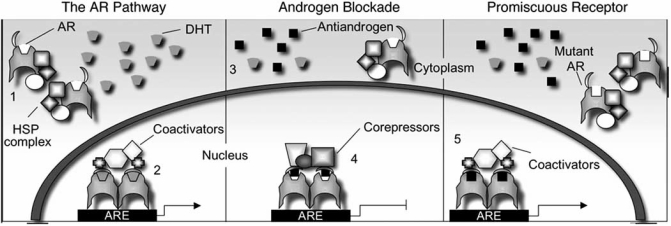
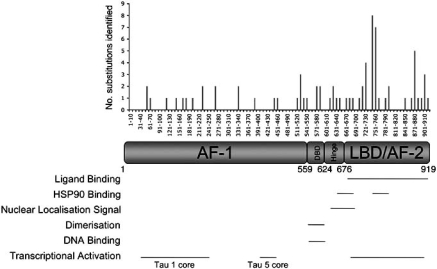
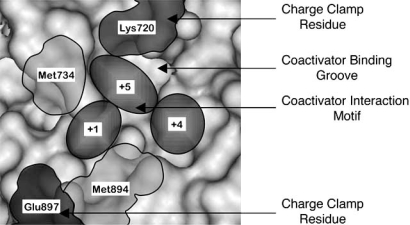
Prostate tumour growth is almost always dependent upon the androgen receptor pathway and hence therapies aimed at blocking this signalling axis are useful tools in the management of this disease. Unfortunately such therapies invariably fail; and the tumour progresses to an "androgen-independent" stage. In such cases androgen receptor expression is almost always maintained and much evidence exists to suggest that it may still be driving growth. One mechanism by which the receptor is thought to remain active is mutation. This review summarises the present data on androgen receptor mutations in prostate cancer, and how such substitutions offer a growth advantage by affecting cofactor interactions or by reducing ligand specificity. Such alterations appear to have a subsequent effect upon gene expression suggesting that tumours may "behave" differently dependent upon the ligand promoting growth and if a mutation is present.
Overview
The claims and statistics of this paper haven’t been checked yet.
Run the check — free, no account needed. It reads the open-access text and checks the sources it cites.
Integrity signals
Registry
Cites
Statistics
Figures
Verification
Claims the paper makes
The claims and statistics of this paper haven’t been checked yet.
Run the check — free, no account needed. It reads the open-access text and checks the sources it cites.
Claims other papers make about this one
Each is checked against this paper’s own text: does it say what the citing paper says it does?
In the citing paper
“Activating mutations of the AR have the capacity to create a promiscuous receptor, alter interactions with coregulatory proteins, and impair intramolecular N-C interactions (71).”
From Minireview: Alternative Activation Pathways for the Androgen Receptor in Prostate Cancer (2011) · cites this paper as [71]
In the citing paper
“Approximately 70 different missense mutations have been described in patient samples, with varying consequences upon AR activity.”
From Minireview: Alternative Activation Pathways for the Androgen Receptor in Prostate Cancer (2011) · cites this paper as [71]
Self-check
Percentages, sums and reported differences re-computed from the paper’s own numbers.
The self-check needs the paper’s full text.
Citations
Cites
The nuclear receptor superfamily: the second decade
Mangelsdorf, D. J., Thummel, C., Beato, M., Herrlich, P., Schütz, G., Umesono, K., Blumberg, B., Kastner, P., Mark, M., Chambon, P., et al. (1995) · Cell · doi:10.1016/0092-8674(95)90199-x · Cited by 6,964
Gene regulation by steroid hormones
Beato, M. (1989) · Cell · doi:10.1016/0092-8674(89)90237-7 · Cited by 3,383
Molecular basis of agonism and antagonism in the oestrogen receptor
Brzozowski, A. M., Pike, A. C. W., Dauter, Z., Hubbard, R. E., Bonn, T., Engström, O., Öhman, L., Greene, G. L., Gustafsson, J.-Å., & Carlquist, M. (1997) · Nature · doi:10.1038/39645 · Cited by 3,355
MOLECULAR MECHANISMS OF ACTION OF STEROID/THYROID RECEPTOR SUPERFAMILY MEMBERS
Tsai, M., & O’Malley, B. W. (1994) · Annual Review of Biochemistry · doi:10.1146/annurev.bi.63.070194.002315 · Cited by 2,887
Androgen receptor gene mutations in X-linked spinal and bulbar muscular atrophy
Spada, A. L., Wilson, E. M., Lubahn, D. B., Harding, A., & Fischbeck, K. (1991) · Nature · doi:10.1038/352077a0 · Cited by 2,801
The development of androgen-independent prostate cancer.
Feldman, B. J., & Feldman, D. (2001) · Nature reviews. Cancer · doi:10.1038/35094009 · Cited by 2,326
A signature motif in transcriptional co-activators mediates binding to nuclear receptors
Heery, D. M., Kalkhoven, E., Hoare, S., & Parker, M. G. (1997) · Nature · doi:10.1038/42750 · Cited by 2,128
Steroid Receptor Interactions with Heat Shock Protein and Immunophilin Chaperones*
Pratt, W. B., & Toft, D. O. (1997) · Endocrine Reviews · doi:10.1210/edrv.18.3.0303 · Cited by 1,791
Mutation of the Androgen-Receptor Gene in Metastatic Androgen-Independent Prostate Cancer
Taplin, M., Bubley, G. J., Shuster, T. D., Frantz, M. E., Spooner, A. E., Ogata, G. K., Keer, H. N., & Balk, S. P. (1995) · New England Journal of Medicine · doi:10.1056/nejm199505253322101 · Cited by 1,243
Crystal structure of the RAR-γ ligand-binding domain bound to all-trans retinoic acid
Renaud, J., Rochel, N., Ruff, M., Vivat, V., Chambon, P., Gronemeyer, H., & Moras, D. (1995) · Nature · doi:10.1038/378681a0 · Cited by 1,118
Research works printed but not linked: 3
- [59]Brooks J Walsh P A.R Darracott Vaughan E Wein A Anatomy of the lower urinary tract and male genitalia Campbell's Urology 2002 London Saunders 41 80
- [64]Shepherd DL Harris M Thompson I Syrigos K Radical Prostatectomy in the management of localised prostate cancer Prostate Cancer: Biology, Diagnosis and Management 2001 Oxford Oxford University Press 229 242
- [72]Taplin M-E Bubley GJ Shuster TD Frantz ME Spooner AE Ogata GK Keer HN Balk SP Mutation of the androgen-receptor gene in metastatic androgen-independent prostate cancer N. Engl. J. Med 1995 332 1393 1398 7723794
Cited by
Sorted by citations
Bisphenol A (BPA) and cell signaling pathways
Murata, M., & Kang, J. (2017) · Biotechnology Advances · doi:10.1016/j.biotechadv.2017.12.002 · Cited by 366
Drug resistance in metastatic castration-resistant prostate cancer
Šeruga, B., Ocaña, A., & Tannock, I. F. (2010) · Nature Reviews Clinical Oncology · doi:10.1038/nrclinonc.2010.136 · Cited by 346
Partners in crime: deregulation of AR activity and androgen synthesis in prostate cancer
Knudsen, K. E., & Penning, T. M. (2010) · Trends in Endocrinology and Metabolism · doi:10.1016/j.tem.2010.01.002 · Cited by 291
Steroid Hormone Receptors in Prostate Cancer: A Hard Habit to Break?
Attard, G., Cooper, C. S., & de Bono, J. S. (2009) · Cancer Cell · doi:10.1016/j.ccr.2009.11.006 · Cited by 242
Shen, Z., Zhou, L., Zhang, C., & Xu, J. (2019) · Cancer Letters · doi:10.1016/j.canlet.2019.10.006 · Cited by 194
Metadata
- Authors
- Brooke, G., & Bevan, C.
- Affiliations
- Imperial College London (GB)
- Corresponding author
- Bevan, C.
- ORCID
- Venue
- Current Genomics
- Publisher
- Bentham Science Publishers Ltd.
- Published
- 2009-03-01
- Volume
- 10
- Issue
- 1
- Pages
- 18-25
- ISSN
- 1389-2029 (ISSN-L)
- PMC
- PMC2699836
- OpenAlex
- W2082107721
- Cited by
- 181
- References
- 83
- Citations by year
- 2026: 4 · 2025: 8 · 2024: 5 · 2023: 8 · 2022: 7 · 2021: 12 · 2020: 11 · 2019: 8 · 2018: 14 · 2017: 7 · 2016: 11 · 2015: 17 · 2014: 13 · 2013: 12 · 2012: 12
- FWCI
- 12.39
- Type
- journal article
- Language
- en
- Open access
- green
- www.ncbi.nlm.nih.gov
- Licence
- cc-by
- Locations
- Current Genomics (publishedVersion)
- Europe PMC (PubMed Central) (publishedVersion, cc-by)
- PubMed Central (publishedVersion, cc-by)
- PubMed (publishedVersion)
- Open Access at Essex (University of Essex) (submittedVersion)
- Topics
- Life Sciences › Biochemistry, Genetics and Molecular Biology › Cancer Research › Prostate Cancer Treatment and Research
- Health Sciences › Medicine › Urology › Prostate Cancer Diagnosis and Treatment
- Life Sciences › Biochemistry, Genetics and Molecular Biology › Molecular Biology › Chromatin Remodeling and Cancer
- Keywords
- androgen receptor, androgen receptor mutations, prostate cancer progression, castration-resistant prostate cancer, androgen receptor signaling, cofactor interactions, ligand specificity, gene expression, androgen receptor antagonists
About these checks
Registry, retraction, Cites and statistics results are computed, not judged, with one exception: a printed reference that no index lists is read once by a model before it counts as a citation error. Claims are extracted by a model and kept only when their quote appears verbatim in the text; each cited source is then checked, with a model’s help, for whether it says what the claim relies on. Those verdicts can be wrong — read the claim’s quote and the cited source before relying on one.
Statistics and arithmetic are recomputed, not judged.
Confidence bands are shown only for fields calibrated on our annotated test set. None is calibrated yet, so no band is shown.
What counts as a claim ›How we measure confidence ›How we check this ›
Are you an author, or do you see a problem with this page? Request a review
