

Chlorogenic Acid and Mental Diseases: From Chemistry to Medicine
Open accessThe DOI matches its Crossref record; 107 of the 108 references it cites were found in a registry or an index, and 1 are not checked yet.
Abstract
BACKGROUND: At present, much attention has been focused on the beneficial effects of natural products on the human health due to their high efficacy and low adverse effects. Among them, polyphenolic compounds are known as one of the most important and common classes of natural products, which possess multiple range of health-promotion effects including anti-inflammatory and antioxidant activities. A plethora of scientific evidence has shown that polyphenolic compounds possess beneficial effects on the central nervous system. METHODS: Data were collected from Web of Science (ISI Web of Knowledge), Medline, Pubmed, Scopus, Embase, and BIOSIS Previews (from 1950 to 2015), through searching of these keywords: "chlorogenic acid and mental diseases" and "chlorogenic acid and neuroprotection". RESULTS: Chlorogenic acid is known as one of the most common polyphenolic compounds, and is found in different types of fruits and vegetables, spices, wine, olive oil, as well as coffee. The potential neuroprotective effects of chlorogenic acid have been highlighted in several in vitro and in vivo studies. This review critically analyses the available scientific evidence regarding the neuroprotective effects of chlorogenic acid, and its neuropharmacological mechanisms of action. In addition, we also discuss its biosynthesis, sources, bioavailability and metabolism, to provide a broad perspective of the therapeutic implications of this compound in brain health and disease. CONCLUSION: The present review showed that chlorogenic acid possesses neuroprotective effects under the both in vitro and in vivo models.
Overview
The claims and statistics of this paper haven’t been checked yet.
Free: it reads the open-access text and checks the first 5 claims that cite a source we can check. Create a free account to check every claim.
Integrity signals
Registry
Cites
Statistics
Figures
Verification
Claims the paper makes
The claims and statistics of this paper haven’t been checked yet.
Free: it reads the open-access text and checks the first 5 claims that cite a source we can check. Create a free account to check every claim.
Claims other papers make about this one
Each is checked against this paper’s own text: does it say what the citing paper says it does?
The source backs part of the claim, not all of it — or backs it for a different population, condition or comparison.
In the citing paper
“There is controversial information regarding the ability of CGA and its metabolites to cross the BBB [214,215].”
From Effects of Coffee and Its Components on the Gastrointestinal Tract and the Brain–Gut Axis (2020) · cites this paper as [215]
Experimental — accuracy not yet measured
Self-check
Percentages, sums and reported differences re-computed from the paper’s own numbers.
The self-check needs the paper’s full text.
Citations
Cites
1 retracted
Xu, R., Kang, Q., Ren, J., Li, Z., & Xu, X. (2013) · Journal of Analytical Methods in Chemistry · doi:10.1155/2013/951319 · Cited by 40
RetractedTwo new Later Stone Age sites from the Final Pleistocene in the Falémé Valley, eastern Senegal
Ndiaye, M., Lespez, L., Tribolo, C., Rassé, M., Hadjas, I., Davidoux, S., Huysecom, É., & Douze, K. (2024) · Monash University Research Portal (Monash University) · doi:10.3929/ethz-b-000667478 · Cited by 23,868
Algebraic decay in hierarchical graphs
Garcia, A., Sonnino, G., Malek-Mansour, M.-A., & Baras, F. (1997) · doi:10.1023/a · Cited by 5,187
Chlorogenic Acid and Caffeic Acid Are Absorbed in Humans
Olthof, M. R., Katan, M. B., & Hollman, P. C. H. (2001) · The Journal of Nutrition · doi:10.1093/jn/131.1.66 · Cited by 975 · cited 1×
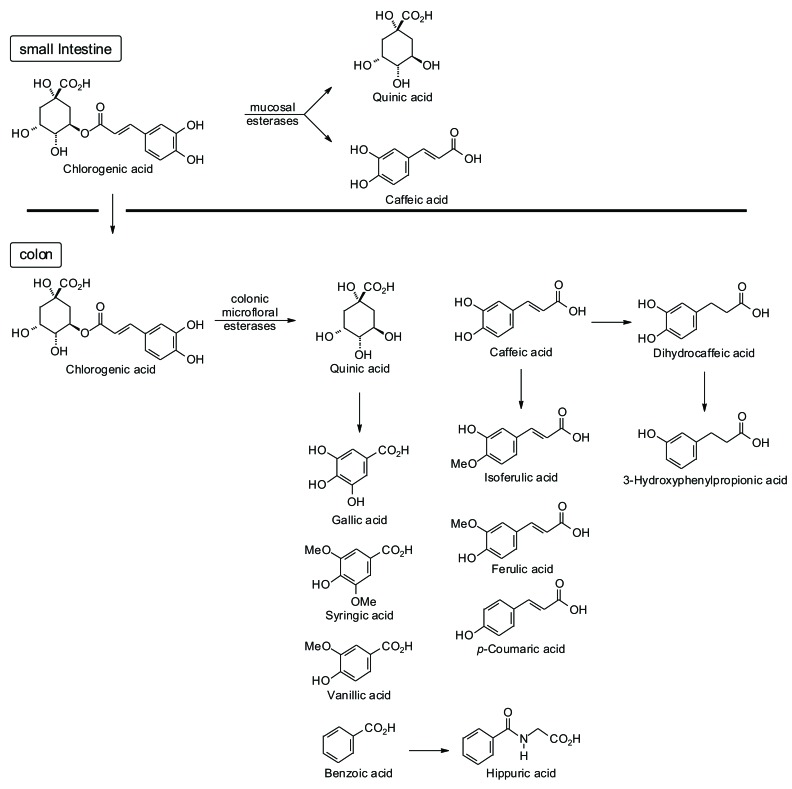
“About one-third of ingested chlorogenic acid is absorbed by the small intestine in humans [58] (see Fig.”
In vitro and in vivo antioxidant properties of chlorogenic acid and caffeic acid
Sato, Y., Itagaki, S., Kurokawa, T., Ogura, J., Kobayashi, M., Hirano, T., Sugawara, M., & Iseki, K. (2011) · International Journal of Pharmaceutics · doi:10.1016/j.ijpharm.2010.09.035 · Cited by 965
Kaempferol and inflammation: from chemistry to medicine
Devi, K. P., Malar, D. S., Nabavi, S. F., Sureda, A., Xiao, J., Nabavi, S. M., & Daglia, M. (2015) · Pharmacological Research · doi:10.1016/j.phrs.2015.05.002 · Cited by 619 · cited 1×
“Polyphenolic compounds have been shown to modulate several molecular cascades, attenuate oxidative stress, and ameliorate neuroinflammation [9-13].”
Self-citationChlorogenic Acids from Green Coffee Extract Are Highly Bioavailable in Humans
Farah, A., Monteiro, M., Donangelo, C. M., & Lafay, S. (2008) · The Journal of Nutrition · doi:10.3945/jn.108.095554 · Cited by 578
Chlorogenic Acid Bioavailability Largely Depends on Its Metabolism by the Gut Microflora in Rats
Gonthier, M.-P., Verny, M.-A., Besson, C., Rémésy, C., & Scalbert, A. (2003) · The Journal of Nutrition · doi:10.1093/jn/133.6.1853 · Cited by 523
Estimation of Scavenging Activity of Phenolic Compounds Using the ABTS•+ Assay
Nenadis, N., Wang, L.-F., Tsimidou, M., & Zhang, H.-Y. (2004) · Journal of Agricultural and Food Chemistry · doi:10.1021/jf0400056 · Cited by 493
Chlorogenic Acid, Quercetin-3-Rutinoside and Black Tea Phenols Are Extensively Metabolized in Humans
Olthof, M. R., Hollman, P. C. H., Buijsman, M. N. C. P., van Amelsvoort, J. M. M., & Katan, M. B. (2003) · The Journal of Nutrition · doi:10.1093/jn/133.6.1806 · Cited by 468 · cited 1×
“The microfloral metabolites can then reach circulation [61].”
Cited by
Items 101–153 of 153
Friligkou, E., Pathak, G. A., Tylee, D. S., Lillo, A. D., Koller, D., Cabrera‐Mendoza, B., & Polimanti, R. A. (2025) · Psychological Medicine · doi:10.1017/s0033291725001217 · Cited by 10
Deng, Q., Parker, E. J., Duan, R., & Yang, L. (2025) · Molecular Neurobiology · doi:10.1007/s12035-025-04896-4 · Cited by 11
Shazad, A., Tlais, A. Z. A., Gottardi, D., Filannino, P., Patrignani, F., Lanciotti, R., Gobbetti, M., & Cagno, R. D. (2025) · Current Research in Food Science · doi:10.1016/j.crfs.2025.101100 · Cited by 8
Basıt, A., Shahzad, R., Mueed, A., Muhammad, A., Wang, R., Liu, Y., Gong, X., Shahrokh, K., Arshad, M., & Shutian, T. (2025) · Food Bioscience · doi:10.1016/j.fbio.2025.106407 · Cited by 8
He, X., Han, X., Shen, P., Zhang, J., Tang, M., Wei, Y., Gao, Y., & Qian, S. (2025) · Chemical Engineering Journal · doi:10.1016/j.cej.2025.161908 · Cited by 5
Feng, Z., Hao, P., Yang, Y.-T., Xve, X., & Zhang, J. (2024) · Medicine · doi:10.1097/md.0000000000040218 · Cited by 5
Soliman, A., Abdelbary, S., Yonus, A., & Abdelghany, T. M. (2022) · Journal of Advanced Pharmacy Research · doi:10.21608/aprh.2022.111305.1147 · Cited by 5
Xue, M., Zhao, Y., Cui, Y. J., Yang, J., Wang, Y., & Chai, X. (2022) · Journal of Analytical Methods in Chemistry · doi:10.1155/2022/4229945 · Cited by 5
Chen, C., Wen, Y., Wang, X., Cheng, H., & Yu, J. J. (2025) · Food Chemistry · doi:10.1016/j.foodchem.2025.145278 · Cited by 4
Mohamed, A. I., Erukainure, O. L., Ismail, H., & Islam, M. S. (2025) · Food Science & Nutrition · doi:10.1002/fsn3.70527 · Cited by 4
PHENOLIC COMPOUNDS OF SERRATULA CENTAUROIDES AND ANXIOLYTIC EFFECT
Николаев, С. М. (2019) · FARMACIA · doi:10.31925/farmacia.2019.3.19 · Cited by 4
KAJIAN : KARAKTERISASI SENYAWA AKTIF DALAM KOPI ROBUSTA SEBAGAI ANTIOKSIDAN
Husniati, H. (2021) · Majalah TEGI · doi:10.46559/tegi.v12i2.6750 · Cited by 26
Adeyemo‐Salami, O. A., Afonja, O. J., Adeleke, O. F., Adedara, A. O., & Abolaji, A. O. (2021) · Journal of Public Health International · doi:10.14302/issn.2641-4538.jphi-21-3993 · Cited by 5
Gómez-Urios, C., Kalaydzhiev, H. R., Blesa, J., Esteve, M. J., Nacheva, E., Iserliyska, D., & Tomlekova, N. (2023) · Foods · doi:10.3390/foods12132616 · Cited by 3
Herrada, A. A., Rodríguez-Arriaza, F., Olate‐Briones, A., Albornoz-Muñoz, S., Faúndez-Acuña, J. Y., Rojas‐Henríquez, V., Retamal-Quinteros, L., Prado, C. E., & Escobedo, N. (2025) · Nutrients · doi:10.3390/nu17050897 · Cited by 3
Shazad, A., Tlais, A. Z. A., Cappello, C., Bacchiocchi, S. C., Filannino, P., Gobbetti, M., & Cagno, R. D. (2025) · Applied Food Research · doi:10.1016/j.afres.2025.101178 · Cited by 3
Effect of Acute Exposure of Swiss Mice to Chlorogenic Acid
Adeyemo‐Salami, O. A., Afolabi, D. A., Amuzat, A. A., Adekanye, J. O., & Oladokun, O. O. (2025) · Basic & Clinical Pharmacology & Toxicology · doi:10.1111/bcpt.70017 · Cited by 3
Rao, X., Chen, Z., Qi, X., Sun, L., Wang, J., Guan, M., An, B., Wang, S., Lin, J., & Lin, L. (2026) · Phytotherapy Research · doi:10.1002/ptr.70175 · Cited by 4
Li, T., Fili, M., Mohammadiarvejeh, P., Dawson, A. L., Hu, G., & Willette, A. A. (2024) · Nutrients · doi:10.3390/nu16244303 · Cited by 3
Retrieval of Polyphenols Using Aqueous Two-Phase Systems Based on Ethyl Lactate and Organic Salts
Perestrelo, G., Velho, P., & Macedo, E. A. (2025) · Molecules · doi:10.3390/molecules30071532 · Cited by 2
Товчига, О. В., Shtrygol', S. J., & Balia, A. A. (2018) · Clinical pharmacy · doi:10.24959/cphj.18.1459 · Cited by 3
Utilization of Nypa fruit in Alzheimer’s Disease: An In Silico Approach
Sulfahri, S., Wardhani, R., Makatita, F. A., & Iskandar, I. W. (2019) · Journal of Physics Conference Series · doi:10.1088/1742-6596/1341/2/022003 · Cited by 2
The Role of Chlorogenic Acid in Alleviating Intestinal Ischemia/Reperfusion-Induced Lung Injury
Tanyeli̇, A., Güzel, D., Akdemi̇r, F. N. E., Eraslan, E., & Güler, M. C. (2020) · DergiPark (Istanbul University) · Cited by 2
Traditional Turkish Coffee with Medicinal Effect
Senthil, R., Kavukcu, S. B., Türkmen, H., Zengin, A. C. A., & Yaşa, İ. (2021) · Borneo Journal of Pharmacy · doi:10.33084/bjop.v4i4.2378 · Cited by 2
Hou, M., Martin, J. J. J., Li, W., Dong, Z., Wang, Q., Chen, Y., Song, Y., Sun, C., & Cao, H. (2025) · Scientia Horticulturae · doi:10.1016/j.scienta.2025.114290 · Cited by 2
Bakhshinejad, B., Sabahi, A., Dehesh, T., Sarhadynejad, Z., Mehrabani, M., Khazaneha, M., Mehrbani, M., & Mehrabani, M. (2025) · Journal of Ethnopharmacology · doi:10.1016/j.jep.2025.120452 · Cited by 1
He, S., Liu, L., Wang, X.-Q., Wang, H., Fu, X., Kong, L., Wang, S., Wang, P.-K., Cai, X., & Wang, Y. (2025) · Journal of Neuroimmunology · doi:10.1016/j.jneuroim.2025.578826 · Cited by 1
Ogawa, H., Nishio, T., Yoshikawa, Y., Sadakane, K., & Yoshikawa, K. (2023) · Chemistry Letters · doi:10.1246/cl.230171 · Cited by 1
Chlorogenic acid co‐administration alleviates cisplatin‐induced peripheral neuropathy in rats
Ünel, Ç. Ç., Eroglu, E., Özatik, O., & Erol, K. (2023) · Fundamental and Clinical Pharmacology · doi:10.1111/fcp.12970 · Cited by 2
Bindi, G., Smith, A. J., Crisafulli, P., Denti, V., Bossi, E., Serrao, S., Piga, I., Sanchéz, W. S., Paglia, G., Magni, F., et al. (2024) · Pure and Applied Chemistry · doi:10.1515/pac-2024-0210 · Cited by 2
Tanasie, Ș. E., Nănescu, V., Amzoiu, E., Amzoiu, M. O., Mocanu, A. G., Ciulu-Costinescu, F., & Chirigiu, L. (2024) · Timişoara Medical Journal · doi:10.35995/tmj20240105 · Cited by 1
EDITORIAL: Neuroprotection Mechanisms and their Potential Applications
Cutuli, D. (2017) · Current Neuropharmacology · doi:10.2174/1570159x15999170208155946
CAPACIDADE ANTIOXIDANTE DE INFUSÕES DE CAFÉS DESCAFEINADOS E EPILEPSIA
Páez, L., Rettori, D., Gonçalves, I. D., Diniz, S. N., & Pereira, R. (2018) · Enciclopédia Biosfera · doi:10.18677/encibio_2018b118
Woźniak, D., Nawrot-Hadzik, I., Kozłowska, W., Ślusarczyk, S., & Matkowski, A. (2020) · Springer eBooks · doi:10.1007/978-981-13-1745-3_23-1 · Cited by 1
LEVISTICUM OFFICINALE: PHARMACOLOGICAL EFFECT OF BIOLOGICALLY ACTIVE SUBSTANCES (REVIEW)
Кубасова, Е. Д., KORELSKAYA, G. V., & Р.В., К. (2021) · Медико-фармацевтический журнал «Пульс» · doi:10.26787/nydha-2686-6838-2021-23-10-20-27
PLANT PIGMENTS IN PSYCHIATRY AND NEUROLOGY: HISTORICAL AND MODERN USES. PART I (LITERATURE REVIEW)
Bekker, R. A., & Bykov, Y. V. (2023) · Siberian Journal of Life Sciences and Agriculture · doi:10.12731/2658-6649-2023-15-5-951
Utility of phenolic acids in neurological disorders
Dassamiour, S., Bensaad, M. S., & Ghebache, W. (2024) · Elsevier eBooks · doi:10.1016/b978-0-443-18538-0.00015-9
Mohamed, S. I. A., Shaffai, A. E., Yahya, S. M. M., Mettwally, W. S. A., & Elsayed, G. H. (2024) · Oriental Pharmacy and Experimental Medicine · doi:10.1007/s13596-024-00775-w
Oyeniran, O. H., Adebayo, A. A., Ademiluyi, A. O., Ademosun, A. O., & Oboh, G. (2025) · Nutrire · doi:10.1186/s41110-025-00339-1
Partitioning of Riboflavin in Sustainable Aqueous Biphasic Systems and the Influence of Solubility
Perestrelo, G., Velho, P., & Macedo, E. A. (2025) · Journal of Chemical & Engineering Data · doi:10.1021/acs.jced.5c00460
Kroupitski, Y., Barak, T., Rajasekharan, S. K., Sela, N., Harari, M., Ashkenazi, A., Shemesh, M., & Elmann, A. (2025) · Food Frontiers · doi:10.1002/fft2.70190
Yu, Y., Chen, J., Zhang, X., Wang, Y., Wang, S., Zhao, L., & Wang, Y. (2021) · Figshare · doi:10.6084/m9.figshare.14708057
Yu, Y., Chen, J., Zhang, X., Wang, Y., Wang, S., Zhao, L., & Wang, Y. (2021) · Figshare · doi:10.6084/m9.figshare.14708060
Yu, Y., Chen, J., Zhang, X., Wang, Y., Wang, S., Zhao, L., & Wang, Y. (2021) · Figshare · doi:10.6084/m9.figshare.14708063
Yu, K.-J., Yang, G.-Z., Huang, J., Fei, T., Lu, X., Xu, Y. B., OuYang, J., Wang, M.-X., Zhou, H., Yang, Z., et al. (2026) · Journal of Ethnopharmacology · doi:10.1016/j.jep.2026.121693 · Cited by 1
Kuban‐Jankowska, A., Suchecki, M., & Górska‐Ponikowska, M. (2026) · Biomedicine & Pharmacotherapy · doi:10.1016/j.biopha.2026.119678 · Cited by 1
Neuroprotective Effects of Ethiopian Coffee Beans against Hyperglycemia‐induced Brain Injury in Rats
Mohamed, A. I., Olofinsan, K. A., Erukainure, O. L., Ismail, H., & Islam, M. S. (2026) · Food Science & Nutrition · doi:10.1002/fsn3.72054
Nanotechnology and Phytopharmaceuticals: A Comprehensive Outlook
Menon, G., Chaudhari, N. B., Patil, D., Magar, S. B., Salve, S., & Thejaswini, A. (2026) · Reference series in phytochemistry · doi:10.1007/978-3-031-69044-0_28-1
Green discolouration of processed artichokes: a defect caused by spoiler Pseudomonas strains
Pinto, L., Venere, D. D., Durante, M., Attolico, G., & Baruzzi, F. (2026) · LWT · doi:10.1016/j.lwt.2026.119820
Coirini, H., Kruse, M. S., Simirgiotis, M. J., Gómez, J., Tapia, A. A., & Rey, M. (2026) · Plants · doi:10.3390/plants15182872
Crossroads of well-being: oral health, neurology, neuronutrition and healthy aging
Popovskaya, K. A., Badaeva, A. V., Kosareva, A., Novikov, V. N., Ab, D., Danilov, A. B., Calabrese, V., Rashan, L. J., Isola, G., Sobin, A., et al. (2026) · Open Medicine · doi:10.1515/med-2026-1515
Murthy, H. N., Joseph, K. S., Paek, K., & Park, S.-Y. (2026) · Critical Reviews in Biotechnology · doi:10.1080/07388551.2026.2743724
Metadata
- Authors
- Nabavi, S. F., Tejada, S., Setzer, W. N., Gortzi, O., Sureda, A., Braidy, N., Daglia, M., Manayi, A., & Nabavi, S. M.
- Affiliations
- Baqiyatallah University of Medical Sciences (IR)
- Hospital Son Llatzer (ES)
- University of Alabama in Huntsville (US)
- Technological Educational Institute of Thessaly (GR)
- Research Institute of Health Sciences (ES)
- UNSW Sydney (AU)
- University of Pavia (IT)
- Tehran University of Medical Sciences (IR)
- Corresponding author
- Nabavi, Seyed Mohammad
- ORCID
- Venue
- Current Neuropharmacology
- Publisher
- Bentham Science Publishers Ltd.
- Published
- 2017-04-11
- Volume
- 15
- Issue
- 4
- Pages
- 471-479
- ISSN
- 1570-159X (ISSN-L)
- PMC
- PMC5543670
- OpenAlex
- W2316561960
- Semantic Scholar
- 8620ad71b559ac89b5aa4816e6d8d65d371882df
- Cited by
- 152
- References
- 107
- Citations by year
- 2026: 9 · 2025: 22 · 2024: 32 · 2023: 18 · 2022: 19 · 2021: 21 · 2020: 14 · 2019: 12 · 2018: 3 · 2017: 2
- FWCI
- 0.53
- Type
- journal article
- Language
- en
- Open access
- bronze
- doi.org
- Locations
- Current Neuropharmacology (publishedVersion)
- PubMed Central (publishedVersion, cc-by-nc)
- PubMed (publishedVersion)
- Funders
- Centro de Investigación Biomédica en Red-Fisiopatología de la Obesidad y Nutrición (CB12/03/, CB12/03/30038)
- Topics
- Health Sciences › Medicine › Biochemistry (medical) › Phytochemicals and Antioxidant Activities
- Health Sciences › Medicine › Complementary and alternative medicine › Medicinal Plants and Neuroprotection
- Life Sciences › Neuroscience › Neurology › Neuroprotection in Cerebral Ischemia
- Keywords
- chlorogenic acid, polyphenols, neuroprotection, mental illness, neuropharmacology, neuroprotection mechanism, bioavailability, metabolism, biosynthesis, natural products, brain health
- MeSH terms
- Animals, Antioxidants, Chlorogenic Acid, Humans, Psychotic Disorders, Neuroprotective Agents
About these checks
Registry, retraction, Cites and statistics results are computed, not judged, with one exception: a printed reference that no index lists is read once by a model before it counts as a citation error. Claims are extracted by a model and kept only when their quote appears verbatim in the text; each cited source is then checked, with a model’s help, for whether it says what the claim relies on. Those verdicts can be wrong — read the claim’s quote and the cited source before relying on one.
Statistics and arithmetic are recomputed, not judged.
Confidence bands are shown only for fields calibrated on our annotated test set. None is calibrated yet, so no band is shown.
What counts as a claim ›How we measure confidence ›How we check this ›
Are you an author, or do you see a problem with this page? Request a review
Data sources
Bibliographic data: Semantic Scholar, OpenAlex, Crossref.
Contains information from the Semantic Scholar Academic Graph Datasets, made available under the ODC Attribution License (ODC-BY 1.0).
Semantic Scholar’s data is described in: Kinney, R., et al. (2023). The Semantic Scholar Open Data Platform. arXiv:2301.10140.
