

The DOI matches its Crossref record; 111 of the 114 references it cites were found in a registry or an index, and 3 are not checked yet.
The Amyloid Cascade Hypothesis in Alzheimer’s Disease: It’s Time to Change Our Mind
Open accessAbstract
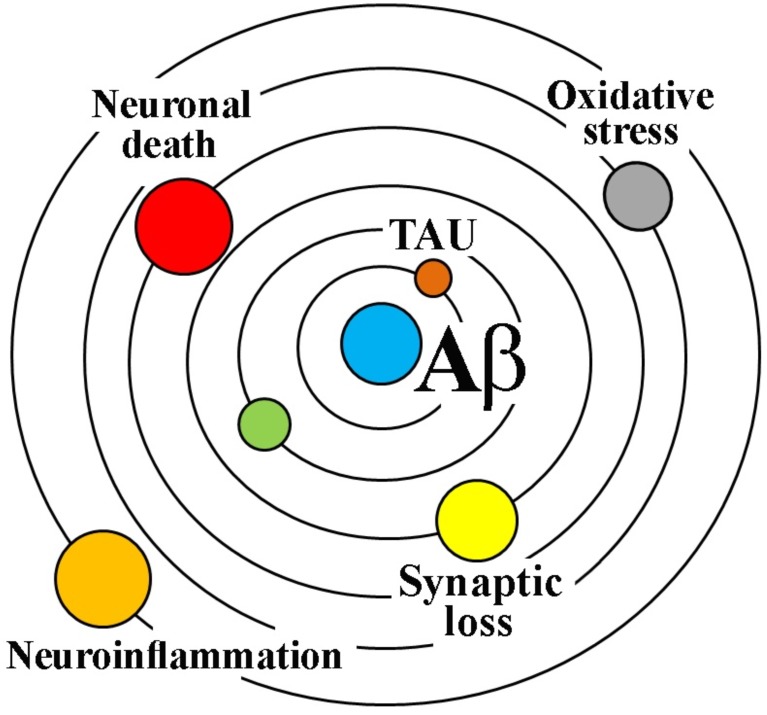
Since its discovery in 1984, the beta amyloid peptide has treaded the boards of neurosciences as the star molecule in Alzheimer's disease pathogenesis. In the last decade, however, this vision has been challenged by evidence-based medicine showing the almost complete failure of clinical trials that experimented anti-amyloid therapies with great hopes. Moreover, data have accumulated which clearly indicate that this small peptide plays a key role in the physiological processes of memory formation. In the present review, we will discuss the different aspects of the amyloid cascade hypothesis, highlighting its pros and cons, and we will analyse the results of the therapeutic approaches attempted to date that should change the direction of Alzheimer's disease research in the future.
Overview
The claims and statistics of this paper haven’t been checked yet.
Run the check — free, no account needed. It reads the open-access text and checks the sources it cites.
Integrity signals
Registry
Cites
Statistics
Figures
Verification
Claims the paper makes
The claims and statistics of this paper haven’t been checked yet.
Run the check — free, no account needed. It reads the open-access text and checks the sources it cites.
Claims other papers make about this one
Each is checked against this paper’s own text: does it say what the citing paper says it does?
The source backs part of the claim, not all of it — or backs it for a different population, condition or comparison.
In the citing paper
“Therefore, more integrative hypotheses have suggested that inflammation, excitatory‐inhibitory imbalance, or vascular impairment is involved in the series of initial reactions that eventually become chronic and result in irreversible brain dyshomeostasis, neurodegeneration, and AD [42, 66, 69].”
From Gliovascular alterations in sporadic and familial Alzheimer's disease: APOE3 Christchurch homozygote glioprotection (2023) · cites this paper as [69]
Experimental — accuracy not yet measuredThe source backs part of the claim, not all of it — or backs it for a different population, condition or comparison.
In the citing paper
“Under healthy conditions, soluble monomeric Aβ contributes to synaptic regulation, neuronal signaling, and neuroprotection through modulation of calcium homeostasis, metal ion binding, and antimicrobial defense [41–43].”
From Toward a Unified Framework in Molecular Neurobiology of Alzheimer’s Disease: Revisiting the Pathophysiological Hypotheses (2026) · cites this paper as [42]
Experimental — accuracy not yet measured
Self-check
Percentages, sums and reported differences re-computed from the paper’s own numbers.
The self-check needs the paper’s full text.
Citations
Cites
Neuropathological stageing of Alzheimer-related changes.
Braak, H., & Braak, E. (1991) · Acta Neuropathologica · doi:10.1007/bf00308809 · Cited by 16,123
Amyloid oligomers exacerbate tau pathology in a mouse model of tauopathy
Selenica, M.-L. B., Brownlow, M., Jimenez, J. P., Lee, D. C., Pena, G., Dickey, C. A., Gordon, M. N., & Morgan, D. (2013) · Neurodegenerative Diseases · doi:10.1159/000337230 · Cited by 10,359
Alzheimer's disease: the amyloid cascade hypothesis
Hardy, J. A., & Higgins, G. A. (1992) · Science · doi:10.1126/science.1566067 · Cited by 7,484
(2023) · doi:10.1126/science · Cited by 6,063
Colman (2022) · doi:10.1073/pnas · Cited by 4,370
Triple-Transgenic Model of Alzheimer’s Disease with Plaques and Tangles
Oddo, S., Caccamo, A., Shepherd, J. D., Murphy, M. P., Golde, T. E., Kayed, R., Metherate, R., Mattson, M. P., Akbari, Y., & LaFerla, F. M. (2003) · Neuron · doi:10.1016/s0896-6273(03)00434-3 · Cited by 4,126
Diffusible, nonfibrillar ligands derived from Aβ 1–42 are potent central nervous system neurotoxins
Lambert, M. P., Barlow, A. K., Chromy, B. A., Edwards, C., Freed, R., Liosatos, M., Morgan, T. E., Rozovsky, I., Trommer, B., Viola, K. L., et al. (1998) · Proceedings of the National Academy of Sciences · doi:10.1073/pnas.95.11.6448 · Cited by 3,506
The antibody aducanumab reduces Aβ plaques in Alzheimer’s disease
Sevigny, J., Chiao, P., Bussière, T., Weinreb, P. H., Williams, L., Maier, M., Dunstan, R., Salloway, S., Chen, T., Ling, Y., et al. (2016) · Nature · doi:10.1038/nature19323 · Cited by 3,059
Bloom (2014) · doi:10.1001/jamaneurol.2013.5847 · Cited by 2,194
Neurotrophic and Neurotoxic Effects of Amyloid β Protein: Reversal by Tachykinin Neuropeptides
Yankner, B. A., Duffy, L. K., & Kirschner, D. A. (1990) · Science · doi:10.1126/science.2218531 · Cited by 1,975
Research works printed but not linked: 2
- [5]Ferreira S.T. Lourenco M.V. Oliveira M.M. De Felice F.G. Soluble amyloid-β oligomers as synaptotoxins leading to cognitive impairment in Alzheimer’s disease. Front. Cell. Neurosci. 2015 26 9 191 PMC4443025 26074767
- [90]Wang H. Song L. Laird F. Wong P.C. Lee H.K. BACE1 knockouts display deficits in activity-dependent potentiation of synaptic transmission at mossy fiber to CA3 synapses in the hippocampus. J. Neurosci. 2008 28 8677 8681 [http://dx.doi.org/ 10.1523/JNEUROSCI.2440-08.2008]. 18753368 PMC2728626 · DOI
Cited by
Sorted by citations
Comprehensive Review on Alzheimer’s Disease: Causes and Treatment
Breijyeh, Z., & Karaman, R. (2020) · Molecules · doi:10.3390/molecules25245789 · Cited by 2,789
Wang, C., & Holtzman, D. M. (2020) · Neuropsychopharmacology · doi:10.1038/s41386-019-0478-5 · Cited by 615
Alzheimer’s disease: Recent treatment strategies
Vaz, M., & Silvestre, S. (2020) · European Journal of Pharmacology · doi:10.1016/j.ejphar.2020.173554 · Cited by 547
The multiplex model of the genetics of Alzheimer's disease
Sims, R., Hill, M., & Williams, J. (2020) · Nature Neuroscience · doi:10.1038/s41593-020-0599-5 · Cited by 466
GLP-1 Receptor Agonists: Beyond Their Pancreatic Effects
Zhao, X., Wang, M., Wen, Z., Lu, Z., Cui, L., Fu, C., Xue, H., Liu, Y., & Zhang, Y. (2021) · Frontiers in Endocrinology · doi:10.3389/fendo.2021.721135 · Cited by 463
Metadata
- Authors
- Ricciarelli, R., & Fedele, E.
- Affiliations
- University of Genoa (IT)
- Corresponding author
- Ricciarelli, Roberta
- Fedele, Ernesto
- Venue
- Current Neuropharmacology
- Publisher
- Bentham Science Publishers Ltd.
- Published
- 2017-07-31
- Volume
- 15
- Issue
- 6
- Pages
- 926-935
- ISSN
- 1570-159X (ISSN-L)
- PMC
- PMC5652035
- OpenAlex
- W2581177196
- Cited by
- 380
- References
- 111
- Citations by year
- 2026: 22 · 2025: 30 · 2024: 49 · 2023: 60 · 2022: 53 · 2021: 58 · 2020: 51 · 2019: 33 · 2018: 13 · 2017: 11
- FWCI
- 21.86
- Type
- journal article
- Language
- en
- Open access
- green
- www.ncbi.nlm.nih.gov
- Licence
- cc-by-nc
- Locations
- Current Neuropharmacology (publishedVersion)
- PubMed Central (publishedVersion, cc-by-nc)
- PubMed (publishedVersion)
- CINECA IRIS Institutial Research Information System (University of Genoa) (submittedVersion)
- Topics
- Life Sciences › Neuroscience › Cellular and Molecular Neuroscience › Alzheimer's disease research and treatments
- Health Sciences › Medicine › Psychiatry and Mental health › Dementia and Cognitive Impairment Research
- Life Sciences › Neuroscience › Neurology › Neuroinflammation and Neurodegeneration Mechanisms
- Keywords
- amyloid hypothesis, Alzheimer's disease, amyloid-beta, anti-amyloid therapy, clinical trial failure, memory formation, Alzheimer's disease pathogenesis
- MeSH terms
- Alzheimer Disease, Animals, Brain, Humans, Amyloid beta-Peptides
About these checks
Registry, retraction, Cites and statistics results are computed, not judged, with one exception: a printed reference that no index lists is read once by a model before it counts as a citation error. Claims are extracted by a model and kept only when their quote appears verbatim in the text; each cited source is then checked, with a model’s help, for whether it says what the claim relies on. Those verdicts can be wrong — read the claim’s quote and the cited source before relying on one.
Statistics and arithmetic are recomputed, not judged.
Confidence bands are shown only for fields calibrated on our annotated test set. None is calibrated yet, so no band is shown.
What counts as a claim ›How we measure confidence ›How we check this ›
Are you an author, or do you see a problem with this page? Request a review
