

The DOI matches its Crossref record; 59 of the 59 references it cites were found in a registry or an index.
A Comparison of Bacterial Composition in Diabetic Ulcers and Contralateral Intact Skin
Open accessAbstract
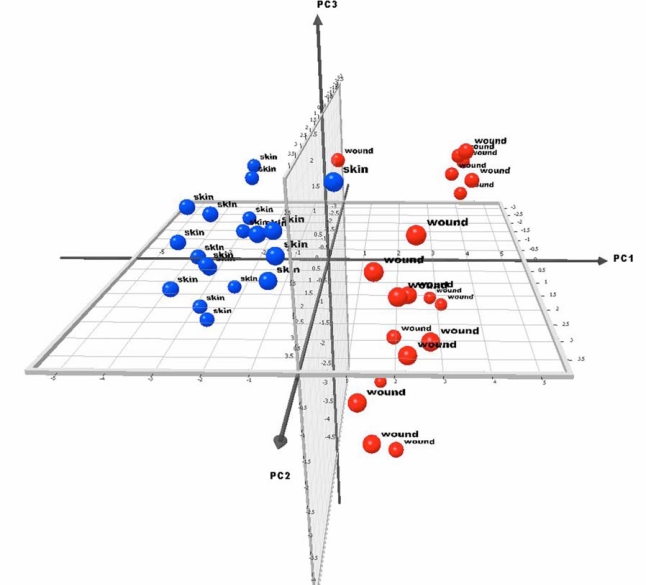
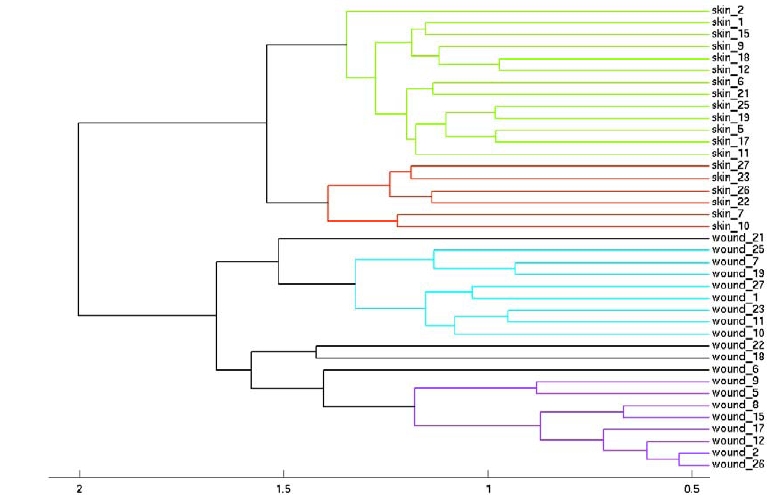
An extensive portion of the healthcare budget is allocated to chronic human infection. Chronic wounds in particular are a major contributor to this financial burden. Little is known about the types of bacteria which may contribute to the chronicity, biofilm and overall bioburden of the wound itself. In this study we compare the bacteriology of wounds and associated intact skin. Wound and paired intact skin swabs (from a contralateral location) were collected. The bacterial diversity was determined using bacterial Tag-encoded FLX amplicon pyrosequencing (bTEFAP). Diversity analysis showed intact skin to be significantly more diverse than wounds on both the species and genus levels (3% and 5% divergence). Furthermore, wounds show heightened levels of anaerobic bacteria, like Peptoniphilus , Finegoldia , and Anaerococcus , and other detrimental genera such as Corynebacterium and Staphylococcus . Although some of these and other bacterial genera were found to be common between intact skin and wounds, notable opportunistic wound pathogens were found at lower levels in intact skin. Principal Component Analysis demonstrated a clear separability of the two groups. The findings of the study not only greatly support the hypothesis of differing bacterial composition of intact skin and wounds, but also contribute additional insight into the ecology of skin and wound microflora. The increased diversity and lowered levels of opportunistic pathogens found in skin make the system highly distinguishable from wounds.
Overview
The claims and statistics of this paper haven’t been checked yet.
Run the check — free, no account needed. It reads the open-access text and checks the sources it cites.
Integrity signals
Registry
Cites
Statistics
Figures
Verification
Claims the paper makes
The claims and statistics of this paper haven’t been checked yet.
Run the check — free, no account needed. It reads the open-access text and checks the sources it cites.
Claims other papers make about this one
Each is checked against this paper’s own text: does it say what the citing paper says it does?
In the citing paper
“The diversity of the chronic wound microbiome may be substantially reduced in comparison to that of neighboring healthy skin (168), but a recent study using animal models of wound infections demonstrated that polymicrobial infection with Staphylococcus aureus and Pseudomonas aeruginosa led to more prominent inhibition of epithelialization than infection with a single species (33), suggesting that”
From Wound repair and regeneration: Mechanisms, signaling, and translation (2014) · cites this paper as [168]
In the citing paper
“Multiple studies have also emphasized the presence of bacteria and the polymicrobial nature of chronic, non-healing wounds [6], [7], [8], [9], [10], and the frequency of S. aureus and P. aeruginosa organisms has been shown to be exceedingly high [10], [11], [12], [13], [14].”
From Interactions of Methicillin Resistant Staphylococcus aureus USA300 and Pseudomonas aeruginosa in Polymicrobial Wound Infection (2013) · cites this paper as [8]
In the citing paper
“The polymicrobial nature of non-healing wounds, such as venous, pressure, and diabetic foot ulcers is well documented and established [6], [7], [8], [9], [58], [59].”
From Interactions of Methicillin Resistant Staphylococcus aureus USA300 and Pseudomonas aeruginosa in Polymicrobial Wound Infection (2013) · cites this paper as [8]
In the citing paper
“If this occurs, these microbes change their metabolism11 and a new ecology is set up with a modified microbiome.12,13”
From The Innate Immune System in Acute and Chronic Wounds (2016) · cites this paper as [13]
Self-check
Percentages, sums and reported differences re-computed from the paper’s own numbers.
The self-check needs the paper’s full text.
Citations
Cites
Basic local alignment search tool
Altschul, S. F., Gish, W., Miller, W., Myers, E. W., & Lipman, D. J. (1990) · Journal of Molecular Biology · doi:10.1006/jmbi.1990.9999 · Cited by 98,669
An introduction to ROC analysis
Fawcett, T. (2006) · Pattern Recognition Letters · doi:10.1016/j.patrec.2005.10.010 · Cited by 21,879
Costerton, J. W., Lewandowski, Z., Caldwell, D. E., Korber, D. R., & Lappin-Scott, H. M. (1995) · Annual Review of Microbiology · doi:10.1146/annurev.mi.49.100195.003431 · Cited by 4,921
Microbial diversity in the deep sea and the underexplored “rare biosphere”
Sogin, M. L., Morrison, H. G., Huber, J. A., Welch, D. B. M., Huse, S. M., Neal, P. R., Arrieta, J. M., & Herndl, G. J. (2006) · Proceedings of the National Academy of Sciences · doi:10.1073/pnas.0605127103 · Cited by 3,803
Thirteen Ways to Look at the Correlation Coefficient
Rodgers, J. L., & Nicewander, W. A. (1988) · The American Statistician · doi:10.1080/00031305.1988.10475524 · Cited by 3,004
Thirteen Ways to Look at the Correlation Coefficient
Rodgers, J. L., & Nicewander, W. A. (1988) · The American Statistician · doi:10.2307/2685263 · Cited by 2,590
Schloss, P. D., & Handelsman, J. (2005) · Applied and Environmental Microbiology · doi:10.1128/aem.71.3.1501-1506.2005 · Cited by 2,529
A Simple Generalisation of the Area Under the ROC Curve for Multiple Class Classification Problems
Hand, D. J., & Till, R. J. (2001) · Machine Learning · doi:10.1023/a:1010920819831 · Cited by 2,276
James, G. A., Swogger, E., Wolcott, R., Pulcini, E. D., Secor, P., Sestrich, J., Costerton, J. W., & Stewart, P. S. (2008) · Wound Repair and Regeneration · doi:10.1111/j.1524-475x.2007.00321.x · Cited by 1,543
Self-citationUniFrac – An online tool for comparing microbial community diversity in a phylogenetic context
Lozupone, C., Hamady, M., & Knight, R. D. (2006) · BMC Bioinformatics · doi:10.1186/1471-2105-7-371 · Cited by 1,454
Research works printed but not linked: 1
- Theodoridis S, Koutroumbas K. Pattern Recognition. 2nd. San Diego, Ca: Academic Press 2008.
Cited by
Sorted by citations
Items 101–155 of 155
Edalat, F. D., & Abdi, M. R. (2017) · International series in management science/operations research/International series in operations research & management science · doi:10.1007/978-3-319-64143-0_7 · Cited by 13
Peptostreptococcus,Finegoldia,Anaerococcus,Peptoniphilus,Veillonella, and Other Anaerobic Cocci
Song, Y., & Finegold, S. M. (2015) · ASM Press eBooks · doi:10.1128/9781555817381.ch51 · Cited by 13
Microbiological insights and dermatological applications of live biotherapeutic products
Locker, J., Serrage, H. J., Ledder, R. G., Deshmukh, S., O’Neill, C. A., & McBain, A. J. (2024) · Journal of Applied Microbiology · doi:10.1093/jambio/lxae181 · Cited by 13
Detection of microbial diversity in endocarditis using cultivation-independent molecular techniques
Wolff, T. Y., Moser, C. E., Bundgaard, H., Høiby, N., Nielsen, P. H., & Thomsen, T. R. (2011) · Scandinavian Journal of Infectious Diseases · doi:10.3109/00365548.2011.598877 · Cited by 12
Tong, K. P. S., Green, S. J., Ortiz, J., & Wu, S. (2022) · Health Science Reports · doi:10.1002/hsr2.718 · Cited by 10
Microbiome–Maternal Tract Interactions in Women with Recurrent Implantation Failure
Kumar, M., Yan, Y., Jiang, L., Sze, C.-H., Kodithuwakku, S. P., Yeung, W. S. B., & Lee, C. (2025) · Microorganisms · doi:10.3390/microorganisms13040844 · Cited by 12
Culture-Independence for Surveillance and Epidemiology
Kirkup, B. C. (2013) · Pathogens · doi:10.3390/pathogens2030556 · Cited by 9
Effects of Factors Influencing Scar Formation on the Scar Microbiome in Patients with Burns
Jung, Y., Cui, H. S., Lee, E. K., Joo, S. Y., Seo, C. H., & Cho, Y. S. (2023) · International Journal of Molecular Sciences · doi:10.3390/ijms242115991 · Cited by 9
A Possible Role of Bacterial Biofilm in the Pathogenesis of Atherosclerosis
Wolcott, R. D., Wolcott, J. J., & Palacio, C. (2012) · Journal of Bacteriology & Parasitology · doi:10.4172/2155-9597.1000127 · Cited by 8
Self-citationRole of infection in wound healing
Hussain, M. A., & Huygens, F. (2020) · Bangladesh Journal of Medical Science · doi:10.3329/bjms.v19i4.46612 · Cited by 7
Sex differences in the skin microbiome of burn scars
Jung, Y., Cui, H. S., Joo, S. Y., Lee, E. K., Seo, C. H., & Cho, Y. S. (2023) · Wound Repair and Regeneration · doi:10.1111/wrr.13088 · Cited by 7
Uberoi, A., Campbell, A. E., & Grice, E. A. (2020) · Elsevier eBooks · doi:10.1016/b978-0-12-816413-6.00012-5 · Cited by 6
Ferhaoui, N., Sebaihia, M., Sekizuka, T., & Kuroda, M. (2025) · Wound Repair and Regeneration · doi:10.1111/wrr.70074 · Cited by 5
Topical Probiotics in Diabetic Wound Healing: Emerging Therapeutic Strategies
Celo, E., Dama, A., Hasho, S., & Deda, L. (2026) · International Journal of Molecular Sciences · doi:10.3390/ijms27062826 · Cited by 5
Kim, J. H., Ahamed, A., Chen, K., Lebig, E. G., Petros, B., Saeed, S., & Martins‐Green, M. M. (2022) · Elsevier eBooks · doi:10.1016/b978-0-12-822238-6.00027-3 · Cited by 7
Jud, P., Valentin, T., Regauer, S., Gary, T., Hackl, G., Rief, P., Brodmann, M., & Hafner, F. (2017) · International Journal of Infectious Diseases · doi:10.1016/j.ijid.2017.01.010 · Cited by 5
Percival, S. L., Swann, M. J., Daly, K., Mayer, D., Moodley, P., & Chen, R. (2026) · Journal of Internal Medicine · doi:10.1111/joim.70138 · Cited by 4
Le microbiote cutané : étude de la diversité microbienne et de son rôle dans la pathogénicité
Dunyach‐Remy, C., Sotto, A., & Lavigne, J. (2015) · Revue Francophone des Laboratoires · doi:10.1016/s1773-035x(15)72821-2 · Cited by 4
THE SKIN MICROBIOTA AND ITCH: Is There a Link?
Kim, H. S., & Yosipovitch, G. (2020) · PubMed Central · Cited by 4
Berbari, E. F., Steckelberg, J. M., & Osmon, D. R. (2015) · Elsevier eBooks · doi:10.1016/b978-1-4557-4801-3.00106-5 · Cited by 4
Sanjar, F., Silliman, D. T., Johnson, I. J., Htut, Z., Peacock, T. J., Thompson, S. F., Dion, G. R., Nahid, M. A., Decker, J. F., & Leung, K. P. (2024) · Molecular Oral Microbiology · doi:10.1111/omi.12460 · Cited by 3
Lee, J.-H., Lee, Y., Choi, S., Bae, E., & Lee, D. (2022) · Oral Biology Research · doi:10.21851/obr.46.01.202203.10 · Cited by 3
Gatt, C., Tierney, B. T., Madrigal, P., Mason, C. E., Beheshti, A., Telzerow, A., Beneš, V., Zahra, G., Bonett, J., Cassar, K., et al. (2022) · Heliyon · doi:10.1016/j.heliyon.2022.e12075 · Cited by 3
Next Steps: Studying Diabetic Foot Infections with Next-Generation Molecular Assays
Sande, C., Boston, Z. J., Kalan, L., & Brennan, M. B. (2023) · Current Infectious Disease Reports · doi:10.1007/s11908-023-00822-8 · Cited by 3
Karadoğan, A., Azgin, F., YİĞİTTEKİN, E. S., & Dinçer, S. (2025) · IntechOpen eBooks · doi:10.5772/intechopen.1010579 · Cited by 2
Interferencia de las biopelículas en el proceso de curación de heridas
Rivera, L. E. C., Ramos, A. P., & Desgarennes, M. D. C. P. (2011) · Cited by 2
Forss, R., Hugman, Z., Ridlington, K., Radley, M., Henry-Toledo, E., & O’Neill, B. (2021) · Journal of the American Podiatric Medical Association · doi:10.7547/18-141 · Cited by 2
Rapid analysis of metagenomic data using signature-based clustering
Chappell, T., Geva, S., Hogan, J. M., Huygens, F., Rathnayake, I. U., Rudd, S. A., Kelly, W., & Perrin, D. (2018) · BMC Bioinformatics · doi:10.1186/s12859-018-2540-4 · Cited by 4
Comparative investigation of the Diabetic foot ulcer microbiomePreprint
Saeb, A. T. M., Tayeb, H. T., Ouizi, S., Nassar, M. S., Alfadda, A. A., Gk, U. R., Mani, B., Youssef, A. M., & Alsuabeyl, M. S. (2021) · bioRxiv (Cold Spring Harbor Laboratory) · doi:10.1101/2021.01.21.427721 · Cited by 2
Fungal Nails? DNA Facts Challenge Dystrophic Etiology
Pearce, B. S., Bishop, S., Jones, C. E., & Kennedy, J. P. (2021) · Journal of the American Podiatric Medical Association · doi:10.7547/18-042 · Cited by 1
Sanabani, S. S. (2026) · Smart Medicine · doi:10.1002/smmd.70044 · Cited by 1
Wound infections and healing: Are they contributing factors for carcinogenesis?
Park, S. S., & Izadjoo, M. J. (2014) · Journal of Wound Care · doi:10.12968/jowc.2014.23.6.314 · Cited by 1
Leme, R. C. P., Chaves, J., Gonçalves, L. C., Alvim, L. C., de Almeida, J. R. C., de Abreu, A. C. C., & Renó, L. D. C. (2021) · Preprints.org · doi:10.20944/preprints202106.0364.v1 · Cited by 1
Gatt, C., Tierney, B. T., Madrigal, P., Mason, C. E., Beheshti, A., Telzerow, A., Beneš, V., Zahra, G., Bonett, J., Cassar, K., et al. (2022) · SSRN Electronic Journal · doi:10.2139/ssrn.4174835 · Cited by 1
Raudales, F., & Dina, G. (2011) · Illinois Digital Environment for Access to Learning and Scholarship (University of Illinois at Urbana-Champaign)
Chopyk, J. (2025) · Library, Museums and Press - UDSpace (University of Delaware) · doi:10.58088/51xf-6s50
Khan, W. (2012) · HEC National Digital Library
Discovery of New Axillary Odorous Bacteria and a New Axillary Odorous Inhibitor
Shinozaki, J., Fujii, T., Hisanaga, M., Kajiura, T., Iwasaki, K., Tsuda, T., & Fudou, R. (2014) · Journal of Society of Cosmetic Chemists of Japan · doi:10.5107/sccj.48.296
Clinical Implications of Interkingdom Fungal and Bacterial Biofilms
Ramage, G., O’Donnell, L. E., Kean, R., Townsend, E. R., & Rajendran, R. (2017) · CRC Press eBooks · doi:10.4324/9781315120119-2 · Cited by 1
Hussain, M. A. (2017) · Queensland University of Technology · doi:10.5204/thesis.eprints.110339
Wallen-Russell, C., & Wallen-Russell, S. (2020)
Muchoka, J. P., Mugendi, D. N., Njiruh, P. N., Mbugua, P. K., Njeru, E. M., Ghilamicael, A. M., & Mutiga, M. I. (2020) · Air Soil and Water Research · doi:10.1177/1178622120969190
Bakardzhiev, I., & Stoyanova, Z. (2021) · Varna Medical Forum · doi:10.14748/vmf.v10i2.7889
Anmerkungen zu den Inschriften von Ikonion
Probst, P. (2008) · Epigraphica Anatolica
Jung, Y., Joo, S. Y., Seo, C. H., Cui, H. S., Lee, E. K., & Cho, Y. S. (2023) · Research Square · doi:10.21203/rs.3.rs-3162047/v1
Veloo, A. C. M., & Johnson, C. N. (2023) · ClinMicroNow · doi:10.1002/9781683674849.mcm0054
Veloo, A. C. M., & Johnson, C. N. (2023) · ClinMicroNow · doi:10.1002/9781683670438.mcm0054
Enterococcus faecium colonization and persistence in a model of diabetic wound infection
Jeyabalan, N., Tanoto, F. R., Antypas, H., Neo, C. J. Y., Tan, R. J. W., Pethe, K., Becker, D. L., Stocks, C. J., & Kline, K. A. (2026) · Infection and Immunity · doi:10.1128/iai.00652-25 · Cited by 1
Derma microbiota and skin diseases
Faezi, N. A., Zeinalzadeh, E., Köse, Ş., Khodadadi, E., Fathizadeh, H., Ganvarov, K., & Kafil, H. S. (2024) · Reviews in Medical Microbiology · doi:10.1097/mrm.0000000000000401
Kissner, M. S., Rosin, A., Sprenger, H., Gonnella, G., Neuhaus, K., Abbas, A., Chang, H., Tralau, T., Krause, J. L., Höper, T., et al. (2026) · Microorganisms · doi:10.3390/microorganisms14081722 · Cited by 2
Gut–Brain–Skin Axis: From Mechanistic Insights to Translational Applications in Neurocosmetics
Zhao, R., Xu, H., Zhu, Y., Chang, H., Liu, B., & Liu, Z. (2026) · Dermatology and Therapy · doi:10.1007/s13555-026-01892-x
Metadata
- Authors
- Gontcharova, V., Youn, E., Sun, Y., Wolcott, R. D., & Dowd, S. E.
- Affiliations
- Texas Tech University (US)
- Southwest Regional Wound Care Center (US)
- Corresponding author
- Gontcharova, Viktoria
- Venue
- The Open Microbiology Journal
- Publisher
- Bentham Science Publishers Ltd.
- Published
- 2010-03-17
- Volume
- 4
- Issue
- 1
- Pages
- 8-19
- ISSN
- 1874-2858 (ISSN-L)
- PMC
- PMC2866239
- OpenAlex
- W2096279745
- Cited by
- 156
- References
- 57
- Citations by year
- 2026: 6 · 2025: 5 · 2024: 5 · 2023: 10 · 2022: 11 · 2021: 7 · 2020: 14 · 2019: 4 · 2018: 9 · 2017: 14 · 2016: 11 · 2015: 11 · 2014: 9 · 2013: 11 · 2012: 12
- FWCI
- 12.98
- Type
- journal article
- Language
- en
- Open access
- hybrid
- doi.org
- Locations
- The Open Microbiology Journal (publishedVersion, cc-by)
- Europe PMC (PubMed Central) (publishedVersion, cc-by-nc)
- PubMed Central (publishedVersion, cc-by-nc)
- PubMed (publishedVersion)
- Topics
- Health Sciences › Medicine › Surgery › Wound Healing and Treatments
- Health Sciences › Medicine › Endocrinology, Diabetes and Metabolism › Diabetic Foot Ulcer Assessment and Management
- Physical Sciences › Environmental Science › Ecology › Microbial Community Ecology and Physiology
- Keywords
- diabetic ulcers, chronic wounds, skin microbiome, bacterial diversity, anaerobic bacteria, Peptoniphilus, Finegoldia, Anaerococcus, Corynebacterium, Staphylococcus, opportunistic pathogens, wound biofilm, microbial load
About these checks
Registry, retraction, Cites and statistics results are computed, not judged, with one exception: a printed reference that no index lists is read once by a model before it counts as a citation error. Claims are extracted by a model and kept only when their quote appears verbatim in the text; each cited source is then checked, with a model’s help, for whether it says what the claim relies on. Those verdicts can be wrong — read the claim’s quote and the cited source before relying on one.
Statistics and arithmetic are recomputed, not judged.
Confidence bands are shown only for fields calibrated on our annotated test set. None is calibrated yet, so no band is shown.
What counts as a claim ›How we measure confidence ›How we check this ›
Are you an author, or do you see a problem with this page? Request a review
