

The DOI matches its Crossref record; 59 of the 59 references it cites were found in a registry or an index.
A Comparison of Bacterial Composition in Diabetic Ulcers and Contralateral Intact Skin
Open accessAbstract
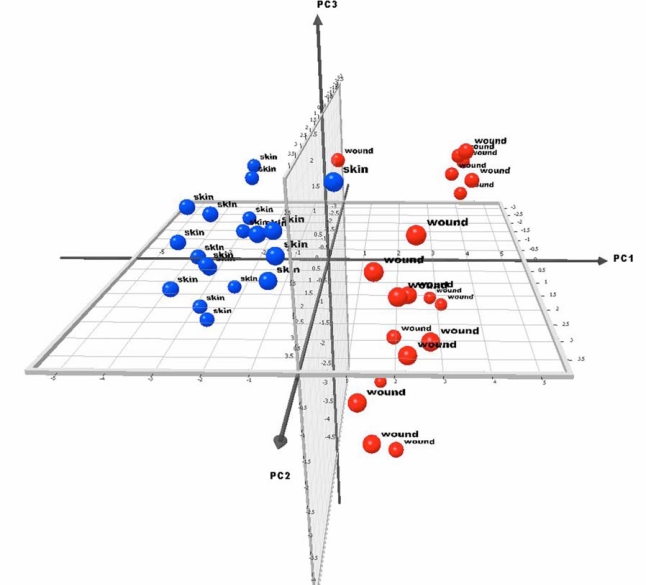
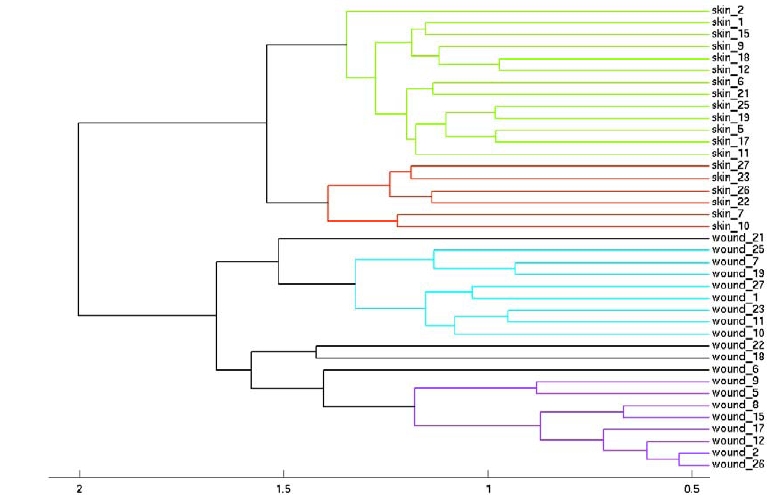
An extensive portion of the healthcare budget is allocated to chronic human infection. Chronic wounds in particular are a major contributor to this financial burden. Little is known about the types of bacteria which may contribute to the chronicity, biofilm and overall bioburden of the wound itself. In this study we compare the bacteriology of wounds and associated intact skin. Wound and paired intact skin swabs (from a contralateral location) were collected. The bacterial diversity was determined using bacterial Tag-encoded FLX amplicon pyrosequencing (bTEFAP). Diversity analysis showed intact skin to be significantly more diverse than wounds on both the species and genus levels (3% and 5% divergence). Furthermore, wounds show heightened levels of anaerobic bacteria, like Peptoniphilus , Finegoldia , and Anaerococcus , and other detrimental genera such as Corynebacterium and Staphylococcus . Although some of these and other bacterial genera were found to be common between intact skin and wounds, notable opportunistic wound pathogens were found at lower levels in intact skin. Principal Component Analysis demonstrated a clear separability of the two groups. The findings of the study not only greatly support the hypothesis of differing bacterial composition of intact skin and wounds, but also contribute additional insight into the ecology of skin and wound microflora. The increased diversity and lowered levels of opportunistic pathogens found in skin make the system highly distinguishable from wounds.
Overview
The claims and statistics of this paper haven’t been checked yet.
Run the check — free, no account needed. It reads the open-access text and checks the sources it cites.
Integrity signals
Registry
Cites
Statistics
Figures
Verification
Claims the paper makes
The claims and statistics of this paper haven’t been checked yet.
Run the check — free, no account needed. It reads the open-access text and checks the sources it cites.
Claims other papers make about this one
Each is checked against this paper’s own text: does it say what the citing paper says it does?
In the citing paper
“The diversity of the chronic wound microbiome may be substantially reduced in comparison to that of neighboring healthy skin (168), but a recent study using animal models of wound infections demonstrated that polymicrobial infection with Staphylococcus aureus and Pseudomonas aeruginosa led to more prominent inhibition of epithelialization than infection with a single species (33), suggesting that”
From Wound repair and regeneration: Mechanisms, signaling, and translation (2014) · cites this paper as [168]
In the citing paper
“Multiple studies have also emphasized the presence of bacteria and the polymicrobial nature of chronic, non-healing wounds [6], [7], [8], [9], [10], and the frequency of S. aureus and P. aeruginosa organisms has been shown to be exceedingly high [10], [11], [12], [13], [14].”
From Interactions of Methicillin Resistant Staphylococcus aureus USA300 and Pseudomonas aeruginosa in Polymicrobial Wound Infection (2013) · cites this paper as [8]
In the citing paper
“The polymicrobial nature of non-healing wounds, such as venous, pressure, and diabetic foot ulcers is well documented and established [6], [7], [8], [9], [58], [59].”
From Interactions of Methicillin Resistant Staphylococcus aureus USA300 and Pseudomonas aeruginosa in Polymicrobial Wound Infection (2013) · cites this paper as [8]
In the citing paper
“If this occurs, these microbes change their metabolism11 and a new ecology is set up with a modified microbiome.12,13”
From The Innate Immune System in Acute and Chronic Wounds (2016) · cites this paper as [13]
Self-check
Percentages, sums and reported differences re-computed from the paper’s own numbers.
The self-check needs the paper’s full text.
Citations
Cites
Basic local alignment search tool
Altschul, S. F., Gish, W., Miller, W., Myers, E. W., & Lipman, D. J. (1990) · Journal of Molecular Biology · doi:10.1006/jmbi.1990.9999 · Cited by 98,669
An introduction to ROC analysis
Fawcett, T. (2006) · Pattern Recognition Letters · doi:10.1016/j.patrec.2005.10.010 · Cited by 21,879
Costerton, J. W., Lewandowski, Z., Caldwell, D. E., Korber, D. R., & Lappin-Scott, H. M. (1995) · Annual Review of Microbiology · doi:10.1146/annurev.mi.49.100195.003431 · Cited by 4,921
Microbial diversity in the deep sea and the underexplored “rare biosphere”
Sogin, M. L., Morrison, H. G., Huber, J. A., Welch, D. B. M., Huse, S. M., Neal, P. R., Arrieta, J. M., & Herndl, G. J. (2006) · Proceedings of the National Academy of Sciences · doi:10.1073/pnas.0605127103 · Cited by 3,803
Thirteen Ways to Look at the Correlation Coefficient
Rodgers, J. L., & Nicewander, W. A. (1988) · The American Statistician · doi:10.1080/00031305.1988.10475524 · Cited by 3,004
Thirteen Ways to Look at the Correlation Coefficient
Rodgers, J. L., & Nicewander, W. A. (1988) · The American Statistician · doi:10.2307/2685263 · Cited by 2,590
Schloss, P. D., & Handelsman, J. (2005) · Applied and Environmental Microbiology · doi:10.1128/aem.71.3.1501-1506.2005 · Cited by 2,529
A Simple Generalisation of the Area Under the ROC Curve for Multiple Class Classification Problems
Hand, D. J., & Till, R. J. (2001) · Machine Learning · doi:10.1023/a:1010920819831 · Cited by 2,276
James, G. A., Swogger, E., Wolcott, R., Pulcini, E. D., Secor, P., Sestrich, J., Costerton, J. W., & Stewart, P. S. (2008) · Wound Repair and Regeneration · doi:10.1111/j.1524-475x.2007.00321.x · Cited by 1,543
Self-citationUniFrac – An online tool for comparing microbial community diversity in a phylogenetic context
Lozupone, C., Hamady, M., & Knight, R. D. (2006) · BMC Bioinformatics · doi:10.1186/1471-2105-7-371 · Cited by 1,454
Research works printed but not linked: 1
- Theodoridis S, Koutroumbas K. Pattern Recognition. 2nd. San Diego, Ca: Academic Press 2008.
Cited by
Sorted by citations
Wound repair and regeneration: Mechanisms, signaling, and translation
Eming, S. A., Martin, P., & Tomic-Canic, M. (2014) · Science Translational Medicine · doi:10.1126/scitranslmed.3009337 · Cited by 3,562
Epithelialization in Wound Healing: A Comprehensive Review
Pastar, I., Stojadinović, O., Yin, N. C., Ramirez, H. A., Nusbaum, A. G., Sawaya, A. P., Patel, S. B., Khalid, L., Isseroff, R. R., & Tomic‐Canic, M. (2014) · Advances in Wound Care · doi:10.1089/wound.2013.0473 · Cited by 1,604
Diversity of the human skin microbiome early in life
Capone, K. A., Dowd, S. E., Stamatas, G. N., & Nikolovski, J. (2011) · Journal of Investigative Dermatology · doi:10.1038/jid.2011.168 · Cited by 532
Self-citationPastar, I., Nusbaum, A. G., Gil, J., Patel, S. B., Chen, J., Valdes, J., Stojadinovic, O., Plano, L. R., Tomic-Canic, M., & Davis, S. C. (2013) · PLoS ONE · doi:10.1371/journal.pone.0056846 · Cited by 391
Gram-positive anaerobic cocci – commensals and opportunistic pathogens
Murphy, E. C., & Frick, I.-M. (2012) · FEMS Microbiology Reviews · doi:10.1111/1574-6976.12005 · Cited by 366
Temporal Stability in Chronic Wound Microbiota Is Associated With Poor Healing
Loesche, M. A., Gardner, S. E., Kalan, L., Horwinski, J., Zheng, Q., Hodkinson, B. P., Tyldsley, A. S., Franciscus, C. L., Hillis, S. L., Mehta, S. D., et al. (2016) · Journal of Investigative Dermatology · doi:10.1016/j.jid.2016.08.009 · Cited by 313
The Innate Immune System in Acute and Chronic Wounds
MacLeod, A. S., & Mansbridge, J. N. (2016) · Advances in Wound Care · doi:10.1089/wound.2014.0608 · Cited by 289
“If this occurs, these microbes change their metabolism(11) and a new ecology is set up with a modified microbiome.(12,13) The species composition of the bacterial communities in chronic wounds may differ from normal skin, but presumably also show species similarities and may persist for many years.”
BackgroundSkin microbiome: genomics-based insights into the diversity and role of skin microbes
Kong, H. H. (2011) · Trends in Molecular Medicine · doi:10.1016/j.molmed.2011.01.013 · Cited by 293
The microbiome of chronic rhinosinusitis: culture, molecular diagnostics and biofilm detection
Boase, S., Foreman, A., Cleland, E. J., Tan, L., Melton-Kreft, R., Pant, H., Hu, F. Z., Ehrlich, G. D., & Wormald, P. (2013) · BMC Infectious Diseases · doi:10.1186/1471-2334-13-210 · Cited by 271
Microbiology of the skin and the role of biofilms in infection
Percival, S. L., Emanuel, C., CUTTING, K. F., & Williams, D. W. (2011) · International Wound Journal · doi:10.1111/j.1742-481x.2011.00836.x · Cited by 274
The skin microbiome: Current perspectives and future challenges
Chen, Y. E., & Tsao, H. (2013) · Journal of the American Academy of Dermatology · doi:10.1016/j.jaad.2013.01.016 · Cited by 275
Biofilms in Diabetic Foot Ulcers: Significance and Clinical Relevance
Pouget, C., Dunyach‐Remy, C., Pantel, A., Schuldiner, S., Sotto, A., & Lavigne, J. (2020) · Microorganisms · doi:10.3390/microorganisms8101580 · Cited by 243
Comparison of Culture and Molecular Identification of Bacteria in Chronic Wounds
Rhoads, D. D., Wolcott, R. D., Sun, Y., & Dowd, S. E. (2012) · International Journal of Molecular Sciences · doi:10.3390/ijms13032535 · Cited by 221
Self-citationInflammation Drives Dysbiosis and Bacterial Invasion in Murine Models of Ileal Crohn’s Disease
Craven, M. D., Egan, C. E., Dowd, S. E., McDonough, S. P., Dogan, B., Denkers, E., Bowman, D. D., Scherl, E., & Simpson, K. W. (2012) · PLoS ONE · doi:10.1371/journal.pone.0041594 · Cited by 197
Self-citationCephas, K., Kim, J., Mathai, R. A., Barry, K. A., Dowd, S. E., Meline, B. S., & Swanson, K. S. (2011) · PLoS ONE · doi:10.1371/journal.pone.0023503 · Cited by 158
Self-citationInnate sensing of microbial products promotes wound-induced skin cancer
Hoste, E., Arwert, E. N., Lal, R., South, A. P., Salas-Alanis, J. C., Murrell, D. F., Donati, G., & Watt, F. M. (2015) · Nature Communications · doi:10.1038/ncomms6932 · Cited by 155
Smith, K., Collier, A., Townsend, E. R., O’Donnell, L. E., Bal, A. M., Butcher, J. P., Mackay, W. G., Ramage, G., & Williams, C. (2016) · BMC Microbiology · doi:10.1186/s12866-016-0665-z · Cited by 162
The role of the microbiome in nonhealing diabetic wounds
Kalan, L., & Brennan, M. B. (2018) · Annals of the New York Academy of Sciences · doi:10.1111/nyas.13926 · Cited by 162
Heras, K. L., García-Orue, I., Rancan, F., Igartúa, M., Santos‐Vizcaíno, E., & Hernández, R. M. (2024) · Advanced Drug Delivery Reviews · doi:10.1016/j.addr.2024.115342 · Cited by 143
Therapeutic role of growth factors in treating diabetic wound
Zheng, S.-Y., Wan, X.-X., Kambey, P. A., Luo, Y., Hu, X., Liu, Y., Shan, J.-Q., Chen, Y., & Xiong, K. (2023) · World Journal of Diabetes · doi:10.4239/wjd.v14.i4.364 · Cited by 147
The diabetic foot microbiota: A review
Jneid, J., Lavigne, J., Scola, B. L., & Cassir, N. (2017) · Human Microbiome Journal · doi:10.1016/j.humic.2017.09.002 · Cited by 130
The skin microbiome: Associations between altered microbial communities and disease
Weyrich, L. S., Dixit, S., Farrer, A. G., Cooper, A. J., & Cooper, A. J. (2015) · Australasian Journal of Dermatology · doi:10.1111/ajd.12253 · Cited by 137
Pérez-Díaz, M. A., Alvarado-Gómez, E., Magaña-Aquino, M., Sánchez‐Sánchez, R., Velasquillo, C., González, C., Ganem‐Rondero, A., Martínez-Castañón, G. A., Zavala-Alonso, N. V., & Martínez‐Gutiérrez, F. (2015) · Materials Science and Engineering C · doi:10.1016/j.msec.2015.11.036 · Cited by 120
Polymicrobial wound infections: Pathophysiology and current therapeutic approaches
Bertesteanu, S. V., Triaridis, S., Stankovic, M. D., Lazăr, V., Chifiriuc, M. C., Vlad, M., & Grigore, R. (2013) · International Journal of Pharmaceutics · doi:10.1016/j.ijpharm.2013.12.012 · Cited by 117
Holmes, C., Wrobel, J. S., Eachern, M. P. M., & Boles, B. R. (2013) · Diabetes Metabolic Syndrome and Obesity · doi:10.2147/dmso.s36024 · Cited by 115
Quantitation and Composition of Cutaneous Microbiota in Diabetic and Nondiabetic Men
Redel, H., Gao, Z., Li, H., Alekseyenko, A. V., Zhou, Y., Perez-Perez, G. I., Weinstock, G. M., Sodergren, E. J., & Blaser, M. J. (2013) · The Journal of Infectious Diseases · doi:10.1093/infdis/jit005 · Cited by 117
Gimblet, C., Meisel, J. S., Loesche, M. A., Cole, S. D., Horwinski, J., Novais, F. O., Misic, A. M., Bradley, C. W., Beiting, D. P., Rankin, S. C., et al. (2017) · Cell Host & Microbe · doi:10.1016/j.chom.2017.06.006 · Cited by 114
Bacteria and Archaea diversity within the hot springs of Lake Magadi and Little Magadi in Kenya
Kambura, A. K., Mwirichia, R., Kasili, R. W., Karanja, E., Makonde, H. M., & Boga, H. I. (2016) · BMC Microbiology · doi:10.1186/s12866-016-0748-x · Cited by 111
Reducing bias in bacterial community analysis of lower respiratory infections
Rogers, G. B., Cuthbertson, L., Hoffman, L. R., Wing, P. A. C., Pope, C. E., Hooftman, D. A. P., Lilley, A. K., Oliver, A., Carroll, M. P., Bruce, K. D., et al. (2012) · The ISME Journal · doi:10.1038/ismej.2012.145 · Cited by 107
Pereira, S. G., Moura, J., Carvalho, E., & Empadinhas, N. (2017) · Frontiers in Microbiology · doi:10.3389/fmicb.2017.01791 · Cited by 107
Taylor, S., Rogers, G. B., Chen, A. C. –., Burr, L. D., McGuckin, M. A., & Serisier, D. J. (2015) · Annals of the American Thoracic Society · doi:10.1513/annalsats.201411-513oc · Cited by 100
Kim, J. H., Yang, B. K., Tedesco, A., Lebig, E. G., Ruegger, P. M., Xu, K. H., Borneman, J., & Martins‐Green, M. M. (2019) · Scientific Reports · doi:10.1038/s41598-019-55644-3 · Cited by 101
Colonizing microbiota is associated with clinical outcomes in diabetic wound healing
Wang, G., Lin, Z., Li, Y., Chen, L., Reddy, S., Hu, Z., & Garza, L. A. (2023) · Advanced Drug Delivery Reviews · doi:10.1016/j.addr.2023.114727 · Cited by 103
Neumann, A., Björck, L., & Frick, I.-M. (2020) · Frontiers in Microbiology · doi:10.3389/fmicb.2020.00065 · Cited by 94
The role of the microbiome in diabetes mellitus
Zhang, S., Cai, Y., Meng, C., Ding, X., Huang, J., Luo, X., Cao, Y., Gao, F., & Zou, M. (2020) · Diabetes Research and Clinical Practice · doi:10.1016/j.diabres.2020.108645 · Cited by 99
Fernandez-Raudales, D., Hoeflinger, J. L., Bringe, N. A., Cox, S. B., Dowd, S. E., Miller, M. J., & de Mejı́a, E. G. (2012) · Gut Microbes · doi:10.4161/gmic.21578 · Cited by 92
Self-citationMolecular diagnostics and personalised medicine in wound care: assessment of outcomes
Dowd, S. E., Wolcott, R. D., Kennedy, J. P., Jones, C., & Cox, S. B. (2011) · Journal of Wound Care · doi:10.12968/jowc.2011.20.5.232 · Cited by 86
Self-citationNew Molecular Techniques to Study the Skin Microbiota of Diabetic Foot Ulcers
Lavigne, J., Sotto, A., Dunyach‐Remy, C., & Lipsky, B. A. (2014) · Advances in Wound Care · doi:10.1089/wound.2014.0532 · Cited by 85
Fasina, Y. O., Newman, M. M., Stough, J. M. A., & Liles, M. R. (2015) · Poultry Science · doi:10.3382/ps/pev329 · Cited by 82
Healing and healing rates of chronic wounds in the age of molecular pathogen diagnostics
Wolcott, R. D., Cox, S. B., & Dowd, S. E. (2010) · Journal of Wound Care · doi:10.12968/jowc.2010.19.7.48898 · Cited by 81
Self-citationTuttle, M. S., Mostow, E. N., Mukherjee, P. K., Hu, F. Z., Kreft, R., Ehrlich, G. D., Dowd, S. E., & Ghannoum, M. A. (2011) · Journal of Clinical Microbiology · doi:10.1128/jcm.00847-11 · Cited by 79
Self-citationBloodstream infections due to Peptoniphilus spp.: report of 15 cases
Brown, K., Church, D. L., Lynch, T., & Gregson, D. B. (2014) · Clinical Microbiology and Infection · doi:10.1111/1469-0691.12657 · Cited by 76
Frick, I.-M., Nordin, S. L., Baumgarten, M., Mörgelin, M., Sørensen, O. E., Olin, A. I., & Egesten, A. (2011) · The Journal of Immunology · doi:10.4049/jimmunol.1004179 · Cited by 74
Oates, A., Bowling, F. L., Boulton, A. J. M., & McBain, A. J. (2012) · Journal of Clinical Microbiology · doi:10.1128/jcm.06599-11 · Cited by 74
Kim, J. H., Ruegger, P. R., Lebig, E. G., VanSchalkwyk, S., Jeske, D. R., Hsiao, A., Borneman, J., & Martins‐Green, M. M. (2020) · Frontiers in Cellular and Infection Microbiology · doi:10.3389/fcimb.2020.00259 · Cited by 73
Nachappa, P., Levy, J. G., Pierson, E. A., & Tamborindeguy, C. (2011) · Current Microbiology · doi:10.1007/s00284-011-9885-5 · Cited by 72
The Impact of Microbial Communities on Wound Healing
Xu, Z., & Hsia, H. C. (2018) · Annals of Plastic Surgery · doi:10.1097/sap.0000000000001450 · Cited by 71
Holmes, C. J., Plichta, J. K., Gamelli, R. L., & Radek, K. A. (2014) · Advances in Wound Care · doi:10.1089/wound.2014.0546 · Cited by 71
de Sousa, N. T. A., Santos, M. F., Gomes, R. C., Brandino, H. E., Martínez, R., & Guirro, R. R. D. J. (2015) · Photomedicine and Laser Surgery · doi:10.1089/pho.2014.3854 · Cited by 63
Patient genetics is linked to chronic wound microbiome composition and healing
Tipton, C. D., Wolcott, R. D., Sanford, N. E., Miller, C., Pathak, G. A., Silzer, T. K., Sun, J., Fleming, D. F., Rumbaugh, K. P., Little, T. D., et al. (2020) · PLoS Pathogens · doi:10.1371/journal.ppat.1008511 · Cited by 65
Self-citationGarg, S. S., Dubey, R., Sharma, S., Vyas, A., & Gupta, J. (2023) · International Journal of Biological Macromolecules · doi:10.1016/j.ijbiomac.2023.125636 · Cited by 64
Oestrogen promotes healing in a bacterial LPS model of delayed cutaneous wound repair
Crompton, R. A., Williams, H., Ansell, D. M., Campbell, L., Holden, K. A., Cruickshank, S. M., & Hardman, M. J. (2016) · Laboratory Investigation · doi:10.1038/labinvest.2015.160 · Cited by 61
Evaluation of prokaryotic diversity of five hot springs in Eritrea
Ghilamicael, A. M., Budambula, N. L. M., Anami, S. E., Mehari, T., & Boga, H. I. (2017) · BMC Microbiology · doi:10.1186/s12866-017-1113-4 · Cited by 58
The Role of Every-Day Cosmetics in Altering the Skin Microbiome: A Study Using Biodiversity
Wallen-Russell, C. (2018) · Cosmetics · doi:10.3390/cosmetics6010002 · Cited by 57
Co-occurrence of Anaerobes in Human Chronic Wounds
Choi, Y., Banerjee, A., McNish, S., Couch, K. S., Torralba, M., Lucas, S. K., Tovchigrechko, A., Madupu, R., Yooseph, S., Nelson, K. E., et al. (2018) · Microbial Ecology · doi:10.1007/s00248-018-1231-z · Cited by 58
Sloan, T. J., Turton, J. C., Tyson, J., Musgrove, A., Fleming, V. M., Lister, M. M., Loose, M., Sockett, R. E., Diggle, M. A., Game, F. L., et al. (2019) · Journal of Medical Microbiology · doi:10.1099/jmm.0.000907 · Cited by 58
Medina, R. F., Nachappa, P., & Tamborindeguy, C. (2011) · Journal of Evolutionary Biology · doi:10.1111/j.1420-9101.2010.02215.x · Cited by 55
Shaping of cutaneous function by encounters with commensals
Barnard, E., & Li, H. (2016) · The Journal of Physiology · doi:10.1113/jp271638 · Cited by 59
Bacterial ecology of abattoir wastewater treated by an anaerobic digestor
Jabari, L., Gannoun, H., Khelifi, E., Cayol, J., Godon, J., Hamdi, M., & Fardeau, M. (2016) · Brazilian Journal of Microbiology · doi:10.1016/j.bjm.2015.11.029 · Cited by 53
From Germ Theory to Germ Therapy
Wong, V., Martindale, R. G., Longaker, M. T., & Gurtner, G. C. (2013) · Plastic & Reconstructive Surgery · doi:10.1097/prs.0b013e3182a3c11e · Cited by 50
Min, K. R., Galvis, A., Nole, K. L. B., Sinha, R., Clarke, J., Kirsner, R. S., & Ajdić, D. (2020) · PLoS ONE · doi:10.1371/journal.pone.0227006 · Cited by 50
Wallen-Russell, C., & Wallen-Russell, S. (2017) · Cosmetics · doi:10.3390/cosmetics4020014 · Cited by 46
Ma, J., Ibekwe, A. M., Yang, C., & Crowley, D. E. (2013) · FEMS Microbiology Ecology · doi:10.1111/1574-6941.12083 · Cited by 45
Bacteriocin from Bacillus subtilis as a novel drug against diabetic foot ulcer bacterial pathogens
Joseph, B., Dhas, B., Hena, V., & Raj, S. J. (2013) · Asian Pacific Journal of Tropical Biomedicine · doi:10.1016/s2221-1691(13)60183-5 · Cited by 45
Citron, D. M., Tyrrell, K. L., & Goldstein, E. J. C. (2011) · Anaerobe · doi:10.1016/j.anaerobe.2011.11.008 · Cited by 45
Salgado, V. R., Queiroz, A. T. L., Sanabani, S. S., de Oliveira, C. I., Carvalho, E. M., Costa, J. M. L., Barral‐Netto, M., & Barral, A. M. P. (2016) · Memórias do Instituto Oswaldo Cruz · doi:10.1590/0074-02760150436 · Cited by 40
Brown, J. L., Townsend, E., Short, R. D., Williams, C., Woodall, C., Nile, C. J., & Ramage, G. (2022) · npj Biofilms and Microbiomes · doi:10.1038/s41522-022-00286-z · Cited by 45
Sibley, C. D., Church, D. L., Surette, M. G., Dowd, S. E., & Parkins, M. D. (2012) · European Journal of Clinical Microbiology & Infectious Diseases · doi:10.1007/s10096-012-1614-x · Cited by 38
Self-citationCooperative Evolutionary Strategy between the Bacteriome and Mycobiome
Ghannoum, M. A. (2016) · mBio · doi:10.1128/mbio.01951-16 · Cited by 38
Bacteriophage Therapy as a Potential Management Option for Surgical Wound Infections
Nadareishvili, L., Hoyle, N. S., Nakaidze, N., Nizharadze, D., Kutateladze, M., Balarjishvili, N., Kutter, E. M., & Pruidze, N. (2020) · PHAGE · doi:10.1089/phage.2020.0010 · Cited by 37
The Skin Microbiota and Itch: Is There a Link?
Kim, H. S., & Yosipovitch, G. (2020) · Journal of Clinical Medicine · doi:10.3390/jcm9041190 · Cited by 38
Dynamic Role of Oxygen in Wound Healing: A Microbial, Immunological, and Biochemical Perspective.
Gupta, S., Mujawdiya, P. K., Maheshwari, G., & Sagar, S. (2022) · PubMed Central · doi:10.22092/ari.2022.357230.2003 · Cited by 34
Mini Review Therapeutic Strategies Targeting for Biofilm and Bone Infections
Wu, S., Wu, B., Liu, Y., Deng, S., Lei, L., & Zhang, H. (2022) · Frontiers in Microbiology · doi:10.3389/fmicb.2022.936285 · Cited by 34
Chopyk, J., Moore, R. M., DiSpirito, Z., Stromberg, Z. R., Lewis, G. L., Renter, D. G., Cernicchiaro, N., Moxley, R. A., & Wommack, K. E. (2016) · Microbiome · doi:10.1186/s40168-016-0155-4 · Cited by 32
Hume, M. E., Barbosa, N. A. A., Dowd, S. E., Sakomura, N. K., Nalian, A. G., Kley, A. M., & Oviedo-Rondon, E. O. (2011) · Foodborne Pathogens and Disease · doi:10.1089/fpd.2011.0863 · Cited by 30
Self-citationRubin‐Blum, M., Antler, G., Tsadok, R., Shemesh, E., Austin, J. A., Coleman, D. F., Goodman‐Tchernov, B., Ben‐Avraham, Z., & Tchernov, D. (2014) · PLoS ONE · doi:10.1371/journal.pone.0091456 · Cited by 30
Biofilms in Chronic Wounds and the Potential Role of Negative Pressure Wound Therapy
Hawkins-Bradley, B., & Cunningham, M. (2013) · Journal of Wound Ostomy and Continence Nursing · doi:10.1097/won.0b013e31827e8481 · Cited by 30
Anne, K. K., Mwirichia, R., Kasili, R. W., Karanja, E., Huxley, M. M., & Hamadi, I. B. (2016) · African Journal of Microbiology Research · doi:10.5897/ajmr2015.7879 · Cited by 29
Kurečič, M., Rijavec, T., Hribernik, S., Lapanje, A., Kleinschek, K. S., & Maver, U. (2018) · Nanomedicine · doi:10.2217/nnm-2018-0014 · Cited by 28
P. aeruginosa interactions with other microbes in biofilms during co-infection
Oliveira, M., Cunha, E. S., Tavares, L. M., & Serrano, I. D. (2023) · AIMS Microbiology · doi:10.3934/microbiol.2023032 · Cited by 31
Kalan, L., Zhou, M., Labbie, M., & Willing, B. P. (2017) · PLoS ONE · doi:10.1371/journal.pone.0187728 · Cited by 26
Molecular Mechanisms of RIP, an Effective Inhibitor of Chronic Infections
Lopez-Leban, F., Kiran, M. D., Wolcott, R. D., & Balaban, N. (2010) · The International Journal of Artificial Organs · doi:10.1177/039139881003300904 · Cited by 26
Self-citationStarosvetsky, J., Zukerman, U., & Armon, R. H. (2012) · Journal of Microbiological Methods · doi:10.1016/j.mimet.2012.11.009 · Cited by 25
Ghilamicael, A. M., Boga, H. I., Anami, S. E., Mehari, T., & Budambula, N. L. M. (2018) · PLoS ONE · doi:10.1371/journal.pone.0194554 · Cited by 25
Topological data analysis of Escherichia coli O157:H7 and non-O157 survival in soils
Ibekwe, A. M., Ma, J., Crowley, D. E., Yang, C., Johnson, A. M., Petrossian, T. C., & Lum, P. Y. (2014) · Frontiers in Cellular and Infection Microbiology · doi:10.3389/fcimb.2014.00122 · Cited by 24
Microbiome‐skin‐brain axis: A novel paradigm for cutaneous wounds
Hadian, Y., Fregoso, D. R., Nguyen, C., Bagood, M. D., Dahle, S. E., Gareau, M. G., & Isseroff, R. R. (2020) · Wound Repair and Regeneration · doi:10.1111/wrr.12800 · Cited by 26
Božić, D. D., Pavlović, B., Milovanovic, J. P., Jotic, A. D., Čolović, J., & Cirkovic, I. B. (2018) · European Archives of Oto-Rhino-Laryngology · doi:10.1007/s00405-018-5049-6 · Cited by 23
Cirkovic, I. B., Pavlović, B., Božić, D. D., Jotic, A. D., Bakic, L., & Milovanovic, J. P. (2017) · European Archives of Oto-Rhino-Laryngology · doi:10.1007/s00405-017-4454-6 · Cited by 22
Watts, G. S., Thornton, J. E., Youens‐Clark, K., Ponsero, A. J., Slepian, M. J., Menashi, E., Hu, C. K. C., Deng, W., Armstrong, D. G., Reed, S., et al. (2019) · PLoS Computational Biology · doi:10.1371/journal.pcbi.1006863 · Cited by 22
Anaerobic bacteria in chronic wounds: Roles in disease, infection and treatment failure
Coluccio, A. E., Palomera, F. L., & Spero, M. A. (2024) · Wound Repair and Regeneration · doi:10.1111/wrr.13208 · Cited by 22
Martins‐Green, M. M., Kim, J. H., & Aziz, K. (2025) · Antioxidants · doi:10.3390/antiox14060682 · Cited by 21
Kunimitsu, M., Nakagami, G., Kitamura, A., Minematsu, T., Koudounas, S., Ogai, K., Sugama, J., Takada, C., Yeo, S., & Sanada, H. (2022) · Journal of Tissue Viability · doi:10.1016/j.jtv.2022.10.006 · Cited by 19
Bacterial infections in cancer: A bilateral relationship
Basu, A., Singh, R., & Gupta, S. (2022) · Wiley Interdisciplinary Reviews Nanomedicine and Nanobiotechnology · doi:10.1002/wnan.1771 · Cited by 19
Huang, Y., Xiao, Z., Cao, Y. J., Gao, F., Fu, Y., Zou, M., Luo, X., Jiang, Y., & Xue, Y. (2022) · Frontiers in Microbiology · doi:10.3389/fmicb.2022.1021955 · Cited by 18
Review of the molecular mechanisms in wound healing: new therapeutic targets?
Palmieri, B., Vadalà, M., & Laurino, C. (2017) · Journal of Wound Care · doi:10.12968/jowc.2017.26.12.765 · Cited by 17
Kaistha, S. D., & Deshpande, N. M. (2021) · Springer eBooks · doi:10.1007/978-981-16-2677-7_8 · Cited by 19
Cutaneous Wound Biofilm and the Potential for Electrical Stimulation in Management of the Microbiome
Ashrafi, M. H., Baguneid, M. S., Alonso-Rasgado, T. A., Rautemaa‐Richardson, R., & Bayat, A. (2017) · Future Microbiology · doi:10.2217/fmb-2016-0204 · Cited by 17
Physiology and Pathophysiology of Wound Healing in Diabetes
Stojadinović, O., Pastar, I., Gordon, K. A., & Tomic‐Canic, M. (2012) · Humana Press eBooks · doi:10.1007/978-1-61779-791-0_7 · Cited by 16
The skin microbiota in equine pastern dermatitis: a case‐control study of horses in Switzerland
Kaiser‐Thom, S., Hilty, M., Flammer, S. A., & Gerber, V. (2021) · Veterinary Dermatology · doi:10.1111/vde.12955 · Cited by 15
Wound Healing Finally Enters the Age of Molecular Diagnostic Medicine
Tatum, O. L., & Dowd, S. E. (2012) · Advances in Wound Care · doi:10.1089/wound.2011.0303 · Cited by 13
Self-citation
Metadata
- Authors
- Gontcharova, V., Youn, E., Sun, Y., Wolcott, R. D., & Dowd, S. E.
- Affiliations
- Texas Tech University (US)
- Southwest Regional Wound Care Center (US)
- Corresponding author
- Gontcharova, Viktoria
- Venue
- The Open Microbiology Journal
- Publisher
- Bentham Science Publishers Ltd.
- Published
- 2010-03-17
- Volume
- 4
- Issue
- 1
- Pages
- 8-19
- ISSN
- 1874-2858 (ISSN-L)
- PMC
- PMC2866239
- OpenAlex
- W2096279745
- Cited by
- 156
- References
- 57
- Citations by year
- 2026: 6 · 2025: 5 · 2024: 5 · 2023: 10 · 2022: 11 · 2021: 7 · 2020: 14 · 2019: 4 · 2018: 9 · 2017: 14 · 2016: 11 · 2015: 11 · 2014: 9 · 2013: 11 · 2012: 12
- FWCI
- 12.98
- Type
- journal article
- Language
- en
- Open access
- hybrid
- doi.org
- Locations
- The Open Microbiology Journal (publishedVersion, cc-by)
- Europe PMC (PubMed Central) (publishedVersion, cc-by-nc)
- PubMed Central (publishedVersion, cc-by-nc)
- PubMed (publishedVersion)
- Topics
- Health Sciences › Medicine › Surgery › Wound Healing and Treatments
- Health Sciences › Medicine › Endocrinology, Diabetes and Metabolism › Diabetic Foot Ulcer Assessment and Management
- Physical Sciences › Environmental Science › Ecology › Microbial Community Ecology and Physiology
- Keywords
- diabetic ulcers, chronic wounds, skin microbiome, bacterial diversity, anaerobic bacteria, Peptoniphilus, Finegoldia, Anaerococcus, Corynebacterium, Staphylococcus, opportunistic pathogens, wound biofilm, microbial load
About these checks
Registry, retraction, Cites and statistics results are computed, not judged, with one exception: a printed reference that no index lists is read once by a model before it counts as a citation error. Claims are extracted by a model and kept only when their quote appears verbatim in the text; each cited source is then checked, with a model’s help, for whether it says what the claim relies on. Those verdicts can be wrong — read the claim’s quote and the cited source before relying on one.
Statistics and arithmetic are recomputed, not judged.
Confidence bands are shown only for fields calibrated on our annotated test set. None is calibrated yet, so no band is shown.
What counts as a claim ›How we measure confidence ›How we check this ›
Are you an author, or do you see a problem with this page? Request a review
