

High Agreement and High Prevalence: The Paradox of Cohen’s Kappa
Open accessThe DOI matches its Crossref record; 30 of the 30 references it cites were found in a registry or an index; none of the 20 sources its claims cite is checked for support yet.
Abstract
Background: Cohen's Kappa is the most used agreement statistic in literature. However, under certain conditions, it is affected by a paradox which returns biased estimates of the statistic itself. Objective: The aim of the study is to provide sufficient information which allows the reader to make an informed choice of the correct agreement measure, by underlining some optimal properties of Gwet’s AC1 in comparison to Cohen’s Kappa, using a real data example. Method: During the process of literature review, we have asked a panel of three evaluators to come up with a judgment on the quality of 57 randomized controlled trials assigning a score to each trial using the Jadad scale. The quality was evaluated according to the following dimensions: adopted design, randomization unit, type of primary endpoint. With respect to each of the above described features, the agreement between the three evaluators has been calculated using Cohen’s Kappa statistic and Gwet’s AC1 statistic and, finally, the values have been compared with the observed agreement. Results: The values of the Cohen’s Kappa statistic would lead to believe that the agreement levels for the variables Unit, Design and Primary Endpoints are totally unsatisfactory. The AC1 statistic, on the contrary, shows plausible values which are in line with the respective values of the observed concordance. Conclusion: We conclude that it would always be appropriate to adopt the AC1 statistic, thus bypassing any risk of incurring the paradox and drawing wrong conclusions about the results of agreement analysis.
Overview
CoChat Summary
TL;DR
Cohen’s Kappa can produce misleadingly low agreement estimates when outcome prevalence is high, even when observed agreement is strong. Using a real reproducibility example, the authors argue Gwet’s AC1 avoids this paradox and should be preferred for agreement analysis.
Key findings
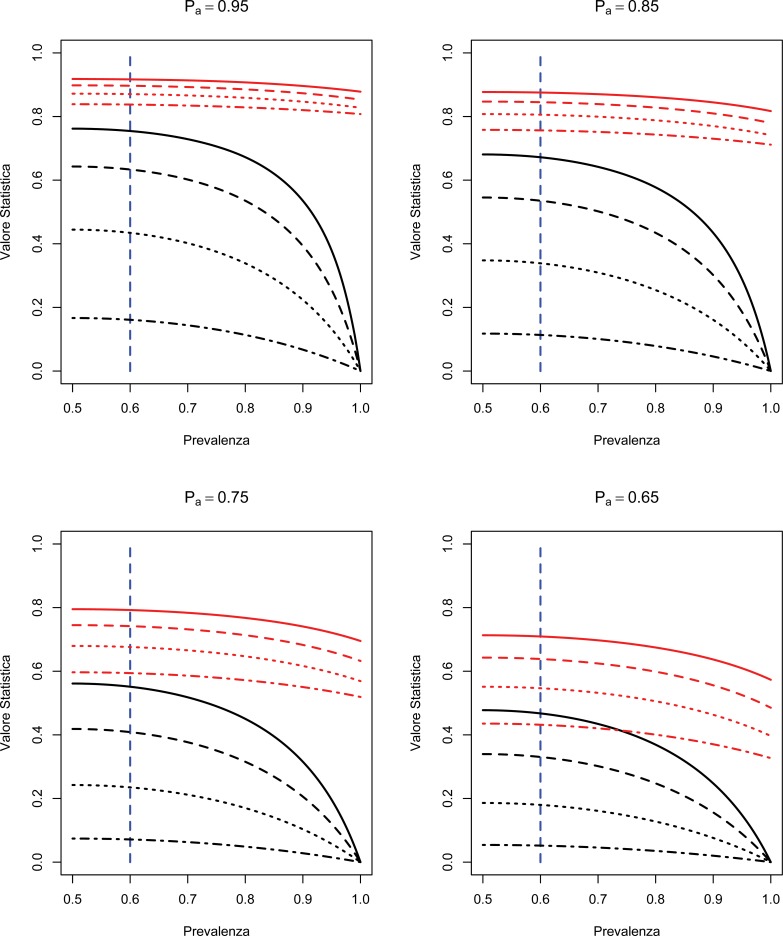
- In sensitivity curves, the Kappa paradox becomes evident when prevalence exceeds 60%, across the scenarios considered; AC1 values remained aligned with observed agreement and were not particularly affected by prevalence level.
- In the case study, Cohen’s Kappa suggested that agreement for the variables Unit, Design, and Primary Endpoints was “totally unsatisfactory,” while AC1 gave plausible values consistent with observed concordance.
- The likely cause of the paradox was high classification probabilities for the levels “Individual,” “Parallel,” and “Continuous” for Unit, Design, and Primary Endpoint, respectively.
- For the Jadad variable, where the authors say the paradox was absent, Kappa and AC1 had quite similar values, both consistent with observed concordance.
Methods
- A panel of three evaluators judged the quality of 57 randomized controlled trials using the Jadad scale, which assigns scores from zero to five; trials were dichotomized as good (>3) or poor (<3) quality.
- Evaluators also classified each trial by randomization unit (individual or community), design (parallel, factorial, or crossover), and primary endpoint (binary, continuous, survival, or other).
- Agreement among the three evaluators was calculated using Cohen’s Kappa and Gwet’s AC1, with 95% confidence intervals, and compared with observed agreement.
Limitations
- The paper does not state a formal limitations section.
- Evident from the text: the empirical demonstration relies on a single case study of 57 RCTs and three evaluators, with no simulation or broader validation reported.
- The authors note that for the Design variable, evaluators may not have had sufficient expertise to distinguish less common designs from “Parallel” type, which may have contributed to high classification probability.
Model-written summary. Check it against the paper before relying on it.
Integrity signals
Registry
Cites
Statistics
Figures
Verification
Claims the paper makes
0 Valid · 0 Not valid · 13 Not checked · 11 Own results and interpretations
A result the paper reports from its own data — it cites no other source for it, so there is none to check. The quote shows it is in the paper.
In the paper
“Even in simple cases with only two evaluators and two outcomes, the paradox tends to occur if, at equal sensitivity and specificity of the evaluators, the prevalence of one of the results is above 60%, as seen in Fig. (1) graphs.”
§ High Agreement and High Prevalence: The Paradox of Cohen’s Kappa > DISCUSSION
hedgedstates a possible cause- Asserted: passes — The authors put it forward as true.
- Checkable: passes — It can be checked against evidence.
- Load-bearing: passes — The paper’s conclusions depend on it.
- Based: passes — The paper gives a reason why it holds.
A result the paper reports from its own data — it cites no other source for it, so there is none to check. The quote shows it is in the paper.
In the paper
“The values of the Cohen’s Kappa statistic would lead to believe that the agreement levels for the variables Unit, Design and Primary Endpoints are totally unsatisfactory.”
- Also stated in: § RESULTS · hedged
“The values of the Cohen’s Kappa statistic would lead to believe that the agreement levels for the variables Unit, Design and Primary Endpoints are totally unsatisfactory.”
§ High Agreement and High Prevalence: The Paradox of Cohen’s Kappa > Abstract > Results:
hedgedstates a cause- Asserted: passes — The authors put it forward as true.
- Checkable: passes — It can be checked against evidence.
- Load-bearing: passes — The paper’s conclusions depend on it.
- Based: passes — The paper gives a reason why it holds.
- Also stated in: § RESULTS · hedged
A result the paper reports from its own data — it cites no other source for it, so there is none to check. The quote shows it is in the paper.
In the paper
“The AC1 statistic, on the contrary, shows plausible values which are in line with the respective values of the observed concordance.”
- Also stated in: § RESULTS · plain
“The AC1 statistic, on the contrary, shows plausible values which are in line with the respective values of the observed concordance.”
§ High Agreement and High Prevalence: The Paradox of Cohen’s Kappa > Abstract > Results:
plainstates an association- Asserted: passes — The authors put it forward as true.
- Checkable: passes — It can be checked against evidence.
- Load-bearing: passes — The paper’s conclusions depend on it.
- Based: passes — The paper gives a reason why it holds.
- Rests on an assumption not shown here.
- Also stated in: § RESULTS · plain
A result the paper reports from its own data — it cites no other source for it, so there is none to check. The quote shows it is in the paper.
In the paper
“As we can see, in all scenarios considered (hence independent on the observed correlation values, sensitivity and specificity) the paradox begins to be evident for values of prevalence higher than 60%.”
§ High Agreement and High Prevalence: The Paradox of Cohen’s Kappa > RESULTS
plainstates an association- Asserted: passes — The authors put it forward as true.
- Checkable: passes — It can be checked against evidence.
- Load-bearing: passes — The paper’s conclusions depend on it.
- Based: passes — The paper gives a reason why it holds.
A conclusion the paper draws from its own results — it cites no other source for it, so there is none to check. The quote shows it is in the paper.
In the paper
“The most likely explanation for the onset of the paradox can be given by high values, shown in Table 2, taken from the levels "Individual", "Parallel" and "Continuous" for variables Unit, Design and Primary Endpoint. These values have led to high probability of classification and hence to paradox affected values of Kappa statistic.”
§ High Agreement and High Prevalence: The Paradox of Cohen’s Kappa > RESULTS
hedgedstates a cause- Asserted: passes — The authors put it forward as true.
- Checkable: passes — It can be checked against evidence.
- Load-bearing: passes — The paper’s conclusions depend on it.
- Based: passes — The paper gives a reason why it holds.
- Rests on an assumption not shown here.
7 more claims
Create a free account to see all 24 claims and every source verdict.
- It may state two separate claims as one. 8
- The quote only partly states this claim. 1
- Probably not a substantial claim. 6
Claims other papers make about this one
Each is checked against this paper’s own text: does it say what the citing paper says it does?
The source backs part of the claim, not all of it — or backs it for a different population, condition or comparison.
In the citing paper
“The 𝜅 statistic is known to severely underestimate the agreement in situations when one of the labels is clearly dominant [59].”
From A Comparative Study of AI-Generated (GPT-4) and Human-crafted MCQs in Programming Education (2024) · cites this paper as [59]
Experimental — accuracy not yet measured
Self-check
Percentages, sums and reported differences re-computed from the paper’s own numbers.
Each contradiction between two passages listed here was confirmed by an independent check.
Rated minor: it would not touch a result — a value no result rests on, a p-value that stays on the same side of the significance level, or a conflict that is clerical, resolved elsewhere in the paper, or outside its own findings.
In the paper
§ High Agreement and High Prevalence: The Paradox of Cohen’s Kappa > METHODS > Case Study: Reproducibility of the Evaluation of Clinical Trial Quality
“An RCT is considered of good quality if it gets a score equal to or greater than 3.”
§ High Agreement and High Prevalence: The Paradox of Cohen’s Kappa > METHODS > Case Study: Reproducibility of the Evaluation of Clinical Trial Quality
“the Jadad score was dichotomized, distinguishing between good (> 3), and poor (<3) quality trial.”
Rated minor: it would not touch a result — a value no result rests on, a p-value that stays on the same side of the significance level, or a conflict that is clerical, resolved elsewhere in the paper, or outside its own findings.
In the paper
§ High Agreement and High Prevalence: The Paradox of Cohen’s Kappa > INTRODUCTION > AC1 Statistic
“The variance of the AC1 statistics, indispensable for the construction of confidence intervals, is calculated through the expression (3), following Gwet [28].”
§ High Agreement and High Prevalence: The Paradox of Cohen’s Kappa > INTRODUCTION > The Cohen’s Kappa Statistic
“while the expected agreement in case of random assignment is given by: (3)Pe|K=∑K=1K∑r=2R(−1)r∑i1,i2,.......ir∏j=1rpkij”
Citations
Cites
A Coefficient of Agreement for Nominal Scales
Cohen, J. (1960) · Educational and Psychological Measurement · doi:10.1177/001316446002000104 · Cited by 42,398 · cited 2×
“The Cohen’s Kappa statistic [16] is the most used agreement measure in literature.”
MethodIntraclass correlations: Uses in assessing rater reliability.
Shrout, P. E., & Fleiss, J. L. (1979) · Psychological Bulletin · doi:10.1037/0033-2909.86.2.420 · Cited by 24,532
Assessing the quality of reports of randomized clinical trials: Is blinding necessary?
Jadad, A. R., Moore, R. A., Carroll, D., Jenkinson, C., Reynolds, D. J. M., Gavaghan, D. J., & McQuay, H. J. (1996) · Controlled Clinical Trials · doi:10.1016/0197-2456(95)00134-4 · Cited by 17,582 · cited 1×
“Case Study: Reproducibility of the Evaluation of Clinical Trial Quality During the process of literature review [29], we have asked a panel of three evaluators to come up with a judgment on the quality of 57 randomized controlled trials (RCTs), assigning a score to each trial using the Jadad scale [9].”
MethodZhang, Q., Wang, C., Zheng, M., Li, Y., Li, J., Zhang, L., Shang, X., & Yan, C. (2015) · Cerebrovascular Diseases · doi:10.1159/000369778 · Cited by 11,533
Measuring nominal scale agreement among many raters.
Fleiss, J. L. (1971) · Psychological Bulletin · doi:10.1037/h0031619 · Cited by 8,733
Moher, D., Cook, D. J., Eastwood, S., Olkin, I., Rennie, D., & Stroup, D. F. (1999) · The Lancet · doi:10.1016/s0140-6736(99)04149-5 · Cited by 4,826
Dong, Y., Hao, L., Shi, Z., Wang, G., Zhang, Z., & Han, C. (2013) · Urologia Internationalis · doi:10.1159/000351405 · Cited by 4,540
Landis, J. R., & Koch, G. G. (1977) · Biometrics · doi:10.2307/2529786 · Cited by 4,332 · cited 1×
“4 or negative are indicators of discordance [27].”
BackgroundAssessing the quality of controlled clinical trials
Jüni, P., Altman, D. G., & Egger, M. (2001) · BMJ · doi:10.1136/bmj.323.7303.42 · Cited by 3,309 · cited 2×
“As for the latter, the literature is unanimous in considering that low-quality trials, conducted using inadequate methodological approach, are often associated with the over-estimated treatment effects [5, 7].”
BackgroundHigh agreement but low Kappa: I. the problems of two paradoxes
Feinstein, A. R., & Cicchetti, D. V. (1990) · Journal of Clinical Epidemiology · doi:10.1016/0895-4356(90)90158-l · Cited by 3,034 · cited 1×
“In fact, this assumption is weakened - sometimes even contradicted - in presence of strong differences in prevalence of possible outcomes [17].”
Background
Cited by
A Comparative Study of AI-Generated (GPT-4) and Human-crafted MCQs in Programming Education
Doughty, J., Wan, Z., Bompelli, A., Qayum, J., Wang, T., Zhang, J., Zheng, Y., Doyle, A., Sridhar, P., Agarwal, A., et al. (2024) · Proceedings of the 26th Australasian Computing Education Conference · doi:10.1145/3636243.3636256 · Cited by 132
“The 𝜅 statistic is known to severely underestimate the agreement in situations when one of the labels is clearly dominant [59].”
BackgroundThe DoCTRINE Guidelines: Defined Criteria To Report INnovations in Education
Blanco, M., Prunuske, J., DiCorcia, M., Learman, L. A., Mutcheson, B., & Huang, G. C. (2022) · Academic Medicine · doi:10.1097/acm.0000000000004634 · Cited by 67
Kanaparthy, N. S., Villuendas-Rey, Y., Bakare, T., Diao, Z., Iscoe, M., Loza, A., Wright, D., Safranek, C., Faustino, I. V., Brackett, A., et al. (2025) · JMIR AI · doi:10.2196/76743 · Cited by 57
“Both metrics offer a reliable, comprehensive view of interrater reliability, aligning with our study’s emphasis on precision and consistency in data extraction [28,29].”
Social Media Posts About Medical Tests With Potential for Overdiagnosis
Nickel, B., Moynihan, R. N., Gram, E. G., Copp, T., Taba, M., Shih, P., Heiss, R., Gao, M., & Zadro, J. R. (2025) · JAMA Network Open · doi:10.1001/jamanetworkopen.2024.61940 · Cited by 87
Head-to-head evaluation on diagnostic accuracies of six SARS-CoV-2 serological assays
Tan, S. S. Y., Saw, S., Chew, K. L., Chan, Y., Khoo, C., Pajarillaga, A., Wang, W., Tambyah, P. A., Ong, L., Jureen, R., et al. (2020) · Pathology · doi:10.1016/j.pathol.2020.09.007 · Cited by 39
Cervical Disc and Ligamentous Injury in Hyperextension Trauma: MRI and Intraoperative Correlation
Henninger, B., Kaser, V., Ostermann, S., Spicher, A., Zegg, M., Schmid, R., Kremser, C., & Krappinger, D. (2019) · Journal of Neuroimaging · doi:10.1111/jon.12663 · Cited by 35
Understanding Privacy-Related Advice on Stack Overflow
Tahaei, M., Li, T., & Vaniea, K. E. (2022) · Proceedings on Privacy Enhancing Technologies · doi:10.2478/popets-2022-0038 · Cited by 54
“This measure was a suitable measure for our data because we had a high agreement in some codes, such as separate and target audience , and Cohen’s Kappa may not work well in these situations resulting in “Cohen’s Kappa Paradox” (i.e., having a high agreement but a low Kappa) [24, 65, 67].”
MethodRemote cognitive assessment in severe mental illness: a scoping review
Lavigne, K. M., Sauvé, G., Raucher‐Chéné, D., Guimond, S., Lecomte, T., Bowie, C. R., Menon, M., Lal, S., Woodward, T. S., Bodnar, M. D., et al. (2022) · Schizophrenia · doi:10.1038/s41537-022-00219-x · Cited by 37
Casagrande, A., Fabris, F., & Girometti, R. (2020) · Medical & Biological Engineering & Computing · doi:10.1007/s11517-020-02261-2 · Cited by 34
Binvel, M., Arsenault, J., Depré, B., & Blais, M. (2020) · Journal of Veterinary Internal Medicine · doi:10.1111/jvim.16010 · Cited by 33
A Fine-Grained Sentiment Dataset for NorwegianPreprint
Øvrelid, L., Mæhlum, P., Barnes, J., & Velldal, E. (2019) · arXiv (Cornell University) · doi:10.48550/arxiv.1911.12722 · Cited by 50
“We do not do the same for Binary Overlap, as the procedure leads to symmetrically imbalanced predictions (both annotator 1 and annotator 2 are highly likely to have overlapping annotations) and this is known to be problematic for κ (Flight and Julious, 2015; Zec et al., 2017).”
BackgroundReliability of preoperative MRI findings in patients with lumbar spinal stenosis
Banitalebi, H., Espeland, A., Anvar, M., Hermansen, E., Hellum, C., Brox, J. I., Myklebust, T. Å., Indrekvam, K., Brisby, H., Weber, C., et al. (2022) · BMC Musculoskeletal Disorders · doi:10.1186/s12891-021-04949-4 · Cited by 32
“This coefficient is preferred instead of κ when the measurements are not normally distributed, which was the case here (to avoid the so-called high agreement low κ paradox) [25].”
BackgroundSolymosi, T., Hegedűs, L. D., Bonnema, S. J., Frasoldati, A., Jámbor, L., Karányi, Z., Kovács, G. L., Papini, E., Rucz, K., Russ, G., et al. (2023) · European Thyroid Journal · doi:10.1530/etj-22-0134 · Cited by 28
“However, Kappa counting provides some ‘meaningless’ values (26).”
Priyadi, Y., Putra, A. M., & Lyanda, P. S. (2021) · IEEE International Conference on Information Technology, Information Systems and Electrical Engineering (ICITISEE) · doi:10.1109/icitisee53823.2021.9655844 · Cited by 24
Safety and Risk Assessment in Child Welfare: A Reliability Study Using Multiple Measures
Vial, A., Assink, M., Stams, G. J. J. M., & van der Put, C. E. (2019) · Journal of Child and Family Studies · doi:10.1007/s10826-019-01536-z · Cited by 26
Howard, R. S., Goldberg, T. E., Luo, J. N., Muñoz, C., & Schneider, L. S. (2023) · Alzheimer s & Dementia Diagnosis Assessment & Disease Monitoring · doi:10.1002/dad2.12406 · Cited by 22
Chung, P., Swaminathan, A., Goodell, A. J., Kim, Y., Reincke, S. M., Han, L., Deverett, B., Sadeghi, M. A., Ariss, A.-B., Ghanem, M., et al. (2025) · NEJM AI · doi:10.1056/aidbp2500418 · Cited by 80
Lazzerini, M., Mariani, I., de Melo e Lima, T. R., Felici, E., Martelossi, S., Lubrano, R., Lucarelli, A., Trobia, G. L., Cogo, P., Peri, F., et al. (2022) · BMJ Open · doi:10.1136/bmjopen-2021-052115 · Cited by 11
Wong, D. K., Pinto, R., Price, S., Watson, L., & McKay, A. (2023) · The Clinical Neuropsychologist · doi:10.1080/13854046.2023.2200205 · Cited by 18
“The probability of chance agreement in this score becomes inflated, which decreases Cohen’s kappa, even when instances of agreement are high and purposeful (Zec et al., 2017).”
BackgroundA Systematic Review of Gamification and Its Assessment in EFL Teaching
Helvich, J., Novák, L., Mikoška, P., & Hubálovský, Š. (2023) · International Journal of Computer-Assisted Language Learning and Teaching · doi:10.4018/ijcallt.322394 · Cited by 38
“It is possible that such small kappa values were the result of the first kappa paradox (Warrens, 2010; Zec et al., 2017), which might occur when the real degree of agreement is high (Gwet, 2008).”
BackgroundValletta, R., Corato, V., Lombardo, F., et al. (2023) · European Journal of Radiology · doi:10.1016/j.ejrad.2023.111217 · Cited by 16
Valente, E. P., Covi, B., Mariani, I., Morano, S., Otelea, M., Nanu, I., Nanu, M. I., Elden, H., Linden, K., Zaigham, M., et al. (2022) · BMJ Open · doi:10.1136/bmjopen-2021-056753 · Cited by 12
A comparative study of AI ‐generated and human‐crafted learning objectives in computing education
Doyle, A., Sridhar, P., Agarwal, A., Šavelka, J., & Sakr, M. F. (2025) · Journal of Computer Assisted Learning · doi:10.1111/jcal.13092 · Cited by 30
Sørensen, M. L., Oterhals, K., Pönitz, V., & Morken, I. M. (2022) · European Journal of Cardiovascular Nursing · doi:10.1093/eurjcn/zvac089 · Cited by 20
Rogers, B., & Franklin, A. E. (2023) · Nurse Education Today · doi:10.1016/j.nedt.2023.105769 · Cited by 17
Jaroenngarmsamer, T., Benali, F., Fladt, J. C., Singh, N., Bala, F., Tymianski, M., Hill, M. D., Goyal, M., Ganesh, A., & On behalf of the ESCAPE-NA1 Investigators (2023) · American Journal of Neuroradiology · doi:10.3174/ajnr.a7981 · Cited by 14
“27 The Gwet agreement coefficient 1 (AC1) 28 is particularly useful in this setting because it provides a more stable coefficient with varying prevalence or marginal probability.”
BackgroundMalecki, S. L., Loffler, A., Tamming, D., Johansen, N. D., Biering-Sørensen, T., Fralick, M., Sohail, S., Shi, J., Roberts, S., Colacci, M., et al. (2024) · Int. J. Medical Informatics · doi:10.1016/j.ijmedinf.2024.105508 · Cited by 17
Smith, R. L., Taylor, K. M., Friedman, A. B., Su, H. Y., Con, D., & Gibson, P. R. (2021) · European Journal of Gastroenterology & Hepatology · doi:10.1097/meg.0000000000002253 · Cited by 16
Hyeamang, L. J., Sekhar, T. C., Rush, E., Beresheim, A. C., Cheverko, C. M., Brooks, W. S., Breckling, A. C. M., Karim, M. N., Ferrigno, C., & Wilson, A. B. (2025) · Anatomical Sciences Education · doi:10.1002/ase.70074 · Cited by 14
Chee-Williams, J. L., Cordero, K. N., & Sitzman, T. J. (2023) · The Cleft Palate-Craniofacial Journal · doi:10.1177/10556656231185494 · Cited by 15
“28 Finally, while the raters did not have access to patient diagnoses or history at the time of rating from audio recordings, bias may be present if the rater recalled a patient ’ s speech, resonance, or voice characteristics.”
Can GPT Alleviate the Burden of Annotation?
Gray, M., Šavelka, J., Oliver, W. M., & Ashley, K. D. (2023) · Frontiers in artificial intelligence and applications · doi:10.3233/faia230961 · Cited by 28
Lanera, C., Berchialla, P., Baldi, I., Lorenzoni, G., Tramontan, L., Scamarcia, A., Cantarutti, L., Giaquinto, C., & Gregori, D. (2020) · JMIR Medical Informatics · doi:10.2196/14330 · Cited by 15
“AC1 has been used given its propensity to be weakly affected by marginal probability, and therefore it was chosen to manage unbalanced data [43].”
MethodSelf-citationAcute encephalopathy with biphasic seizures and late reduced diffusion: Predictive EEG findings
Ohno, A., Okumura, A., Fukasawa, T., et al. (2021) · Brain and Development · doi:10.1016/j.braindev.2021.11.003 · Cited by 13
Hale, C., Crocker, J., Vanka, A., Ricotta, D. N., McSparron, J. I., & Huang, G. C. (2021) · BMJ Open · doi:10.1136/bmjopen-2020-045600 · Cited by 13
Parry, G., Herrington, L. C., & Munro, A. G. (2023) · International Journal of Sports Physical Therapy · doi:10.26603/001c.88007 · Cited by 15
Speech Communication Interference in the Operating Room
Bachar, A., Brommelsiek, M., Simonson, R. J., Chan, Y.-Y. R., Davies, A., Catchpole, K., & Sutkin, G. (2023) · Journal of Surgical Research · doi:10.1016/j.jss.2023.11.064 · Cited by 14
Assessing Interrater Reliability of a Faculty-Provided Feedback Rating Instrument
Walsh, D. P., Chen, M. J., Buhl, L. K., et al. (2022) · Journal of Medical Education and Curricular Development · doi:10.1177/23821205221093205 · Cited by 10
“despite high observed agreement values.(10) The IRR for utility scores was measured using R(5,11) to calculate intraclass correlation (ICC), specifically two-way random effects, consistency, multiple raters/measurements.”
MethodFontrier, A.-M., Kamphuis, B. W., & Kanavos, P. G. (2023) · The European Journal of Health Economics · doi:10.1007/s10198-023-01637-z · Cited by 11
Haug, E. S., Myklebust, T. Å., Juliebø‐Jones, P., Reisæter, L. A. R., Aas, K., Berg, A. S., Müller, C., Hofmann, B., Størkersen, Ø., Nilsen, K. L., et al. (2023) · BJUI Compass · doi:10.1002/bco2.214 · Cited by 9
“The latter was included to complement the kappa coefficient, which might be influenced by low/high prevalence in one or more of the cT-stage and/or pT-stage.(16) All analyses were done using Stata version 17.”
MethodValidation of the Hospital Asthma Severity Score (HASS) in children ages 2–18 years old
Abecassis, L., Gaffin, J. M., Forbes, P. W., et al. (2020) · Journal of Asthma · doi:10.1080/02770903.2020.1852414 · Cited by 9
“high agreement and negative kappa) (14,15).”
Nickel, B., Heiss, R., Shih, P., Gram, E. G., Copp, T., Taba, M., Moynihan, R. N., & Zadro, J. R. (2024) · JMIR Research Protocols · doi:10.2196/56899 · Cited by 10
Content Analysis of YouTube Videos Related to E-Cigarettes and COVID-19
Lee, J., Ouellette, R. R., Murthy, D., et al. (2023) · Substance Use & Misuse · doi:10.1080/10826084.2023.2262027 · Cited by 7
“The Gwet AC1 statistics, which address the marginal predicted probability issues of Cohen’s kappa statistics, (Zec et al., 2017) ranged from 0.8558 to 1, which indicates “almost perfect” agreement across all coded items.”
BackgroundInfluentialNovak, R., Robinson, J. A., Kanduč, T., Sarigiannis, D. A., Džeroski, S., & Kocman, D. (2023) · Sensors · doi:10.3390/s23249890 · Cited by 10
“Though there is some disagreement on the applicability of the Kappa statistic in the context of “The Paradox of Cohen’s Kappa” [83,84] and what the guidelines are for evaluating it [85], in this context, a value of >0.7 can be interpreted as moderate to strong agreement.”
BackgroundInfluentialPressures on Egyptian Red Sea fisheries from the artisan fishers’ perspective
Soliman, R. F. A., Schuchert, P., & Farnsworth, K. D. (2024) · Ocean & Coastal Management · doi:10.1016/j.ocecoaman.2024.107406 · Cited by 9
Assessing the societal influence of academic research with ChatGPT: Impact case study evaluations
Kousha, K., & Thelwall, M. (2025) · Journal of the Association for Information Science and Technology · doi:10.1002/asi.25021 · Cited by 7
“More relevant is the observation that for human classification studies, rare classes cause problems because, if errors randomly occur, higher proportions of allocations to rarer classes are likely to occur through random errors (e.g., see Zec et al., 2017).”
Perez-Lao, A. R., Ying, G., Arias, F., Levy, S.-A. T., & Smith, G. E. (2025) · Neuropsychology Review · doi:10.1007/s11065-025-09666-6 · Cited by 17
“This could be explained by the Cohen’s Kappa paradox, which challenges the assumption that the value of Kappa statistic increases agreement in data (Zec et al., 2017).”
Pumpo, M. D., Gualano, M. R., Buonsenso, D., Raffaelli, F., Donà, D., Maio, V., Laurenti, P., Ricciardi, W., & Villani, L. (2025) · BMJ Health & Care Informatics · doi:10.1136/bmjhci-2025-101632 · Cited by 9
Negrini, D., & Schmidt, S. L. (2023) · Frontiers in Psychology · doi:10.3389/fpsyg.2023.1134047 · Cited by 6
“This statistical phenomenon is, sometimes, referred in the literature as the “kappa paradox” (Zec et al., 2017).”
BackgroundBerendsen, S., van der Paardt, J. W., Van, H. L., van Bruggen, M., Nusselder, H., Jalink, M., de Peuter, O. R., Peen, J., van Tricht, M. J., & de Haan, L. (2020) · Progress in Neuro-Psychopharmacology and Biological Psychiatry · doi:10.1016/j.pnpbp.2019.109856 · Cited by 8
Lin, X., & Zhang, X. (2021) · BMC Medical Informatics and Decision Making · doi:10.1186/s12911-020-01350-4 · Cited by 9
“Kappa coefficient [33, 34] is an index to measure the accuracy of classification,which is defined as where p 0 is total classification accuracy.”
MethodTananuchittikul, P., Yimtae, K., Chayaopas, N., Thanawirattananit, P., Kasemsiri, P., & Piromchai, P. (2023) · JMIR mhealth and uhealth · doi:10.2196/44703 · Cited by 6
Eyrikaya, E., & Dağ, İ. (2025) · Depression and Anxiety · doi:10.1155/da/9943590 · Cited by 7
“To ensure inter-rater reliability, the Gwet AC1 test was employed, a reliability metric that has gained prominence in recent years, particularly in peer-reviewed studies in healthcare research [56 – 58].”
Sheehan, D., Holland, J. F., & Carr, A. (2023) · Child Abuse Review · doi:10.1002/car.2849 · Cited by 14
Dutch elementary school teachers’ differentiation practices during Science and Technology lessons
Kahmann, R., Droop, M., & Lazonder, A. W. (2024) · Teaching and Teacher Education · doi:10.1016/j.tate.2024.104626 · Cited by 28
Movin’ on up? A survey experiment on mobility enhancing policies
Barton, J., & Pan, X. S. (2021) · European Journal of Political Economy · doi:10.1016/j.ejpoleco.2021.102172 · Cited by 9
From theory to practice: a risk management model for SMEs in the context of ISO 9001
Martins, Y. S., da Silva, C. E. S., & GAUDENCIO, J. H. D. (2021) · Production · doi:10.1590/0103-6513.20210036 · Cited by 15
Feasibility of a Standardised Mid‐Trimester Ultrasound Protocol: A National Multicenter Study
Bultez, T., Salomon, L. J., Mahallati, H., Fries, N., & the CNEOFT2 Study Group (2025) · BJOG An International Journal of Obstetrics & Gynaecology · doi:10.1111/1471-0528.18102 · Cited by 5
“Reliability analysis between hetero-evaluation and self-evaluation was performed using Gwet's AC1 statistic, more appropriate due to a high prevalence of view conformity criteria [18].”
Valitutti, F., Lindley, K. J., Saliakellis, E., Chanpong, A., Pesce, M., Rybak, A., Thapar, N., & Borrelli, O. (2022) · Journal of Pediatric Gastroenterology and Nutrition · doi:10.1097/mpg.0000000000003599 · Cited by 5
“Degree of agreement was interpreted based on Krippendorff’s alpha coefficient along with the percentage agreement among observers in order to allow for a more meaningful interpretation of the inter- and intra-observer agreement when Krippendorff’s alpha was paradoxically low (23,24).”
MethodReliability analysis of binary outcomes: sample size and calculations of kappa statistic
Mitkina, E. A., Kozlova, Y. G., Gorbatova, M. A., & Grjibovski, A. M. (2023) · Marine Medicine · doi:10.22328/2413-5747-2023-9-3-102-112 · Cited by 6
Nylund, L. E., Sinclair, P. J., McLean, A. N., et al. (2021) · Scandinavian Journal of Medicine and Science in Sports · doi:10.1111/sms.14037 · Cited by 5
“Female 56 (64) Hung on with one hand 18 (21)”
BackgroundPickering, D., Serafimovska, A., Cho, S.-A., Blaszczynski, A. P., & Gainsbury, S. (2021) · Internet Interventions · doi:10.1016/j.invent.2021.100491 · Cited by 11
“%) agreement, and comparatively low Cohen's Kappa value of 0.56 (some to moderate agreement; Cohen, 1988) (see ‘Kappa paradox ’ for an in-depth explanation of this finding; Zec et al., 2017).”
BackgroundInfluentialSilver, L. J., Kaplan, D., Asencio, J., et al. (2023) · CHEST Journal · doi:10.1016/j.chest.2023.04.019 · Cited by 5
Nawrath, M., Merlina, A., Knight, J., Welch, S. A., Rashidian, M., & Seifert-Dähnn, I. (2026) · Information · doi:10.3390/info17050501 · Cited by 8
“Although Cohen’s kappa is widely used, it can be paradoxically low under imbalanced prevalence and skewed marginals, which has been coined the “prevalence paradox” [40,41].”
InfluentialSchoonover, A., Eriksson, C. O., Nguyen, T. D., Meckler, G. D., Hansen, M. L., Harrod, T., & Guise, J. (2022) · Journal of the American College of Emergency Physicians Open · doi:10.1002/emp2.12726 · Cited by 4
Shahbaz, M., Harding, J. E., Milne, B. J., Walters, A. G. B., Underwood, L., von Randow, M., Xu, L., Gamble, G. D., & for the ANCHOR Study Group (2024) · Clinical Trials · doi:10.1177/17407745241259088 · Cited by 5
“44 Gwet’s AC1 agreement statistic is not influenced by prevalence in this way.”
Finlayson, N., Marsden, E. J., & Hawkes, R. (2024) · Language Teaching Research · doi:10.1177/13621688241288877 · Cited by 12
Weir, S. A., McDevitt, L., Andrews, C. P., & Kessler, S. E. (2025) · Animals · doi:10.3390/ani15050647 · Cited by 7
“Due to the presence/absence nature of the data, with some categories having a high prevalence of absences, Gwet’s AC1 was deemed most appropriate to test reliability [133,134].”
Zych, R., Mocanu, D., Hagberg, Y., et al. (2025) · Skeletal Radiology · doi:10.1007/s00256-025-05032-y · Cited by 4
“Agreement in tendon shape classification was assessed using both Cohen’s Kappa and Gwet’s AC1 because Cohen’s Kappa is known to be susceptible to prevalence-related distortion, commonly referred to as the Kappa paradox [20].”
Piliero, M. A., Casiraghi, M., Bosetti, D. G., et al. (2020) · British Journal of Radiology · doi:10.1259/bjr.20200412 · Cited by 4
Chan, J. Y., & Mazzocco, M. M. M. (2021) · Methods in Psychology · doi:10.1016/j.metip.2021.100044 · Cited by 4
Türkçe Haber Metinlerinin Çok Terimli Naive Bayes Algoritması Kullanılarak Sınıflandırılması
Aydemir, E., Işık, M., & Tuncer, T. (2021) · Fırat Üniversitesi Mühendislik Bilimleri Dergisi · doi:10.35234/fumbd.871986 · Cited by 4
Stíobhairt, A., Staunton, D., & Guérin, S. (2023) · Mental Health Review Journal · doi:10.1108/mhrj-02-2022-0009 · Cited by 6
Batisse, E., Labrèche, F., Goldberg, M. S., et al. (2021) · Journal of Occupational and Environmental Hygiene · doi:10.1080/15459624.2021.1976412 · Cited by 4
“Gwet coefficients (Feinstein and and Cicchetti 1990; Zec et al. 2017) are increasingly used to estimate inter-rater reliability (Gwet 2014).”
MethodDeconstructing rurality to better “place” health data
Beene, D., Lin, Y., Hoover, J. H., & Shi, X. (2025) · International Journal of Geographical Information Systems · doi:10.1080/13658816.2025.2482718 · Cited by 4
A medically grounded LLM agent–based tool to detect patient safety events in medical records
Trujillo, D., Wang, D., Bahr, N. J., Hsieh, T. Y. J., Cho, B., Meckler, G. D., Hansen, M. L., Eriksson, C. O., Kim, K. S., Bedrick, S., et al. (2026) · PLOS Digital Health · doi:10.1371/journal.pdig.0001174 · Cited by 3
“We have used this measure in previous studies [19] to overcome the “kappa paradox” [20], wherein the low prevalence of events, such as severe ASEs, could result in low scores despite high agreement among raters [18,21,22].”
Plaikner, M., Lanser, L., Kremser, C., Weiß, G., & Henninger, B. (2023) · European Radiology · doi:10.1007/s00330-023-09451-0 · Cited by 4
Moral Injury: Need and Development of a Measurement Scale for Firefighters
DeMoulin, D., Harris, J. I., McGovern, P. M., Beebe, T. J., Church, T. R., & Kim, H. S. (2023) · Current Treatment Options in Psychiatry · doi:10.1007/s40501-023-00305-6 · Cited by 3
Antônio, T. T. D., Jassi, F. J., & Chaves, T. C. (2022) · Physiotherapy Theory and Practice · doi:10.1080/09593985.2022.2043964 · Cited by 3
Teachers’ Experiences with Flipped Classrooms in Senior Secondary Mathematics Instruction
Omoniyi, A. A., Jita, L. C., & Jita, T. (2025) · Computers · doi:10.3390/computers14050180 · Cited by 13
Sakamoto, M., Sawamura, H., Aihara, M., et al. (2022) · Japanese Journal of Ophthalmology · doi:10.1007/s10384-022-00935-y · Cited by 3
Shah, R., Sharma, S., Vohra, R., et al. (2023) · Indian Journal of Orthopaedics · doi:10.1007/s43465-023-01014-1 · Cited by 2
“This phenomenon, known as the “Kappa Paradox,” is avoided using Gwet’s AC coefficient, which is not affected by the prevalence of outcome variables [14].”
MethodSiddiq, B. S., Giorgino, R., Gillinov, S. M., Lee, J. S., Dowley, K. S., Cherian, N. J., & MARTIN, S. D. (2024) · Arthroscopy Sports Medicine and Rehabilitation · doi:10.1016/j.asmr.2024.100991 · Cited by 2
Xu, H. G., Campbell, J., Takashima, M., Larsen, E. N., Coyer, F. M., August, D. L., Dean, A., Pitt, C., Griffin, B. R., Marsh, N. M., et al. (2024) · Journal of Advanced Nursing · doi:10.1111/jan.16416 · Cited by 7
Viktil, E., Hanekamp, B. A., Nesbakken, A., et al. (2025) · European Radiology · doi:10.1007/s00330-025-11996-1 · Cited by 2
“We found high agreement and prevalence for single parameters measuring image artifacts, and to avoid the paradox of Cohen ’ s Kappa, we used proportions of agreement and Gwet ’ s agreement coef fi cient 1 (AC1) [23, 24].”
Bracey, A., Lacy, A. J., Weingart, S. D., et al. (2026) · The American Journal of Emergency Medicine · doi:10.1016/j.ajem.2025.12.041 · Cited by 2
From Agreement to Epistemic Alignment: A Signal Detection–Theoretic Model of Inter-Rater Reliability
Gianeselli, I. (2026) · Educational and Psychological Measurement · doi:10.1177/00131644261417643 · Cited by 3
“When prevalence is extreme, or when raters differ in their internal thresholds, k may decline even when all apply the same inferential logic (Byrt et al., 1993; Zec et al., 2017).”
A Systematic Scoping Review of Team-Level Job Redesign in Organizations
Edelmann, C. M., Bakker, A. B., & Derks, D. (2026) · Human Resource Development Review · doi:10.1177/15344843261442560 · Cited by 3
Pumpo, M. D., Villani, L., Maio, V., Gualano, M. R., Marziali, E., Maio, L. D., Mancini, R., Boccia, S., Ricciardi, W., & Laurenti, P. (2026) · Public Health · doi:10.1016/j.puhe.2026.106359 · Cited by 2
Leveraging Peer, Self, and Teacher Assessments for Generative AI-Enhanced Feedback
Becerra, Á., & Cobos, R. (2026) · IEEE Global Engineering Education Conference (EDUCON) · doi:10.1109/educon67543.2026.11574298 · Cited by 5
“It is important to note that weighted Cohen’s κ values were considerably lower, which can be explained by the well-known kappa paradox , a phenomenon where high observed agreement coexists with low κ values due to prevalence or bias effects [33].”
Mafra, A. C. C. N., Miraglia, J. L., Colugnati, F. A. B., Padilha, G. S. L., Tadeucci, R. R. S., de Almeida, E. H. P., & Bracco, M. M. (2020) · BMC Health Services Research · doi:10.1186/s12913-020-05495-w · Cited by 2
Yarycky, L., Castillo, L. I. R., Gagnon, M. M., & Hadjistavropoulos, T. (2024) · Clinical Journal of Pain · doi:10.1097/ajp.0000000000001190 · Cited by 5
Billings, W. Z., Cleven, A., Dworaczyk, J., Dale, A. P., Ebell, M. H., McKay, B., & Handel, A. (2023) · The Journal of the American Board of Family Medicine · doi:10.3122/jabfm.2023.230126r1 · Cited by 1
“utf8 ## [4] LC_NUMERIC1⁄4C ## [5] LC_TIME1⁄4English United States.”
Krasztel, M. M., Czopowicz, M., Szaluś‐Jordanow, O., Moroz, A., Mickiewicz, M., & Kaba, J. (2021) · Animals · doi:10.3390/ani11113172 · Cited by 2
Hinds, A. M., Aguilar, B. S., Berrio, Y. D., Ospina, D., Vargas, J. H. G., Ruiz, V. E., & Mignone, J. (2024) · Evaluation & the Health Professions · doi:10.1177/01632787241263370 · Cited by 3
“As well, the kappa statistic is in fl uenced by prevalence; that is, the level of agreement will be lower when the prevalence is high (in this case, a high percentage of the sample used health care) (Zec et al., 2017).”
Movin’ on up? A Survey Experiment on Mobility Enhancing Policies
Barton, J. (2020) · AEA Randomized Controlled Trials · doi:10.1257/rct.6135 · Cited by 2
Govindaswamy, P., Laing, S., Spence, K., Waters, D., Walker, K., & Badawi, N. A. (2022) · Journal of Neonatal Nursing · doi:10.1016/j.jnn.2022.04.006 · Cited by 3
Clarke, L., Ridgewell, E., Li, X., & Dillon, M. P. (2023) · Journal of Rehabilitation Medicine · doi:10.2340/jrm.v55.2409 · Cited by 1
On the overlapping discourse functions of Spanish ‘cómo que’ and French ‘comment ça’ interrogatives
Fliessbach, J., Brunetti, L., & Yoo, H. (2024) · Open Linguistics · doi:10.1515/opli-2024-0005 · Cited by 1
Longo, D., Doronzio, S. G., Piazzini, M., et al. (2025) · Journal of Rehabilitation Medicine · doi:10.2340/jrm.v57.40441 · Cited by 1
Talhouk, A., Chiu, D. S., Meunier, L., et al. (2025) · Scientific Reports · doi:10.1038/s41598-024-82206-z · Cited by 1
“However, recently, Gwet’s AC1 30 has emerged as an alternative measure, outperforming kappa measures because of its robustness against the "Kappa paradox" 31,32 , which occurs in the presence of class imbalance, where one of the measurement categories exhibits higher prevalence than the others.”
Metadata
- Authors
- Zec, S., Soriani, N., Comoretto, R., & Baldi, I.
- Affiliations
- University of Padua (IT)
- University of Milan (IT)
- Corresponding author
- Baldi, Ileana
- Venue
- The Open Nursing Journal
- Publisher
- Bentham Science Publishers Ltd.
- Published
- 2017-10-31
- Volume
- 11
- Issue
- 1
- Pages
- 211-218
- ISSN
- 1874-4346 (ISSN-L)
- PMC
- PMC5712640
- OpenAlex
- W2767182834
- Cited by
- 169
- References
- 30
- Citations by year
- 2026: 52 · 2025: 28 · 2024: 16 · 2023: 28 · 2022: 14 · 2021: 15 · 2020: 9 · 2019: 3 · 2018: 2
- FWCI
- 3.51
- Type
- journal article
- Language
- en
- Open access
- diamond
- doi.org
- Locations
- The Open Nursing Journal (publishedVersion, cc-by)
- PubMed (publishedVersion)
- Europe PMC (PubMed Central) (submittedVersion, cc-by)
- PubMed Central (submittedVersion, cc-by)
- Institutional Research Information System University of Turin (University of Turin) (submittedVersion, other-oa)
- Padua Research Archive (University of Padova) (submittedVersion, cc-by)
- Topics
- Social Sciences › Decision Sciences › Statistics, Probability and Uncertainty › Reliability and Agreement in Measurement
- Health Sciences › Nursing › Research and Theory › Health Education and Validation
- Health Sciences › Medicine › Surgery › Hemodynamic Monitoring and Therapy
- Keywords
- Cohen's kappa, Gwet's AC1, interobserver agreement, randomized controlled trials, Jadad scale, trial quality assessment
About these checks
Registry, retraction, Cites and statistics results are computed, not judged, with one exception: a printed reference that no index lists is read once by a model before it counts as a citation error. Claims are extracted by a model and kept only when their quote appears verbatim in the text; each cited source is then checked, with a model’s help, for whether it says what the claim relies on. Those verdicts can be wrong — read the claim’s quote and the cited source before relying on one.
A language model drew the claims from the paper on 2026-10-16, under version 3 of the claim definition (model deepseek-v4.1-flash, prompt extract-v3).
A second model labelled each claim on 2026-10-16 (model jev-1.13-20260917, definition revision gold-guideline-v0.2).
Statistics and arithmetic are recomputed, not judged.
Confidence bands are shown only for fields calibrated on our annotated test set. None is calibrated yet, so no band is shown.
What counts as a claim ›How we measure confidence ›How we check this ›
Are you an author, or do you see a problem with this page? Request a review
Data sources
Bibliographic data: Semantic Scholar, OpenAlex, Crossref.
Contains information from the Semantic Scholar Academic Graph Datasets, made available under the ODC Attribution License (ODC-BY 1.0).
Semantic Scholar’s data is described in: Kinney, R., et al. (2023). The Semantic Scholar Open Data Platform. arXiv:2301.10140.
