

The DOI matches its Crossref record; 50 of the 50 references it cites were found in a registry or an index.
Procedures to Select Digital Sensing Technologies for Passive Data Collection With Children and Their Caregivers: Qualitative Cultural Assessment in South Africa and Nepal
Open accessPublished version of a preprint
Abstract
BACKGROUND: Populations in low-resource settings with high childhood morbidity and mortality increasingly are being selected as beneficiaries for interventions using passive sensing data collection through digital technologies. However, these populations often have limited familiarity with the processes and implications of passive data collection. Therefore, methods are needed to identify cultural norms and family preferences influencing the uptake of new technologies. OBJECTIVE: Before introducing a new device or a passive data collection approach, it is important to determine what will be culturally acceptable and feasible. The objective of this study was to develop a systematic approach to determine acceptability and perceived utility of potential passive data collection technologies to inform selection and piloting of a device. To achieve this, we developed the Qualitative Cultural Assessment of Passive Data collection Technology (QualCAPDT). This approach is built upon structured elicitation tasks used in cultural anthropology. METHODS: We piloted QualCAPDT using focus group discussions (FGDs), video demonstrations of simulated technology use, attribute rating with anchoring vignettes, and card ranking procedures. The procedure was used to select passive sensing technologies to evaluate child development and caregiver mental health in KwaZulu-Natal, South Africa, and Kathmandu, Nepal. Videos were produced in South Africa and Nepal to demonstrate the technologies and their potential local application. Structured elicitation tasks were administered in FGDs after showing the videos. Using QualCAPDT, we evaluated the following 5 technologies: home-based video recording, mobile device capture of audio, a wearable time-lapse camera attached to the child, proximity detection through a wearable passive Bluetooth beacon attached to the child, and an indoor environmental sensor measuring air quality. RESULTS: In South Africa, 38 community health workers, health organization leaders, and caregivers participated in interviews and FGDs with structured elicitation tasks. We refined the procedure after South Africa to make the process more accessible for low-literacy populations in Nepal. In addition, the refined procedure reduced misconceptions about the tools being evaluated. In Nepal, 69 community health workers and caregivers participated in a refined QualCAPDT. In both countries, the child's wearable time-lapse camera achieved many of the target attributes. Participants in Nepal also highly ranked a home-based environmental sensor and a proximity beacon worn by the child. CONCLUSIONS: The QualCAPDT procedure can be used to identify community norms and preferences to facilitate the selection of potential passive data collection strategies and devices. QualCAPDT is an important first step before selecting devices and piloting passive data collection in a community. It is especially important for work with caregivers and young children for whom cultural beliefs and shared family environments strongly determine behavior and potential uptake of new technology.
Overview
The claims and statistics of this paper haven’t been checked yet.
Free: it reads the open-access text and checks the first 5 claims that cite a source we can check. Create a free account to check every claim.
Integrity signals
Registry
Cites
Statistics
Figures



Verification
Claims the paper makes
The claims and statistics of this paper haven’t been checked yet.
Free: it reads the open-access text and checks the first 5 claims that cite a source we can check. Create a free account to check every claim.
Claims other papers make about this one
Each is checked against this paper’s own text: does it say what the citing paper says it does?
The cited source says what the claim attributes to it.
In the citing paper
“CHWs are also seen as users of apps [47,82,83,150] and web-based platforms [12,48,63], social media [84,146], and digital sensory data [144] aimed at supporting CHWs in service delivery.”
From Digital Health Technologies for Maternal and Child Health in Africa and Other Low- and Middle-Income Countries: Cross-disciplinary Scoping Review With Stakeholder Consultation (2023) · doi:10.2196/42161 · cites this paper as [63]
The cited source says what the claim attributes to it.
In the citing paper
“It is not surprising that the public health sciences accounts for most articles focusing on health outcomes by providing 8 articles [35,55,57,63,83,87,92,156] followed by the social sciences applied to health, which provided 2 articles [91,96], and the HCI in health research, which provided 1 article [158].”
From Digital Health Technologies for Maternal and Child Health in Africa and Other Low- and Middle-Income Countries: Cross-disciplinary Scoping Review With Stakeholder Consultation (2023) · doi:10.2196/42161 · cites this paper as [63]
In the citing paper
“Kohrt et al [63] explained that researchers should take time to first establish and understand the cultural norms present in any community before they attempt to deploy wearable technology for passive data collection.”
From Digital Health Technologies for Maternal and Child Health in Africa and Other Low- and Middle-Income Countries: Cross-disciplinary Scoping Review With Stakeholder Consultation (2023) · doi:10.2196/42161 · cites this paper as [63]
Self-check
Percentages, sums and reported differences re-computed from the paper’s own numbers.
The self-check needs the paper’s full text.
Citations
Cites
Tong, A., Sainsbury, P., & Craig, J. (2007) · International Journal for Quality in Health Care · doi:10.1093/intqhc/mzm042 · Cited by 42,509 · cited 2×
“Although we conducted our supplemental interviews before the analysis, it is preferable to follow qualitative and mixed-methods research recommendations to share results with members of the target group to collect their interpretation of the findings [48].”
Gale, N. K., Heath, G., Cameron, E., Rashid, S., & Redwood, S. (2013) · BMC Medical Research Methodology · doi:10.1186/1471-2288-13-117 · Cited by 10,865 · cited 1×
“A framework coding analysis approach was used [47].”
Research methods in anthropology: qualitative and quantitative approaches
(2002) · Choice Reviews Online · doi:10.5860/choice.39-4047 · Cited by 5,638 · cited 1×
“We developed the QualCAPDT procedure by adapting methods commonly used in cultural anthropology [36,37].”
(2005) · Medical Entomology and Zoology · Cited by 3,609
Methods of coping with social desirability bias: A review
Nederhof, A. J. (1985) · European Journal of Social Psychology · doi:10.1002/ejsp.2420150303 · Cited by 2,340 · cited 2×
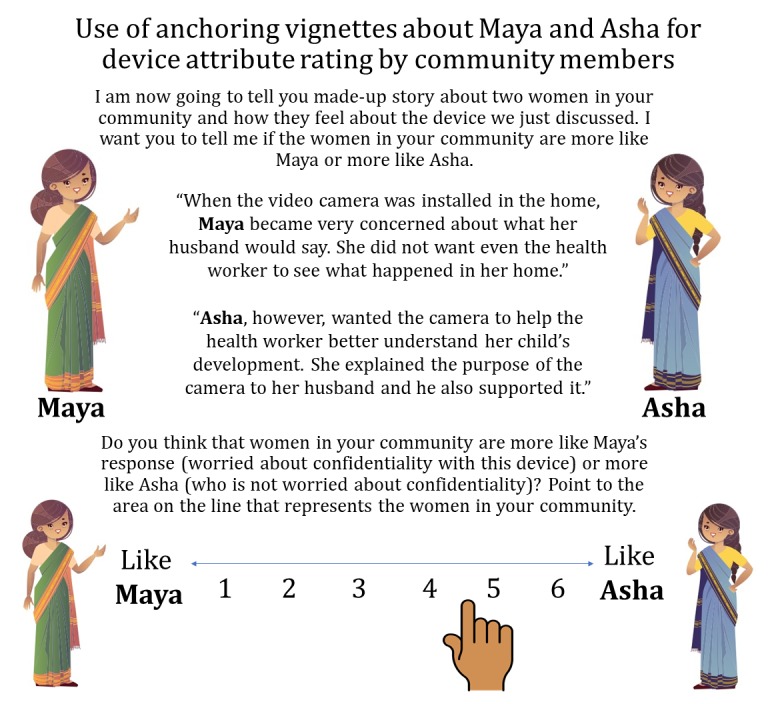
“The use of anchoring vignette with a third-person character simplifies the comparative process and minimizes the social desirability biases [44], that is, the responses are external to the individual and participants are not bound to present themselves as someone agreeable, which is very important in some cultural set…”
The Quality of Mixed Methods Studies in Health Services Research
O'cathain, A., Murphy, E., & Nicholl, J. (2008) · Journal of Health Services Research & Policy · doi:10.1258/jhsrp.2007.007074 · Cited by 1,916
Cognition assessment using the NIH Toolbox
Weintraub, S., Dikmen, S. S., Heaton, R. K., Tulsky, D. S., Zelazo, P. D., Bauer, P. J., Carlozzi, N. E., Slotkin, J., Blitz, D., Wallner-Allen, K., et al. (2013) · Neurology · doi:10.1212/wnl.0b013e3182872ded · Cited by 1,287 · cited 2×
“The toolbox comprises a validated set of freely available measures that can be used to quickly (within 2 hours or fewer) assess cognitive, sensory, motor, and emotional function in a diverse range of contexts [7].”
The Rise of Consumer Health Wearables: Promises and Barriers
Piwek, L., Ellis, D. A., Andrews, S., & Joinson, A. (2016) · PLOS Medicine · doi:10.1371/journal.pmed.1001953 · Cited by 1,235 · cited 1×
“Among the sensors included in modern mobile phones are accelerometer, altimeter, digital camera, microphone, Global Positioning System (GPS), Bluetooth proximity, and oximeter among others [19].”
Vision assessment using the NIH Toolbox
Varma, R., McKean-Cowdin, R., Vitale, S., Slotkin, J., & Hays, R. D. (2013) · Neurology · doi:10.1212/wnl.0b013e3182876e0a · Cited by 1,178
Handbook of methods in cultural anthropology
(1999) · Choice Reviews Online · doi:10.5860/choice.36-4846 · Cited by 1,066
Research works printed but not linked: 3
- Buenaflor, C, 2013, Int J Multimed Ubiquitous Eng, 8, 103
- Morrison, J, 2013, JNMA J Nepal Med Asso, 52, 538
- Kohrt, BA, 2009, Stud Nepali Hist Soc, 14, 107
Cited by
(2023) · doi:10.2196/42161 · Cited by 106
“It is not surprising that the public health sciences accounts for most articles focusing on health outcomes by providing 8 articles [35,55,57,63,83,87,92,156] followed by the social sciences applied to health, which provided 2 articles [91,96], and the HCI in health research, which provided 1…”
BackgroundInfluentialGlobal Mental Health: Interdisciplinary challenges for a field in motion
Bemme, D., & Kirmayer, L. J. (2020) · Transcultural Psychiatry · doi:10.1177/1363461519898035 · Cited by 103
“…the ethical implications, cultural acceptability, and feasibility of digital technologies in GMH are currently being studied by interventionists (Maulik et al., 2017, Kohrt et al., 2019), but they also invite broader reflection on the socio-cultural worlds they are part of and helping to create.”
BackgroundMaharjan, S. M., Poudyal, A., van Heerden, A. C., Byanjankar, P., Thapa, A., Islam, C., Kohrt, B. A., & Hagaman, A. K. (2021) · BMC Medical Informatics and Decision Making · doi:10.1186/s12911-021-01473-2 · Cited by 65
Self-citationPoudyal, A., van Heerden, A. C., Hagaman, A. K., Maharjan, S. M., Byanjankar, P., Subba, P., & Kohrt, B. A. (2019) · JMIR Research Protocols · doi:10.2196/14734 · Cited by 41
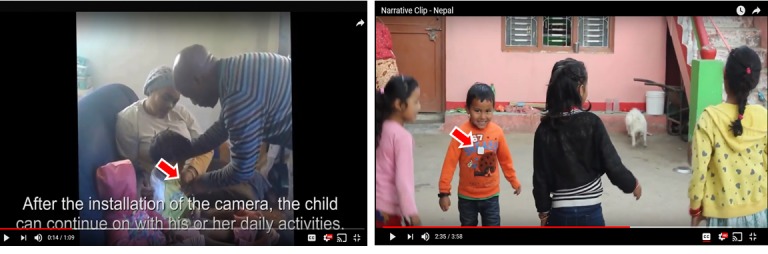
“The community advisory board also reviewed the technology to be used by observing videos demonstrating the technology [70] and through a live demonstration of the technology.”
InfluentialSelf-citationLeal-Neto, O. B., Haenni, S., Phuka, J. C., Ozella, L., Paolotti, D., Cattuto, C., Robles, D., & Lichand, G. (2021) · JMIR Public Health and Surveillance · doi:10.2196/23154 · Cited by 28
“Even the observation of several factors that coexist in Malawi shows that they have been addressed as syndemics in similar contexts like Kenya or in similar social fabric related to food insecurity, maternal mental health, and domestic violence [52,53].”
Background
Metadata
- Authors
- Kohrt, B. A., Rai, S., Vilakazi, K., Thapa, K., Bhardwaj, A., & van Heerden, A.
- Affiliations
- George Washington University (US)
- University of Washington (US)
- Human Sciences Research Council (ZA)
- University of Georgia (US)
- Johns Hopkins University (US)
- Corresponding author
- Kohrt, Brandon A
- Venue
- JMIR Pediatrics and Parenting
- Publisher
- JMIR Publications Inc.
- Published
- 2019-01-16
- Volume
- 2
- Issue
- 1
- Pages
- e12366
- ISSN
- 2561-6722 (ISSN-L)
- PMC
- PMC6716492
- OpenAlex
- W2907072092
- Cited by
- 29
- References
- 50
- Citations by year
- 2026: 1 · 2025: 1 · 2024: 2 · 2023: 1 · 2022: 4 · 2021: 6 · 2020: 11 · 2019: 2
- FWCI
- 7.64
- Type
- journal article
- Language
- en
- Open access
- gold
- doi.org
- Licence
- cc-by
- Locations
- JMIR Pediatrics and Parenting (publishedVersion, cc-by)
- PubMed Central (publishedVersion, cc-by)
- PubMed (publishedVersion)
- Funders
- Jacobs Foundation
- Topics
- Health Sciences › Health Professions › General Health Professions › Mobile Health and mHealth Applications
- Physical Sciences › Computer Science › Information Systems › ICT in Developing Communities
- Physical Sciences › Computer Science › Human-Computer Interaction › Innovative Human-Technology Interaction
- Keywords
- passive data collection, cultural acceptability, caregiver mental health, child development monitoring, home video recording, community health workers, caregiver preferences, resource-limited settings, South Africa, Nepal, KwaZulu-Natal, Kathmandu Valley
About these checks
Registry, retraction, Cites and statistics results are computed, not judged, with one exception: a printed reference that no index lists is read once by a model before it counts as a citation error. Claims are extracted by a model and kept only when their quote appears verbatim in the text; each cited source is then checked, with a model’s help, for whether it says what the claim relies on. Those verdicts can be wrong — read the claim’s quote and the cited source before relying on one.
Statistics and arithmetic are recomputed, not judged.
Confidence bands are shown only for fields calibrated on our annotated test set. None is calibrated yet, so no band is shown.
What counts as a claim ›How we measure confidence ›How we check this ›
Are you an author, or do you see a problem with this page? Request a review
How to cite
Cite CoChat for the checks on this page, and the paper for its own findings.
- This page
- CoChat. (2026). Citation check: Procedures to Select Digital Sensing Technologies for Passive Data Collection With Children and Their Caregivers: Qualitative Cultural Assessment in South Africa and Nepal. https://app.cochat.ai/papers/10.2196/12366
- The paper
- Kohrt, B. A., Rai, S., Vilakazi, K., Thapa, K., Bhardwaj, A., & van Heerden, A. (2019). Procedures to Select Digital Sensing Technologies for Passive Data Collection With Children and Their Caregivers: Qualitative Cultural Assessment in South Africa and Nepal. JMIR Pediatrics and Parenting. https://doi.org/10.2196/12366
Data sources
Bibliographic data: Semantic Scholar, OpenAlex, Crossref.
Contains information from the Semantic Scholar Academic Graph Datasets, made available under the ODC Attribution License (ODC-BY 1.0).
Semantic Scholar’s data is described in: Kinney, R., et al. (2023). The Semantic Scholar Open Data Platform. arXiv:2301.10140.
