

A Smartphone App–Based Mindfulness Intervention for Cancer Survivors: Protocol for a Randomized Controlled Trial
Open accessPublished version of a preprint
The DOI matches its Crossref record; 50 of the 50 references it cites were found in a registry or an index.
Abstract
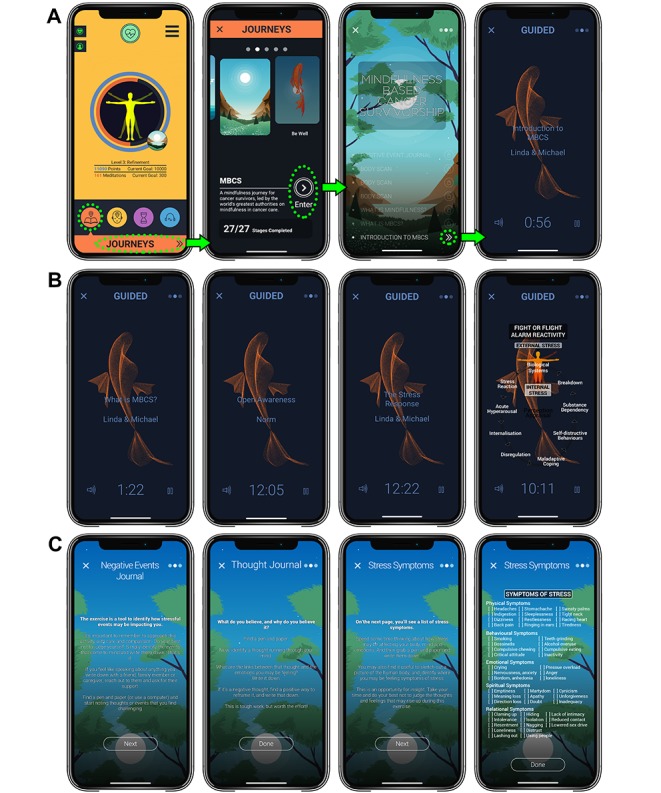
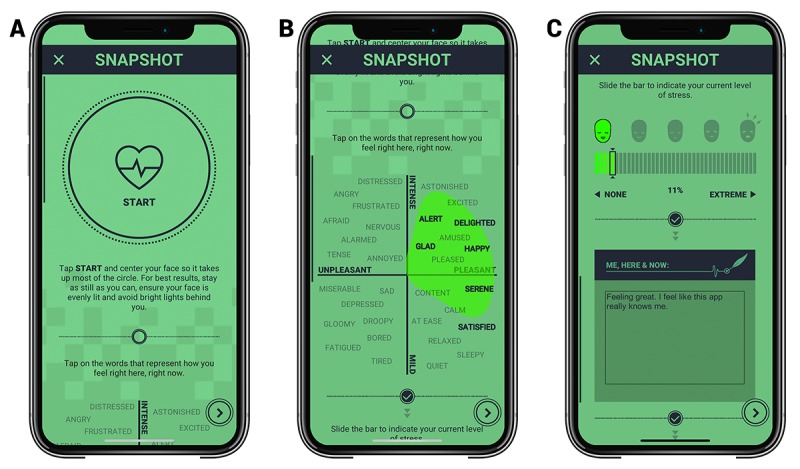
Background: Cancer patients transitioning to survivorship after completing cancer treatments need psychosocial interventions to manage stressors such as anxiety, depression, and fear of cancer recurrence. Mindfulness-based interventions (MBIs) are effective for treating these symptoms; however, cancer survivors are often unable to participate in face-to-face interventions because of difficulties such as work and family commitments, treatment-related side-effects, scheduling conflicts, and geography. Smartphone app–based MBIs are an innovative way to deliver psychosocial cancer care and can overcome several such difficulties, since patients can participate at their own convenience. Objective: The SEAMLESS (Smartphone App–Based Mindfulness Intervention for Cancer Survivors) study aims to evaluate the efficacy of a tailored app-based mindfulness intervention for cancer survivors (the Am Mindfulness-Based Cancer Survivorship—MBCS—Journey) for treating (1) symptoms of stress (primary outcome), as well as (2) fear of cancer recurrence, anxiety, depression, fatigue, and overall physical functioning (secondary outcomes). This is the first Canadian efficacy trial of a tailored mindfulness app intervention in cancer survivors. Methods: This is a randomized waitlist-controlled trial, which will evaluate the effectiveness of Am MBCS for impacting the primary and secondary outcomes in cancer survivors who have completed all their cancer treatments. Outcomes will be assessed using web-based surveys with validated psychometric instruments at (1) baseline, (2) mid-intervention (2 weeks later), (3) immediately postintervention (4 weeks), (4) 3 months postbaseline, (5) 6 months postbaseline, and (6) 12 months postbaseline. The waitlist group will complete all assessments and will cross over to the intervention condition after the 3-month assessment. In addition, data will be obtained by the smartphone app itself, which includes users’ engagement with the app-based intervention, their emotional state (eg, angry and elated) from a user-inputted digital emotion-mapping board, and psychobiometric data using photoplethysmography technology. Results: The study received ethics approval in September 2018 and recruitment commenced in January 2019. Participants are being recruited through a provincial cancer registry, and the majority of participants currently enrolled are breast (44/83, 53%) or colorectal (17/83, 20%) cancer survivors, although some survivors of other cancer are also present. Data collection for analysis of the primary outcome time-point will be complete by September 2019, and the follow-up data will be collected and analyzed by September 2020. Data will be analyzed to determine group differences using linear mixed modelling statistical techniques. Conclusions: Cancer care providers are uncertain about the efficacy of app-based mindfulness interventions for patients, which are available in great supply in today’s digital world. This study will provide rigorously evaluated efficacy data for an app-based mindfulness intervention for cancer survivors, which if helpful, could be made available for psychosocial care at cancer centers worldwide. Trial Registration: ClinicalTrials.gov NCT03484000; https://clinicaltrials.gov/ct2/show/NCT03484000 International Registered Report Identifier (IRRID): DERR1-10.2196/15178
Overview
The claims and statistics of this paper haven’t been checked yet.
Free: it reads the open-access text and checks the first 5 claims that cite a source we can check. Create a free account to check every claim.
Integrity signals
Registry
Cites
Statistics
Figures
Verification
Claims the paper makes
The claims and statistics of this paper haven’t been checked yet.
Free: it reads the open-access text and checks the first 5 claims that cite a source we can check. Create a free account to check every claim.
Claims other papers make about this one
Each is checked against this paper’s own text: does it say what the citing paper says it does?
The source backs part of the claim, not all of it — or backs it for a different population, condition or comparison.
In the citing paper
“The curriculum is based on previously validated AmDTx MBI app protocols [27,43] and team expertise in youth MBI (Sonia Roth, Craig Mackie, MC, and AAL) and was peer reviewed by experts in the field and parent engagement leaders (Ana Maria Vranceanu, Jonathan Greenberg, and Erin McCarthy).”
From Smartphone App–Delivered Mindfulness-Based Intervention for Mild Traumatic Brain Injury in Adolescents: Protocol for a Feasibility Randomized Controlled Trial (2024) · cites this paper as [43]
Experimental — accuracy not yet measured
Self-check
Percentages, sums and reported differences re-computed from the paper’s own numbers.
The self-check needs the paper’s full text.
Citations
Cites
Faul, F., Erdfelder, E., Lang, A.-G., & Buchner, A. (2007) · Behavior Research Methods · doi:10.3758/bf03193146 · Cited by 65,971 · cited 2×
“For this study, we therefore used a medium effect size (f=0.25) to conduct an a priori sample size calculation using the software G*Power 3.1.9.3 developed and maintained by researchers at Heinrich Heine University Düsseldorf [35].”
BackgroundInfluentialHarris, P. A., Taylor, R., Thielke, R., Payne, J., Gonzalez, N., & Conde, J. G. (2009) · Journal of Biomedical Informatics · doi:10.1016/j.jbi.2008.08.010 · Cited by 51,384 · cited 1×
“REDCap’s web-based app uses secure two-factor web authentication, data logging, and secure sockets layer encryption that ensures the security and confidentiality of private information for obtaining informed consent [37].”
MethodCella, D., Riley, W., Stone, A., Rothrock, N., Reeve, B., Yount, S., Amtmann, D., Bode, R., Buysse, D., Choi, S., et al. (2010) · Journal of Clinical Epidemiology · doi:10.1016/j.jclinepi.2010.04.011 · Cited by 5,128 · cited 1×
“0–Anxiety [52] All PROMIS-Cancer instruments were developed for use with any cancer patient.”
MethodHayes, S. C., Wilson, K. G., Gifford, E. V., Follette, V. M., & Strosahl, K. (1996) · Journal of Consulting and Clinical Psychology · doi:10.1037//0022-006x.64.6.1152 · Cited by 3,595
Eysenbach, G., & CONSORT-EHEALTH Group (2011) · Journal of Medical Internet Research · doi:10.2196/jmir.1923 · Cited by 1,863 · cited 2×
“The results will be reported as per the updated Consolidated Standards of Reporting Trials (CONSORT) eHealth checklist [43] version 1.”
MethodTrapnell, P. D., & Campbell, J. D. (1999) · Journal of Personality and Social Psychology · doi:10.1037/0022-3514.76.2.284 · Cited by 1,646
Boutron, I., Altman, D. G., Moher, D., Schulz, K. F., Ravaud, P., & for the CONSORT NPT Group* (2017) · Annals of Internal Medicine · doi:10.7326/m17-0046 · Cited by 1,538 · cited 1×
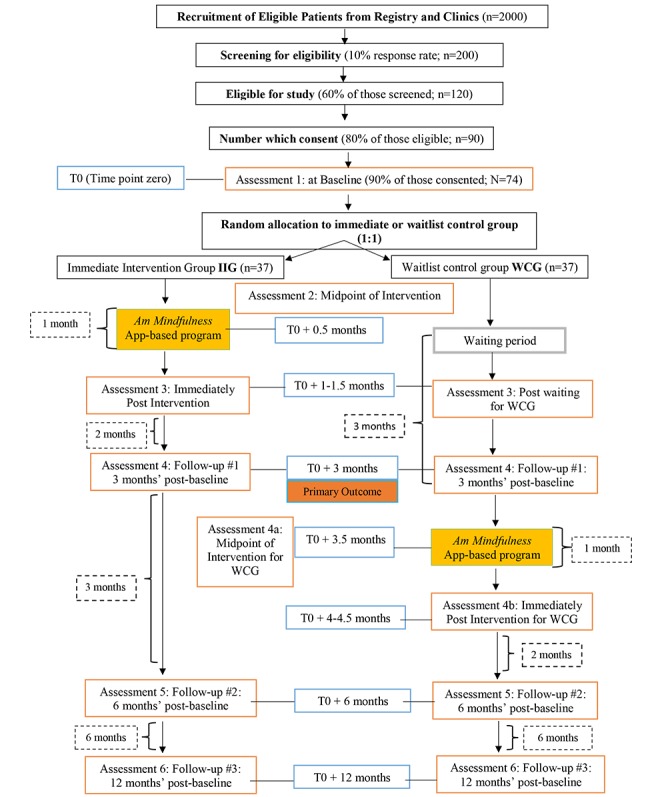
“and will follow guidelines and the flow diagram for reporting nonpharmacological treatments [44].”
BackgroundSix-item screener to identify cognitive impairment among potential subjects for clinical research
Callahan, C. M., Unverzagt, F. W., Hui, S. L., Perkins, A. J., & Hendrie, H. C. (2002) · Medical Care · doi:10.1097/00005650-200209000-00007 · Cited by 1,499 · cited 6×
“(3) Cognitive impairment that would interfere with completing questionnaires or the intervention; <6 on the Brief Screen for Cognitive Impairment (BSCI) [3]”
MethodInfluential(2006) · National Academies Press eBooks · doi:10.17226/11613 · Cited by 737
Simard, S., & Savard, J. (2009) · Supportive Care in Cancer · doi:10.1007/s00520-008-0444-y · Cited by 608 · cited 3×
“FCRI contains 42 items, evaluating 7 components associated with the fear of cancer recurrence: triggers, severity, psychological distress and functioning impairments, Fear of Cancer Recurrence Inventory (FCRI) [48] Fear of cancer recurrence insight scale, reassurance, and coping strategies.”
BackgroundInfluential
Research works printed but not linked: 2
- National Research Council Institute of Medicine Ganz PA Hewitt M From Cancer Patient to Cancer Survivor: Lost in Transition 2006 Washington, DC National Academies Press
- Puddicombe A The Headspace Guide to Meditation and Mindfulness: How Mindfulness Can Change Your Life in Ten Minutes a Day 2012 New York, NY St. Martin's Griffin
Cited by
van Beek, F. E., Wijnhoven, L. M. A., Holtmaat, K., Custers, J. A. E., Prins, J. B., Leeuw, I. M. V., & Jansen, F. (2021) · Psycho-Oncology · doi:10.1002/pon.5753 · Cited by 79
Review of Psychological Interventions in Oncology: Current Trends and Future Directions
Anghel, T., MELANIA, B. L., Costea, I., Albai, O., Marinca, A., Levai, C. M., & Hogea, L. (2025) · Medicina · doi:10.3390/medicina61020279 · Cited by 57
“For example, a randomized controlled trial exploring a smartphone app-based mindfulness intervention found it feasible and beneficial for cancer survivors to use, addressing their specific psychosocial needs [49].”
Haßdenteufel, K., Müller, M., Abele, H., Brucker, S. Y., Graf, J., Zipfel, S., Bauer, A., Jakubowski, P., Pauluschke‐Fröhlich, J., Wallwiener, M., et al. (2023) · Psychiatry Research · doi:10.1016/j.psychres.2023.115599 · Cited by 45
“Lastly, the 8-week duration was selected based on considerations of potentially greater effectiveness than shorter interventions programs used in earlier research (Subnis et al., 2020).”
Toivonen, K., Hermann, M., White, J. H., Speca, M., & Carlson, L. E. (2020) · Mindfulness · doi:10.1007/s12671-020-01461-z · Cited by 27
Self-citationAI-enabled remote and objective quantification of stress at scale
Al-Jebrni, A. H., Chwyl, B., Wang, X. Y., Wong, A., & Saab, B. J. (2020) · Biomedical Signal Processing and Control · doi:10.1016/j.bspc.2020.101929 · Cited by 21
Self-citationLiu, L., Liu, M., Lv, Z., Yan, F., Mao, Y., & Liu, Y. (2024) · BMC Nursing · doi:10.1186/s12912-024-02360-7 · Cited by 21
“…for colorectal cancer survivors through guided meditations, audio lectures, self-meditation timers, and logging features, which can save healthcare costs and meet the psychological needs of patients, and provide a new platform for continuity of psychological interventions for cancer survivors [30].”
BackgroundLedoux, A.-A., Zemek, R., Cairncross, M., Silverberg, N., Sicard, V., Barrowman, N., Goldfield, G., Gray, C., Harris, A. D., Jaworska, N., et al. (2024) · JMIR Research Protocols · doi:10.2196/57226 · Cited by 15
“The curriculum is based on previously validated AmDTx MBI app protocols [27,43] and team expertise in youth MBI (Sonia Roth, Craig Mackie, MC, and AAL) and was peer reviewed by experts in the field and parent engagement leaders (Ana Maria Vranceanu, Jonathan Greenberg, and Erin McCarthy).”
MethodSelf-citationNon-pharmaceutical interventions to optimize cancer immunotherapy
Boesch, M., Baty, F., Rassouli, F., Kowatsch, T., Joerger, M., Früh, M., & Brutsche, M. H. (2023) · OncoImmunology · doi:10.1080/2162402x.2023.2255459 · Cited by 20
(2024) · doi:10.2196/preprints.57226 · Cited by 14
Patient preference attributes in eHealth interventions for cancer‐related fatigue: A scoping review
Beenhakker, L., Witteveen, A., Wijlens, K. A. E., Siemerink, E., van der Lee, M. L., Bode, C., Siesling, S., & Vollenbroek-Hutten, M. M. R. (2022) · European Journal of Cancer Care · doi:10.1111/ecc.13754 · Cited by 17
“…Information System (PROMIS, Henry et al., 2018; Kelleher et al., 2021; Mikolasek et al., 2018; Nápoles et al., 2019; Price-Blackshear et al., 2020; Subnis et al., 2020) and the Functional Assessment of Cancer Therapy (FACT) or Functional Assessment of Chronic Illness Therapy (FACIT, Bray et al.,…”
BackgroundMethodInfluentialSicard, V., O'Kane, K. M. K., Brown, O., Butterfield, L., Kardish, R., Choi, E., Healey, K., Silverberg, N. D., Smith, A., Goldfield, G. S., et al. (2024) · Digital Health · doi:10.1177/20552076241248296 · Cited by 9
“19,39 The targeted MBI for this open-label pilot trial consists of a 4-week custom-made program for adolescents with concussion.”
MethodSelf-citationWang, H. S., Farb, N. A. S., & Saab, B. J. (2025) · Journal of Medical Internet Research · doi:10.2196/56086 · Cited by 7
“Asynchronous and on-demand psychotherapy was available as audio files and has been clinically validated across the mental illness severity spectrum [21-24, 26 , 27, 30-33”
Self-citationMcCloy, K., Hughes, C., Dunwoody, L., Marley, J., Cleland, I., Cruciani, F., Saunders, C., & Gracey, J. (2023) · PLoS ONE · doi:10.1371/journal.pone.0278252 · Cited by 6
“Following a review of web-based mindfulness intervention studies, it is estimated that the attrition rate will be approximately 20% with 10% to 15% of missing data [52,53].”
BackgroundPereira, D. R., Silva, E. R., Carvalho-Maia, C., Monteiro-Reis, S., Lourenço, C., Calisto, R., Teixeira, R. J., Carlson, L. E., Bart, G., Vainio, S. J., et al. (2022) · Trials · doi:10.1186/s13063-022-06045-x · Cited by 6
“In this study, we will adopt some of the strategies reported in previous studies, including twiceweekly email reminders [47], reinforced reminders during the synchronous sessions [96], and additional reminders to unresponsive participants [22, 23].”
MethodSelf-citationZibaite, S., Tripathee, S., Moffat, H., Elsberger, B., & Maclennan, S. (2024) · PLOS ONE · doi:10.1371/journal.pone.0312769 · Cited by 5
Sicard, V., O'Kane, K., Brown, O., Butterfield, L., Kardish, R., Choi, E., Healey, K., Silverberg, N. D., Smith, A., Goldfield, G., et al. (2022) · doi:10.2196/preprints.44757 · Cited by 4
Self-citationBergerot, C. D., Bergerot, P. G., Philip, E. J., Malhotra, J., Castro, D. V., Govindarajan, A., Fuzita, W. H., França, M. V. D. S., de Azeredo, A. C., dos Anjos, G. M., et al. (2025) · The Oncologist · doi:10.1093/oncolo/oyae309 · Cited by 6
Self-citationGonçalves, S. D. (2025) · Exploration of Medicine · doi:10.37349/emed.2025.1001355 · Cited by 7
Daros, A. R., Patel, A., Otevwe, O., Sotelo, S., Saab, B. J., & Quilty, L. C. (2025) · BMC Digital Health · doi:10.1186/s44247-025-00155-7 · Cited by 5
Self-citationAdvancing geohazard risk assessment – A digital tool for steep slope management
Godes, C. R., Lim, O.-B., Rodrigazo, S. A., Kim, Y., Kim, Y., Lee, S., & Yeon, J. (2025) · Progress in Disaster Science · doi:10.1016/j.pdisas.2025.100418 · Cited by 4
Godinho, A., Dalmia, S., Phadke, S., Lalani, Y., Wach, A. C., Rana, P., & Wegier, P. (2025) · Mindfulness · doi:10.1007/s12671-025-02614-8 · Cited by 3
Mind-Body Interventions for People With Cancer: Evidence, Innovation, and Implementation
Conradi, H., Petersson, J. N., Deleemans, J. M., Schuman, H. D. M., Savard, C., Irving, E., Marshall, N., & Carlson, L. E. (2026) · Seminars in Radiation Oncology · doi:10.1016/j.semradonc.2026.151009 · Cited by 4
Self-citationMindfulness-Based Interventions for Patients with Cancer
Porter, L. S., & Gremore, T. M. (2022) · Springer eBooks · doi:10.1007/978-3-030-85702-8_20 · Cited by 2
Carlson, L. E., Karim, S., & Labelle, L. E. (2022) · Integrative Cancer Therapies · doi:10.1177/15347354221103277 · Cited by 2
Self-citationConradi, H. S. W., Nguyen, T., Lawal, O. A., & Carlson, L. E. (2025) · Global Advances in Integrative Medicine and Health · doi:10.1177/27536130251367051 · Cited by 1
“26,27 Taken together, future studies can improve this area of research by assessing other potential mediators in the relationship between mindfulness and fatigue to better understand how mindfulness works to reduce fatigue and inform the development of interventions tailored to address fatigue in PWC, as rumination ma…”
InfluentialSelf-citationPurbaningsih, E. S., Nani, D., Triyanto, E., & Marisa, D. E. (2026) · Al-Rafidain Journal of Medical Sciences · doi:10.54133/ajms.v10i1.2527 · Cited by 1
Mindfulness-based interventions in integrative oncology
Carlson, L. E., Deleemans, J. M., Conradi, H., & Petersson, J. N. (2026) · Elsevier eBooks · doi:10.1016/b978-0-443-30194-0.00007-2 · Cited by 1
Self-citationPereira, D., Silva, E. R., Carvalho-Maia, C., Monteiro-Reis, S., Lourenço, C., Calisto, R., Teixeira, R. J., Carlson, L. E., Bart, G., Vainio, S. J., et al. (2021) · doi:10.21203/rs.3.rs-968587/v1
Self-citationde Souza, D. M. X., de Oliveira, L. N., Pinto, M. J. D. S., Demarzo, M., & Hortense, P. (2022) · Research Society and Development · doi:10.33448/rsd-v11i1.25110
Jebraeily, M., Eghtedar, S., Ayatollahi, H., & Mohammadzadeh, Z. (2022) · Research Square · doi:10.21203/rs.3.rs-1700972/v1
Jebraeily, M., Eghtedar, S., Ayatollahi, H., & Mohammadzadeh, Z. (2022) · Research Square · doi:10.21203/rs.3.rs-1749053/v1
Liu, Z., Li, M., Jia, Y., Zheng, L., & Chen, L. (2024) · Research Square · doi:10.21203/rs.3.rs-4825350/v1
Psycho-oncology interventions from research to practice: the case of mindfulness-based interventions
Carlson, L. E. (2024) · Journal of Psychosocial Oncology Research and Practice · doi:10.1097/or9.0000000000000139
Self-citationYamada, S., Arimitsu, K., Buyo, M., Mukai, T., Noguchi, R., Akiko, M. I. S. U., Sonoki, T., & HAYASHI, M. (2025) · Japanese Journal of Complementary and Alternative Medicine · doi:10.1625/jcam.22.9
Pereira, D. R., Silva, E., Carvalho-Maia, C., Monteiro‐Reis, S., Lourenço, C., Calisto, R., Teixeira, R. J., Carlson, L. E., Bart, G., Vainio, S. J., et al. (2022) · Figshare · doi:10.6084/m9.figshare.19128911
Self-citationLiu, Z., Li, M., Jia, Y., Zheng, L., & Chen, L. (2025) · Journal of Medical Internet Research · doi:10.2196/78337 · Cited by 2
Rai, H., Bruel, D. M. M., Hood, P., Sabiston, C. M., Saab, B. J., & Farb, N. A. S. (2026) · Mindfulness · doi:10.1007/s12671-025-02750-1
“Subsequent clinical investigations showed promise in alleviating a variety of psychiatric symptoms in both adults (Bergerot et al., 2022, 2023; Hood et al., 2022; Subnis et al., 2020; H. Wang et al., 2025) and adolescents (Ledoux et al., 2024; O’Kane et al., 2024; Sicard et al., 2024).”
Self-citationYang, C., Wang, L., Liu, Y., Zeng, J., & Zhou, W. (2026) · Current Medical Research and Opinion · doi:10.1080/03007995.2026.2740839
“For the high-proportion Class 3 patients, standardized health education, peer support programs, and supplementary interventions such as mindfulness-based cognitive therapy or behavioral activation therapy 55,56 may be considered to reduce psychological distress levels.”
Metadata
- Authors
- Subnis, U. B., Farb, N. A., Piedalue, K.-A. L., Speca, M., Lupichuk, S., Tang, P. A., Faris, P., Thoburn, M., Saab, B. J., & Carlson, L. E.
- Affiliations
- University of Calgary (CA)
- University of Toronto (CA)
- Corresponding author
- Subnis, Utkarsh B
- ORCID
- Venue
- JMIR Research Protocols
- Publisher
- JMIR Publications Inc.
- Published
- 2020-05-11
- Volume
- 9
- Issue
- 5
- Pages
- e15178
- ISSN
- 1929-0748 (ISSN-L)
- PMC
- PMC7248798
- OpenAlex
- W3005352987
- Cited by
- 37
- References
- 50
- Citations by year
- 2026: 5 · 2025: 10 · 2024: 6 · 2023: 3 · 2022: 9 · 2021: 2 · 2020: 2
- FWCI
- 1.44
- Type
- journal article
- Language
- en
- Open access
- gold
- doi.org
- Licence
- cc-by
- Locations
- JMIR Research Protocols (publishedVersion, cc-by)
- PubMed Central (publishedVersion, cc-by)
- PubMed (publishedVersion)
- DOAJ (DOAJ: Directory of Open Access Journals) (submittedVersion, cc-by-sa)
- Funders
- Canadian Institutes of Health Research
- Topics
- Health Sciences › Medicine › Oncology › Cancer survivorship and care
- Social Sciences › Psychology › Clinical Psychology › Mindfulness and Compassion Interventions
- Social Sciences › Psychology › Applied Psychology › Digital Mental Health Interventions
- Keywords
- cancer survivors, mindfulness-based interventions, mobile application, digital mental health, fear of cancer recurrence, anxiety, depression, fatigue, physical function, breast cancer, colorectal cancer, app engagement, photoplethysmography, personalized interventions
About these checks
Registry, retraction, Cites and statistics results are computed, not judged, with one exception: a printed reference that no index lists is read once by a model before it counts as a citation error. Claims are extracted by a model and kept only when their quote appears verbatim in the text; each cited source is then checked, with a model’s help, for whether it says what the claim relies on. Those verdicts can be wrong — read the claim’s quote and the cited source before relying on one.
Statistics and arithmetic are recomputed, not judged.
Confidence bands are shown only for fields calibrated on our annotated test set. None is calibrated yet, so no band is shown.
What counts as a claim ›How we measure confidence ›How we check this ›
Are you an author, or do you see a problem with this page? Request a review
Data sources
Bibliographic data: Semantic Scholar, OpenAlex, Crossref.
Contains information from the Semantic Scholar Academic Graph Datasets, made available under the ODC Attribution License (ODC-BY 1.0).
Semantic Scholar’s data is described in: Kinney, R., et al. (2023). The Semantic Scholar Open Data Platform. arXiv:2301.10140.
