

A Smartphone App–Based Mindfulness Intervention for Cancer Survivors: Protocol for a Randomized Controlled Trial
Open accessPublished version of a preprint
The DOI matches its Crossref record; 50 of the 50 references it cites were found in a registry or an index.
Abstract
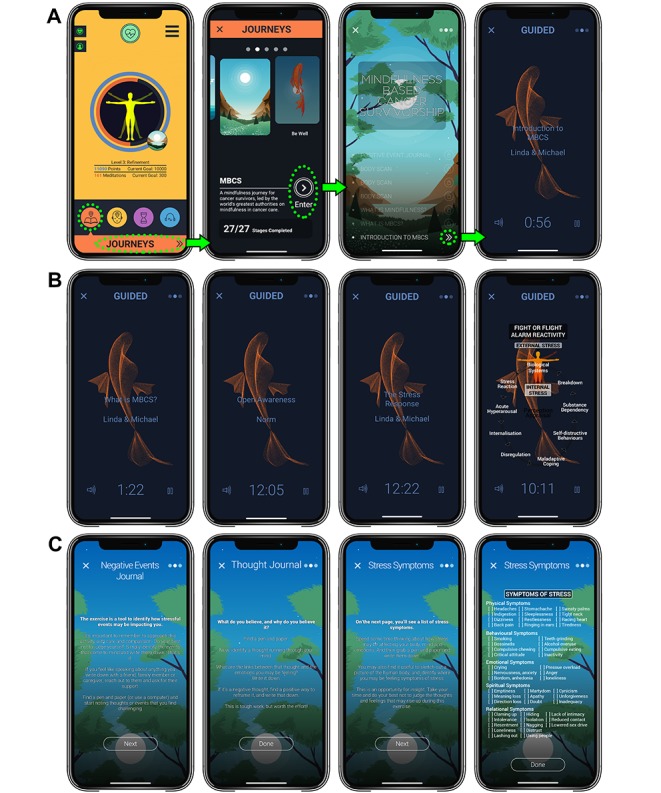
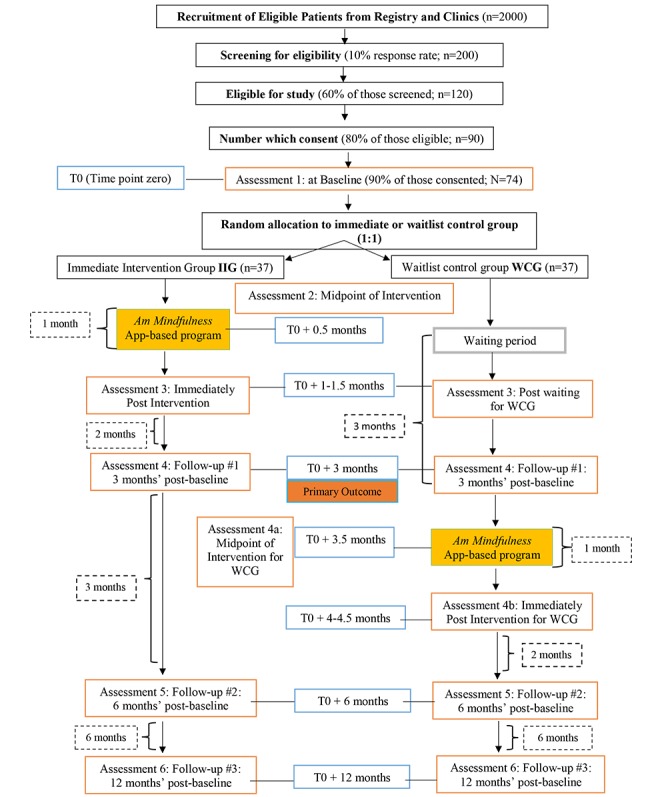
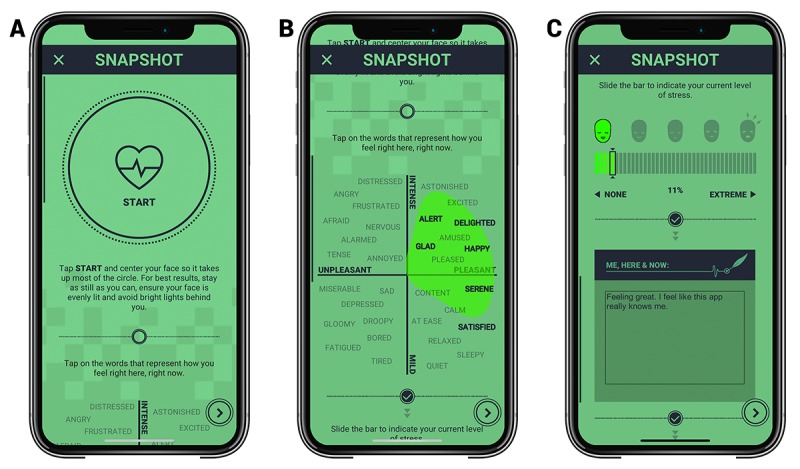
Background: Cancer patients transitioning to survivorship after completing cancer treatments need psychosocial interventions to manage stressors such as anxiety, depression, and fear of cancer recurrence. Mindfulness-based interventions (MBIs) are effective for treating these symptoms; however, cancer survivors are often unable to participate in face-to-face interventions because of difficulties such as work and family commitments, treatment-related side-effects, scheduling conflicts, and geography. Smartphone app–based MBIs are an innovative way to deliver psychosocial cancer care and can overcome several such difficulties, since patients can participate at their own convenience. Objective: The SEAMLESS (Smartphone App–Based Mindfulness Intervention for Cancer Survivors) study aims to evaluate the efficacy of a tailored app-based mindfulness intervention for cancer survivors (the Am Mindfulness-Based Cancer Survivorship—MBCS—Journey) for treating (1) symptoms of stress (primary outcome), as well as (2) fear of cancer recurrence, anxiety, depression, fatigue, and overall physical functioning (secondary outcomes). This is the first Canadian efficacy trial of a tailored mindfulness app intervention in cancer survivors. Methods: This is a randomized waitlist-controlled trial, which will evaluate the effectiveness of Am MBCS for impacting the primary and secondary outcomes in cancer survivors who have completed all their cancer treatments. Outcomes will be assessed using web-based surveys with validated psychometric instruments at (1) baseline, (2) mid-intervention (2 weeks later), (3) immediately postintervention (4 weeks), (4) 3 months postbaseline, (5) 6 months postbaseline, and (6) 12 months postbaseline. The waitlist group will complete all assessments and will cross over to the intervention condition after the 3-month assessment. In addition, data will be obtained by the smartphone app itself, which includes users’ engagement with the app-based intervention, their emotional state (eg, angry and elated) from a user-inputted digital emotion-mapping board, and psychobiometric data using photoplethysmography technology. Results: The study received ethics approval in September 2018 and recruitment commenced in January 2019. Participants are being recruited through a provincial cancer registry, and the majority of participants currently enrolled are breast (44/83, 53%) or colorectal (17/83, 20%) cancer survivors, although some survivors of other cancer are also present. Data collection for analysis of the primary outcome time-point will be complete by September 2019, and the follow-up data will be collected and analyzed by September 2020. Data will be analyzed to determine group differences using linear mixed modelling statistical techniques. Conclusions: Cancer care providers are uncertain about the efficacy of app-based mindfulness interventions for patients, which are available in great supply in today’s digital world. This study will provide rigorously evaluated efficacy data for an app-based mindfulness intervention for cancer survivors, which if helpful, could be made available for psychosocial care at cancer centers worldwide. Trial Registration: ClinicalTrials.gov NCT03484000; https://clinicaltrials.gov/ct2/show/NCT03484000 International Registered Report Identifier (IRRID): DERR1-10.2196/15178
Overview
The claims and statistics of this paper haven’t been checked yet.
Free: it reads the open-access text and checks the first 5 claims that cite a source we can check. Create a free account to check every claim.
Integrity signals
Registry
Cites
Statistics
Figures
Verification
Claims the paper makes
The claims and statistics of this paper haven’t been checked yet.
Free: it reads the open-access text and checks the first 5 claims that cite a source we can check. Create a free account to check every claim.
Claims other papers make about this one
Each is checked against this paper’s own text: does it say what the citing paper says it does?
The source backs part of the claim, not all of it — or backs it for a different population, condition or comparison.
In the citing paper
“The curriculum is based on previously validated AmDTx MBI app protocols [27,43] and team expertise in youth MBI (Sonia Roth, Craig Mackie, MC, and AAL) and was peer reviewed by experts in the field and parent engagement leaders (Ana Maria Vranceanu, Jonathan Greenberg, and Erin McCarthy).”
From Smartphone App–Delivered Mindfulness-Based Intervention for Mild Traumatic Brain Injury in Adolescents: Protocol for a Feasibility Randomized Controlled Trial (2024) · cites this paper as [43]
Experimental — accuracy not yet measured
Self-check
Percentages, sums and reported differences re-computed from the paper’s own numbers.
The self-check needs the paper’s full text.
Citations
Cites
Faul, F., Erdfelder, E., Lang, A.-G., & Buchner, A. (2007) · Behavior Research Methods · doi:10.3758/bf03193146 · Cited by 65,971 · cited 2×
“For this study, we therefore used a medium effect size (f=0.25) to conduct an a priori sample size calculation using the software G*Power 3.1.9.3 developed and maintained by researchers at Heinrich Heine University Düsseldorf [35].”
BackgroundInfluentialHarris, P. A., Taylor, R., Thielke, R., Payne, J., Gonzalez, N., & Conde, J. G. (2009) · Journal of Biomedical Informatics · doi:10.1016/j.jbi.2008.08.010 · Cited by 51,384 · cited 1×
“REDCap’s web-based app uses secure two-factor web authentication, data logging, and secure sockets layer encryption that ensures the security and confidentiality of private information for obtaining informed consent [37].”
MethodCella, D., Riley, W., Stone, A., Rothrock, N., Reeve, B., Yount, S., Amtmann, D., Bode, R., Buysse, D., Choi, S., et al. (2010) · Journal of Clinical Epidemiology · doi:10.1016/j.jclinepi.2010.04.011 · Cited by 5,128 · cited 1×
“0–Anxiety [52] All PROMIS-Cancer instruments were developed for use with any cancer patient.”
MethodHayes, S. C., Wilson, K. G., Gifford, E. V., Follette, V. M., & Strosahl, K. (1996) · Journal of Consulting and Clinical Psychology · doi:10.1037//0022-006x.64.6.1152 · Cited by 3,595
Eysenbach, G., & CONSORT-EHEALTH Group (2011) · Journal of Medical Internet Research · doi:10.2196/jmir.1923 · Cited by 1,863 · cited 2×
“The results will be reported as per the updated Consolidated Standards of Reporting Trials (CONSORT) eHealth checklist [43] version 1.”
MethodTrapnell, P. D., & Campbell, J. D. (1999) · Journal of Personality and Social Psychology · doi:10.1037/0022-3514.76.2.284 · Cited by 1,646
Boutron, I., Altman, D. G., Moher, D., Schulz, K. F., Ravaud, P., & for the CONSORT NPT Group* (2017) · Annals of Internal Medicine · doi:10.7326/m17-0046 · Cited by 1,538 · cited 1×
“and will follow guidelines and the flow diagram for reporting nonpharmacological treatments [44].”
BackgroundSix-item screener to identify cognitive impairment among potential subjects for clinical research
Callahan, C. M., Unverzagt, F. W., Hui, S. L., Perkins, A. J., & Hendrie, H. C. (2002) · Medical Care · doi:10.1097/00005650-200209000-00007 · Cited by 1,499 · cited 6×
“(3) Cognitive impairment that would interfere with completing questionnaires or the intervention; <6 on the Brief Screen for Cognitive Impairment (BSCI) [3]”
MethodInfluential(2006) · National Academies Press eBooks · doi:10.17226/11613 · Cited by 737
Simard, S., & Savard, J. (2009) · Supportive Care in Cancer · doi:10.1007/s00520-008-0444-y · Cited by 608 · cited 3×
“FCRI contains 42 items, evaluating 7 components associated with the fear of cancer recurrence: triggers, severity, psychological distress and functioning impairments, Fear of Cancer Recurrence Inventory (FCRI) [48] Fear of cancer recurrence insight scale, reassurance, and coping strategies.”
BackgroundInfluentialValidation of the Mindful Attention Awareness Scale in a cancer population
Carlson, L. E., & Brown, K. W. (2005) · Journal of Psychosomatic Research · doi:10.1016/j.jpsychores.2004.04.366 · Cited by 583 · cited 3×
“MAAS is a 15-item scale, designed to assess characteristics associated with mindfulness, such as open or receptive awareness of and attention to what is taking place in Mindfulness Attention Awareness Scale (MAAS) [49] Mindfulness”
BackgroundInfluentialSelf-citationClinical validity of PROMIS depression, anxiety, and anger across diverse clinical samples
Schalet, B. D., Pilkonis, P. A., Yu, L., Dodds, N., Johnston, K. L., Yount, S., Riley, W., & Cella, D. (2016) · Journal of Clinical Epidemiology · doi:10.1016/j.jclinepi.2015.08.036 · Cited by 507
Matthew-Maich, N., Harris, L., Ploeg, J., Markle-Reid, M., Valaitis, R., Ibrahim, S., Gafni, A., & Isaacs, S. (2016) · JMIR mHealth and uHealth · doi:10.2196/mhealth.5127 · Cited by 390
Sun, Y., Zhang, Y., Gwizdka, J., & Trace, C. B. (2019) · Journal of Medical Internet Research · doi:10.2196/12522 · Cited by 333
Ward, E. M., Sherman, R. L., Henley, S. J., Jemal, A., Siegel, D. A., Feuer, E. J., Firth, A. U., Kohler, B. A., Scott, S., Ma, J., et al. (2019) · JNCI: Journal of the National Cancer Institute · doi:10.1093/jnci/djz106 · Cited by 323 · cited 1×
“Concurrently, they must deal with psychosocial stressors such as anxiety, depression, uncertainty about the future, and fear of cancer recurrence as they transition back to their previous roles and responsibilities at home and in the workplace; these factors can impair their quality of life, performance at work, and t…”
BackgroundCarlson, L. E., Doll, R., Stephen, J., Faris, P., Tamagawa, R., Drysdale, E., & Speca, M. (2013) · Journal of Clinical Oncology · doi:10.1200/jco.2012.47.5210 · Cited by 282 · cited 2×
“The investigators on this research team LC and MS have studied MBCR for the past three decades and have tested its efficacy in a range of studies and groups of people with cancer, with success in impacting a range of biological and psychosocial outcomes including, but not limited to, symptoms of stress, quality of lif…”
BackgroundMethodSelf-citationPROMIS Fatigue Item Bank had Clinical Validity across Diverse Chronic Conditions
Cella, D., Lai, J.-S., Jensen, S. E., Christodoulou, C., Junghaenel, D. U., Reeve, B. B., & Stone, A. A. (2016) · Journal of Clinical Epidemiology · doi:10.1016/j.jclinepi.2015.08.037 · Cited by 255 · cited 1×
“9) in numerous studies within cancer and other clinical populations [54].”
BackgroundAdvances in Patient Reported Outcomes: The NIH PROMIS Measures
Broderick, J., DeWit, E. M., Rothrock, N., Crane, P., & Forrest, C. B. (2013) · eGEMs (Generating Evidence & Methods to improve patient outcomes) · doi:10.13063/2327-9214.1015 · Cited by 244 · cited 2×
“The advantage of using PROMIS measures is that they are psychometrically sound and have been created to be relevant across all conditions for the assessment of symptoms and functions [45].”
MethodLeach, C. R., Weaver, K. E., Aziz, N. M., Alfano, C. M., Bellizzi, K. M., Kent, E. E., Forsythe, L. P., & Rowland, J. H. (2015) · Journal of Cancer Survivorship · doi:10.1007/s11764-014-0403-1 · Cited by 240 · cited 7×
“(3) Cognitive impairment that would interfere with completing questionnaires or the intervention; <6 on the Brief Screen for Cognitive Impairment (BSCI) [3]”
BackgroundInfluentialJensen, R. E., Potosky, A. L., Reeve, B. B., Hahn, E., Cella, D., Fries, J., Smith, A. W., Keegan, T. H. M., Wu, X.-C., Paddock, L., et al. (2015) · Quality of Life Research · doi:10.1007/s11136-015-0992-9 · Cited by 237 · cited 6×
“The PROMIS-Cancer Physical Function item bank contains a total of 45 items, 33 of which are also in the PROMIS-Physical Function item bank [55], and will be delivered to patients in this study.”
MethodInfluentialBorah, P., & Xiao, X. (2018) · Journal of Health Communication · doi:10.1080/10810730.2018.1455770 · Cited by 216 · cited 1×
“Also, cancer patients and survivors are more inclined to accept and utilize content created and delivered by clinical experts, for reasons such as source credibility and condition-specific content [28-30].”
BackgroundLeykin, Y., Thekdi, S. M., Shumay, D. M., Muñoz, R. F., Riba, M., & Dunn, L. B. (2012) · Psycho-Oncology · doi:10.1002/pon.1993 · Cited by 192 · cited 2×
“In the field of cancer care, reviews of internet and smartphone app–based interventions for cancer patients and survivors have suggested that cancer patients find these interventions to be highly acceptable and feasible [15,16].”
BackgroundZernicke, K. A., Campbell, T. S., Speca, M., McCabe-Ruff, K., Flowers, S., & Carlson, L. E. (2014) · Psychosomatic Medicine · doi:10.1097/psy.0000000000000053 · Cited by 187 · cited 2×
“In addition, based on our previous experience with online and in-person MBI trials and previous app-based studies [10,18,20,34,36], we assumed approximately 20% attrition and”
MethodSelf-citationKubo, A., Kurtovich, E., McGinnis, M., Aghaee, S., Altschuler, A., Quesenberry, C., Kolevska, T., & Avins, A. L. (2019) · Integrative Cancer Therapies · doi:10.1177/1534735419850634 · Cited by 167 · cited 1×
“In addition, based on our previous experience with online and in-person MBI trials and previous app-based studies [10,18,20,34,36], we assumed approximately 20% attrition and”
MethodMind‐body interventions for fear of cancer recurrence: A systematic review and meta‐analysis
Hall, D. L., Luberto, C. M., Philpotts, L. L., Song, R., Park, E. R., & Yeh, G. Y. (2018) · Psycho-Oncology · doi:10.1002/pon.4757 · Cited by 159 · cited 2×
“5 for stress [34]; also, most MBI studies collect their primary outcome at 3 months postbaseline as most mindfulness interventions span 6 to 10 weeks [7,34].”
BackgroundResearch-Tested Mobile Apps for Breast Cancer Care: Systematic Review
Jongerius, C., Russo, S., Mazzocco, K., & Pravettoni, G. (2019) · JMIR mHealth and uHealth · doi:10.2196/10930 · Cited by 146 · cited 3×
“Also, recent systematic reviews and meta-analyses of app-based mindfulness interventions in the cancer population report high feasibility and acceptability; albeit engagement is an important variable to consider for intervention success [16,19,20].”
BackgroundMindfulness‐based interventions for coping with cancer
Carlson, L. E. (2016) · Annals of the New York Academy of Sciences · doi:10.1111/nyas.13029 · Cited by 143 · cited 3×
“The investigators on this research team LC and MS have studied MBCR for the past three decades and have tested its efficacy in a range of studies and groups of people with cancer, with success in impacting a range of biological and psychosocial outcomes including, but not limited to, symptoms of stress, quality of lif…”
BackgroundSelf-citationNoone, C., & Hogan, M. J. (2018) · BMC Psychology · doi:10.1186/s40359-018-0226-3 · Cited by 140 · cited 1×
“For example, this is demonstrated by a randomized trial of Headspace with college students that reported no effects for the mindfulness component of Headspace’s app-based program [24].”
BackgroundPsychotherapist mindfulness and the psychotherapy process.
Bruce, N. G., Manber, R., Shapiro, S. L., & Constantino, M. J. (2010) · Psychotherapy: Theory, Research, Practice, Training · doi:10.1037/a0018842 · Cited by 132 · cited 1×
“This approach may not connect with all cancer patients and survivors, considering the importance of the patient-psychotherapist relationship in determining the success of any psychotherapeutic practice [26,27].”
BackgroundWalsh, K. M., Saab, B. J., & Farb, N. A. (2019) · JMIR Mental Health · doi:10.2196/10844 · Cited by 123 · cited 3×
“Evidence from a recent randomized trial with a prerelease version of the Am Mindfulness app (called Wildflowers) has demonstrated efficacy evidence for reducing anxiety in college students before a stressful event of an examination [33].”
BackgroundMethodInfluentialSelf-citationLengacher, C. A., Shelton, M. M., Reich, R. R., Barta, M. K., Johnson-Mallard, V., Moscoso, M. S., Paterson, C., Ramesar, S., Budhrani, P., Carranza, I., et al. (2014) · Journal of Behavioral Medicine · doi:10.1007/s10865-012-9473-6 · Cited by 117
Rosen, K. D., Paniagua, S. M., Kazanis, W., Jones, S., & Potter, J. S. (2018) · Psycho-Oncology · doi:10.1002/pon.4764 · Cited by 106 · cited 2×
“a randomized waitlist-controlled trial and a prospective cohort study of Headspace have demonstrated good overall efficacy for improving outcomes such as quality of life and anxiety in women diagnosed with breast cancer [21,23].”
BackgroundLengacher, C. A., Reich, R. R., Ramesar, S., Alinat, C. B., Moscoso, M., Cousin, L., Marino, V. R., Elias, M. N., Paterson, C. L., Pleasant, M. L., et al. (2018) · Psycho-Oncology · doi:10.1002/pon.4491 · Cited by 101 · cited 3×
“Most research studies of this nature have tested MBIs such as MBCR when delivered face to face in a group-based setting, although a variety of online-based and digitally adapted MBIs are now available to patients through smartphone apps [11].”
Backgroundde Abreu Costa, M., D’Alò de Oliveira, G. S., Tatton-Ramos, T., Manfro, G. G., & Salum, G. A. (2019) · Mindfulness · doi:10.1007/s12671-018-1058-1 · Cited by 85 · cited 2×
“5 for stress [34]; also, most MBI studies collect their primary outcome at 3 months postbaseline as most mindfulness interventions span 6 to 10 weeks [7,34].”
BackgroundMethodMikolasek, M., Witt, C. M., & Barth, J. (2018) · JMIR mHealth and uHealth · doi:10.2196/11271 · Cited by 83 · cited 1×
“Also, recent systematic reviews and meta-analyses of app-based mindfulness interventions in the cancer population report high feasibility and acceptability; albeit engagement is an important variable to consider for intervention success [16,19,20].”
BackgroundDevelopment of the calgary symptoms of stress inventory (c-sosi)
Carlson, L. E., & Thomas, B. C. (2007) · International Journal of Behavioral Medicine · doi:10.1007/bf03003000 · Cited by 81 · cited 3×
“The C-SOSI is a 56-item scale, derived from exploratory factor analysis on the 95item Symptom of Stress Inventory (SOSI) collected from cancer patients who attended Calgary Symptoms of Stress Inventory (C-SOSI) [47] Symptoms of stress”
MethodInfluentialSelf-citationNoone, C., & Hogan, M. J. (2016) · BMC Psychology · doi:10.1186/s40359-016-0122-7 · Cited by 81
Osborn, J., Ajakaiye, A., Cooksley, T., & Subbe, C. P. (2020) · Supportive Care in Cancer · doi:10.1007/s00520-019-04945-4 · Cited by 78 · cited 2×
“Furthermore, psycho-oncology researchers have advocated for more research with psychosocial interventions that can be delivered using the internet and smartphone apps in the cancer population [15-17].”
BackgroundCarlson, L. E., Tamagawa, R., Stephen, J., Doll, R., Faris, P., Dirkse, D., & Speca, M. (2014) · JNCI Monographs · doi:10.1093/jncimonographs/lgu034 · Cited by 69 · cited 1×
“The investigators on this research team LC and MS have studied MBCR for the past three decades and have tested its efficacy in a range of studies and groups of people with cancer, with success in impacting a range of biological and psychosocial outcomes including, but not limited to, symptoms of stress, quality of lif…”
BackgroundSelf-citationPatients' experiences with continuity of cancer care in Canada: Results from the CanIMPACT study.
Easley, J., Miedema, B. B., Carroll, J. C., O’Brien, M. A., Manca, D. P., & Grunfeld, E. (2016) · PubMed · Cited by 65
Donovan, E., Martin, S. R., Seidman, L. C., Zeltzer, L. K., Cousineau, T. M., Payne, L. A., Trant, M., Weiman, M., Knoll, M., & Federman, N. C. (2019) · JMIR mHealth and uHealth · doi:10.2196/10921 · Cited by 41 · cited 1×
“Also, cancer patients and survivors are more inclined to accept and utilize content created and delivered by clinical experts, for reasons such as source credibility and condition-specific content [28-30].”
BackgroundTheory-Based Predictors of Mindfulness Meditation Mobile App Usage: A Survey and Cohort Study
Crandall, A., Cheung, A., Young, A., & Hooper, A. P. (2019) · JMIR mHealth and uHealth · doi:10.2196/10794 · Cited by 36 · cited 2×
“Mobile app–based MBIs for cancer patients and survivors allow for considerable flexibility and appeal, especially since they eliminate the need for travel time and problems due to scheduling conflicts [11,12].”
BackgroundHuberty, J., Eckert, R., Larkey, L., Joeman, L., & Mesa, R. (2019) · JMIR Cancer · doi:10.2196/14292 · Cited by 35 · cited 1×
“However, while there are hundreds of commercially available mindfulness training apps, eg, Headspace, Calm, and 10% Happier [21,22], only Headspace has been customized for cancer patients and been scientifically evaluated [21].”
BackgroundProgress in net cancer survival in Canada over 20 years.
Ellison, L. F. (2018) · PubMed · Cited by 32
AI-enabled remote and objective quantification of stress at scale
Al-Jebrni, A. H., Chwyl, B., Wang, X. Y., Wong, A., & Saab, B. J. (2020) · Biomedical Signal Processing and Control · doi:10.1016/j.bspc.2020.101929 · Cited by 21
Self-citationCuthbert, C. A., Samawi, H. H., Hemmelgarn, B. R., & Cheung, W. Y. (2018) · Systematic Reviews · doi:10.1186/s13643-018-0902-7 · Cited by 11 · cited 1×
“The most recent data suggest there are over 800,000 Canadians living with a history of cancer diagnosed in the previous 10 years [5].”
BackgroundRosen, K. D., & Potter, J. S. (2018) · Iproceedings · doi:10.2196/11907 · Cited by 5 · cited 2×
“In addition, based on our previous experience with online and in-person MBI trials and previous app-based studies [10,18,20,34,36], we assumed approximately 20% attrition and”
BackgroundMethodDeglint, J., Chung, A. G., Chwyl, B., Amelard, R., Kazemzadeh, F., Wang, X., Clausi, D. A., & Wong, A. K. C. (2016) · Proceedings of SPIE, the International Society for Optical Engineering/Proceedings of SPIE · doi:10.1117/12.2213532 · Cited by 3 · cited 1×
“First, cognitive stress is objectively quantified via a 30-second “selfie” video that uses an algorithm to extract heart rate and heart rate variability from the biosignals inherent to the human face using photoplethysmographic imaging principles [40].”
MethodDonovan, E., Zeltzer, L. K., Federman, N. C., Cousineau, T. M., Payne, L. A., Martin, S. R., Seidman, L. C., Weiman, M., Knoll, M., & Burton, J. A. (2017) · Iproceedings · doi:10.2196/iproc.8408 · Cited by 2 · cited 1×
“Also, cancer patients and survivors are more inclined to accept and utilize content created and delivered by clinical experts, for reasons such as source credibility and condition-specific content [28-30].”
BackgroundGrewal, N. K., Arya, R., Malik, R., Hasan, Y., Golden, D. W., & McCall, A. R. (2019) · International Journal of Radiation Oncology*Biology*Physics · doi:10.1016/j.ijrobp.2019.06.1181 · Cited by 2 · cited 1×
“a randomized waitlist-controlled trial and a prospective cohort study of Headspace have demonstrated good overall efficacy for improving outcomes such as quality of life and anxiety in women diagnosed with breast cancer [21,23].”
Background
Research works printed but not linked: 2
- National Research Council Institute of Medicine Ganz PA Hewitt M From Cancer Patient to Cancer Survivor: Lost in Transition 2006 Washington, DC National Academies Press
- Puddicombe A The Headspace Guide to Meditation and Mindfulness: How Mindfulness Can Change Your Life in Ten Minutes a Day 2012 New York, NY St. Martin's Griffin
Cited by
van Beek, F. E., Wijnhoven, L. M. A., Holtmaat, K., Custers, J. A. E., Prins, J. B., Leeuw, I. M. V., & Jansen, F. (2021) · Psycho-Oncology · doi:10.1002/pon.5753 · Cited by 79
Review of Psychological Interventions in Oncology: Current Trends and Future Directions
Anghel, T., MELANIA, B. L., Costea, I., Albai, O., Marinca, A., Levai, C. M., & Hogea, L. (2025) · Medicina · doi:10.3390/medicina61020279 · Cited by 57
“For example, a randomized controlled trial exploring a smartphone app-based mindfulness intervention found it feasible and beneficial for cancer survivors to use, addressing their specific psychosocial needs [49].”
Haßdenteufel, K., Müller, M., Abele, H., Brucker, S. Y., Graf, J., Zipfel, S., Bauer, A., Jakubowski, P., Pauluschke‐Fröhlich, J., Wallwiener, M., et al. (2023) · Psychiatry Research · doi:10.1016/j.psychres.2023.115599 · Cited by 45
“Lastly, the 8-week duration was selected based on considerations of potentially greater effectiveness than shorter interventions programs used in earlier research (Subnis et al., 2020).”
Toivonen, K., Hermann, M., White, J. H., Speca, M., & Carlson, L. E. (2020) · Mindfulness · doi:10.1007/s12671-020-01461-z · Cited by 27
Self-citationAI-enabled remote and objective quantification of stress at scale
Al-Jebrni, A. H., Chwyl, B., Wang, X. Y., Wong, A., & Saab, B. J. (2020) · Biomedical Signal Processing and Control · doi:10.1016/j.bspc.2020.101929 · Cited by 21
Self-citation
Metadata
- Authors
- Subnis, U. B., Farb, N. A., Piedalue, K.-A. L., Speca, M., Lupichuk, S., Tang, P. A., Faris, P., Thoburn, M., Saab, B. J., & Carlson, L. E.
- Affiliations
- University of Calgary (CA)
- University of Toronto (CA)
- Corresponding author
- Subnis, Utkarsh B
- ORCID
- Venue
- JMIR Research Protocols
- Publisher
- JMIR Publications Inc.
- Published
- 2020-05-11
- Volume
- 9
- Issue
- 5
- Pages
- e15178
- ISSN
- 1929-0748 (ISSN-L)
- PMC
- PMC7248798
- OpenAlex
- W3005352987
- Cited by
- 37
- References
- 50
- Citations by year
- 2026: 5 · 2025: 10 · 2024: 6 · 2023: 3 · 2022: 9 · 2021: 2 · 2020: 2
- FWCI
- 1.44
- Type
- journal article
- Language
- en
- Open access
- gold
- doi.org
- Licence
- cc-by
- Locations
- JMIR Research Protocols (publishedVersion, cc-by)
- PubMed Central (publishedVersion, cc-by)
- PubMed (publishedVersion)
- DOAJ (DOAJ: Directory of Open Access Journals) (submittedVersion, cc-by-sa)
- Funders
- Canadian Institutes of Health Research
- Topics
- Health Sciences › Medicine › Oncology › Cancer survivorship and care
- Social Sciences › Psychology › Clinical Psychology › Mindfulness and Compassion Interventions
- Social Sciences › Psychology › Applied Psychology › Digital Mental Health Interventions
- Keywords
- cancer survivors, mindfulness-based interventions, mobile application, digital mental health, fear of cancer recurrence, anxiety, depression, fatigue, physical function, breast cancer, colorectal cancer, app engagement, photoplethysmography, personalized interventions
About these checks
Registry, retraction, Cites and statistics results are computed, not judged, with one exception: a printed reference that no index lists is read once by a model before it counts as a citation error. Claims are extracted by a model and kept only when their quote appears verbatim in the text; each cited source is then checked, with a model’s help, for whether it says what the claim relies on. Those verdicts can be wrong — read the claim’s quote and the cited source before relying on one.
Statistics and arithmetic are recomputed, not judged.
Confidence bands are shown only for fields calibrated on our annotated test set. None is calibrated yet, so no band is shown.
What counts as a claim ›How we measure confidence ›How we check this ›
Are you an author, or do you see a problem with this page? Request a review
Data sources
Bibliographic data: Semantic Scholar, OpenAlex, Crossref.
Contains information from the Semantic Scholar Academic Graph Datasets, made available under the ODC Attribution License (ODC-BY 1.0).
Semantic Scholar’s data is described in: Kinney, R., et al. (2023). The Semantic Scholar Open Data Platform. arXiv:2301.10140.
