

Using the Preparation Phase of the Multiphase Optimization Strategy to Develop a Messaging Component for Weight Loss: Formative and Pilot Research
Open accessPublished version of a preprint
The DOI matches its Crossref record; 40 of the 40 references it cites were found in a registry or an index.
Abstract
Background: Mobile messaging is often used in behavioral weight loss interventions, yet little is known as to the extent to which they contribute to weight loss when part of a multicomponent treatment package. The multiphase optimization strategy (MOST) is a framework that researchers can use to systematically investigate interventions that achieve desirable outcomes given specified constraints. Objective: This study describes the use of MOST to develop a messaging intervention as a component to test as part of a weight loss treatment package in a subsequent optimization trial. Methods: On the basis of our conceptual model, a text message intervention was created to support self-regulation of weight-related behaviors. We tested the messages in the ENLIGHTEN feasibility pilot study. Adults with overweight and obesity were recruited to participate in an 8-week weight loss program. Participants received a commercially available self-monitoring smartphone app, coaching calls, and text messages. The number and frequency of text messages sent were determined by individual preferences, and weight was assessed at 8 weeks. Results: Participants (n=9) in the feasibility pilot study lost 3.2% of their initial body weight over the 8-week intervention and preferred to receive 1.8 texts per day for 4.3 days per week. Researcher burden in manually sending messages was high, and the cost of receiving text messages was a concern. Therefore, a fully automated push notification system was developed to facilitate sending tailored daily messages to participants to support weight loss. Conclusions: Following the completion of specifying the conceptual model and the feasibility pilot study, the message intervention went through a final iteration. Theory and feasibility pilot study results during the preparation phase informed critical decisions about automation, frequency, triggers, and content before inclusion as a treatment component in a factorial optimization trial. Trial Registration: ClinicalTrials.gov NCT01814072; https://clinicaltrials.gov/ct2/show/NCT01814072
Overview
The claims and statistics of this paper haven’t been checked yet.
Free: it reads the open-access text and checks the first 5 claims that cite a source we can check. Create a free account to check every claim.
Integrity signals
Registry
Cites
Statistics
Figures


Verification
Claims the paper makes
The claims and statistics of this paper haven’t been checked yet.
Free: it reads the open-access text and checks the first 5 claims that cite a source we can check. Create a free account to check every claim.
Claims other papers make about this one
Each is checked against this paper’s own text: does it say what the citing paper says it does?
In the citing paper
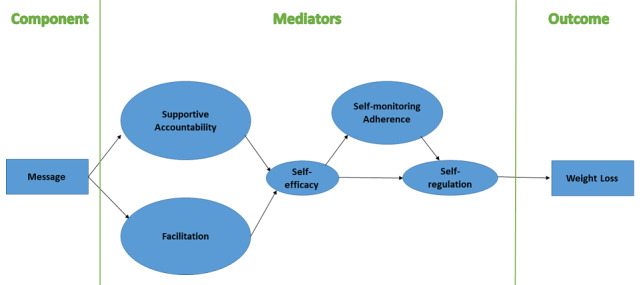
“A previous conceptual model indicated that, during the optimization phase of an intervention [72], participants need to understand how the provided materials can inspire them and facilitate their thoughts to improve self-efficacy, which increases capability for self-monitoring and self-regulation and can lead to improved health outcomes and behavioral changes [72,73].”
From Understanding Mobile Health and Youth Mental Health: Scoping Review (2023) · cites this paper as [72]
Self-check
Percentages, sums and reported differences re-computed from the paper’s own numbers.
The self-check needs the paper’s full text.
Citations
Cites
Ryan, R. M., & Deci, E. L. (2000) · American Psychologist · doi:10.1037//0003-066x.55.1.68 · Cited by 54,599
Moral Identity and Developmental Theory
Lapsley, D. (2015) · Human Development · doi:10.1159/000435926 · Cited by 3,819
Nahum-Shani, I., Smith, S. N., Spring, B. J., Collins, L. M., Witkiewitz, K., Tewari, A., & Murphy, S. A. (2018) · Annals of Behavioral Medicine · doi:10.1007/s12160-016-9830-8 · Cited by 2,171 · cited 1×
“Specific timing of the messages was structured to balance the message value with the burden that notifications place on the participant [28].”
BackgroundSelf-citationSelf-monitoring in weight loss: a systematic review of the literature
Burke, L. E., Wang, J., & Sevick, M. A. (2011) · Journal of the American Dietetic Association · doi:10.1016/j.jada.2010.10.008 · Cited by 1,203 · cited 1×
“Self-regulation, an internal process, involves the use of self-control, internal monitoring of behaviors in relation to a goal or value in the face of temptation, and is a well-established and important capacity that is strongly tied to success in weight loss [27].”
BackgroundText messaging as a tool for behavior change in disease prevention and management
Cole-Lewis, H., & Kershaw, T. (2010) · Epidemiologic Reviews · doi:10.1093/epirev/mxq004 · Cited by 1,190
Mohr, D. C., Cuijpers, P., & Lehman, K. (2011) · Journal of Medical Internet Research · doi:10.2196/jmir.1602 · Cited by 1,097 · cited 2×
“Supportive accountability refers to a relationship of encouragement and accountability that is established between two individuals, such as participant and coach, and that has been demonstrated to enhance adherence to positive behavior change [24-26].”
BackgroundMobile Text Messaging for Health: A Systematic Review of Reviews
Hall, A. K., Cole-Lewis, H., & Bernhardt, J. M. (2015) · Annual Review of Public Health · doi:10.1146/annurev-publhealth-031914-122855 · Cited by 815
Rodgers, A., Corbett, T., Bramley, D., Riddell, T., Wills, M., Lin, R.-B., & Jones, M. (2005) · Tobacco Control · doi:10.1136/tc.2005.011577 · Cited by 732 · cited 1×
“Although the first randomized controlled trial examining messaging as a health intervention was only conducted in 2005 [5,6], messaging has now been used in a variety of health interventions.”
BackgroundA Text Message–Based Intervention for Weight Loss: Randomized Controlled Trial
Patrick, K., Raab, F., Adams, M. A., Dillon, L., Zabinski, M., Rock, C. L., Griswold, W. G., & Norman, G. J. (2009) · Journal of Medical Internet Research · doi:10.2196/jmir.1100 · Cited by 671 · cited 2×
“One strategy that is now possible involves tailoring messages in real time to respond to the user’s current state [15], thereby increasing the receptivity of the person to the message and its intended effect.”
BackgroundMicrorandomized trials: An experimental design for developing just-in-time adaptive interventions.
Klasnja, P., Hekler, E. B., Shiffman, S., Boruvka, A., Almirall, D., Tewari, A., & Murphy, S. A. (2015) · Health Psychology · doi:10.1037/hea0000305 · Cited by 671 · cited 1×
“One could also optimize weight loss by testing the use of message systems in stepped sequences as in a sequential multiple assignment randomized trial [37,38] or in specific just in time contexts as in a microrandomized trial [39].”
MethodEfficacy of text messaging-based interventions for health promotion: A meta-analysis
Head, K. J., Noar, S. M., Iannarino, N. T., & Grant Harrington, N. (2013) · Social Science & Medicine · doi:10.1016/j.socscimed.2013.08.003 · Cited by 654
Burke, L. E., Ma, J., Azar, K. M. J., Bennett, G. G., Peterson, E. D., Zheng, Y., Riley, W., Stephens, J., Shah, S. H., Suffoletto, B., et al. (2015) · Circulation · doi:10.1161/cir.0000000000000232 · Cited by 516
Self-citationIntegrated Theory of Health Behavior Change: Background and Intervention Development
RYAN, P. (2009) · Clinical Nurse Specialist · doi:10.1097/nur.0b013e3181a42373 · Cited by 407
Finitsis, D. J., Pellowski, J. A., & Johnson, B. T. (2014) · PLoS ONE · doi:10.1371/journal.pone.0088166 · Cited by 355 · cited 1×
“This is an appealing alternative to costly human coaches who may not be able to deliver interventions at a time when the person needs it in everyday life [10,33-36].”
BackgroundIntegrating Technology Into Standard Weight Loss Treatment: A Randomized Controlled Trial
Spring, B., Duncan, J. M., Janke, E. A., Kozak, A. T., McFadden, H. G., DeMott, A., Pictor, A., Epstein, L. H., Siddique, J., Pellegrini, C. A., et al. (2013) · JAMA Internal Medicine · doi:10.1001/jamainternmed.2013.1221 · Cited by 234
Self-citationThe Role of Feedback in the Process of Health Behavior Change
DiClemente, C. C., Marinilli, A. S., Singh, M., & Bellino, L. E. (2001) · American Journal of Health Behavior · doi:10.5993/ajhb.25.3.8 · Cited by 215
Spring, B., Schneider, K., McFadden, H. G., Vaughn, J., Kozak, A. T., Smith, M., Moller, A. C., Epstein, L. H., DeMott, A., Hedeker, D., et al. (2012) · Archives of Internal Medicine · doi:10.1001/archinternmed.2012.1044 · Cited by 208
Self-citationCollins, L. M., Nahum-Shani, I., & Almirall, D. (2014) · Clinical Trials · doi:10.1177/1740774514536795 · Cited by 197
Beyond the Randomized Controlled Trial: A Review of Alternatives in mHealth Clinical Trial Methods
Pham, Q., Wiljer, D., & Cafazzo, J. A. (2016) · JMIR mHealth and uHealth · doi:10.2196/mhealth.5720 · Cited by 162 · cited 1×
“One could also optimize weight loss by testing the use of message systems in stepped sequences as in a sequential multiple assignment randomized trial [37,38] or in specific just in time contexts as in a microrandomized trial [39].”
MethodJoo, N.-S., & Kim, B.-T. (2007) · Journal of Telemedicine and Telecare · doi:10.1258/135763307783064331 · Cited by 161
Text Messaging to Motivate Walking in Older African Americans
Kim, B. H., & Glanz, K. (2012) · American Journal of Preventive Medicine · doi:10.1016/j.amepre.2012.09.050 · Cited by 160
Physical Activity Text Messaging Interventions in Adults: A Systematic Review
Buchholz, S. W., Wilbur, J., Ingram, D., & Fogg, L. (2013) · Worldviews on Evidence-Based Nursing · doi:10.1111/wvn.12002 · Cited by 156
A systematic review and meta-analysis of interventions for weight management using text messaging
Siopis, G., Chey, T., & Allman‐Farinelli, M. (2015) · Journal of Human Nutrition and Dietetics · doi:10.1111/jhn.12207 · Cited by 155
Developing and Pretesting a Text Messaging Program for Health Behavior Change: Recommended Steps
Abroms, L. C., Whittaker, R., Free, C., Mendel Van Alstyne, J., & Schindler-Ruwisch, J. M. (2015) · JMIR mHealth and uHealth · doi:10.2196/mhealth.4917 · Cited by 155
Schippers, M., Adam, P. C. G., Smolenski, D. J., Wong, H. T. H., & de Wit, J. B. F. (2017) · Obesity Reviews · doi:10.1111/obr.12492 · Cited by 150
Muench, F., & Baumel, A. (2017) · Journal of Medical Internet Research · doi:10.2196/jmir.7463 · Cited by 138
Current mHealth Technologies for Physical Activity Assessment and Promotion
O’Reilly, G. A., & Spruijt-Metz, D. (2013) · American Journal of Preventive Medicine · doi:10.1016/j.amepre.2013.05.012 · Cited by 134
Shaw, R., & Bosworth, H. (2012) · Health Informatics Journal · doi:10.1177/1460458212442422 · Cited by 131 · cited 1×
“The question then becomes: What level of tailoring is necessary and on what variables should messages be tailored to garner a positive behavioral effect? Message tailoring for most behavioral interventions to date has been restricted to surface level features: for example, personalizing with name, gender, or another b…”
BackgroundDick, J. J., Nundy, S., Solomon, M. C., Bishop, K. N., Chin, M. H., & Peek, M. E. (2011) · Journal of Diabetes Science and Technology · doi:10.1177/193229681100500534 · Cited by 126 · cited 1×
“The complexity of reminders can vary from a once daily prompt (eg, to take medication [11]) to multiple daily prompts to take medications at particular times or to perform other behaviors (eg, physical activity [12]) multiple times daily.”
BackgroundHaug, S., Schaub, M. P., Venzin, V., Meyer, C., & John, U. (2013) · Journal of Medical Internet Research · doi:10.2196/jmir.2636 · Cited by 122
Lombard, C., Deeks, A., Jolley, D., Ball, K., & Teede, H. (2010) · BMJ · doi:10.1136/bmj.c3215 · Cited by 117 · cited 1×
“The current lack of optimization is not limited to obesity treatment but has rather been unaddressed across various health interventions [7,15,40,41].”
BackgroundMartin, C. K., Miller, A. C., Thomas, D. M., Champagne, C. M., Han, H., & Church, T. (2015) · Obesity · doi:10.1002/oby.21063 · Cited by 114
Pellegrini, C. A., Hoffman, S. A., Collins, L. M., & Spring, B. J. (2014) · Contemporary Clinical Trials · doi:10.1016/j.cct.2014.05.007 · Cited by 91
Self-citationStephens, J. D., Yager, A. M., & Allen, J. (2017) · Journal of Cardiovascular Nursing · doi:10.1097/jcn.0000000000000307 · Cited by 70
Norman, G. J., Kolodziejczyk, J. K., Adams, M. A., Patrick, K., & Marshall, S. J. (2013) · Preventive Medicine · doi:10.1016/j.ypmed.2012.10.012 · Cited by 58
Griffin, J. B., Struempler, B., Funderburk, K., Parmer, S., Tran, C., & Wadsworth, D. D. (2018) · Journal of Nutrition Education and Behavior · doi:10.1016/j.jneb.2017.09.007 · Cited by 50
Interactivity and presence of three eHealth interventions
Hawkins, R. P., Han, J. Y., Pingree, S., Shaw, B. R., Baker, T. B., & Roberts, L. J. (2010) · Computers in Human Behavior · doi:10.1016/j.chb.2010.03.011 · Cited by 49
Pellegrini, C. A., Hoffman, S. A., Collins, L. M., & Spring, B. (2015) · Contemporary Clinical Trials · doi:10.1016/j.cct.2015.09.001 · Cited by 16 · cited 1×
“Opt-IN, described in detail elsewhere [19,20], is a 6-month behavioral weight loss study comprising 32 experimental conditions.”
BackgroundSelf-citationTurner, B. A. (2013) · The statesman's yearbook online/Statesman's year-book · doi:10.1007/978-1-349-59643-0_155 · Cited by 12
Heath-Brown, N. (2015) · The statesman's yearbook online/Statesman's year-book · doi:10.1007/978-1-349-57823-8_159 · Cited by 12
Cited by
Hepburn, J., Williams, L., & McCann, L. (2025) · JMIR Aging · doi:10.2196/80000 · Cited by 177
Landoll, R. R., Vargas, S. E., Samardzic, K. B., Clark, M. F., & Guastaferro, K. (2021) · Translational Behavioral Medicine · doi:10.1093/tbm/ibab146 · Cited by 41
Militello, L. K., Sobolev, M., Okeke, F., Adler, D. A., & Nahum-Shani, I. B. (2021) · JMIR Formative Research · doi:10.2196/30606 · Cited by 42
Understanding Mobile Health and Youth Mental Health: Scoping Review
Ding, X., Wuerth, K., Sakakibara, B., Schmidt, J., Parde, N., Holsti, L., & Barbic, S. (2023) · JMIR mHealth and uHealth · doi:10.2196/44951 · Cited by 30
“A previous conceptual model indicated that, during the optimization phase of an intervention [72], participants need to understand how the provided materials can inspire them and facilitate their thoughts to improve self-efficacy, which increases capability for self-monitoring and self-regulation…”
Ihab, M., Abdelaziz, W. E., Hassan, W., & Tantawi, M. E. (2023) · BMC Oral Health · doi:10.1186/s12903-023-03351-x · Cited by 11
Metadata
- Authors
- Pfammatter, A. F., Marchese, S. H., Pellegrini, C., Daly, E., Davidson, M., & Spring, B.
- Affiliations
- Northwestern University (US)
- University of South Carolina (US)
- Corresponding author
- Pfammatter, Angela Fidler
- ORCID
- Venue
- JMIR Formative Research
- Publisher
- JMIR Publications Inc.
- Published
- 2020-05-13
- Volume
- 4
- Issue
- 5
- Pages
- e16297
- ISSN
- 2561-326X (ISSN-L)
- PMC
- PMC7254290
- OpenAlex
- W3006380852
- Cited by
- 17
- References
- 40
- Citations by year
- 2026: 1 · 2025: 2 · 2023: 9 · 2022: 1 · 2021: 4
- FWCI
- 3.65
- Type
- journal article
- Language
- en
- Open access
- gold
- doi.org
- Licence
- cc-by
- Locations
- JMIR Formative Research (publishedVersion, cc-by)
- PubMed Central (publishedVersion, cc-by)
- PubMed (publishedVersion)
- DOAJ (DOAJ: Directory of Open Access Journals) (submittedVersion, cc-by-sa)
- Funders
- National Institutes of Health (UL1TR001422, U54TR001018)
- National Heart, Lung, and Blood Institute (L30 HL143668)
- National Institute of Diabetes and Digestive and Kidney Diseases (R01DK097364, F31DK120151, R01DK125749)
- National Center for Advancing Translational Sciences
- Topics
- Health Sciences › Health Professions › General Health Professions › Mobile Health and mHealth Applications
- Social Sciences › Psychology › Applied Psychology › Digital Mental Health Interventions
- Physical Sciences › Computer Science › Information Systems › Mobile Learning in Education
- Keywords
- multiphase optimization strategy, text messaging, weight loss interventions, obesity, overweight, self-regulation, push notifications, feasibility, mobile health, self-monitoring app, intervention development
About these checks
Registry, retraction, Cites and statistics results are computed, not judged, with one exception: a printed reference that no index lists is read once by a model before it counts as a citation error. Claims are extracted by a model and kept only when their quote appears verbatim in the text; each cited source is then checked, with a model’s help, for whether it says what the claim relies on. Those verdicts can be wrong — read the claim’s quote and the cited source before relying on one.
Statistics and arithmetic are recomputed, not judged.
Confidence bands are shown only for fields calibrated on our annotated test set. None is calibrated yet, so no band is shown.
What counts as a claim ›How we measure confidence ›How we check this ›
Are you an author, or do you see a problem with this page? Request a review
Data sources
Bibliographic data: Semantic Scholar, OpenAlex, Crossref.
Contains information from the Semantic Scholar Academic Graph Datasets, made available under the ODC Attribution License (ODC-BY 1.0).
Semantic Scholar’s data is described in: Kinney, R., et al. (2023). The Semantic Scholar Open Data Platform. arXiv:2301.10140.
