

Effects of Psychoeducational Interventions Using Mobile Apps and Mobile-Based Online Group Discussions on Anxiety and Self-Esteem in Women With Breast Cancer: Randomized Controlled Trial
Open accessPublished version of a preprint
The DOI matches its Crossref record; 75 of the 75 references it cites were found in a registry or an index.
Abstract
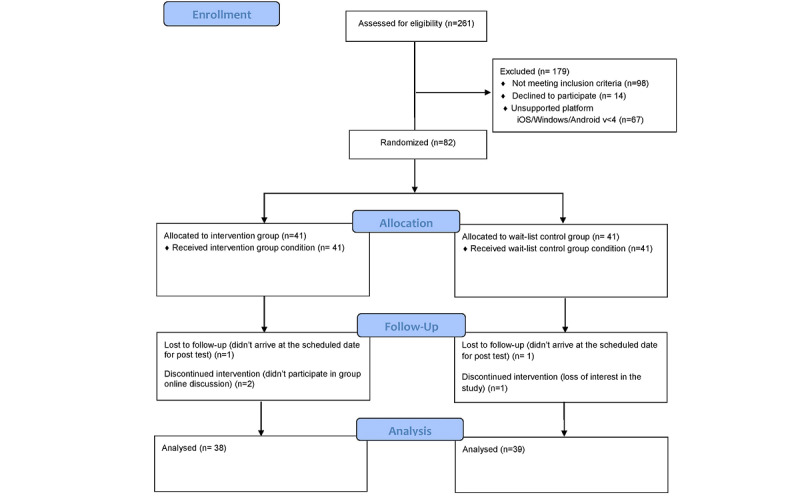
Background: Psychoeducation has turned into an effective tool in taking care of cancer patients and improving their psychophysical symptoms and quality of life. Despite the growing use of mobile phone apps in medical settings for improving health, evidence supporting their effectiveness in the psychoeducation of patients with breast cancer is rarely available. Objective: This study was conducted to investigate the effect of psychoeducational interventions on anxiety and self-esteem in women with breast cancer using a mobile app and an online support group. Methods: An unblinded randomized controlled trial based on mobile phones was conducted in Shiraz, Iran. A research assistant recruited 82 women with nonmetastatic breast cancer aged 20 to 60 years were from clinics during a face-to-face visit at the point of care and randomly assigned to an intervention group (n=41) and a wait-list control group (n=41) through blocked randomization. The intervention group received psychoeducational interventions through a mobile phone app and participated in nurse-assisted online mobile support sessions for a total four weeks, whereas the control group was put on a waiting list. The State-Trait Anxiety Inventory (STAI) and the Rosenberg Self-Esteem Scale (RSES) were used to measure the levels of anxiety and self-esteem as the main outcomes at baseline and one week after the intervention. Results: A total of 82 patients with a mean age of 46.45 (SD 9.29) years recruited in Winter 2016 were randomly assigned to a wait-list control group (n=41) and intervention group (n=41). Five patients dropped out for different reasons. Comparing the postintervention mean scores of anxiety and its subscales using the independent t test showed statistically significant differences between the mobile psychoeducation group and controls (P<.001). The paired t test used to compare the postintervention mean scores of anxiety with its preintervention scores in the intervention group showed significant reductions in the scores of anxiety (95% CI –17.44 to –8.90, P<.001, d=1.02) and its two subscales (state anxiety: 95% CI –9.20 to –4.21, P<.001, d=0.88 and trait anxiety: 95% CI –8.50 to –4.12, P<.001, d=0.94). Comparing the postintervention mean scores of self-esteem showed statistically insignificant differences between the control and intervention groups (16.87 vs 17.97, P=.24). In contrast with the controls, using the paired t test showed that the increase in the postintervention mean scores of self-esteem were statistically significant in the intervention group compared with the preintervention scores (mean difference 2.05, 95% CI 1.28 to 2.82, P<.001). Conclusions: This study demonstrated the key role of mobile apps in decreasing anxiety and improving self-esteem in women with breast cancer through psychoeducational interventions. Similar studies with longer follow-ups are recommended that be conducted in this context. Trial Registration: Iranian Registry of Clinical Trials IRCT2015072123279N2; https://en.irct.ir/trial/19882
Overview
The claims and statistics of this paper haven’t been checked yet.
Free: it reads the open-access text and checks the first 5 claims that cite a source we can check. Create a free account to check every claim.
Integrity signals
Registry
Cites
Statistics
Figures
Verification
Claims the paper makes
The claims and statistics of this paper haven’t been checked yet.
Free: it reads the open-access text and checks the first 5 claims that cite a source we can check. Create a free account to check every claim.
Claims other papers make about this one
Each is checked against this paper’s own text: does it say what the citing paper says it does?
The source backs part of the claim, not all of it — or backs it for a different population, condition or comparison.
In the citing paper
“These methods have been shown to reduce anxiety,21-26 depression,21,22,25-29 and fatigue.30-33”
From Effects of a Video Sequence Based Intervention on Anxiety, Fatigue and Depression in Cancer Patients: Results of a Randomized Controlled Trial. (2023) · cites this paper as [23]
Experimental — accuracy not yet measured
Self-check
Percentages, sums and reported differences re-computed from the paper’s own numbers.
The self-check needs the paper’s full text.
Citations
Cites
Statistical Power Analysis for the Behavioral Sciences
Cohen, J. (2013) · doi:10.4324/9780203771587 · Cited by 25,373
Siegel, R. L., Miller, K. D., & Jemal, A. (2016) · CA: A Cancer Journal for Clinicians · doi:10.3322/caac.21332 · Cited by 16,003
Spielberger, C. D. (2010) · The Corsini Encyclopedia of Psychology · doi:10.1002/9780470479216.corpsy0943 · Cited by 2,535
Does low self-esteem predict depression and anxiety? A meta-analysis of longitudinal studies.
Sowislo, J. F., & Orth, U. (2013) · Psychological Bulletin · doi:10.1037/a0028931 · Cited by 2,123 · cited 1×
“These patients therefore require special support in different stages, including diagnosis, treatment, rehabilitation, and follow-up [8,12].”
BackgroundJulian, L. J. (2011) · Arthritis Care & Research · doi:10.1002/acr.20561 · Cited by 1,794 · cited 1×
“The inclusion criteria comprised age range of 20 to 60 years, willingness to participate in the study, diagnosis of nonmetastatic breast cancer, literacy, access to smart mobile electronic devices connected to the internet and willingness to have the app installed on them, ability to work with the app and social netwo…”
BackgroundSchmitt, D. P., & Allik, J. (2005) · Journal of Personality and Social Psychology · doi:10.1037/0022-3514.89.4.623 · Cited by 1,665 · cited 1×
“Administering the RSES in 53 nations, Schmitt et al [41] also confirmed the validity and reliability of this test.”
MethodBarak, A., Hen, L., Boniel-Nissim, M., & Shapira, N. (2008) · Journal of Technology in Human Services · doi:10.1080/15228830802094429 · Cited by 1,283 · cited 2×
“These interventions were found more effective than conventional treatments and as effective as face-to-face therapies for a wide range of conditions such as depression and anxiety [21,22].”
BackgroundA Systematic Review of Healthcare Applications for Smartphones
Mosa, A. S. M., Yoo, I., & Sheets, L. (2012) · BMC Medical Informatics and Decision Making · doi:10.1186/1472-6947-12-67 · Cited by 1,184 · cited 2×
“mHealth apps include patient education, disease self-management, remote monitoring of patients, diagnostic treatment services, data collection, communication, and counseling services [18].”
BackgroundMohr, D. C., Cuijpers, P., & Lehman, K. (2011) · Journal of Medical Internet Research · doi:10.2196/jmir.1602 · Cited by 1,097 · cited 1×
“Research suggests using an app coupled with human support (eg, coaching and supervision through phone or text messages) can help increase engagement and use and promote the outcomes [30,31]; for instance, a mobile phone app supported with a behavioral health intervention based on social media was found to promote qual…”
BackgroundSocial media and health care professionals: benefits, risks, and best practices.
(2014) · PubMed Central · Cited by 1,011
Research works printed but not linked: 10
- Saniah, A, 2010, Malaysian J Psychiatr, 19, 1
- 10.32598/jccnc.1.1.9 · doi:10.32598/jccnc.1.1.9
- Aghabarari, M, 2008, J Shahrekord Univ Med Sci, 9, 26
- 10.1002/9780470479216.corpsy0943 · DOI · Paper page
- Mahram, B, 1993, [Manual of Spielberger State-Trait Anxiety Inventory] [Thesis], 52
- Alizadeh, T, 2005, J Reprod Infertil, 6, 194
- Fani, M, 2014, Interdiscipl J Virtual Learning Med Sci, 5, 72
- Izadi-Ajirlo, A, 2013, J Rehab, 13, 72
- Ventola, CL, 2014, P T, 39, 491
- Absavaran, M, 2015, Payesh J, 14, 363
Cited by
Lee, A. Y. L., Wong, A. K. C., Hung, T. T. M., Yan, J., & Yang, S. (2022) · Journal of Medical Internet Research · doi:10.2196/40364 · Cited by 159
“Apart from nurse follow-ups and telemonitoring, there were 4 studies that used smartphone apps to support chronic disease rehabilitation in the community [23,35,44,45].”
Lee, K., Kim, S., Kim, S. H., Yoo, S., Sung, J. H., Oh, E. G., Kim, N. W., & Lee, J. (2023) · Journal of Medical Internet Research · doi:10.2196/38333 · Cited by 95
Kim, J., Aryee, L. M. D., Bang, H., Prajogo, S., Choi, Y. K., Hoch, J. S., & Prado, E. L. (2023) · JMIR Mental Health · doi:10.2196/43066 · Cited by 106
“More information about the included studies is available in Multimedia Appendix 6 [26-121].”
BackgroundInfluentialSaevarsdottir, S. R., & Gudmundsdottir, S. L. (2023) · Journal of Medical Internet Research · doi:10.2196/42852 · Cited by 68
“The results of the risk-of-bias assessment are presented in Figure 2 [51-53”
InfluentialQin, M., Chen, B., Sun, S., & Liu, X. (2022) · Journal of Medical Internet Research · doi:10.2196/39799 · Cited by 81
“Some studies have demonstrated that smartphone app interventions benefit mental health [16,17].”
Systematic review and meta-analysis of adverse events in clinical trials of mental health apps
Linardon, J., Fuller-Tyszkiewicz, M., Firth, J., Goldberg, S. B., Anderson, C., McClure, Z., & Torous, J. (2024) · npj Digital Medicine · doi:10.1038/s41746-024-01388-y · Cited by 44
Wright, P. J., Raynor, P. A., Bowers, D., Combs, E. M., Corbett, C. F., Hardy, H., & Patel, K. (2023) · DIGITAL HEALTH · doi:10.1177/20552076231204746 · Cited by 39
“Other outcomes included: reductions in anxiety levels, other psychiatric symptoms, diabetes symptoms, and carbon monoxide exhalation levels, and improvements in functional well-being, physical health, quality of life, well-being, and psychological health.(21,22,29,34,38,39,41,45) Discussion The purpose of this systema…”
BackgroundA meta-analysis of persuasive design, engagement, and efficacy in 92 RCTs of mental health apps
Valentine, L., Hinton, J. D. X., Bajaj, K., Boyd, L., O’Sullivan, S., Sorenson, R. P., Bell, I., Vega, M. S., Liu, P., Peters, W., et al. (2025) · npj Digital Medicine · doi:10.1038/s41746-025-01567-5 · Cited by 56
Digital Health Interventions to Improve Mental Health in Patients With Cancer: Umbrella Review
Zhong, C., Luo, X., Tan, M., Chi, J., Guo, B., Tang, J., Guo, Z., Deng, S., Zhang, Y., & Wu, Y. (2025) · Journal of Medical Internet Research · doi:10.2196/69621 · Cited by 47
“The design of apps in this study mostly focuses on patient education, disease self-management, and remote monitoring of symptoms [18], but lacks highly tailored symptom management interventions for certain emotional conditions.”
Akingbade, O., Nguyen, K. T., & Chow, K. M. (2023) · Journal of Clinical Nursing · doi:10.1111/jocn.16533 · Cited by 35
Zhang, T., Ren, Z., Wakefield, C. E., Hui, B. P. H., Akechi, T., Shi, C., Du, X., Chen, W., Lai, L., Zhao, C., et al. (2024) · Clinical Psychology Review · doi:10.1016/j.cpr.2024.102520 · Cited by 47
Springer, F., Maier, A., Friedrich, M., Raue, J. S., Finke, G., Lordick, F., Montgomery, G., Esser, P., Brock, H., & Mehnert-Theuerkauf, A. (2024) · Journal of Medical Internet Research · doi:10.2196/51949 · Cited by 34
Ahmadi, M., Shahrokhi, S. N., Zadeh, M. K., & Alipour, J. (2022) · Applied Clinical Informatics · doi:10.1055/s-0042-1757295 · Cited by 38
A systematic review of eHealth technologies for breast cancer supportive care
Gyawali, B., Bowman, M., Sharpe, I., Jalink, M., Srivastava, S., & Wijeratne, D. T. (2023) · Cancer Treatment Reviews · doi:10.1016/j.ctrv.2023.102519 · Cited by 28
Al‐Alawi, K. S., Al-Azri, M. H., Al-Fahdi, A., & Chan, M. F. (2022) · Seminars in Oncology Nursing · doi:10.1016/j.soncn.2022.151315 · Cited by 36
Mohammadzadeh, Z., Eghtedar, S., Ayatollahi, H., & Jebraeily, M. (2022) · BMC Women s Health · doi:10.1186/s12905-022-02020-5 · Cited by 34
“However, a randomized controlled trial in Iran demonstrated that psychoeducational interventions through mobile apps could be helpful in decreasing anxiety and improving self-esteem in women with breast cancer [23].”
BackgroundWang, M., Chen, H., Yang, F., Xu, X., & Li, J. (2023) · Journal of Affective Disorders · doi:10.1016/j.jad.2023.06.057 · Cited by 25
Sun, X., Jiang, Y., Wang, J., Fan, S., Fu, X., An, Z., Zhu, X., & Wu, Y. (2024) · BMC Medicine · doi:10.1186/s12916-024-03652-0 · Cited by 30
“…from cancer maintain high levels of anxiety throughout the life cycle, and mHealth management support interventions for cancer patient groups, as well as scientific health guidance, can effectively reduce the anxiety level of patients, which is consistent with the results of our study [43].”
ResultThe role of resilience and coping strategies as predictors of well-being in breast cancer patients
Ochoa, A. U., Macía, P., Ruiz-de-Alegría, B., García‐Vivar, C., & Iraurgi, I. (2024) · European Journal of Oncology Nursing · doi:10.1016/j.ejon.2024.102620 · Cited by 28
Akingbade, O., Adediran, V., Somoye, I. E., Alade, A. S., & Chow, K. M. (2022) · Supportive Care in Cancer · doi:10.1007/s00520-022-07403-w · Cited by 30
Yu, S., Liu, Y., Cao, M., Tian, Q., Xu, M., Yu, L., Yang, S., & Zhang, W. (2025) · Cancer Nursing · doi:10.1097/ncc.0000000000001274 · Cited by 22
Chau, L. W., Lam, R. W. M., Minas, H., Hayashi, K., Nguyen, V. C., & O’Neil, J. (2025) · JMIR Mental Health · doi:10.2196/68296 · Cited by 39
“Four articles reported on challenges [72,73,78,101].”
InfluentialObrero‐Gaitán, E., Cortés‐Pérez, I., Calet-Fernández, T., García‐López, H., López‐Ruiz, M. D. C., & Osuna‐Pérez, M. C. (2022) · Cancers · doi:10.3390/cancers14174133 · Cited by 22
“2021 (Iran) [74] Design: RCT (NB) Setting: Shiraz University of Medical Sciences (Shiraz) Funding: Yes.”
BackgroundA Scoping Review and a Taxonomy to Assess the Impact of Mobile Apps on Cancer Care Management
Dhar, E., Bah, A. N., Giglioli, I. A. C., Quer-Palomas, S., Fernández-Luque, L., Núñez-Benjumea, F. J., Malwade, S., Uddin, M., Upadhyay, U., & Syed-Abdul, S. (2023) · Cancers · doi:10.3390/cancers15061775 · Cited by 25
“, 2021 [42] Iran Breast Cancer 82 RCT 100% females 46.”
BackgroundMontoro, C. I., Alcaraz, M. D. C., & Galvez-Sánchez, C. M. (2023) · Behavioral Sciences · doi:10.3390/bs13050377 · Cited by 42
“Psychoeducation programs aimed not only at patients and women at risk, but also at healthy women, could also be useful for improving adherence to mammography screening [66,67].”
BackgroundNeubert, S., Schlecht, S., Meng, K., Rabe, A., & Jentschke, E. (2023) · Integrative Cancer Therapies · doi:10.1177/15347354231153172 · Cited by 20
Cabanes, A., Taylor, C. D., Malburg, C., & Le, P. T. D. (2022) · Supportive Care in Cancer · doi:10.1007/s00520-022-07319-5 · Cited by 27
“Five articles reported interventions to improve education for patients [25][26][27][28][29], one for caregivers [30], and one for both groups [31].”
BackgroundMa, Z., Shi, Y., Yao, S., Lu, N., & Cheng, F. (2023) · Supportive Care in Cancer · doi:10.1007/s00520-023-08052-3 · Cited by 17
“There were 15 website-based interventions (n = 15) [24, 25, 28, 30, 32, 36, 38–40, 44, 46, 48–51], 3 telephone-based interventions (n = 3) [29, 31, 43], and 8 app-based interventions (n = 8) [26, 27, 35, 37, 41, 42, 45, 52].”
A systematic review of m-health apps on managing side effects of breast cancer treatment
Wanchai, A., Anderson, E. A., & Armer, J. M. (2023) · Supportive Care in Cancer · doi:10.1007/s00520-022-07464-x · Cited by 17
Tesema, A. G., Mabunda, S. A., Chaudhri, K., Sunjaya, A. P., Thio, S., Yakubu, K., Jeyakumar, R., Godinho, M. A., John, R., Eltigany, M., et al. (2025) · PLOS Global Public Health · doi:10.1371/journal.pgph.0004289 · Cited by 27
“Twelve out of the 15 studies included management of the condition[29,33,44,48–56], one focussed on rehabilitation[57], one on screening[58], and one focussed on education[46].”
Depression, Anxiety, and Low Self-Esteem Dynamics in Pregnancy During the SARS-COV2 Pandemic
Banariu, G. M., Delcea, C., Alexandru, G. C., Tica, I., Rus, M., Neagoe, G., Onuc, S., Chioran, D., Ilia, I., Bululoi, A. S., et al. (2023) · Archives of Pharmacy Practice · doi:10.51847/44dauyxno1 · Cited by 19
Evaluating the Effectiveness of Mobile Health in Breast Cancer Care: A Systematic Review
Flaucher, M., Zakreuskaya, A., Nissen, M., Mocker, A., Fasching, P. A., Beckmann, M. W., Eskofier, B. M., & Leutheuser, H. (2023) · The Oncologist · doi:10.1093/oncolo/oyad217 · Cited by 15
Camarena, J. M. T., Llobet, M. P., Lluch‐Canut, T., Roldán-Merino, J. F., Moreno-Arroyo, M. C., Moreno‐Poyato, A. R., Balaguer-Sancho, J., Agüera, Z., Sánchez-Ortega, M. A., & Hidalgo-Blanco, M. Á. (2022) · International Journal of Environmental Research and Public Health · doi:10.3390/ijerph20010644 · Cited by 20
Tian, L., Wen, Y., Li, T., Liu, C., & Fan, J. (2025) · Annals of Medicine · doi:10.1080/07853890.2025.2499027 · Cited by 18
Nezenega, Z. S., Aychiluhm, S. B., Ross, A. G., Kassa, Z. Y., Bore, M. G., Leshargie, C. T., Allan, J., Thapa, S., Astawesegn, F. H., Mahmood, S., et al. (2025) · npj Digital Medicine · doi:10.1038/s41746-025-02266-x · Cited by 13
Dong, M., Huang, Y., Zhang, X., Wu, L., Ghazal, L., & Cao, F. (2025) · Psycho-Oncology · doi:10.1002/pon.70166 · Cited by 16
Moulaei, K., Bahaadinbeigy, K., Mashoof, E., & Dinari, F. (2023) · BMC Medical Informatics and Decision Making · doi:10.1186/s12911-023-02308-y · Cited by 19
Goh, C. C., Gan, X., & Klainin‐Yobas, P. (2024) · Seminars in Oncology Nursing · doi:10.1016/j.soncn.2024.151796 · Cited by 13
Dewi, E. U., Nursalam, N., Mahmudah, M., & Yunitasari, E. (2023) · Journal of Public Health Research · doi:10.1177/22799036221146901 · Cited by 14
Tian, L., Wen, Y., Li, J., Guan, J., Li, T., & Fan, J. (2025) · JMIR mhealth and uhealth · doi:10.2196/71196 · Cited by 15
“The sensitivity analysis for the meta-analysis results of pain (Table 3), anxiety (Table S8 in Multimedia Appendix 2 [26-33,40,43,45, 47, 53 ,55 ]), depression ( Table S9”
Mutter, A., Bücheler, M., Idrees, A. R., Domhardt, M., & Baumeister, H. (2024) · BMJ Open · doi:10.1136/bmjopen-2024-086728 · Cited by 12
Mitsis, A., Filis, P., Karanasiou, G. S., Georga, E. I., Mauri, D., Naka, K. Κ., Constantinidou, A., Keramida, K., Tsekoura, D., Mazzocco, K., et al. (2025) · Cancers · doi:10.3390/cancers17111780 · Cited by 11
“Nineteen studies [20,22–25, 27, 30 , 31,33–41, 45, 46 The subgroup analysis based on the delivery method showed that studies us-ing web-based interventions ( n = 6) [38–41, 45,46] yielded an”
Zhang, C., Hong, Y., Chen, Y., Arbing, R. H. A., Chen, W., & Huang, F. (2025) · BMC Nursing · doi:10.1186/s12912-025-03981-2 · Cited by 15
“Another study [25] did not report allocation concealment, and one reported significant baseline differences between the control and intervention groups [26].”
InfluentialSpringer, F., & Mehnert-Theuerkauf, A. (2022) · Current Opinion in Oncology · doi:10.1097/cco.0000000000000836 · Cited by 9
Nia, H. S., Lehto, R. H., Farhadi, B., She, L., Goudarzian, A. H., Fomani, F. K., & Mohammadinezhad, M. (2024) · Asian Pacific Journal of Cancer Prevention · doi:10.31557/apjcp.2024.25.3.1087 · Cited by 9
“Additional influencing factors include psychological and clinical characteristics such as presence of pain [7, 12], social support [13, 14], depression and anxiety [15, 16], and perceived self-efficacy [17].”
BackgroundDoosti, P., Etemadifar, S., & Aliakbari, F. (2024) · BMC Nursing · doi:10.1186/s12912-024-02391-0 · Cited by 8
“…is effective in improving the quality of life of ovarian cancer patients [66], the quality of life of breast cancer patients [42, 72], the quality of life of gynecologic cancer patients [68, 73], the anxiety of breast cancer patients [74] and the stress of women with breast cancer [71].”
BackgroundSchlecht, S., Neubert, S., Meng, K., Rabe, A., & Jentschke, E. (2023) · International Journal of Environmental Research and Public Health · doi:10.3390/ijerph20206933 · Cited by 7
Castro, C. M., Li, E. J., Henson, S. J. S., Chamberlain, C. E. W., & Altman, M. (2022) · Journal of Technology in Behavioral Science · doi:10.1007/s41347-022-00281-3 · Cited by 9
“, 2020; Taylor-Rodgers & Batterham, 2014), and improved mental health symptoms (Ali et al., 2021; Ghanbari et al., 2021; Sapru et al., 2018).”
BackgroundZhang, M., Xue, Y., Shao, M., Yang, Y., Yu, L., Ma, B., Li, D., Zhou, H., Wang, K., Chen, C., et al. (2024) · European Journal of Oncology Nursing · doi:10.1016/j.ejon.2024.102739 · Cited by 7
García-Torres, F., García-Carmona, M., Rubio, S., Luque, B., Gómez-Solís, Á., & Aranda, E. (2023) · International Journal of Medical Informatics · doi:10.1016/j.ijmedinf.2023.105131 · Cited by 5
Sun, D., Zhang, X., & Cui, M. (2023) · European Journal of Oncology Nursing · doi:10.1016/j.ejon.2023.102334 · Cited by 5
Alhuwail, D., Alhouti, A., & Alsarhan, L. (2024) · JMIR Cancer · doi:10.2196/48428 · Cited by 6
Wu, Z., Luo, F., Wang, S., hu, X., & Chen, M. (2025) · JMIR Cancer · doi:10.2196/64754 · Cited by 8
“[19,25,26,40,44,45,51].”
InfluentialChakraborty, B., Trivedi, K., Kiran, K. A., Chatterjee, P., Kujur, M., & Sarkar, B. (2023) · The Malaysian Journal of Nursing · doi:10.31674/mjn.2023.v15i02.016 · Cited by 5
Abadi, M. G. S., Farajkhoda, T., & Mahmoodabadi, H. Z. (2022) · Journal of Education and Health Promotion · doi:10.4103/jehp.jehp_1292_21 · Cited by 6
“[33] Another study showed that Mobile Apps psychoeducational interventions significantly reduced anxiety symptoms, and improved self‐esteem,[34] consistent with our results.”
ResultKim, J., Kim, M., & Seo, Y. (2023) · European Journal of Oncology Nursing · doi:10.1016/j.ejon.2023.102276 · Cited by 6
Design and implementation of mHealth applications for older people with cancer: A scoping review
Sun, Q., Li, D., Cai, T., Luo, J., Jia, Q., Yu, X., Wu, F., & Yuan, C. (2025) · Asia-Pacific Journal of Oncology Nursing · doi:10.1016/j.apjon.2025.100726 · Cited by 4
Zhang, M., Chu, J., Sheng, W., Bai, J., Song, Y., & Fan, L. (2025) · Frontiers in Public Health · doi:10.3389/fpubh.2025.1715103 · Cited by 3
Oral Anticancer Therapies: Addressing Nonadherence in Patients With Breast Cancer
Cazzaniga, M. E., Huober, J., Tamma, A. V., Emde, A., Thoele, K., & O’Shaughnessy, J. (2024) · Clinical Breast Cancer · doi:10.1016/j.clbc.2024.12.011 · Cited by 6
Mobile Applications to Promote Mental Health among Breast Cancer Patients: A Rapid Review
BorjAlilu, S., Karbakhsh, M., Lotfi, M., Haghshenas, E., & Kaviani, A. (2023) · Archives of Breast Cancer · doi:10.32768/abc.2023102103-113 · Cited by 6
Jenkins, V. A., Starkings, R., Teoh, M., May, S. F., Bloomfield, D. J., Zammit, C., Elwell-Sutton, D., Betal, D., Finlay, J., Nicholson, K., et al. (2023) · Supportive Care in Cancer · doi:10.1007/s00520-023-08115-5 · Cited by 3
Karimi, M., Heshmatnia, F., Azima, S., Akbarzadeh, M., & Thapa, S. (2025) · Health Science Reports · doi:10.1002/hsr2.70587 · Cited by 5
Goh, R., Ng, S. X., Tan, J. H., Pikkarainen, M. A., & He, H. G. (2025) · European Journal of Oncology Nursing · doi:10.1016/j.ejon.2025.103007 · Cited by 3
Yousefi, M., Khalilzadeh-Farsangi, Z., Robabi, H., & Fallah-Karimi, S. (2025) · Journal of Breast Diseases · doi:10.61882/ijbd.18.3.2 · Cited by 2
“Another study examined the effect of education via mobile applications on self-care and self-esteem in women with breast cancer and showed that using this technology can facilitate education and medical counseling (12).”
Schmidt, M., Weng, Y., Juengst, S. B., & Holland, A. (2025) · Journal of Medical Internet Research · doi:10.2196/83995 · Cited by 4
“…to meaningful reductions in symptoms, strengthen individuals’ confidence in managing their health, and enhance adherence to prescribed regimens [42-44]. ePST was developed using learning experience design and a CBPR framework to ensure accessibility, community-driven decision-making, and…”
Santonja-Ayuso, L., & Simarro, J. V. C. (2026) · Archives of Psychiatric Nursing · doi:10.1016/j.apnu.2026.152056 · Cited by 6
Li, X., & Dong, L. (2024) · Technology and Health Care · doi:10.3233/thc-240695 · Cited by 3
“Ghanbari et al. (2021) [32] conducted an experimental study investigating the impact of psychological education intervention on anxiety and self-esteem in cancer patients.”
Anxiety in breast cancer research (1982–2024): a bibliometric analysis
Hou, J., Meng, Y., Zhang, L., Fan, H., & Zhang, M. (2025) · Clinical & Translational Oncology · doi:10.1007/s12094-025-04115-5 · Cited by 3
Akingbade, O., Adediran, V., Somoye, I. E., Alade, A. S., & Chow, K. M. (2022) · Research Square · doi:10.21203/rs.3.rs-1237217/v1 · Cited by 2
Mukeshimana, B., & Andala, H. O. (2024) · African Journal of Empirical Research · doi:10.51867/ajernet.5.4.86 · Cited by 2
The use of virtual reality in cancer patient health education: A scoping review
Chen, F., Guo, X., Wei, D., Wang, M., Wang, J., Xu, D., Jin, L., & Xian, X. (2025) · International Journal of Nursing Sciences · doi:10.1016/j.ijnss.2025.12.013 · Cited by 1
“Our findings indicate that VR technology has a positive effect on both the psychological well-being and knowledge acquisition of cancer patients, consistent with prior research [58,64].”
Xiong, Z., Zhou, J., Wang, X., Huang, J., Lin, C., & Cong, L. (2026) · Health and Quality of Life Outcomes · doi:10.1186/s12955-026-02476-1 · Cited by 1
“Our finding extend this early intervention principles to the psychosocial realm: providing counseling or psychoeducation soon after surgery may help preserve self-esteem and prevent alienation [59, 60].”
Mehneh, M. R., Kimiafar, K., Baigi, S. F. M., Marouzi, P., Shahidsales, S., & Sarbaz, M. (2026) · Journal of Education and Health Promotion · doi:10.4103/jehp.jehp_1641_24 · Cited by 2
Roshid, M. M., Rahman, M. M., Alam, M. N., Banu, B., Eity, K. F., Shahin, R. R., Shaba, S. S. E., Rahman, M. J., Sarker, M. H. R., & Okamura, H. (2024) · Cureus · doi:10.7759/cureus.55520 · Cited by 1
“Furthermore, several studies have demonstrated that the utilization of mHealth increases knowledge, skills, and self-efficacy regarding caregiving responsibilities and the ability to manage one's well-being [13,14].”
BackgroundTak, Y. W., Park, Y.-E., Baek, S., Lee, J. W., Chung, S., & Lee, Y. (2024) · JCO Clinical Cancer Informatics · doi:10.1200/cci.23.00242 · Cited by 1
Models, outcomes, barriers, and facilitators of supportive care in cancer: a scoping review
Monnery, D., Law, K., Gopal, D. P., Minton, O., Calman, L. A., Chamberlain, C., Taylor, S., Smith, R., Lewis, T., Chester, A., et al. (2026) · Supportive Care in Cancer · doi:10.1007/s00520-026-10613-1 · Cited by 3
Baghelani, N., Miladinia, M., Jahangiri, M., & Zarea, K. (2026) · European Journal of Cancer Care · doi:10.1155/ecc/7802902
Huang, Y., Li, X., Cai, J., Zhou, F., & Song, J. (2022) · Research Square · doi:10.21203/rs.3.rs-1347113/v1
Qin, M., Chen, B., & Liu, X. (2022) · doi:10.2196/preprints.39799
Aplicação de softwares na saúde mental – benefícios e limitações: revisão de literatura integrativa
Magalhães, B. B., de Andrade, J. K. M. L., de Carvalho, A. F. M., Costa, J. V., Jesuíno, A. D. S. A., Neta, N. B. D., Magalhães, J. V., Magalhães, D. A. P., Muniz, I. S. L., & Silva, D. D. S. (2022) · Research Society and Development · doi:10.33448/rsd-v11i16.37908 · Cited by 3
Ibrahim, S., Abozead, S. E.-S., Refat, L., & Abd-Almageed, A. (2023) · Assiut Scientific Nursing Journal · doi:10.21608/asnj.2023.205835.1570
Hasanah, I., Sari, A. S., Nursalam, N., Safinatunnaja, B., Krisnana, I., Basuni, H. L., Haikal, Z., & Ramdani, W. F. (2024) · Africa Journal of Nursing and Midwifery · doi:10.25159/2520-5293/15152 · Cited by 3
A Decision Support Application for Patients with Cancer: A Feasibility StudyPreprint
Kawasaki, Y., Nii, M., & Kiyohara, H. (2024) · Research Square · doi:10.21203/rs.3.rs-4645284/v1
Elkodoos, R. F. A., Ebrahim, M. M., Kader, A. I. A. E., & Abdallah, L. S. (2024) · Egyptian Nursing Journal · doi:10.4103/enj.enj_14_24
Kavuma, D., Obuku, E. A., Namisango, E., Kansiime, R., Niyonzima, N., Kinengyere, A. A., Kasasa, S., Makumbi, F. E., Kafeero, H. M., & Nuwaha, F. (2024) · Research Square · doi:10.21203/rs.3.rs-5626478/v1
The Effect of Psychoeducation on Reducing Anxiety in Elderly with Hypertension
Susanti, M. R., & Yuniartika, W. (2025) · Indonesian Journal of Global Health Research · doi:10.37287/ijghr.v7i2.5944
“Anxiety is a psychological factor that reflects emotions and bodily responses to thoughts that trigger anxiety (Ghanbari et al., 2021).”
Smartphone apps for cancer care
Alhuwail, D., Abd-Alrazaq, A. A., & Alsahli, M. A. (2025) · Elsevier eBooks · doi:10.1016/b978-0-443-33984-4.00015-8 · Cited by 1
Varik, M., Mäesepp, H., & Dolgin, M. (2025) · SOCIAL WELFARE INTERDISCIPLINARY APPROACH · doi:10.15388/sw.2025.15.8
Kavuma, D., Obuku, E. A., Namisango, E., Niyonzima, N., Kinengyere, A. A., Kasasa, S., Makumbi, F. E., Kansiime, R., Kafeero, H. M., & Nuwaha, F. (2025) · Psychology Health & Medicine · doi:10.1080/13548506.2025.2587255 · Cited by 1
“However, the effect size of psychosocial care interventions for four studies (Elyasi et al., 2021; Ghanbari et al., 2021; Sajjad et al., 2016; Tabrizi et al., 2016) was not significant (0.206, 95% CI (−0.233 to 0.3646); 0.271, 95% CI (−0.291 to 0.834); 0.264, 95% CI (−0.173 to 0.701); 0.192, 95% CI…”
InfluentialRibeiro, C. D. O., Silva, L. D. S., Gomes, L. M. R. L., Pinto, D. L., Barroso, T. M. M. D. D. A., & Kalinke, L. P. (2025) · Revista Brasileira de Enfermagem · doi:10.1590/0034-7167-2024-0510pt
Ribeiro, C. D. O., Silva, L. D. S., Gomes, L. M. R. L., Pinto, D. L., Barroso, T. M. M. D. D. A., & Kalinke, L. P. (2025) · Revista Brasileira de Enfermagem · doi:10.1590/0034-7167-2024-0510
“…those designed for cancer patients, have the potential to support healthcare professionals and patients in managing psychological distress and diagnosis, treatment planning and monitoring, information delivery and reinforcement, medication adherence, and the management of side effects (3) .”
Moulaei, K., Bahaadinbeigy, K., Mashoof, E., & Dinari, F. (2023) · Figshare · doi:10.6084/m9.figshare.24234221
Dou, L., Liu, L. N., Liu, Z., Wang, Y., Guo, H., Xiao, Y., Pan, M., Song, Y., Wu, H., & Zhang, Y. (2026) · Current Oncology · doi:10.3390/curroncol33010023
“Some interventions for improving self-esteem have been verified in cancer patients’ HRQoL, such as psychoeducational intervention [52] and meaning-making intervention [53].”
Sun, F., Du, Y., Teng, H., & Guo, Y. (2026) · Psychogeriatrics · doi:10.1111/psyg.70132
Ligorio, L. E., Rossi, A. A., Sala, R., Pesavento, F., Musco, F., Mannarini, S., & Bollina, R. (2026) · Frontiers in Psychology · doi:10.3389/fpsyg.2025.1759849
Pasch, L., Verma, R., Sandhu, A., Shen, J., Masiello, A. M., Ajeya, D., Ailani, S., & KASHYAP, R. (2026) · Journal of Affective Disorders · doi:10.1016/j.jad.2026.121513
Online health communities, decision making and the over-engagement paradox
Maddah, M., & Esmaeilzadeh, P. (2026) · British Journal of Healthcare Management · doi:10.12968/bjhc.2024.0118 · Cited by 1
Serwaa, D., Chang, S., Gauci, L., Jefford, M., Ee, C., Hickey, M., Cohen, P. A., Marino, J. L., Saunders, C. M., Susanto, N. S., et al. (2026) · Global Implementation Research and Applications · doi:10.1007/s43477-026-00221-w
“This supports the previous report that more patients have been using mobile/ electronic health applications in recent years, given that the majority own mobile phones (Ghanbari et al., 2021; ensured that lived experience informed all stages of the study.”
Advances in Patient-Reported Outcomes for Breast Cancer
Li, R. (2026) · Journal of Clinical Personalized Medicine · doi:10.12677/jcpm.2026.52136
Gallois, C. B., Machado, M. M., Foppa, G. T., de Oliveira, R. A. L., de Baumont, A. C., Ebert, A. B., Zanelatto, L. A., Rangel, C. C., Lodi, B., dos Santos, L. R., et al. (2026) · Research Square · doi:10.21203/rs.3.rs-9727754/v1
Metadata
- Authors
- Ghanbari, E., Yektatalab, S., & Mehrabi, M.
- Affiliations
- Shiraz University of Medical Sciences (IR)
- Shiraz University (IR)
- Corresponding author
- Yektatalab, Shahrzad
- Venue
- JMIR mHealth and uHealth
- Publisher
- JMIR Publications Inc.
- Published
- 2021-05-18
- Volume
- 9
- Issue
- 5
- Pages
- e19262
- ISSN
- 2291-5222 (ISSN-L)
- PMC
- PMC8170553
- OpenAlex
- W3136528119
- Cited by
- 104
- References
- 75
- Citations by year
- 2026: 17 · 2025: 25 · 2024: 20 · 2023: 24 · 2022: 18
- FWCI
- 5.65
- Type
- journal article
- Language
- en
- Open access
- gold
- doi.org
- Licence
- cc-by
- Locations
- JMIR mhealth and uhealth (publishedVersion, cc-by)
- PubMed Central (publishedVersion, cc-by)
- PubMed (publishedVersion)
- DOAJ (DOAJ: Directory of Open Access Journals) (submittedVersion, cc-by-sa)
- Topics
- Health Sciences › Medicine › Oncology › Cancer survivorship and care
- Health Sciences › Health Professions › General Health Professions › Mobile Health and mHealth Applications
- Social Sciences › Psychology › Applied Psychology › Digital Mental Health Interventions
- Keywords
- psychoeducation, breast cancer, mobile health apps, online support groups, anxiety, self-esteem, state anxiety, trait anxiety, women with cancer, digital mental health interventions, non-metastatic breast cancer, quality of life, patient education, Shiraz, State-Trait Anxiety Inventory, Rosenberg Self-Esteem Scale
- MeSH terms
- Adult, Anxiety, Breast Neoplasms, Female, Humans, Iran, Middle Aged, Quality of Life, Young Adult, Mobile Applications
About these checks
Registry, retraction, Cites and statistics results are computed, not judged, with one exception: a printed reference that no index lists is read once by a model before it counts as a citation error. Claims are extracted by a model and kept only when their quote appears verbatim in the text; each cited source is then checked, with a model’s help, for whether it says what the claim relies on. Those verdicts can be wrong — read the claim’s quote and the cited source before relying on one.
Statistics and arithmetic are recomputed, not judged.
Confidence bands are shown only for fields calibrated on our annotated test set. None is calibrated yet, so no band is shown.
What counts as a claim ›How we measure confidence ›How we check this ›
Are you an author, or do you see a problem with this page? Request a review
Data sources
Bibliographic data: Semantic Scholar, OpenAlex, Crossref.
Contains information from the Semantic Scholar Academic Graph Datasets, made available under the ODC Attribution License (ODC-BY 1.0).
Semantic Scholar’s data is described in: Kinney, R., et al. (2023). The Semantic Scholar Open Data Platform. arXiv:2301.10140.
