

Effects of Psychoeducational Interventions Using Mobile Apps and Mobile-Based Online Group Discussions on Anxiety and Self-Esteem in Women With Breast Cancer: Randomized Controlled Trial
Open accessPublished version of a preprint
The DOI matches its Crossref record; 75 of the 75 references it cites were found in a registry or an index.
Abstract
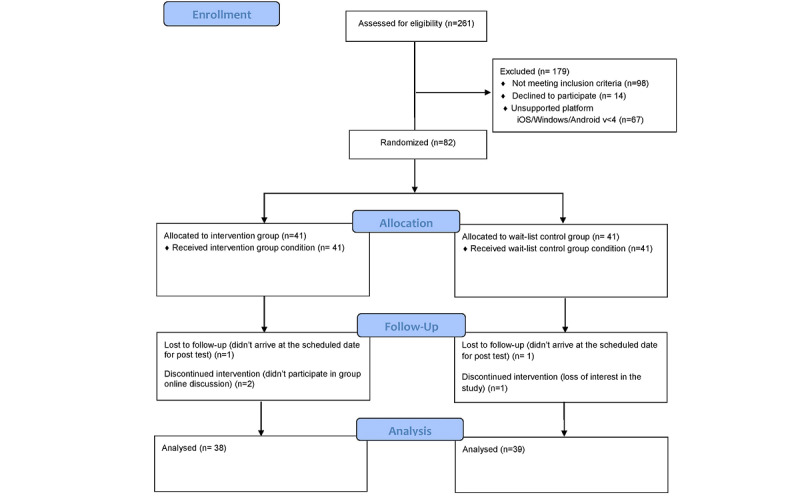
Background: Psychoeducation has turned into an effective tool in taking care of cancer patients and improving their psychophysical symptoms and quality of life. Despite the growing use of mobile phone apps in medical settings for improving health, evidence supporting their effectiveness in the psychoeducation of patients with breast cancer is rarely available. Objective: This study was conducted to investigate the effect of psychoeducational interventions on anxiety and self-esteem in women with breast cancer using a mobile app and an online support group. Methods: An unblinded randomized controlled trial based on mobile phones was conducted in Shiraz, Iran. A research assistant recruited 82 women with nonmetastatic breast cancer aged 20 to 60 years were from clinics during a face-to-face visit at the point of care and randomly assigned to an intervention group (n=41) and a wait-list control group (n=41) through blocked randomization. The intervention group received psychoeducational interventions through a mobile phone app and participated in nurse-assisted online mobile support sessions for a total four weeks, whereas the control group was put on a waiting list. The State-Trait Anxiety Inventory (STAI) and the Rosenberg Self-Esteem Scale (RSES) were used to measure the levels of anxiety and self-esteem as the main outcomes at baseline and one week after the intervention. Results: A total of 82 patients with a mean age of 46.45 (SD 9.29) years recruited in Winter 2016 were randomly assigned to a wait-list control group (n=41) and intervention group (n=41). Five patients dropped out for different reasons. Comparing the postintervention mean scores of anxiety and its subscales using the independent t test showed statistically significant differences between the mobile psychoeducation group and controls (P<.001). The paired t test used to compare the postintervention mean scores of anxiety with its preintervention scores in the intervention group showed significant reductions in the scores of anxiety (95% CI –17.44 to –8.90, P<.001, d=1.02) and its two subscales (state anxiety: 95% CI –9.20 to –4.21, P<.001, d=0.88 and trait anxiety: 95% CI –8.50 to –4.12, P<.001, d=0.94). Comparing the postintervention mean scores of self-esteem showed statistically insignificant differences between the control and intervention groups (16.87 vs 17.97, P=.24). In contrast with the controls, using the paired t test showed that the increase in the postintervention mean scores of self-esteem were statistically significant in the intervention group compared with the preintervention scores (mean difference 2.05, 95% CI 1.28 to 2.82, P<.001). Conclusions: This study demonstrated the key role of mobile apps in decreasing anxiety and improving self-esteem in women with breast cancer through psychoeducational interventions. Similar studies with longer follow-ups are recommended that be conducted in this context. Trial Registration: Iranian Registry of Clinical Trials IRCT2015072123279N2; https://en.irct.ir/trial/19882
Overview
The claims and statistics of this paper haven’t been checked yet.
Free: it reads the open-access text and checks the first 5 claims that cite a source we can check. Create a free account to check every claim.
Integrity signals
Registry
Cites
Statistics
Figures
Verification
Claims the paper makes
The claims and statistics of this paper haven’t been checked yet.
Free: it reads the open-access text and checks the first 5 claims that cite a source we can check. Create a free account to check every claim.
Claims other papers make about this one
Each is checked against this paper’s own text: does it say what the citing paper says it does?
The source backs part of the claim, not all of it — or backs it for a different population, condition or comparison.
In the citing paper
“These methods have been shown to reduce anxiety,21-26 depression,21,22,25-29 and fatigue.30-33”
From Effects of a Video Sequence Based Intervention on Anxiety, Fatigue and Depression in Cancer Patients: Results of a Randomized Controlled Trial. (2023) · cites this paper as [23]
Experimental — accuracy not yet measured
Self-check
Percentages, sums and reported differences re-computed from the paper’s own numbers.
The self-check needs the paper’s full text.
Citations
Cites
Statistical Power Analysis for the Behavioral Sciences
Cohen, J. (2013) · doi:10.4324/9780203771587 · Cited by 25,373
Siegel, R. L., Miller, K. D., & Jemal, A. (2016) · CA: A Cancer Journal for Clinicians · doi:10.3322/caac.21332 · Cited by 16,003
Spielberger, C. D. (2010) · The Corsini Encyclopedia of Psychology · doi:10.1002/9780470479216.corpsy0943 · Cited by 2,535
Does low self-esteem predict depression and anxiety? A meta-analysis of longitudinal studies.
Sowislo, J. F., & Orth, U. (2013) · Psychological Bulletin · doi:10.1037/a0028931 · Cited by 2,123 · cited 1×
“These patients therefore require special support in different stages, including diagnosis, treatment, rehabilitation, and follow-up [8,12].”
BackgroundJulian, L. J. (2011) · Arthritis Care & Research · doi:10.1002/acr.20561 · Cited by 1,794 · cited 1×
“The inclusion criteria comprised age range of 20 to 60 years, willingness to participate in the study, diagnosis of nonmetastatic breast cancer, literacy, access to smart mobile electronic devices connected to the internet and willingness to have the app installed on them, ability to work with the app and social netwo…”
BackgroundSchmitt, D. P., & Allik, J. (2005) · Journal of Personality and Social Psychology · doi:10.1037/0022-3514.89.4.623 · Cited by 1,665 · cited 1×
“Administering the RSES in 53 nations, Schmitt et al [41] also confirmed the validity and reliability of this test.”
MethodBarak, A., Hen, L., Boniel-Nissim, M., & Shapira, N. (2008) · Journal of Technology in Human Services · doi:10.1080/15228830802094429 · Cited by 1,283 · cited 2×
“These interventions were found more effective than conventional treatments and as effective as face-to-face therapies for a wide range of conditions such as depression and anxiety [21,22].”
BackgroundA Systematic Review of Healthcare Applications for Smartphones
Mosa, A. S. M., Yoo, I., & Sheets, L. (2012) · BMC Medical Informatics and Decision Making · doi:10.1186/1472-6947-12-67 · Cited by 1,184 · cited 2×
“mHealth apps include patient education, disease self-management, remote monitoring of patients, diagnostic treatment services, data collection, communication, and counseling services [18].”
BackgroundMohr, D. C., Cuijpers, P., & Lehman, K. (2011) · Journal of Medical Internet Research · doi:10.2196/jmir.1602 · Cited by 1,097 · cited 1×
“Research suggests using an app coupled with human support (eg, coaching and supervision through phone or text messages) can help increase engagement and use and promote the outcomes [30,31]; for instance, a mobile phone app supported with a behavioral health intervention based on social media was found to promote qual…”
BackgroundSocial media and health care professionals: benefits, risks, and best practices.
(2014) · PubMed Central · Cited by 1,011
Self-Esteem and Adolescent Problems: Modeling Reciprocal Effects
Rosenberg, M., Schooler, C., & Schoenbach, C. (1989) · American Sociological Review · doi:10.2307/2095720 · Cited by 843 · cited 1×
“The inclusion criteria comprised age range of 20 to 60 years, willingness to participate in the study, diagnosis of nonmetastatic breast cancer, literacy, access to smart mobile electronic devices connected to the internet and willingness to have the app installed on them, ability to work with the app and social netwo…”
BackgroundInternet-Delivered Psychological Treatments
Andersson, G. (2016) · Annual Review of Clinical Psychology · doi:10.1146/annurev-clinpsy-021815-093006 · Cited by 595 · cited 2×
“These interventions were found more effective than conventional treatments and as effective as face-to-face therapies for a wide range of conditions such as depression and anxiety [21,22].”
BackgroundClassen, C., Butler, L. D., Koopman, C., Miller, E., DiMiceli, S., Giese-Davis, J., Fobair, P., Carlson, R. W., Kraemer, H. C., & Spiegel, D. (2001) · Archives of General Psychiatry · doi:10.1001/archpsyc.58.5.494 · Cited by 520
Evaluation of an internet support group for women with primary breast cancer
Winzelberg, A. J., Classen, C., Alpers, G. W., Roberts, H., Koopman, C., Adams, R. E., Ernst, H., Dev, P., & Taylor, C. B. (2003) · Cancer · doi:10.1002/cncr.11174 · Cited by 485 · cited 2×
“In line with our research, a study by Winzelberg at al [56] found an internet support group to help reduce perceived stress, cancer-associated traumas, and depression in females with primary breast cancer.”
BackgroundResultRyu, S. (2012) · Healthcare Informatics Research · doi:10.4258/hir.2012.18.3.231 · Cited by 448 · cited 1×
“Given the growing use of mobile health apps and devices in medical sciences and the health care industry, the World Health Organization defined mobile health (mHealth) as using mobile and wireless technologies to help achieve health objectives [17].”
BackgroundAttai, D. J., Cowher, M. S., Al-Hamadani, M., Schoger, J. M., Staley, A. C., & Landercasper, J. (2015) · Journal of Medical Internet Research · doi:10.2196/jmir.4721 · Cited by 357 · cited 1×
“These findings are consistent with the literature, including an uncontrolled study by Attai et al [57] that reported a rise in perceived knowledge and reductions in anxiety levels in patients with breast cancer as a result of participating in a support group on Twitter.”
ResultLaing, B. Y., Mangione, C. M., Tseng, C.-H., Leng, M., Vaisberg, E., Mahida, M., Bholat, M., Glazier, E., Morisky, D. E., & Bell, D. S. (2014) · Annals of Internal Medicine · doi:10.7326/m13-3005 · Cited by 353
Bender, J. L., Yue, R. Y. K., To, M. J., Deacken, L., & Jadad, A. R. (2013) · Journal of Medical Internet Research · doi:10.2196/jmir.2661 · Cited by 346 · cited 2×
“The promising platform provided by mobile apps helps women with breast cancer acquire knowledge and interact with peers and health care experts whenever and wherever they need to [20].”
BackgroundRobots at home: Understanding long-term human-robot interaction
Kidd, C. D., & Breazeal, C. (2008) · 2008 IEEE/RSJ International Conference on Intelligent Robots and Systems · doi:10.1109/iros.2008.4651113 · Cited by 332
Mobile, social, and wearable computing and the evolution of psychological practice.
Morris, M. E., & Aguilera, A. (2012) · Professional Psychology: Research and Practice · doi:10.1037/a0029041 · Cited by 298
For Telehealth To Succeed, Privacy And Security Risks Must Be Identified And Addressed
Hall, J. L., & McGraw, D. (2014) · Health Affairs · doi:10.1377/hlthaff.2013.0997 · Cited by 297 · cited 1×
“According to McGraw and Hall [67], serious security and privacy issues in mobile apps and telehealth systems serve as obstacles to the clinical and industrial applications of these systems; nevertheless, many populations, especially chronically ill patients, have reported that the beneficial effects of using telehealt…”
BackgroundTorous, J., Friedman, R., & Keshavan, M. (2014) · JMIR mHealth and uHealth · doi:10.2196/mhealth.2994 · Cited by 287 · cited 1×
“Furthermore, mobile systems can be employed to raise patient levels of access to psychological support and remotely perform psychological interventions when patients are vulnerable [69,70].”
BackgroundAssociations among adolescent risk behaviours and self‐esteem in six domains
Wild, L. G., Flisher, A. J., Bhana, A., & Lombard, C. (2004) · Journal of Child Psychology and Psychiatry · doi:10.1111/j.1469-7610.2004.00330.x · Cited by 286
Torous, J., Chan, S. R., Yee-Marie Tan, S., Behrens, J., Mathew, I., Conrad, E. J., Hinton, L., Yellowlees, P., & Keshavan, M. (2014) · JMIR Mental Health · doi:10.2196/mental.4004 · Cited by 228 · cited 1×
“Smartphone and mobile apps provide a great opportunity to discover new modalities of monitoring, treatment, and research into psychiatric and mental health conditions [63].”
BackgroundIncidence of primary breast cancer in Iran: Ten-year national cancer registry data report
Jazayeri, S. B., Saadat, S., Ramezani, R., & Kaviani, A. (2015) · Cancer Epidemiology · doi:10.1016/j.canep.2015.04.016 · Cited by 170
Paxling, B., Lundgren, S., Norman, A., Almlöv, J., Carlbring, P., Cuijpers, P., & Andersson, G. (2013) · Behavioural and Cognitive Psychotherapy · doi:10.1017/s1352465812000240 · Cited by 162 · cited 1×
“As found in Paxling et al [47], the psychiatric nurse feedback was based on guidelines as follows: validating the work of the participants and reporting difficulties, problem solving and clarification on how to perform the treatment methods, promoting the tasks, reinforcing the progress, and encouraging work continuat…”
MethodThe SmartCAT: An m-Health Platform for Ecological Momentary Intervention in Child Anxiety Treatment
Pramana, G., Parmanto, B., Kendall, P. C., & Silk, J. S. (2014) · Telemedicine and e-Health · doi:10.1089/tmj.2013.0214 · Cited by 162
Gold, M., Dunn, L. B., Phoenix, B. J., Paul, S. M., Hamolsky, D., Levine, J. D., & Miaskowski, C. A. (2015) · European Journal of Oncology Nursing · doi:10.1016/j.ejon.2015.06.003 · Cited by 160 · cited 1×
“Cancer-associated anxiety can intensify the disease symptoms in patients, prolong their recovery, cause undesirable outcomes, and degrade their and their caregivers’ quality of life [5,6].”
BackgroundLin, Y., Shiah, I., Chang, Y., Lai, T.-J., Wang, K., & Chou, K. (2004) · Nurse Education Today · doi:10.1016/j.nedt.2004.09.004 · Cited by 149
Research-Tested Mobile Apps for Breast Cancer Care: Systematic Review
Jongerius, C., Russo, S., Mazzocco, K., & Pravettoni, G. (2019) · JMIR mHealth and uHealth · doi:10.2196/10930 · Cited by 146 · cited 2×
“Numerous studies have demonstrated the impact of mobile phones and apps on the provision of support for cancer survivors and the treatment, control, and prevention of diverse disorders and diseases [18,29,61].”
BackgroundSupport network of adolescents with chronic disease: Adolescents’ perspective
Kyngäs, H. (2004) · Nursing & Health Sciences · doi:10.1111/j.1442-2018.2004.00207.x · Cited by 131
Anxiety in patients with breast cancer undergoing treatment: a systematic review.
Lim, C. C., Devi, M. K., & Ang, E. (2011) · PubMed · doi:10.1111/j.1744-1609.2011.00221.x · Cited by 125 · cited 1×
“Anxiety is the most common response to a mastectomy, potentially in association with body image, pain, and disfigurement, and is reported to be normally associated with a sense of disability that lowers self-esteem in women who have undergone a mastectomy [7,8].”
BackgroundZhu, J., Ebert, L., Liu, X., Wei, D., & Chan, S. W.-C. (2018) · JMIR mHealth and uHealth · doi:10.2196/mhealth.9438 · Cited by 124 · cited 3×
“A simple app-based e-support program was also found to improve quality of life, self-efficacy, and symptom interference in women with breast cancer during their chemotherapy [59].”
BackgroundPsychometric Characteristics and Dimensionality of a Persian Version of Rosenberg Self-Esteem Scale
Shapurian, R., Hojat, M., & Nayerahmadi, H. (1987) · Perceptual and Motor Skills · doi:10.2466/pms.1987.65.1.27 · Cited by 121 · cited 1×
“Validity and reliability of the Persian version of the RSES have been confirmed previously [42].”
BackgroundPerceived Benefits of Online Support Groups for Women with Metastatic Breast Cancer
Vilhauer, R. P. (2009) · Women & Health · doi:10.1080/03630240903238719 · Cited by 116 · cited 1×
“In addition, mobile and web-based online support groups enable women with breast cancer to express psychophysical and sexual problems arising from their disease and easily share their feelings and experiences with therapists and other patients; otherwise, they would be hesitant to express their problems in face-to-fac…”
BackgroundInterdisciplinary Journal of Virtual Learning in Medical Sciences
(2017) · Interdisciplinary Journal of Virtual Learning in Medical Sciences · doi:10.5812/ijvlms · Cited by 116
Greer, J. A., Jacobs, J., Pensak, N., MacDonald, J. J., Fuh, C.-X., Perez, G. K., Ward, A., Tallen, C., Muzikansky, A., Traeger, L., et al. (2019) · The Oncologist · doi:10.1634/theoncologist.2018-0536 · Cited by 112
Mobile Health in Oncology: A Patient Survey About App-Assisted Cancer Care
Kessel, K. A., Vogel, M. M. E., Kessel, C., Bier, H., Biedermann, T., Friess, H., Herschbach, P., von Eisenhart‐Rothe, R., Meyer, B., Kiechle, M. B., et al. (2017) · JMIR mhealth and uhealth · doi:10.2196/mhealth.7689 · Cited by 106 · cited 2×
“In approximately half the cases, patients with cancer were recently found to be willing to send and receive data through an app supporting their oncological treatment and follow-ups [23].”
BackgroundRosen, K. D., Paniagua, S. M., Kazanis, W., Jones, S., & Potter, J. S. (2018) · Psycho-Oncology · doi:10.1002/pon.4764 · Cited by 106 · cited 1×
“In addition to promoting health-related quality of life and decreasing stress, mHealth-based interventions were found to improve weight loss and physical activity in patients with breast cancer [24-26]; nevertheless, the evidence for the effects of mHealth apps and mental health interventions on psychological dimensio…”
BackgroundLengacher, C. A., Reich, R. R., Ramesar, S., Alinat, C. B., Moscoso, M., Cousin, L., Marino, V. R., Elias, M. N., Paterson, C. L., Pleasant, M. L., et al. (2018) · Psycho-Oncology · doi:10.1002/pon.4491 · Cited by 101 · cited 2×
“In addition to promoting health-related quality of life and decreasing stress, mHealth-based interventions were found to improve weight loss and physical activity in patients with breast cancer [24-26]; nevertheless, the evidence for the effects of mHealth apps and mental health interventions on psychological dimensio…”
BackgroundPsychosocial Impact of Breast Cancer Diagnosis Among Omani Women
Al-Azri, M. H., Al-Awisi, H., Al-Rasbi, S., El-Shafie, K. T., Al‐Hinai, M., Al-Habsi, H. A., & Al-Moundhri, M. S. (2014) · Oman Medical Journal · doi:10.5001/omj.2014.115 · Cited by 100 · cited 2×
“The long-term survival of patients with breast cancer, however, predisposes them to many psychological disorders [3].”
BackgroundBørøsund, E., Cvancarova, M., Ekstedt, M., Moore, S. M., & Ruland, C. M. (2013) · Journal of Medical Internet Research · doi:10.2196/jmir.2285 · Cited by 97 · cited 1×
“Research suggests advanced social media and communication technology can be used to increase the involvement of patients with cancer in diverse types of discussion and reflection on their own health [64].”
Pope, Z., Lee, J. E., Zeng, N., Lee, H. Y., & Gao, Z. (2019) · Translational Behavioral Medicine · doi:10.1093/tbm/iby002 · Cited by 97 · cited 2×
“This research states that online mobile-based systems enhance different psychosocial and quality of life outcomes and reduce anxiety levels in patients with breast cancer [32].”
BackgroundSpecialist breast care nurses for supportive care of women with breast cancer
Cruickshank, S., Kennedy, C., Lockhart, K., Dosser, I., & Dallas, L. (2008) · Cochrane Database of Systematic Reviews · doi:10.1002/14651858.cd005634.pub2 · Cited by 94
Optimizing cancer care through mobile health
Odeh, B., Kayyali, R., Nabhani‐Gebara, S., & Philip, N. Y. (2015) · Supportive Care in Cancer · doi:10.1007/s00520-015-2627-7 · Cited by 86 · cited 1×
“With a key role in the management and delivery of cancer care, mHealth can assist health care professionals and patients with the diagnosis of cancers and their associated psychological distress as well as follow-up, planning, providing cancer-related information, supporting medication adherence, and managing side eff…”
BackgroundTechnology- and Phone-Based Weight Loss Intervention
Hartman, S. J., Nelson, S. H., Cadmus-Bertram, L. A., Patterson, R. E., Parker, B. A., & Pierce, J. P. (2016) · American Journal of Preventive Medicine · doi:10.1016/j.amepre.2016.06.024 · Cited by 86 · cited 1×
“In addition to promoting health-related quality of life and decreasing stress, mHealth-based interventions were found to improve weight loss and physical activity in patients with breast cancer [24-26]; nevertheless, the evidence for the effects of mHealth apps and mental health interventions on psychological dimensio…”
BackgroundInfluence of Body Image in Women Undergoing Treatment for Breast Cancer
Freitas‐Júnior, R., Prates, M. F. O., Veloso, M. D. F., de Barros, N., & Prates, A. C. L. (2017) · Revista Brasileira Ginecologia e Obstetrícia · doi:10.1055/s-0037-1601453 · Cited by 80 · cited 1×
“Research has demonstrated that self-esteem was found to be adversely affected in women with breast cancer, which in turn can further impair their psychological well-being [10].”
BackgroundeHealth for Breast Cancer Survivors: Use, Feasibility and Impact of an Interactive Portal
Kuijpers, W., Groen, W. G., Oldenburg, H. S., Wouters, M. W., Aaronson, N. K., & van Harten, W. H. (2016) · JMIR Cancer · doi:10.2196/cancer.5456 · Cited by 77 · cited 1×
“Evaluating the effect of an mobile app on women with breast cancer through an uncontrolled study, Kuijpers et al [58] reported significant improvements in the 3 dimensions of quality of life (role functioning, emotional-mental health, and physical functioning) over time.”
BackgroundDrion, I., Pameijer, L. R., van Dijk, P. R., Groenier, K. H., Kleefstra, N., & Bilo, H. J. G. (2015) · Journal of Diabetes Science and Technology · doi:10.1177/1932296815585871 · Cited by 74
Foley, N. M., O'Connell, E. P., Lehane, E. A., Livingstone, V., Maher, B., Kaimkhani, S., Cil, T., Relihan, N., Bennett, M. W., Redmond, H. P., et al. (2016) · The Breast · doi:10.1016/j.breast.2016.08.012 · Cited by 68 · cited 3×
“Similarly, Foley et al [27] found an mHealth app developed to provide ample information for patients with breast cancer to negatively affect them and JMIR Mhealth Uhealth 2021 | vol. 9 | iss.”
BackgroundInfluentialAbdoli, N., Farnia, V., Salemi, S., Davarinejad, O., Jouybari, T. A., Khanegi, M., Alikhani, M., & Behrouz, B. (2020) · East Asian Archives of Psychiatry · doi:10.12809/eaap1870 · Cited by 68
Self-Esteem and Cancer: Theory and Research
Katz, M. R., Rodin, G., & Devins, G. M. (1995) · The Canadian Journal of Psychiatry · doi:10.1177/070674379504001007 · Cited by 68
Evidence on the Use of Mobile Apps During the Treatment of Breast Cancer: Systematic Review
Cruz, F. O. A. M., Vilela, R. A., Ferreira, E. B., Melo, N. S., & Reis, P. E. D. D. (2019) · JMIR mHealth and uHealth · doi:10.2196/13245 · Cited by 66 · cited 1×
“Numerous studies have demonstrated the impact of mobile phones and apps on the provision of support for cancer survivors and the treatment, control, and prevention of diverse disorders and diseases [18,29,61].”
BackgroundRichards, R., Kinnersley, P., Brain, K., McCutchan, G., Staffurth, J., & Wood, F. (2018) · JMIR mHealth and uHealth · doi:10.2196/10026 · Cited by 64 · cited 1×
“Patients with cancer were found to be interested in using mobile technologies for managing their disease, and the potential of smartphones for improving patient awareness of emotional well-being and stress by delivering therapeutic interventions and reducing anxiety has been highlighted in literature [55].”
Backgroundvan Eenbergen, M. C., van de Poll-Franse, L. V., Heine, P., & Mols, F. (2017) · JMIR Cancer · doi:10.2196/cancer.7312 · Cited by 60
Effects of a Smartphone Application on Breast Self-Examination: A Feasibility Study
Heo, J., Chun, M., Lee, K. Y., Oh, Y.-T., Noh, O. K., & Park, R. W. (2013) · Healthcare Informatics Research · doi:10.4258/hir.2013.19.4.250 · Cited by 52 · cited 1×
“All multimedia contents provided by smartphones such as video clips, text messages, and images can also assist users in improving their health [54].”
BackgroundHinnen, C., Hagedoorn, M., Ranchor, A. V., & Sanderman, R. (2008) · British Journal of Health Psychology · doi:10.1348/135910707x252431 · Cited by 52 · cited 1×
“As embedded features of the mobile app, lessons on assertiveness, anger and stress management, and effective communication skills for women with breast cancer were also found to enhance their self-esteem [53].”
BackgroundCarpenter, J. S. (1997) · Journal of Psychosocial Oncology · doi:10.1300/j077v15n03_03 · Cited by 51
Zhu, J., Ebert, L., Guo, D., Yang, S., Han, Q., & Chan, S. W.-C. (2018) · JMIR mHealth and uHealth · doi:10.2196/mhealth.9311 · Cited by 46 · cited 2×
“Moreover, a study by Zhu et al [60] showed the participants to perceive the program as effective in improving their knowledge, emotional well-being, and confidence.”
BackgroundQuality of life, anxiety and depression in Turkish breast cancer patients and in their husbands
Alacacıoğlu, A., Yavuzşen, T., Diriöz, M., & Yilmaz, U. (2008) · Medical Oncology · doi:10.1007/s12032-008-9138-z · Cited by 43 · cited 1×
“Cancer-associated anxiety can intensify the disease symptoms in patients, prolong their recovery, cause undesirable outcomes, and degrade their and their caregivers’ quality of life [5,6].”
BackgroundDastan, N. B., & Buzlu, S. (2012) · Asian Pacific Journal of Cancer Prevention · doi:10.7314/apjcp.2012.13.10.5313 · Cited by 38 · cited 2×
“Research suggests beneficial effects of psychoeducational interventions on patients with breast cancer [15,16].”
BackgroundEnache, R. G. (2012) · Procedia - Social and Behavioral Sciences · doi:10.1016/j.sbspro.2012.01.096 · Cited by 32 · cited 2×
“Anxiety is the most common response to a mastectomy, potentially in association with body image, pain, and disfigurement, and is reported to be normally associated with a sense of disability that lowers self-esteem in women who have undergone a mastectomy [7,8].”
BackgroundUse of Mental Health Apps by Patients With Breast Cancer in the United States: Pilot Pre-Post Study
Chow, P., Showalter, S., Gerber, M. S., Kennedy, E., Brenin, D., Mohr, D., Lattie, E., Gupta, A., Ocker, G., & Cohn, W. (2020) · JMIR Cancer · doi:10.2196/16476 · Cited by 32 · cited 1×
“Research suggests using an app coupled with human support (eg, coaching and supervision through phone or text messages) can help increase engagement and use and promote the outcomes [30,31]; for instance, a mobile phone app supported with a behavioral health intervention based on social media was found to promote qual…”
BackgroundTorabizadeh, C., Bostani, S., & Yektatalab, S. (2016) · Complementary Therapies in Clinical Practice · doi:10.1016/j.ctcp.2016.09.001 · Cited by 29 · cited 1×
“The obtained results can be explained by the factors used in this study such as cognitive behavioral methods, including relaxation and adaptation skills, thought stopping, conscious breathing, guided imagery, and stress and emotional management, whose effectiveness in emotional disorders such as anxiety has been prove…”
Self-citationSelf-Esteem Among the Elderly Visiting the Healthcare Centers in Kermanshah-Iran (2012)
Jafari, F., Khatony, A., & Malek, M. (2015) · Global Journal of Health Science · doi:10.5539/gjhs.v7n5p352 · Cited by 26
The relationship between anxiety and self-esteem in women suffering from breast cancer
Yektatalab, S., & Ghanbari, E. (2020) · Journal of Mid-life Health · doi:10.4103/jmh.jmh_140_18 · Cited by 26 · cited 1×
“Moreover, low self-esteem was found to be associated with anxiety in this group of women [11].”
BackgroundSelf-citationRingwald, J., Marwedel, L., Junne, F., Ziser, K., Schäffeler, N., Gerstner, L., Wallwiener, M., Brucker, S. Y., Hautzinger, M., Zipfel, S., et al. (2017) · JMIR Cancer · doi:10.2196/cancer.7973 · Cited by 22 · cited 1×
“Although patients rated self-esteem as extremely high and very important in mHealth intervention, this dimension has not been included in previous psycho-oncological mHealth interventions [28].”
BackgroundPositive Technology: Using Mobile Phones for Psychosocial Interventions
Konrath, S. (2015) · IGI Global eBooks · doi:10.4018/978-1-4666-8239-9.ch072 · Cited by 21
Cozaru, G. C., Papari, A. C., & Sandu, M. L. (2014) · Procedia - Social and Behavioral Sciences · doi:10.1016/j.sbspro.2014.03.110 · Cited by 11
Setting up the Structure and Process for E-Content Development
Mehrabi, M. (2019) · DOAJ (DOAJ: Directory of Open Access Journals) · doi:10.30476/ijvlms.2019.84733.1016 · Cited by 7 · cited 1×
“All these steps focused on the stage evaluation to provide proper feedback for each stage [45,46].”
BackgroundSelf-citationSexual Dysfunction in Breast Cancer Survivors
Yektatalab, S., Abdolghasem, T., Moosavinasab, M., & Sara, S. (2015) · DOAJ (DOAJ: Directory of Open Access Journals) · Cited by 6
Self-citationArafa, M. E., & Hassan, M. (2013) · Egyptian Journal of Psychiatry · doi:10.7123/01.ejp.0000415299.41177.69 · Cited by 4 · cited 2×
“Research suggests beneficial effects of psychoeducational interventions on patients with breast cancer [15,16].”
BackgroundYektatalab, S., Khodadadi, S., Moattari, M., Hosseiny, F. N., & Zare, N. (2017) · International Journal of Adolescent Medicine and Health · doi:10.1515/ijamh-2017-0012 · Cited by 3 · cited 1×
“The obtained results can be explained by the factors used in this study such as cognitive behavioral methods, including relaxation and adaptation skills, thought stopping, conscious breathing, guided imagery, and stress and emotional management, whose effectiveness in emotional disorders such as anxiety has been prove…”
Self-citationAssertive Community Treatment of Psychosocial Distress in Patients with Breast Cancer
(2017) · International Journal of Science and Research (IJSR) · doi:10.21275/art20174780 · Cited by 2 · cited 1×
“Research suggests promoting assertiveness skills and self-confirmation can assist the patients in improving their performance and social interactions [52].”
BackgroundMobile application of cognitive behavioral therapy for anxiety and advanced cancer.
MacDonald, J. J., Amoyal, N. R., Nisotel, L. E., Perez, G. K., Traeger, L. N., Temel, J. S., Pirl, W. F., Safren, S. A., & Greer, J. A. (2015) · Journal of Clinical Oncology · doi:10.1200/jco.2015.33.29_suppl.220 · Cited by 1 · cited 1×
“MacDonald [62] found the possibility of interacting and receiving feedback from the therapist, different features of the apps and homework, and symptom distress tracking to be the factors that help enhance patient adherence to mHealth apps.”
Background
Research works printed but not linked: 10
- Saniah, A, 2010, Malaysian J Psychiatr, 19, 1
- 10.32598/jccnc.1.1.9 · doi:10.32598/jccnc.1.1.9
- Aghabarari, M, 2008, J Shahrekord Univ Med Sci, 9, 26
- 10.1002/9780470479216.corpsy0943 · DOI · Paper page
- Mahram, B, 1993, [Manual of Spielberger State-Trait Anxiety Inventory] [Thesis], 52
- Alizadeh, T, 2005, J Reprod Infertil, 6, 194
- Fani, M, 2014, Interdiscipl J Virtual Learning Med Sci, 5, 72
- Izadi-Ajirlo, A, 2013, J Rehab, 13, 72
- Ventola, CL, 2014, P T, 39, 491
- Absavaran, M, 2015, Payesh J, 14, 363
Cited by
Lee, A. Y. L., Wong, A. K. C., Hung, T. T. M., Yan, J., & Yang, S. (2022) · Journal of Medical Internet Research · doi:10.2196/40364 · Cited by 159
“Apart from nurse follow-ups and telemonitoring, there were 4 studies that used smartphone apps to support chronic disease rehabilitation in the community [23,35,44,45].”
Lee, K., Kim, S., Kim, S. H., Yoo, S., Sung, J. H., Oh, E. G., Kim, N. W., & Lee, J. (2023) · Journal of Medical Internet Research · doi:10.2196/38333 · Cited by 95
Kim, J., Aryee, L. M. D., Bang, H., Prajogo, S., Choi, Y. K., Hoch, J. S., & Prado, E. L. (2023) · JMIR Mental Health · doi:10.2196/43066 · Cited by 106
“More information about the included studies is available in Multimedia Appendix 6 [26-121].”
BackgroundInfluentialSaevarsdottir, S. R., & Gudmundsdottir, S. L. (2023) · Journal of Medical Internet Research · doi:10.2196/42852 · Cited by 68
“The results of the risk-of-bias assessment are presented in Figure 2 [51-53”
InfluentialQin, M., Chen, B., Sun, S., & Liu, X. (2022) · Journal of Medical Internet Research · doi:10.2196/39799 · Cited by 81
“Some studies have demonstrated that smartphone app interventions benefit mental health [16,17].”
Metadata
- Authors
- Ghanbari, E., Yektatalab, S., & Mehrabi, M.
- Affiliations
- Shiraz University of Medical Sciences (IR)
- Shiraz University (IR)
- Corresponding author
- Yektatalab, Shahrzad
- Venue
- JMIR mHealth and uHealth
- Publisher
- JMIR Publications Inc.
- Published
- 2021-05-18
- Volume
- 9
- Issue
- 5
- Pages
- e19262
- ISSN
- 2291-5222 (ISSN-L)
- PMC
- PMC8170553
- OpenAlex
- W3136528119
- Cited by
- 104
- References
- 75
- Citations by year
- 2026: 17 · 2025: 25 · 2024: 20 · 2023: 24 · 2022: 18
- FWCI
- 5.65
- Type
- journal article
- Language
- en
- Open access
- gold
- doi.org
- Licence
- cc-by
- Locations
- JMIR mhealth and uhealth (publishedVersion, cc-by)
- PubMed Central (publishedVersion, cc-by)
- PubMed (publishedVersion)
- DOAJ (DOAJ: Directory of Open Access Journals) (submittedVersion, cc-by-sa)
- Topics
- Health Sciences › Medicine › Oncology › Cancer survivorship and care
- Health Sciences › Health Professions › General Health Professions › Mobile Health and mHealth Applications
- Social Sciences › Psychology › Applied Psychology › Digital Mental Health Interventions
- Keywords
- psychoeducation, breast cancer, mobile health apps, online support groups, anxiety, self-esteem, state anxiety, trait anxiety, women with cancer, digital mental health interventions, non-metastatic breast cancer, quality of life, patient education, Shiraz, State-Trait Anxiety Inventory, Rosenberg Self-Esteem Scale
- MeSH terms
- Adult, Anxiety, Breast Neoplasms, Female, Humans, Iran, Middle Aged, Quality of Life, Young Adult, Mobile Applications
About these checks
Registry, retraction, Cites and statistics results are computed, not judged, with one exception: a printed reference that no index lists is read once by a model before it counts as a citation error. Claims are extracted by a model and kept only when their quote appears verbatim in the text; each cited source is then checked, with a model’s help, for whether it says what the claim relies on. Those verdicts can be wrong — read the claim’s quote and the cited source before relying on one.
Statistics and arithmetic are recomputed, not judged.
Confidence bands are shown only for fields calibrated on our annotated test set. None is calibrated yet, so no band is shown.
What counts as a claim ›How we measure confidence ›How we check this ›
Are you an author, or do you see a problem with this page? Request a review
Data sources
Bibliographic data: Semantic Scholar, OpenAlex, Crossref.
Contains information from the Semantic Scholar Academic Graph Datasets, made available under the ODC Attribution License (ODC-BY 1.0).
Semantic Scholar’s data is described in: Kinney, R., et al. (2023). The Semantic Scholar Open Data Platform. arXiv:2301.10140.
