

Virtual Trauma-Focused Therapy for Military Members, Veterans, and Public Safety Personnel With Posttraumatic Stress Injury: Systematic Scoping Review
Open accessPublished version of a preprint
The DOI matches its Crossref record; 84 of the 84 references it cites were found in a registry or an index.
Abstract
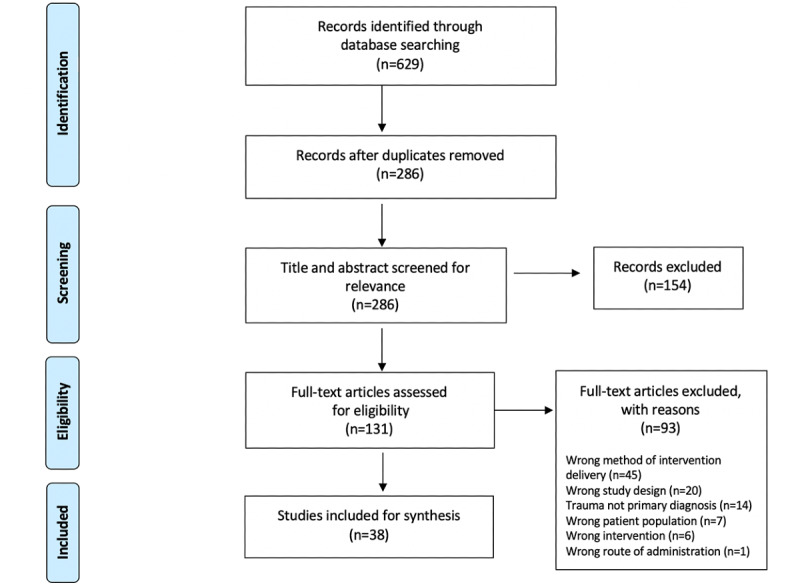
Background: A necessary shift from in-person to remote delivery of psychotherapy (eg, teletherapy, eHealth, videoconferencing) has occurred because of the COVID-19 pandemic. A corollary benefit is a potential fit in terms of the need for equitable and timely access to mental health services in remote and rural locations. Owing to COVID-19, there may be an increase in the demand for timely, virtual delivery of services among trauma-affected populations, including public safety personnel (PSP; eg, paramedics, police, fire, correctional officers), military members, and veterans. There is a lack of evidence on the question of whether digital delivery of trauma-therapies for military members, veterans, and PSP leads to similar outcomes to in-person delivery. Information on barriers and facilitators and recommendations regarding digital-delivery is also scarce. Objective: This study aims to evaluate the scope and quality of peer-reviewed literature on psychotherapeutic digital health interventions delivered remotely to military members, veterans, and PSP and synthesize the knowledge of needs, gaps, barriers to, and facilitators for virtual assessment of and virtual interventions for posttraumatic stress injury. Methods: Relevant studies were identified using MEDLINE (Medical Literature Analysis and Retrieval System Online), EMBASE (Excerpta Medica dataBASE), APA (American Psychological Association) PsycINFO, CINAHL (Cumulative Index of Nursing and Allied Health Literature) Plus with Full Text, and Military & Government Collection. For collation, analysis, summarizing, and reporting of results, we used the CASP (Critical Skills Appraisal Program) qualitative checklist, PEDro (Physiotherapy Evidence Database) scale, level of evidence hierarchy, PRISMA-ScR (Preferred Reporting Items for Systematic Reviews and Meta-Analyses extension for Scoping Reviews), and narrative synthesis. Results: A total of 38 studies were included in this review. Evidence for the effectiveness of digital delivery of prolonged exposure therapy, cognitive processing therapy, behavioral activation treatment with therapeutic exposure to military members, veterans, and PSP was rated level 1a, whereas evidence for cognitive behavioral therapy was conflicting. The narrative synthesis indicated that virtual delivery of these therapies can be as effective as in-person delivery but may reduce stigma and cost while increasing access to therapy. Issues of risk, safety, potential harm (ie, suicidality, enabling avoidance), privacy, security, and the match among the therapist, modality, and patient warrant further consideration. There is a lack of studies on the influences of gender, racial, and cultural factors that may result in differential outcomes, preferences, and/or needs. An investigation into other therapies that may be suitable for digital delivery is needed. Conclusions: Digital delivery of trauma therapies for military members, veterans, and PSP is a critical area for further research. Although promising evidence exists regarding the effectiveness of digital health within these populations, many questions remain, and a cautious approach to more widespread implementation is warranted.
Overview
The claims and statistics of this paper haven’t been checked yet.
Free: it reads the open-access text and checks the first 5 claims that cite a source we can check. Create a free account to check every claim.
Integrity signals
Registry
Cites
Statistics
Figures
Verification
Claims the paper makes
The claims and statistics of this paper haven’t been checked yet.
Free: it reads the open-access text and checks the first 5 claims that cite a source we can check. Create a free account to check every claim.
Claims other papers make about this one
Each is checked against this paper’s own text: does it say what the citing paper says it does?
The cited source says what the claim attributes to it.
In the citing paper
“However, caveats surrounding web-based delivery, including clinical, cultural, practical, and privacy and security issues, remain underaddressed [7].”
From Synchronous Web-Based Psychotherapy for Mental Disorders From a Health Quality Perspective: Scoping Review (2023) · cites this paper as [7]
Self-check
Percentages, sums and reported differences re-computed from the paper’s own numbers.
The self-check needs the paper’s full text.
Citations
Cites
Using thematic analysis in psychology
Braun, V., & Clarke, V. (2006) · Qualitative Research in Psychology · doi:10.1191/1478088706qp063oa · Cited by 194,414
PRISMA Extension for Scoping Reviews (PRISMA-ScR): Checklist and Explanation
Tricco, A. C., Lillie, E., Zarin, W., O'Brien, K. K., Colquhoun, H., Levac, D., Moher, D., Peters, M. D. J., Horsley, T., Weeks, L., et al. (2018) · Annals of Internal Medicine · doi:10.7326/m18-0850 · Cited by 43,565
Scoping studies: towards a methodological framework
Arksey, H., & O'Malley, L. (2005) · International Journal of Social Research Methodology · doi:10.1080/1364557032000119616 · Cited by 36,742
Popay, J., Roberts, H., Sowden, A., Petticrew, M., Arai, L., Rodgers, M., Britten, N., Roen, K., & Duffy, S. (2006) · Lancaster University · doi:10.13140/2.1.1018.4643 · Cited by 2,070
Milliken, C. S., Auchterlonie, J. L., & Hoge, C. W. (2007) · JAMA · doi:10.1001/jama.298.18.2141 · Cited by 1,640 · cited 1×
“The incidence of PTSIs among military members, veterans, and PSP varies: within military and veteran populations globally, PTSD prevalence is persistent, complex, and may increase over time [16,17].”
BackgroundEvidence for physiotherapy practice: A survey of the Physiotherapy Evidence Database (PEDro)
Moseley, A. M., Herbert, R. D., Sherrington, C., & Maher, C. G. (2002) · Australian Journal of Physiotherapy · doi:10.1016/s0004-9514(14)60281-6 · Cited by 911 · cited 2×
“The 3 tools utilized for this step were the PEDro (Physiotherapy Evidence Database) scale [48], CASP (Critical Appraisal Skills Program) qualitative checklist [49], and the levels of evidence hierarchy.”
BackgroundMethodFulton, J. J., Calhoun, P. S., Wagner, H. R., Schry, A. R., Hair, L. P., Feeling, N., Elbogen, E., & Beckham, J. C. (2015) · Journal of Anxiety Disorders · doi:10.1016/j.janxdis.2015.02.003 · Cited by 693
Mental Disorder Symptoms among Public Safety Personnel in Canada
Carleton, R. N., Afifi, T. O., Turner, S., Taillieu, T., Duranceau, S., LeBouthillier, D. M., Sareen, J., Ricciardelli, R., MacPhee, R. S., Groll, D., et al. (2018) · The Canadian Journal of Psychiatry · doi:10.1177/0706743717723825 · Cited by 558
Eccleston, C., Blyth, F. M., Dear, B. F., Fisher, E. A., Keefe, F. J., Lynch, M. E., Palermo, T. M., Reid, M. C., & Williams, A. C. D. C. (2020) · Pain · doi:10.1097/j.pain.0000000000001885 · Cited by 480 · cited 2×
“Physical distancing during the COVID-19 pandemic has led to a rapid paradigm shift toward remote mental health service delivery and a surge in the use of digital health delivery (eg, teletherapy, telemedicine, eHealth, and mobile health) [1,2].”
BackgroundLewis, C., Roberts, N. P., Andrew, M., Starling, E., & Bisson, J. I. (2020) · European Journal of Psychotraumatology · doi:10.1080/20008198.2020.1729633 · Cited by 460 · cited 4×
“Psychotherapeutic interventions most strongly recommended for military members, veterans, and PSP include CPT, CBT, PE, and EMDR [34-38].”
BackgroundInfluential
Research works printed but not linked: 7
- Resick P Monson CG Psychosocial Treatments for PTSD Guilford Press 2007 2020-07-06 http://www.guilford.com
- Covidence Systematic Review Software Covidence - Better Systematic Review Management 2020-07-06 https://www.covidence.org/reviews/active
- Aubut J Teasell R Cullen N Marshall SB Evidence-Based Review of Moderate to Severe Brain Injury Semantic Scholar: AI-Powered Research Tool 2013 2020-08-20 https://pdfs.semanticscholar.org/2b08/beaff788b361f6e3f5ca37ed8fda616b3fa9.pdf
- Straus S Richardson W Glasziou P Haynes R Evidence-Based Medicine: How to Practice and Teach EBM. Third Edition 2005 Edinburgh, UK SAGE Publications
- Luxton DD Pruitt LD O'Brien K Kramer G An evaluation of the feasibility and safety of a home-based telemental health treatment for posttraumatic stress in the US military Telemed J E Health 2015 11 21 11 880 6 10.1089/tmj.2014.0235 26103565 26103565 · DOI · Paper page
- Morland L Wells S Glassman L Grubbs K Mackintosh M Golshan S Sohn M Thorp S Savage UA Acierno RE What do veterans want? Understanding veterans' preferences for PTSD treatment delivery Mil Med 2019 12 1 184 11-12 686 92 10.1093/milmed/usz035 30839067 30839067 · DOI
- Internet-Delivered Cognitive Behavioural Therapy for Post-Traumatic Stress Disorder: Recommendations Canadian Agency for Drugs and Technologies in Health (CADTH) 2020 2020-07-04 https://cadth.ca/sites/default/files/hta-he/op0537-icbt-for-ptsd-recommendations.pdf 32134610
Cited by
Philippe, T. J., Sikder, N., Jackson, A., Koblanski, M. E., Liow, E., Pilarinos, A., & Vasarhelyi, K. (2022) · JMIR Mental Health · doi:10.2196/35159 · Cited by 436
Treatment of Posttraumatic Stress Disorder: A State-of-the-art Review
Burback, L., Brémault-Phillips, S., Nijdam, M. J., McFarlane, A., & Vermetten, E. (2024) · Current Neuropharmacology · doi:10.2174/1570159x21666230428091433 · Cited by 208
Self-citationDigital health for quality healthcare: A systematic mapping of review studies
Ibrahim, M. S., Yusoff, H. M., Bakar, Y. I. A., Aung, M. M. T., Abas, M. I., & Ramli, R. A. (2022) · Digital Health · doi:10.1177/20552076221085810 · Cited by 138
Mapping Factors That Affect the Uptake of Digital Therapeutics Within Health Systems: Scoping Review
van Kessel, R., Román-Urrestarazu, A., Anderson, M., Kyriopoulos, I., Field, S., Monti, G., Reed, S. D., Pavlova, M., Wharton, G., & Mossialos, E. A. (2023) · Journal of Medical Internet Research · doi:10.2196/48000 · Cited by 132
A network meta-analysis of psychosocial interventions for refugees and asylum seekers with PTSD
Turrini, G., Tedeschi, F., Cuijpers, P. J., Giovane, C. D., Kip, A., Morina, N., Nosè, M., Ostuzzi, G., Purgato, M., Ricciardi, C., et al. (2021) · BMJ Global Health · doi:10.1136/bmjgh-2021-005029 · Cited by 76
The development of a self‐report scale to assess therapists' acceptance of telepsychotherapy
Békés, V., Doorn, K. A., McCollum, J. K., Prout, T. A., & Hoffman, L. (2021) · Journal of Clinical Psychology · doi:10.1002/jclp.23289 · Cited by 41
Békés, V., Doorn, K. A., Roberts, K. E., Stukenberg, K. W., Prout, T. A., & Hoffman, L. (2023) · Journal of Clinical Psychology · doi:10.1002/jclp.23477 · Cited by 39
Smith‐MacDonald, L., Lusk, J., Lee‐Baggley, D., Bright, K. S., Laidlaw, A., Voth, M., Spencer, S., Mack, E., Pike, A., Jones, C., et al. (2022) · Frontiers in Psychiatry · doi:10.3389/fpsyt.2021.801680 · Cited by 27
Self-citationMoghimi, E., Knyahnytska, Y., Omrani, M., Nikjoo, N., Stephenson, C., Layzell, G., Simpson, A. I. F., & Alavi, N. (2022) · Frontiers in Psychiatry · doi:10.3389/fpsyt.2022.921527 · Cited by 30
Lahutina, S., Frankova, I., Gruen, M., Vermetten, E. H. G. J. M., Zohar, J., Spitschan, M., & Bajbouj, M. (2024) · Neuroscience Applied · doi:10.1016/j.nsa.2024.104089 · Cited by 38
Jones, C., Miguel Cruz, A., Smith-MacDonald, L., Brown, M. R. G., Vermetten, E., & Brémault-Phillips, S. (2022) · JMIR Formative Research · doi:10.2196/33681 · Cited by 19
Self-citationLiao, D.-D., Long, Y., Yu, T., Kang, X., Liu, S., Jin, Y., & Zhang, A. (2023) · Frontiers in Public Health · doi:10.3389/fpubh.2023.1030456 · Cited by 22
Obuobi-Donkor, G., Shalaby, R., Eboreime, E., Agyapong, B., Phung, N., Eyben, S., Wells, K., Hilario, C. T., Dias, R. D. L., Jones, C., et al. (2023) · International Journal of Environmental Research and Public Health · doi:10.3390/ijerph20054215 · Cited by 17
Self-citationВоловик, М. Г., Belova, A. N., Kuznetsov, A., Полевая, А. В., Vorobyova, O. V., & Khalak, M. E. (2023) · Современные технологии в медицине · doi:10.17691/stm2023.15.1.08 · Cited by 63
Jones, C., Cruz, A. M., & Brémault‐Phillips, S. (2021) · JMIR Rehabilitation and Assistive Technologies · doi:10.2196/26078 · Cited by 17
Self-citationWendlandt, B., Ceppe, A., Gaynes, B. N., Cox, C. E., Hanson, L. C., Nelson, J. E., & Carson, S. S. (2022) · Critical Care Explorations · doi:10.1097/cce.0000000000000647 · Cited by 13
Smith‐MacDonald, L., Jones, C., Sevigny, P. R., White, A. A., Laidlaw, A., Voth, M., Mikolas, C., Heber, A., Greenshaw, A. J., & Brémault‐Phillips, S. (2021) · JMIR Formative Research · doi:10.2196/26369 · Cited by 16
Self-citationTreatments and regulatory mechanisms of acoustic stimuli on mood disorders and neurological diseases
Chen, Y., Sun, J., Tao, J., & Sun, T. (2024) · Frontiers in Neuroscience · doi:10.3389/fnins.2023.1322486 · Cited by 16
Winkler, O., Dhaliwal, R., Greenshaw, A. J., O’Shea, K., Abba‐Aji, A., Chima, C., Purdon, S. E., & Burback, L. (2021) · JMIR Research Protocols · doi:10.2196/30711 · Cited by 13
Self-citationDhaliwal, R., Yap, S., Talarico, F., Al-Shamali, H., Mcweeny, R., Reeson, M., Shalaby, R., Chen, T., Spronk, E., Snodgrass, R., et al. (2023) · Journal of Medical Internet Research · doi:10.2196/40710 · Cited by 8
“However, caveats surrounding web-based delivery, including clinical, cultural, practical, and privacy and security issues, remain underaddressed [7].”
Self-citationCogan, N., Kirk, A. F., & Graf, C. (2026) · JMIR Research Protocols · doi:10.2196/72250 · Cited by 8
Obuobi-Donkor, G., Eboreime, E., Shalaby, R., Agyapong, B., Phung, N., Eyben, S., Wells, K., Dias, R. D. L., Hilario, C. T., Jones, C., et al. (2023) · JMIR Formative Research · doi:10.2196/46431 · Cited by 8
Self-citationRecent aspects of medical rehabilitation for combat trauma
В., П. И., Shchikota, A. M., Гумарович, К. А., Kotelnikova, A. V., Makarova, M. R., & Сергеевич, Ф. М. (2024) · Russian Journal of Physiotherapy Balneology and Rehabilitation · doi:10.17816/622930 · Cited by 7
Understanding veteran barriers to specialty outpatient PTSD clinical care
Rozek, D. C., Steigerwald, V. L., Baker, S. N., Gross, G. M., Maieritsch, K. P., Hoff, R. A., Harpaz‐Rotem, I., & Smith, N. B. (2023) · Journal of Anxiety Disorders · doi:10.1016/j.janxdis.2023.102675 · Cited by 12
Shi, Y., Wu, Z., Wang, H., Kong, W., & Zhuansun, X. (2022) · Evidence-based Complementary and Alternative Medicine · doi:10.1155/2022/6720287 · Cited by 7
RetractedMoghimi, E., Knyahnytska, Y., Zhu, Y., Kumar, A., Knyahnytski, A., Patel, C. B., Omrani, M., Gerritsen, C. J., Martin, M. S., Simpson, A. I. F., et al. (2022) · Frontiers in Psychiatry · doi:10.3389/fpsyt.2022.1004143 · Cited by 10
Suicidal Ideation, Planning, and Attempts Among new Royal Canadian Mounted Police Cadets
Nisbet, J., Jamshidi, L., Maguire, K. Q., Afifi, T. O., Brunet, A., Fletcher, A. J., Asmundson, G. J. G., Sareen, J., Shields, R. E., Andrews, K. L., et al. (2023) · The Canadian Journal of Psychiatry · doi:10.1177/07067437221149469 · Cited by 8
A Review of Reviews Assessing Patient–Provider Racial and Ethnic Concordance in Mental Health
Jackson, J. L. A., Apilado, K. P., & Koehlmoos, T. P. (2025) · Journal of Racial and Ethnic Health Disparities · doi:10.1007/s40615-025-02546-y · Cited by 8
Ryk, J., Simpson, R., Hosseiny, F., Notarianni, M., Provencher, M. D., Rudnick, A., Upshur, R. E. G., & Sud, A. (2022) · PLoS ONE · doi:10.1371/journal.pone.0275774 · Cited by 5
ter Heide, F. J. J., de Goede, M. L., van Dam, S., & Ekkers, S. (2022) · Frontiers in Psychiatry · doi:10.3389/fpsyt.2022.890858 · Cited by 5
Ross, D., McCallum, N., Truuvert, A. K., Butt, A., Behdinan, T., Rojas, D., Soklaridis, S., & Vigod, S. N. (2024) · Journal of Mental Health · doi:10.1080/09638237.2024.2332797 · Cited by 5
The Impact of COVID-19 Pandemic on Suicidal Behavior
Hocaoğlu, Ç. (2021) · IntechOpen eBooks · doi:10.5772/intechopen.97663 · Cited by 4
Baez, L. M., Huberty, J., Yourell, J., Jewell, C. C., Lin, E. C., Kaysen, D. L., Cutts, L., Noori, S., Rosenthal, I., & Chard, K. M. (2026) · Journal of Traumatic Stress · doi:10.1002/jts.70045 · Cited by 3
Ibrahim, R. H., Yaas, M. H., Hamarash, M. Q., Mukhtar, S. H. A., Abdulghani, M. F., & Almushhadany, O. I. (2025) · JMIR Pediatrics and Parenting · doi:10.2196/67137 · Cited by 6
Landry, C. A., Beahm, J. D., McCall, H. C., & Hadjistavropoulos, H. D. (2023) · International Journal of Environmental Research and Public Health · doi:10.3390/ijerph20085592 · Cited by 7
Seidman, L. C., Handy, A. B., Temme, C. R., Greenfield, S. F., & Payne, L. A. (2023) · Journal of Psychosomatic Obstetrics & Gynecology · doi:10.1080/0167482x.2023.2264486 · Cited by 3
Social and Psychological Rehabilitation of Servicemen with Post-Traumatic Stress Disorder
Druz, O., Bursa, A. I., Dolynskyi, R. G., Shpak, S., & Rudakevich, O. (2024) · The Open Psychology Journal · doi:10.2174/0118743501314928240923052326 · Cited by 8
Yap, S., Allen, R. R., Bright, K. S., Brown, M. R. G., Burback, L., Hayward, J., Winkler, O., Wells, K., Jones, C., Sevigny, P. R., et al. (2025) · International Journal of Environmental Research and Public Health · doi:10.3390/ijerph22020220 · Cited by 2
Self-citationGlassman, L. H., Schmied, E. A., Jun, H., Bonkowski, J. F., Levine, J. A., & Walter, K. H. (2025) · Military Medicine · doi:10.1093/milmed/usaf309 · Cited by 2
Walter, K. H., Glassman, L. H., Levine, J. A., Jun, H., Bonkowski, J. F., Chung, S. Y., & Schmied, E. A. (2026) · JMIR Mental Health · doi:10.2196/83809 · Cited by 3
Rauzi, M. R., Tran, M. K., Plew, J. T., Abbate, L. M., Christiansen, C. L., Stevens‐Lapsley, J. E., Mealer, M. L., & Nearing, K. A. J. (2025) · Journal of Geriatric Physical Therapy · doi:10.1519/jpt.0000000000000469 · Cited by 2
Yap, S., Wozniak, R., Bright, K. S., Brown, M. R., Burback, L., Hayward, J., Winkler, O., Wells, K., Jones, C., Sevigny, P. R., et al. (2024) · medRxiv · doi:10.1101/2024.04.09.24305560 · Cited by 2
Self-citationMeadows, S. O., Smucker, S., Barnes‐Proby, D., Verástegui, J. V., Li, R., & Brennan, E. (2022) · Rand health quarterly · doi:10.7249/rhq-10-02-07 · Cited by 1
Peace Officer PTSD and Compound Trauma: Operational Risks, Treatment Options, and Stigma Management
MacLean, C. E. (2024) · IntechOpen eBooks · doi:10.5772/intechopen.1007328 · Cited by 4
Yap, S., Allen, R. R., Bright, K. S., Brown, M., Burback, L., Hayward, J., Winkler, O., Wells, K., Jones, C., Sevigny, P. R., et al. (2025) · International Journal of Environmental Research and Public Health · doi:10.3390/ijerph22010081 · Cited by 2
Self-citationBolus, M., Chen, J., Regala, S., Kapoor, A., Barbeito, A., Raghunathan, K., Stafford, R. S., Mariano, E. R., & Mudumbai, S. C. (2025) · Military Medicine · doi:10.1093/milmed/usaf258 · Cited by 2
Valldejuli, K., Stickley, K. S., Schwachter, V., Spooner, H., Williamson, J. B., & Kaimal, G. (2025) · INQUIRY The Journal of Health Care Organization Provision and Financing · doi:10.1177/00469580251389802 · Cited by 6
Vaidyanathan, S., Praharaj, S. K., Rege, S., & Rai, S. (2026) · Counselling and Psychotherapy Research · doi:10.1002/capr.70140 · Cited by 1
Xia, H., Coundouris, S. P., Elliott, T. C., Baghaei, N., Oestreich, L., Greig, L., Henry, J. D., & Kirby, J. N. (2026) · Behaviour Research and Therapy · doi:10.1016/j.brat.2026.105102 · Cited by 2
Hilberdink, C. E., Huibregtse, M. E., Hinojosa, C. A., Dean, G. S., van Zuiden, M., & Schultebraucks, K. (2026) · Journal of Traumatic Stress · doi:10.1002/jts.70108 · Cited by 1
Krebs, B. K., Brehon, K., Miciak, M., Dick, B. D., Brémault‐Phillips, S., Straube, S., & Gross, D. P. (2025) · Journal of Occupational Rehabilitation · doi:10.1007/s10926-025-10285-4 · Cited by 1
Self-citationRivest‐Beauregard, M., Fortin, J., Gauthier, É., Lonergan, M. H., Brunet, A., & Ferrari, M. (2025) · BJPsych Open · doi:10.1192/bjo.2025.10832 · Cited by 3
Zia, A., Zafar, A., Riaz, S., Babur, M. N., & Akram, S. K. W. (2025) · medRxiv · doi:10.1101/2025.09.15.25335819
A Study on protagonist's damnation in Marlowe's Doctor Faustus
Widodo, T. W. (2003)
Cabrera, J., & Marsh, A. N. (2022) · Elsevier eBooks · doi:10.1016/b978-0-12-818954-2.00017-1
ЕФЕКТИВНІ МЕТОДИ ПСИХОЛОГІЧНОЇ РЕАБІЛІТАЦІЇ ВЕТЕРАНІВ ВІЙНИ: НАВЧАЛЬНІ ПРИКЛАДИ ТА КРАЩІ ПРАКТИКИ
Лівандовська, І., Голярдик, Н., & Клімушева, Г. (2024) · Наукові перспективи (Naukovì perspektivi) · doi:10.52058/2708-7530-2024-1(43)-829-840
Teletherapy Groups for Complex Trauma: Probing Patient Experiences
Montagne, A., Cohen‐Fournier, S. M., Dubes, L., Ducharme, L., Sanokho, B.-M., Alam, R., Rousseau, C., Noble, H. R., Langevin, R., & Thomas, Z. (2025) · International Journal of Group Psychotherapy · doi:10.1080/00207284.2025.2497239
Jabeen, I., Shomik, M. S., Hossain, S., Ara, T., Manna, R. M., Islam, S. M. H., Akter, T., Usmani, N. G., Chandra, P., Ahamed, B., et al. (2026) · BMC Health Services Research · doi:10.1186/s12913-026-15109-6
de Oliveira, A. M., & de Lucca, S. R. (2026) · Revista Brasileira de Saúde Ocupacional · doi:10.1590/2317-6369/20725pt2026v51e16
Angelin, A. S. D. O., & de Lucca, S. R. (2026) · Revista Brasileira de Saúde Ocupacional · doi:10.1590/2317-6369/20725en2026v51e16
Spooner, H., Stickley, K. S., Jones, L. C., Selby, K., Lee, C. E., Brown, S. W., Lamb, D. G., Levy, C. E., Goodie, J. L., Williamson, J. B., et al. (2026) · The Arts in Psychotherapy · doi:10.1016/j.aip.2026.102548
Mulligan, A., Goudal, L., Dziekan, R., Dupuis, G., Kane, C., & Notarianni, M. (2026) · Healthcare Management Forum · doi:10.1177/08404704261493158
Metadata
- Authors
- Jones, C., Miguel-Cruz, A., Smith-MacDonald, L., Cruikshank, E., Baghoori, D., Kaur Chohan, A., Laidlaw, A., White, A., Cao, B., Agyapong, V., Burback, L., Winkler, O., Sevigny, P. R., Dennett, L., Ferguson-Pell, M., Greenshaw, A., & Brémault-Phillips, S.
- Affiliations
- Department of National Defence (CA)
- University of Alberta (CA)
- Corresponding author
- Jones, Chelsea
- ORCID
- Venue
- JMIR mHealth and uHealth
- Publisher
- JMIR Publications Inc.
- Published
- 2020-09-21
- Volume
- 8
- Issue
- 9
- Pages
- e22079
- ISSN
- 2291-5222 (ISSN-L)
- PMC
- PMC7536597
- OpenAlex
- W3046702291
- Cited by
- 62
- References
- 84
- Citations by year
- 2026: 11 · 2025: 11 · 2024: 9 · 2023: 12 · 2022: 12 · 2021: 6
- FWCI
- 1.25
- Type
- journal article
- Language
- en
- Open access
- gold
- doi.org
- Licence
- cc-by
- Locations
- JMIR mhealth and uhealth (publishedVersion, cc-by)
- PubMed Central (publishedVersion, cc-by)
- PubMed (publishedVersion)
- Topics
- Health Sciences › Medicine › Public Health, Environmental and Occupational Health › Telemedicine and Telehealth Implementation
- Social Sciences › Psychology › Applied Psychology › Digital Mental Health Interventions
- Social Sciences › Psychology › Clinical Psychology › Posttraumatic Stress Disorder Research
- Keywords
- online therapy, external beam radiotherapy, digital mental health interventions, military personnel, veterans, public safety personnel, prolonged exposure therapy, cognitive processing therapy, behavioral activation, cognitive behavioral therapy, barriers and facilitators, access to mental health care, COVID-19 pandemic, stigma reduction, privacy and security risks
- MeSH terms
- COVID-19, Humans, Military Personnel, Pneumonia, Viral, Stress Disorders, Post-Traumatic, Veterans, Randomized Controlled Trials as Topic, Treatment Outcome, Telemedicine, Coronavirus Infections, Pandemics, Emergency Responders
About these checks
Registry, retraction, Cites and statistics results are computed, not judged, with one exception: a printed reference that no index lists is read once by a model before it counts as a citation error. Claims are extracted by a model and kept only when their quote appears verbatim in the text; each cited source is then checked, with a model’s help, for whether it says what the claim relies on. Those verdicts can be wrong — read the claim’s quote and the cited source before relying on one.
Statistics and arithmetic are recomputed, not judged.
Confidence bands are shown only for fields calibrated on our annotated test set. None is calibrated yet, so no band is shown.
What counts as a claim ›How we measure confidence ›How we check this ›
Are you an author, or do you see a problem with this page? Request a review
Data sources
Bibliographic data: Semantic Scholar, OpenAlex, Crossref.
Contains information from the Semantic Scholar Academic Graph Datasets, made available under the ODC Attribution License (ODC-BY 1.0).
Semantic Scholar’s data is described in: Kinney, R., et al. (2023). The Semantic Scholar Open Data Platform. arXiv:2301.10140.
