

Hybrid Ubiquitous Coaching With a Novel Combination of Mobile and Holographic Conversational Agents Targeting Adherence to Home Exercises: Four Design and Evaluation Studies
Open accessPublished version of a preprint
The DOI matches its Crossref record; 134 of the 134 references it cites were found in a registry or an index.
Abstract
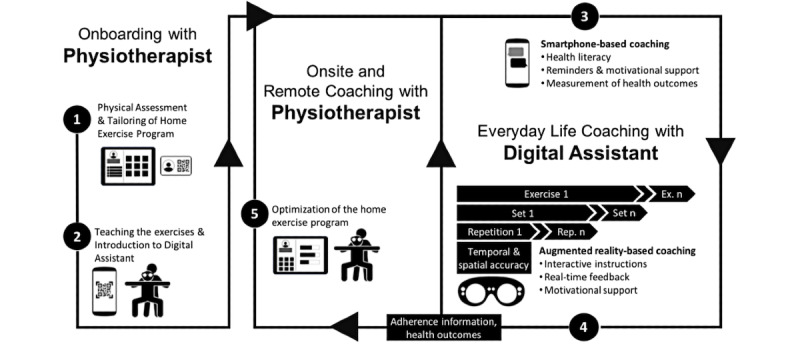
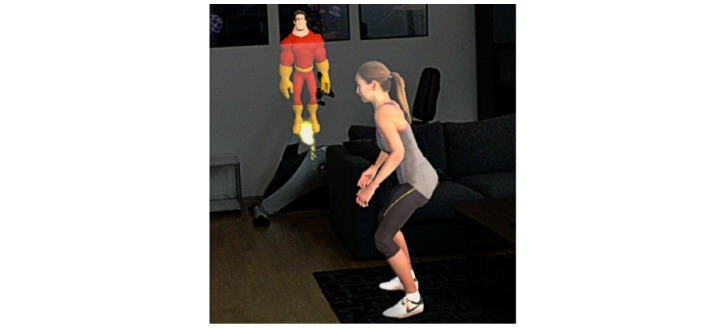
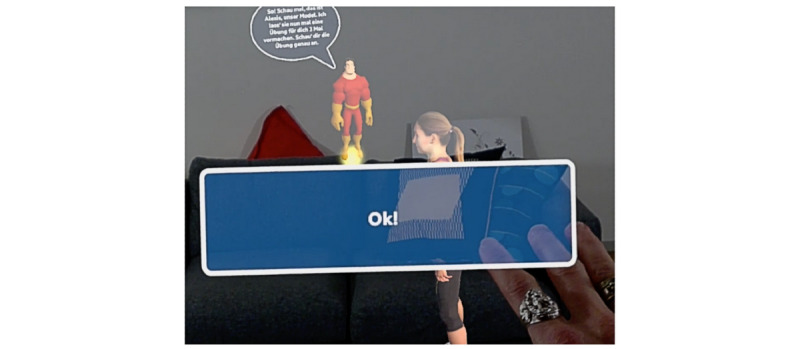
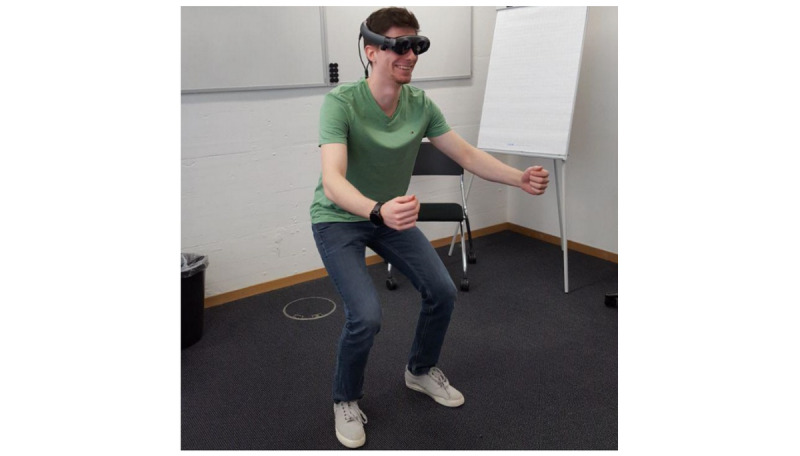
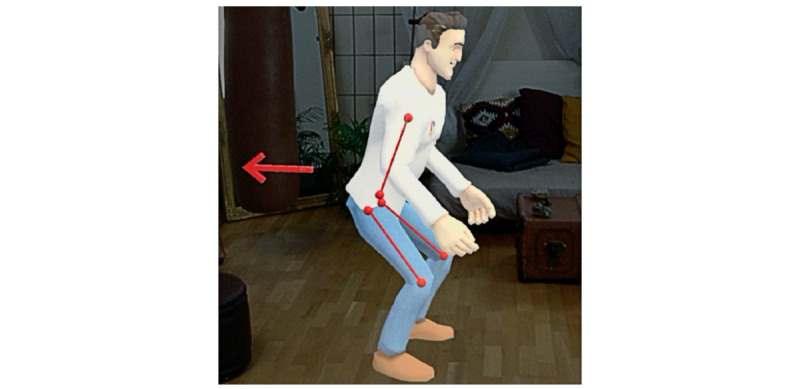
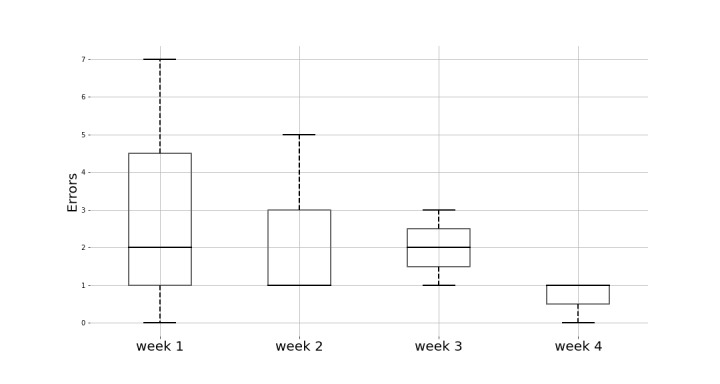
Background: Effective treatments for various conditions such as obesity, cardiac heart diseases, or low back pain require not only personal on-site coaching sessions by health care experts but also a significant amount of home exercises. However, nonadherence to home exercises is still a serious problem as it leads to increased costs due to prolonged treatments. Objective: To improve adherence to home exercises, we propose, implement, and assess the novel coaching concept of hybrid ubiquitous coaching (HUC). In HUC, health care experts are complemented by a conversational agent (CA) that delivers psychoeducation and personalized motivational messages via a smartphone, as well as real-time exercise support, monitoring, and feedback in a hands-free augmented reality environment. Methods: We applied HUC to the field of physiotherapy and conducted 4 design-and-evaluate loops with an interdisciplinary team to assess how HUC is perceived by patients and physiotherapists and whether HUC leads to treatment adherence. A first version of HUC was evaluated by 35 physiotherapy patients in a lab setting to identify patients’ perceptions of HUC. In addition, 11 physiotherapists were interviewed about HUC and assessed whether the CA could help them build up a working alliance with their patients. A second version was then tested by 15 patients in a within-subject experiment to identify the ability of HUC to address adherence and to build a working alliance between the patient and the CA. Finally, a 4-week n-of-1 trial was conducted with 1 patient to show one experience with HUC in depth and thereby potentially reveal real-world benefits and challenges. Results: Patients perceived HUC to be useful, easy to use, and enjoyable, preferred it to state-of-the-art approaches, and expressed their intentions to use it. Moreover, patients built a working alliance with the CA. Physiotherapists saw a relative advantage of HUC compared to current approaches but initially did not see the potential in terms of a working alliance, which changed after seeing the results of HUC in the field. Qualitative feedback from patients indicated that they enjoyed doing the exercise with an augmented reality–based CA and understood better how to do the exercise correctly with HUC. Moreover, physiotherapists highlighted that HUC would be helpful to use in the therapy process. The longitudinal field study resulted in an adherence rate of 92% (11/12 sessions; 330/360 repetitions; 33/36 sets) and a substantial increase in exercise accuracy during the 4 weeks. Conclusions: The overall positive assessments from both patients and health care experts suggest that HUC is a promising tool to be applied in various disorders with a relevant set of home exercises. Future research, however, must implement a variety of exercises and test HUC with patients suffering from different disorders.
Overview
The claims and statistics of this paper haven’t been checked yet.
Free: it reads the open-access text and checks the first 5 claims that cite a source we can check. Create a free account to check every claim.
Integrity signals
Registry
Cites
Statistics
Figures
Verification
Claims the paper makes
The claims and statistics of this paper haven’t been checked yet.
Free: it reads the open-access text and checks the first 5 claims that cite a source we can check. Create a free account to check every claim.
Claims other papers make about this one
Each is checked against this paper’s own text: does it say what the citing paper says it does?
The source backs part of the claim, not all of it — or backs it for a different population, condition or comparison.
In the citing paper
“In addition, virtual reality–based training has been shown to reduce the focus on pain by dividing attention to tasks [25,26] and increase the motivation of movement through progressive achievement [27-29].”
From Virtual Reality–Based Training in Chronic Low Back Pain: Systematic Review and Meta-Analysis of Randomized Controlled Trials (2024) · cites this paper as [27]
Experimental — accuracy not yet measured
Self-check
Percentages, sums and reported differences re-computed from the paper’s own numbers.
The self-check needs the paper’s full text.
Citations
Cites
Perceived usefulness, perceived ease of use, and user acceptance of information technology
Davis, F. D. (1989) · MIS Quarterly · doi:10.2307/249008 · Cited by 68,483
User Acceptance of Information Technology: Toward A Unified View1
Venkatesh, V., Morris, M. G., Davis, G. B., & Davis, F. D. (2003) · MIS Quarterly · doi:10.2307/30036540 · Cited by 45,035
User Acceptance of Computer Technology: A Comparison of Two Theoretical Models
Davis, F. D., Bagozzi, R. P., & Warshaw, P. R. (1989) · Management Science · doi:10.1287/mnsc.35.8.982 · Cited by 25,709 · cited 3×
“To reduce participant burden, and due to the feasibility character of this first study, we used single-item measures for perceived enjoyment [87], perceived ease of use, perceived usefulness [85], and intention to use [83].”
BackgroundMethodSelf-efficacy mechanism in human agency
Bandura, A. (1982) · American Psychologist · doi:10.1037/0003-066x.37.2.122 · Cited by 15,975
Venkatesh, V., Thong, J. Y. L., & Xu, X. (2012) · MIS Quarterly · doi:10.2307/41410412 · Cited by 15,756
Development of NASA-TLX (Task Load Index): Results of Empirical and Theoretical Research
(1988) · Advances in Psychology · doi:10.1016/s0166-4115(08)62386-9 · Cited by 15,003
Mining association rules between sets of items in large databases
Agrawal, R., Imieliński, T., & Swami, A. (1993) · Proceedings of the 1993 ACM SIGMOD international conference on Management of data · doi:10.1145/170035.170072 · Cited by 14,907 · cited 1×
“In doing so, exercise suggestions could be learned, for example, from a basket analysis that considers past exercise programs, patient-related variables (eg, diagnosis and preferences) and past treatment outcomes (eg, reduction in pain) [109,110].”
BackgroundJames, S. L., Abate, D., Abate, K. H., Abay, S. M., Abbafati, C., Abbasi, N., Abbastabar, H., Abd-Allah, F., Abdela, J., Abdelalim, A., et al. (2018) · The Lancet · doi:10.1016/s0140-6736(18)32279-7 · Cited by 13,867
Vos, T., Abajobir, A. A., Abate, K. H., Abbafati, C., Abbas, K. M., Abd-Allah, F., Abdulkader, R. S., Abdulle, A. M., Abebo, T. A., Abera, S. F., et al. (2017) · The Lancet · doi:10.1016/s0140-6736(17)32154-2 · Cited by 13,220
The Computer for the 21st Century
Weiser, M. (1991) · Scientific American · doi:10.1038/scientificamerican0991-94 · Cited by 10,017
Research works printed but not linked: 3
- Basset S The assessment of patient adherence to physiotherapy rehabilitation New Zeal J Physiother 2003 31 2 60 66
- Kowatsch T Nißen M Shih, Chen-Hsuan I Rüegger D Volland D Filler A Künzler F Barata F Büchter D Brogle B Heldt K Gindrat P Farpour-Lambert N l’Allemand D Text-based Healthcare Chatbots Supporting Patient and Health Professional Teams: Preliminary Results of a Randomized Controlled Trial on Childhood Obesity 2017 8 Embodied Agents for Behavior Change (PEACH2017) Workshop, co-located with the 17th International Conference on Intelligent Virtual Agents (IVA 2017) August 27, 2017 Stockholm, Sweden 1 10
- Fadhil A Schiavo G Designing for Health Chatbots ArXiv. Preprint posted online on February 24, 2019
Cited by
Jakob, R., Harperink, S., Rudolf, A. M., Fleisch, E., Haug, S., Mair, J. L., Salamanca-Sanabria, A., & Kowatsch, T. (2022) · Journal of Medical Internet Research · doi:10.2196/35371 · Cited by 446
Self-citationProblems and Barriers Related to the Use of Digital Health Applications: Scoping Review
Giebel, G. D., Speckemeier, C., Abels, C., Plescher, F., Börchers, K., Wasem, J., Blase, N., & Neusser, S. (2023) · Journal of Medical Internet Research · doi:10.2196/43808 · Cited by 229
“Some social situations [19,20,24,25,37] or disease-specific contexts [37] were reported as being problematic.”
InfluentialChew, H. S. J. (2022) · JMIR Medical Informatics · doi:10.2196/32578 · Cited by 134
Wutz, M., Hermes, M., Winter, V., & Köberlein-Neu, J. (2023) · Journal of Medical Internet Research · doi:10.2196/46548 · Cited by 99
The Use of Virtual Reality in Back Pain Rehabilitation: A Systematic Review and Meta-Analysis
Bordeleau, M., Stamenkovic, A., Tardif, P.-A., & Thomas, J. (2022) · The Journal of Pain · doi:10.1016/j.jpain.2021.08.001 · Cited by 86
Metadata
- Authors
- Kowatsch, T., Lohse, K.-M., Erb, V., Schittenhelm, L., Galliker, H., Lehner, R., & Huang, E. M.
- Affiliations
- University of St.Gallen (CH)
- ETH Zurich (CH)
- Korea Advanced Institute of Science and Technology (KR)
- Singapore-ETH Centre (SG)
- University of Zurich (CH)
- Corresponding author
- Kowatsch, Tobias
- ORCID
- Venue
- Journal of Medical Internet Research
- Publisher
- JMIR Publications Inc.
- Published
- 2021-02-22
- Volume
- 23
- Issue
- 2
- Pages
- e23612
- ISSN
- 1438-8871 (ISSN-L)
- PMC
- PMC7939948
- OpenAlex
- W3126039345
- Cited by
- 39
- References
- 134
- Citations by year
- 2026: 4 · 2025: 11 · 2024: 7 · 2023: 5 · 2022: 8 · 2021: 4
- FWCI
- 6.74
- Type
- journal article
- Language
- en
- Open access
- gold
- doi.org
- Licence
- cc-by
- Locations
- Journal of Medical Internet Research (publishedVersion, cc-by)
- PubMed Central (publishedVersion, cc-by)
- PubMed (publishedVersion)
- Alexandria (UniSG) (University of St.Gallen) (acceptedVersion)
- Alexandria (UniSG) (University of St.Gallen) (submittedVersion)
- DOAJ (DOAJ: Directory of Open Access Journals) (submittedVersion, cc-by-sa)
- Repository for Publications and Research Data (ETH Zurich) (submittedVersion, cc-by)
- ETH Zürich Research Collection (cc-by)
- Topics
- Health Sciences › Health Professions › General Health Professions › Mobile Health and mHealth Applications
- Social Sciences › Psychology › Social Psychology › Social Robot Interaction and HRI
- Physical Sciences › Computer Science › Computer Vision and Pattern Recognition › Augmented Reality Applications
- Keywords
- home exercise adherence, chatbots, augmented reality, mobile health, physiotherapy, therapeutic relationship, patient-physiotherapist relationship, psychoeducation, motivational messages, exercise feedback, patient acceptance, N-of-1 trials, telemedicine, low back pain, medication adherence
- MeSH terms
- Smartphone, Mentoring, Exercise Therapy, Female, Humans, Male, Research Design, Low Back Pain, Physical Therapists
About these checks
Registry, retraction, Cites and statistics results are computed, not judged, with one exception: a printed reference that no index lists is read once by a model before it counts as a citation error. Claims are extracted by a model and kept only when their quote appears verbatim in the text; each cited source is then checked, with a model’s help, for whether it says what the claim relies on. Those verdicts can be wrong — read the claim’s quote and the cited source before relying on one.
Statistics and arithmetic are recomputed, not judged.
Confidence bands are shown only for fields calibrated on our annotated test set. None is calibrated yet, so no band is shown.
What counts as a claim ›How we measure confidence ›How we check this ›
Are you an author, or do you see a problem with this page? Request a review
Data sources
Bibliographic data: Semantic Scholar, OpenAlex, Crossref.
Contains information from the Semantic Scholar Academic Graph Datasets, made available under the ODC Attribution License (ODC-BY 1.0).
Semantic Scholar’s data is described in: Kinney, R., et al. (2023). The Semantic Scholar Open Data Platform. arXiv:2301.10140.
